Latest News
Stay updated with the latest news and articles
Top Stories
China Bets Billions on AI and Chip Breakthroughs to Beat US Tech Curbs
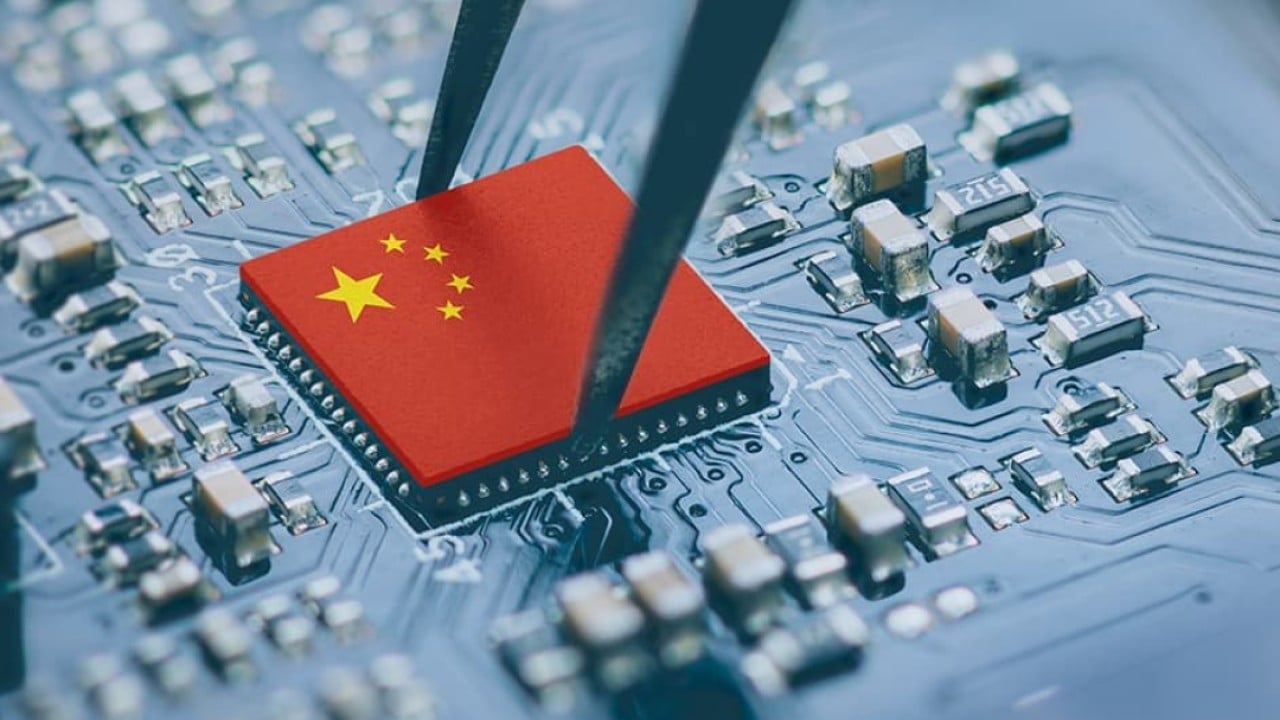
China Bets Billions on AI and Chip Breakthroughs to Beat US Tech Curbs China is pouring tens of billions of dollars into a state-led campaign to achieve self-sufficiency in advanced semiconductors and artificial intelligence (AI), aiming to overcome U.S. export restrictions and dominate next-generation technologies [51155][95150][86995][43531]. The national strategy, formalized in the country's latest five-year plan, directs massive resources toward breaking foreign "chokepoints" in strategic industries [95150]. This marks a decisive pivot from a decades-long policy of absorbing foreign technology to one focused on creating cutting-edge innovations at home [59734]. Provinces and major cities are executing this national directive with huge local investments. The eastern tech hub of Zhejiang announced a five-year plan to develop advanced AI chips as small as 3 nanometers, directly targeting the U.S. "chokehold" on cutting-edge semiconductor technology [51155]. Shanghai launched a $10 billion investment plan focused on microchips and AI, among other sectors [43531]. At the national level, a new state-backed semiconductor fund worth over $47 billion has been established to equip China's domestic chip industry, focusing on the advanced manufacturing equipment currently controlled by the U.S. and its allies [86995]. Overall science and technology funding is seeing a major increase, with a draft budget allocating over $61 billion to "future industries" like AI, satellite internet, and electric vehicles [93804]. President Xi Jinping's recent inspection of a national technology innovation park underscored the political priority placed on achieving "high-level" technological independence [71486]. Analysts note the strategy represents a fundamental divide with the United States, where AI development is market-driven, while China pursues state-coordinated integration of AI as core national infrastructure [109135]. The concerted push extends beyond chips and AI to other frontier fields like nuclear fusion and advanced defense systems, reflecting a comprehensive effort to secure leadership in the technologies that will shape global economic and strategic power [95150][59734]. China Targets 3nm AI Chips to Break US "Chokehold" China's New Plan: Beat US Tech Rivals with AI and Fusion Power China Bets $47 Billion to Break the Chip Barrier Shanghai Bets $10 Billion on Chips and AI in Tech Race China's Tech Pivot: From "Catch-Up" to Cutting-Edge China's $62 Billion Bet Mirrors Musk's Vision AI War: US Bets on Markets, China Bets on Control Xi Inspects Tech Park, Stakes Claim in Global Innovation Race
Climate Chaos Becomes the New Normal: 2025's Extreme Weather Disrupted Millions and Cost Billions
Climate Chaos Becomes the New Normal: 2025's Extreme Weather Disrupted Millions and Cost Billions The year 2025 marked a grim turning point as extreme weather events, fueled by climate change, shifted from being catastrophic anomalies to regular, disruptive features of daily life across the globe. From Europe to Africa, relentless heatwaves, floods, droughts, and storms caused widespread damage, claimed thousands of lives, and inflicted economic losses amounting to billions of dollars [113458][36941][49594]. Scientists confirm that rising global temperatures, driven by greenhouse gas emissions from human activity, are fundamentally altering weather patterns, making such disasters more frequent and intense [36941][49594]. Last year was the planet's third hottest on record, providing the volatile backdrop for a series of devastating events [49594]. In Europe, the continent faced a relentless cycle of climate disasters, including devastating floods and scorching heatwaves that sparked wildfires. Countries are still managing costly recoveries, with experts warning that such severe events may now be the standard [36941]. The United Kingdom’s wildlife and landscapes were pushed to a "breaking point" by a destructive sequence of major storms, drought, fires, and severe autumn floods [36898]. The human and economic toll was particularly severe in Africa. A report from the World Meteorological Organization (WMO) confirmed that extreme weather killed thousands, impacted millions, and caused billions in economic losses across the continent [113458]. In Eastern Africa, a "triple planetary crisis" of climate change, biodiversity loss, and pollution directly threatened food security by ruining crops and killing livestock [91481]. Meanwhile, in South Africa, climate change is exacerbating air pollution, leading to a surge in lung diseases like asthma and bronchitis as wildfires and dust storms increase [110220]. This consolidation of climate impacts into everyday reality occurred as three major forces deepened the ecological crisis: large-scale development projects that damage landscapes, insufficient market-based climate policies, and the resource burden of increasing global militarization [37775]. The United Nations Environment Assembly has since called for urgent, accelerated global action to address the interconnected crises of climate change, biodiversity loss, and pollution [21446]. Europe's 2025 Weather: A New Normal of Extremes? 2025: The Year the Weather Broke UK Wildlife Pushed to "Breaking Point" by Extreme Weather in 2025 Climate Crisis Costs Africa Billions, Claims Thousands Triple Planetary Crisis Starves East Africa Every Breath a Risk: The Hidden Climate Threat to South Africa's Lungs 2025: Climate Crisis Becomes Daily Life UN Environment Assembly Demands Urgent Global Action on Climate and Biodiversity 2025: The Year Climate Chaos Became Routine
Trump Threatens to Block Key Global Oil Route, Rattling Markets and Alliances
Trump Threatens to Block Key Global Oil Route, Rattling Markets and Alliances Former U.S. President Donald Trump has threatened to blockade the Strait of Hormuz, a vital waterway for global oil shipments, if he wins the November election, sending energy markets into turmoil and raising new questions about America's security commitments [127262]. The threat, part of his "America First" foreign policy, triggered an immediate spike in oil prices and a sharp drop in Asian stock markets [127262]. The Strait of Hormuz, a narrow passage between Iran and Oman, is a chokepoint for approximately one-fifth of the world's seaborne oil [127262][127575]. Trump stated he would seal off the strait unless U.S. allies paid more for American military protection, a move analysts warn would severely disrupt global supplies and cause prices to surge much higher [127262]. The threat coincides with reports that the United States is preparing plans for a potential naval blockade of the strait, underscoring the military option is under active consideration [127575]. This development intensifies a pre-existing standoff with Iran, which has become a direct test of strength between the two nations [127469]. Experts describe the situation as volatile, dependent on Iran's ability to withstand U.S. strikes versus President Trump's willingness to bear the costs of a deeper conflict [127469]. The aggressive posture is straining America's international alliances. Following recent military confrontations involving Iran, President Trump warned that the North Atlantic Treaty Organization (NATO) needs "very serious examining," accusing European members of failing to support the United States despite its large financial contributions to the alliance [127219]. This has injected fresh uncertainty into the future of the transatlantic security partnership [127121]. The combined effect of rising Middle East tensions and U.S. policy statements is creating widespread geopolitical and economic ripples. In Asia, a major survey reveals that confidence in U.S. leadership has fallen sharply, complicating the region's delicate balancing act between Washington and Beijing [126587]. Meanwhile, a former governor of China's central bank stated that U.S. policies, including widespread tariffs and financial sanctions, have created a "golden window of opportunity" to promote the international use of China's yuan, citing eroding global trust in the dollar [127524]. As the crisis simmers, diplomatic coordination is intensifying among U.S. rivals. Russian Foreign Minister Sergey Lavrov traveled to China for talks, a visit seen as an effort to align positions on the Middle East and present a united front [127451]. Trump Threatens to Block Key Oil Route, Sending Markets into Turmoil U.S. Weighs Hormuz Blockade as Key Trump Ally Loses EU Seat Trump's Iran Dilemma: A Test of Wills With No Easy Exit Trump Questions NATO's Future After Iran Crisis Trump Doubts Shake Asia's China-US Tightrope Dollar Weakness Opens "Golden Window" for China's Yuan, Says Ex-Central Bank Chief Russia's Lavrov Flies to China as US-Iran Crisis Simmers

Tourists Chase Viral Thrills, Straining Cities and Sparking Backlash
Tourists Chase Viral Thrills, Straining Cities and Sparking Backlash From a single rooftop in a Rio favela to a simple dock in Venice, social media is creating sudden, overwhelming tourist crazes that are pushing popular destinations to a breaking point. This trend of "overtourism," driven by viral videos and celebrity influence, is forcing local governments to implement new taxes and restrictions to protect communities and environments [80040]. The phenomenon is starkly visible in Rio de Janeiro, where a spot known as the "Gateway to Heaven" on a Rocinha favela rooftop has become a global pilgrimage site. Visitors from around the world wait for hours for a photo that frames the Christ the Redeemer statue through a unique architectural gap, an image popularized online. Local guides now offer special motorbike taxi rides to the spot, and the owner charges an access fee, illustrating how quickly social media can redirect tourist traffic and create new, unplanned economic activity [101397]. Similarly, in Venice, a routine wooden jetty outside the Gritti Palace hotel has been rebranded as the "Kardashian Jetty" after Kim Kardashian used it during the wedding festivities of Jeff Bezos. Tourists now seek out this formerly mundane location, along with the private island and hotel linked to the celebrity event, showing how a single happening can reshape tourist interest in a historic city [51924]. Experts say the problem extends beyond famous landmarks, as social media algorithms and cheaper travel create instant "must-see" trends that can overwhelm a destination almost overnight [80040]. In response, destinations are experimenting with solutions like tourist taxes, promoting off-season travel, and redirecting visitors to less crowded areas to manage the crush [80040]. This surge contrasts with a parallel trend identified by analysts for 2026: a growing desire for "meaningful tourism" where travelers seek deeper cultural experiences beyond quick photo ops, often inspired by television and film [36959]. Some initiatives, like the community-based trekking project Village Ways in the Indian Himalayas, are already modeling this alternative. For over 21 years, it has connected travelers with remote villages to support traditional economies and reduce urban migration, offering a low-impact counterpoint to the viral crowds [100125]. Viral 'Gateway to Heaven' Rooftop Floods Rio Favela with Tourists Venice's New Tourist Hotspot: The 'Kardashian Jetty' Tourist Destinations Hit Breaking Point: What Causes the Crush? Beyond Paris: TV Drives 2026 "Meaningful Tourism" Trend Village Tourism Pioneer Fights Urban Flight in India's Himalayas

Iranians Flee Bombs, Others Rush Back as War Tears Families Apart
Iranians Flee Bombs, Others Rush Back as War Tears Families Apart A brutal conflict in Iran is forcing civilians into agonizing choices, with thousands fleeing airstrikes only to be met by others desperately returning to check on loved ones. The remote Kapıköy mountain crossing between Iran and Turkey has become a stark symbol of the war's divisive impact, witnessing two opposing streams of people [119947]. Eyewitnesses report a steady flow of refugees crossing into Turkey to escape relentless military bombardment inside Iran. "Every night they are bombarding," said one recent arrival, who gave only the name Amir for safety [119947][95980]. The exodus is compounded by widespread government internet blackouts that sever communication with family members still inside the country [119947]. In a contrasting and desperate movement, some Iranians are traveling in the opposite direction, leaving Turkey to return to Iran. They are driven by fears for relatives trapped in the conflict zones and a need to be closer to them, despite the danger [95980][119947]. This two-way flight highlights the impossible decisions civilians face, torn between personal safety and profound concern for family. The shift in traffic at the border is dramatic. Just weeks ago, the Kapıköy crossing was primarily used by Iranian tourists visiting Turkey for shopping or nightlife. Now, it serves as a critical, snow-covered escape route and a painful corridor for family reunions [119947]. The situation underscores how modern warfare disrupts entire populations, creating parallel crises of displacement and desperate return. Iranians Cross Border in Both Directions as War Intensifies Two-Way Flight: Iranians Flee Bombs, Others Rush Back to Family

Trump Revives Push to Buy Greenland, Using Tariff Threats and Cash Offers
Trump Revives Push to Buy Greenland, Using Tariff Threats and Cash Offers Former President Donald Trump is renewing his controversial campaign to purchase Greenland, employing a mix of financial incentives, tariff threats, and public pressure tactics more common to real estate deals than international diplomacy. The autonomous Danish territory in the Arctic has consistently stated it is not for sale [50444]. Trump publicly discussed the potential acquisition during a speech at the World Economic Forum in Davos, Switzerland, telling global leaders the United States should be allowed to buy the island [55297]. He later clarified he does not want to use military force, but called for immediate negotiations to secure a purchase [55327]. His administration has reportedly made cash offers directly to Greenlanders while threatening economic consequences for Denmark if it obstructs a deal [50444]. The push underscores Trump’s unorthodox foreign policy approach, which experts say conflates genuine strategic interests with unrealistic expansionist ideas [50444]. Greenland’s location makes it increasingly valuable for Arctic shipping lanes and resource extraction, but its government and people have repeatedly rejected any notion of a sale [52669]. Denmark, which handles Greenland's foreign and defense policy, also firmly opposes the transaction [50444]. Analysts note that Trump’s tactics—including public criticism of NATO allies and threats of tariffs—ignore traditional diplomatic "soft power" and emphasize direct demands [55327]. However, experts widely agree the strategy is doomed to fail, as tariff threats are unlikely to coerce a sovereign people and risk provoking backlash from other global powers with Arctic interests, like Russia and China [52669]. The Danish and Greenlandic governments maintain a unified position: the island is not on the market [50444]. Trump at Davos: Questions NATO, Wants to Buy Greenland Trump Eyes Greenland: Cash, Threats, and Military Force Trump at Davos: Skips Soft Power, Targets Greenland and NATO Allies Trump's Tariff Plan Fails to "Capture" Greenland

Farmers Block Highways, Demand Price Guarantees as U.S. Trade Deal Looms
Farmers Block Highways, Demand Price Guarantees as U.S. Trade Deal Looms A wave of protests by Indian farmers is challenging the government's trade and agricultural policies, with fears that a new agreement with the United States could flood the market with cheap imports and undermine local livelihoods. For the second time in recent months, farmers have mobilized nationwide, using tractors and trucks to block major highways and railway lines in a show of force [75183]. The immediate trigger is a trade pact announced following negotiations with the United States, which protesters believe will lower tariffs on American farm goods [75183][73750]. At the heart of the dispute is India's Minimum Support Price (MSP) system, a government mechanism that buys key staples like wheat and rice from farmers at a guaranteed price [73750]. Farmer unions fear the trade terms could force India to reduce these supports or allow a surge of subsidized U.S. produce, devastating their incomes [73750]. "We don't trust the safeguards they promise," said one protest leader, echoing widespread skepticism of government assurances [75183]. The protests have centered on key entry points to the capital, New Delhi, with police significantly bolstering security in response [73750]. The demonstrations highlight the potent political influence of India's vast farming community, a crucial voting bloc that the government must carefully balance against its international diplomatic ambitions [73750]. While officials insist the MSP system remains protected and negotiations are ongoing, farmer leaders are demanding a new law that would legally cement the current price guarantees [73750]. The standoff underscores the persistent tensions in India's economy, where high-growth sectors like technology advance rapidly while the agricultural foundation supporting millions remains in a precarious state [96383]. Indian Farmers Strike, Fearing U.S. Trade Deal Will Flood Market India's Farmers Protest as Modi-Trump Trade Pact Threatens Key Crop Prices India's Economy Booms, But Not For Everyone
U.S. Forces Capture Venezuelan President Maduro in Major Military Strike, Vow to "Run" Country
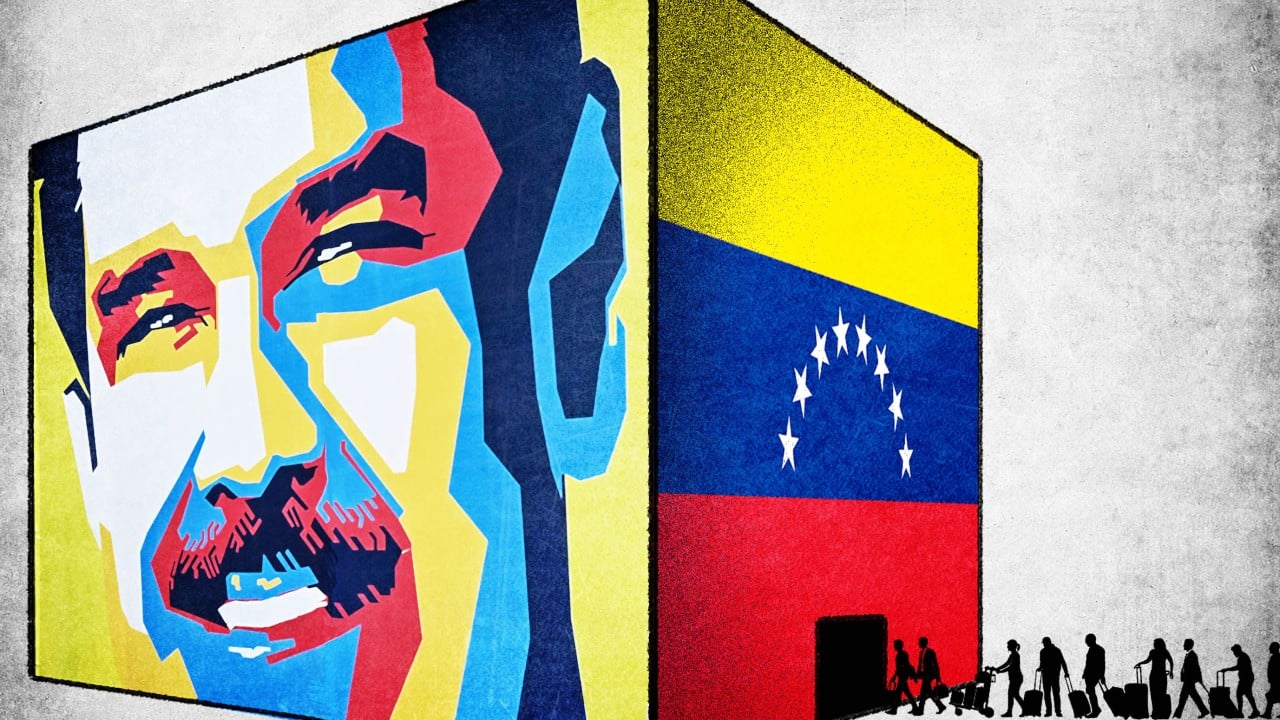
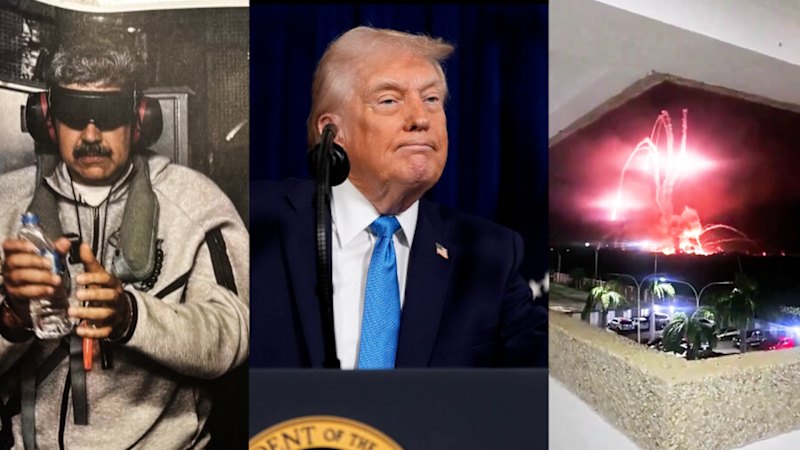
U.S. Forces Capture Venezuelan President Maduro in Major Military Strike, Vow to "Run" Country U.S. military forces have captured Venezuelan President Nicolás Maduro and his wife, Cilia Flores, following a large-scale military strike on Venezuelan territory. The unprecedented operation, ordered by the administration of President Donald Trump, marks a direct and dramatic escalation in the long-standing political crisis in the South American nation [41033][41227][41379]. According to U.S. officials, the operation resulted in the detention of the Venezuelan leader, who has long been labeled illegitimate by Washington [40668][41379]. Maduro and his wife have been taken to New York, where they will face criminal charges, including terrorism and narcotics offenses [41136][40942]. In a statement following the capture, President Trump declared that the United States will now "run" Venezuela [41227][42114]. He stated a key objective is to "take back the oil" and fix the country's collapsed oil infrastructure, aiming to restore access to the world's largest proven oil reserves [41227][40871][41525]. Trump framed the action as ensuring "American dominance in the western hemisphere will never be questioned again" [41525]. The unilateral military intervention has created an immediate power vacuum and deep uncertainty for Venezuela's 30 million citizens [41136][42114]. No clear successor has been named, and the status of the remaining government is unclear [41136][41379]. While the U.S. has recognized opposition leader Juan Guaidó as Venezuela's legitimate president since 2019, the path forward for forming a new government remains uncertain [41379][42114]. International legal experts have immediately questioned the legality of the attack, predicting the U.S. will justify it as an act of self-defense [40942]. The action is expected to trigger a major geopolitical crisis and intense debate over sovereignty [40668][40737]. U.S. Forces Capture Venezuelan President in Military Strike Venezuela Leader Ousted in U.S. Strike, Faces Charges in New York US Strikes Venezuela, Captures President Maduro U.S. Captures Venezuela's President in Secret Operation U.S. Forces Capture Venezuelan President Nicolás Maduro US Strikes Venezuela, Abducts President Maduro US Captures Venezuelan President in "Large-Scale Strike" U.S. Military Strike Captures Venezuelan Leader Maduro U.S. Captures Maduro: What Now for Venezuela? US Seizes Venezuelan President, Vows to "Run" Country and "Take Back the Oil" U.S. Claims Capture of Venezuelan Leader in Military Strike U.S. Strikes Venezuela, Captures President Maduro
AI Replay Tech Makes Olympic Jumps Spin on Screen: A New View for Millions
AI Replay Tech Makes Olympic Jumps Spin on Screen: A New View for Millions A new artificial intelligence-powered broadcasting system has debuted at the Winter Olympics, transforming how millions of viewers watch sports by generating replays from physically impossible angles. The technology creates detailed 3D models of athletes from standard broadcast footage, allowing for dynamic, computer-generated perspectives [82096]. The innovation was showcased during American figure skater Ilia Malinin's performance. For viewers worldwide, the replay of his quadruple jump did not show a standard side angle. Instead, the video frames appeared to orbit around the athlete as he spun in mid-air, providing a startling and clear view of all four revolutions [82096]. This "orbiting" replay is one of many new vantage points created by the AI system at the Milano Cortina Games. Beyond enhancing television broadcasts, the technology is also being used to assist officials with judging and to generate unique content for social media platforms [82096]. The project blends cutting-edge tech with a touch of Olympic history. Photographers at the same Games are also using adapted 70-year-old Graflex cameras from the 1950s to capture images, which are then transmitted live via smartphones—a nod to the 1956 Winter Games hosted by Cortina [79782]. AI Replay Tech Makes Olympic Jumps Spin on Screen Vintage Cameras Capture 2026 Olympics for Modern Crowd

Court Overturns African Football Champion, Strips Senegal of Title in Unprecedented Move
Court Overturns African Football Champion, Strips Senegal of Title in Unprecedented Move In a decision that has sent shockwaves through the world of sports, the Court of Arbitration for Sport (CAS) has overturned the result of the 2023 Africa Cup of Nations (AFCON) final, stripping Senegal of its championship and declaring Morocco the winner [105769]. The stunning ruling, announced Tuesday, erases Senegal's celebrated first continental title from the record books. The court's decision is final and cannot be appealed [105769]. The African football governing body, which referred the case to the court, stated it will release the full details of the judgment later this week [105769]. No official reason for the overturn was immediately provided in the brief announcement [105769]. The chaotic tournament final was originally played in January, with Senegal emerging victorious [105769]. The unprecedented court ruling fundamentally alters the recent history of African football, the continent's premier international football competition [32394][105769]. The Africa Cup of Nations tournament itself recently concluded its group stage, where matches like the one between defending champion Ivory Coast and already-eliminated Gabon were played for pride and momentum despite having no impact on the knockout round standings [38697]. The competition opened with dramatic moments, such as Zambia's Patson Daka scoring a stoppage-time equalizer with a diving header to secure a 1-1 draw against Mali [32394]. Court Shocker: Morocco Awarded Africa Cup Title, Overturning Senegal's Win Daka's Last-Minute Header Stuns Mali in AFCON Opener AFCON Finale: Why Play a Game That Doesn't Matter?


Latest Articles
Ruto Defends "Propaganda" Railway Project in Nyamira
President William Ruto has defended a new railway project in Nyamira County. He dismissed growing criticism of the development as "propaganda." Ruto...
Rwanda Honors 21 Politicians Killed for Opposing Genocide
Every year on April 13, Rwanda holds a special ceremony. It marks the end of a national week of mourning. The event honors 21 politicians. These pol...
UN to Vote on South Sudan Peacekeepers as Atrocity Risk Rises
The UN Security Council will vote this week on whether to renew its peacekeeping mission in South Sudan. The decision comes as civilians across the c...
Somali PM Vows Stronger Army on 66th Anniversary
Somali Prime Minister Hamza Abdi Barre has pledged to build a powerful military to protect the country's sovereignty. He made the statement on Sunda...
Malawi Flood Survivors Forced Back to Ruins as Camps Close
Thousands of Malawians displaced by recent floods now face a new crisis. The government has shut down evacuation camps, forcing people to return to h...
Nigeria's Power Grid Surges to 4,300 Megawatts
The Federal Government announced a significant increase in national electricity generation on Sunday. Power output rose from 3,951 megawatts (MW) to...
Liberia Sends Finance Chief to Key IMF, World Bank Talks
Liberia’s Finance Minister, Augustine Kphehe Ngafuan II, has arrived in the United States. He will lead the country's team at the 2026 Spring Meeting...
New Fuel Tax Rule Stops Evasion, Wins Business Praise
A major energy company in Tanzania says a new government tax system is successfully stopping fuel tax evasion. MOIL Energies, which imports and dist...
South Africa Secures Record R890 Billion, But Will It Deliver?
South African companies have pledged the vast majority of a record R890 billion in investment commitments. The pledges were secured at the country's...
Zimbabwe Runner Crawls to Bronze, Wins $5,300 Prize
A Zimbabwean athlete captured global attention at South Africa's Two Oceans Marathon by crawling across the finish line to secure third place. Nobuh...
Human Activity Blamed for Botswana's Latest Foot and Mouth Disease Outbreak
Gaborone, Botswana — A government minister says human activity likely caused a new Foot and Mouth Disease (FMD) outbreak at a key livestock facility....
Nuclear Power Plan for South Africa Hits Heritage Snag
A new nuclear power station in South Africa is one step closer to reality. Officials have identified a preferred location. But the plan now faces a m...
Kenyans Held in India Over Half-Billion Shilling Gold Haul
Indian authorities have arrested 26 Kenyans for allegedly smuggling gold. The seized metal is valued at over 500 million Kenyan shillings. The arres...
NFL Dream Killed in Robbery: Ghana Football Star Dies on Highway
A professional football player in Ghana has been killed during a highway robbery, police confirmed. The victim was a player for Berekum Chelsea, a t...
Kim Jong Un Declares Victory: Is North Korea's Confidence Real?
North Korea’s leader, Kim Jong Un, displayed strong confidence at a major political meeting last month. The event was the first Workers' Party congre...
Official Inquiry: Southport Attacker's Violence Was 'Unambiguously Signposted' but Ignored
A damning official report blames "catastrophic" failures by multiple agencies and the "irresponsible and harmful" actions of his parents for allowing...
Hungary's Orbán Era Ends: A New Ally for Ukraine and the EU?
Péter Magyar has won Hungary's election. His victory ends Viktor Orbán's 16 years in power. Magyar leads the Tisza party. He has promised to fix Hun...
Spring Cleaning in Seoul, Tributes in Delhi: Photos of the Day
Our picture editors have selected striking images from around the globe for Monday. In Seoul, South Korea, workers performed a high-rise "spring cle...
Forget Meditation. I Found Peace in a Puzzle Box.
I once believed jigsaw puzzles were only for children. For over 20 years, I thought there were always more exciting or productive things to do. That...
Chili Eggs Recipe: Make Breakfast Ahead in Minutes
This hearty dish is a perfect breakfast for busy mornings. You can prepare most of it the night before. The recipe uses a "cheat ingredient" for hea...