Latest News
Stay updated with the latest news and articles
Top Stories
Pentagon Defends Strikes in Venezuela and Caribbean, Citing Law and "Fog of War"
Pentagon Defends Strikes in Venezuela and Caribbean, Citing Law and "Fog of War" The U.S. Department of Defense is mounting a public defense of recent military actions in Venezuela and the Caribbean, asserting their legality while acknowledging the complex realities of combat. In separate statements, Pentagon officials have backed commanders who authorized strikes in Venezuela. A spokesperson confirmed that a senior commander's decision to launch strikes followed a rigorous legal review process, stating the actions were approved by military and civilian lawyers throughout the chain of command [17258]. Defense Secretary John Hegseth later defended a specific incident where U.S. forces struck the same target twice, attributing the decision to the inherent confusion of battle. "It was the fog of war," Hegseth stated, explaining he supported the admiral's choice to fire again to eliminate a perceived threat [17273]. Simultaneously, a senior defense official, Pete Hegseth, stated that ongoing U.S. military operations in the Caribbean are lawful under both U.S. and international law. The statement directly addressed growing questions about the legal foundation for the mission [15064]. The justifications come amid political maneuvering in Washington. Senate Republicans are taking steps to shield the legal authority used for the Venezuela operation, aiming to block a Democratic effort to repeal the 2001 war powers resolution that justified the strikes [50051]. Pentagon Defends Commander's Decision in Venezuela Strikes **Pentagon Defends Second Strike in "Fog of War" Incident** Pentagon Official Defends Legality of Caribbean Operations Senate Republicans Move to Shield Trump's War Powers

Election Systems Under Fire as Ruling Parties Accused of Tilting the Field
Election Systems Under Fire as Ruling Parties Accused of Tilting the Field From Hungary to Zimbabwe, governing parties are facing accusations of manipulating electoral systems to maintain their hold on power, raising alarms about the integrity of democratic processes. In Hungary, Prime Minister Viktor Orbán’s Fidesz party is favored to win an election this Sunday despite polls showing a new opposition party leading in popular support [124115]. Experts say an election system redesigned during Orbán’s 14-year rule gives more weight to votes in areas where his party is strongest, meaning the party with the most votes may not win the most parliamentary seats [124115]. Critics argue this system is part of a larger structure where state institutions and media also work to support the ruling party [124115]. A similar challenge to electoral fairness is unfolding in Turkey, where the main opposition leader has accused the government of violating the constitution to avoid calling a potential early election because it fears losing votes [124010]. Meanwhile, in Zimbabwe, the ruling party has proposed a draft law that would fundamentally alter how the president is chosen [123444]. The plan would end direct presidential elections by the public and instead have the head of state elected by parliament, where the ruling party holds a majority [123444]. Critics argue the move would concentrate power and weaken democracy [123444]. These developments coincide with major corruption trials for senior former officials from Spain’s two largest political parties, which threaten the parties' credibility ahead of important elections [124018]. In the United States, a sheriff’s seizure of approximately 650,000 cast ballots in California has sparked election integrity concerns, with experts warning the action breaks the secure chain of custody and undermines public trust [123356]. In Djibouti, President Ismail Omar Guelleh is widely expected to win a sixth term in an election where he faces only one little-known challenger, extending his 27-year rule [124134]. Polls Show Opposition Ahead, But Orban's Election System Favors Fidesz Turkish Opposition Leader Accuses Government of Constitutional Violation Zimbabwe Ruling Party Proposes Ending Presidential Elections Spain's Top Parties Face Major Corruption Trials Before Elections California Sheriff Seizes 650,000 Ballots, Sparking Election Alarm One Rival, One Certainty: Djibouti's Leader Eyes Sixth Term


Israel Launches Largest Strike in Lebanon, Threatening Fragile US-Iran Ceasefire
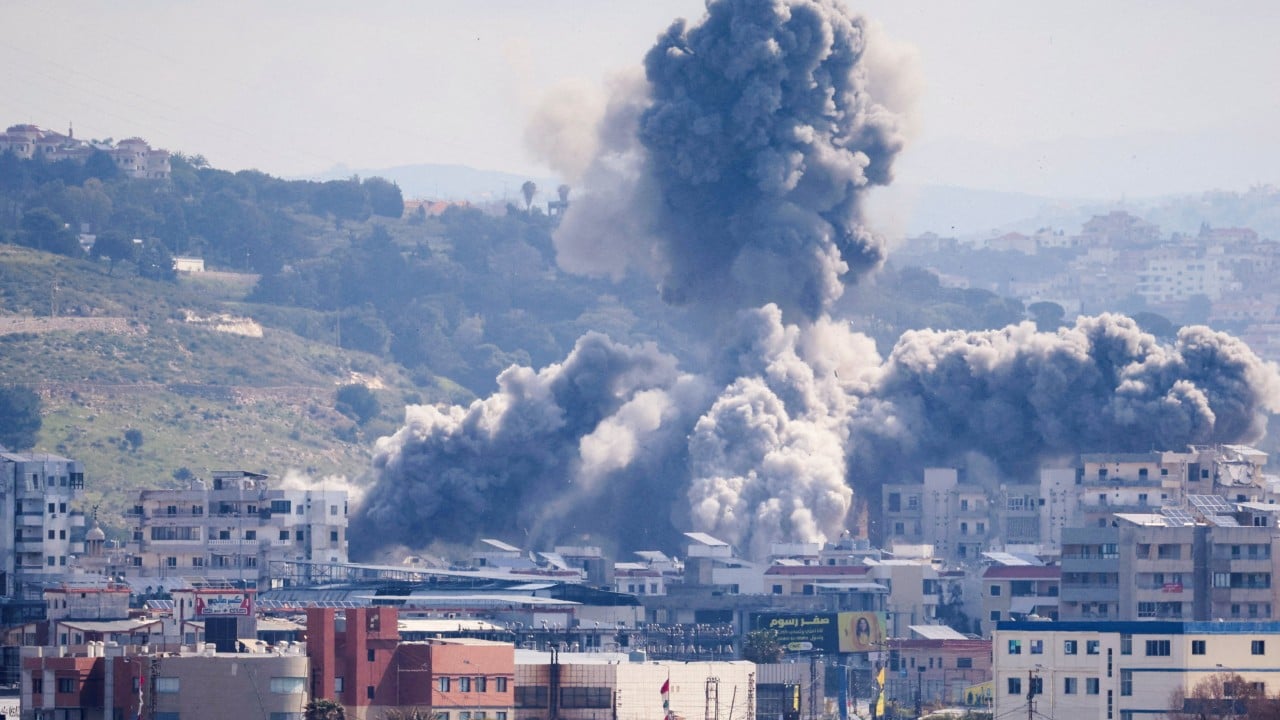
Israel Launches Largest Strike in Lebanon, Threatening Fragile US-Iran Ceasefire A major Israeli military operation in Lebanon has thrown a newly announced ceasefire between the United States and Iran into immediate jeopardy. The strikes, described as Israel's largest coordinated attack in Lebanon since the current conflict began, killed dozens and prompted a stark warning from Tehran that it could abandon the truce [124022]. The ceasefire, intended to reduce regional tensions, was announced just hours before Israeli warplanes struck multiple regions across Lebanon on Thursday. Targets included the southern suburbs of the capital, Beirut, areas in southern Lebanon, and the eastern Bekaa Valley [123847]. The Israeli military stated it targeted the pro-Iranian group Hezbollah, destroying several buildings in Beirut's city center in what its defense minister called a "surprise strike" [124022]. The scale of the assault has created a new crisis, with Iranian officials warning that Tehran could withdraw from the ceasefire agreement [124022]. The deal, a two-week truce centered on the vital Strait of Hormuz, was seen as a fragile but critical diplomatic opportunity to ease tensions in a region critical to global oil supply [123732]. The immediate Israeli strikes have placed that goal in serious danger. The development has prompted urgent diplomatic activity, with Turkey's foreign minister holding phone talks with his Iranian and Qatari counterparts to discuss ways to sustain the fragile pause in hostilities [123836]. International reaction to the ceasefire itself had been cautiously optimistic. Asian nations including Malaysia, Japan, and Australia welcomed the pause, expressing hope it could lead to broader Middle East peace [123614]. Analysts had suggested the agreement could lower the risk of oil supply disruptions, potentially leading to cheaper fuel prices worldwide if it held [123858]. The future of that tentative stability now hinges on the fallout from the attacks in Lebanon and the regional response. Israel Launches Largest Strike in Lebanon, Threatening US-Iran Ceasefire US-Iran Truce Announced; Israel Strikes Lebanon US-Iran Ceasefire: Will Gas Prices Finally Fall? Turkey's Top Diplomat in Urgent Calls to Save US-Iran Ceasefire Truce Tests Tense Waters in Gulf U.S.-Iran Ceasefire: Asia Sees Hope for Broader Middle East Peace

Governments Ditch Old Playbook, Bet Billions on AI and Security in Economic Overhaul
Governments Ditch Old Playbook, Bet Billions on AI and Security in Economic Overhaul A fundamental shift is underway in how nations manage their economies, driven by the twin forces of artificial intelligence and geopolitical rivalry. Governments are abandoning long-held principles of free trade and global rebalancing, pouring massive public funds into domestic technology and manufacturing while rewiring supply chains for national security. This new pattern marks a stark departure from the framework that led to the 2008 financial crisis. That era was defined by simple imbalances: high-saving nations like China funded high consumption in countries like the United States [123918]. The textbook solution called for surplus countries to spend more and deficit countries to save more. Today, that old logic is being broken. Artificial intelligence (AI) is now viewed as a "general-purpose technology" critical to both future economic dominance and military power [123918]. This perception is triggering a global race, with nations like the United States investing heavily to secure leadership in semiconductors and AI development [123918]. Simultaneously, intense strategic competition is forcing a rethink of globalization. Countries are increasingly prioritizing "friend-shoring"—moving production and supply chains to politically allied nations—over pure cost efficiency [123918]. Economic decisions are now inseparable from technology strategy and national security concerns. The combined effect is a world where government intervention and strategic investment are becoming the norm. This realignment is causing widespread economic uncertainty, with markets struggling to price in potential new tariffs and the disruptive impact of AI on productivity [33350]. The transition is also contributing to a persistent "vibecession," where strong economic data clashes with deep public pessimism [33350]. This strategic pivot is not limited to Western nations. China is executing its own radical economic redesign, deliberately moving away from a decades-long dependence on debt-fueled property construction [118216]. Instead of a bailout for its troubled real estate sector, Chinese policymakers are accepting short-term pain to build a smaller, more manageable housing market and redirect investment toward manufacturing and technological innovation [118216][9336]. The goal is to foster long-term public "psychological security" by reducing financial risks and promoting job stability in new industries [9336]. The global result is an economic map being redrawn by government strategy, where the old rules of engagement no longer apply [123918]. AI and Rivalry Redraw the World's Economic Map Economics in 2024: A Strange Brew of Tariffs, AI, and "Vibecession" China's Real Estate Revolution: No Bailout, Just a Rebuild China Shifts Focus from Property to "Peace of Mind"


Ukraine Trades Battlefield Drone-Knowledge for Weapons and Gulf Leverage on Russia
Ukraine Trades Battlefield Drone-Knowledge for Weapons and Gulf Leverage on Russia Ukraine is deploying its elite military specialists to Gulf states in a series of high-stakes barter deals, trading its hard-won expertise in defeating drones for advanced weapons and diplomatic pressure on Moscow [100935][112369][91239]. Facing relentless Russian missile and drone attacks, Kyiv is leveraging its status as the world's most experienced military in countering Iranian-designed unmanned aerial vehicles (UAVs). President Volodymyr Zelenskyy confirmed that Ukrainian teams specializing in hunting drones are now active in several countries, which he described as "a half-dozen" nations without naming them specifically [112369]. The arrangement is direct: Ukrainian specialists teach Gulf and NATO allies how to effectively shoot down drones like the Iranian-made Shaheds, which are also used by Iranian proxies in the Middle East [100935]. In return, Ukraine seeks critical military supplies, specifically mentioning advanced air defense systems such as Patriot missile batteries [112369]. Beyond weapons, Kyiv has proposed a broader strategic exchange. Zelenskyy has offered to deploy anti-drone units to help protect Gulf oil facilities and infrastructure if those states use their significant economic leverage as major buyers of Russian energy to pressure the Kremlin toward peace [91239]. This pragmatic strategy turns Ukraine's battlefield experience into a valuable diplomatic and military resource. Western and Gulf states are eager to learn Ukraine's cost-effective methods for neutralizing the drone threat, ensuring a flow of support back to Kyiv while strengthening allied defenses globally [100935]. The moves highlight a shift in Ukraine's approach, positioning it not just as a recipient of aid but as a provider of vital defense technology [91239]. Kyraine Sells Drone-Knowledge for Weapons Ukraine Trades Air Defense Secrets for Gulf's Drone-Killers Ukraine Offers Gulf States a Deal: Our Drone Hunters for Your Leverage on Russia

Catastrophic Southeast Asia Floods Kill Over 1,400, Displace Millions
Catastrophic Southeast Asia Floods Kill Over 1,400, Displace Millions A series of devastating floods and landslides, triggered by weeks of exceptionally heavy rainfall, has killed more than 1,400 people and affected millions across Southeast Asia [17624]. The catastrophic weather has submerged villages, severed roads, and buried homes under mud, prompting massive international relief efforts. The hardest-hit nations include Indonesia, Sri Lanka, Thailand, and Malaysia [17624]. In Indonesia, the death toll has climbed to 995, with rescuers still searching for 226 missing people. Neighboring Sri Lanka reports 640 dead and 211 missing [25217]. Combined, nearly 4 million citizens in these two countries alone have been impacted, with homes, roads, and farms destroyed [25217]. Southern Thailand has also suffered severe losses, with authorities reporting at least 145 fatalities [14423]. Torrential rains caused rivers to overflow and saturated hillsides, leading to destructive landslides that have left communities reeling and isolated [14423][17624]. Emergency crews across the region are working to evacuate residents from submerged towns, provide aid to displaced communities, and search for survivors [14786][20084]. National governments and aid agencies are mobilizing to provide emergency shelter, clean water, and medical supplies [17624]. Authorities have warned of additional dangers, including further landslides and the spread of waterborne diseases in the aftermath of the floods [11385]. The full scale of the destruction is still being assessed as rescue operations continue [14423]. Deadly Floods and Landslides Claim Over 1,400 Lives Across Southeast Asia Massive Floods Kill Over 1,600, Affect Millions in Asia Deadly Floods and Landslides Claim Over 250 Lives in Southeast Asia Southeast Asia Reels From Widespread Flooding Deadly Floods and Landslides Claim Lives Across Southeast Asia Deadly Floods and Landslides Claim Over 1,500 Lives Across Asia


Global Fuel Crisis Deepens as Conflict and Supply Shocks Send Prices Soaring
Global Fuel Crisis Deepens as Conflict and Supply Shocks Send Prices Soaring A wave of fuel emergencies and record-high prices is sweeping across the globe, driven by geopolitical conflict and critical supply disruptions. From national emergencies in Africa to unprecedented costs in Europe and Asia, governments and consumers are grappling with the economic shock of soaring fuel costs. The crisis has multiple epicenters. In Madagascar, the government declared a state of emergency due to severe fuel shortages, directly linking the situation to the war in Iran which has disrupted global oil shipments [123851][123416]. Similarly, Zambia declared a national emergency, citing the Middle East conflict as the primary cause of spiking global oil prices that have created a critical situation [122023]. The supply shock is being felt acutely in energy markets. A vital global oil route, the Strait of Hormuz, has been effectively shut, blocking a channel used for about one-fifth of the world's seaborne oil [123168]. Analysts at J.P. Morgan warn that U.S. gasoline prices could surge to $5 per gallon if the closure continues [123168]. The disruption is compounded by environmental damage, as an oil spill from a damaged Iranian ship, struck during recent conflict, now threatens a protected wetland near the strait [123126]. In Europe, drivers are facing historic price levels. Germany's diesel fuel has surged past €2 per liter, prompting the nation's largest automobile association to demand a temporary cut to the country's high fuel taxes [122922]. Belgium is bracing for diesel to hit a predicted record of 2.90 euros per liter, a sharp jump that places severe pressure on transport companies [122941]. France is experiencing a "perfect storm" of steep diesel price spikes, exacerbated by its historic policy that encouraged diesel car use and its current reliance on imported fuel [122900]. The ripple effects are global. In South Africa, drivers rushed to gas stations ahead of a midnight price hike expected to be the most expensive in the country's history, a direct result of the Iran war's disruption of global oil supplies [117884]. In China, drivers queued at pumps before the largest single fuel price increase of the year took effect, as government-set prices adjusted to rising international crude costs [109102]. Liberia officially raised its price ceiling for gasoline and diesel, citing global market pressures [121970]. The economic pain is accelerating a shift in consumer behavior. In the Philippines, record-high fuel costs are sparking a noticeable rush toward electric vehicles, with consumers actively seeking alternatives to unpredictable petrol prices [122504]. Meanwhile, Africa's new Dangote Refinery in Nigeria is attempting to provide a regional lifeline, shipping petrol to several African countries to address supply disruptions caused by the war [122838]. Madagascar Declares Emergency: No Fuel, Fears of Chaos Madagascar Declares Emergency as Iran War Hits Fuel Supply Germany's Diesel Hits Record High, Drivers Demand Tax Break U.S. Gas Prices Could Hit $5 if Key Oil Passage Remains Closed Diesel Shock: Belgian Prices Set to Break Record Oil Slick From Bombed Iranian Ship Heads for Protected Wetland Diesel Shock: Why France Can't Escape Soaring Fuel Prices South Africa Braces for Record Fuel Price Surge Dangote Refinery Sends Fuel Lifeline to Africa Amid Global Shortage Zambia Declares Emergency Over Fuel Supply Drivers Race to Pumps Ahead of China's Biggest Fuel Price Jump of 2024 Liberia Hikes Gas Prices, Citing Global Market Pressures Filipinos' "Breaking Point": Soaring Fuel Prices Spark Electric Car Rush


Syrian Army and Kurdish Forces Clash in Aleppo, Forcing Thousands to Flee
Syrian Army and Kurdish Forces Clash in Aleppo, Forcing Thousands to Flee Intense fighting has erupted between Syrian government forces and Kurdish-led fighters in and around the strategic city of Aleppo, sparking a mass civilian exodus and shattering a period of fragile calm [44512][45585][45588]. The clashes, concentrated in Aleppo's northern suburbs and the eastern Deir Hafer district, have forced tens of thousands of residents to flee their homes [45585][45588][49667]. Local aid groups report a rapid movement of displaced families seeking safety as front lines shift [45585]. The violence pits the Syrian Arab Army against the US-backed Syrian Democratic Forces (SDF), a coalition of Kurdish and Arab fighters [43634]. Key supply routes into Aleppo, including the Castello road, have become battlegrounds [43634]. The fighting follows the collapse of political talks between the two sides and the recent evacuation of SDF fighters from several Aleppo neighborhoods [45585][47153][49667]. A brief ceasefire was declared by both sides on Monday after deadly clashes, but the overall situation remains highly volatile [32516]. The stalemate between the Damascus government and the SDF, which controls large parts of northern Syria, is deepening and becoming more deadly [44512]. The renewed combat threatens to unravel relative stability in northern Syria, a region already hosting millions displaced by the country's long-running civil war [45585][45588]. The United Nations has repeatedly warned that any major new offensive risks a humanitarian catastrophe [45585]. Aleppo Exodus: Fighting Erupts as Syria Peace Talks Fail Aleppo Exodus: Fighting Erupts as Syria Peace Talks Fail Syrian Army Advances on Aleppo, Sparking Mass Exodus Fresh Clashes Erupt Between Syrian Army and Kurdish Forces Syrian Army and US-Backed Forces Clash in Aleppo Syrian Forces and Kurds Clash, Then Halt Fire After Deadly Fighting Syria Detains, Expels Kurds in Aleppo as US Bombs ISIS
China Bets Billions on AI and Chip Breakthroughs to Beat US Tech "Chokehold"
China Bets Billions on AI and Chip Breakthroughs to Beat US Tech "Chokehold" A massive, state-coordinated push is underway in China to achieve self-sufficiency and global leadership in critical technologies, with a sharp focus on artificial intelligence (AI) and advanced semiconductors. This national strategy, driven by billions in government investment, aims to break foreign dependencies and win a defining technological race with the United States. Multiple Chinese provinces and cities are launching multi-billion dollar initiatives targeting these sectors. Shanghai has directed a $10 billion investment plan specifically into microchips and AI [43531]. At the national level, a new state-backed semiconductor fund worth over $47 billion has been established to finance the development of domestic chip manufacturing equipment [86995]. The eastern tech hub of Zhejiang has announced a five-year plan to produce advanced AI chips as small as 3 nanometers, a direct effort to counter U.S. export controls described as a strategic "chokehold" [51155]. This investment is fueling tangible advances. Chinese tech giant Alibaba recently launched one of the country's largest home-grown computing clusters, built with 10,000 of its own "Zhenwu" AI chips in collaboration with a state-owned telecom firm [123660]. Officials highlighted the system as "fully domestic," underscoring the drive to create an independent AI infrastructure. Analysts note the U.S. and China are locked in a split AI race, with China taking a lead in the volume of patents and research papers through state-driven effort [122661]. However, the broader Chinese strategy extends beyond AI hardware. A newly revealed national blueprint for 2026-2030 prioritizes dominating frontier technologies like AI and nuclear fusion to secure the future and break foreign "chokepoints" [95150]. This marks a definitive pivot from China's old strategy of absorbing foreign technology to one of creating cutting-edge innovation domestically [59734]. The approach contrasts with the U.S., where AI development is largely market-led. China's model is defined by state coordination, aiming to integrate AI as a core component of national infrastructure and planning [109135]. The government is also tightening oversight of the tech sector, imposing stricter rules on companies using offshore structures to list abroad, ensuring fundraising aligns with developing core businesses inside China [122505]. AI and Rivalry Redraw the World's Economic Map China Deploys 10,000-Chip AI "Brain" in Tech Race with U.S. U.S. and China Locked in Split AI Race, With Stakes for Global Power China Targets 3nm AI Chips to Break US "Chokehold" China's New Plan: Beat US Tech Rivals with AI and Fusion Power China's Tech Pivot: From "Catch-Up" to Cutting-Edge AI War: US Bets on Markets, China Bets on Control China Bets $47 Billion to Break the Chip Barrier Shanghai Bets $10 Billion on Chips and AI in Tech Race China Tightens Grip on Offshore IPOs, Targeting Tech and Biotech


Climate Chaos Is Here: 2025's Extreme Weather Pushed Nature to the "Breaking Point"
**Climate Chaos Is Here: 2025's Extreme Weather Pushed Nature to the "Breaking Point"** A relentless barrage of extreme weather battered Europe and the UK in 2025, pushing wildlife and ecosystems to a "breaking point" and signaling a dangerous new normal of climate-driven disasters [36898]. Scientists and conservationists warn that the devastating floods, heatwaves, droughts, and storms of the past year are a direct consequence of human-caused climate change and a preview of crises to come [36941][49594]. The year unfolded as a destructive cycle of climate extremes. It began and ended with major storms—Éowyn and Bram—that caused widespread damage [36898]. In between, a sun-soaked spring and summer led to severe drought and fierce wildfires across heath and moorlands, which were later broken by intense autumn floods [36898]. This pattern of whiplash between dry and wet extremes placed immense stress on natural environments. Conservation charity the National Trust, in its annual review, stated these events served as "alarm signals we cannot ignore," showing that UK nature is being pushed to its limits by climate breakdown [36898]. The broader European continent faced a similar onslaught, managing costly recoveries from a relentless series of disasters throughout the year [36941]. Experts directly link the increasing frequency and intensity of these events to greenhouse gas emissions from human activities [36941]. Last year was the planet's third hottest on record, but scientists emphasize that the real story was the global cascade of extreme and costly weather, which demonstrates a climate system under increasing stress [49594]. They urge that without urgent global action to cut emissions, such severe weather will become a standard, recurring reality [36941]. The environmental toll extends beyond infrastructure. In Europe, long-term monitoring data confirmed a dramatic "insect apocalypse," with flying insect populations crashing by up to 80% over the past 30 years [122935]. Scientists cite intensive agriculture, pesticide use, and climate-linked habitat loss as primary causes for the collapse, which poses a direct threat to food security and biodiversity [122935]. UK Wildlife Pushed to "Breaking Point" by Extreme Weather in 2025 Europe's 2025 Weather: A New Normal of Extremes? 2025: The Year the Weather Broke Insect Apocalypse in Europe: Populations Crash by 80%

Latest Articles

Belgian FM: Lebanon Must Be Part of Any US-Israel-Iran Ceasefire Deal
Belgium's foreign minister has called for Lebanon to be included in any regional ceasefire, after a massive Israeli strike hit near the Belgian embas...

Shell Warns of Gas Output Drop and Cash Squeeze, Cites Oil Trading Boost
Energy giant Shell has warned investors of a significant drop in its first-quarter liquefied natural gas (LNG) output. The company also expects a maj...

Israeli Strikes Kill 89 in Lebanon, Says Health Ministry
Israeli forces launched more than 100 strikes across Lebanon on Wednesday, according to the Israeli military. The attacks mark a major escalation in...

NATO Chief, Top US Senator Huddle as Trump Criticizes Allies
The head of NATO and a leading US senator held urgent talks on major global conflicts this week. The meeting comes amid public criticism from former...

Trump's Ultimatum: Only One "Acceptable" Path for Iran Talks
President Donald Trump says there is only one "acceptable" proposal for negotiations with Iran. He dismissed all other plans as "fraudulent." The U....

Iran's "Nuclear Weapon" is the Strait of Hormuz, Says Russian Official
A senior Russian official has made a stark claim about Iran's military power. He stated that Iran has already successfully tested its "nuclear weapon...

UN Warns: Lebanon Ceasefire Fails, Violence 'Dramatically' Continues
The top United Nations official in Lebanon has warned of a "huge escalation" in the country. This comes despite news of a ceasefire. UN Special Coor...

Bipartisan Threat: Lawmakers Vow to Force Ex-Attorney General Bondi to Testify on Epstein
A bipartisan group of U.S. lawmakers is threatening to hold former Florida Attorney General Pam Bondi in contempt of Congress. They say she must test...

Delta Warns: Iran Conflict Could Add $2 Billion to Fuel Bill
Delta Air Lines says the conflict in the Middle East is pushing its fuel costs sharply higher. The company now expects to spend over $2 billion more...

UN Condemns Israeli Strikes in Lebanon as US-Iran Ceasefire Creates Diplomatic Opening
The United Nations has strongly condemned recent Israeli airstrikes in Lebanon. It is urging an immediate diplomatic solution to prevent a wider regi...

Italy's Salvini: Russian Gas Return Hinges on Ukraine Peace
Italy's Deputy Prime Minister, Matteo Salvini, has stated that resuming imports of Russian natural gas would only be possible after the war in Ukrain...

Lufthansa Strike Grounds Friday Flights
A union has called for a nearly full-day strike of Lufthansa cabin crew this Friday. The walkout will center on Germany's two largest airports, Frank...

UN Warns Lebanon Conflict Could Spark New Refugee Crisis
The head of the United Nations migration agency has issued a stark warning over the escalating conflict in Lebanon, calling the situation "deeply wor...

Senate to Vote on Halting War Powers Against Iran
The U.S. Senate will vote next week on a resolution to limit President Donald Trump's military authority regarding Iran. The move follows heightened...

World's Green Tech at Risk as Rare Earth Supply Falters
A new report from the International Energy Agency (IEA) issues a stark warning. Global efforts to diversify the supply of critical rare earth mineral...

Turkey's Top Security Council: "Terrorism Will Be Drowned In Its Own Blood"
Turkey's National Security Council declared a firm stance against terrorism and support for regional stability following a key meeting chaired by Pre...

Erdogan Credits Pakistan for Iran Ceasefire, Warns Time is Short
Turkish President Recep Tayyip Erdogan has publicly thanked Pakistan’s Prime Minister Shehbaz Sharif for his role in securing a temporary halt to fig...

Al Jazeera Reporter Killed in Gaza, Journalist Death Toll Hits 262
A Palestinian journalist was killed by Israeli fire in Gaza on Friday, according to local authorities. The Gaza government media office named the jo...

Iran to U.S.: Choose Ceasefire or Face War
Iran has issued a stark warning to the United States, stating it must choose between securing a ceasefire in Gaza or risking a wider war through Isra...

Israeli Strikes Hit Central Beirut Hours After Ceasefire Announcement
Israeli airstrikes hit central Beirut on Wednesday afternoon. The strikes targeted dense commercial and residential areas. The attack came without w...