Latest News
Stay updated with the latest news and articles
Top Stories
AI Reshapes 56% of U.S. Jobs, Experts Warn of Widening Wealth Gap
AI Reshapes 56% of U.S. Jobs, Experts Warn of Widening Wealth Gap A wave of new analyses and reports confirms that artificial intelligence is set to transform the global workforce and economy, with a dominant focus on how it will change jobs and potentially deepen inequality, rather than simply replace humans outright. A major study finds that artificial intelligence will impact more than half of all jobs in the United States [123388]. However, the research concludes that widespread job elimination is not the most likely outcome. Instead, AI is expected to fundamentally alter how work is performed, with most affected roles seeing tasks augmented or managed by new AI tools [123388]. This shift will require significant worker adaptation and new skills across a wide range of professions. Concurrently, economists are warning that this technological transformation risks dramatically increasing economic inequality if left unchecked [123690]. The core concern is that AI will automate many tasks, concentrating profits and power among the companies and investors who control the technology, while leaving displaced workers behind [123690]. This could create a sharper divide between economic "winners and losers," leading to significant societal strain [123690]. The pressure is already visible in the job market. Skilled professionals with degrees and years of experience are reporting desperate struggles to find traditional employment, with some turning to low-paid, project-based AI training work as a last resort [122822]. This trend underscores the brutal transition many workers face as the economy begins to shift. Despite fears that AI will render human labor obsolete, a growing number of experts are challenging what they call a "dystopian fantasy of uselessness" [123624]. They argue that human purpose has always extended beyond paid work and that AI lacks general human understanding, empathy, and physical dexterity, ensuring many complex roles remain [123624]. The debate centers on whether society can successfully redefine value and create new forms of meaningful work as technology changes the nature of old ones [123624]. The combined evidence points to a future defined by job transformation, not mere destruction, but one that demands deliberate policy to manage the transition. Economists suggest governments may need new strategies, including potential taxes on AI-driven profits, improved retraining programs, and stronger social safety nets to ensure the benefits of AI are shared broadly and prevent deeper social division [123690]. AI Will Reshape Most U.S. Jobs, Not Replace Them, Study Finds AI to Widen Wealth Gap, Warn Experts Desperate for Work, Skilled Professionals Turn to AI Training AI Won't Steal Your Purpose: Experts Challenge "Uselessness" Fears

Turkey Assumes Command of Key NATO Naval Force as 2,000 Troops Deploy for Major Drills
Turkey Assumes Command of Key NATO Naval Force as 2,000 Troops Deploy for Major Drills Turkey is taking on a prominent role in NATO's military readiness this year, assuming command of a key naval strike force while deploying thousands of troops for the alliance's largest exercises. The Turkish Naval Forces formally took command of the NATO Amphibious Task Force and its Landing Force Command on July 1. [54453] This command, which will last for one year, gives Turkey responsibility for planning and leading NATO exercises and potential missions involving complex assaults from sea to land. [54453] Concurrently, approximately 2,000 Turkish troops have deployed to Germany to participate in NATO's Steadfast Defender 24 exercise, the alliance's biggest drill this year. [70222] The first Turkish military aircraft landed at Germany’s Wunstorf Air Base, marking the start of the Turkish contingent's involvement in the wide-ranging drills scheduled across Europe. [70222] In a related demonstration of capability, Turkish naval and army units are also conducting joint amphibious operations in Germany as part of the separate Steadfast Dart 2026 exercise. [80228] A key feature of Turkey's participation in these drills is the operational use of its own domestically produced defense platforms. [80228] These moves underscore Turkey's active role within the North Atlantic Treaty Organization (NATO) framework, contributing significant personnel and taking on leadership responsibilities in critical military domains. The exercises are designed to test and demonstrate the alliance's ability to rapidly deploy forces and operate together in a coordinated manner. [80228][70222] Turkey Assumes Command of Key NATO Naval Strike Force **NATO's Biggest 2024 Drill Begins with Turkish Troops Landing in Germany** Turkish Forces Deploy Homegrown Tech in Major NATO Drill

Ukraine Unleashes Drone Blitz, Crippling 40% of Russia's Oil Exports
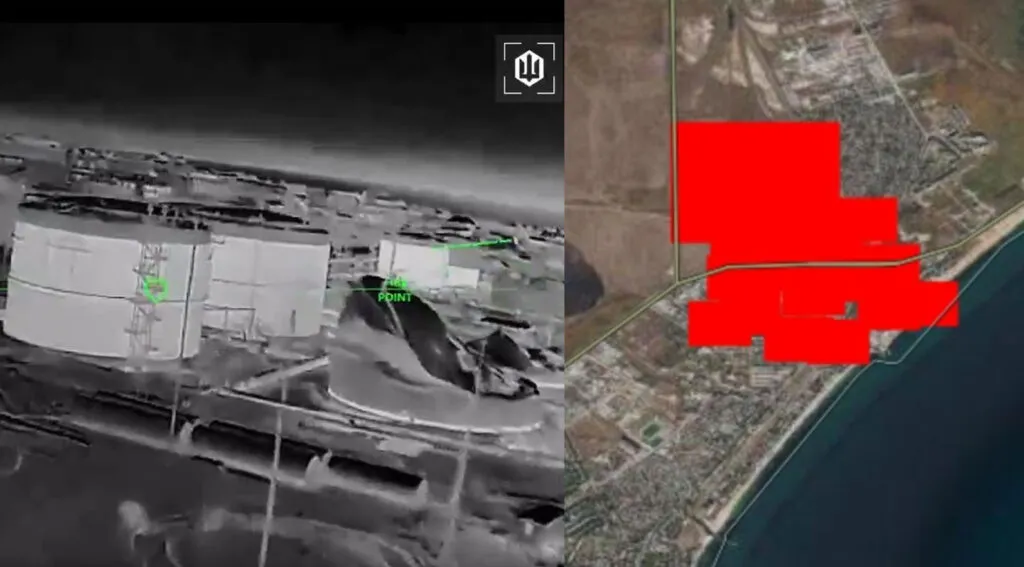
Ukraine Unleashes Drone Blitz, Crippling 40% of Russia's Oil Exports Ukraine is systematically dismantling Russia's critical oil export network with a wave of long-range drone strikes, targeting terminals that handle nearly half of the Kremlin's seaborne crude shipments in a bid to slash the revenue funding its war machine. In a series of precise attacks over recent days, Ukrainian forces have repeatedly hit major Russian oil hubs on the Baltic and Black Seas. The campaign has focused on the Ust-Luga complex on the Baltic Sea, a vital gateway for Russian fuel, striking it twice within 72 hours and forcing temporary shutdowns [123057][123064]. Another successful strike damaged the Sheskharis oil terminal in Novorossiysk, a facility that handles between 3.5 and 4.5 million tonnes of crude monthly [122400]. Ukrainian officials state these strikes have disabled over 40% of Russia's seaborne oil export capacity [122398]. The strategy aims to choke off a primary source of state income, which has surged due to higher global oil prices, money that is then used to purchase weapons from allies like Iran [123062]. "The goal is to damage a key source of funding for the Russian military," a military analyst said of the coordinated strategy [123057]. The operations demonstrate Ukraine's growing technological reach. Drones have struck targets hundreds of kilometers from the front line, including deep in occupied Crimea where a fuel depot at the Feodosiia Marine Oil Terminal was set ablaze in an attack visible from space [123982]. In a separate tactical victory, Ukrainian forces destroyed advanced Russian air defense systems, including a Buk-M3 and a Tor-M2 launcher, in occupied Luhansk Oblast [123982]. Beyond energy, Ukraine continues to pressure Russian military assets in the Black Sea. In a major escalation, powerful naval drones targeted the Russian Black Sea Fleet's new flagship, the frigate *Admiral Makarov* [122549]. This follows the combat debut of the Swedish-supplied RBS 15 "sea skimmer" missile, a weapon designed to sink warships that Ukraine has adapted for ground launches [123056]. Despite the offensive campaign, President Volodymyr Zelensky has proposed a temporary "energy ceasefire" to the United States mediators, offering to halt strikes on Russian energy infrastructure if Moscow stops attacking Ukrainian power plants and electrical grids [122336]. Ukraine Strikes Russian Oil Hub, Hunts Air Defenses Deep in Occupied Territory Ukraine Targets Russia's Baltic Oil Lifeline Ukraine Strikes Russian Oil, Targeting Iran's War Profits Ukraine Strikes Key Russian Oil Port—Again Ukraine Hits Key Russian Oil Terminal, But Target Disputed Ukraine Strikes Key Russian Oil Hub and Military Aircraft in Crimea Ukraine Targets Russia's New Black Sea Flagship in Major Drone Strike Ukraine Fires Swedish "Sea Skimmer" Missile in Combat Debut Ukraine Proposes "Energy Ceasefire" After Hitting Russian Oil Ukraine Proposes "Energy Truce" to Russia, Zelensky Says

Global Powers Scramble for Africa's $450 Billion Mineral Prize as New "Scramble" Heats Up
Global Powers Scramble for Africa's $450 Billion Mineral Prize as New "Scramble" Heats Up A new and intense competition for Africa's vast mineral wealth is reshaping the continent's economic and strategic landscape, as world powers seek to secure the critical resources needed for modern technology and green energy. This modern-day "scramble" is driven by geopolitical rivalry and the global shift away from fossil fuels, placing African nations at the center of a high-stakes contest for influence and supply chains [83553]. The race focuses on minerals like cobalt, graphite, lithium, and rare earth elements, which are essential for manufacturing electric vehicle batteries, smartphones, renewable energy systems, and advanced military equipment [123980] [83553]. Unlike historical conquests, this competition is playing out through high-value deals, security partnerships, and infrastructure investments. Russia has recently secured a major foothold, finalizing an agreement with Mozambique for extensive mining rights to cobalt and graphite. Crucially, the deal also grants Russia operational control over the deep-water port of Pemba, providing a strategic naval and trade hub on the Indian Ocean [123980]. Simultaneously, Russia is expanding its military influence in West Africa's Sahel region through its "Africa Corps," gaining leverage with the military governments of Mali, Niger, and Burkina Faso [67411]. This expansion is forcing a strategic rethink by Western powers. The United States and Japan are actively working to build the Philippines into an alternative mineral supplier to reduce reliance on China, highlighting a global pattern of seeking secure sources outside dominant supply chains [123895]. In Africa, the European Union is seeking to strengthen its own partnership with the continent, with a recent summit focusing on trade and critical minerals amid the growing influence of other global players [11355]. Analysts note that the combined forces of geopolitical rivalry and the pursuit of strategic technologies like artificial intelligence are breaking traditional economic rules, making national security a primary factor in trade and investment decisions [123918]. This environment creates both significant opportunity and risk for African nations. Experts warn that without strong coordination, individual countries could be pressured into unfair deals that fail to maximize local benefits [83553]. The long-term impact on global markets and regional stability remains a key question, as the silent race for resources accelerates [123980] [83553]. Russia Secures Key Minerals, Strategic Port in Africa The New Scramble: Africa's Minerals and the Silent Race U.S. and Russia in High-Stakes Scramble for Africa's Sahel EU-Africa Summit Focuses on Trade and Minerals Amid Global Tensions US, Japan Target Philippines to Rival China in Minerals Race AI and Rivalry Redraw the World's Economic Map

Roma Groups Demand Real Power and Policy on World Roma Day
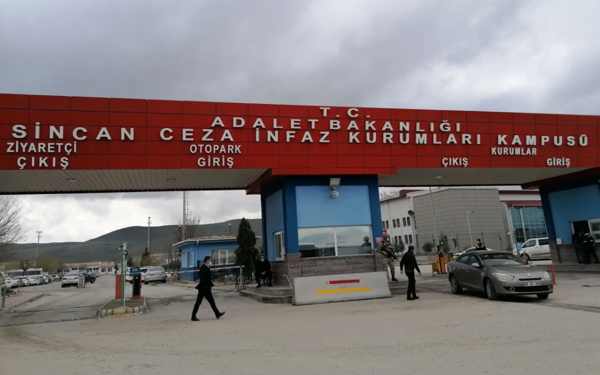
Roma Groups Demand Real Power and Policy on World Roma Day Roma rights organizations marked World Roma Day with a unified call for governments to stop designing policies from afar and instead create binding, concrete plans in direct partnership with Roma communities themselves [124005]. The demand for a shift from talking to tangible action was the dominant theme of the day. The Turkish DEM Party's Peoples and Faiths Commission issued a statement calling for "equal citizenship, justice, and a dignified life" for Roma people, highlighting persistent discrimination and poverty [124006]. Echoing this, the international group Romani Godi stressed that effective policy must be made *with* Roma people, not *about* them, to combat deep-rooted, "multi-layered discrimination" [124005]. Both groups emphasized that discrimination is not uniform and often falls hardest on the most vulnerable within Roma communities. Romani Godi specifically noted that young people, women, and LGBTQ+ individuals face the strongest inequalities [124005]. The parallel discussions extended to questions of identity and recognition. Experts pointed to the struggle of some Dom people, who feel pressured to publicly identify as Romani for wider acceptance. They argue that true equal citizenship requires a system that recognizes and accepts people for who they say they are, without forcing name changes or assimilation [123723]. The collective statements frame World Roma Day not just as a cultural celebration but as a direct challenge to governments. The core message is that achieving justice requires moving beyond symbolic statements to inclusive policymaking and the recognition of self-identified community identity. Turkish Party Marks World Roma Day, Calls for Equality and Justice Roma Rights Group: "Stop Making Policy About Us, Start Making It With Us" Who Must You Be? The Fight for Names and Equal Citizenship


Pentagon Defends Strikes in Venezuela and Caribbean, Citing Law and "Fog of War"
Pentagon Defends Strikes in Venezuela and Caribbean, Citing Law and "Fog of War" The U.S. Department of Defense is mounting a public defense of recent military actions in Venezuela and the Caribbean, asserting their legality while acknowledging the complex realities of combat. In separate statements, Pentagon officials have backed commanders who authorized strikes in Venezuela. A spokesperson confirmed that a senior commander's decision to launch strikes followed a rigorous legal review process, stating the actions were approved by military and civilian lawyers throughout the chain of command [17258]. Defense Secretary John Hegseth later defended a specific incident where U.S. forces struck the same target twice, attributing the decision to the inherent confusion of battle. "It was the fog of war," Hegseth stated, explaining he supported the admiral's choice to fire again to eliminate a perceived threat [17273]. Simultaneously, a senior defense official, Pete Hegseth, stated that ongoing U.S. military operations in the Caribbean are lawful under both U.S. and international law. The statement directly addressed growing questions about the legal foundation for the mission [15064]. The justifications come amid political maneuvering in Washington. Senate Republicans are taking steps to shield the legal authority used for the Venezuela operation, aiming to block a Democratic effort to repeal the 2001 war powers resolution that justified the strikes [50051]. Pentagon Defends Commander's Decision in Venezuela Strikes **Pentagon Defends Second Strike in "Fog of War" Incident** Pentagon Official Defends Legality of Caribbean Operations Senate Republicans Move to Shield Trump's War Powers

Election Systems Under Fire as Ruling Parties Accused of Tilting the Field
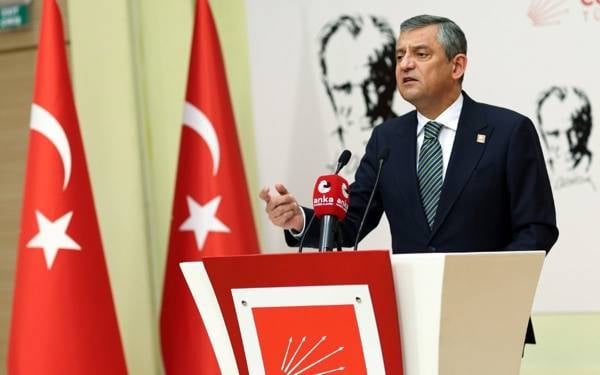
Election Systems Under Fire as Ruling Parties Accused of Tilting the Field From Hungary to Zimbabwe, governing parties are facing accusations of manipulating electoral systems to maintain their hold on power, raising alarms about the integrity of democratic processes. In Hungary, Prime Minister Viktor Orbán’s Fidesz party is favored to win an election this Sunday despite polls showing a new opposition party leading in popular support [124115]. Experts say an election system redesigned during Orbán’s 14-year rule gives more weight to votes in areas where his party is strongest, meaning the party with the most votes may not win the most parliamentary seats [124115]. Critics argue this system is part of a larger structure where state institutions and media also work to support the ruling party [124115]. A similar challenge to electoral fairness is unfolding in Turkey, where the main opposition leader has accused the government of violating the constitution to avoid calling a potential early election because it fears losing votes [124010]. Meanwhile, in Zimbabwe, the ruling party has proposed a draft law that would fundamentally alter how the president is chosen [123444]. The plan would end direct presidential elections by the public and instead have the head of state elected by parliament, where the ruling party holds a majority [123444]. Critics argue the move would concentrate power and weaken democracy [123444]. These developments coincide with major corruption trials for senior former officials from Spain’s two largest political parties, which threaten the parties' credibility ahead of important elections [124018]. In the United States, a sheriff’s seizure of approximately 650,000 cast ballots in California has sparked election integrity concerns, with experts warning the action breaks the secure chain of custody and undermines public trust [123356]. In Djibouti, President Ismail Omar Guelleh is widely expected to win a sixth term in an election where he faces only one little-known challenger, extending his 27-year rule [124134]. Polls Show Opposition Ahead, But Orban's Election System Favors Fidesz Turkish Opposition Leader Accuses Government of Constitutional Violation Zimbabwe Ruling Party Proposes Ending Presidential Elections Spain's Top Parties Face Major Corruption Trials Before Elections California Sheriff Seizes 650,000 Ballots, Sparking Election Alarm One Rival, One Certainty: Djibouti's Leader Eyes Sixth Term


Israel Launches Largest Strike in Lebanon, Threatening Fragile US-Iran Ceasefire
Israel Launches Largest Strike in Lebanon, Threatening Fragile US-Iran Ceasefire A major Israeli military operation in Lebanon has thrown a newly announced ceasefire between the United States and Iran into immediate jeopardy. The strikes, described as Israel's largest coordinated attack in Lebanon since the current conflict began, killed dozens and prompted a stark warning from Tehran that it could abandon the truce [124022]. The ceasefire, intended to reduce regional tensions, was announced just hours before Israeli warplanes struck multiple regions across Lebanon on Thursday. Targets included the southern suburbs of the capital, Beirut, areas in southern Lebanon, and the eastern Bekaa Valley [123847]. The Israeli military stated it targeted the pro-Iranian group Hezbollah, destroying several buildings in Beirut's city center in what its defense minister called a "surprise strike" [124022]. The scale of the assault has created a new crisis, with Iranian officials warning that Tehran could withdraw from the ceasefire agreement [124022]. The deal, a two-week truce centered on the vital Strait of Hormuz, was seen as a fragile but critical diplomatic opportunity to ease tensions in a region critical to global oil supply [123732]. The immediate Israeli strikes have placed that goal in serious danger. The development has prompted urgent diplomatic activity, with Turkey's foreign minister holding phone talks with his Iranian and Qatari counterparts to discuss ways to sustain the fragile pause in hostilities [123836]. International reaction to the ceasefire itself had been cautiously optimistic. Asian nations including Malaysia, Japan, and Australia welcomed the pause, expressing hope it could lead to broader Middle East peace [123614]. Analysts had suggested the agreement could lower the risk of oil supply disruptions, potentially leading to cheaper fuel prices worldwide if it held [123858]. The future of that tentative stability now hinges on the fallout from the attacks in Lebanon and the regional response. Israel Launches Largest Strike in Lebanon, Threatening US-Iran Ceasefire US-Iran Truce Announced; Israel Strikes Lebanon US-Iran Ceasefire: Will Gas Prices Finally Fall? Turkey's Top Diplomat in Urgent Calls to Save US-Iran Ceasefire Truce Tests Tense Waters in Gulf U.S.-Iran Ceasefire: Asia Sees Hope for Broader Middle East Peace


Governments Ditch Old Playbook, Bet Billions on AI and Security in Economic Overhaul
Governments Ditch Old Playbook, Bet Billions on AI and Security in Economic Overhaul A fundamental shift is underway in how nations manage their economies, driven by the twin forces of artificial intelligence and geopolitical rivalry. Governments are abandoning long-held principles of free trade and global rebalancing, pouring massive public funds into domestic technology and manufacturing while rewiring supply chains for national security. This new pattern marks a stark departure from the framework that led to the 2008 financial crisis. That era was defined by simple imbalances: high-saving nations like China funded high consumption in countries like the United States [123918]. The textbook solution called for surplus countries to spend more and deficit countries to save more. Today, that old logic is being broken. Artificial intelligence (AI) is now viewed as a "general-purpose technology" critical to both future economic dominance and military power [123918]. This perception is triggering a global race, with nations like the United States investing heavily to secure leadership in semiconductors and AI development [123918]. Simultaneously, intense strategic competition is forcing a rethink of globalization. Countries are increasingly prioritizing "friend-shoring"—moving production and supply chains to politically allied nations—over pure cost efficiency [123918]. Economic decisions are now inseparable from technology strategy and national security concerns. The combined effect is a world where government intervention and strategic investment are becoming the norm. This realignment is causing widespread economic uncertainty, with markets struggling to price in potential new tariffs and the disruptive impact of AI on productivity [33350]. The transition is also contributing to a persistent "vibecession," where strong economic data clashes with deep public pessimism [33350]. This strategic pivot is not limited to Western nations. China is executing its own radical economic redesign, deliberately moving away from a decades-long dependence on debt-fueled property construction [118216]. Instead of a bailout for its troubled real estate sector, Chinese policymakers are accepting short-term pain to build a smaller, more manageable housing market and redirect investment toward manufacturing and technological innovation [118216][9336]. The goal is to foster long-term public "psychological security" by reducing financial risks and promoting job stability in new industries [9336]. The global result is an economic map being redrawn by government strategy, where the old rules of engagement no longer apply [123918]. AI and Rivalry Redraw the World's Economic Map Economics in 2024: A Strange Brew of Tariffs, AI, and "Vibecession" China's Real Estate Revolution: No Bailout, Just a Rebuild China Shifts Focus from Property to "Peace of Mind"

Ukraine Trades Battlefield Drone-Knowledge for Weapons and Gulf Leverage on Russia
Ukraine Trades Battlefield Drone-Knowledge for Weapons and Gulf Leverage on Russia Ukraine is deploying its elite military specialists to Gulf states in a series of high-stakes barter deals, trading its hard-won expertise in defeating drones for advanced weapons and diplomatic pressure on Moscow [100935][112369][91239]. Facing relentless Russian missile and drone attacks, Kyiv is leveraging its status as the world's most experienced military in countering Iranian-designed unmanned aerial vehicles (UAVs). President Volodymyr Zelenskyy confirmed that Ukrainian teams specializing in hunting drones are now active in several countries, which he described as "a half-dozen" nations without naming them specifically [112369]. The arrangement is direct: Ukrainian specialists teach Gulf and NATO allies how to effectively shoot down drones like the Iranian-made Shaheds, which are also used by Iranian proxies in the Middle East [100935]. In return, Ukraine seeks critical military supplies, specifically mentioning advanced air defense systems such as Patriot missile batteries [112369]. Beyond weapons, Kyiv has proposed a broader strategic exchange. Zelenskyy has offered to deploy anti-drone units to help protect Gulf oil facilities and infrastructure if those states use their significant economic leverage as major buyers of Russian energy to pressure the Kremlin toward peace [91239]. This pragmatic strategy turns Ukraine's battlefield experience into a valuable diplomatic and military resource. Western and Gulf states are eager to learn Ukraine's cost-effective methods for neutralizing the drone threat, ensuring a flow of support back to Kyiv while strengthening allied defenses globally [100935]. The moves highlight a shift in Ukraine's approach, positioning it not just as a recipient of aid but as a provider of vital defense technology [91239]. Kyraine Sells Drone-Knowledge for Weapons Ukraine Trades Air Defense Secrets for Gulf's Drone-Killers Ukraine Offers Gulf States a Deal: Our Drone Hunters for Your Leverage on Russia

Latest Articles
Florida Man Charged with Murder After Allegedly Setting Home Ablaze, Killing Good Samaritan
A Florida man faces first-degree murder and arson charges after a deadly incident in Floral City. William Larsen is accused of setting his own home...
Kate Jackson: "Charlie's Angels" Fame Stole My Life
Kate Jackson, one of the original stars of the hit 1970s TV series "Charlie's Angels," says her sudden fame came at a devastating personal cost. In...
U.S. Warns Travelers: Nepal Protests Prompt Caution Advisory
The U.S. State Department has elevated its travel advisory for Nepal, urging Americans to "exercise increased caution" due to ongoing political unres...
Congresswoman Calls U.S. "Upper Class" the "Enemy" at Rally
U.S. Representative Summer Lee (D-Pa.) described the American "upper class" as the "enemy" during a political rally in Michigan on Saturday. The eve...
D.C. Delays Vote as Teen "Takeovers" Spark Alarm
Washington, D.C., has delayed a key vote on its youth curfew law. This comes amid rising public concern over organized teen gatherings that sometimes...
Senator Slotkin Eyes 2028 White House Run
U.S. Senator Elissa Slotkin (D-Mich.) has not ruled out a presidential campaign in 2028. She stated she would consider a bid if no other Democratic c...
Salting Your Food Could Shorten Your Life, Study Warns Older Adults
A simple habit at the dinner table is linked to worse health for people over 60, new research shows. The study found that adults who always add salt...
White House Blasts Media for "Running with Iranian Demands"
White House Press Secretary Karine Jean-Pierre has sharply criticized major U.S. news organizations. She accused them of incorrectly reporting that I...
Trump's Iran Ceasefire Tested by Reported Attacks Within Hours
A new ceasefire announced by former US President Donald Trump with Iran faced immediate pressure. Reports emerged of drone and missile attacks in the...
Ex-AG Skips Epstein Hearing, Claims Subpoena Invalid
Former Florida Attorney General Pam Bondi has refused to appear for a scheduled congressional interview regarding the Jeffrey Epstein investigation....
Spring Break Trip Ends in Fire: Three Georgia Teens Dead, One Critical
A spring break beach trip turned deadly early Friday morning in a fiery Florida highway crash. Three teenagers from Georgia were killed. A fourth re...
Navy Seeks $3 Billion to Replace Missiles Used in Iran War
The U.S. Navy is asking for an extra $3 billion to buy more Tomahawk missiles. The request comes after many of these long-range weapons were used in...
Comedian Heckled With Slur "Jew" During NYC Show
Comedian Judy Gold was targeted by a heckler who shouted "Jew" as an insult during her performance at a New York City club. The incident occurred at...
Michael Avenatti, Stormy Daniels' Ex-Lawyer, Released to Halfway House
Michael Avenatti, the once-famous lawyer who represented adult film actress Stormy Daniels, has left prison. Federal records show he was moved to a r...
Marriott Ditches Pepsi After 35 Years, Sparking Soda War
Marriott International is switching its primary beverage partner from Pepsi to Coca-Cola. The hotel giant confirmed the change this week, ending a pa...
Judge Blocks U.S. Effort to Deport Man, Rebukes Government Overreach
A federal judge has halted the deportation of Abrego Garcia to Liberia. The ruling delays a complex, 13-month legal case that has moved through court...
U.S. Lawmakers Demand Probe Into Chinese-Linked Nonprofits
Top U.S. lawmakers are calling for an investigation into several American nonprofit groups. They allege the organizations are being used by the Chine...
Ex-Paramedic Accused of Killing Wife with Eye Drops for Insurance Money
A former paramedic in the United States is accused of murdering his wife by slowly poisoning her with a common household product: eye drops. Joshua...
Queen's Final Summer Focused on Youngest Royals, Including Harry and Meghan's Children
A new biography reveals Queen Elizabeth II's personal priority during her last months: creating happy memories with her great-grandchildren. The boo...
From 'Genocide' to 'Chicken': Trump's Iran Reversal Sparks Mockery
Critics of U.S. President Donald Trump first accused him of threatening genocide. Days later, they mocked him as a "chicken" for backing down. The s...