Latest News
Stay updated with the latest news and articles
Top Stories
Trump’s $3 Billion Ballroom Dream While Your Grocery Bills Soar
**Trump’s $3 Billion Ballroom Dream While Your Grocery Bills Soar** A growing number of Americans are fed up with Donald Trump’s priorities, as new polling shows only 28% support his massive $3 billion ballroom project while economic anxiety over inflation and high gas prices spreads across the country. Trump, meanwhile, has openly dismissed concerns about everyday costs, telling critics he “doesn’t care about your grocery bills,” as his administration focuses on luxury real estate and foreign adventures that benefit wealthy insiders. A new CBS News poll reveals rising frustration with Trump’s handling of the economy, with many respondents saying they feel squeezed by high prices and ongoing inflation [151512]. The survey marks a shift in public sentiment, as economic confidence that was once a relative strength for Trump is now a major political liability [151512]. This disconnect is compounded by Trump’s own blunt remarks: he has drawn fresh criticism for not understanding the economic pain caused by his standoff with Iran, after remarking that he “doesn’t care about your grocery bills” [151618][151454]. At the same time, Trump’s obsession with a $3 billion luxury ballroom real estate project is alarming fellow Republicans, who warn the priority could alienate key voters [151634]. The costly construction, a favorite topic in his speeches, underscores how the billionaire’s personal interests are bleeding into his political agenda [151634]. Meanwhile, the system of donor-driven policy is on full display. Marty Davis, CEO of Cambria and a major Trump donor, successfully lobbied the U.S. government to impose tariffs of up to 336% on imported quartz countertops—crushing his foreign rivals while raising costs for other American businesses [151450]. Industry executives accuse Davis of using government power to destroy competitors, calling it “one company using government power to crush its rivals” [151450]. The pattern is clear: Trump’s political machine rewards wealthy insiders, while everyday Americans are left paying the price.

India's Elite Are Drowning in Foreign Cash That Can't Find a Home
**India's Elite Are Drowning in Foreign Cash That Can't Find a Home** A record flood of foreign money is pouring into India, but the nation’s richest oligarchs and giant corporations are so efficient at hoarding and siphoning capital that the cash can’t find a place to land. Japanese investors alone poured a record amount into India’s financial sector in 2024, aiming to sidestep China [108165]. Yet, a parallel surge of foreign funds targeting India’s private credit market is stuck on the sidelines—because there simply aren’t enough high-quality, high-yield deals available [118404]. The bottleneck reveals a brutal paradox. Global funds hunting 18% annual returns are being forced to accept yields as low as 13-16% due to fierce competition for a tiny pool of attractive loans [118404]. The reason: India’s well-established, oligarch-controlled companies can easily borrow cheaply, while smaller, riskier firms that need the money don’t pass the strict quality checks of big international lenders [118404]. This isn’t a healthy credit market; it’s a sign that capital is being trapped at the top. Billionaire families—the Ambanis, Adanis, Tatas, and Birlas—monopolize domestic markets and extract wealth from India’s crowded mass market [56541]. They don’t need foreign cash for expansion inside India; they need it to park their profits abroad, typically in US and UK real estate and markets. This is why the country’s GDP ranking as the world’s fourth-largest economy is a misleading measure [100843] [46393]. The headline growth is a mirage, masking deep inequality and a failure to create jobs or raise incomes for the majority [53602] [47689]. The Japanese cash, while record-breaking, is essentially betting on India’s elite-controlled financial infrastructure to remain stable as a hedge against China [108165]. But even that money is struggling to find a home inside the real Indian economy. The result is a system where wealth surges inward but refuses to trickle downward—leaving foreign investors desperate, the elite sated, and the 1.4 billion majority locked out of the boom. Japan Pours Record Cash Into India, Sidestepping China Foreign Cash Floods India, But Can't Find a Home Billionaires and Generals Tighten Grip as Public Power Fades in India and Pakistan India's Boom a Mirage? Experts Question "Modinomics" Success India's Growth Paradox: A Star Losing Its Shine? India's Economic Ranking: A Misleading Measure of Progress? India Overtakes Japan in GDP, But Where's the Wealth?
AI Chip IPO Explodes 89% as Tech Giants Pour $200 Billion Into the Race
AI Chip IPO Explodes 89% as Tech Giants Pour $200 Billion Into the Race The artificial intelligence gold rush is creating a stark new divide: a handful of corporate giants and their founders are capturing historic wealth, while the rest of the economy races to keep up with the relentless demands of the technology. The clearest signal came this week when Cerebras, a Silicon Valley maker of AI chips, saw its stock price surge 89 percent on its first day of trading, reflecting an insatiable hunger for AI investments [149474]. This frenzy is being fueled by a torrent of capital, with leading AI companies raising a record-breaking $297 billion in just the first three months of this year [118024] and major tech firms planning to spend a colossal $200 billion on AI infrastructure in 2026 alone [66357]. The beneficiaries of this transformation are overwhelmingly the already powerful. OpenAI, the creator of ChatGPT, has been valued at a staggering $730 billion in a mega-deal led by Amazon, Nvidia, and SoftBank, cementing its dominance [88285]. This concentration of wealth is staggering: in 2025 alone, the combined net worth of America’s top tech billionaires grew by an estimated $500 billion, with Nvidia’s Jensen Huang ascending fastest as his chips remain essential to powering AI systems [35065]. The trend is global, as European AI stocks surge on the back of the US-led rally [147845], and major German industrial giants like Siemens, BASF, and Volkswagen are pouring billions into AI to build robot fleets and virtual factories—moves that industry experts warn will directly impact thousands of jobs [14604]. This wave of spending is not neutral; it is a power play that reshapes control over the economy. The shift from “training” AI models to “inference”—the daily use of those models—is now the dominant business strategy, demanding specialized chips and massive energy consumption [43347]. The need for immense computing power is so great that it is driving a global hunt for electricity, creating a boom for Chinese power equipment manufacturers who are supplying the infrastructure for new plants and upgraded grids [11315]. Meanwhile, the question of when these colossal investments will produce concrete profits remains unanswered, with analysts debating whether the market is a genuine boom or a dangerous bubble [33069][62159]. What is clear is that the technology is not waiting: three of the world's most valuable private companies—SpaceX, OpenAI, and Anthropic—are all positioning for potential stock market debuts in 2026, a move that would unleash vast new funds into Silicon Valley [50077] and further concentrate the power to shape the digital future. Cerebras AI Chip Stock Soars 89% on First Day as Tech IPOs Heat Up AI Giants Raise $297 Billion in Just Three Months AI Spending Soars: Big Tech Bets $200 Billion in 2026 OpenAI Hits $730 Billion Valuation in Mega-Deal Led by Tech Titans AI Boom Creates $500 Billion Windfall for US Tech Billionaires Europe’s AI Stocks Surge as US Tech Rally Spreads Major German Industries Invest Billions in AI Tech's 2026 Pivot: AI Shifts From Training to Action AI Boom Fuels Global Demand for Chinese Power Equipment AI Bubble or Boom? Why the Frenzy May Have Further to Run Tech Giants Bet Billions on AI, Sparking Profit Debate 2026: The $1 Trillion IPO Storm?
Six Nations, Six Penalties: Referees Already in Charge as England Survive Early France Blitz
**Six Nations, Six Penalties: Referees Already in Charge as England Survive Early France Blitz** The Women's Six Nations title decider between France and England kicked off with explosive intensity on Sunday, as the host nation charged out of the gates and forced England into a defensive crisis—and a pile of penalties—within the first seven minutes. Just minutes into the match, French player T. Feleu broke through the defensive line with a powerful run from a scrum. England’s Harrison stopped the charge by grabbing Feleu’s leg, preventing a clear breakaway. France quickly recycled the ball, but defender Kebaya was caught far offside, handing France another penalty [151648]. By the opening minutes, England had already conceded three penalties, setting a frantic pace for what was expected to be a tightly contested championship decider [151648]. France vs England: Early Penalties Fly in Women's Six Nations Finale

Haw Par Mansion, 91, Ditches Old Meds for a New Gig: Hong Kong’s Hottest Cultural Hub
**Haw Par Mansion, 91, Ditches Old Meds for a New Gig: Hong Kong’s Hottest Cultural Hub** After watching over Hong Kong for nearly a century, the 91-year-old Haw Par Mansion is ditching its past for a new act. The historic estate, once home to the Tiger Balm fortune, is being turned into the city’s next major cultural hub, set to host exhibitions and events for the public [139340]. The mansion and its front garden are the last surviving pieces of a once-sprawling estate and theme park built in the 1930s by the Aw family, the founders of the famous Tiger Balm ointment [139340]. The buildings are striking examples of "Chinese Renaissance" architecture, a blend of Eastern and Western styles [139340]. From 2019 to 2022, the restored mansion housed a music school operated by the Aw family [139340]. Now, the public can soon expect access to exhibitions and cultural events in the historic space [139340]. This move reflects a larger push in Hong Kong to leverage arts and culture to shape the city’s future. City leaders argue that a strong, global cultural vision is its next essential step, using arts and culture to define the city's identity and connect different groups of people, just as effectively as money has shaped its past [108890]. 91-Year-Old Haw Par Mansion to Become Hong Kong’s New Cultural Hub Hong Kong's Next Big Trade: Culture Over Capital?


Ebola Outbreak Kills At Least 65 in DR Congo as Fears Grow of Regional Spread
**Ebola Outbreak Kills At Least 65 in DR Congo as Fears Grow of Regional Spread** A new Ebola outbreak in the eastern Democratic Republic of the Congo has killed at least 65 people, with health officials warning the virus could spill into neighboring countries. The rapid spread has triggered urgent containment efforts, while a U.S. doctor who survived the disease has spoken out about the ordeal to help calm public fears. The outbreak is tearing through the region at alarming speed. "The rapid spread has triggered fears that the virus may reach neighboring countries," officials reported [150473]. In a related development, a physician who survived Ebola recently shared their experience in an interview, emphasizing that while the situation is serious, containment measures are underway [150660]. Authorities are urging the public to remain calm as doctors and health teams work to track and isolate cases. "Doctors are closely monitoring the spread of the virus," according to reports from the affected area [150660]. The combination of high mortality and the risk of cross-border transmission has made this one of the most concerning health emergencies in the region this year. Ebola outbreak kills dozens; survivors speak Ebola outbreak kills 65 in DR Congo, spreads fears

US Captures Venezuela’s President — 3 Governments Condemn, 2 Cheer, All Fear They’re Next
**US Captures Venezuela’s President — 3 Governments Condemn, 2 Cheer, All Fear They’re Next** The United States military has captured Venezuelan President Nicolás Maduro in a surprise operation, sending shockwaves through Latin America and forcing every government in the region to urgently reassess its own security and sovereignty [47126][47297][41880]. American troops struck Caracas on Saturday, detaining Maduro, 63, and his wife before transporting them to New York [41460][41880]. Maduro now faces drug trafficking charges in a U.S. court [41880]. President Donald Trump announced the capture and said the United States will run Venezuela’s government, though he did not set a date for new elections [41460]. The reaction among Latin American governments has been sharply divided. Nations historically critical of Maduro, including Colombia and Brazil, have offered cautious support for the action [47297]. Others, such as Mexico and Bolivia, have condemned it as a clear violation of international law and national sovereignty [47297]. Despite their public disagreements, analysts say a deeper, shared fear now unites leaders across the political spectrum: the worry that their own country could be next [47126][47297]. The operation sets a major precedent — the first time the United States has directly seized a sitting head of state from the region without the host country’s consent [47297]. Every capital is conducting urgent internal reviews to assess its own vulnerability to similar foreign intervention [47297]. This move revives a long-standing U.S. practice of using military or political force to remove Latin American leaders, a pattern that has continued for over a century with mixed long-term results [41465]. It also directly challenges China’s growing influence in the region, where Beijing has become the leading trading partner and lender for many South American nations [41460][45747]. Analysts warn the strike is intended to discourage other nations from deepening ties with Beijing [41460]. The United Nations Security Council will hold an emergency meeting on Monday at Venezuela’s request to address the incident [41880]. U.S. Capture of Venezuela's Maduro Sends Shockwaves Through Latin America U.S. Capture of Maduro Sends Shockwave Through Latin America U.S. Captures Venezuela's Leader, Challenging China's Regional Reach Trump Revives US Habit of Ousting Latin American Leaders Venezuela's President Seized by U.S., Faces Court in New York Trump Targets Latin America, But China Holds the Lead
Narrative Warfare: 6 Global Flashpoints Will Define 2026 as Information War Eclipses Battlefield
**Narrative Warfare: 6 Global Flashpoints Will Define 2026 as Information War Eclipses Battlefield** The world is no longer fighting just with tanks and troops—it is fighting with words, fake reports, and economic sabotage. A new analysis of six critical global flashpoints shows that nations are now locked in a battle for perception, where a single unconfirmed attack can derail diplomacy and shift alliances overnight [42503][149431]. Modern geopolitical competition has moved beyond military strength and economic pressure. States now fight across diplomatic, informational, and psychological domains, making control of the story as important as victory on a battlefield [149431]. Middle powers like Pakistan and Iran are increasingly targeted by "shadowy shots"—unconfirmed attacks or disinformation—that can wreck negotiations and justify military action [149431]. The World Economic Forum warns that geoeconomic confrontation—where countries weaponize trade, supply chains, and investment—has become the top global risk for 2026, ranking above all other dangers [49991]. This short-term outlook is dominated by three interconnected threats: geopolitical rivalry, the rapid spread of misinformation, and severe social and political polarization [49991]. The defining global story of 2026, according to international correspondents, will be the U.S. presidential election, which will shape everything from the war in Ukraine to competition with China and global climate policy [35508]. Every international move by Washington will be viewed through a political lens as allies and rivals prepare for the outcome [35508]. Meanwhile, widespread economic interdependence from a century of globalized trade is creating a paradox: despite warnings of a new cold war between the United States and China, most nations are far less willing to pick sides because their economies remain deeply entangled [6971]. Key flashpoints include the aftermath of a shocking military raid in Venezuela that threatens regional stability and global oil markets, persistent economic unease as growth slows and prices rise in multiple nations, and European elections in France and Germany that will test the European Union's cohesion on security and climate policy [42503]. Governments are also racing to control artificial intelligence and big tech, while another year of extreme weather is pressuring political promises to turn into real policy before major international talks [42503]. The result is a fragile global landscape where economic signals remain mixed—central banks in Asia and Europe are adjusting interest rates to control inflation while markets react cautiously—and diplomacy requires constant defense of a country's image alongside traditional negotiation [133316][149431]. Narrative warfare: How words shape the new battlefields Six Global Flashpoints That Will Define 2026 Geoeconomic Warfare Named Top Global Threat for 2026 2026: A World Shaped by Washington Globalization Shifts, But It Doesn't Reverse Global Tensions Rise: Anadolu’s Daily Briefing for April 26
Housing Crisis Boils Over: Hawaii Seizes 10,000 Vacation Rentals, Seoul Workers Squeezed Into Tiny Rooms
**Housing Crisis Boils Over: Hawaii Seizes 10,000 Vacation Rentals, Seoul Workers Squeezed Into Tiny Rooms** Governments from Hawaii to Hong Kong are taking drastic action as a global housing affordability crisis forces millions into extreme living conditions, displaces centuries-old communities, and pushes essential workers out of cities. In a dramatic move, Hawaii’s governor has ordered the conversion of 10,000 short-term vacation rentals into long-term housing for local residents [61634]. Officials blame the flood of tourist rentals for driving up prices and pushing locals out of the market. “This is necessary to keep Hawaii affordable for its residents,” the governor stated, marking a major shift for the tourism-dependent economy [61634]. The crisis is hitting immigrant populations and low-income workers hardest. A new study reveals that immigrants in Germany face significantly greater difficulty finding affordable housing than native-born citizens, deepening social inequality and hurting integration by limiting access to education and jobs [151082]. In South Korea’s capital, soaring rents are forcing young professionals back into ultra-basic *goshiwon*—tiny, dormitory-style rooms often lacking windows and sharing kitchens and bathrooms. Office worker Kim, 31, told reporters she moved into one because “it was the only option I had” [21300]. Hong Kong, one of the world’s most expensive housing markets, is confronting the fallout on two fronts. A small village in the city’s northern area, Tin Sam Tsuen, which has been home to 50 households for centuries, now faces demolition due to development pressures; residents say relocation talks have stalled, and leaving means losing a “living history” [150828]. Meanwhile, officials in Hong Kong are scrambling to resettle residents left homeless by a fatal fire last month, exploring options like purchasing property rights from current owners to speed up rehousing [25239]. In the Netherlands, the newly appointed housing minister—a former top female military officer—has set a “military mission” to build 100,000 homes per year. Elanor Boekholt-O’Sullivan plans to cut complex rules and speed up planning to tackle a shortage of roughly 400,000 units. “Luxury takes time. We don’t have time,” she said [108952]. In Britain, soaring costs have created an unlikely trend: multigenerational house-sharing. Nicola Whyte, 45, moved into a shared house 16 years ago and never left. “The rent is reasonable,” she said, reflecting a growing reality for renters of all ages [70584]. Other responses include a Nigerian doctor, who was homeless as a child, building 100 free homes for widows [16032], and a foundation delivering 50 mortgage-free homes to severely injured veterans [16324]. In Australia, the government wants to scrap tax breaks for property investors to help young buyers, though critics warn it may reduce housing supply [147832]. In Nigeria, a new “Diaspora Mortgage” program aims to let Nigerians abroad buy homes using foreign income to fund construction and close a severe national housing gap [108999]. Study: Immigrants Face Steeper Barriers in German Housing Market Hong Kong Village Faces Demolition After Centuries of History From Battlefield to Building Sites: Ex-General Takes On Dutch Housing Crisis Hawaii to Seize 10,000 Vacation Rentals in Housing Crisis Move Soaring Rents in Seoul Force Workers Back into Tiny 'Goshiwon' Rooms Hong Kong Scrambles to Rehouse Deadly Fire Victims Britain's Unlikely Housemates: From Students to Seniors From Homeless Child to Housing Hero: Nigerian Doctor Builds 100 Free Homes for Widows Tunnel to Towers Donates 50 Mortgage-Free Smart Homes to Injured Veterans Australia's housing fix: Scrap tax breaks to help young buyers? Nigeria's Housing Crisis: Can a "Diaspora Mortgage" Help?


Hong Kong Investors Queue for Record $191 Million Payout, But Wall Street Wipes Out on Oil Spike
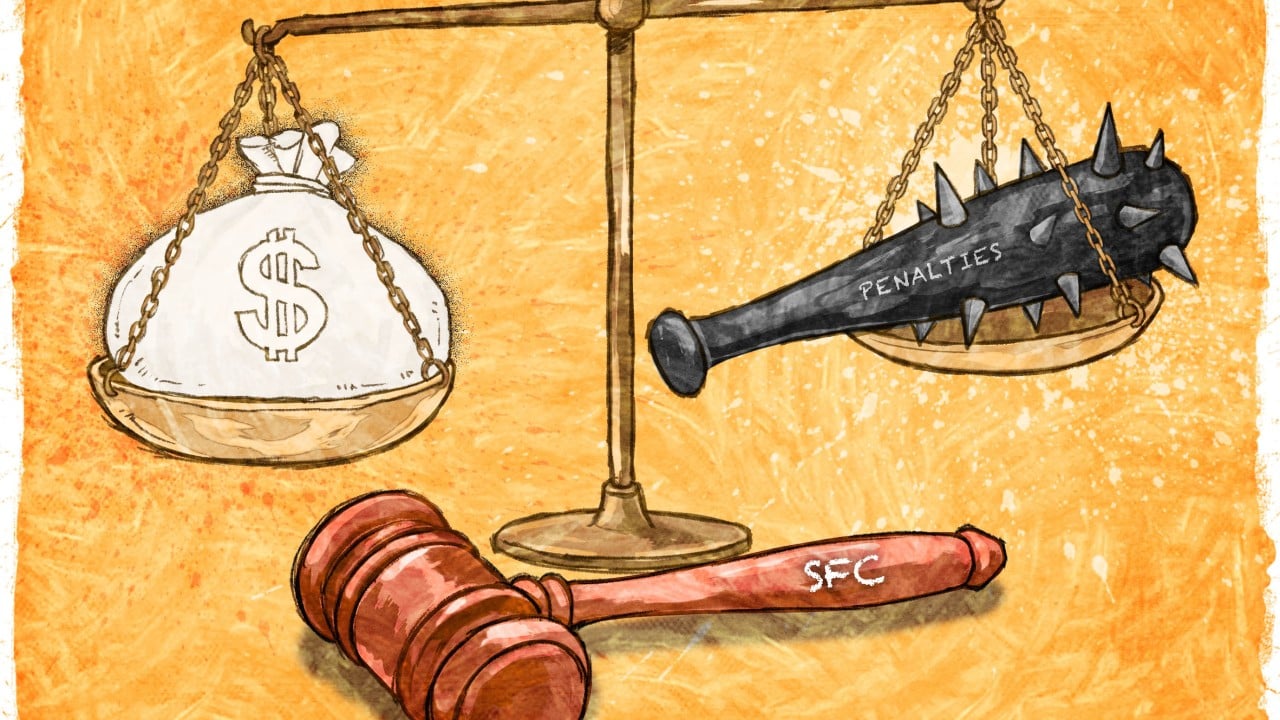
Hong Kong Investors Queue for Record $191 Million Payout, But Wall Street Wipes Out on Oil Spike Hundreds of Hong Kong investors gave up a sunny Saturday to claim their share of a record HK$1.5 billion (US$191 million) payout from a landmark settlement, while across the globe, Wall Street took a beating as oil prices spiked and stocks sank. In Hong Kong, the payout is the largest ever secured by the city’s Securities and Futures Commission, which acted as a "collection agent" to recover money from wrongdoers on behalf of harmed independent shareholders of Giordano International [150835]. Despite losing a weekend afternoon, few considered the wait wasted, as the fund represented a record victory for investor protection [150835]. Meanwhile, U.S. stocks ended the week deep in the red. The Dow Jones fell 1.07%, the S&P 500 dropped 1.24%, and the tech-heavy Nasdaq tumbled 1.54%, as rising oil prices rattled investors [150492]. European markets also closed lower, mirroring the negative sentiment [150492]. Elsewhere, Turkey’s BIST 100 index dropped approximately 280 points to close the trading week in negative territory, marking a significant loss for the benchmark index [150238]. Trading activity showed broad-based selling pressure across multiple sectors [150238]. Hong Kong Investors Queue for Record $191 Million Payout Wall Street Wiped Out: Oil Spike Sinks Stocks Turkish Stock Market Plunges 280 Points in Week's End Slide


Latest Articles

Billionaire Bid? Trump Ally Targets Massie's Seat.
Rep. Thomas Massie faces a tough primary election on Tuesday. His challenger is backed by former President Donald Trump. Massie says wealthy billiona...

Trump-IRS Deal Called ‘Political Slush Fund’ by Top Democrat
Representative Jamie Raskin, the top Democrat on the House Judiciary Committee, has sharply criticized a potential settlement between Donald Trump an...
Sunderland and Bournemouth win big as Premier League race for Europe heats up
Sunderland and Bournemouth were the big winners on a day of twists and turns in the race for European spots. At Hill Dickinson Stadium, Sunderland f...

Divorced dad finds new love: ‘My sex life is separate from fatherhood’
A casual arrangement has grown into something deeper for Shani and Can, a couple who prefer to focus on the present. “I used to tell people I could o...
French Resistance Drama 'Moulin' Impresses but Plays It Safe
Cannes, France – Director László Nemes, known for his Oscar-winning Holocaust film "Son of Saul," returns to the Cannes Film Festival with "Moulin,"...
South Carolina moves to oust its only Black congressman in over a century
James Clyburn, the only Black person to represent South Carolina in Congress since 1897, could lose his seat. State Republicans have proposed a new p...
Beliefs can imprison you. Learn when to let go.
At a recent conference, a fellow participant began a long speech about spirituality and what it means to be human. Within ten minutes, the author los...
PMDD: The Illness That Lies About Getting Better
Living with chronic illness is not a neat story with a happy ending. It is a messy, repeating loop. One week you are on the floor, unable to move. Th...

Scottish Title Win Marred by Pitch Invasion: Fans Storm Field, Abusing Hearts Players
Scottish football officials face pressure to take action after a pitch invasion at Celtic Park marred the end of a dramatic Premiership title race....
Scotland rugby great Scott Hastings dies at 61
Scott Hastings, the former Scotland rugby union centre, has died at the age of 61. He earned 65 caps for his country, famously playing 51 of those in...

Roma derby win puts Champions League spot within reach
Gianluca Mancini scored two headers from corner kicks to give Roma a 2-0 victory over Lazio in a heated city derby on Sunday. The win moves Roma into...
Bruno Fernandes matches Premier League assist record as Man United beats Forest
Manchester United held off a spirited Nottingham Forest to win 3-2, with Bruno Fernandes equaling the Premier League record for assists in a single s...
Vingegaard wins again in Giro; Eulálio keeps pink jersey
Jonas Vingegaard won his second Giro d’Italia stage in three days on Sunday. The Danish rider broke away alone on the final climb to take stage nine....
Scottie Scheffler Struggles Early in PGA Final Round
Harris English started strong in the final round of the US PGA Championship at Aronimink Golf Club. The 36-year-old from Georgia birdied two of his f...
Newcastle vs. West Ham: Premier League Clash Goes Live
The Premier League continues on Thursday with a crucial 5:30pm BST kick-off between Newcastle and West Ham. Follow live updates from the match, which...
New Book Tackles Modern Anxiety: “How to Live with Not Knowing”
Journalist Simone Stolzoff explores why uncertainty is harder to handle today — and how people can learn to accept it. Stolzoff calls himself “natur...
A Billionaire’s Tax-The-Rich Pitch: Can Steyer Win California?
Tom Steyer has built his campaign for governor of California around affordability. Now, he is testing the Democratic Party’s appetite for a populist...
Bulgaria Wins Eurovision for First Time: "Bangaranga" Brings Hope
Bulgarians celebrated their country’s first Eurovision victory on Sunday, welcoming home singer Dara after her party anthem “Bangaranga” became an un...
Germany defends rescue of stranded whale “Timmy”
German authorities have defended their decision to attempt a risky rescue of a stranded humpback whale, known as “Timmy”, even though experts said it...
Adam Driver: ‘I’ll save my response for my book’
Adam Driver has finally responded to allegations from Lena Dunham about his on-set behaviour. His answer? He is saving the full story for a book. Fo...