Latest News
Stay updated with the latest news and articles
Top Stories
Iran’s Oil Burns as "Ceasefire" Fails: $1 Trillion Hit to Global Economy as Ships Blaze in Strait
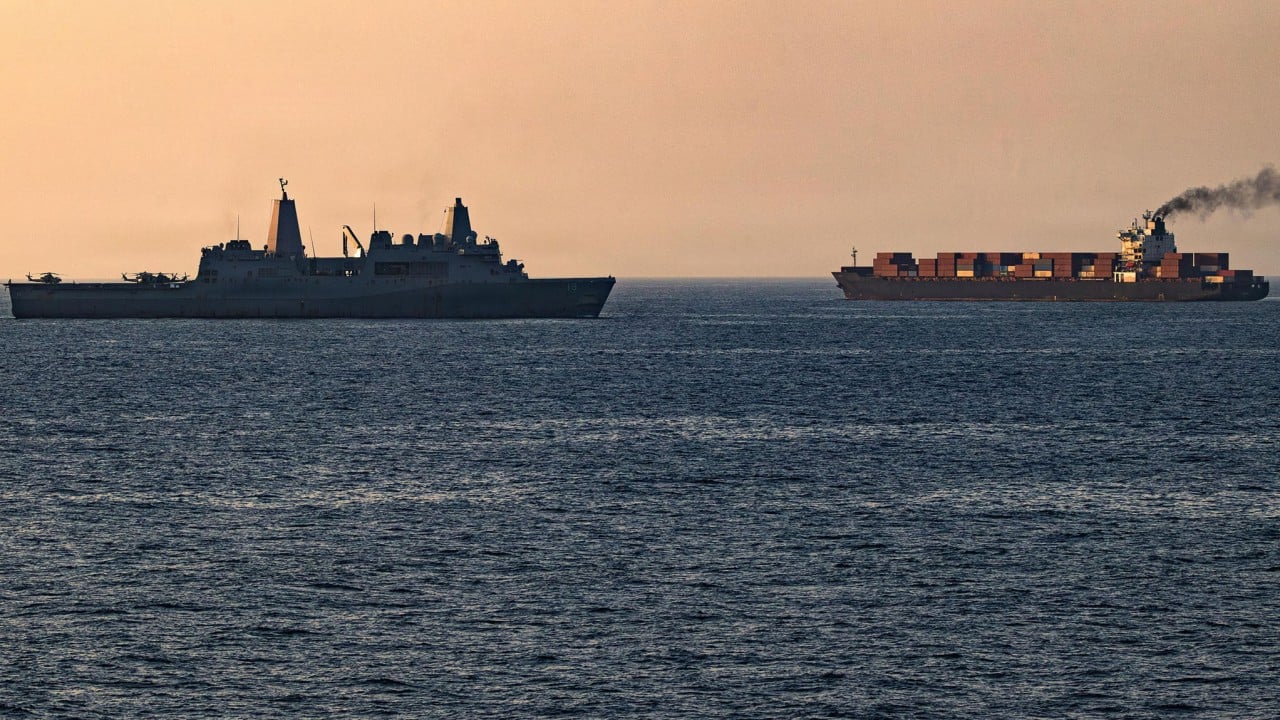
Iran’s Oil Burns as "Ceasefire" Fails: $1 Trillion Hit to Global Economy as Ships Blaze in Strait The ceasefire between the United States and Iran is a lie. Ships are still on fire in the Strait of Hormuz, an oil slick from a bombed Iranian warship is heading for a protected wetland, and the global economy is staring at a $1 trillion hit from the energy crisis [135681][123126][135286]. A damaged Iranian drone carrier, the Shahid Bagheri, was struck by a U.S. warplane. It has been leaking heavy fuel oil, and the slick now threatens the Hara mangrove forest, a critical habitat for migrating birds and endangered turtles [123126]. The war continues to disrupt the vital Strait of Hormuz shipping lane, with a blockade severely impacting global trade [103486]. The economic fallout is staggering. A new analysis warns the Middle East oil and gas crisis will add $1 trillion in extra costs to the world, while petroleum companies rake in massive profits from higher fuel prices [135286]. The conflict has exposed the fragility of the global energy system, which was already under pressure from rising demand and a slow shift to renewable energy [134718]. The violence has spread beyond Iran. Strikes have hit Lebanon and several Gulf nations, including Kuwait and the United Arab Emirates (UAE), after Israel and the United States launched attacks on Iran [90697]. The UAE announced it will leave the Organization of the Petroleum Exporting Countries (OPEC) amid the growing tensions [135303]. Gulf states are also revoking citizenship from residents they label “traitors” in what analysts question as a genuine security measure or a tool to silence opposition [134301]. The fighting is pushing people out of the region. A rising number of refugees are fleeing into Armenia, adding pressure on a country already facing economic and security challenges [134382]. An Iranian athlete in Australia has refused to return home and is seeking asylum, as the United States warned of its “most intense” day of military strikes yet [98283]. In Malaysia, private hospitals expect a surge in medical tourists from the Middle East as patients flee safety concerns in hubs like Dubai [105998]. Despite the stalled peace talks and ongoing stalemate, life in Tehran has returned to a semblance of normal since the ceasefire was declared. Iranian society is undergoing a major transformation that began months ago and has accelerated in recent weeks [135347]. Muslim families across the region still observed Eid al-Fitr prayers under the shadow of distant conflict [107728]. A senior Iranian military officer now claims his country controls the outcome of the war, demanding the withdrawal of U.S. forces from the Gulf and payment for all damages [103486]. The crisis is forcing a "complete reset" of the Gulf region, with looming military reassessments and families reconsidering whether to stay or move away due to security concerns [98764]. Sources: Ships on Fire: Why the “Ceasefire” in Iran Looks Like War Middle East crisis could cost global economy $1tn as oil firms rake in 'obscene' profits UAE Quits OPEC: Fallout from Iran War Iran’s Quiet Revolution: Life Returns to Normal in Tehran Eid Prayers Echo as War Thunder Rolls in Middle East Iran War Exposes Fragile Global Energy System Middle East Conflict Diverts Medical Tourists to Malaysia Oil Slick From Bombed Iranian Ship Heads for Protected Wetland Gulf states revoking citizenship of "traitors" amid Iran-Israel tensions Middle East Conflict Widens: Strikes Hit Lebanon, Gulf States Gulf Region Braces for "Complete Reset" After Iran Attacks Iran Conflict Sparks Refugee Crisis in Armenia Iranian Athlete Seeks Asylum in Sydney as U.S. Warns of Major Strikes Iran Claims Control as Gulf Blockade Shocks World Economy
Unemployment Drops to 8.1% in Turkey, but 31.5% of Workers Are Now "Idle" – Job Market Crisis Hides Behind Official Numbers
Unemployment Drops to 8.1% in Turkey, but 31.5% of Workers Are Now "Idle" – Job Market Crisis Hides Behind Official Numbers Turkey’s official unemployment rate fell to 8.1% in March, but a much wider measure of labor underutilization – called “idle labor” – surged to 31.5%, exposing a deep weakness in the country’s job market that policymakers aren’t fixing [1]. The Turkish Statistical Institute (TÜİK) reported that the drop in the headline jobless rate hides a grim reality: more than three out of every ten workers have either stopped looking for work or are stuck in part-time jobs they don’t want [1]. Economists warn that the official figure no longer reflects the real pain on the ground [1]. The data also reveals a massive gender gap. In March, 66% of Turkish men held jobs, but only 31.5% of women were employed – less than half the male rate [1]. This dynamic is fueling economic strain for millions of households, even as the government points to the falling unemployment number as a sign of recovery [1]. Meanwhile, a top Turkish minister, Trade Minister Ömer Bolat, warned that the global economy faces a new risk: over-reliance on a handful of countries for critical minerals like lithium and cobalt, which are essential for electric vehicle batteries and renewable energy storage [2]. Bolat called this dependency a “vulnerability” and said rising protectionism and export controls threaten supply chains for the green energy transition [2]. “This dependency is a vulnerability,” Bolat said. Without diversified sources and international cooperation, the shift to a greener, more digital economy could slow down [2]. The double blow – a broken labor market inside Turkey and fragile supply chains abroad – highlights how the current global economic system leaves workers exposed while profits remain concentrated in the hands of a few. Sources: Turkey’s jobless rate falls to 8.1%, but “idle labor” jumps to 31.5% Global Economy at Risk: Lithium, Cobalt Dependency Creates ‘Critical’ Vulnerabilities

Shock Move: India & New Zealand Dump US-China Dependence with 15-Year Trade Pact
**Shock Move: India & New Zealand Dump US-China Dependence with 15-Year Trade Pact** India and New Zealand have finally signed a free-trade agreement after 15 years of stalled talks, marking a dramatic shift to break away from reliance on both the United States and China. The deal gained urgent momentum as Indian exporters face major disruptions from the closure of the Strait of Hormuz and skyrocketing American tariffs that have shattered supply chains [135100]. For New Zealand, the pact is a strategic play to reduce its heavy dependence on China, its largest trading partner [135100]. The agreement is part of a wider global scramble to secure new trade lifelines. Turkey has simultaneously launched an overland route through Saudi Arabia, offering a critical alternative for shipments threatened by instability around the Strait of Hormuz—a narrow passage used by tankers carrying about one-fifth of the world’s oil [122456]. The new Saudi corridor allows cargo to bypass the strait entirely, moving overland across Saudi Arabia for shipment from Red Sea ports [122456]. Elsewhere, Kenya and Morocco have signed 11 new agreements covering agriculture, health, and the "blue economy" to unlock investment and ease trade between the two nations [125813]. Nigeria and Turkey have also inked nine new deals to more than double their trade volume to $5 billion, covering energy, mining, and defense [61140]. Egypt and Türkiye have set an even bigger target—boosting their current $9 billion annual trade to $15 billion or higher [67240]. In a separate high-stakes barter, Ukraine is trading its hard-won battlefield expertise for vital supplies. Kyiv is sending specialists to Gulf and NATO nations to teach them how to shoot down Iranian-made drones, receiving more weapons and financial support in return [100935]. President Zelenskyy confirmed Ukrainian anti-drone teams are now deployed to a half-dozen Gulf states, with Kyiv seeking advanced Patriot air defense systems in exchange [112369]. The offer is direct: Ukraine shares its low-cost methods to defeat drones that threaten Gulf oil facilities, expecting partners to use their economic leverage over Moscow to push for peace [91239]. India and New Zealand Sign Trade Deal to Cut Reliance on China and US Turkey Opens New Trade Lifeline to Bypass Gulf Chokepoint Kenya and Morocco Sign 11 Deals to Boost Trade Nigeria and Turkey Target $5 Billion Trade Deal Egypt and Türkiye Target $15 Billion Trade Surge Ukraine Trades Drone-Knowledge for Weapons **Ukraine Trades Air Defense Secrets for Gulf's Drone-Killers** **Ukraine Offers Gulf States a Deal: Our Drone Hunters for Your Leverage on Russia**


PLANET GOES BERSERK: January Smashes Records with $120 Billion in Extreme Weather Chaos
**PLANET GOES BERSERK: January Smashes Records with $120 Billion in Extreme Weather Chaos** The World Meteorological Organization (WMO) has declared January a month of unprecedented global weather extremes, with simultaneous deadly floods, heatwaves, and winter storms striking multiple continents and costing over $120 billion in damages [63783][35699]. The month’s catastrophic flooding and landslides across Southeast Asia have killed more than 1,400 people, with Indonesia, Thailand, Malaysia, and Sri Lanka suffering the highest tolls [17624][25217]. In Indonesia, the death count has reached 995, with 226 still missing, while Sri Lanka reports 640 dead and 211 missing [25217]. Combined, nearly 4 million people across the region have been affected, with rescue crews still digging through debris and delivering aid to isolated communities [25217][17624]. Last year was Earth’s third hottest on record, but scientists say the real story is the clear influence of climate change driving these extreme events [49594]. The WMO stated that the January disasters are not isolated incidents but part of a dangerous pattern of more frequent and intense weather linked to a warming planet [63783]. The financial toll is staggering. A new report from Christian Aid lists cyclones and floods in Southeast Asia as the costliest disasters, causing over $25 billion in damage and killing more than 1,750 people [35699]. California wildfires added another $60 billion, while China’s floods caused $12 billion in damage [35699]. Experts warn these extremes may become the new normal. "Rising temperatures are changing global weather patterns, leading to more powerful and unpredictable events," climate scientists say [49594]. The combined force of water and earth has left communities across Asia reeling, with damaged infrastructure and ongoing access problems complicating rescue efforts [17624][20084]. Emergency crews are now in a desperate race against time, focusing on finding survivors and delivering essential aid as governments and international organizations mobilize a major relief effort [20084]. January Shatters Weather Norms with Global Extremes 2025: The Year the Weather Broke Deadly Floods and Landslides Claim Over 1,400 Lives Across Southeast Asia Massive Floods Kill Over 1,600, Affect Millions in Asia Deadly Floods and Landslides Claim Over 1,500 Lives Across Asia Climate Disasters Cost Over $120 Billion in 2025 2025's Top 10 Disasters: A $120 Billion Year of Extreme Weather

Oil Refinery Burns, Gas Lines Grow—Global Fuel Chaos Hits $115 a Barrel
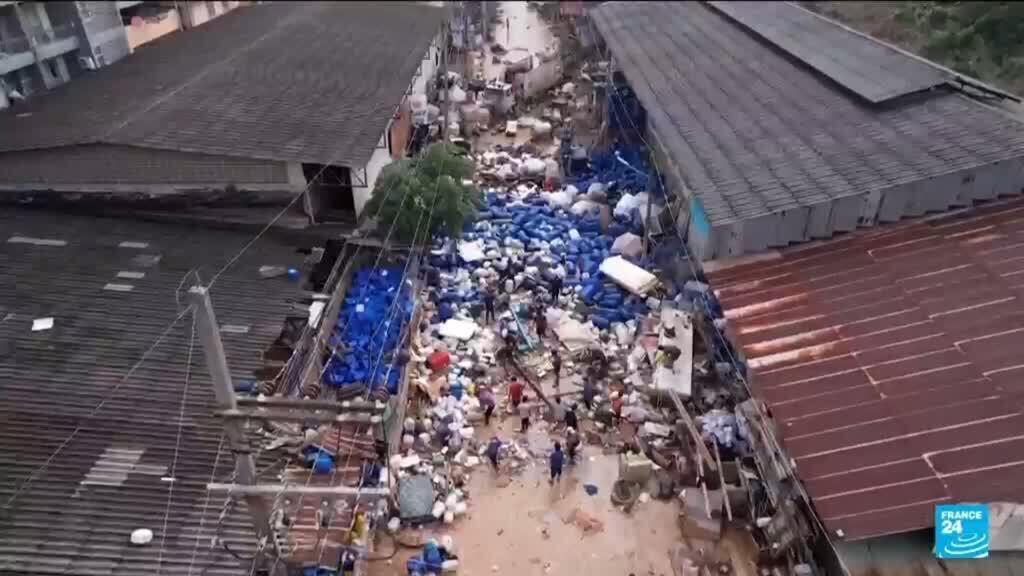
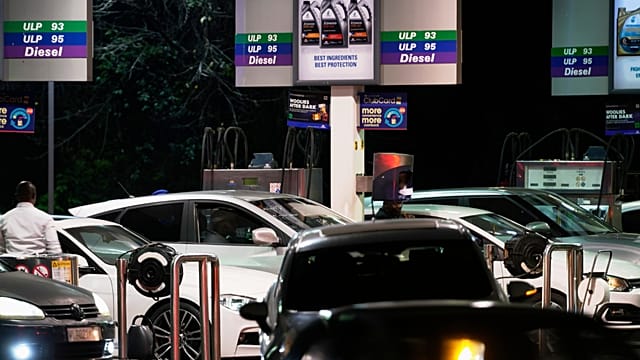
Oil Refinery Burns, Gas Lines Grow—Global Fuel Chaos Hits $115 a Barrel Ukrainian drone strikes ignited a massive fire at Russia’s Tuapse oil refinery on the Black Sea, forcing evacuations and halting operations at a key export plant owned by Rosneft [135091]. The attack comes as a separate drone strike set a Kuwaiti oil tanker ablaze off the UAE coast, sending global crude prices surging past $115 a barrel and triggering a sell-off in Asian stock markets [116225]. The coordinated disruptions have tightened global oil supplies, driving record fuel price hikes from Beijing to South Africa. China raised its official refined oil prices by the largest single jump of 2024, as drivers rushed to pumps before midnight [109102]. South African motorists face a potential record increase of up to 8 rand per liter, with the government’s 3-rand fuel tax cut failing to stop one of the steepest pump price spikes in history [117581] [95663]. Kenya’s energy regulator sharply increased fuel prices, warning the global price surge will raise transportation and electricity costs [130314]. In Tehran, long lines formed at gas stations after reported strikes on Iran’s oil facilities cut supplies. Authorities slashed monthly gasoline quotas from 30 liters to 20 liters per ration card, sparking fears of broader shortages [96510]. In South Africa’s Nelson Mandela Bay, petroleum companies imposed fuel limits and emergency surcharges, adding up to 10 rand per liter for paraffin [108127]. The oil market remains volatile. Even the release of 400 million barrels from strategic reserves has failed to stop prices climbing [134719]. Analysts warn that pump prices will stay high as long as the Strait of Hormuz—a chokepoint for 20% of global oil—remains disrupted [116592]. Diesel rose by R7.51 per liter in South Africa, triggering immediate price hikes for water delivery, security services, and taxi fares [118106]. Ukrainian Drone Strike Ignites Russian Oil Refinery, Forces Evacuation Drone Attack on Tanker Sends Oil Soaring Past $115 Drivers Race to Pumps Ahead of China's Biggest Fuel Price Jump of 2024 South Africa Cuts Fuel Tax, But Drivers Still Hit by Record Price Hike South Africa Braces for R8/Litre Petrol Shock Fuel Prices Skyrocket in Kenya Tehran Gas Lines Grow After Attack on Fuel Supply Oil Reserves Drained, But Prices Keep Rising Oil Prices Steady, So Why Is Petrol So Expensive? Fuel Limits and War Surcharges Hit South African Metro Fuel Shockwave: Water, Security Prices Surge After Diesel Spike

Ships Burn in Strait of Hormuz as 1.2 Million Flee Lebanon and Aleppo Explodes
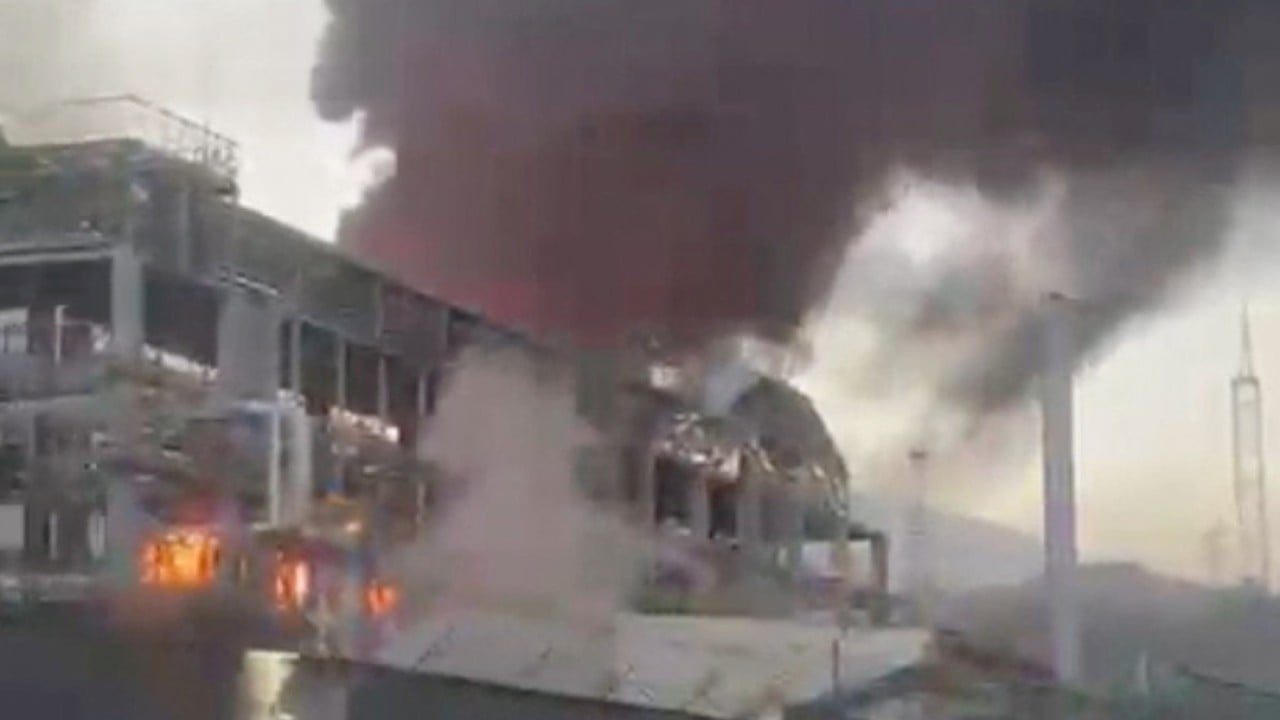
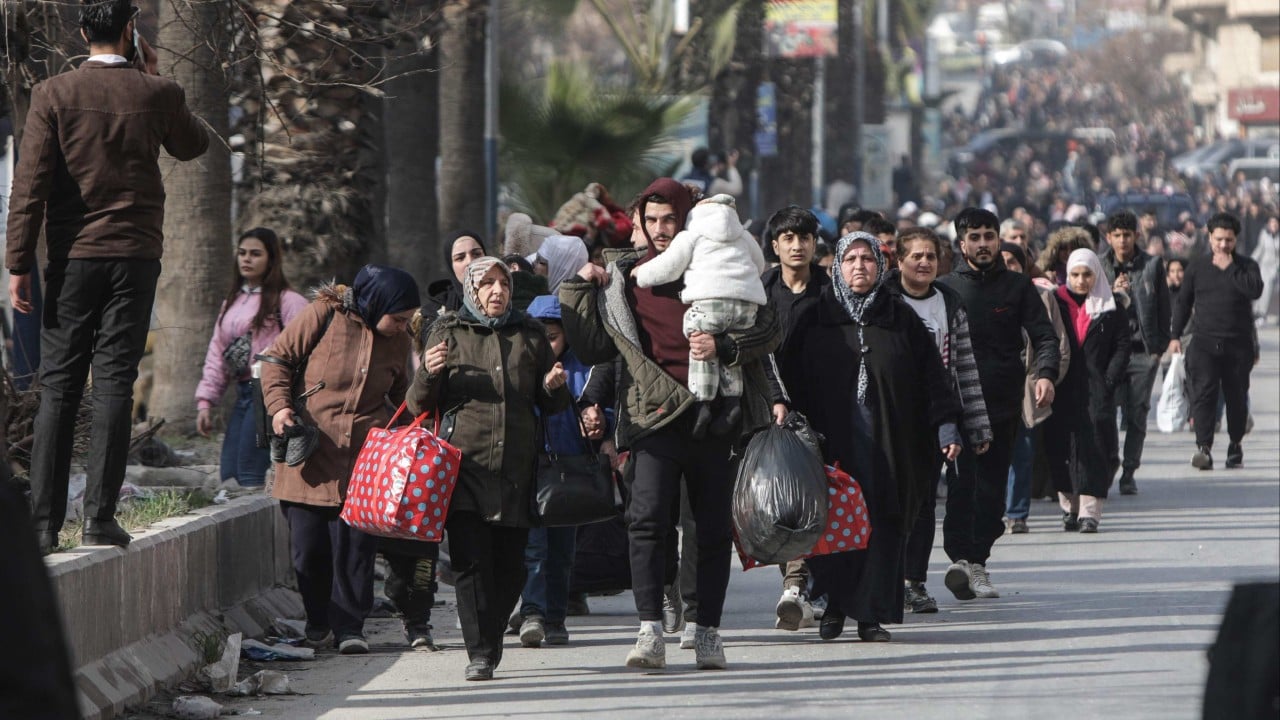
**Ships Burn in Strait of Hormuz as 1.2 Million Flee Lebanon and Aleppo Explodes** The Middle East is burning on three fronts as a US-brokered "ceasefire" in Lebanon collapses, ships catch fire in the Strait of Hormuz, and Syrian forces battle Kurdish-led troops in Aleppo. Despite the United States claiming a truce, Israel continues to strike Lebanon and occupies a strip of southern Lebanon, destroying homes it calls Hezbollah infrastructure [135581]. Hezbollah has retaliated by launching multiple drones at Israeli soldiers and attacking northern Israel [135522]. The ongoing hostilities have displaced 1.2 million people [135581]. Lebanese civil defense officials say three of their members are trapped under rubble after an Israeli strike hit them during a rescue mission [135614]. In Syria, intense fighting has returned to Aleppo as government forces and Kurdish-led Syrian Democratic Forces (SDF) clash [44512]. The violence has forced thousands of civilians to flee their homes [44512]. Heavy fighting is focused on two key fronts—the Castello road and al-Sheihan area—which are important supply routes into Aleppo city [43634]. The Syrian army has begun distributing evacuation maps to civilians in several neighborhoods, urging them to leave for their safety [44681]. The SDF has shelled residential neighborhoods in Aleppo, threatening a fragile calm [43634]. Meanwhile, business at Gwadar Port has surged amid rising tensions in the Strait of Hormuz, where ships are on fire [135699][135681]. The United States and Iran are trading peace proposals in Islamabad, but the gap on nuclear issues remains unbridgeable [135681]. The American naval blockade remains in place, and diplomats call the current situation a ceasefire, but the reality looks like war [135681]. Ceasefire fails: 1.2 million displaced as Israel and Hezbollah keep fighting Hezbollah Drones Strike Israeli Soldiers as Ceasefire Frays Rescue Team Buried in Strike; 3 Lebanese Trapped Syria's Aleppo Truce Shatters, Thousands Flee as U.S. Mediates Syrian Army and US-Backed Forces Clash in Aleppo Syrian Army Distributes Evacuation Maps in Aleppo Amid Clashes Gwadar Port Booms as Strait of Hormuz Crisis Deepens Ships on Fire: Why the “Ceasefire” in Iran Looks Like War

China's $62 Billion AI & Chip Blitz Overtakes Japan, Europe in EVs
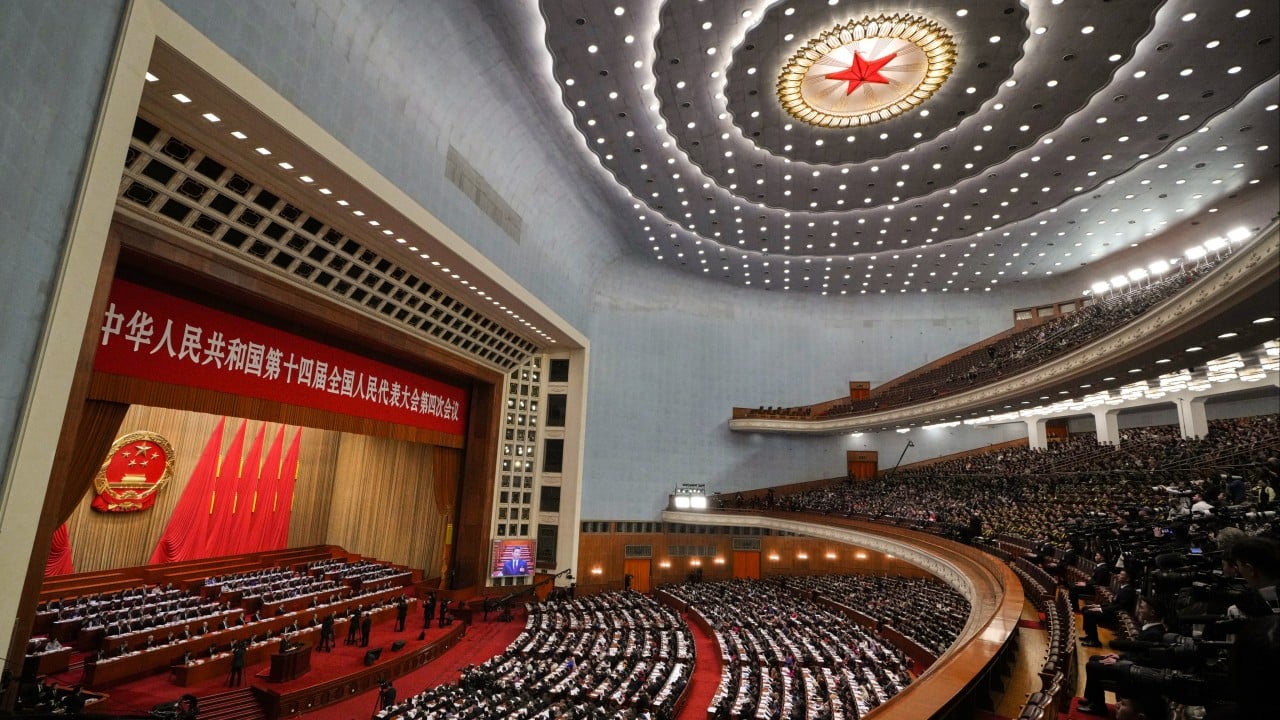
China's $62 Billion AI & Chip Blitz Overtakes Japan, Europe in EVs China has unveiled a sweeping, state-driven technology offensive, committing over $62 billion to dominate artificial intelligence (AI) and advanced semiconductors, a move that has already propelled its carmakers past Japanese and European rivals in the global electric vehicle (EV) market. [93804][51155][86995] The strategy, outlined in national and provincial five-year plans for 2026-2030, targets breakthroughs in chips as small as 3 nanometers to break what officials call a foreign "chokehold" on technology. [51155][95150] Zhejiang province, home to Alibaba, has pledged to manufacture these cutting-edge semiconductors, while Shanghai has launched a separate $10 billion fund for microchips and AI. [51155][43531] At the national level, a $47 billion state-backed investment fund is specifically targeting the equipment needed to make these chips, aiming to build a self-sufficient supply chain from materials to manufacturing. [86995] This technological push is already reshaping global industries. China’s top automakers have surged past competitors in Japan and Europe for the first time, driven by breakthroughs in AI-powered in-car systems and batteries that offer over 600 kilometers of range on a single charge. [134482] In 2023, China exported more vehicles than Japan, marking a historic shift in the global automotive hierarchy. [134482] The central government's $62 billion budget for science and technology explicitly funds "future industries" like satellite internet, electric vehicles, and brain-computer interfaces—areas that directly overlap with Elon Musk’s ventures. [93804] This coordinated, cross-provincial push reflects a national pivot from "catch-up" manufacturing to creating original, cutting-edge technology. [59734] At least 22 provinces have published draft proposals prioritizing semiconductors, AI, and the local production of critical resources like rare earth elements. [19492] China's $62 Billion Bet Mirrors Musk's Vision China Targets 3nm AI Chips to Break US "Chokehold" China’s carmakers overtake Japan and Europe with AI and battery edge China's New Plan: Beat US Tech Rivals with AI and Fusion Power China Bets $47 Billion to Break the Chip Barrier Shanghai Bets $10 Billion on Chips and AI in Tech Race Chinese Provinces Prioritize Tech and Self-Reliance in New Economic Plans China's Tech Pivot: From "Catch-Up" to Cutting-Edge

Oil Crisis and Extreme Weather Slam Vulnerable Nations, UN Warns of $1 Trillion Global Hit
**Oil Crisis and Extreme Weather Slam Vulnerable Nations, UN Warns of $1 Trillion Global Hit** A painful cycle of soaring oil prices and worsening climate disasters is crushing vulnerable economies and public health systems, as the UN Environment Assembly demands urgent global action. New research shows heart attacks and strokes are spiking from both heat waves and cold snaps, while small island nations are being bankrupted by imported fuel costs they cannot escape [135690][135464]. For many small island states, the "polycrisis" has become a daily reality. These countries rely almost entirely on imported oil for electricity, transport, and fishing. Skyrocketing global oil prices are forcing their governments to drain budgets that would otherwise go to schools and hospitals, leaving them unable to adapt to rising seas and stronger storms — which are themselves accelerated by the same fossil fuels [135690]. Island nations produce a tiny fraction of global emissions but suffer the worst consequences, trapped in a cycle where higher oil costs both fund climate damage and block adaptation. The health toll is now undeniable. Scientists analyzing data from multiple countries found that extreme temperatures directly raise the risk of cardiovascular problems. During heat waves, blood vessels expand and the heart pumps harder to cool the body; in cold snaps, vessels narrow, increasing blood pressure and the chance of clots. The elderly and people with existing heart conditions face the highest danger [135464]. Meanwhile, a new analysis warns the Middle East oil and gas crisis could cost the global economy up to $1 trillion in extra costs, while petroleum companies rake in "obscene" profits from higher fuel prices. Climate groups are demanding an urgent windfall tax [135286]. The crisis is deepening inequality and poverty across nations heavily dependent on fossil fuels. In response, the world’s top environmental decision-making body, the UN Environment Assembly in Nairobi, Kenya, concluded with a strong call for accelerated global action. Member states committed to strengthening international cooperation on the interconnected crises of climate change, biodiversity loss, and pollution, urging countries to increase the speed and scale of their environmental interventions [21446]. Rising Oil Costs Sink Island Economies, Accelerate Climate Crisis Heart attacks, strokes spike as heat waves and cold snaps worsen Middle East crisis could cost global economy $1tn as oil firms rake in ‘obscene’ profits UN Environment Assembly Demands Urgent Global Action on Climate and Biodiversity
UAE Dumps OPEC in Shock Move, Sends Oil Markets into a Tailspin
**UAE Dumps OPEC in Shock Move, Sends Oil Markets into a Tailspin** The United Arab Emirates has announced it is quitting the OPEC oil cartel, effective immediately, in a stunning rupture with Saudi Arabia and a move that is already sending shockwaves through global energy markets already reeling from the war in Iran [135744][135586][135337]. The UAE, one of the world's top oil producers, said the decision was driven by "national interests" and a shift in its long-term energy strategy, effectively ending its membership in the group that coordinates production policies among major oil exporters [135586][135337]. The move deals a heavy blow to OPEC’s unity and its de facto leader, Saudi Arabia, highlighting a growing split between the two Gulf allies [135744][135248]. Analysts say the withdrawal could reshape global supply dynamics, potentially increasing price volatility and creating disarray within the cartel [135337][135248]. The exit comes as energy prices surge amid the ongoing conflict with Iran [135337]. The UAE had previously chafed under OPEC’s production quotas, and the decision to prioritize its own economic goals over collective output targets signals a potential realignment in Middle Eastern energy politics [135586][135337]. The sudden loss of a longtime member like the UAE may be seen as a win for those who have accused the cartel of inflating oil prices [135248]. UAE Quits OPEC, Splits with Saudi Arabia UAE to Leave OPEC Over 'National Interests' Amid War-Driven Oil Price Surge UAE Quits OPEC, Sends Shockwaves Through Global Oil Markets UAE Quits OPEC in Blow to Saudi Arabia, Iran War Shocks Oil Markets

Venice's "Kardashian Jetty" Becomes a Tourist Trap, As Overtourism Plagues Historic Cities
Venice's "Kardashian Jetty" Becomes a Tourist Trap, As Overtourism Plagues Historic Cities A floating wooden dock in Venice, used by Kim Kardashian during Jeff Bezos' wedding, has become a must-see attraction for tourists, demonstrating how celebrity culture and social media are creating new hotspots and worsening overtourism in ancient cities. The same forces are now pushing travelers toward quieter alternatives in Tuscany, as popular destinations like Florence buckle under the weight of 4.6 million annual visitors [133286]. The jetty outside the Gritti Palace hotel, which locals compare to a bus stop, drew global attention last June when Kim Kardashian used it during Bezos' wedding festivities. Now, fans flock to the spot, as well as the luxury hotel where the couple stayed and the private island where vows were exchanged [51924]. This phenomenon is part of a broader trend where viral content and celebrity events “suddenly redirect tourist traffic” to residential areas, taxing local infrastructure [101397]. Data shows that Florence is “drowning in tourists,” with 4.6 million visitors last year overwhelming the city’s 365,000 residents. The director of the Accademia gallery described this as “hit and run” tourism: selfies in front of Michelangelo’s David with little economic contribution. Local author Margherita Calderoni called the main shopping street a “rancid soup” of chain restaurants and plastic souvenir shops [133286]. In response, Florence has banned new short-term rentals, but smaller towns like Siena and San Gimignano face similar pressures [133286]. Experts say the root cause is social media and cheaper travel creating sudden “must-see” trends that can overwhelm a destination [80040]. A tourism professor at Swansea University notes that travelers are “looking for more meaningful tourism” driven by TV shows and films, shifting away from just visiting famous landmarks [36959]. To cope, local governments are imposing tourist taxes, promoting off-season travel, and redirecting visitors to less crowded areas [80040]. The good news is that quieter alternatives exist. Beyond the tourist-clogged spots, six Tuscan towns with Medici fortresses, frescoes, and Roman amphitheaters remain uncrowded, offering “no selfie sticks” and no chain takeaway restaurants [133286]. These hidden gems provide the deep cultural experience that travelers increasingly seek [36959]. Venice's New Tourist Hotspot: The 'Kardashian Jetty' Tuscany’s Hidden Gems: Six Towns Without the Selfie Sticks Tourist Destinations Hit Breaking Point: What Causes the Crush? Beyond Paris: TV Drives 2026 "Meaningful Tourism" Trend Viral 'Gateway to Heaven' Rooftop Floods Rio Favela with Tourists

Latest Articles
Six Months After Capture of El Fasher, Many Still Missing
It has been six months since the Rapid Support Forces (RSF) seized El Fasher, the capital of North Darfur State, in a bloody raid. The United Nations...
UAE Quits OPEC, Shocks Oil Markets
The United Arab Emirates announced its withdrawal from OPEC and OPEC+ on Tuesday, according to a statement from the country's energy ministry. The de...

UNICEF: Darfur’s children face new catastrophe, 20 years after first crisis
Twenty years after Darfur first shocked the world, UNICEF has warned that children in the region are once again trapped in a severe humanitarian cata...
Zimbabwe Cleanup Failing? Illegal Street Vendors Blamed
Illegal street vending is undermining efforts to clean up Harare's central business district, a top official told lawmakers. Geo Pomona chairman Deli...
Tanzania Judge Demands “Fair Accountability” for Election Violence
DAR ES SALAAM — The head of Tanzania’s commission investigating election violence said on April 28, 2026, that those responsible for the unrest must...
Burkina Faso’s Army Plan: Fast Recruitment Raises Abuse Fears
Human Rights Watch warns that Burkina Faso’s plan to quickly expand its military reserve may lead to more human rights abuses. The government wants t...
Liberia wins $266 million IMF deal as economy booms
MONROVIA -- The International Monetary Fund has approved a $266 million financing package for Liberia. It is the largest single injection of multilat...
Meningitis Outbreak Kills Several in Nigerian Village
Health officials in Nigeria’s Sokoto State have confirmed a suspected meningitis outbreak that has killed several people in a local village. State Co...
Nigeria approves $516m loan for roads, lawmakers say yes.
Nigeria's lawmakers have approved President Bola Tinubu's request for a $516 million loan. The money will be used for a road construction project. Th...
AllAfrica: Will Africa Make History Today?
Africa’s political and economic landscape shifts on April 29, 2026, as the continent awaits a series of historic decisions. The allAfrica news servic...
Crocodile Menace: Swimmer Breaks Record in 55km River Race
Andy Donaldson smashed the record for the longest solo swim in Australia’s crocodile-infested Ord River, completing the 55-kilometer challenge in und...

Beetles Dance on Water: A Dartmoor Morning Miracle
On a calm, clear morning in West Dartmoor, Devon, the shallow pools look smooth as glass. Scattered wedges of sky reflect between grass and gorse. Bu...

Australians Dress Pop’s Biggest Stars — But Fame Doesn’t Pay the Bills
A bikini made from tangled strands of diamantes drapes down the torso of Colombian superstar Shakira. She sings from a floating pink bubble in the sk...
Moroccan Lamb Shoulder and Artichoke Pasta: A Feast with Minimal Effort
Artichokes and peas, seasoned with garlic, ground ginger and turmeric, create a surprising sauce for pasta. A slow-cooked Moroccan-spiced lamb should...
Nancy Holt: Concrete Tunnels Aligned with the Cosmos
Nancy Holt, a key figure in the land art movement of the 1960s and 70s, created huge works in deserts and along riverbanks. Her art focused on the sy...
"Slime" Sequel Loses the Laughs but Gains Stunning Animation
The new film in the "That Time I Got Reincarnated as a Slime" series is less funny than its predecessor but features breathtaking animation. The sto...

The House of the Spirits: Faithful but “Old-Fashioned”
Amazon’s new Spanish-language series “The House of the Spirits” aims to correct past mistakes. A 1993 film version of Isabel Allende’s novel cast whi...

Lucy Caldwell's New Stories: Family, Memory, and a Touch of Fear
Northern Irish writer Lucy Caldwell returns with her fourth short story collection, *Devotions*. The book explores family life, careers in the arts,...
Indian Billionaire's Son Offers to Move Pablo Escobar's Hippos to His Private Zoo
Anant Ambani, the son of an Indian billionaire, has revived an offer to relocate 80 hippos from Colombia to his private zoo. The animals are all desc...
Air Pollution in Pregnancy Delays Baby’s First Words, Study Finds
Babies exposed to higher levels of air pollution during the first three months of pregnancy take longer to learn to speak, according to new research....