Oil Crisis and Extreme Weather Slam Vulnerable Nations, UN Warns of $1 Trillion Global Hit
**Oil Crisis and Extreme Weather Slam Vulnerable Nations, UN Warns of $1 Trillion Global Hit** A painful cycle of soaring oil prices and worsening climate disasters is crushing vulnerable economies and public health systems, as the UN Environment Assembly demands urgent global action. New research shows heart attacks and strokes are spiking from both heat waves and cold snaps, while small island nations are being bankrupted by imported fuel costs they cannot escape [135690][135464]. For many small island states, the "polycrisis" has become a daily reality. These countries rely almost entirely on imported oil for electricity, transport, and fishing. Skyrocketing global oil prices are forcing their governments to drain budgets that would otherwise go to schools and hospitals, leaving them unable to adapt to rising seas and stronger storms — which are themselves accelerated by the same fossil fuels [135690]. Island nations produce a tiny fraction of global emissions but suffer the worst consequences, trapped in a cycle where higher oil costs both fund climate damage and block adaptation. The health toll is now undeniable. Scientists analyzing data from multiple countries found that extreme temperatures directly raise the risk of cardiovascular problems. During heat waves, blood vessels expand and the heart pumps harder to cool the body; in cold snaps, vessels narrow, increasing blood pressure and the chance of clots. The elderly and people with existing heart conditions face the highest danger [135464]. Meanwhile, a new analysis warns the Middle East oil and gas crisis could cost the global economy up to $1 trillion in extra costs, while petroleum companies rake in "obscene" profits from higher fuel prices. Climate groups are demanding an urgent windfall tax [135286]. The crisis is deepening inequality and poverty across nations heavily dependent on fossil fuels. In response, the world’s top environmental decision-making body, the UN Environment Assembly in Nairobi, Kenya, concluded with a strong call for accelerated global action. Member states committed to strengthening international cooperation on the interconnected crises of climate change, biodiversity loss, and pollution, urging countries to increase the speed and scale of their environmental interventions [21446]. Rising Oil Costs Sink Island Economies, Accelerate Climate Crisis Heart attacks, strokes spike as heat waves and cold snaps worsen Middle East crisis could cost global economy $1tn as oil firms rake in ‘obscene’ profits UN Environment Assembly Demands Urgent Global Action on Climate and Biodiversity
Articles in this Cluster
Rising Oil Costs Sink Island Economies, Accelerate Climate Crisis
Heart attacks, strokes spike as heat waves and cold snaps worsen
Middle East crisis could cost global economy $1tn as oil firms rake in ‘obscene’ profits
Climate Crisis Threatens the Future of Global Sports
A Global Push to Curb Carbon Emissions
Climate Change Fuels Extremism: What Kenya Must Do Now
Europe's 2025 Weather: A New Normal of Extremes?
2025: The Year the Weather Broke
UK Wildlife Pushed to "Breaking Point" by Extreme Weather in 2025
War's Toxic Toll: Iran's Environment Under Fire
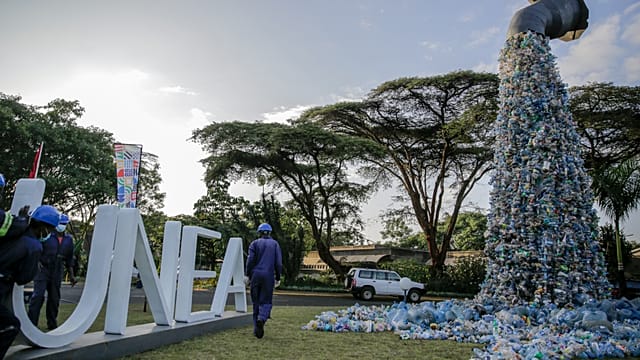
UN Environment Assembly Demands Urgent Global Action on Climate and Biodiversity
