Latest News
Stay updated with the latest news and articles
Top Stories
Ships Burn in Strait of Hormuz as 1.2 Million Flee Lebanon and Aleppo Explodes
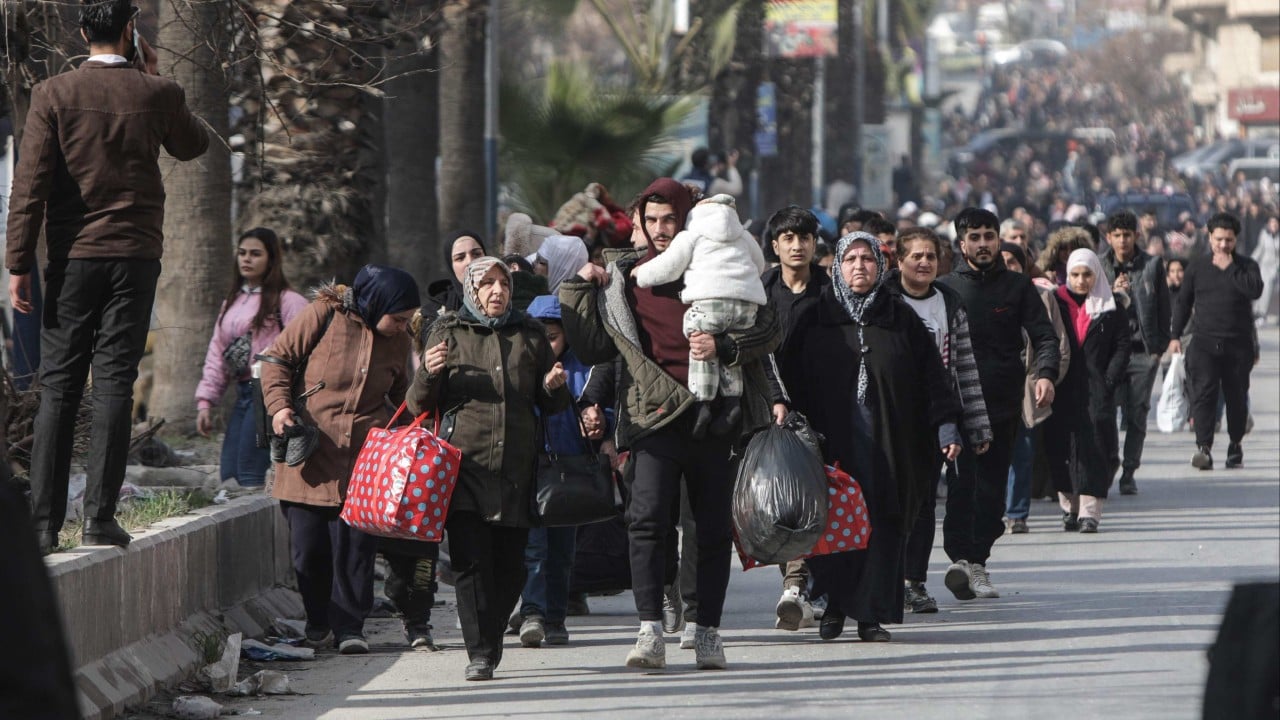
**Ships Burn in Strait of Hormuz as 1.2 Million Flee Lebanon and Aleppo Explodes** The Middle East is burning on three fronts as a US-brokered "ceasefire" in Lebanon collapses, ships catch fire in the Strait of Hormuz, and Syrian forces battle Kurdish-led troops in Aleppo. Despite the United States claiming a truce, Israel continues to strike Lebanon and occupies a strip of southern Lebanon, destroying homes it calls Hezbollah infrastructure [135581]. Hezbollah has retaliated by launching multiple drones at Israeli soldiers and attacking northern Israel [135522]. The ongoing hostilities have displaced 1.2 million people [135581]. Lebanese civil defense officials say three of their members are trapped under rubble after an Israeli strike hit them during a rescue mission [135614]. In Syria, intense fighting has returned to Aleppo as government forces and Kurdish-led Syrian Democratic Forces (SDF) clash [44512]. The violence has forced thousands of civilians to flee their homes [44512]. Heavy fighting is focused on two key fronts—the Castello road and al-Sheihan area—which are important supply routes into Aleppo city [43634]. The Syrian army has begun distributing evacuation maps to civilians in several neighborhoods, urging them to leave for their safety [44681]. The SDF has shelled residential neighborhoods in Aleppo, threatening a fragile calm [43634]. Meanwhile, business at Gwadar Port has surged amid rising tensions in the Strait of Hormuz, where ships are on fire [135699][135681]. The United States and Iran are trading peace proposals in Islamabad, but the gap on nuclear issues remains unbridgeable [135681]. The American naval blockade remains in place, and diplomats call the current situation a ceasefire, but the reality looks like war [135681]. Ceasefire fails: 1.2 million displaced as Israel and Hezbollah keep fighting Hezbollah Drones Strike Israeli Soldiers as Ceasefire Frays Rescue Team Buried in Strike; 3 Lebanese Trapped Syria's Aleppo Truce Shatters, Thousands Flee as U.S. Mediates Syrian Army and US-Backed Forces Clash in Aleppo Syrian Army Distributes Evacuation Maps in Aleppo Amid Clashes Gwadar Port Booms as Strait of Hormuz Crisis Deepens Ships on Fire: Why the “Ceasefire” in Iran Looks Like War

China's $62 Billion AI & Chip Blitz Overtakes Japan, Europe in EVs
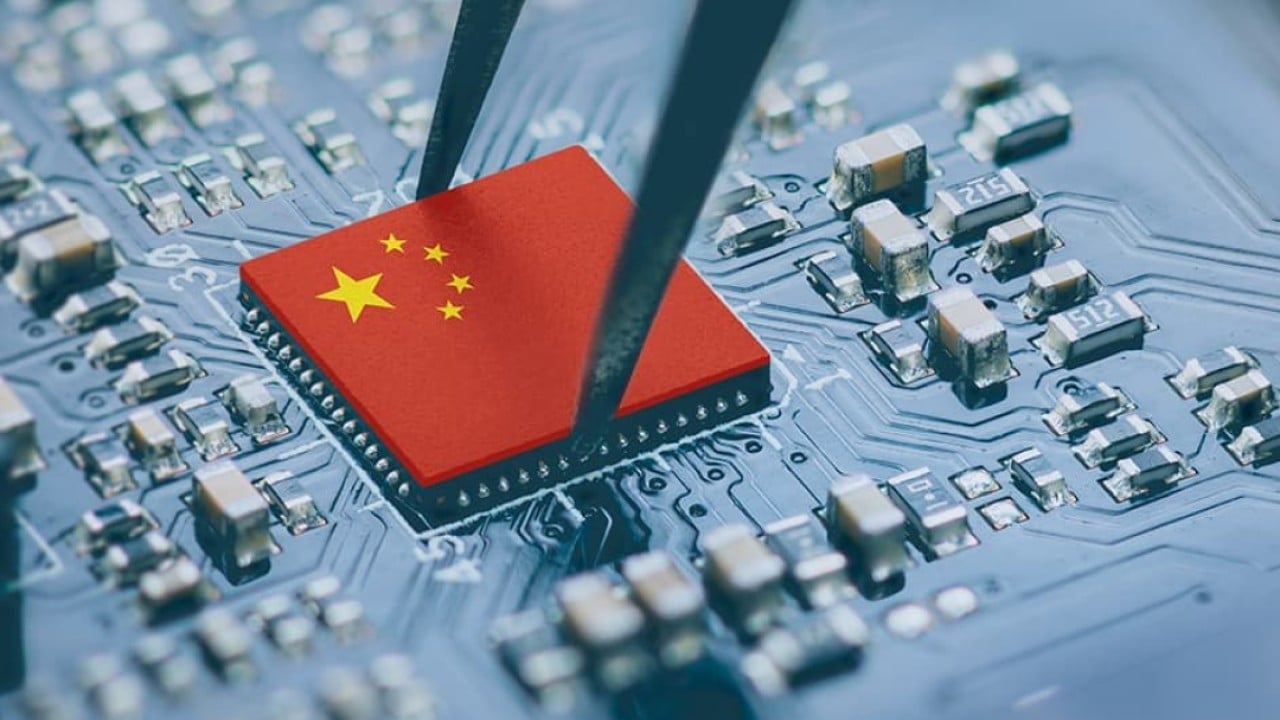
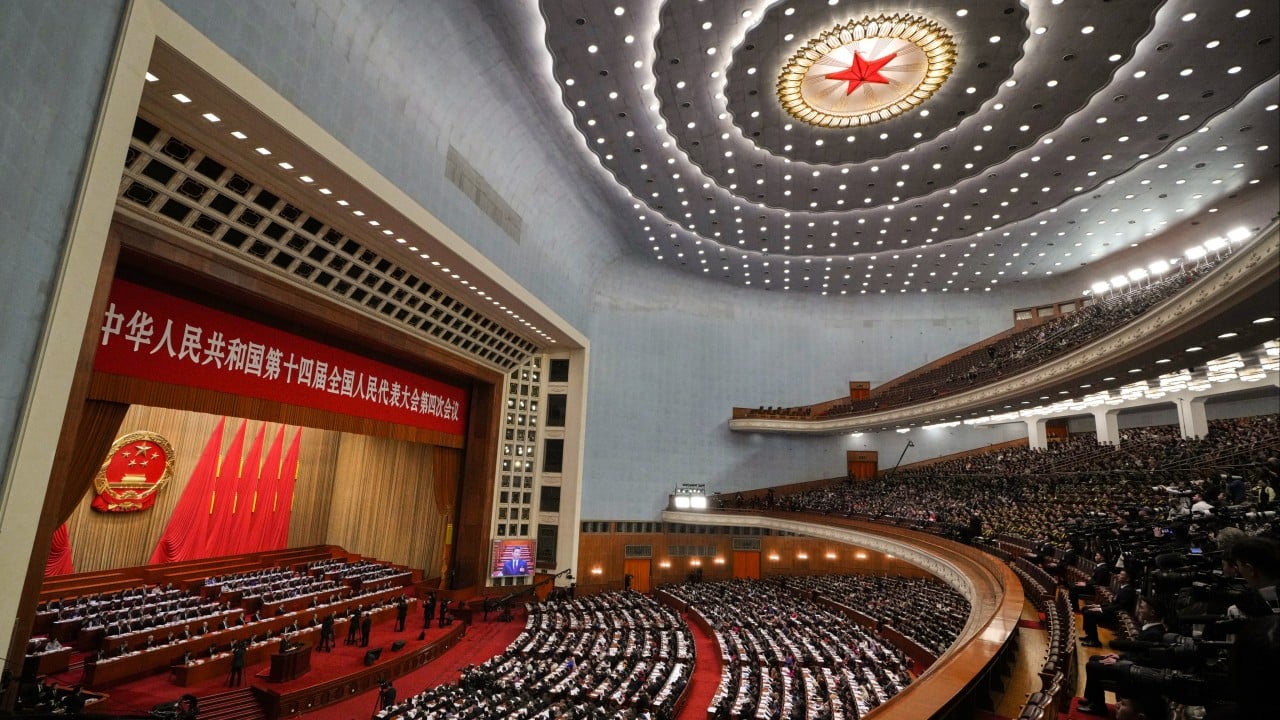
China's $62 Billion AI & Chip Blitz Overtakes Japan, Europe in EVs China has unveiled a sweeping, state-driven technology offensive, committing over $62 billion to dominate artificial intelligence (AI) and advanced semiconductors, a move that has already propelled its carmakers past Japanese and European rivals in the global electric vehicle (EV) market. [93804][51155][86995] The strategy, outlined in national and provincial five-year plans for 2026-2030, targets breakthroughs in chips as small as 3 nanometers to break what officials call a foreign "chokehold" on technology. [51155][95150] Zhejiang province, home to Alibaba, has pledged to manufacture these cutting-edge semiconductors, while Shanghai has launched a separate $10 billion fund for microchips and AI. [51155][43531] At the national level, a $47 billion state-backed investment fund is specifically targeting the equipment needed to make these chips, aiming to build a self-sufficient supply chain from materials to manufacturing. [86995] This technological push is already reshaping global industries. China’s top automakers have surged past competitors in Japan and Europe for the first time, driven by breakthroughs in AI-powered in-car systems and batteries that offer over 600 kilometers of range on a single charge. [134482] In 2023, China exported more vehicles than Japan, marking a historic shift in the global automotive hierarchy. [134482] The central government's $62 billion budget for science and technology explicitly funds "future industries" like satellite internet, electric vehicles, and brain-computer interfaces—areas that directly overlap with Elon Musk’s ventures. [93804] This coordinated, cross-provincial push reflects a national pivot from "catch-up" manufacturing to creating original, cutting-edge technology. [59734] At least 22 provinces have published draft proposals prioritizing semiconductors, AI, and the local production of critical resources like rare earth elements. [19492] China's $62 Billion Bet Mirrors Musk's Vision China Targets 3nm AI Chips to Break US "Chokehold" China’s carmakers overtake Japan and Europe with AI and battery edge China's New Plan: Beat US Tech Rivals with AI and Fusion Power China Bets $47 Billion to Break the Chip Barrier Shanghai Bets $10 Billion on Chips and AI in Tech Race Chinese Provinces Prioritize Tech and Self-Reliance in New Economic Plans China's Tech Pivot: From "Catch-Up" to Cutting-Edge
Oil Crisis and Extreme Weather Slam Vulnerable Nations, UN Warns of $1 Trillion Global Hit
**Oil Crisis and Extreme Weather Slam Vulnerable Nations, UN Warns of $1 Trillion Global Hit** A painful cycle of soaring oil prices and worsening climate disasters is crushing vulnerable economies and public health systems, as the UN Environment Assembly demands urgent global action. New research shows heart attacks and strokes are spiking from both heat waves and cold snaps, while small island nations are being bankrupted by imported fuel costs they cannot escape [135690][135464]. For many small island states, the "polycrisis" has become a daily reality. These countries rely almost entirely on imported oil for electricity, transport, and fishing. Skyrocketing global oil prices are forcing their governments to drain budgets that would otherwise go to schools and hospitals, leaving them unable to adapt to rising seas and stronger storms — which are themselves accelerated by the same fossil fuels [135690]. Island nations produce a tiny fraction of global emissions but suffer the worst consequences, trapped in a cycle where higher oil costs both fund climate damage and block adaptation. The health toll is now undeniable. Scientists analyzing data from multiple countries found that extreme temperatures directly raise the risk of cardiovascular problems. During heat waves, blood vessels expand and the heart pumps harder to cool the body; in cold snaps, vessels narrow, increasing blood pressure and the chance of clots. The elderly and people with existing heart conditions face the highest danger [135464]. Meanwhile, a new analysis warns the Middle East oil and gas crisis could cost the global economy up to $1 trillion in extra costs, while petroleum companies rake in "obscene" profits from higher fuel prices. Climate groups are demanding an urgent windfall tax [135286]. The crisis is deepening inequality and poverty across nations heavily dependent on fossil fuels. In response, the world’s top environmental decision-making body, the UN Environment Assembly in Nairobi, Kenya, concluded with a strong call for accelerated global action. Member states committed to strengthening international cooperation on the interconnected crises of climate change, biodiversity loss, and pollution, urging countries to increase the speed and scale of their environmental interventions [21446]. Rising Oil Costs Sink Island Economies, Accelerate Climate Crisis Heart attacks, strokes spike as heat waves and cold snaps worsen Middle East crisis could cost global economy $1tn as oil firms rake in ‘obscene’ profits UN Environment Assembly Demands Urgent Global Action on Climate and Biodiversity
UAE Dumps OPEC in Shock Move, Sends Oil Markets into a Tailspin
**UAE Dumps OPEC in Shock Move, Sends Oil Markets into a Tailspin** The United Arab Emirates has announced it is quitting the OPEC oil cartel, effective immediately, in a stunning rupture with Saudi Arabia and a move that is already sending shockwaves through global energy markets already reeling from the war in Iran [135744][135586][135337]. The UAE, one of the world's top oil producers, said the decision was driven by "national interests" and a shift in its long-term energy strategy, effectively ending its membership in the group that coordinates production policies among major oil exporters [135586][135337]. The move deals a heavy blow to OPEC’s unity and its de facto leader, Saudi Arabia, highlighting a growing split between the two Gulf allies [135744][135248]. Analysts say the withdrawal could reshape global supply dynamics, potentially increasing price volatility and creating disarray within the cartel [135337][135248]. The exit comes as energy prices surge amid the ongoing conflict with Iran [135337]. The UAE had previously chafed under OPEC’s production quotas, and the decision to prioritize its own economic goals over collective output targets signals a potential realignment in Middle Eastern energy politics [135586][135337]. The sudden loss of a longtime member like the UAE may be seen as a win for those who have accused the cartel of inflating oil prices [135248]. UAE Quits OPEC, Splits with Saudi Arabia UAE to Leave OPEC Over 'National Interests' Amid War-Driven Oil Price Surge UAE Quits OPEC, Sends Shockwaves Through Global Oil Markets UAE Quits OPEC in Blow to Saudi Arabia, Iran War Shocks Oil Markets


Venice's "Kardashian Jetty" Becomes a Tourist Trap, As Overtourism Plagues Historic Cities
Venice's "Kardashian Jetty" Becomes a Tourist Trap, As Overtourism Plagues Historic Cities A floating wooden dock in Venice, used by Kim Kardashian during Jeff Bezos' wedding, has become a must-see attraction for tourists, demonstrating how celebrity culture and social media are creating new hotspots and worsening overtourism in ancient cities. The same forces are now pushing travelers toward quieter alternatives in Tuscany, as popular destinations like Florence buckle under the weight of 4.6 million annual visitors [133286]. The jetty outside the Gritti Palace hotel, which locals compare to a bus stop, drew global attention last June when Kim Kardashian used it during Bezos' wedding festivities. Now, fans flock to the spot, as well as the luxury hotel where the couple stayed and the private island where vows were exchanged [51924]. This phenomenon is part of a broader trend where viral content and celebrity events “suddenly redirect tourist traffic” to residential areas, taxing local infrastructure [101397]. Data shows that Florence is “drowning in tourists,” with 4.6 million visitors last year overwhelming the city’s 365,000 residents. The director of the Accademia gallery described this as “hit and run” tourism: selfies in front of Michelangelo’s David with little economic contribution. Local author Margherita Calderoni called the main shopping street a “rancid soup” of chain restaurants and plastic souvenir shops [133286]. In response, Florence has banned new short-term rentals, but smaller towns like Siena and San Gimignano face similar pressures [133286]. Experts say the root cause is social media and cheaper travel creating sudden “must-see” trends that can overwhelm a destination [80040]. A tourism professor at Swansea University notes that travelers are “looking for more meaningful tourism” driven by TV shows and films, shifting away from just visiting famous landmarks [36959]. To cope, local governments are imposing tourist taxes, promoting off-season travel, and redirecting visitors to less crowded areas [80040]. The good news is that quieter alternatives exist. Beyond the tourist-clogged spots, six Tuscan towns with Medici fortresses, frescoes, and Roman amphitheaters remain uncrowded, offering “no selfie sticks” and no chain takeaway restaurants [133286]. These hidden gems provide the deep cultural experience that travelers increasingly seek [36959]. Venice's New Tourist Hotspot: The 'Kardashian Jetty' Tuscany’s Hidden Gems: Six Towns Without the Selfie Sticks Tourist Destinations Hit Breaking Point: What Causes the Crush? Beyond Paris: TV Drives 2026 "Meaningful Tourism" Trend Viral 'Gateway to Heaven' Rooftop Floods Rio Favela with Tourists

Fifteen Deportees Dumped in War-Torn Congo With No Connections
Fifteen Deportees Dumped in War-Torn Congo With No Connections Fifteen South American migrants and asylum seekers deported from the United States are stranded in the Democratic Republic of the Congo (DRC), a country engulfed in armed conflict where they have no family or local ties [135170]. The group, sent to the DRC by U.S. authorities, now faces an uncertain and dangerous future. “We don't know what will happen to us,” one deportee said, describing the fear of being in a dangerous region without any support [135170]. The DRC is currently experiencing ongoing violence, leaving the deportees with little access to safety or stability [135170]. They have no local connections, making it difficult to find housing, work, or aid, highlighting the severe risks of removing individuals to countries where they lack any links and where conflict is active [135170]. Deportees from U.S. stranded in war zone without ties


Shockwaves in the MAGA Base: 2 Warring Cults Now Claim Trump Staged Shooting or Is the Antichrist
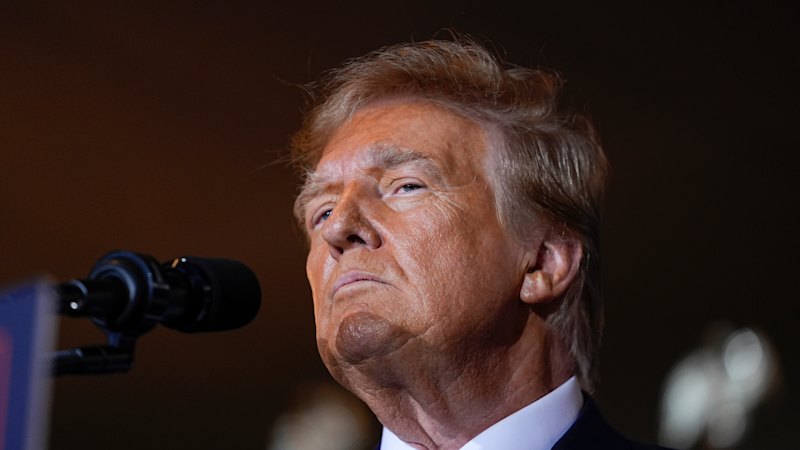
**Shockwaves in the MAGA Base: 2 Warring Cults Now Claim Trump Staged Shooting or Is the Antichrist** A bizarre and deepening split is fracturing Donald Trump’s most loyal supporters. Two incompatible conspiracy theories are now gaining traction inside the MAGA-verse: one claiming the 2024 assassination attempt against Trump was a staged false-flag operation, the other arguing Trump is the literal Antichrist [135710]. Neither theory is supported by evidence, but their simultaneous rise underscores a growing divide among the far-right base, where distrust of institutions now extends even to the movement’s own leader [135710]. Meanwhile, Trump’s hardline policies on immigration, the war in Iran, and his recent religious rhetoric are dividing the Christian coalition that helped him win the White House, testing the loyalty of his most faithful supporters as key segments of the religious right question their alignment with the administration [135481]. Adding to the chaos, Trump escalated a diplomatic confrontation with Germany, claiming Chancellor Friedrich Merz supports a nuclear-armed Iran and accusing him of being dangerously misinformed [135615]. “He doesn't know what he's talking about,” Trump said, though no official German statement has corroborated the claim [135615]. On the domestic front, the Trump administration is targeting Temporary Protected Status (TPS), which currently grants work permits and deportation protection to roughly 900,000 people from countries hit by war or disaster [135187]. The administration argues the program has moved beyond its humanitarian purpose, allowing indefinite stays, while critics warn that ending it would uproot families and damage industries that depend on those workers [135187]. The debate over TPS reflects a larger fight over immigration policy, with both sides agreeing reform is needed but disagreeing on whether to extend or dismantle the program [135187]. MAGA-verse split: Trump staged shooting, or he’s the Antichrist Trump's Hardline Stance Splits Christian Voters Trump: German Leader Would Back Nuclear Iran; "Merz Doesn't Know What He's Talking About" Trump targets TPS: Will 900,000 lose work permits?

India's $18 Billion Problem: Foreign Cash Piles Up, Deals Too Scarce to Spend
**India's $18 Billion Problem: Foreign Cash Piles Up, Deals Too Scarce to Spend** A flood of foreign money is pouring into India, but global investors are hitting a wall—they simply can't find enough high-yield deals to park their cash. The private credit market, where funds lend directly to companies instead of through banks, is seeing a record surge of international capital that's now stuck on the sidelines due to intense competition for a limited number of attractive loans [118404]. Foreign funds typically chase annual yields of 18% or more, but the scramble for deals is forcing returns down to 13-16% [118404]. At those levels, many international lenders are questioning whether the risk is worth the reward. The problem stems from a split market: large, well-established Indian companies borrow cheaply at lower rates, while smaller, riskier firms that actually need loans fail to meet the strict quality checks of these big funds [118404]. This clash of capital is not isolated to credit markets. Japanese investment in India's financial sector has hit an all-time high as Tokyo pours record cash into insurance, banking, and digital payments, actively sidestepping China amid geopolitical tensions [108165]. Yet even with this deepening partnership, the same fundamental challenge persists—foreign money is flooding in faster than India can sustainably absorb it. The irony is stark: India has overtaken Japan to become the world's fourth-largest economy by nominal GDP, yet the benefits of that growth remain deeply uneven [46393]. Critics warn that headline growth figures mask weak job creation and persistent inequality [53602] [100843]. For India's 1.4 billion people, the ranking means little if capital cannot be deployed to create real economic activity and widespread prosperity [46393] [47689]. To unlock this logjam, foreign lenders may need to accept lower returns, build local teams to hunt for riskier small-business deals, or wait for India's market to mature [118404]. The outcome will test whether the world's fastest-growing major economy can actually turn its massive inflows into inclusive growth—or if the cash simply keeps circling without finding a home. Foreign Cash Floods India, But Can't Find a Home Japan Pours Record Cash Into India, Sidestepping China India Overtakes Japan in GDP, But Where's the Wealth? India's Boom a Mirage? Experts Question "Modinomics" Success India's Economic Ranking: A Misleading Measure of Progress? India's Growth Paradox: A Star Losing Its Shine?
Chinese Robotaxis Flood Global Markets at Under $34,000—And They're Not Stopping
**Chinese Robotaxis Flood Global Markets at Under $34,000—And They're Not Stopping** Chinese robotaxi companies, led by Pony AI and WeRide, are accelerating a global expansion by slashing vehicle costs to below $34,000, leveraging the country’s dominant supply chain for new energy vehicles (NEVs) to undercut Western competitors [134194]. The total cost of Pony AI’s upgraded seventh-generation robotaxi—including the base vehicle, battery, and autonomous driving kit—has dropped to under 230,000 yuan, or roughly $33,700 [134194]. Analysts say China’s ability to produce affordable electric cars and self-driving technology gives these firms a decisive advantage in deploying commercial fleets abroad faster than rivals [134194]. This aggressive pricing strategy is set to intensify competition in markets like the United States and Europe, where similar services remain significantly more costly [134194]. The global AI boom is also fueling demand for Chinese power equipment manufacturers, as governments and tech giants build new power plants and upgrade grids to support energy-hungry AI data centers [11315]. Analysts note that Chinese firms are benefiting from a spillover of orders from the United States, initially driven by investments from tech leaders like Meta and SoftBank [11315]. Meanwhile, the broader AI investment frenzy continues: OpenAI hit a $730 billion valuation after a $110 billion funding round led by Amazon, Nvidia, and SoftBank [88285], and top AI companies raised a record $297 billion in just the first three months of this year [118024]. Major tech firms like Microsoft, Google, and Amazon plan to spend $200 billion on AI this year alone—double the amount from two years ago—signaling a long-term strategic race that they believe is too risky to lose [66357]. Chinese robotaxis under $34,000 flood global markets AI Boom Fuels Global Demand for Chinese Power Equipment OpenAI Hits $730 Billion Valuation in Mega-Deal Led by Tech Titans AI Giants Raise $297 Billion in Just Three Months AI Spending Soars: Big Tech Bets $200 Billion in 2026
Zimbabwe Runner Crawls 56K Marathon for Bronze — and $5,300 Prize
**Zimbabwe Runner Crawls 56K Marathon for Bronze — and $5,300 Prize** A Zimbabwean runner collapsed just meters from the finish line of South Africa's Two Oceans Marathon, then crawled on her hands and knees across the 56-kilometer ultramarathon to secure third place and a $5,300 prize. Nobuhle Nobunkosi Tshuma's body gave out near the end of the race in Cape Town, but she refused to stop. Using her hands and knees, she dragged herself across the line, earning a bronze medal and a prize of 100,000 South African rand (about $5,300) [127681]. The moment transformed a race of endurance into a powerful display of human will and immediately spread across social media and sports news channels [127681]. Tshuma's extraordinary effort guaranteed her the final podium position and the significant financial reward that comes with it [127681]. Zimbabwe Runner Crawls to Bronze, Wins $5,300 Prize

Latest Articles

Dinner shooting echoes 1960s political violence
Historians see eerie parallels between today’s political climate and the 1960s and 1970s. Both eras were marked by bitter political divides and a gro...

King Charles III Addresses Congress; Comey Declares Innocence After Indictment
British monarch King Charles III delivered a rare address to a joint meeting of the U.S. Congress on Tuesday. The speech marks a significant diplomat...

Officer's Phone Stopped Bullet at White House Dinner
Investigators said the suspect was running at about 9 miles per hour when he sprinted through a security checkpoint and fired a shotgun at the White...

DeSantis Map Could Give GOP 4 More House Seats
Florida is the next state to propose changes to its congressional map before the November midterm elections. Governor Ron DeSantis has released a pla...

"A College Degree in Weeks? Online 'Fast-Track' Programs Raise Alarms."
Most students spend four years earning a bachelor's degree. Now, some online colleges are offering the same qualification in just weeks. This rapid s...

Copycat Investing: Americans Ditch DIY Stocks to Copy the Rich
A growing number of Americans are using smartphone apps to automatically copy the stock trades of famous investors instead of making their own decisi...

King Charles Arrives at White House for State Dinner
President Trump hosted King Charles III and Queen Camilla of the United Kingdom for a state dinner at the White House on Tuesday. White House histori...

OxyContin Maker Purdue Pharma to Dissolve After Judge Approves Settlement
Purdue Pharma, the company that created the powerful painkiller OxyContin, is preparing to shut down. A federal judge has approved a criminal sentenc...

King Charles Addresses Congress After U.K. Envoy’s Leaked Remark on U.S.-Israel Ties
King Charles III addressed the U.S. Congress on Tuesday, a visit clouded by tension in the historic “special relationship” between the United States...

FBI Director Indicted for Instagram Threat Against President
Former FBI Director James Comey was indicted for a second time on Tuesday, this time over an Instagram post that prosecutors allege constituted a thr...

Sixth Day of Severe Storms Threatens Central U.S. Safety
For the sixth straight night, dangerous weather is again targeting millions of people in the central United States. The storms bring risks of high wi...

Accused Trump Assassination Plotter to Appear in Court Thursday
The man accused of attempting to assassinate President Trump at the White House Correspondents’ Dinner is scheduled to return to court on Thursday. A...

March Madness to Expand to 76 Teams by 2027
The NCAA is planning to expand its March Madness basketball tournaments to 76 teams starting in 2027. Under the new format, the main bracket will add...

FCC Investigates ABC After Trump Calls for Kimmel to Be Fired
The Federal Communications Commission has opened an early review of ABC’s broadcast licenses. The move comes one day after President Trump and the fi...

Sweden detects radiation, reveals Soviet nuclear disaster
On April 28, 1986, Swedish scientists detected abnormally high radiation levels in the atmosphere. Their finding exposed a reactor explosion at the C...

Camp Mystic Director Admits Failure to Parents of Flood Victims
AUSTIN, Texas — The director of Camp Mystic told grieving parents on Tuesday that he failed them. Edward Eastland made the statement before a state c...

Woman dies after balcony fall on Carnival cruise ship, federal officials probe incident
Federal officials are investigating the death of a woman who fell from the balcony of her stateroom on a Carnival Cruise Line ship. The incident occu...

Comey Declares Innocence After New Indictment; King Charles Addresses US Congress
Former FBI Director James Comey has stated that he is innocent following a second indictment. The announcement comes as legal proceedings against him...

Trump Admin. Loses Bid for Arizona Voter Data
A federal judge dismissed a lawsuit Tuesday that was filed by the Justice Department. The suit sought access to records about Arizona voters. The rul...

King Charles Gives Trump the Bell from HMS Trump, Toasts U.S.-UK Ties
LONDON – King Charles III presented President Donald Trump with the original ship’s bell from the HMS Trump on Tuesday night. The monarch then raised...