Latest News
Stay updated with the latest news and articles
Top Stories
Governments, Courts Face Mounting Pressure Over Detention and Rights Abuses
Governments, Courts Face Mounting Pressure Over Detention and Rights Abuses From Turkey to Russia and India, governments are facing intense scrutiny and legal challenges over their treatment of detainees and political opponents, with human rights groups and international bodies alleging systematic violations of fundamental legal protections. In Turkey, a coalition of rights organizations is demanding the immediate release of 84 individuals detained in a sweeping police operation targeting the left-wing Socialist Party of the Oppressed (ESP) [125684]. Advocates report that detainees are being denied access to their lawyers and case files, while female detainees have allegedly been subjected to invasive strip searches by male officers, which groups condemn as a severe breach of dignity and privacy [125684]. Separately, the Human Rights Association (İHD) has warned that the continued imprisonment of a critically ill inmate, Mehmet Emin Çam, violates his fundamental right to life [107236]. The group advocates for the release of severely ill prisoners on medical grounds, highlighting ongoing concerns about healthcare in detention [107236]. In a major blow to civil society, Russia’s Supreme Court has ordered the closure of the Memorial human rights group, labeling it an “extremist organization” [126183]. The ruling, which forces an immediate end to Memorial’s decades-long work documenting historical repression and current abuses, has been condemned by independent experts as a significant escalation in the repression of dissent [126183]. Meanwhile, families allege that thousands of Ukrainian civilians are being illegally held for years in Russian prisons, a practice international legal experts state is a clear breach of laws prohibiting the arbitrary detention and deportation of civilians during wartime [126185]. Reports from released detainees describe poor conditions and torture [126185]. United Nations human rights experts have also leveled serious allegations against Indian authorities, accusing them of violating international law in Jammu and Kashmir [12511]. In a formal statement, the experts cited arbitrary arrests, property demolitions, communication blackouts, and forced expulsions following counter-terrorism operations, arguing these measures amount to collective punishment that breaches human rights standards [12511]. In a separate legal sphere, India’s Supreme Court issued a landmark ruling declaring menstrual health and hygiene a fundamental right, linking it to constitutional rights to life and equality [79316]. The court called for an end to stigma and mandated government action to ensure access to sanitary products and education [79316]. International agreements are also under fire. A group of nine UN experts has demanded the United Kingdom and France abandon a controversial “one in, one out” asylum deal, warning it could lead to serious breaches of human rights law [69103]. The experts, who made their letter public after receiving no satisfactory reply from the governments, have called for the agreement to be scrapped [69103]. No Lawyer, No Privacy: Rights Groups Demand Immediate Release of 84 Detainees Russia's Supreme Court Bans Memorial as "Extremist" UN Experts Allege Human Rights Violations in Indian Counter-Terrorism Operations Thousands of Ukrainian Civilians Held in Russian Prisons, Families Say Critically Ill Prisoner's Detention Violates Right to Life, Says Rights Group India's Supreme Court: Menstrual Health is a Fundamental Right UN Experts: UK-France Asylum Deal May Break Human Rights Law

Pentagon Defends Commander's Call in Back-to-Back Strikes, Citing "Fog of War"
Pentagon Defends Commander's Call in Back-to-Back Strikes, Citing "Fog of War" The U.S. Department of Defense is mounting a robust defense of its commanders' decisions in recent military engagements, publicly backing their legal authority and split-second judgments in complex combat situations. In two separate incidents, senior Pentagon officials have stepped forward to justify controversial strike orders. Defense Secretary John Hegseth defended a naval engagement where forces struck the same boat twice, attributing the decision to the inherent confusion of battle. "It happened in the 'fog of war,'" Hegseth stated, explaining he saw no survivors after the initial attack but supported the admiral's choice to fire again to "eliminate the threat" [17273]. This public backing follows the Pentagon's earlier defense of a senior commander who authorized recent military strikes in Venezuela. A spokesperson confirmed that the actions taken by Admiral Bradley followed a rigorous legal review. "These actions were approved by the best military and civilian lawyers throughout the chain of command," the spokeswoman said [17258]. The legal justification for U.S. military operations has become a focal point. A senior defense official, Pete Hegseth, separately asserted that ongoing American activities in the Caribbean are lawful. "Our current operations in the Caribbean are lawful under both U.S. and international law," he stated [15064]. This institutional stance extends beyond the battlefield to legal and political arenas. The Pentagon is also defending new rules that restrict some media outlets, arguing in a lawsuit that the measures are necessary to protect national security and "stop activity that could compromise national security" [64596]. Concurrently, Senate Republicans are taking a rare procedural step to shield the presidential war powers used to authorize a recent Venezuela operation, aiming to block a Democratic effort to repeal the 2001 Authorization for Use of Military Force (AUMF) that justified the mission [50051]. The coordinated defenses underscore the administration's commitment to supporting its commanders' operational discretion and preserving broad executive authority in military and national security matters. Pentagon Defends Second Strike in "Fog of War" Incident Pentagon Defends Commander's Decision in Venezuela Strikes Pentagon Official Defends Legality of Caribbean Operations Pentagon Cites National Security in Media Lawsuit Defense Senate Republicans Move to Shield Trump's War Powers

Hungary Votes in Record Numbers as Orban Faces Toughest Fight Yet
Hungary Votes in Record Numbers as Orban Faces Toughest Fight Yet Voters in Hungary turned out in historic numbers on Sunday for a national election that posed the most serious challenge to Prime Minister Viktor Orbán's 12-year rule [126882][126885]. The high-stakes contest, watched closely across Europe, will determine if the country continues its nationalist path or shifts toward a more pro-European Union direction [126903][126894]. Polls closed after a day of heavy participation, with the final vote count set to decide if Orbán's Fidesz party retains power or falls to a unified opposition [126882][126903]. The prime minister, a frequent critic of the EU and ally of Russia, warned during an aggressive campaign that a loss for his party would drag Hungary into the war in neighboring Ukraine [126885]. The main challenge came from centre-right rival Péter Magyar and his new Tisza party, who framed the election as a decisive choice for the country's future [126894][126920]. The opposition coalition argued for change, accusing Orbán's government of corruption and mismanagement while campaigning on issues including high inflation and the nation's international alliances [126882][126903]. The campaign also drew attention from the United States, with former President Donald Trump publicly expressing his support for Orbán [126894]. All major parties urged supporters to monitor the vote-counting process as the country awaited official results [126882]. The outcome is expected to have significant implications for Hungary's relations with the European Union, which has repeatedly clashed with Orbán's government over democratic standards and the rule of law [126903][126798]. Orban Faces Toughest Fight as Hungary Votes in Record Numbers Record Turnout as Hungary Votes in High-Stakes Election Hungary Votes: Could a New Party Topple Orban? Hungary Votes: Could This End Viktor Orban's 16-Year Rule? Hungary Votes: Key EU Nation's Future Hangs in Balance Hungary's Choice: East or West, Corruption or Clean Government?


U.S. and Iran Hold High-Stakes Talks in Pakistan as Regional War Widens
U.S. and Iran Hold High-Stakes Talks in Pakistan as Regional War Widens Direct, high-level negotiations between the United States and Iran opened in Islamabad this weekend, a rare diplomatic effort aimed at halting a rapidly expanding Middle East conflict that has drawn in multiple nations and armed groups. The talks, hosted by Pakistan, began with a meeting between U.S. Vice President JD Vance and Pakistani Prime Minister Shehbaz Sharif on Saturday [125866]. A U.S. government plane carrying senior officials landed in Islamabad for the discussions, which are intended to find a path to permanently end a six-week war that has killed thousands [125874]. The dialogue represents the highest-level direct meeting between the two rival nations in decades [125785]. The Indonesian foreign ministry called the talks "encouraging" and urged both sides to work toward a "sustainable solution" [125940]. A central and immediate complication for the negotiators is the demand from Iran that any ceasefire agreement must include Lebanon, where the Iranian-backed Hezbollah group is engaged in near-daily clashes with Israeli forces along their shared border [125874]. This conflict is now a pivotal issue, with analysts warning that the violence in Lebanon could trigger a much wider regional war and will heavily influence the Islamabad discussions [125686][126108]. The U.S. delegation, led by Vice President Vance, arrived with a sharp warning for Tehran. "Now is not the time for Iran to play games with the United States," Vance told reporters as he departed on his mission, which will also include stops in Egypt, Jordan, Qatar, and Israel [126108]. The negotiations occur against a backdrop of severe regional escalation. Recent strikes have damaged cultural heritage sites, including the Golestan Palace, a UNESCO World Heritage site in Tehran, which Iran says was hit by Israeli missiles [126546]. The conflict has also spread to Gulf nations, affecting major hubs like Dubai and Kuwait, and raising fears of a full-scale regional war [90697]. The outcome of the talks in Pakistan is seen as critical for the immediate future of several nations, particularly Lebanon. The United Nations has described the country as facing a "perfect storm" of crises following Israeli strikes, and its stability now hinges on the fragile international diplomacy underway [125652]. US and Iran Meet for Talks as Middle East War Expands Iran Demands Lebanon Ceasefire in Last-Minute Peace Talk Hurdle US and Iran Hold Rare Direct Talks in Pakistan to End Middle East War Iran and US to Meet in Pakistan as Israel-Lebanon Tensions Rise Vance to Iran: "Do Not Test Us" as Mideast Mission Begins U.S.-Iran Ceasefire Talks Leave Lebanon in Tense Limbo


Global Markets Reel as Billions Flee Asia Amid Middle East Turmoil
Global Markets Reel as Billions Flee Asia Amid Middle East Turmoil A sharp flight of foreign capital is battering Asia's emerging economies, with investors pulling billions of dollars from the region as instability in the Middle East triggers a widespread financial retreat. In March alone, overseas investors withdrew massive sums from regional stock and bond markets, according to market analysts [126095]. This accelerating exodus of investment capital is putting intense pressure on local currencies and forcing central banks into difficult positions to manage the stress. The financial shockwaves originate from the conflict between the U.S. and Iran, which has created deep uncertainty in global markets. While a potential ceasefire is being discussed, analysts warn that the damage to investor confidence is already severe and will not be quickly undone [126095]. The uncertainty has fundamentally altered investor behavior, and regaining trust will require prolonged stability. The fallout extends beyond financial markets, contributing to a broader climate of economic strain linked to Middle East instability. In Ethiopia, chronic fuel shortages and rising prices for basic goods, crises connected to the region's volatility, overshadowed major religious observances like Easter [126260]. Economists note that the current conflict's economic impact could persist long after any ceasefire is signed. New analysis suggests the war's disruption to global trade, energy costs, and supply chains may create financial shocks that last for years, requiring significant international coordination to resolve [124481]. For the governments of nations from Indonesia to India, the immediate challenge is stemming the capital outflow and stabilizing their economies, as the promised relief of a geopolitical truce remains distant [126095]. Iran Ceasefire? Asia's Economies Still Bleed Cash Fuel Shortages, High Prices Dampen Ethiopian Easter Beyond the Battlefield: A War's Economic Shock Could Last for Years


Ukraine Trades Battlefield Drone Secrets for Gulf Fuel and Weapons
Ukraine Trades Battlefield Drone Secrets for Gulf Fuel and Weapons In a striking wartime barter deal, Ukraine is deploying its combat-hardened military specialists to Gulf states, trading its unique expertise in shooting down drones for the fuel and air defense missiles it desperately needs to fight Russia [125620][112369]. President Volodymyr Zelenskyy confirmed that Ukrainian teams are now active in several Middle Eastern nations, teaching them how to counter Iranian-made attack drones [112369]. This knowledge was gained through brutal experience, as Ukrainian forces have defended against thousands of these same "Shahed" drones used by Russian forces [125620]. The arrangement is a direct exchange. In return for providing advanced training in drone warfare and electronic jamming tactics, Ukraine seeks shipments of diesel fuel and air defense interceptors, including advanced systems like Patriot missile batteries [125620][112369]. The high-level security talks involve nations including Oman, Kuwait, and Bahrain [125620]. This move marks a strategic shift for Kyiv, turning its defensive war experience into a valuable diplomatic and military commodity. The Iranian drones that menace Ukraine are also a persistent threat in the Middle East, where they have been used to target oil facilities and infrastructure, making Ukraine's low-cost countermeasures highly sought-after [100935][91239]. By sharing this critical know-how, Ukraine aims to secure a more reliable flow of vital supplies for its own war effort while building new security partnerships. The deal positions Ukraine not merely as an aid recipient, but as a provider of essential defense technology to global partners [91239]. Ukraine Sells Drone-Know-How to Gulf States for Fuel and Weapons Ukraine Trades Air Defense Secrets for Gulf's Drone-Killers Kyraine Sells Drone-Knowledge for Weapons Ukraine Offers Gulf States a Deal: Our Drone Hunters for Your Leverage on Russia

Catastrophic Floods and Mudslides Kill Over 1,400, Devastate Southeast Asia
Catastrophic Floods and Mudslides Kill Over 1,400, Devastate Southeast Asia A series of catastrophic floods and landslides, triggered by a week of exceptionally heavy rain, has devastated parts of Southeast Asia, killing more than 1,400 people and affecting millions [17624]. The disasters have submerged villages, severed roads, and buried homes across Indonesia, Sri Lanka, Thailand, and Malaysia [20084]. The torrential downpours caused rivers to overflow and saturated hillsides, leading to widespread, destructive mudslides [17624]. In Indonesia, the death toll has reached 995, with rescuers still searching for 226 missing people [25217]. Neighboring Sri Lanka reports 640 dead and 211 missing [25217]. Combined, nearly 4 million citizens in these two nations have been impacted, with homes, roads, and farms destroyed [25217]. Southern Thailand has also suffered a severe loss of life, with authorities reporting at least 145 fatalities [14423]. Rescue operations are ongoing across all affected regions as emergency crews work to provide aid, find survivors, and reach isolated communities hampered by damaged infrastructure [14423][20084]. National governments and international aid agencies are mobilizing major relief efforts, focusing on providing emergency shelter, clean water, and medical supplies to displaced survivors [17624]. Aid groups warn of rising health risks from damaged water supplies in the flooded regions [25217]. Deadly Floods and Landslides Claim Over 1,400 Lives Across Southeast Asia Massive Floods Kill Over 1,600, Affect Millions in Asia Deadly Floods and Landslides Claim Over 1,500 Lives Across Asia Deadly Floods and Landslides Claim Over 250 Lives in Southeast Asia


Drone Wars and Middle East Conflict Send Global Fuel Prices Soaring, Sparking Protests
Drone Wars and Middle East Conflict Send Global Fuel Prices Soaring, Sparking Protests A wave of protests and panic-buying is sweeping across multiple continents as a potent mix of drone attacks, Middle East conflict, and supply chain disruptions sends fuel prices to record highs, squeezing household budgets and threatening essential services. The crisis is being driven by direct attacks on global energy infrastructure. Ukrainian forces have launched a record number of long-range drone strikes targeting Russian oil refineries and storage facilities, damaging critical infrastructure and injecting volatility into global markets [125638]. Simultaneously, a drone strike that set a Kuwaiti oil tanker on fire off the coast of the United Arab Emirates caused global oil prices to surge past $115 a barrel, spooking financial markets [116225]. These incidents have exacerbated existing fears over the stability of Middle Eastern supplies, where a key shipping route remains a flashpoint. The Strait of Hormuz, a passage for approximately 20% of the world's oil, faces ongoing threats from regional tensions [95663]. Analysts confirm that concerns over the failure of a proposed Gaza ceasefire are directly pushing oil prices higher, with markets fearing a wider conflict could erupt [124783]. The financial impact is immediate and severe. In the United States, drivers were hit with the largest weekly gasoline price spike since the start of the Ukraine war in 2022 [97612]. In Germany, petrol price rises have outpaced those in neighboring European Union countries due to the conflict's disruption of energy markets [124639]. The soaring costs have triggered civil unrest. In Ireland, protesters blocking key oil terminals and refineries have caused hundreds of petrol stations to run dry, forcing the government to convene an emergency cabinet meeting to address the five-day-old crisis [126425][126288]. In South Africa, drivers raced to fill tanks ahead of a historic midnight price hike, with one predicted increase reaching up to 8 Rand per litre [117884][95663]. Even a 3 Rand per litre government tax cut failed to prevent one of the steepest pump price increases the country has ever recorded [117581]. Further strain comes from choked supply chains. Despite a steady crude oil price, pump costs continue to climb because the closure of the Strait of Hormuz has created a major bottleneck, disrupting the global movement of refined fuel [116592]. In South Africa's Nelson Mandela Bay, this has led petroleum companies to impose fuel purchase limits and add emergency war surcharges of up to 10 Rand per litre for paraffin [108127]. In China, where the government sets official prices, drivers crowded stations ahead of the largest single fuel price increase of 2024 [109102]. The situation underscores a global pattern where geopolitical instability is now a primary determinant of the cost of filling a tank, with no significant relief in sight [124783]. Ukraine's Drone Surge Hits Russian Energy, Shakes Global Markets Drone Attack on Tanker Sends Oil Soaring Past $115 South Africa Braces for R8/Litre Petrol Shock Fuel Prices Climb as Gaza Ceasefire Hopes Fade Oil Prices Rocket, Hitting Drivers With Sharpest Spike Since Ukraine War Fuel Crisis Forces Irish Cabinet to Emergency Talks South Africa Braces for Record Fuel Price Surge South Africa Cuts Fuel Tax, But Drivers Still Hit by Record Price Hike Oil Prices Steady, So Why Is Petrol So Expensive? Fuel Limits and War Surcharges Hit South African Metro Drivers Race to Pumps Ahead of China's Biggest Fuel Price Jump of 2024 German Gas Prices Surge, Outpacing EU Neighbors



Syrian Army and Kurdish Forces Clash in Aleppo, Sparking Mass Exodus of Thousands
Syrian Army and Kurdish Forces Clash in Aleppo, Sparking Mass Exodus of Thousands Intense fighting between Syrian government forces and Kurdish-led fighters has erupted in and around the city of Aleppo, triggering a mass civilian exodus and threatening to unravel a fragile stability in northern Syria [44512][45585][45588]. The clashes, concentrated in the city's northern suburbs and the surrounding province, have forced tens of thousands of people to flee their homes under heavy shelling [45588][45173]. The Syrian army has begun distributing maps to civilians in several Aleppo neighborhoods, outlining safe evacuation routes in anticipation of further military operations [44681]. The violence pits the Syrian Arab Army against the Kurdish-led Syrian Democratic Forces (SDF), a coalition that controls large parts of northeastern Syria [43634][45585]. Both sides have exchanged blame for initiating the fighting, which has resulted in multiple casualties [44512][44088]. A brief ceasefire was ordered after deadly clashes on Monday, but the situation remains highly tense [32516]. This surge in hostilities follows a breakdown in political talks aimed at resolving the long-standing standoff between the Damascus government and the SDF [45585][45588]. The stalemate has deepened, with periodic negotiations failing to produce a lasting agreement on integrating the Kurdish-led administration into the state [44512][33236]. The renewed combat risks opening a major new front in Syria's long-running civil war, which has already displaced millions [45173]. Aid groups warn that the rapid movement of families is creating a severe humanitarian crisis in Aleppo province, an area that already hosts many people displaced from earlier phases of the conflict [45585][45588]. International efforts to mediate have so far failed to halt the escalation. U.S. officials are attempting to broker a ceasefire, according to reports, highlighting the dangerous potential for the conflict to expand [44512][45173]. Syria's Aleppo Truce Shatters, Thousands Flee as U.S. Mediates Aleppo Exodus: Fighting Erupts as Syria Peace Talks Fail Syrian Army Advances on Aleppo, Sparking Mass Exodus Syrian Army and US-Backed Forces Clash in Aleppo Syrian Army Distributes Evacuation Maps in Aleppo Amid Clashes Syrian Forces and Kurds Clash, Then Halt Fire After Deadly Fighting Deadly Clashes in Aleppo as Turkey Urges Kurdish Integration Syria's Kurds and Army Clash, Risking Major War Fresh Clashes Erupt Between Syrian Army and Kurdish Forces Aleppo Clashes Follow Secret Syria-Israel Talks


China Bets Billions on AI and Chips to Break U.S. Tech "Chokehold"
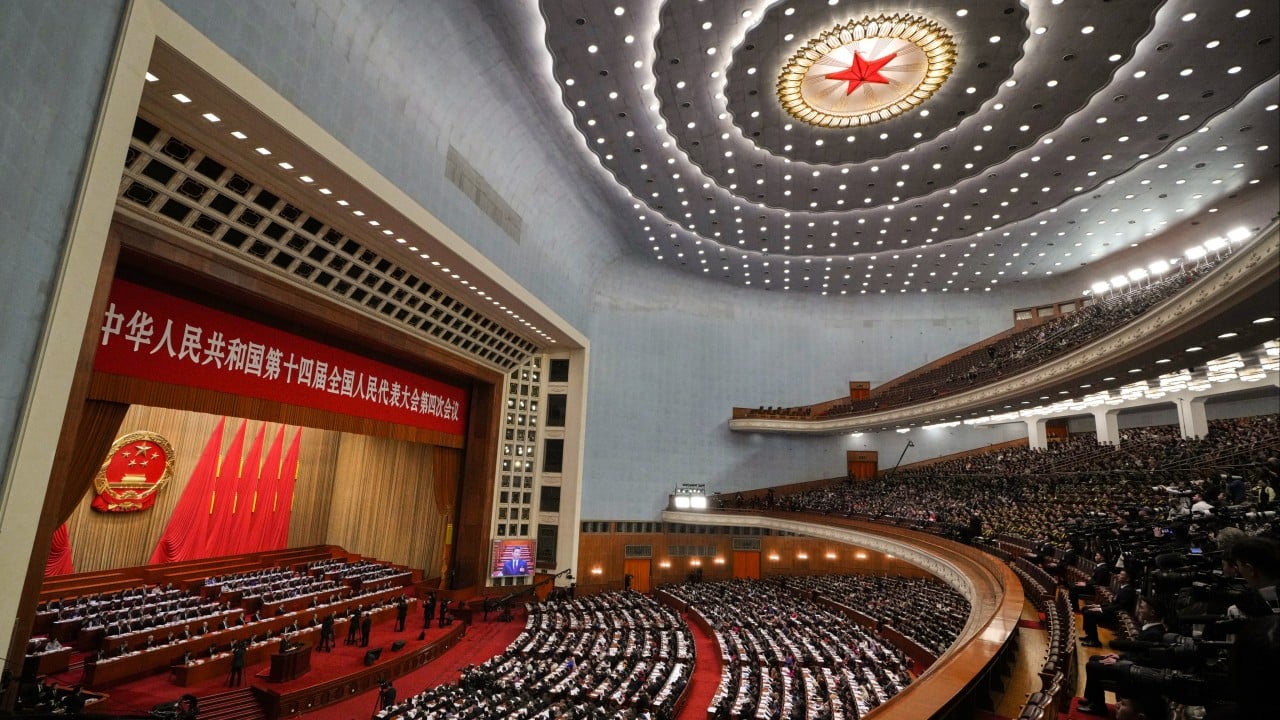
China Bets Billions on AI and Chips to Break U.S. Tech "Chokehold" China is mobilizing hundreds of billions of dollars in state-led investment to achieve self-sufficiency in advanced semiconductors and artificial intelligence, aiming to break a U.S.-imposed technological "chokehold" and dominate the next generation of critical technologies [51155][95150][86995]. The national strategy, formalized in the upcoming five-year plan, directs massive resources toward overcoming foreign dependencies in strategic industries [95150]. This marks a decisive pivot from China's decades-long model of absorbing foreign technology to one focused on creating and controlling cutting-edge innovations [59734]. Shanghai has launched a $10 billion investment plan targeting microchips and AI, while the eastern tech hub of Zhejiang aims to manufacture advanced AI chips as small as 3 nanometers within five years [43531][51155]. This provincial-level drive aligns with a national directive, with at least 22 provincial governments prioritizing high-tech industries like semiconductors and AI in their economic plans [19492]. The effort is backed by a new state-backed semiconductor fund worth over $47 billion, focused on developing the advanced equipment needed to make chips—an area currently controlled by the U.S., Japan, and the Netherlands, which have restricted China's access [86995]. Concurrently, China's national science and technology budget allocates over $61 billion to "future industries" including AI, satellite internet, and new energy, sectors that overlap with leading global innovators like Elon Musk [93804]. President Xi Jinping recently toured a major technology innovation park in Beijing, underscoring the national priority of achieving "high-level" technological independence [71486]. Private tech giants are following the state's lead, with companies like Xiaomi announcing intensified multi-year investment plans into core technologies such as semiconductors and AI [86064]. Analysts describe the U.S. strategy as one of export controls and market-driven innovation, while China's is defined by state coordination and systemic integration, deploying AI and advanced chips as core components of national infrastructure [109135]. The outcome of this competition is expected to shape international standards and the global balance of technological power for decades [109135]. China Targets 3nm AI Chips to Break US "Chokehold" China's New Plan: Beat US Tech Rivals with AI and Fusion Power China Bets $47 Billion to Break the Chip Barrier Shanghai Bets $10 Billion on Chips and AI in Tech Race Chinese Provinces Prioritize Tech and Self-Reliance in New Economic Plans China's $62 Billion Bet Mirrors Musk's Vision Xi Inspects Tech Park, Stakes Claim in Global Innovation Race Xiaomi Bets Billions on Chips and AI as Rivals Build Robots China's Tech Pivot: From "Catch-Up" to Cutting-Edge AI War: US Bets on Markets, China Bets on Control

Latest Articles

Global Economy at a Crossroads: IMF, World Bank Convene Amid Growth and Inflation Fears
Finance ministers and central bankers are gathering for major meetings of the International Monetary Fund (IMF) and World Bank this week. Their urgen...

Iran War Costs to Dominate Global Economic Talks
Top central bankers and economists will meet in Washington this week. Their urgent task is to measure the economic damage from the war in the Middle...

Two Decades, Zero Deals: Iran Nuclear Standoff Hardens
Direct talks this weekend repeated a now-familiar pattern of difficult and frustrating diplomacy between the United States and Iran. The discussions...

Oil Prices Set to Surge as Strait of Hormuz Hopes Dim
Hopes for a deal to reopen the vital Strait of Hormuz are fading. This has ended a brief period of stability for global oil prices, which are now exp...

Trump Announces Naval Blockade of Strait of Hormuz
Former U.S. President Donald Trump has announced a plan to impose a naval blockade on the Strait of Hormuz. This major shipping route is crucial for...

Swalwell Denies Abuse Allegations as Prosecutor Investigates
A California prosecutor has opened an investigation into abuse allegations against U.S. Congressman Eric Swalwell. Swalwell is a high-profile Democra...

Iran and US Talks Collapse After One Day
High-level negotiations between Iran and the United States have ended without agreement. The talks, which lasted 21 hours, failed to resolve decades...

Iran Counts the Dead: Forensic Report Says 3,375 Killed in US-Israeli Operations
Iran's forensic authority has released a detailed count of people it says were killed in operations by the United States and Israel. The report state...

Hungary Election: Record Early Vote Stuns Observers
A surprisingly high number of Hungarians have already voted, according to official data. The early turnout is notably larger than in previous parliam...

Hungary's Choice: East or West, Corruption or Clean Government?
Hungarian opposition figure Péter Magyar has called the upcoming European Parliament elections a "decisive" moment for the country. In a public stat...

Peru Votes for 35 Presidents in One Day to Escape Chaos
Peruvians voted Sunday in a unique election to choose both a new president and a new congress. The country hopes this double vote will break a cycle...

Trump Announces Naval Blockade of Iran
President Donald Trump has declared the United States will begin a naval blockade of Iran. He stated the action would start "shortly" and involve oth...

Trump Announces Naval Blockade of Iran
President Donald Trump has declared the United States will begin a naval blockade of Iran. He stated the action would start soon and involve other, u...

No Deal with Iran? Israeli Minister Warns of Possible Strikes
A senior Israeli official has warned that military action against Iran is possible if diplomatic efforts fail. Israel Katz, the country's energy min...

Syria to UN: Stop Israel's "Repeated Attacks"
Syria's top diplomat has called for urgent United Nations action against Israel. He accuses Israel of launching continuous military strikes on Syrian...

Aid Flotilla for Gaza Departs, But Full Voyage On Hold
A coalition of activists has launched a symbolic aid mission to Gaza, but its ships will not immediately attempt to breach the Israeli blockade. The...

World Leaders Flock to Türkiye: Can This Forum Forge Peace?
Antalya, Türkiye, will become a global diplomatic hub this April. The city hosts the Antalya Diplomacy Forum (ADF) from the 17th to the 19th. The ev...

Iran Calls Putin, Hints at US Talks Progress
Iran's new president, Masoud Pezeshkian, has briefed Russian leader Vladimir Putin on his assessment of recent discussions with the United States. I...

Azerbaijan Reopens Tehran Embassy During U.S.-Iran Truce
Azerbaijan has reopened its embassy in Iran's capital, Tehran. The diplomatic post resumes work during a temporary, two-week ceasefire between Iran a...

Poland's PM Labels Opposition a "Putinist Front"
Polish Prime Minister Mateusz Morawiecki has sharply escalated the country's political conflict. He directly accused the main opposition party of bei...