Latest News
Stay updated with the latest news and articles
Top Stories
US Tech Giants and White House Form "Pincer Attack" to Reshape Europe, Report Warns
US Tech Giants and White House Form "Pincer Attack" to Reshape Europe, Report Warns A new report from a leading European think tank warns that the United States government, in alliance with its Silicon Valley tech giants, is conducting a coordinated campaign to pressure the European Union into abandoning its regulatory sovereignty. The strategy reportedly exploits Europe's military dependence on Washington and leverages far-right political movements within Europe to force policy changes [44570]. The analysis, authored by Armida van Rij of the Centre for European Reform, claims the ultimate goal is to dismantle a global system based on international rules and replace it with one dictated by raw power and U.S. commercial interests. A central pillar of this effort is the collaboration between major American technology firms and the White House, who use Europe's reliance on U.S. security guarantees as political leverage [44570]. This creates what the report describes as a "pincer attack" on European regulators, squeezing them from both external and internal fronts. The aggressive tactics are seen as an attempt to weaken the EU's distinctive social and economic model, which includes strong digital privacy rules, worker protections, and public healthcare systems—policies often at odds with U.S. corporate practices [44570] [78938]. The pressure highlights Europe's critical vulnerability: its deep dependence on the very American digital infrastructure it seeks to regulate. The EU relies on U.S. companies for essential cloud computing, professional software, social media, and payment systems, making any serious restrictions difficult to enforce [58167]. This digital reliance compounds a broader strategic dependence, which a separate analysis argues was a deliberate policy choice that has left the EU economically and militarily vulnerable as global tensions rise [69895]. Despite the intense pressure, the report concludes Europe is not without options. It suggests the European Union can resist by strengthening its own internal unity and building alliances beyond Washington. The call comes as a senior Belgian minister accused the U.S. of waging an "ideological attack" against Europe's social welfare systems, arguing the EU must act as a "protective shield" for its citizens [78938]. US Tech Giants and White House Ally to Pressure EU, Report Warns Belgian Minister: U.S. Waging "Ideological Attack" on Europe Europe's Digital Dilemma: Reliant on US Tech It Seeks to Curb **Trump Era Demands "Political Adults" in EU, Analysts Warn
AI "Officers" and Robot Brains: The Global Rush to Militarize and Embody Artificial Intelligence
AI "Officers" and Robot Brains: The Global Rush to Militarize and Embody Artificial Intelligence A quiet but intense global competition is underway to develop a new generation of artificial intelligence that can see, act, and command in the real world. From military command posts to robotics labs, nations and corporations are pouring billions into AI systems designed to interact with—and dominate—the physical environment. In a significant military development, China has tested a new AI that acts as a digital staff officer. During a simulated amphibious assault, the AI was deployed in a battalion command tent to cut through the "fog of war"—the confusion inherent in battle [124817]. The system processed chaotic battlefield reports and radio traffic, providing decision-making support to the human commander at a speed that reportedly surpassed human capabilities in the high-pressure scenario [124817]. This move highlights a global race to integrate AI directly into tactical military operations, a shift experts warn could dramatically accelerate the pace of future wars [124817]. Simultaneously, the commercial AI sector is making a strategic pivot toward "embodied intelligence." Chinese tech giant SenseTime is betting its future on AI that powers robots and autonomous agents, leveraging its long history with visual recognition technology [22794]. "Our expertise in vision-based AI puts us in a strong position," said company co-founder Lin Dahua, arguing that understanding the physical world is the next critical frontier [22794]. This vision is shared in the West. French AI startup AMI announced a massive $1 billion funding round on Tuesday with the explicit goal of building AI that learns "in the way animals and humans do" [98165]. The company aims to create systems that understand real-world physics and environments directly, moving beyond the text-and-chat paradigm of current models like ChatGPT [98165]. AMI stated it expects to develop "fairly universal intelligent systems" within five years [98165]. The push into physical and military AI represents a major new direction for the industry, signaling that the future of the technology lies not just in conversation, but in action and perception. China's New AI "Officer" Outsmarts Humans in War Games SenseTime Bets on Robot AI to Regain Lead French AI Startup Aims for Animal-Like Intelligence with $1 Billion Boost
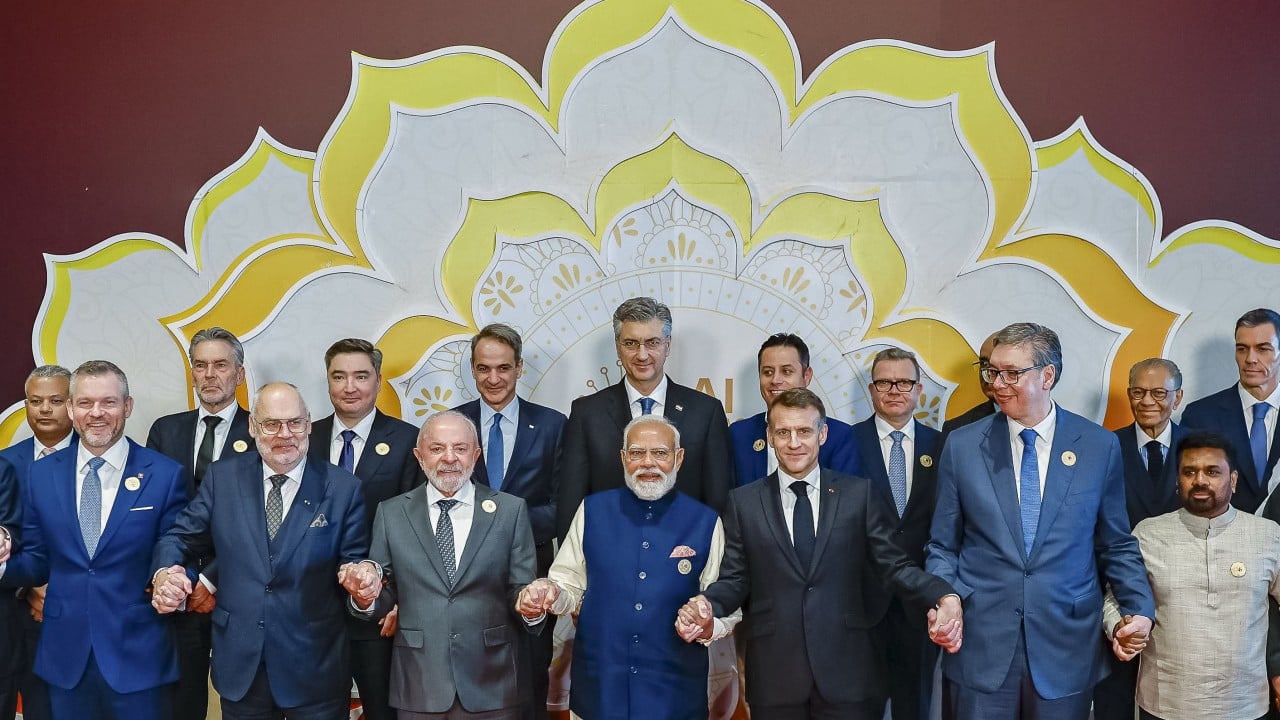


Turkey Takes Charge: Commands Key NATO Naval Force and Deploys Troops for Major 2024 Drills
Turkey Takes Charge: Commands Key NATO Naval Force and Deploys Troops for Major 2024 Drills Turkey has assumed command of a critical NATO naval strike force and is deploying thousands of troops to Germany, playing a central role in the alliance's largest military exercises this year. The Turkish Naval Forces formally took control of the NATO Amphibious Task Force and its Landing Force Command on July 1 [54453]. This command, which will last for one year, puts Turkey in charge of planning and leading NATO's amphibious exercises and potential missions in the region [54453]. An amphibious task force is a powerful naval group designed for assaults from sea to land. Simultaneously, the first Turkish military aircraft have landed in Germany, marking the start of Turkey's participation in NATO's Steadfast Defender 24 exercise [70222]. Approximately 2,000 Turkish troops are deploying to Wunstorf Air Base for the drills, which run from February 8 to February 20 across Europe [70222]. The exercise is a key part of NATO's efforts to reinforce its eastern flank and demonstrate rapid deployment capabilities [70222]. In a separate but related NATO drill, Turkish naval and army units are conducting joint amphibious operations in Germany as part of Exercise Steadfast Dart 2026 [80228]. A notable aspect of Turkey's involvement is the prominent use of its own domestically produced defense platforms during the live exercises [80228]. These moves highlight Turkey's active and multifaceted role within the NATO military structure, from high-level command rotations to large-scale troop contributions for readiness training. Turkey Assumes Command of Key NATO Naval Strike Force NATO's Biggest 2024 Drill Begins with Turkish Troops Landing in Germany Turkish Forces Deploy Homegrown Tech in Major NATO Drill


Ukraine Ditches Truce Talk, Vows to Hit Back Hard as Fighting Surges
Ukraine Ditches Truce Talk, Vows to Hit Back Hard as Fighting Surges Ukraine has declared it will directly match Russian attacks blow-for-blow, signaling an end to diplomatic pauses as fierce fighting resumes across the front lines following a failed Easter ceasefire [126699][126283]. The 32-hour truce, proposed for the Orthodox Easter holiday, was marred by accusations from both sides of thousands of violations, with reports of shelling continuing in some areas [126765][126283]. The brief pause offered civilians a tense respite to bake traditional bread or visit loved ones, but did little to inspire hope, with residents in cities like Kharkiv bracing for an immediate return to combat [126704][126537]. In response to the deteriorating situation, Ukrainian President Volodymyr Zelenskyy stated his forces would now respond "symmetrically" to any Russian aggression, a policy of direct retaliation [126699]. This warning comes as military analysts anticipate a critical new phase in the war, now in its third year with no diplomatic resolution in sight [126704][126699]. The renewed hostilities follow a significant Ukrainian deep-strike operation that successfully hit a Russian drone command center, ammunition depots, and fuel storage facilities in a single coordinated attack, aiming to degrade enemy logistics [126360]. Simultaneously, Ukraine is leveraging its battlefield expertise, offering drone warfare training to Gulf states in exchange for vital supplies like fuel and air defense interceptors [125620]. On the defensive front, President Zelenskyy warned that a retreat from current positions in the Donbas region would open a direct path for Russian forces to advance on major Ukrainian cities, a strategic risk the military cannot afford [125606]. As Russia shifts tactics from targeting the power grid to attacking water infrastructure, Ukrainian authorities have begun a major project to decentralize and protect the national water supply network [125612]. Ukraine Vows "Symmetrical" Response to Russian Attacks Ukraine, Russia Trade Blame as Easter Cease-Fire Falters Easter Truce Brings Ukrainians Fear, Not Faith Easter Truce Breaks, But Not the War Easter Ceasefire Begins: Ukraine Vows to Match Russian Actions Ukraine Strikes Deep: Drone Command, Ammo, and Fuel Hit in One Night Ukraine Sells Drone-Know-How to Gulf States for Fuel and Weapons Zelenskyy: Retreat from Donbas Would Open Path to Ukraine's Heartland Russia Targets Ukraine's Water After Power Grid Withstands Winter Assault
Global Powers Scramble for Africa's Resources and Loyalty in High-Stakes 2026
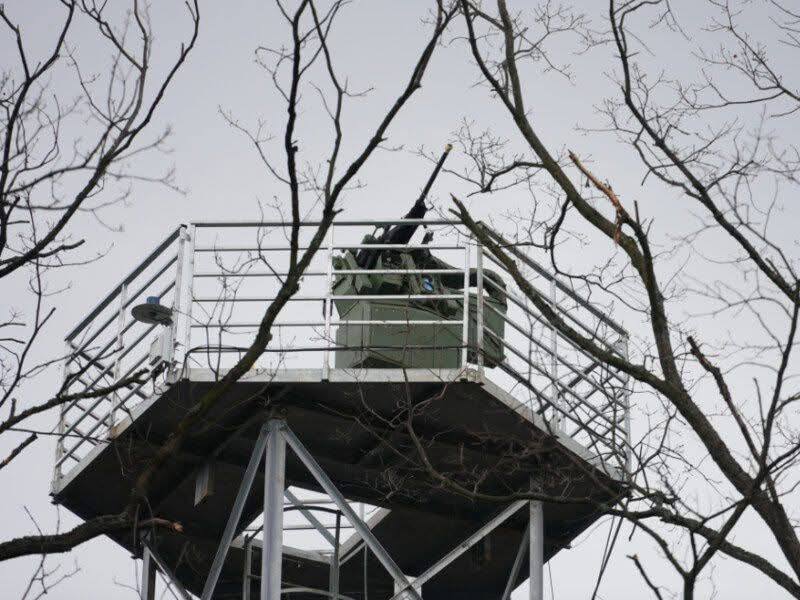
Global Powers Scramble for Africa's Resources and Loyalty in High-Stakes 2026 A renewed and intense competition for influence, security partnerships, and critical minerals is drawing global powers back to Africa, forcing the continent's leaders to navigate a complex geopolitical landscape while defending their own economic interests. The strategic rivalry is most visible in the security sphere, where Russia is rapidly expanding its military footprint. In the Sahel nations of Mali, Niger, and Burkina Faso, new military governments have expelled French forces and embraced security support from Russia's Africa Corps [67411]. This shift has prompted the United States to urgently revise its own strategy in the region to counter waning influence [67411]. Simultaneously, a "silent scramble" is underway for the minerals essential to the global green energy transition, including lithium, cobalt, and rare earth elements [83553]. This industrial race, driven by soaring demand, presents African nations with both a major economic opportunity and the risk of being pressured into unfair, piecemeal deals [83553]. The competition extends to information and infrastructure. The U.S. and China are actively battling for the allegiance of Africa's large youth population through targeted media campaigns, each seeking to damage the other's image and present itself as the preferable partner [126737]. Meanwhile, Ethiopia's push for sea access has turned an African Union summit into a stage for rivalry, with the U.S., China, Turkey, and Gulf states all vying for naval and economic positioning in the Horn of Africa [87433]. This multifaceted pressure comes as African nations increasingly pursue a strategy of "multi-alignment," pivoting from traditional Western partners to forge new bilateral agreements with Russia, China, and other Global South nations [44946]. The collective moves signal a growing focus on leveraging the continent's resources and unified voice to maximize its own development, even as external powers intensify their courtship [35302]. U.S. and Russia in High-Stakes Scramble for Africa's Sahel The New Scramble: Africa's Minerals and the Silent Race Superpowers Battle for Africa's Youth Through Media Global Powers Rush for Africa's Coast as Ethiopia Seeks a Port African Nations Pivot from West to Russia and China Amid Economic Strain Africa Gains Global Ground Amid U.S. Turmoil


Governments, Courts Face Mounting Pressure Over Detention and Rights Abuses
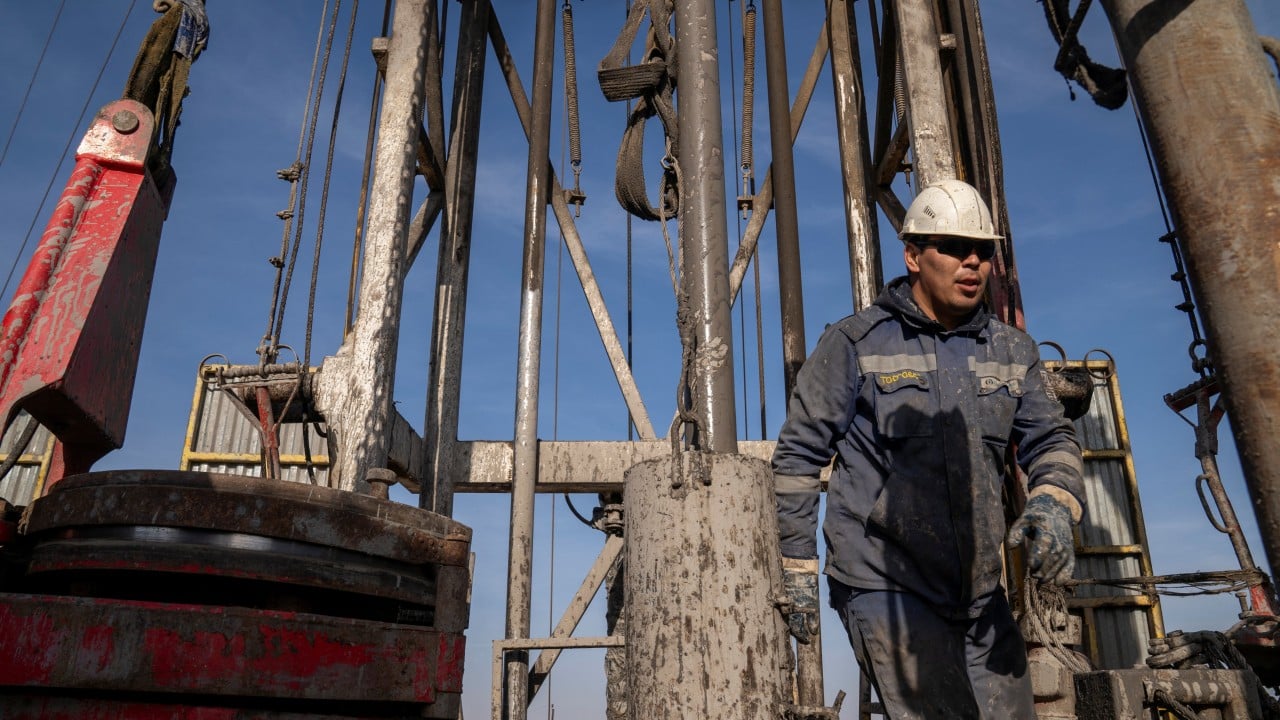
Governments, Courts Face Mounting Pressure Over Detention and Rights Abuses From Turkey to Russia and India, governments are facing intense scrutiny and legal challenges over their treatment of detainees and political opponents, with human rights groups and international bodies alleging systematic violations of fundamental legal protections. In Turkey, a coalition of rights organizations is demanding the immediate release of 84 individuals detained in a sweeping police operation targeting the left-wing Socialist Party of the Oppressed (ESP) [125684]. Advocates report that detainees are being denied access to their lawyers and case files, while female detainees have allegedly been subjected to invasive strip searches by male officers, which groups condemn as a severe breach of dignity and privacy [125684]. Separately, the Human Rights Association (İHD) has warned that the continued imprisonment of a critically ill inmate, Mehmet Emin Çam, violates his fundamental right to life [107236]. The group advocates for the release of severely ill prisoners on medical grounds, highlighting ongoing concerns about healthcare in detention [107236]. In a major blow to civil society, Russia’s Supreme Court has ordered the closure of the Memorial human rights group, labeling it an “extremist organization” [126183]. The ruling, which forces an immediate end to Memorial’s decades-long work documenting historical repression and current abuses, has been condemned by independent experts as a significant escalation in the repression of dissent [126183]. Meanwhile, families allege that thousands of Ukrainian civilians are being illegally held for years in Russian prisons, a practice international legal experts state is a clear breach of laws prohibiting the arbitrary detention and deportation of civilians during wartime [126185]. Reports from released detainees describe poor conditions and torture [126185]. United Nations human rights experts have also leveled serious allegations against Indian authorities, accusing them of violating international law in Jammu and Kashmir [12511]. In a formal statement, the experts cited arbitrary arrests, property demolitions, communication blackouts, and forced expulsions following counter-terrorism operations, arguing these measures amount to collective punishment that breaches human rights standards [12511]. In a separate legal sphere, India’s Supreme Court issued a landmark ruling declaring menstrual health and hygiene a fundamental right, linking it to constitutional rights to life and equality [79316]. The court called for an end to stigma and mandated government action to ensure access to sanitary products and education [79316]. International agreements are also under fire. A group of nine UN experts has demanded the United Kingdom and France abandon a controversial “one in, one out” asylum deal, warning it could lead to serious breaches of human rights law [69103]. The experts, who made their letter public after receiving no satisfactory reply from the governments, have called for the agreement to be scrapped [69103]. No Lawyer, No Privacy: Rights Groups Demand Immediate Release of 84 Detainees Russia's Supreme Court Bans Memorial as "Extremist" UN Experts Allege Human Rights Violations in Indian Counter-Terrorism Operations Thousands of Ukrainian Civilians Held in Russian Prisons, Families Say Critically Ill Prisoner's Detention Violates Right to Life, Says Rights Group India's Supreme Court: Menstrual Health is a Fundamental Right UN Experts: UK-France Asylum Deal May Break Human Rights Law

Pentagon Defends Commander's Call in Back-to-Back Strikes, Citing "Fog of War"
Pentagon Defends Commander's Call in Back-to-Back Strikes, Citing "Fog of War" The U.S. Department of Defense is mounting a robust defense of its commanders' decisions in recent military engagements, publicly backing their legal authority and split-second judgments in complex combat situations. In two separate incidents, senior Pentagon officials have stepped forward to justify controversial strike orders. Defense Secretary John Hegseth defended a naval engagement where forces struck the same boat twice, attributing the decision to the inherent confusion of battle. "It happened in the 'fog of war,'" Hegseth stated, explaining he saw no survivors after the initial attack but supported the admiral's choice to fire again to "eliminate the threat" [17273]. This public backing follows the Pentagon's earlier defense of a senior commander who authorized recent military strikes in Venezuela. A spokesperson confirmed that the actions taken by Admiral Bradley followed a rigorous legal review. "These actions were approved by the best military and civilian lawyers throughout the chain of command," the spokeswoman said [17258]. The legal justification for U.S. military operations has become a focal point. A senior defense official, Pete Hegseth, separately asserted that ongoing American activities in the Caribbean are lawful. "Our current operations in the Caribbean are lawful under both U.S. and international law," he stated [15064]. This institutional stance extends beyond the battlefield to legal and political arenas. The Pentagon is also defending new rules that restrict some media outlets, arguing in a lawsuit that the measures are necessary to protect national security and "stop activity that could compromise national security" [64596]. Concurrently, Senate Republicans are taking a rare procedural step to shield the presidential war powers used to authorize a recent Venezuela operation, aiming to block a Democratic effort to repeal the 2001 Authorization for Use of Military Force (AUMF) that justified the mission [50051]. The coordinated defenses underscore the administration's commitment to supporting its commanders' operational discretion and preserving broad executive authority in military and national security matters. Pentagon Defends Second Strike in "Fog of War" Incident Pentagon Defends Commander's Decision in Venezuela Strikes Pentagon Official Defends Legality of Caribbean Operations Pentagon Cites National Security in Media Lawsuit Defense Senate Republicans Move to Shield Trump's War Powers
Hungary Votes in Record Numbers as Orban Faces Toughest Fight Yet
Hungary Votes in Record Numbers as Orban Faces Toughest Fight Yet Voters in Hungary turned out in historic numbers on Sunday for a national election that posed the most serious challenge to Prime Minister Viktor Orbán's 12-year rule [126882][126885]. The high-stakes contest, watched closely across Europe, will determine if the country continues its nationalist path or shifts toward a more pro-European Union direction [126903][126894]. Polls closed after a day of heavy participation, with the final vote count set to decide if Orbán's Fidesz party retains power or falls to a unified opposition [126882][126903]. The prime minister, a frequent critic of the EU and ally of Russia, warned during an aggressive campaign that a loss for his party would drag Hungary into the war in neighboring Ukraine [126885]. The main challenge came from centre-right rival Péter Magyar and his new Tisza party, who framed the election as a decisive choice for the country's future [126894][126920]. The opposition coalition argued for change, accusing Orbán's government of corruption and mismanagement while campaigning on issues including high inflation and the nation's international alliances [126882][126903]. The campaign also drew attention from the United States, with former President Donald Trump publicly expressing his support for Orbán [126894]. All major parties urged supporters to monitor the vote-counting process as the country awaited official results [126882]. The outcome is expected to have significant implications for Hungary's relations with the European Union, which has repeatedly clashed with Orbán's government over democratic standards and the rule of law [126903][126798]. Orban Faces Toughest Fight as Hungary Votes in Record Numbers Record Turnout as Hungary Votes in High-Stakes Election Hungary Votes: Could a New Party Topple Orban? Hungary Votes: Could This End Viktor Orban's 16-Year Rule? Hungary Votes: Key EU Nation's Future Hangs in Balance Hungary's Choice: East or West, Corruption or Clean Government?


U.S. and Iran Hold High-Stakes Talks in Pakistan as Regional War Widens
U.S. and Iran Hold High-Stakes Talks in Pakistan as Regional War Widens Direct, high-level negotiations between the United States and Iran opened in Islamabad this weekend, a rare diplomatic effort aimed at halting a rapidly expanding Middle East conflict that has drawn in multiple nations and armed groups. The talks, hosted by Pakistan, began with a meeting between U.S. Vice President JD Vance and Pakistani Prime Minister Shehbaz Sharif on Saturday [125866]. A U.S. government plane carrying senior officials landed in Islamabad for the discussions, which are intended to find a path to permanently end a six-week war that has killed thousands [125874]. The dialogue represents the highest-level direct meeting between the two rival nations in decades [125785]. The Indonesian foreign ministry called the talks "encouraging" and urged both sides to work toward a "sustainable solution" [125940]. A central and immediate complication for the negotiators is the demand from Iran that any ceasefire agreement must include Lebanon, where the Iranian-backed Hezbollah group is engaged in near-daily clashes with Israeli forces along their shared border [125874]. This conflict is now a pivotal issue, with analysts warning that the violence in Lebanon could trigger a much wider regional war and will heavily influence the Islamabad discussions [125686][126108]. The U.S. delegation, led by Vice President Vance, arrived with a sharp warning for Tehran. "Now is not the time for Iran to play games with the United States," Vance told reporters as he departed on his mission, which will also include stops in Egypt, Jordan, Qatar, and Israel [126108]. The negotiations occur against a backdrop of severe regional escalation. Recent strikes have damaged cultural heritage sites, including the Golestan Palace, a UNESCO World Heritage site in Tehran, which Iran says was hit by Israeli missiles [126546]. The conflict has also spread to Gulf nations, affecting major hubs like Dubai and Kuwait, and raising fears of a full-scale regional war [90697]. The outcome of the talks in Pakistan is seen as critical for the immediate future of several nations, particularly Lebanon. The United Nations has described the country as facing a "perfect storm" of crises following Israeli strikes, and its stability now hinges on the fragile international diplomacy underway [125652]. US and Iran Meet for Talks as Middle East War Expands Iran Demands Lebanon Ceasefire in Last-Minute Peace Talk Hurdle US and Iran Hold Rare Direct Talks in Pakistan to End Middle East War Iran and US to Meet in Pakistan as Israel-Lebanon Tensions Rise Vance to Iran: "Do Not Test Us" as Mideast Mission Begins U.S.-Iran Ceasefire Talks Leave Lebanon in Tense Limbo


Global Markets Reel as Billions Flee Asia Amid Middle East Turmoil
Global Markets Reel as Billions Flee Asia Amid Middle East Turmoil A sharp flight of foreign capital is battering Asia's emerging economies, with investors pulling billions of dollars from the region as instability in the Middle East triggers a widespread financial retreat. In March alone, overseas investors withdrew massive sums from regional stock and bond markets, according to market analysts [126095]. This accelerating exodus of investment capital is putting intense pressure on local currencies and forcing central banks into difficult positions to manage the stress. The financial shockwaves originate from the conflict between the U.S. and Iran, which has created deep uncertainty in global markets. While a potential ceasefire is being discussed, analysts warn that the damage to investor confidence is already severe and will not be quickly undone [126095]. The uncertainty has fundamentally altered investor behavior, and regaining trust will require prolonged stability. The fallout extends beyond financial markets, contributing to a broader climate of economic strain linked to Middle East instability. In Ethiopia, chronic fuel shortages and rising prices for basic goods, crises connected to the region's volatility, overshadowed major religious observances like Easter [126260]. Economists note that the current conflict's economic impact could persist long after any ceasefire is signed. New analysis suggests the war's disruption to global trade, energy costs, and supply chains may create financial shocks that last for years, requiring significant international coordination to resolve [124481]. For the governments of nations from Indonesia to India, the immediate challenge is stemming the capital outflow and stabilizing their economies, as the promised relief of a geopolitical truce remains distant [126095]. Iran Ceasefire? Asia's Economies Still Bleed Cash Fuel Shortages, High Prices Dampen Ethiopian Easter Beyond the Battlefield: A War's Economic Shock Could Last for Years


Latest Articles
PM Albanese Seeks Emergency Fuel Deals on Crisis Trip
Prime Minister Anthony Albanese is embarking on an urgent international mission to secure fuel supplies for Australia. This follows his recent visit...
Trump Announces Blockade of Key Global Oil Passage
President Donald Trump has declared a full blockade of the Strait of Hormuz, a critical waterway for global oil shipments. The announcement follows t...
Sabrina Carpenter Sparks Controversy After Mocking Arabic Celebration at Coachella
Pop star Sabrina Carpenter has apologized after mistakenly mocking a traditional Arabic celebratory cry during her Coachella performance. Video from...
Stampede at Haitian Landmark Kills at Least 30
A deadly crowd crush killed at least 30 people at Haiti's historic Citadelle Laferrière fortress on Tuesday. The incident occurred as a large crowd g...
My Neighbor, The Gilgo Beach Killer
I served with Rex Heuermann on my building's co-op board. To us, he was just another member—a working architect from Long Island. This week, authori...
Cuba Defies U.S. as Trump Focuses on Iran
Cuban President Miguel Díaz-Canel used a major U.S. television interview to project a defiant stance toward Washington. His appearance on NBC's "Mee...
Trump Axes Entire Board Overseeing San Francisco's Presidio
President Donald Trump has fired all six members of the board that governs the Presidio in San Francisco. The Presidio is a historic former military...
From Backing to Abandonment: Swalwell's Governor Bid Collapses in Days
Influential California Democrats quickly endorsed a little-known congressman for governor—and then just as quickly withdrew their support. Represent...
U.S. "Failed to Gain Trust," Says Iran, Blaming Washington for Stalled Nuclear Talks
Iran's lead nuclear negotiator has declared the latest diplomatic talks a failure, placing the blame squarely on the United States. The official sta...
Vice President Vance Held Secret Iran Talks After Opposing War
Vice President JD Vance recently led the highest-level discussions between the United States and Iran in almost five decades. This is notable because...
Lake Balaton Sells Out: Local Anger Threatens Orban's Rule
A backlash over luxury property deals at Hungary's premier vacation spot could help topple Prime Minister Viktor Orban in Sunday's election. Lake Ba...
Orban Loses: Hungary's Populist Era Ends as PM Concedes
Prime Minister Viktor Orban has conceded defeat in Hungary's national election. He congratulated opposition leader Peter Magyar on his victory. Orba...

Pope's African Tour Echoes Historic Papal Odyssey
Pope Leo XIV has begun a complex, 11-day journey across four African nations. The ambitious trip is being compared to the early, globe-spanning trave...
Swalwell Denies Misconduct as Political Support Crumbles
U.S. Congressman Eric Swalwell is denying allegations of sexual misconduct. His lawyer issued the denial on his behalf. The statement acknowledged t...
Tax Deadline Looming? Don't Lose Money to These 5 IRS Mistakes
Millions of Americans are filing their annual tax returns this week. Common, simple errors can lead to costly penalties from the IRS and delay your r...
Trump Orders U.S. Navy to Blockade Key Oil Strait
President Trump has ordered the U.S. Navy to blockade the Strait of Hormuz. The directive aims to stop and inspect commercial vessels that have paid...
Trump Threatens U.S. Navy Blockade of Key Oil Strait
Former U.S. President Donald Trump has vowed to impose a full naval blockade on the Strait of Hormuz if he returns to office. He made the statement i...
Ivanka Trump Moves In With Grandmother, Cites "Privilege"
Ivanka Trump has revealed a new living arrangement, now residing with her 86-year-old grandmother in Florida. She describes the situation as a "privi...
U.S.-Iran Talks Collapse After 21-Hour Marathon
A historic diplomatic meeting between the United States and Iran has ended without a deal. U.S. Vice President JD Vance led the unprecedented talks...
Identity Theft Skyrockets 70% for Seniors, FBI Reports
Losses from identity theft for Americans aged 60 and older jumped dramatically last year. A new FBI report shows these losses surged by 70%. The tot...