Latest News
Stay updated with the latest news and articles
Top Stories
UN Experts Demand Global Action on "Systemic" Sex Trafficking in Epstein Case
UN Experts Demand Global Action on "Systemic" Sex Trafficking in Epstein Case United Nations human rights experts have issued a forceful call for justice, stating that newly released court documents in the Jeffrey Epstein case reveal "systemic" sex trafficking of young women and girls [131174]. In a formal statement, the experts expressed grave concern over the credible allegations within the files, which they say point to an organized pattern of crime for sexual exploitation, not isolated incidents [131174]. The group is demanding full investigations and legal accountability for all individuals involved in enabling the trafficking network [131174]. The experts emphasized that victims must see justice served, placing new international pressure on authorities to act on the long-standing allegations [131174]. While the UN statement did not name specific suspects, it frames the case as one of systemic abuse requiring a comprehensive legal response [131174]. UN Experts: Epstein Files Show "Systemic" Sex Trafficking



Pentagon Defends Commander's Calls in Back-to-Back Strike Incidents
Pentagon Defends Commander's Calls in Back-to-Back Strike Incidents U.S. military leaders are publicly defending the split-second decisions of commanders in the field following two separate, high-profile military engagements. The Department of Defense has issued statements supporting the legality and necessity of the actions, citing the complex and dangerous nature of modern combat. In one incident, the Pentagon has publicly supported a senior commander's decision to authorize recent military strikes in Venezuela. A spokesperson stated that the actions taken by Admiral Bradley followed proper legal procedures and were approved by military and civilian lawyers throughout the chain of command [17258]. In a separate event, U.S. Secretary of Defense John Hegseth defended a naval engagement where forces struck the same boat twice. Hegseth stated the decision occurred in the "fog of war," a term for the confusion during combat, and that he fully supported the admiral's choice to fire again to "eliminate the threat" [17273]. The justifications come amid a broader legal stance from the Defense Department. A senior U.S. Defense official, Pete Hegseth, has also publicly asserted that recent American military actions in the Caribbean are lawful under both U.S. and international law, directly addressing growing questions about such missions' legal basis [15064]. Furthermore, the Pentagon is actively defending its authority to control information related to national security. In response to a lawsuit filed by The New York Times, officials stated that new rules restricting some media outlets are necessary to "stop activity that could compromise national security" [64596]. These consecutive defenses highlight the administration's effort to reinforce the legal and operational authority of its military commanders while asserting broad executive power in matters of national security and wartime conduct. Pentagon Defends Commander's Decision in Venezuela Strikes Pentagon Defends Second Strike in "Fog of War" Incident Pentagon Official Defends Legality of Caribbean Operations Pentagon Cites National Security in Media Lawsuit Defense

France Kicks Off Nationwide Local Elections, Testing Political Mood Ahead of 2027 Presidential Race
France Kicks Off Nationwide Local Elections, Testing Political Mood Ahead of 2027 Presidential Race Voters across France are heading to the polls to elect mayors and local councils in nationwide municipal elections, a crucial test of political strength one year before the next presidential election [103079][108245]. More than 48 million registered voters are eligible to participate in elections covering over 34,000 towns and cities [103520]. The first round of voting was held last week, with a second round occurring today in municipalities where no candidate secured a decisive majority [103520][108245]. While the elections focus on local issues like security, housing, and public services, analysts are watching the results closely for signals about national party strength and potential alliances [103079]. The outcomes in key cities like Paris and Marseille remain undecided, with the radical left and the far right hoping to gain more power [108245]. Electoral alliances are proving critical in the final round, as candidates make deals to gather enough support to win mayoral positions in major contests [108245]. The results of these local votes are widely seen as a key indicator of the country's political mood ahead of the 2027 presidential election [103079][108245]. France Votes: Millions Choose Local Leaders in Key Elections France's Presidential Preview: Local Elections Begin Nationwide French Voters Decide Paris, Marseille Mayors in Key Presidential Preview
Bulgaria Votes Again: Pro-Russian Leader Set to Win After Years of Political Chaos
India Pushes Major Political Reshuffle: Women's Quota and Seat Overhaul
Carville Urges Democrats: Plan for Court, Statehood Moves After Next Win
U.S. and Iran Edge Toward Ceasefire as China Mediates, While Strait of Hormuz Closure Threatens Years of Energy Chaos
U.S. and Iran Edge Toward Ceasefire as China Mediates, While Strait of Hormuz Closure Threatens Years of Energy Chaos The United States and Iran, with China acting as an unusual mediator, are engaged in high-stakes talks aimed at securing a ceasefire to halt a widening Middle East conflict, even as the closure of a critical oil shipping lane threatens a two-year disruption to global energy supplies [131566]. The diplomatic push seeks to calm hostilities that have expanded from Gaza and Israel to involve Lebanon and Gulf states [90697]. A key part of the negotiations involves a separate ceasefire between Israel and the Lebanese militant group Hezbollah, which is viewed as an Iranian proxy [131129]. Israel has agreed to that truce as part of the broader effort to prevent a full-scale regional war, with Iran reportedly pledging to stop arming Hezbollah for offensive operations [130739]. The involvement of China as a facilitator marks a significant shift in diplomatic strategy in a region traditionally led by U.S. diplomacy [131566]. The progress of these interconnected talks is being closely monitored globally. Meanwhile, the conflict's impact on world energy markets is becoming severe. The Strait of Hormuz, a vital channel for roughly one-fifth of the world's oil, has been effectively closed since late February due to attacks and mining, blocking a major route for exports [131334]. Fatih Birol, head of the International Energy Agency, warned that restoring normal oil and gas production could take two years if the strait remains shut [131334]. Former U.S. President Donald Trump has announced plans for a risky operation to clear mines from the waterway, a slow and dangerous process [130509]. The supply shock is forcing nations to seek alternatives. Australia and Malaysia signed a pact to protect oil and gas flow to each other, creating a regional buffer against the Middle Eastern disruption [130696]. The economic ripples are spreading worldwide, disrupting global shipping and raising prices [129803]. Environmental damage is also mounting. An oil spill from an Iranian military ship damaged by a U.S. warplane is heading toward the protected Hara mangrove forest, a vital wetland in the Gulf region [123126]. China Mediates U.S.-Iran Talks, Aims for Middle East Ceasefire Oil Shock: Key Strait Closure Could Disrupt Energy for Two Years Local Israel-Lebanon Ceasefire May Complicate U.S.-Iran Talks Israel Agrees to Lebanon Ceasefire in Broader Deal with Iran Australia and Malaysia Sign Pact to Protect Oil and Gas Flow Amid Iran War Disruption Trump Plans Risky Mine Clearance in Iran-Closed Strait of Hormuz Oil Slick From Bombed Iranian Ship Heads for Protected Wetland Middle East Conflict Widens: Strikes Hit Lebanon, Gulf States Middle East Conflict Ripples Outward, Hitting Unexpected Nations



U.S. Inflation Battle Threatens Years of Global Economic Pain
U.S. Inflation Battle Threatens Years of Global Economic Pain The world economy is bracing for a prolonged period of strain, driven by America's ongoing fight against high prices. Analysts warn that persistent U.S. inflation could force the Federal Reserve to keep interest rates high for an extended period, creating a chain reaction that weakens currencies and slows growth across the globe for years [130979]. The core of the problem is the sheer size of the U.S. economy. When the Federal Reserve raises interest rates to cool domestic inflation, it makes dollar-denominated investments more attractive. This pulls global capital toward the United States, strengthening the U.S. dollar while simultaneously weakening other currencies [130979]. A stronger dollar makes imports more expensive for other nations and dramatically increases the cost of repaying debt held in U.S. dollars by foreign governments and companies [130979]. This dynamic presents a severe and lasting challenge, distinct from temporary supply chain disruptions. Experts compare the potential crisis to the 2021 Suez Canal blockage but warn an internal U.S. "supply-side shock" would be far more severe because global markets cannot route around it [130979]. The strain is already visible within the United States. A new Federal Reserve report notes that while business activity continues to grow, American consumers are cracking under financial pressure. Households are pulling back on spending, trading down to cheaper products, and increasingly relying on credit cards and savings to make ends meet [129942]. This mounting pressure on consumers is a direct result of the high prices and interest rates the Fed is using to combat inflation [129942]. The situation is further complicated by geopolitical conflicts, which the Federal Reserve cites as a source of "heightened uncertainty" for businesses, adding another risk to future economic stability [129942]. Analysts note that the economic shockwaves from ongoing wars could reshape trade and energy markets for a decade or more, creating a difficult backdrop for global recovery [124481]. For now, the Federal Reserve's focus remains on subduing inflation at home. However, the latest data and expert warnings make clear that the consequences of this battle will not be contained within U.S. borders, setting the stage for a turbulent period for the worldwide economy [130979] [129942]. U.S. Inflation Could Hit Global Economy for Years, Experts Warn Fed Sees "War-Driven Uncertainty" as U.S. Consumers Crack Under Pressure Beyond the Battlefield: A War's Economic Shock Could Last for Years


Turkey and Nigeria Aim to Double Trade, Eye $10 Billion Boom as Turkish Goods Fill Nigerian Homes
Turkey and Nigeria Aim to Double Trade, Eye $10 Billion Boom as Turkish Goods Fill Nigerian Homes A major economic push is underway between Türkiye and Nigeria, with officials and business leaders targeting a dramatic surge in bilateral trade that could exceed $10 billion. The drive follows a series of new agreements and is fueled by the deep penetration of Turkish products into the daily lives of Nigerian consumers [62201]. Dele Oye, head of the Nigeria-Türkiye Business Council, stated that Turkish goods are now ubiquitous in Nigeria. "There is no home in Nigeria that does not have a Turkish product," Oye said, predicting trade could surge past the $10 billion mark [62201]. This ambition builds on a foundational goal to more than double the current trade volume to $5 billion, a target set during a recent state visit by Turkish President Recep Tayyip Erdogan to Abuja [61140]. During that visit, the two nations signed nine new agreements covering key sectors including energy, mining, and defense. President Erdogan announced the formation of a new Joint Economy and Trade Committee designed to expand Turkish investments in Nigeria, emphasizing the strategic nature of the partnership [61140]. The business council is now tasked with implementing these new pacts to unlock greater economic potential for both countries [62201]. The concerted effort represents a significant move by both nations to diversify their economic partnerships and stimulate growth through enhanced commercial exchange [61140]. Turkish Goods in Every Home: Nigeria Aims for $10 Billion Trade Boom Nigeria and Turkey Target $5 Billion Trade Deal


Catastrophic Southeast Asia Floods Kill Over 1,400, Affect Millions
Catastrophic Southeast Asia Floods Kill Over 1,400, Affect Millions A series of devastating floods and landslides, triggered by weeks of exceptionally heavy rain, has killed more than 1,400 people and affected millions across Southeast Asia. The catastrophic weather has caused widespread destruction in Indonesia, Sri Lanka, Thailand, and Malaysia, with rescue operations ongoing and the full scale of damage still being assessed [17624]. The torrential downpours caused rivers to overflow and saturated hillsides, leading to destructive landslides that buried homes and cut off communities [14423]. In Indonesia, the death toll has reached 995, with rescuers still searching for 226 missing people. Neighboring Sri Lanka reports 640 dead and 211 missing [25217]. Combined, nearly 4 million citizens in these two nations have been impacted, with homes, roads, and farmland destroyed [25217]. Southern Thailand has also suffered a severe loss of life, with authorities reporting at least 145 fatalities [14423]. The widespread deluges have capped off a particularly destructive wet season for the region, forcing mass evacuations and displacing thousands [14786]. Emergency crews are working to provide aid and reach isolated communities cut off by the floods and mud [14423]. National governments and international aid agencies are mobilizing large-scale relief efforts, focusing on providing emergency shelter, clean water, and medical supplies to survivors [17624]. Authorities have issued warnings about the continued threat of additional landslides and the spread of waterborne diseases in the aftermath of the floods [11385]. Deadly Floods and Landslides Claim Over 1,400 Lives Across Southeast Asia Massive Floods Kill Over 1,600, Affect Millions in Asia Deadly Floods and Landslides Claim Over 250 Lives in Southeast Asia Southeast Asia Reels From Widespread Flooding Deadly Floods and Landslides Claim Lives Across Southeast Asia


Fuel Prices Hit Record Highs Worldwide as Conflict and Supply Fears Grip Markets
Fuel Prices Hit Record Highs Worldwide as Conflict and Supply Fears Grip Markets A sharp and sudden spike in global oil prices is hitting drivers hard across multiple continents, pushing fuel costs to historic highs. The surge, driven by supply disruptions from ongoing conflicts and attacks on energy infrastructure, has overwhelmed government attempts to provide relief through tax cuts. In Kenya, the price of diesel has hit a record high despite a recent government cut to the value-added tax on fuel [129374]. Officials cited increased tensions in the Middle East for pushing international prices upward, canceling out the benefit of the domestic tax cut and making transportation and electricity more expensive [129374][130314]. The situation is mirrored in South Africa, where drivers rushed to fill tanks ahead of a midnight price hike that was set to be one of the steepest ever recorded [117884]. Despite a government reduction of the fuel levy by 3 rand per litre, the surge in global prices led to a record increase at the pump [117581]. In one metro area, petroleum companies have begun limiting fuel supplies and adding emergency war surcharges, citing threats to local stocks from conflict in the Gulf region [108127]. In the Philippines, soaring global prices have pushed costs to among the world's highest, with the government suggesting a major shift is permanent. The Energy Secretary stated that diesel may never return to 60 pesos (approximately US$1) per liter again [130197]. Meanwhile, in China, drivers queued at stations ahead of the country's largest single fuel price increase of 2024, a government adjustment linked directly to rising international crude costs [109102]. Analysts point to a confluence of global pressures. Attacks on Russian oil infrastructure, including a recent Ukrainian drone strike on a major refinery and its Black Sea export terminal, aim to reduce Russia's oil revenue and have disrupted operations [130465]. Simultaneously, fears that Middle East instability could widen, particularly around the Strait of Hormuz and Gaza ceasefire prospects, are threatening supplies and spooking markets [95663][124783]. This has caused the international benchmark price for crude to rocket, leading to the largest weekly gasoline price increase in the United States since the start of the Ukraine war in 2022 [97612]. The volatility has left consumers facing sustained higher costs, with major motoring organizations warning that significant price relief is not expected in the near future as global political tensions now directly dictate fuel expenses [124783]. Fuel Prices Skyrocket in Kenya South Africa Braces for Record Fuel Price Surge Philippines Fuel Shock: Diesel May Never Hit $1/Liter Again Fuel Prices Soar in Kenya, Despite Tax Cut Drivers Race to Pumps Ahead of China's Biggest Fuel Price Jump of 2024 South Africa Cuts Fuel Tax, But Drivers Still Hit by Record Price Hike Fuel Limits and War Surcharges Hit South African Metro Fuel Prices Climb as Gaza Ceasefire Hopes Fade Oil Prices Rocket, Hitting Drivers With Sharpest Spike Since Ukraine War Ukraine Strikes Russian Oil Hub: Refinery and Sea Port Hit in One Blow South Africa Braces for R8/Litre Petrol Shock

Ceasefire Brings Hope and Gridlock as Over 150,000 Lebanese Rush Home
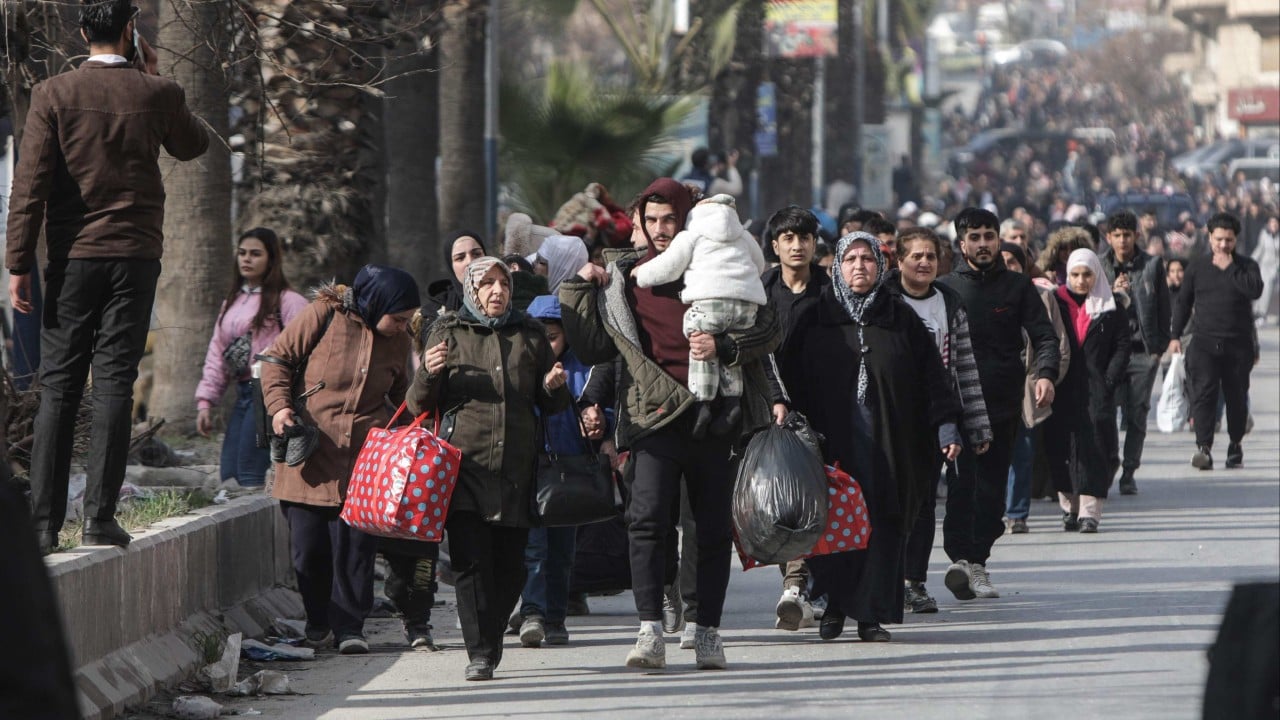
Ceasefire Brings Hope and Gridlock as Over 150,000 Lebanese Rush Home A fragile ceasefire between Israel and the Lebanese militant group Hezbollah has triggered a massive, cautious return of displaced civilians to southern Lebanon, even as the agreement faces immediate accusations of violation and fails to address the conflict's root causes. Tens of thousands of people clogged roads heading south from Beirut and other areas of refuge on Tuesday, creating heavy traffic as families seized the pause in fighting to check on homes and belongings [131333]. The ceasefire, announced by French President Emmanuel Macron as a 10-day deal, halted weeks of intense cross-border rocket fire and airstrikes that had displaced over 150,000 people on both sides of the border [131333][131332]. However, the truce began under a cloud of mutual suspicion. The Lebanese army reported several alleged Israeli violations of the ceasefire just hours after it took effect [131315][131473]. Hezbollah stated it had responded to Israeli military actions, underscoring the fragility of the calm [131473]. President Macron warned that continued military action would directly threaten the new agreement [131332]. The diplomatic effort behind the ceasefire is part of a broader U.S.-led initiative, with President Donald Trump inviting leaders from both nations to Washington for talks [131315]. Analysts note the local truce is also linked to wider regional negotiations, as Israel views Hezbollah as a proxy for Iran, and U.S. officials seek a broader agreement with Tehran [131129][130739]. Despite the mass movement of people returning home, authorities have urged caution, noting the situation remains unstable and a permanent solution is not yet in sight [131333][131441]. The core disputes—including Israel's military presence in contested border areas and the long-standing international demands for Hezbollah to disarm—remain entirely unresolved, leaving the ceasefire as a temporary pause rather than a path to peace [131473][131441]. Lebanese Families Rush Home as Israel-Hezbollah Truce Holds Macron's 10-Day Ceasefire Deal: A Fragile Pause in Israel-Lebanon Fighting Fragile Lebanon Truce Begins Amid Accusations Ceasefire Under Fire: Lebanon Reports Israeli Violations Hours After Truce Begins Lebanon's Fragile Truce: A Deal That Solves Nothing Local Israel-Lebanon Ceasefire May Complicate U.S.-Iran Talks Israel Agrees to Lebanon Ceasefire in Broader Deal with Iran

China Bets Billions on AI Chips and Fusion to Break US Tech "Chokehold"
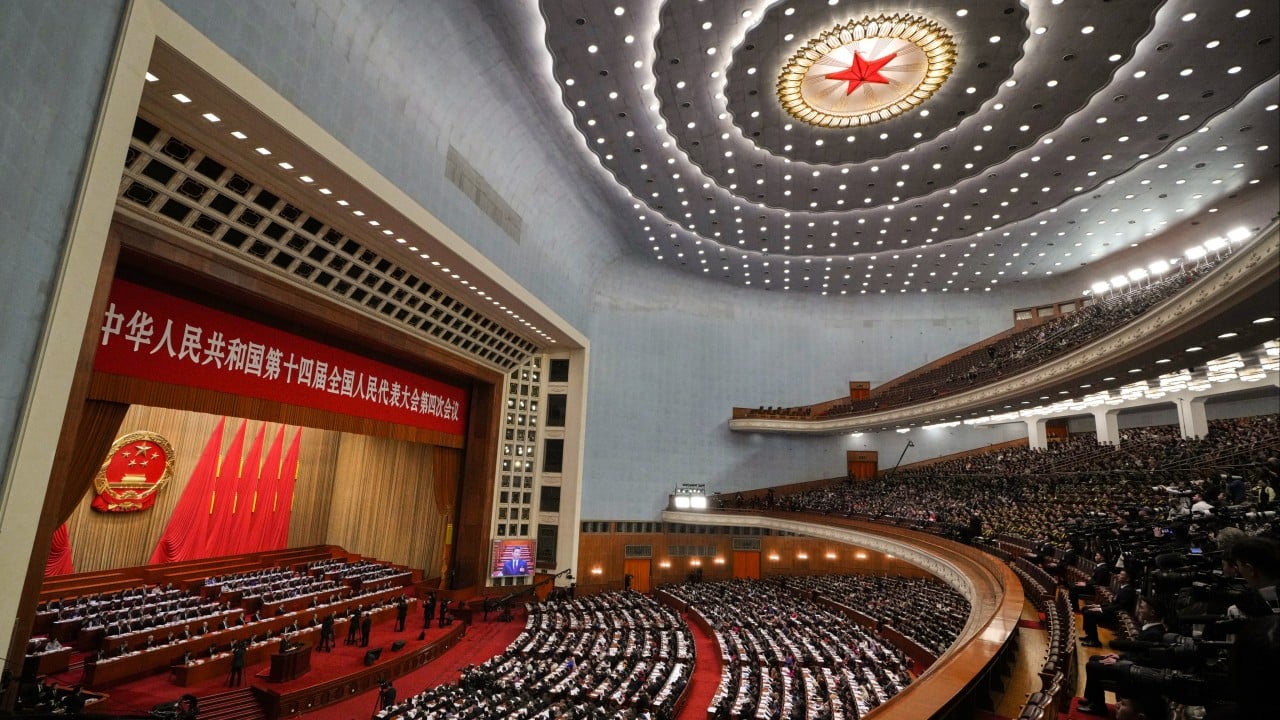
China Bets Billions on AI Chips and Fusion to Break US Tech "Chokehold" China is mobilizing massive state-backed investment and a coordinated national strategy to achieve self-sufficiency in critical technologies, aiming to break a U.S.-led "chokehold" on advanced semiconductors and dominate next-generation fields like artificial intelligence and nuclear fusion. Multiple Chinese provinces and cities are rolling out major funding initiatives targeting these strategic sectors. The eastern technology hub of Zhejiang announced a five-year plan to achieve breakthroughs in manufacturing advanced AI chips as small as 3 nanometers [51155]. Shanghai launched a $10 billion investment plan focused on microchips and AI [43531]. Nationally, a new state-backed semiconductor fund worth over $47 billion has been established to build a domestic supply chain for chipmaking equipment [86995]. This spending surge is part of a formal national blueprint. China's draft 15th five-year plan for 2026-2030 directs massive state resources toward frontier technologies including AI, advanced defense, and nuclear fusion—the process seen as a potential source of limitless clean energy [95150]. The overarching goal is to eliminate foreign technological "chokepoints" and secure leadership in science and innovation [95150]. The strategy marks a pivotal shift in China's industrial policy, from absorbing foreign technology to aggressively creating its own in next-generation fields [59734]. The approach is defined by state coordination, deploying AI as a core component of national infrastructure aligned with government planning [109135]. At least 22 provincial-level governments have published economic plans prioritizing high-tech industries like semiconductors and AI, aligning with these national goals for technological advancement and supply chain security [19492]. President Xi Jinping recently underscored this focus during an inspection of a major technology innovation park in Beijing, emphasizing the drive for "high-level" technological independence [71486]. Private tech giants are aligning with this national directive. Xiaomi announced it is intensifying a major five-year investment plan into core technologies like semiconductors and AI, stating that such spending is essential for growth and aligns with the goal of self-reliance [86064]. The push extends to alternative chip architectures. Chinese companies are advancing in silicon photonics—AI chips that use light instead of electricity—with one leading firm now seeking a public stock listing [129740]. The national tech budget also allocates over $61 billion for "future industries" including satellite internet and brain-computer interfaces, sectors that closely mirror the projects of innovators like Elon Musk [93804]. Analysts view the concerted effort as a direct response to U.S. export controls on advanced chipmaking technology [86995]. The intensifying rivalry positions technological self-reliance as a key battlefield for economic and strategic advantage between the two superpowers [51155]. China Targets 3nm AI Chips to Break US "Chokehold" China's New Plan: Beat US Tech Rivals with AI and Fusion Power China's Tech Pivot: From "Catch-Up" to Cutting-Edge AI War: US Bets on Markets, China Bets on Control China Bets $47 Billion to Break the Chip Barrier Shanghai Bets $10 Billion on Chips and AI in Tech Race China's AI Chip Race: A New Challenger Eyes IPO China's $62 Billion Bet Mirrors Musk's Vision Chinese Provinces Prioritize Tech and Self-Reliance in New Economic Plans Xi Inspects Tech Park, Stakes Claim in Global Innovation Race Xiaomi Bets Billions on Chips and AI as Rivals Build Robots


Latest Articles

Top UK Diplomat Quits After Clashing Over Cuts
A senior British civil servant, brought in to slash costs at the Foreign Office, has resigned after a short and turbulent tenure. Olly Robbins, a po...