Latest News
Stay updated with the latest news and articles
Top Stories
China Bets Billions on AI and Chip Breakthroughs to Challenge US Tech Dominance
China Bets Billions on AI and Chip Breakthroughs to Challenge US Tech Dominance China is pouring tens of billions of dollars into a state-led campaign to achieve self-sufficiency in advanced semiconductors and artificial intelligence, aiming to break a U.S. "chokehold" on critical technology and secure its future as a global leader. The national push, detailed in new provincial and city-level economic plans, directs massive resources toward developing cutting-edge AI chips and mastering their production [51155][19492]. Shanghai alone has launched a $10 billion investment plan focused on microchips and AI, among other sectors [43531]. This follows the launch of a new national semiconductor investment fund worth over $47 billion, targeting the advanced equipment needed to manufacture chips [86995]. A key goal is to manufacture semiconductors as small as 3 nanometers, a direct effort to counter U.S. export restrictions that limit China's access to the latest chipmaking technology [51155]. The broader national strategy, outlined in China's latest five-year planning cycle, prioritizes breaking foreign technological "chokepoints" in strategic industries like AI and next-generation energy, including nuclear fusion [95150]. This marks a definitive pivot in China's industrial strategy, moving from acquiring foreign technology to aggressively creating its own in next-generation fields [59734]. The approach contrasts with the U.S., where AI development is largely market-driven; China's model is defined by state coordination and the systemic integration of AI as national infrastructure [109135]. Beyond hardware, China is building a strategic advantage through the massive, everyday use of AI across its economy. Analysts note that while the country may still rely on some U.S.-designed chips, its scale of real-world AI application creates a cycle of more data and better models that is difficult for competitors to match [129427]. The funding push aligns with global technological frontiers, with China's state budget allocating over $61 billion for "future industries" like satellite internet, electric vehicles, and brain-computer interfaces—sectors prominently championed by innovators like Elon Musk [93804]. The concerted effort signals a deepening tech rivalry where China is betting on centralized planning and vast investment to challenge Western technological hegemony. China Targets 3nm AI Chips to Break US "Chokehold" Chinese Provinces Prioritize Tech and Self-Reliance in New Economic Plans Shanghai Bets $10 Billion on Chips and AI in Tech Race China Bets $47 Billion to Break the Chip Barrier China's New Plan: Beat US Tech Rivals with AI and Fusion Power China's Tech Pivot: From "Catch-Up" to Cutting-Edge AI War: US Bets on Markets, China Bets on Control China Leads AI Race Not in Chips, But in Daily Use China's $62 Billion Bet Mirrors Musk's Vision


Climate Crisis Becomes Daily Reality as Extreme Weather Ravages Continents in 2025
Climate Crisis Becomes Daily Reality as Extreme Weather Ravages Continents in 2025 The year 2025 marked a grim turning point where the climate crisis moved from a looming threat to a disruptive daily reality, with extreme weather events causing widespread damage and loss across Europe and Africa while scrambling ecosystems worldwide. Scientists confirm that last year was Earth's third hottest on record, but the defining feature was a relentless series of costly disasters [49594]. Europe faced a year of climate catastrophes, from devastating floods to scorching heatwaves and wildfires, with countries still managing costly recoveries [36941]. A major UK conservation charity warned that nature was pushed to a "breaking point" by a destructive cycle of storms, heat, drought, and floods [36898]. Experts link the increasing frequency and intensity of these events directly to human-caused climate change, driven by greenhouse gas emissions [36941]. They warn that without urgent action to cut emissions, such severe weather may become standard [36941]. The impacts extended far beyond Europe. A report from the World Meteorological Organization (WMO) confirmed the severe toll in Africa, where extreme weather killed thousands, impacted millions, and caused billions in economic losses [113458]. In Eastern Africa, a "triple planetary crisis" of climate change, biodiversity loss, and pollution is directly threatening food security by ruining crops and killing livestock [91481]. The disruption is also fundamentally altering natural systems. New fishing bans are being enacted globally as rising ocean temperatures and shifting currents force fish to migrate to new areas at unexpected times, rendering traditional fishing calendars unreliable [129824]. On land, beekeepers in the Democratic Republic of the Congo are reporting hive failures due to rising temperatures and shifting seasons, threatening both a key food source and a traditional livelihood [128278]. In response to the escalating crisis, the United Nations Environment Assembly (UNEA-7) concluded with a strong call for accelerated global action, urging countries to enhance cooperation on climate change, biodiversity loss, and pollution [21446]. Europe's 2025 Weather: A New Normal of Extremes? 2025: The Year the Weather Broke UK Wildlife Pushed to "Breaking Point" by Extreme Weather in 2025 Climate Crisis Costs Africa Billions, Claims Thousands Triple Planetary Crisis Starves East Africa Fishing Bans Begin as Climate Change Scrambles Ocean Life Bees Vanish as Congo Feels the Sting of Climate Change UN Environment Assembly Demands Urgent Global Action on Climate and Biodiversity
Trump's Threats Rattle Global Order as Allies Scramble for "Plan B"
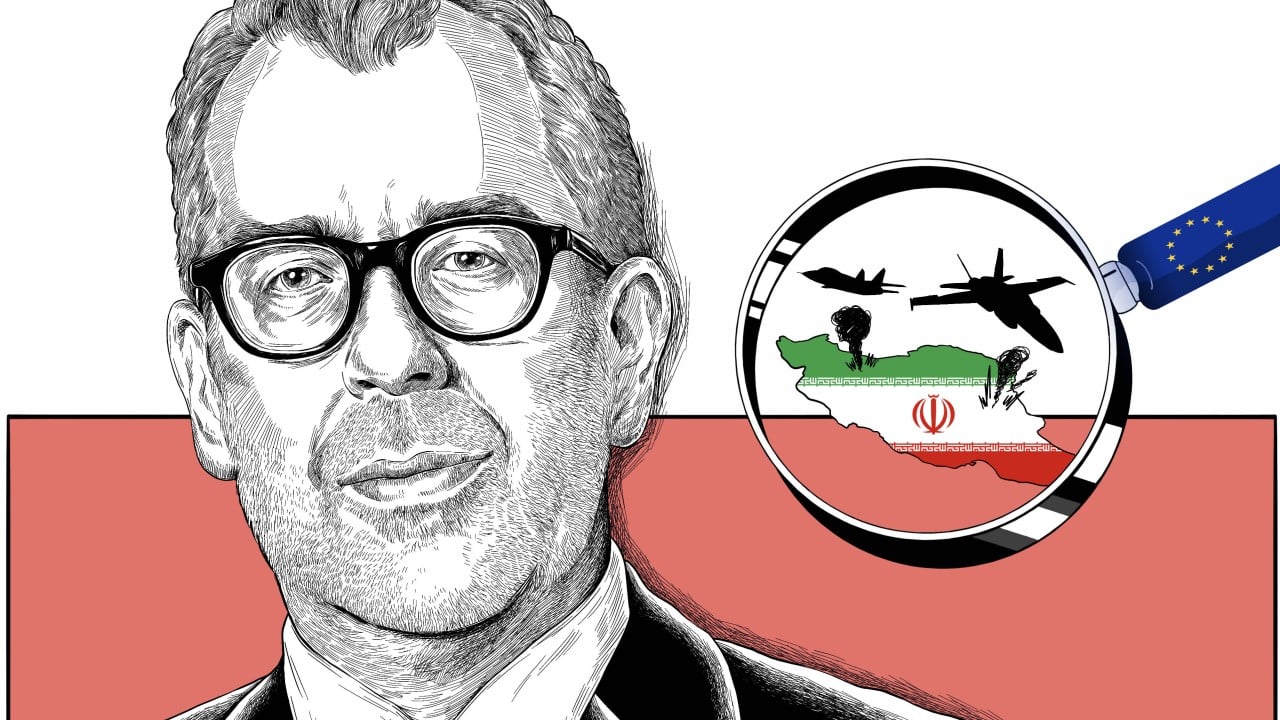
Trump's Threats Rattle Global Order as Allies Scramble for "Plan B" A wave of international unease is sweeping across world capitals as allies of the United States, unsettled by the rhetoric and policy threats of former President Donald Trump, are actively preparing to distance themselves from Washington and forge more independent paths. From Europe to Asia, nations are publicly criticizing U.S. statements, recalibrating strategic relationships, and quietly drafting contingency plans for a future without reliable American support. The strain is most visible in the transatlantic alliance. European officials, alarmed by Trump's repeated criticism of the North Atlantic Treaty Organization (NATO), are now developing a "Plan B" to manage a potential sudden U.S. withdrawal from the 32-member military pact [130130]. This planning signifies a profound loss of confidence in America's commitment to collective defense, a cornerstone of post-war security. Simultaneously, European strategists are calling for a fundamental rethink of the bloc's foreign policy, arguing it must define its own interests independent of both the U.S. and China. Sven Biscop, a leading EU foreign policy specialist, warns that Europe lacks a coherent China strategy and can no longer assume permanent American support, urging the bloc to build a more balanced partnership that functions regardless of who occupies the White House [130384]. In Asia, similar shifts are underway. South Korea has taken a notably tougher diplomatic stance against Israel, a move analysts interpret as a signal of Seoul's growing political confidence and a desire to shape a foreign policy more independent from Washington [130017]. Meanwhile, Indonesia's response to a new U.S. military proposal has been slow and confused, testing its "free and active" foreign policy doctrine as it struggles to balance between major powers [130409]. The global recalibration was evident at the World Economic Forum in Davos, where world leaders issued warnings about a breaking global system and made indirect criticisms of the United States while avoiding direct condemnation of China [57270]. This cautious engagement with Beijing marks a significant shift, driven by anxiety over Trump's potential return and his promises to enact aggressive new trade barriers, including tariffs of over 60% on Chinese goods [129238]. The uncertainty is forcing unusual diplomatic alignments. Leaders from Australia and Malaysia recently found common ground in a rare, unified rebuke of Donald Trump after he criticized Pope Francis, highlighting how world leaders are increasingly forced to manage the international fallout from the former president's statements [130414]. Analysts note these parallel developments—contingency planning in Europe, strategic pivots in Asia, and global criticism of U.S. rhetoric—point to a historic moment of change. Nations are not waiting to see if America's political landscape stabilizes but are instead taking proactive steps to secure their interests in a world where U.S. leadership is seen as increasingly unpredictable and transactional. Europe Considers "Plan B" for a U.S. Exit from NATO Europe Has No China Plan, Must Rethink US Ties, Top Strategist Warns South Korea Shifts Stance on Israel, Signaling New Independence from U.S. Indonesia's "Free and Active" Foreign Policy Under Strain World Shifts Toward China as Trump Upends Old Order China's Xi Warns Against "Law of the Jungle" Amid Rising U.S. Tensions Trump's Pope Remark Draws Rare, Unified Rebuke from Global Leaders
Tourism Hotspots Pivot to New Markets and Experiences as Global Travel Surges
Tourism Hotspots Pivot to New Markets and Experiences as Global Travel Surges From the ski slopes of Kashmir to the tropical beaches of Hainan, global tourism is undergoing a rapid transformation, driven by shifting geopolitics, celebrity influence, and a search for deeper cultural experiences. Destinations are adapting quickly to capture new visitor flows and manage the pressures of rising popularity. In Asia, geopolitical shifts are redrawing tourist maps. China's tropical island of Hainan is experiencing a massive influx of Russian visitors, becoming a warm-weather refuge as traditional destinations are cut off by war and sanctions [128786]. Direct flights from Moscow have resumed, and local businesses have rapidly adapted with Russian-language menus and payment systems to welcome the surge. "Russian tourists are choosing Hainan because it's one of the few friendly, visa-free, warm places they can fly to directly," a tourism analyst said [128786]. Similarly, South Korea set a new tourism record in March, with 2.06 million foreign arrivals, driven significantly by returning Chinese travelers and the powerful draw of cultural exports like K-pop [130391]. The comeback tour of global superstars BTS is credited as a major factor in the historic first-quarter boom, which saw 4.76 million visitors and a 23% increase from the previous year [130391]. Beyond mass appeal, niche and experience-driven travel is also booming. In China, a wave of young, predominantly female tourists dubbed "history fangirls" are embarking on solo pilgrimages to remote historical sites and ancient tombs, fueling a deeper form of heritage tourism [81566]. Meanwhile, popular culture continues to create instant attractions, as seen in Venice where a simple wooden dock, dubbed the "Kardashian jetty," now draws crowds because it was used by a celebrity during a high-profile wedding [51924]. Destinations are actively working to harness these trends for economic stability. The Indian-administered region of Kashmir is aggressively rebranding from a conflict zone to a ski destination, investing in resorts like Gulmarg to build a new tourism-driven economy [46233]. In Morocco's Atlas Mountains, communities that once relied on subsistence farming now predominantly work in tourism, guiding visitors to North Africa's highest peak, Mount Toubkal [83740]. Industry experts note a broader trend toward "meaningful tourism," where travelers seek personalized experiences over simple landmark checklists, a shift expected to define travel in 2026 [36959]. This demand supports community-based models like Village Ways in the Indian Himalayas, which for 21 years has used trekking tours to provide income for remote villages and curb urban migration [100125]. The global competition for visitors remains fierce. Cape Town's Table Mountain is vying for an unprecedented sixth title as the World's Leading Tourist Attraction at the 2026 World Travel Awards, a recognition that officials say brings more international visitors and supports local jobs [130290]. Russian Surge: Hainan Becomes China's Warm-Weather Refuge BTS Comeback Fuels Record Tourist Surge in South Korea China's 'History Fangirls' Hunt Tombs, Write Books Venice's New Tourist Hotspot: The 'Kardashian Jetty' Ski Resorts or Soldiers? Kashmir Bets on Tourism Over Conflict From Walnuts to Tourists: A Changing Valley Leads to North Africa's Peak Beyond Paris: TV Drives 2026 "Meaningful Tourism" Trend Village Tourism Pioneer Fights Urban Flight in India's Himalayas Table Mountain Aims for Sixth "World's Best" Crown

Over 100,000 Flee War, Disaster, and Despair in Global Migration Surge
**Over 100,000 Flee War, Disaster, and Despair in Global Migration Surge** A surge of people is crossing borders worldwide, driven by war, environmental disaster, and economic collapse. From Sudan's mountains to the English Channel, record numbers are on the move, seeking safety and stability far from home. In Sudan, the civil war has triggered a massive refugee crisis. Hundreds of thousands have fled to the remote Nuba Mountains, overwhelming the fragile, self-governed region between Sudan and South Sudan [129527]. The influx is straining scarce resources like food, water, and shelter, threatening to destabilize one of the area's few remaining havens. Meanwhile, a dramatic population exodus is underway in southern Turkey following last year's devastating earthquakes. A new study shows the net migration rate from the disaster zone has increased fivefold, with cities like Malatya, Hatay, and Adıyaman losing the largest share of their residents [68788]. Most are relocating to other parts of Turkey, creating a long-term demographic shift. In Myanmar, a military coup and subsequent conflict have crippled the economy, sparking a major wave of departures. The exodus intensified after the army announced it would enforce a conscription law, forcing young people into service. Thousands of skilled professionals and graduates are now leaving, with Japan emerging as a primary destination [24735]. European borders are also seeing significant shifts. New data from the European Border and Coast Guard Agency (Frontex) reveals that Egyptian nationals have become the leading group of African migrants entering Europe irregularly this year, with just over 16,000 crossings recorded [40271]. Most depart from Libya aiming for Italy. Separately, more than 54,000 Algerians have migrated to Europe since 2020, with most heading to France, a steady stream driven by limited opportunities at home [15039]. The dangerous English Channel crossing remains a frequent route, with over 250 migrants reaching Britain in small boats on a single day following calm seas. The arrivals this year have now surpassed 10,000 [93075]. Conflict is creating complex, two-way flows elsewhere. At the mountain border between Iran and Turkey, some Iranians are fleeing into Turkey to escape constant bombing and internet blackouts. In a contrasting movement, others are traveling back into Iran from Turkey, driven by fears for family members trapped in the conflict zones [119947] [95980]. For those displaced by war, like Ukrainians, relocation offers a stark new reality. Many in Malta describe the move not as a search for higher pay, but as an embrace of a completely different, chaotic, and sun-drenched life far from the conflict [45837]. In the Pacific, climate change is now driving official migration. The first group of citizens from the low-lying island nation of Tuvalu has arrived in Australia under a new special visa program, making them among the world's first officially recognized "climate migrants." The program allows up to 280 Tuvaluans to relocate each year due to the threat of rising sea levels [25540] [10674]. Sudan's War Floods a Fragile Mountain Refuge Earthquake Exodus: Fivefold Surge in Net Migration Rocks Southern Turkey Myanmar's Lost Generation Flees to Japan Egyptians Now Top African Migrants to Europe, EU Agency Reports Over 54,000 Algerians Sought New Lives in Europe Since 2020 Calm Seas, Crowded Boats: Over 250 Migrants Cross Channel to England Iranians Cross Border in Both Directions as War Intensifies Two-Way Flight: Iranians Flee Bombs, Others Rush Back to Family From War to Sun: Ukrainians Find Refuge—and Noise—in Malta Tuvalu Citizens Arrive in Australia as First Official Climate Migrants Australia Opens Special Visa Pathway for Climate-Affected Tuvaluans

Trump Eyes Greenland Purchase, Pressures NATO Allies in Unorthodox Global Push
Trump Eyes Greenland Purchase, Pressures NATO Allies in Unorthodox Global Push President Donald Trump is renewing a controversial push to purchase Greenland while publicly pressuring European allies over military spending, combining real estate-style dealmaking with blunt foreign policy demands on the world stage. Speaking at the World Economic Forum in Davos, Switzerland, Trump questioned the value of the North Atlantic Treaty Organization (NATO) and stated the United States should be allowed to buy Greenland, a self-governing territory of Denmark [55297]. He lambasted European members of the defense alliance for not paying what he deemed their fair share, claiming the U.S. was treated "very unfairly" [55327]. The President's interest in acquiring the vast Arctic island is not new, but his tactics have reportedly expanded. They now include floated cash offers to Greenlanders, threats of tariffs against Denmark, and a refusal to rule out using military force, though he later stated he does not want to use force to acquire it [50444][55327]. The Danish and Greenlandic governments have consistently stated the island is not for sale [50444]. Analysts note the approach largely ignores traditional "soft power" diplomacy—the use of cultural influence and partnerships—in favor of direct demands and economic nationalism [55327]. Historians have compared the territorial ambition combined with a dismissal of diplomatic norms to 19th-century imperial behaviors [58552]. Trump's Davos appearance highlighted his rejection of the forum's core ideals of open borders and multilateral cooperation, even as his wealth and brand-driven identity reflect aspects of its elite globalism [54269]. His speech underscored a focus on challenging the post-World War II international order, showing disdain for alliances and rules he views as unfavorable to American interests [55515][58552]. Trump at Davos: Questions NATO, Wants to Buy Greenland Trump at Davos: Skips Soft Power, Targets Greenland and NATO Allies Trump Eyes Greenland: Cash, Threats, and Military Force Trump's 'New Imperialism': Land Grabs and a Rejected World Order Trump Is the Davos Man Davos' World Order Crumbles as Trump Takes the Stage

India's Farmers Block Highways, Fearing U.S. Trade Deal Will Slash Crop Prices
**India's Farmers Block Highways, Fearing U.S. Trade Deal Will Slash Crop Prices** A wave of protests has swept across India as farmers and trade unions strike against a newly announced trade agreement with the United States, fearing the pact will flood the market with cheap imports and devastate their livelihoods [75183]. Protesters used tractors and trucks to block major highways and railways during a nationwide strike this week [75183]. The core of their anger is a concern that the deal, struck during a recent high-level diplomatic visit, will lower import taxes on American agricultural goods [75183]. Farmers argue this would allow subsidized U.S. produce to undercut locally grown staples like wheat and rice, crashing prices they receive for their crops [73750]. The protests have focused on key entry points to the capital, New Delhi, with police bolstering security at border areas [73750]. Farmer leaders are demanding the government reject the deal entirely, stating it favors American corporate interests over India's agricultural sector [75183]. They are calling for a legal guarantee that the government's existing system of minimum support prices—a safety net that buys key crops at set rates—remains untouched [73750]. The Indian government has sought to reassure the powerful farming community, a crucial voting bloc, stating that the trade agreement includes safeguards to protect the agriculture sector from sudden price shocks [75183]. Officials maintain that the minimum price system is protected under the new terms [73750]. However, protest leaders express deep distrust of these assurances [75183]. The standoff highlights the government's difficult task of balancing a major diplomatic win that strengthens ties with the United States against the risk of domestic instability fueled by one of the country's largest economic groups [73750]. Negotiations between farmer unions and government officials are ongoing [73750]. Indian Farmers Strike, Fearing U.S. Trade Deal Will Flood Market India's Farmers Protest as Modi-Trump Trade Pact Threatens Key Crop Prices
U.S. Forces Capture Venezuelan President Maduro in Military Strike, Plan to "Run" Country
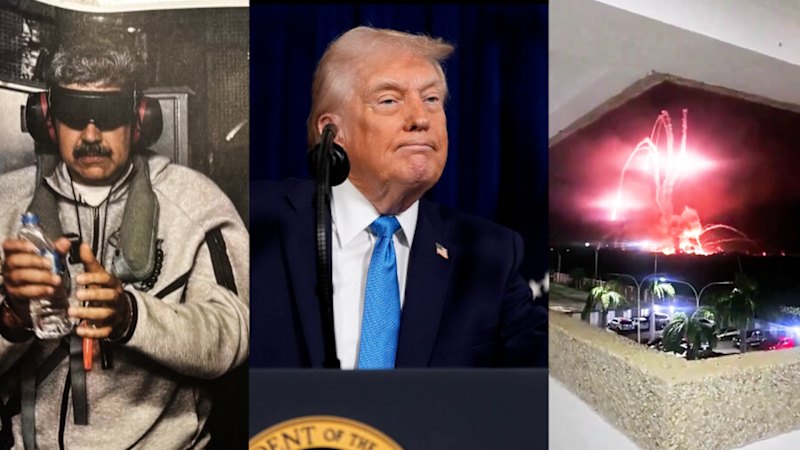
U.S. Forces Capture Venezuelan President Maduro in Military Strike, Plan to "Run" Country U.S. military forces have captured Venezuelan President Nicolás Maduro and his wife, Cilia Flores, in a direct military operation on Venezuelan soil [41033][41227][41379]. The strike, which occurred on Saturday, marks an unprecedented escalation in the long-standing conflict between Washington and Caracas [41088][40970]. Following the capture, former U.S. President Donald Trump stated the United States will now "run" Venezuela, with a stated goal to "take back the oil" and fix the country's collapsed oil infrastructure [41227][40871][41525]. Venezuela holds the world's largest proven oil reserves, but its production has plummeted amid economic crisis [40871][42114]. Maduro and his wife have been taken out of the country and are expected to face criminal charges in a New York court [41136][40970]. The specific charges include accusations of "narco-terrorism" and running a "narco terrorist organisation" [40942][40970]. The U.S. has long labeled Maduro's government as illegitimate, recognizing opposition leader Juan Guaidó as the country's legitimate president since 2019 [41379][40505]. American officials have accused Maduro's administration of corruption, human rights abuses, and ties to drug cartels [41136][40668]. The operation has created an immediate power vacuum and deep uncertainty for Venezuela's 30 million people [41136][42114]. There has been no immediate statement from the Venezuelan military or the remnants of Maduro's government regarding a successor [41379][40668]. The action sets a major precedent for direct military intervention and is expected to trigger a severe political crisis [40737][41525]. U.S. Forces Capture Venezuelan President in Military Strike Venezuela Leader Ousted in U.S. Strike, Faces Charges in New York US Strikes Venezuela, Captures President Maduro U.S. Captures Venezuela's President in Secret Operation U.S. Forces Capture Venezuelan President Nicolás Maduro US Captures Venezuelan President in "Large-Scale Strike" U.S. Military Strike Captures Venezuelan Leader Maduro U.S. Captures Maduro: What Now for Venezuela? US Seizes Venezuelan President, Vows to "Run" Country and "Take Back the Oil" U.S. Claims Capture of Venezuelan Leader in Military Strike U.S. Strikes Venezuela, Captures President Maduro US Captures Venezuelan President in Military Strike U.S. Strikes Venezuela, Captures President Maduro Venezuelan President Captured in U.S. Military Raid
AI Babysits 400 Million Grandparents: China's Tech Giants Bet Big on Elderly Chatbots
AI Babysits 400 Million Grandparents: China's Tech Giants Bet Big on Elderly Chatbots Major Chinese technology companies are aggressively retooling their popular artificial intelligence (AI) chatbots to serve the country's rapidly growing elderly population, rebranding them as digital companions for seniors [129203]. The strategic pivot targets a massive demographic shift. By 2035, an estimated 400 million people in China will be aged 60 or over, representing a vast and largely untapped market for digital services [129203]. To appeal to this group, companies are rolling out practical, senior-specific features. The updated chatbots operate via voice commands, eliminating the need to type, and are trained to understand local dialects beyond formal Mandarin [129203]. Responses are deliberately programmed to be slower, louder, and more repetitive for clarity [129203]. These "Auntie AIs" are designed to provide constant companionship and simple daily assistance. Seniors can ask the chatbots to tell stories, play traditional opera, or issue reminders to take medication [129203]. For families, the technology offers a new way to monitor and check in on older relatives who may live alone [129203]. Tech analysts see significant business potential in making AI feel familiar and trustworthy rather than complex to the elderly demographic [129203]. If successful, this nationwide push could fundamentally alter the experience of aging for millions, embedding friendly AI voices as a common household feature across China [129203]. China’s AI Chatbots Get a New Job: Babysit Grandma


Olympic Dreams Drive Athletes Through Setbacks, Delays, and Defiance
Olympic Dreams Drive Athletes Through Setbacks, Delays, and Defiance From GPS failures to political bans, athletes worldwide are navigating significant obstacles in their pursuit of major sporting competitions, demonstrating resilience and a singular focus on their goals. A British athletics team arrived late to the World Indoor Championships in Poland after a fault with their plane's Global Positioning System (GPS) caused a travel delay [107260]. Despite the disruption, star middle-distance runner Keely Hodgkinson remained fixed on her objective. "I'm looking forward to it," Hodgkinson said. "This last month has been great. I couldn't ask to be in a better position" [107260]. In winter sports, a trio of American sisters continues a years-long fight to reach the Olympic Games. Lauren, Alli, and Sam Macuga, who each specialize in a different skiing discipline, are still training with the goal of qualifying for the 2026 Winter Olympics in Italy after missing recent Games [70176]. Their efforts come as major events face logistical challenges; a heavy snowstorm recently forced the postponement of the women's slopestyle skiing finals at a Winter Games, though other competitions proceeded [78851]. The struggle for opportunity is even more profound for a group of Afghan refugee women. After the Taliban's 2021 ban on women's sports forced them to flee Afghanistan, they have rebuilt a community around soccer in Houston, Texas [20194]. The team allows them to reclaim their identity and passion for sport in a new home. Meanwhile, at the elite level, the determination to compete is palpable. Zambia's Patson Daka scored a dramatic 92nd-minute diving header to salvage a 1-1 draw against Mali in an Africa Cup of Nations opener, showcasing the high stakes of continental football [32394]. In marathon running, Zimbabwe's Nobuhle Nobunkosi Tshuma displayed extraordinary will, crawling across the finish line to secure third place and a $5,300 prize in a South African ultramarathon after collapsing meters from the line [127681]. Paralympian Dani Aravich is undertaking a particularly grueling challenge, competing in both track sprints and the long jump at the Games. She aims to use her platform to increase awareness and inspire young athletes with disabilities [95020]. British Team's GPS Fails, But Star Athlete's Focus is Unbreakable Olympic Dream Still Alive for Three-Sister Ski Team Too Much Snow: Women's Slopestyle Postponed at Winter Olympics Afghan Refugee Women Build New Team and Community on the Soccer Field Daka's Last-Minute Header Stuns Mali in AFCON Opener Zimbabwe Runner Crawls to Bronze, Wins $5,300 Prize Paralympian Races for Two Medals, One Mission

Latest Articles
Orbán's Protégé Topples Him After 16 Years
A former insider has ended Hungary's long political era. Péter Magyar, once a key supporter of Prime Minister Viktor Orbán, led the movement that def...
Harry and Meghan's 'Private Tour' Sparks Exploitation Claims
Prince Harry and Meghan Markle face new criticism over their recent trip to Australia. Royal experts are accusing the couple of conducting a "faux ro...
Billionaire's Campaign Lead Clashes With Private Prison Investments
Billionaire activist Tom Steyer now leads the race to be California's next governor. A new poll shows him 21 percentage points ahead of his closest c...
Las Vegas Tourism Drops as Prices Scare Visitors, Says Pawn Stars' Rick Harrison
Tourism to Las Vegas fell by 7.5% last year. The decline was reported by the Las Vegas Convention and Visitors Authority (LVCVA). Rick Harrison, sta...
From Army Boots to Championship Belts: Flip Gordon's Unlikely Journey
Flip Gordon is now a champion in Mexico's top wrestling league, CMLL. But his path to the ring was shaped by an unexpected place: the U.S. Army Natio...
Swalwell Faces Disbarment Over Misconduct Claims
U.S. Representative Eric Swalwell has resigned from Congress. He left amid multiple allegations of sexual misconduct. Legal experts now warn his tro...
Jade Cargill Aims to Stun "Stone Cold" at WWE Hall of Fame
Current WWE star Jade Cargill has revealed a major personal goal for the upcoming Hall of Fame ceremony. She says she is "very hopeful" to finally me...
Congressman's Campaign Paid Hotel at Center of Assault Claim
U.S. Representative Eric Swalwell’s campaign committee paid the hotel where a woman says he sexually assaulted her, according to financial records....
Nikki Glaser: "I Like It When My Boyfriend Cheats"?
A viral clip from comedian Nikki Glaser has ignited a fierce online debate about modern relationships. On a podcast, Glaser made a surprising confes...
DHS Official Killed: Alleged Vetting Failure Exposed
A U.S. Department of Homeland Security (DHS) official was killed by a naturalized citizen, according to agency statements. The incident has exposed w...
Kamala Harris: High Gas Prices Are "Direct Result" of Trump's Iran War
Former Vice President Kamala Harris directly blamed President Donald Trump for high U.S. fuel prices. She stated the costs are a result of his "war o...

Congressman's "Double Life": Colleagues Claim Ignorance of Misconduct Rumors
A senior US congressman rose to the top ranks of American politics while rumors of misconduct swirled around him. Key allies now say they knew nothin...
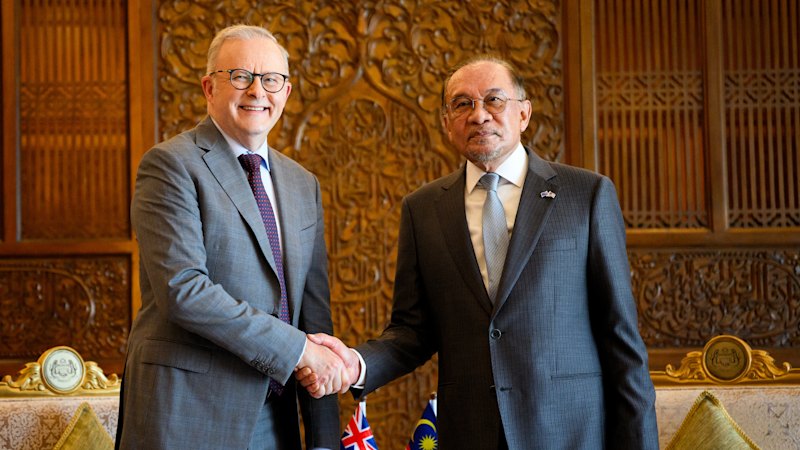
Trump's Pope Remark Draws Rare, Unified Rebuke from Global Leaders
Australian Prime Minister Anthony Albanese and Malaysian Prime Minister Anwar Ibrahim have jointly defended Pope Francis. Their statements come after...

Russia Targets Telegram, Risks Digital Revolt
Russia is preparing for a new phase in its war against Ukraine. However, the most critical fight may not be on the battlefield. It is happening insid...

China's Oil Tanker Turns Back as US, Iran Clash Over Hormuz
A Chinese-owned oil tanker reversed course in the Gulf of Oman this week. The move highlights China's delicate position as the United States and Iran...

Oil's New Normal: War and Risk Keep Prices High
A major war in the Middle East is reshaping global oil markets. The conflict between the United States, Israel, and Iran has caused a lasting price s...

Taiwan Opposition Leader Meets Xi in Beijing
The leader of Taiwan's main opposition party met with China's president in Beijing this week. It is the first such visit in ten years. Kuomintang (K...

Indonesia's "Free and Active" Foreign Policy Under Strain
Indonesia's foreign ministry is urging caution over a new US military proposal. This reveals a deeper challenge for Jakarta. Reports describe a prop...

Mark Mobius, Pioneer of Emerging Market Investing, Dies at 89
Mark Mobius, a pioneering investor who championed emerging markets, has died. He was 89. His death was announced in a statement on his LinkedIn acco...

Trump Announces First Israel-Lebanon Leader Call in Decades
U.S. President Donald Trump says the leaders of Israel and Lebanon will speak directly on Thursday. He stated this would be the first such high-level...