Latest News
Stay updated with the latest news and articles
Top Stories
Catastrophic Floods and Mudslides Kill Over 1,400, Devastate Southeast Asia
Catastrophic Floods and Mudslides Kill Over 1,400, Devastate Southeast Asia A series of catastrophic floods and landslides, triggered by days of exceptionally heavy rain, has left a trail of devastation across Southeast Asia, killing more than 1,400 people and affecting millions [17624][25217][20084]. The disasters have submerged villages, severed roads, and buried homes in mud, with Indonesia, Sri Lanka, Thailand, and Malaysia among the hardest-hit nations [17624][14786]. In Indonesia, the death toll has climbed to 995, with rescuers still searching for 226 missing people [25217]. Neighboring Sri Lanka reports 640 dead and 211 missing [25217]. Combined, the two nations have nearly 4 million citizens impacted by the destruction of homes, roads, and farmland [25217]. Southern Thailand has also suffered a severe loss of life, with authorities reporting at least 145 fatalities [14423]. The torrential downpours caused rivers to overflow and saturated hillsides, leading to destructive landslides across the region [14423][17624]. Emergency crews are working to provide aid and reach isolated communities, but their efforts are hampered by damaged infrastructure and continuing access problems [20084]. National governments and international aid agencies are mobilizing large-scale relief efforts, focusing on providing emergency shelter, clean water, and medical supplies to displaced survivors [17624][20084]. Authorities have warned of additional dangers, including further landslides and the spread of waterborne diseases in the aftermath of the floods [11385]. The full scale of the damage is still being assessed as rescue operations continue [14423][14786]. Deadly Floods and Landslides Claim Over 1,400 Lives Across Southeast Asia Massive Floods Kill Over 1,600, Affect Millions in Asia Deadly Floods and Landslides Claim Over 1,500 Lives Across Asia Deadly Floods and Landslides Claim Over 250 Lives in Southeast Asia Southeast Asia Reels From Widespread Flooding Deadly Floods and Landslides Claim Lives Across Southeast Asia

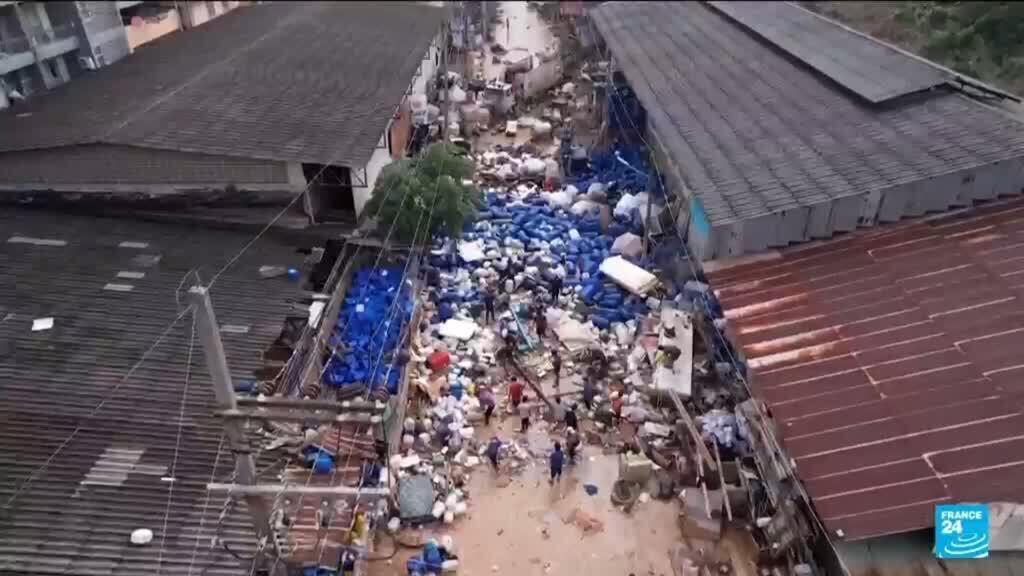
Fuel Crisis Sparks Global Panic: Protests, Price Hikes, and Emergency Government Measures
Fuel Crisis Sparks Global Panic: Protests, Price Hikes, and Emergency Government Measures A global fuel crisis, triggered by conflict in the Middle East, is sending shockwaves through the world economy, forcing emergency government action and sparking protests as pump prices hit historic highs. The immediate trigger is the war in Iran and attacks on key oil infrastructure, which have severely disrupted global supplies [128123] [117884] [127109] [95663]. This has caused the international price of crude oil to rocket, delivering the sharpest spike in fuel costs since the Ukraine war began [97612]. The impact is direct and severe for consumers. In South Africa, drivers rushed to gas stations ahead of a record midnight price hike [117884], with one predicted increase reaching up to 8 Rand per litre [95663]. Despite a government tax cut of 3 Rand per litre, the surge in global prices resulted in one of the steepest increases the country has ever recorded [117581]. The diesel price alone jumped by R7.51 in a single day [118106]. The crisis is forcing governments to intervene. Germany announced an emergency package, cutting fuel tax by 17 cents per litre and encouraging employers to give workers a one-time bonus of up to 1,000 euros to counter war-driven inflation [128123]. In Ireland, the cabinet held an emergency meeting in response to nationwide fuel protests that have entered a fifth day, with hundreds of petrol stations running dry after blockades of oil terminals [126425]. Supply chain bottlenecks are exacerbating the problem. Analysts note that even as crude oil prices steady, the key Strait of Hormuz shipping route remains closed, disrupting the global movement of refined fuel and keeping pump prices painfully high [116592]. The soaring costs are now rippling through the entire economy. In South Africa, security companies and water suppliers have immediately added surcharges to bills, while taxi associations warn of imminent fare increases [118106]. Hong Kong, which already pays the world's highest fuel prices, is bracing for a wave of "imported inflation" that will make everything from toilet paper to road maintenance more expensive within months [127109]. In China, drivers raced to pumps ahead of the country's biggest official fuel price jump of 2024 [109102]. Market analysts broadly warn that with Middle East tensions high, significant price relief for motorists is not expected in the near future [124783]. Germany Cuts Fuel Tax, Offers Worker Bonus to Counter War-Driven Inflation South Africa Braces for Record Fuel Price Surge Hong Kong Braces for Price Surge as Oil Crisis Hits Home Drivers Race to Pumps Ahead of China's Biggest Fuel Price Jump of 2024 **Fuel Crisis Forces Irish Cabinet to Emergency Talks** South Africa Braces for R8/Litre Petrol Shock South Africa Cuts Fuel Tax, But Drivers Still Hit by Record Price Hike Fuel Limits and War Surcharges Hit South African Metro Fuel Prices Climb as Gaza Ceasefire Hopes Fade Oil Prices Rocket, Hitting Drivers With Sharpest Spike Since Ukraine War Oil Prices Steady, So Why Is Petrol So Expensive? Fuel Shockwave: Water, Security Prices Surge After Diesel Spike
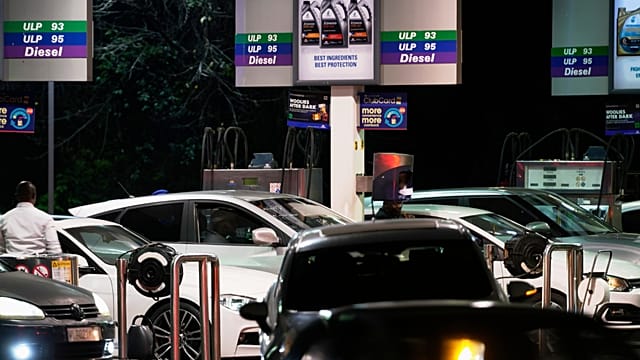
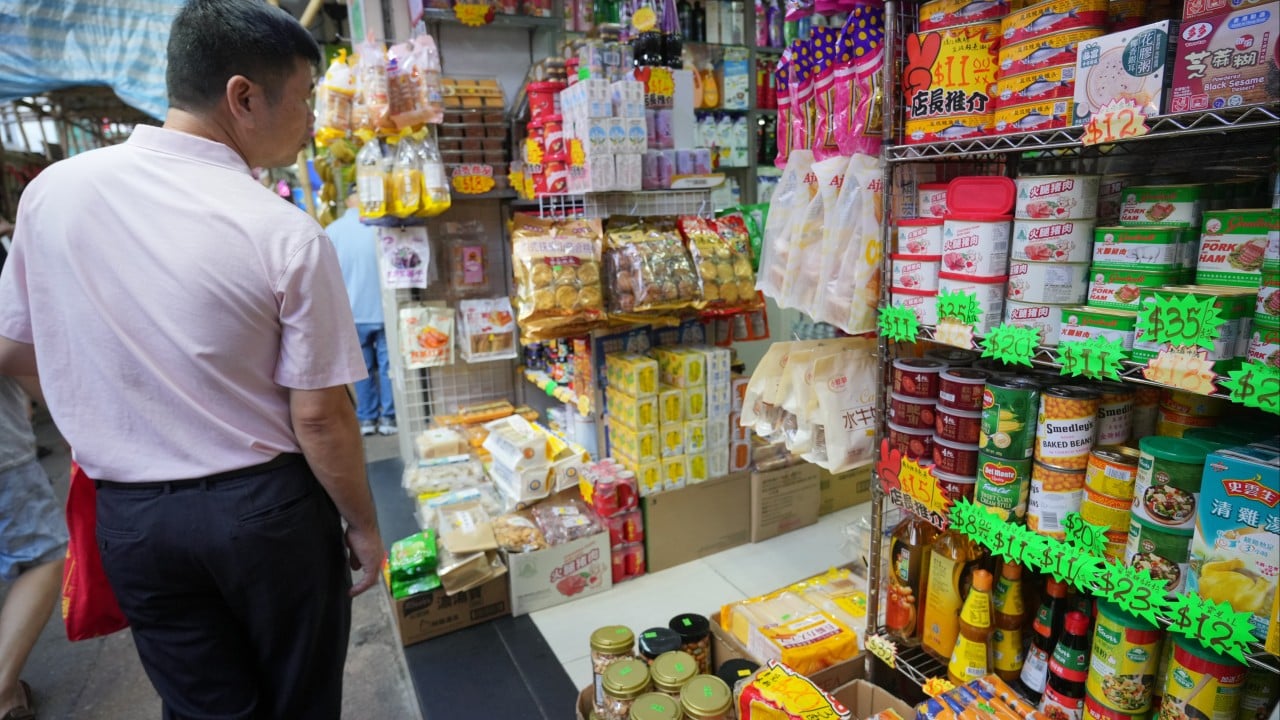
Syrian Army Clashes with Kurdish Forces in Aleppo, Sparking Mass Exodus of Tens of Thousands
Syrian Army Clashes with Kurdish Forces in Aleppo, Sparking Mass Exodus of Tens of Thousands Intense fighting has erupted between Syrian government forces and Kurdish-led militias in and around the city of Aleppo, shattering a fragile calm and triggering a new wave of mass displacement [44512][45585][45588]. The clashes, concentrated in the city's northern suburbs and key areas like the Castello road, have forced tens of thousands of civilians to flee their homes [43634][45588][44681]. The Syrian army has begun distributing evacuation maps to residents, indicating preparations for further military operations and urging people to leave for their safety [44681]. The violence pits the Syrian Arab Army against the US-backed Syrian Democratic Forces (SDF), a Kurdish-led coalition that controls large parts of northeastern Syria [43634][45585]. Both sides have exchanged artillery and small-arms fire, with each blaming the other for initiating the hostilities [44512][44088]. The fighting marks a significant escalation in long-running tensions over control of northern Syria [45585][49667]. This surge in violence follows a breakdown in political talks aimed at resolving the standoff between the Damascus government and the SDF [45585][45588]. A previous agreement to integrate the SDF into the national army has stalled, creating a vacuum that has now been filled with military action [45588]. Local aid groups report a rapid movement of displaced families seeking safety away from the front lines, though the exact number of people displaced is still being assessed [45585]. Those escaping join millions of other Syrians already displaced by the country's protracted civil war [45588]. The situation remains tense despite a brief ceasefire ordered after initial clashes, with analysts warning the violence threatens to unravel the relative stability in the region and could signal a dangerous new phase of conflict [32516][44512][49667]. Syria's Aleppo Truce Shatters, Thousands Flee as U.S. Mediates Aleppo Exodus: Fighting Erupts as Syria Peace Talks Fail Syrian Army Advances on Aleppo, Sparking Mass Exodus Syrian Army and US-Backed Forces Clash in Aleppo Syrian Army Distributes Evacuation Maps in Aleppo Amid Clashes Fresh Clashes Erupt Between Syrian Army and Kurdish Forces Syrian Forces and Kurds Clash, Then Halt Fire After Deadly Fighting Aleppo Clashes Follow Secret Syria-Israel Talks Syria Detains, Expels Kurds in Aleppo as US Bombs ISIS
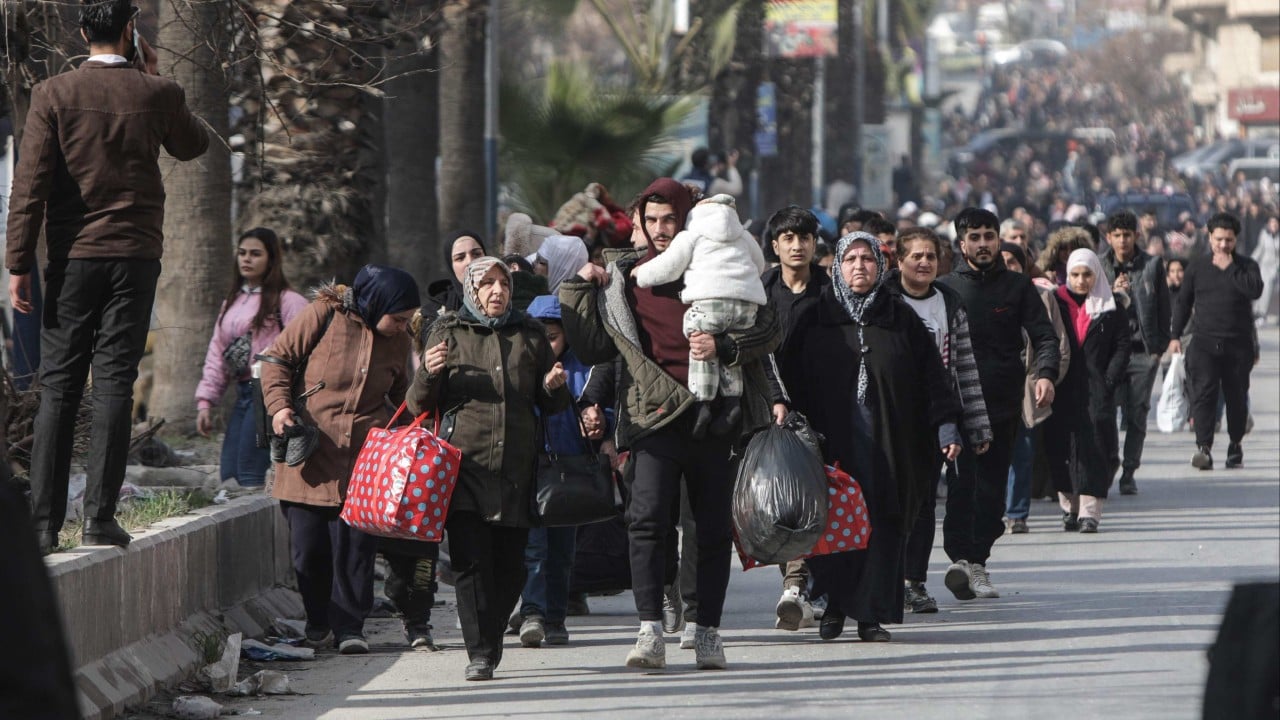

China Bets Billions on AI and Chips to Break US Tech "Chokehold"
China Bets Billions on AI and Chips to Break US Tech "Chokehold" A massive, state-coordinated push to achieve technological self-sufficiency is reshaping the global tech landscape, as China directs hundreds of billions of dollars toward breaking foreign dependencies in semiconductors and artificial intelligence (AI) [51155][95150][86995]. The drive is a direct response to U.S. export controls that restrict China's access to cutting-edge chipmaking technology, a strategy experts describe as a strategic "chokehold" [51155][86995]. In response, Chinese provinces and cities are launching enormous investment funds targeting these critical sectors. Shanghai recently unveiled a $10 billion plan focusing on microchips and AI, among other advanced industries [43531]. This follows the launch of a new national semiconductor fund worth over $47 billion, aimed at building a domestic supply chain for chip manufacturing equipment [86995]. Simultaneously, the eastern tech hub of Zhejiang announced a five-year plan to develop advanced AI chips as small as 3 nanometers [51155]. This investment surge is part of a formal national strategy outlined in China's latest five-year plan, which prioritizes frontier technologies like AI and nuclear fusion to secure a "steadier footing" and reduce reliance on other nations [95150]. Analysts note a clear strategic pivot from a decades-long policy of absorbing foreign technology to one focused on creating and dominating next-generation fields [59734]. The approach highlights a fundamental divide in the U.S.-China tech race. While American development is largely market-driven, China's strategy is defined by state coordination, deploying AI as a core component of national infrastructure aligned with government planning [109135]. The goal is to transition Chinese firms from followers to global leaders in high-tech industries [59734][18411]. The scale of China's manufacturing capacity and state support is leading to what analysts call "China Shock 2.0"—a potential flood of advanced goods like electric vehicles and semiconductors that could lower global prices and disrupt established international companies [128200]. This competition extends beyond factories to a broader "quiet war" for resources and supply chain control, as both superpowers race to secure the minerals and technologies that power the modern economy [47692]. AI Power Demand Positions China's "Electrostate" for Gain Amid Middle East Conflict China's New Plan: Beat US Tech Rivals with AI and Fusion Power China Bets $47 Billion to Break the Chip Barrier Shanghai Bets $10 Billion on Chips and AI in Tech Race China's Tech Pivot: From "Catch-Up" to Cutting-Edge AI War: US Bets on Markets, China Bets on Control China's "Shock 2.0": A Flood of High-Tech Goods Reshapes Global Industries The New Great Game: A U.S.-China Clash Over Resources Begins China’s Corporate Giants Seek New Frontiers Abroad


Climate Crisis Hammers Global South, Killing Thousands and Costing Billions
Climate Crisis Hammers Global South, Killing Thousands and Costing Billions A cascade of climate-driven disasters is exacting a devastating human and economic toll across the world's most vulnerable regions, with new reports confirming thousands of deaths and economic losses in the billions. The impacts, from vanishing livelihoods to crippling food insecurity, underscore how the planetary ecological crisis is now a daily reality for millions. In Africa, extreme weather linked to climate change killed thousands of people, impacted millions more, and caused billions of dollars in economic losses in 2025 alone [113458]. The continent is experiencing rapid environmental disruption from record levels of heat-trapping greenhouse gases, with consequences that scientists warn will persist for generations [113458]. The crisis is stripping communities of their means of survival. In the Democratic Republic of the Congo, rising temperatures and shifting seasons are causing beehives to fail, threatening both a key food source and a critical traditional income for families [128278]. This collapse of a vital pollination service further jeopardizes local food security [128278]. Eastern Africa faces a dire "triple planetary crisis," where climate change, biodiversity loss, and pollution converge to starve the region [91481]. Extreme droughts and floods ruin crops and kill livestock, while pollution degrades the soil and water needed for agriculture [91481]. The region's Ministry of Planning and Development has issued an official warning that these interconnected environmental threats pose a fundamental challenge to stability and development [91481]. The pattern of intensifying extremes is becoming the new normal globally. The year 2025, Earth's third hottest on record, was marked not just by heat but by a global series of catastrophic floods, severe droughts, and unusually intense storms that caused billions in damage [49594]. Scientists state these disasters show the clear influence of climate change, which is altering weather patterns and leading to more powerful, unpredictable events [49594]. In Europe, a relentless year of climate disasters in 2025—from floods to heatwaves and wildfires—has experts warning that such severe events may become standard, driven by greenhouse gas emissions from human activities [36941]. The UK's National Trust reported that extreme weather pushed the nation's wildlife and landscapes to a "breaking point," with a destructive cycle of storms, heat, drought, and floods [36898]. The world's top environmental body, the United Nations Environment Assembly, recently concluded with a strong call for accelerated global action on the interconnected crises of climate change, biodiversity loss, and pollution [21446]. Delegates committed to strengthening international cooperation, urging countries to increase the speed and scale of their interventions to build planetary resilience [21446]. Climate Crisis Costs Africa Billions, Claims Thousands Bees Vanish as Congo Feels the Sting of Climate Change Triple Planetary Crisis Starves East Africa 2025: The Year the Weather Broke Europe's 2025 Weather: A New Normal of Extremes? UK Wildlife Pushed to "Breaking Point" by Extreme Weather in 2025 UN Environment Assembly Demands Urgent Global Action on Climate and Biodiversity


U.S. Threatens Hormuz Blockade, 50% Tariffs in Sharp Escalation with Iran and China
U.S. Threatens Hormuz Blockade, 50% Tariffs in Sharp Escalation with Iran and China The United States has initiated a naval blockade of Iranian ports in the strategic Strait of Hormuz and threatened massive new tariffs, marking a dangerous escalation in tensions with Iran and placing key ally China in a difficult position [128160][128051]. U.S. naval forces moved to block the vital global oil transit route on Monday, a direct military action aimed at pressuring Tehran. Simultaneously, the U.S. threatened to impose 50% tariffs on any country that provides weapons to Iran, a measure analysts say directly targets China [128051]. The economic threat follows a specific warning from former U.S. President Donald Trump on April 12, who stated the U.S. would impose a 50% tariff on China after reports indicated Chinese support for Iran's military [128051]. The dual actions represent a coordinated pressure campaign. China, a major buyer of Iranian oil and reliant on the strait for energy supplies, has urgently called for the U.S. and Iran to restart negotiations. Experts warn the U.S. moves "force Beijing into a political dilemma," forcing it to balance its relationship with Iran against the need for stable ties with the United States [128027][128051]. The Strait of Hormuz is a crucial chokepoint for global oil shipments, and a prolonged blockade risks significant disruption to energy markets and further regional destabilization [128160][128051]. The situation has already caused alarm in nations dependent on oil imports, such as Sri Lanka, which fears the conflict could spike fuel prices and derail its fragile economic recovery [128227]. The escalation also risks disrupting diplomatic calendars. Analysts note that Trump's threat to seal off the strait could jeopardize his planned summit with Chinese leader Xi Jinping, as it creates a major point of tension between the two powers [128027]. Trump Criticizes Pope, U.S. Blockades Iran in Strategic Strait US Threatens Hormuz Blockade, 50% Tariffs in Sharp Escalation with Iran and China Trump's Hormuz Threat Puts Xi Summit at Risk Iran Conflict Threatens Sri Lanka's Fragile Economic Recovery

Tourism's New Frontier: From Tombs to Rooftops, Travelers Chase Meaning Over Monuments
Tourism's New Frontier: From Tombs to Rooftops, Travelers Chase Meaning Over Monuments From the favelas of Rio to the remote tombs of China, a new wave of tourism is reshaping how and why people travel. Driven by social media and a search for deeper connection, visitors are increasingly bypassing traditional landmarks in favor of hyper-specific, often personal, experiences that promise authenticity and a story to tell. This shift is vividly illustrated in Rio de Janeiro's Rocinha favela, where a single rooftop known as the "Gateway to Heaven" has become a global pilgrimage site. Visitors wait for hours for a photo that frames the Christ the Redeemer statue through a unique architectural gap, an image popularized by viral videos [101397]. Local guides have created an ad-hoc tourism economy, ferrying visitors up the narrow streets on motorbike taxis. A similar, though more scholarly, pursuit is underway in China, where a community of mostly young women, calling themselves "history fangirls," are embarking on solo pilgrimages to historical sites and ancient gravesites [81566]. One enthusiast documented a year-long project visiting 52 tombs across the country, seeking a personal connection to the past far removed from crowded museums. The quest for meaningful travel is also being harnessed for economic and cultural revival. In Benin, the government is formally developing sites linked to the transatlantic slave trade, like the "Door of No Return" in Ouidah, into museums and walking tours [127747]. The strategy focuses on "roots tourism," aiming to attract diaspora visitors seeking heritage connections while building a new economic model based on respectful remembrance. Meanwhile, the Indian Himalayas offer a model of community-based tourism designed to combat urban flight. For over two decades, the Village Ways project has connected travelers with remote villages, providing direct income to residents through guided walking tours and homestays [100125]. The initiative, now in over 30 villages, helps preserve traditional life by making it economically viable. Even established destinations are repackaging their offerings to cater to this trend. On Spain's Cantabrian coast, promoters highlight a "30,000-year trip in 30 minutes," where visitors can move from prehistoric cave art replicas to a medieval town and finally to a modern surf beach in one short itinerary [126633]. Industry experts confirm this is part of a larger movement. "Travelers are now looking for more meaningful tourism," says Carl Cater, a tourism professor at Swansea University, predicting 2026 will solidify this shift toward personalized, experience-driven trips [36959]. Viral 'Gateway to Heaven' Rooftop Floods Rio Favela with Tourists China's 'History Fangirls' Hunt Tombs, Write Books From Slave Port to Tourist Stop: Benin Confronts Its Past Village Tourism Pioneer Fights Urban Flight in India's Himalayas From Cave Art to Surfboards: A 30,000-Year Trip in 30 Minutes Beyond Paris: TV Drives 2026 "Meaningful Tourism" Trend

Iran-Turkey Border Sees Two-Way Rush as Families Flee Bombs, Reunite in War Zone
Iran-Turkey Border Sees Two-Way Rush as Families Flee Bombs, Reunite in War Zone A remote mountain pass between Iran and Turkey has become a scene of desperate two-way traffic, with civilians crossing in both directions to escape bombardment or reunite with endangered family members as conflict intensifies inside Iran [95980][119947]. At the snow-covered Kapıköy crossing, some Iranians are fleeing into Turkey, citing relentless nightly airstrikes and government-imposed internet blackouts that cut off communication. "Every night they are bombarding," said one recent arrival who identified himself only as Amir [119947]. The surge of refugees marks a sharp shift from just weeks ago, when the same crossing was primarily used by Iranian tourists visiting Turkey for shopping and nightlife [119947]. In a contrasting movement, other Iranians are traveling from Turkey back into Iran. These individuals are returning to be closer to relatives who are trapped in conflict zones and facing danger, despite the risks [95980][119947]. Eyewitnesses report that returning citizens are often unable to contact loved ones due to widespread communication disruptions, forcing them to make the perilous journey home [95980]. The border has become a symbol of the war's divisive impact, with people moving in opposite directions for the same fundamental reasons: seeking safety and protecting family [119947]. Two-Way Flight: Iranians Flee Bombs, Others Rush Back to Family Iranians Cross Border in Both Directions as War Intensifies


Trump Revives Push to Buy Greenland, Using Tariff Threats and Cash Offers
Trump Revives Push to Buy Greenland, Using Tariff Threats and Cash Offers Former President Donald Trump is renewing his controversial campaign to purchase Greenland, employing a mix of financial incentives, tariff threats, and public pressure tactics more familiar to real estate deals than international diplomacy. The autonomous Danish territory has repeatedly stated it is not for sale [50444]. Trump publicly discussed the potential acquisition during a speech at the World Economic Forum in Davos, Switzerland, stating the United States should be allowed to buy the strategically important Arctic island [55297]. He later clarified he does not want to use military force to acquire it, but called for immediate negotiations [55327]. His methods have reportedly included direct cash offers to Greenlanders and threats of economic penalties against Denmark if the sale is blocked [50444]. The push highlights Trump’s unorthodox approach to foreign policy, which experts say conflates genuine strategic interests with unrealistic expansionist ideas [50444]. Greenland’s location makes it increasingly valuable for shipping lanes and resource extraction as Arctic ice melts. However, analysts widely agree the pressure strategy is destined to fail [52669]. Both the Greenlandic and Danish governments have consistently and firmly rejected the proposition. “Greenland is not for sale,” officials have stated, viewing themselves as a modern nation rather than a commodity [50444][52669]. Experts note that applying economic pressure could backfire, strengthening local resistance rather than forcing a deal. Furthermore, aggressive moves in the Arctic risk provoking backlash from other global powers, like China and Russia, who are closely monitoring the region [52669]. Trump’s interest, first revealed during his presidency, previously caused a significant diplomatic rift with Denmark. After the Danish government dismissed the idea, Trump called its response “nasty” and postponed a state visit [50444]. His return to the topic on a global stage signals a continued willingness to challenge longstanding diplomatic norms and alliance relationships in pursuit of territorial and strategic goals [55297][58552]. Trump at Davos: Questions NATO, Wants to Buy Greenland Trump Eyes Greenland: Cash, Threats, and Military Force Trump at Davos: Skips Soft Power, Targets Greenland and NATO Allies Trump's Tariff Plan Fails to "Capture" Greenland Trump's 'New Imperialism': Land Grabs and a Rejected World Order

India's Farmers Block Highways, Fearing U.S. Trade Deal Will Crash Crop Prices
**India's Farmers Block Highways, Fearing U.S. Trade Deal Will Crash Crop Prices** Thousands of Indian farmers have taken to the streets and blocked major highways, launching a new wave of protests against a recently announced trade agreement with the United States. The farmers fear the deal will flood the market with cheaper American agricultural goods, threatening their livelihoods and a longstanding government price support system [75183]. Protesters, using tractors and trucks, have barricaded roads leading into the capital, New Delhi, demanding the government reject the pact [75183][73750]. Their central concern is the potential impact on India's Minimum Support Price (MSP) system, under which the government buys key staples like wheat and rice at guaranteed prices [73750]. Farmers argue the trade terms could force India to reduce these supports or allow a surge of imports, leading to a catastrophic drop in their incomes [73750]. The trade deal, struck during a visit by former U.S. President Donald Trump, is seen as a diplomatic victory for Prime Minister Narendra Modi [73750]. However, it has ignited immediate backlash from the politically powerful farming community, a crucial voting bloc [73750]. The nationwide strike also saw farmers and trade unions blocking railways, highlighting deep-seated tensions over the direction of India's economic policy [75183]. While the Indian government insists the agreement includes safeguards for the agriculture sector and that the MSP system remains protected, protest leaders express deep distrust [75183][73750]. They argue the deal ultimately favors U.S. corporate interests over Indian farmers [75183]. Negotiations between farmer unions and government officials are currently ongoing, with security heightened around the capital as the standoff continues [73750]. Indian Farmers Strike, Fearing U.S. Trade Deal Will Flood Market India's Farmers Protest as Modi-Trump Trade Pact Threatens Key Crop Prices
Latest Articles
Son of Iran's Last Shah Enters Swedish Parliament, Sparks Division
Reza Pahlavi, the eldest son of Iran's last monarch, entered Sweden's parliament in Stockholm on Monday. He was received by members of parliament for...
Orban Era Ends? New Leader Vows Law Over Loyalty.
Hungary's new leader has promised a return to the rule of law. This follows a major election defeat for the long-time Prime Minister, Viktor Orban....
Benin Finance Minister Wins Presidency With 94% of Vote
Finance Minister Romuald Wadagni has won Benin's presidential election by a massive margin, provisional results show. Official figures released on M...
Canadian PM Carney Wins Majority After Shock U.S. Threats
Prime Minister Mark Carney’s Liberal Party has secured a majority in Canada’s parliament. The victory followed two special election wins on Monday....
Sudan's Poverty Rate Nearly Doubles to 70% Amid War
A brutal war has pushed nearly 70% of Sudan's population into poverty, according to United Nations estimates. This marks a devastating near-doubling...

Ukraine's Covert War Reaches Space: Spy Agency Launches Satellites
Ukraine's military intelligence agency has secretly launched satellites into orbit. This confirms the country has an active space program during wart...

Zelenskyy: Ukraine Now Armed to Defend Itself, Seeks to Export War Expertise
President Volodymyr Zelenskyy has declared that, for the first time in its history, Ukraine possesses sufficient weaponry to defend itself against Ru...
Australian MP Slams "Trump-Style" Migrant Plan
A senior Australian politician has strongly criticized a new immigration proposal. He compared it to policies used by former US President Donald Trum...
Trump Blames AI for Viral "Jesus" Image Amid Pope Feud
Former U.S. President Donald Trump has given a surprising explanation for a viral artificial intelligence (AI) image. The picture appears to show him...

Bees Vanish as Congo Feels the Sting of Climate Change
A changing climate is now hitting beekeepers in the Democratic Republic of the Congo (DRC). Rising temperatures and shifting seasons are causing beeh...
Netflix Goes to the Movies: Streaming Giant Courts Theater Owners
In a significant shift, Netflix co-CEO Ted Sarandos made his first-ever appearance at a major movie theater industry conference this week. According...
Kimmel Mocks Trump's Bible Jibe at Pope
Late-night host Jimmy Kimmel has mocked former U.S. President Donald Trump over a social media post targeting Pope Francis. The comment came after T...
Sudan's Silent Suffering: Why the World Isn't Watching
A major humanitarian crisis is unfolding, yet global attention is absent. In Sudan, a brutal civil war has created what the United Nations calls one...
China's New Rules: Leave and You Could Be Punished
New regulations in China could punish foreign companies for moving their supply chains out of the country. Multinational firms operating in China ar...
Texas Governor Threatens $110 Million Cut to Houston Police Over Immigration Policy
Texas Governor Greg Abbott is threatening to withhold $110 million in state funding from the Houston Police Department. The move is a direct response...
Carney Secures Majority, Ending Canada's Political Gridlock
Prime Minister Mark Carney's Liberal Party has won a majority government. The victory came after special elections on Monday. For the past year, Car...
Pope's Algeria Trip: A Personal Return to Augustine
Pope Francis begins a visit to Algeria on Thursday. The trip is officially about promoting inter-faith peace. But for this Pope, it is also a deeply...
U.S. Seeks 20-Year Nuclear "Pause" with Iran
The United States is negotiating a new deal with Iran. The goal is to freeze Iran's nuclear program for two decades. American officials have propose...

Inquiry: Teen's Stabbing Spree at Swift Dance Class Was Preventable
A British inquiry has concluded that a 2024 mass stabbing at a Taylor Swift-themed dance class was preventable. It found that state agencies and the...
LA Hotel Jobs Slashed as New $25 Minimum Wage Bites, Survey Claims
A new industry survey reports that Los Angeles hotels have cut jobs and reduced worker hours following the city's recent minimum wage mandate. The l...