Latest News
Stay updated with the latest news and articles
Top Stories
Tourist Hotspots Crack Down as Crowds Reach Breaking Point
Tourist Hotspots Crack Down as Crowds Reach Breaking Point From the canals of Venice to the slopes of Kashmir, popular destinations worldwide are implementing new measures to combat the strain of overwhelming visitor numbers. The phenomenon, known as "overtourism," is pushing local governments to act, balancing economic benefits against damage to local life, environments, and cultural sites [80040]. Experts point to social media and cheaper travel as key drivers, creating sudden "must-see" trends that can flood a location unexpectedly [80040]. In response, authorities are rolling out strategies like tourist taxes, promoting travel during off-peak seasons, and redirecting visitors to less-crowded areas [80040]. The issue is not confined to iconic landmarks. In Japan, a national debate on tourist etiquette erupted during the recent cherry blossom season, with reports of "unruly" behavior during traditional viewings sparking calls for greater cultural respect [124598]. Similarly, a single viral rooftop in a Rio de Janeiro favela, dubbed the "Gateway to Heaven," has redirected a torrent of tourists into a densely populated residential community, raising urgent questions about sustainability [101397]. Even destinations actively promoting tourism are facing growing pains. The Indian-administered region of Kashmir is investing heavily in ski resorts and infrastructure to rebuild its economy, but must manage this growth amid visible security concerns [46233]. In Morocco's Atlas Mountains, a shift from subsistence farming to a tourism-based economy around Mount Toubkal is reshaping entire valleys [83740]. The search for solutions is also driving new travel trends. Some operators are pioneering community-based tourism, like in the Indian Himalayas, where treks direct income to remote villages to help preserve traditional life [100125]. Experts predict a broader move toward "meaningful tourism" in the coming years, where travelers seek deeper, more personalized cultural experiences beyond crowded city checklists [36959]. As destinations grapple with the double-edged sword of global interest, the focus is increasingly on managing the crush before it causes irreversible harm [80040]. Tourist Destinations Hit Breaking Point: What Causes the Crush? Cherry Blossom Chaos: Foreigners Blamed for "Unruly" Behavior in Japan Viral 'Gateway to Heaven' Rooftop Floods Rio Favela with Tourists Ski Resorts or Soldiers? Kashmir Bets on Tourism Over Conflict From Walnuts to Tourists: A Changing Valley Leads to North Africa's Peak Village Tourism Pioneer Fights Urban Flight in India's Himalayas Beyond Paris: TV Drives 2026 "Meaningful Tourism" Trend


Climate Migration Accelerates as Thousands Flee Rising Seas and Conflict
Climate Migration Accelerates as Thousands Flee Rising Seas and Conflict A growing wave of people is being driven from their homes by environmental disaster and war, with new data revealing shifting global migration routes and the first official arrivals of climate refugees. The first citizens of Tuvalu, a low-lying Pacific island nation, have arrived in Australia under a pioneering visa program created specifically for climate migrants [25540][10674]. The program, which allows up to 280 Tuvaluans to relocate each year, provides a permanent home and path to citizenship in response to the existential threat of rising sea levels [25540]. In the Mediterranean, Egyptian nationals have become the leading group of African migrants entering Europe through irregular means this year, according to the European Border and Coast Guard Agency, Frontex [40271]. The agency recorded just over 16,000 such crossings by Egyptians as of late November, with most departing from Libya for Italy [40271]. This movement is part of a broader pattern. More than 54,000 Algerians migrated to Europe between 2020 and 2024, with most settling in France, according to the International Organization for Migration [15039]. Analysts cite limited economic opportunities and discontent among youth as primary drivers [15039]. Conflict continues to force major population shifts. In southern Turkey, a study shows the net migration rate from areas devastated by major earthquakes last year has increased fivefold [68788]. Most displaced residents relocated to other parts of Turkey, with cities like Malatya and Hatay experiencing the greatest population loss relative to their size [68788]. Meanwhile, the war in Myanmar has triggered a new exodus of skilled professionals and graduates, with Japan emerging as a primary destination [24735]. The departures accelerated after the military announced it would enforce a conscription law [24735]. At the Iran-Turkey border, a two-way flow of people underscores the personal toll of conflict. While some Iranians flee into Turkey to escape bombardment, others are returning from Turkey to be closer to relatives in danger [95980][119947]. The journeys remain perilous. Over 250 migrants crossed the English Channel to Britain on a single day recently, taking advantage of calm seas [93075]. The dangerous small boat crossings have brought the total number of arrivals via this route this year to more than 10,000 [93075]. Tuvalu Citizens Arrive in Australia as First Official Climate Migrants Australia Opens Special Visa Pathway for Climate-Affected Tuvaluans Egyptians Now Top African Migrants to Europe, EU Agency Reports Over 54,000 Algerians Sought New Lives in Europe Since 2020 Earthquake Exodus: Fivefold Surge in Net Migration Rocks Southern Turkey Myanmar's Lost Generation Flees to Japan Two-Way Flight: Iranians Flee Bombs, Others Rush Back to Family Iranians Cross Border in Both Directions as War Intensifies Calm Seas, Crowded Boats: Over 250 Migrants Cross Channel to England



Trump Revives Bid to Buy Greenland, Mixing Real Estate Tactics with Geopolitics
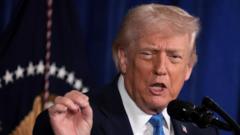
Trump Revives Bid to Buy Greenland, Mixing Real Estate Tactics with Geopolitics President Donald Trump is renewing a controversial push to purchase Greenland, employing a mix of financial offers, diplomatic pressure, and veiled threats that mirror his real estate dealmaking. The autonomous Danish territory, valued for its strategic Arctic location and resources, has been a persistent target for the U.S. administration despite firm rejections from both Copenhagen and Greenland’s own government [50444]. Trump publicly confirmed his interest during a speech at the World Economic Forum in Davos, Switzerland, telling global leaders the United States should be allowed to acquire the island [55297]. He later clarified he did not want to use military force, but called for immediate negotiations to buy it [55327]. His approach has reportedly included cash offers to Greenlanders and threats of tariffs against Denmark if the sale is blocked [50444]. The pursuit forms part of a broader foreign policy that sidelines traditional diplomacy. At the same forum, Trump lambasted NATO allies, complaining the U.S. was treated "very unfairly" and questioning the value of the decades-old military alliance [55297][55327]. Analysts note his Davos address largely ignored "soft power"—the use of cultural influence and partnerships—in favor of direct demands and economic nationalism [55327]. Experts warn that treating a complex geopolitical issue like a real estate transaction is fraught with risk. They say Trump’s strategy dangerously underestimates the role of national pride and sovereignty, factors that are not present in a purely commercial negotiation [87536]. The Danish and Greenlandic governments have consistently stated the island is not for sale, viewing the U.S. campaign as an unrealistic expansionist idea [50444]. Historians have drawn parallels between Trump’s territorial ambitions and 19th-century imperialism, noting his approach aggressively rejects the post-World War II international order built on rules and alliances [58552]. His focus on Greenland underscores an unorthodox presidency that continues to blend personal brand-building with the levers of state power, creating persistent diplomatic friction with longstanding allies. Trump Eyes Greenland: Cash, Threats, and Military Force Trump at Davos: Questions NATO, Wants to Buy Greenland Trump at Davos: Skips Soft Power, Targets Greenland and NATO Allies Trump's 'New Imperialism': Land Grabs and a Rejected World Order Iran Won't Fold: Why Trump's Real Estate Tactics Fail on World Stage
India's Farmers Revolt as U.S. Trade Deal Threatens Livelihoods and Crop Prices
India's Farmers Revolt as U.S. Trade Deal Threatens Livelihoods and Crop Prices A wave of protests has swept across India as farmers fear a new trade agreement with the United States will flood the market with cheap imports and undermine crucial government price supports. The unrest highlights the tense balance between the government's international ambitions and the demands of its vast agricultural sector, a key political constituency. Farmers and trade unions launched a nationwide strike this week, blocking major highways and railways with tractors and trucks [75183]. The protests are a direct response to a trade pact announced following a visit by former U.S. President Donald Trump, which farmers believe will lower import taxes on American agricultural goods [75183][73750]. At the heart of the dispute are government-guaranteed minimum support prices for staple crops like wheat and rice. Farmers fear the trade terms could force India to reduce these price floors or accept more imports, which would crash their incomes [73750]. Protest leaders are demanding a new law that would permanently guarantee the current price system [73750]. While the Indian government has stated the deal includes safeguards for the agriculture sector, protesters remain deeply skeptical [75183]. They argue the agreement ultimately favors U.S. corporate interests over the livelihoods of millions of Indian farmers [75183]. The protests have concentrated around the capital, New Delhi, with police increasing security at key entry points to the city [73750]. The agreement is seen as a diplomatic victory for Prime Minister Narendra Modi in strengthening ties with Washington, but it risks alienating the powerful farming community ahead of elections [73750]. Government officials maintain that the minimum price system is protected and negotiations with farmer leaders are ongoing [73750]. Indian Farmers Strike, Fearing U.S. Trade Deal Will Flood Market India's Farmers Protest as Modi-Trump Trade Pact Threatens Key Crop Prices

U.S. Forces Capture Venezuelan President Maduro in Military Strike, Plan to "Run" Country
U.S. Forces Capture Venezuelan President Maduro in Military Strike, Plan to "Run" Country U.S. military forces have captured Venezuelan President Nicolás Maduro and his wife, Cilia Flores, in a direct military operation on Venezuelan soil, marking an unprecedented escalation in the long-standing political crisis [41033][41227][41379]. The strike, described by former U.S. President Donald Trump as a "large-scale" operation, occurred overnight on Saturday [40942][41088]. Following the capture, Trump announced that the United States intends to "run" Venezuela, suggesting a move toward direct American control of the South American nation [41055][42114]. He stated a key goal is to "take back the oil" and fix the country's collapsed oil infrastructure, aiming to access Venezuela's vast proven reserves, the largest in the world [41227][40871][41525]. Maduro and his wife have been taken out of Venezuela and are expected to face criminal charges in a New York court [41136][40970]. The specific charges include accusations of narco-terrorism and running a "narco terrorist organisation" [40942][40970]. The operation removes a leader long labeled as illegitimate by the U.S. government, which has recognized opposition figure Juan Guaidó as the country's legitimate president since 2019 [41379][40505]. The sudden capture has created an immediate power vacuum and deep uncertainty over who is governing Venezuela, with no clear successor named [41136][40970]. There has been no immediate public statement from the Venezuelan government or military following the operation [40668][41379]. The action, which analysts describe as a major shift in U.S. foreign policy, is expected to trigger a severe political crisis within Venezuela and intense international debate over sovereignty and international law [40737][40505]. U.S. Forces Capture Venezuelan President in Military Strike Venezuela Leader Ousted in U.S. Strike, Faces Charges in New York US Strikes Venezuela, Captures President Maduro U.S. Captures Venezuela's President in Secret Operation U.S. Forces Capture Venezuelan President Nicolás Maduro US Captures Venezuelan President in "Large-Scale Strike" U.S. Military Strike Captures Venezuelan Leader Maduro U.S. Captures Maduro: What Now for Venezuela? US Seizes Venezuelan President, Vows to "Run" Country and "Take Back the Oil" U.S. Claims Capture of Venezuelan Leader in Military Strike U.S. Strikes Venezuela, Captures President Maduro US Captures Venezuelan President in Military Strike U.S. Strikes Venezuela, Captures President Maduro Venezuelan President Captured in U.S. Military Raid

AI Takes the Field: From Olympic Replays to Landmine Hunts, How Artificial Intelligence is Changing the Game
AI Takes the Field: From Olympic Replays to Landmine Hunts, How Artificial Intelligence is Changing the Game From the Olympic podium to minefields and military command posts, artificial intelligence is rapidly moving from research labs into real-world operations, reshaping industries with its ability to analyze data and automate complex tasks. At the recent Winter Olympics, a new AI-powered replay system gave global audiences a revolutionary view of athletic performance. When American figure skater Ilia Malinin executed a quadruple jump, the broadcast used AI to generate a three-dimensional model, allowing the replay to appear to orbit around the spinning athlete in mid-air. This technology creates perspectives from angles without physical cameras, aiding both broadcast entertainment and official judging [82096]. Beyond entertainment, AI is being deployed for life-saving security purposes. The United Kingdom is testing drones equipped with artificial intelligence designed to detect landmines and hidden explosives from the air. The AI scans the ground to automatically identify threats, allowing for the rapid and safe survey of large, dangerous areas—a task that traditionally put soldiers at grave risk [118535]. The military application of AI is advancing at the tactical level as well. In a recent simulation, China tested an AI "digital staff officer" at the battalion command level during a mock amphibious assault. The system was designed to cut through the "fog of war" by processing chaotic battlefield reports and radio traffic, providing rapid decision-making support. Reports indicated its planning speed surpassed human capabilities in the high-pressure scenario, highlighting a global push to integrate AI into frontline military operations [124817]. In environmental protection, Hong Kong is utilizing AI and robotics to conduct precise wildlife surveys. At the Hong Kong Wetland Park, authorities are testing AI-powered cameras that automatically identify bird species and a laser-scanning robot, resembling a robotic dog, that creates detailed 3D maps of trees to assess their health. This data is intended to inform major construction projects, aiming to balance development with conservation by eliminating human error from ecological reviews [47560]. These diverse implementations underscore a broader trend where AI is transitioning from a theoretical tool to a practical asset, capable of enhancing precision, safety, and efficiency across vastly different fields. AI Replay Tech Makes Olympic Jumps Spin on Screen AI Drones Hunt Landmines: UK Tests Life-Saving Tech China's New AI "Officer" Outsmarts Humans in War Games Hong Kong Deploys AI Robot Dogs to Scan for Wildlife

Women's Sports Revenue on Track to Smash $3 Billion Milestone by 2026
Women's Sports Revenue on Track to Smash $3 Billion Milestone by 2026 The commercial power of women's sports is surging, with global revenue projected to surpass $3 billion in 2026, according to new industry analysis [125062]. This rapid acceleration follows an expected total of $2.4 billion in 2025, signaling a major turning point for the financial viability and growth of women's athletics worldwide [125062]. This momentum is visible across major events. In collegiate basketball, the NCAA women's Final Four is underway, featuring a marquee matchup between the defending champion University of Connecticut Huskies and the South Carolina Gamecocks [120219]. In international rugby, the Women's Six Nations tournament begins this weekend with England, the reigning world champion and last year's Grand Slam winner, positioned as the clear favorite [124683]. The push for greater inclusion and visibility continues. In Nordic combined, the last Olympic sport without a women's event, athletes are campaigning for high television ratings for the men's competition this week to prove there is sufficient interest to justify adding women by the 2030 Winter Games [77899]. Meanwhile, a group of Afghan refugee women, forced to flee when the Taliban banned women's sports, have rebuilt a sense of community and identity by forming a soccer team in Houston, Texas [20194]. On the field of play, the focus remains on competition and achievement. American Paralympian Dani Aravich is attempting the rare challenge of competing in two different sports—track sprints and the long jump—at the Games [95020]. In skiing, three American sisters continue their shared Olympic dream, training across different disciplines with the goal of qualifying for the 2026 Winter Olympics [70176]. Analysts describe the current period as one of building commercial momentum, with the multi-billion dollar revenue projection underscoring a significant shift in the sports landscape [125062]. Women's Sports to Top $3 Billion in 2026 England Target Repeat Grand Slam in Women's Six Nations Final Four Live: Can Anyone Stop UConn's Repeat Bid? One Sport Bans Women. This Week's TV Ratings Could End It. Afghan Refugee Women Build New Team and Community on the Soccer Field Paralympian Races for Two Medals, One Mission Olympic Dream Still Alive for Three-Sister Ski Team


How Ancient Traditions Are Becoming Modern Acts of Defiance and Identity
How Ancient Traditions Are Becoming Modern Acts of Defiance and Identity From the snowy Arctic to the sunlit squares of Latin America, communities around the world are turning to their cultural heritage as a vital source of identity and a subtle form of resistance. Far from fading into history, ancient rituals, crafts, and art forms are being actively revived and reinvented, often by younger generations, to assert their place in a globalized world. In China, young people are transforming the centuries-old Qingming Festival, a solemn day for tomb-sweeping and honoring ancestors, into a modern, shared expression of cultural pride [123476]. While maintaining the core rituals, they now document their outings on social media, research family histories online, and leave contemporary offerings like letters and snacks at gravesites, making a private duty a public act of identity [123476]. Similarly, the Chinese Spring Festival is championed not merely as a holiday but as an unbroken "cultural river" and the living heartbeat of Chinese heritage, offering a crucial link to history [84043]. This cultural assertion is also a tool of resilience in conflict zones. In Ukraine, a new collection of Christmas carols, or *koliadky*, connects ancient folk chants to modern-day resistance, carrying subtle messages of national identity [32337]. Scholars note that these songs have long preserved language and culture during periods of oppression, embodying the nation's enduring spirit [32337]. An American scholar argues that Ukraine's focus on defending its unique literature, art, and history resonates more deeply than graphic war imagery, framing the conflict as a fight for cultural truth [122155]. Parallel stories of endurance are found in Syria, where the ancient craft of embroidery is highlighted as a powerful, living symbol of cultural identity that has survived widespread destruction from war [47200]. Meanwhile, the Circassian community in Syria has maintained its unique language and customs for over a century while fully integrating into national society, serving as a model of cultural preservation [36001]. Indigenous groups are also leveraging culture for visibility and pride. A Sámi DJ duo from the Arctic is gaining international success by blending modern electronic beats with traditional Sámi rhythmic singing, known as joik, meeting a growing global appetite for Indigenous culture in music [79759]. The phenomenon even touches viral internet trends, as seen with "Chinamaxxing," where everyday Chinese customs like drinking hot water or wearing house slippers became a short-lived global meme, leaving many of Chinese heritage to question the depth of such fleeting online appreciation [109231]. Together, these movements reveal a global pattern: from ritual and craft to music and digital expression, cultural heritage is being actively mobilized not as a relic, but as a dynamic force for defining community, asserting presence, and quietly pushing back against homogenization and erasure. Young Chinese Reimagine Ancient Tomb-Sweeping Ritual Feng Jicai: Chinese New Year is More Than Fireworks Ukrainian Christmas Carols: Ancient Sounds of Defiance and Hope Why Showing Atrocities Fails: A Scholar's View on Ukraine's Cultural War Syrian Embroidery Survives War, Defines Identity Syria's North Caucasus Legacy: The Circassians' Enduring Identity Remote DJs Rise with Sámi Sound, Fueling Indigenous Pride Chinamaxxing: When Your Culture Becomes a Viral Meme

Breakthrough "Plant Power" Therapy Restores Health in Animals Using Light
Breakthrough "Plant Power" Therapy Restores Health in Animals Using Light Scientists have successfully injected plant-derived nanoparticles into sick animals, using the core process of photosynthesis to restore cellular function and improve health. The pioneering research demonstrates a novel approach to treating degenerative diseases by directly boosting a cell's energy supply from within [124832]. A Chinese research team created tiny, light-activated particles from plant materials. When injected into the bodies of rats and rabbits with degenerative conditions, these nanoparticles entered the animals' cells. Once inside, they acted like miniature power plants, using light to significantly increase cellular energy production [124832]. This boost in energy restored damaged cell functions and interactions, leading to measurable health improvements and longer lifespans in the test subjects. The technique effectively borrows nature's fundamental energy-making mechanism to combat diseases often linked to declining cellular power [124832]. For treating conditions deep inside the body where external light cannot penetrate, the researchers proposed an advanced solution. Their plan involves pairing the photosynthetic nanoparticles with tiny, implantable lights that can be powered wirelessly from outside the body [124832]. This research marks a significant step toward potential new treatments for age-related and degenerative diseases by targeting the foundational issue of cellular energy depletion [124832]. Scientists Inject Plant Power into Animals, Restoring Health with Light


U.S. Forces Capture Venezuelan President Maduro in Unprecedented Military Raid
U.S. Forces Capture Venezuelan President Maduro in Unprecedented Military Raid In a dramatic escalation of tensions, United States military forces captured Venezuelan President Nicolás Maduro in a surprise operation in Caracas, sending shockwaves across Latin America and challenging international norms [41460][41880]. The sitting head of state was taken to New York, where he faces drug trafficking charges in federal court [41880]. The operation, which also detained Maduro's wife, marks the first direct U.S. military attack on a South American nation in history [41064]. President Donald Trump announced the capture, stating the U.S. would oversee Venezuela's government without immediately setting a date for new elections [41460]. Following the action, Trump declared that "American dominance in the western hemisphere will never be questioned again" [41064]. The bold move has deeply divided regional governments and set a major precedent for extraterritorial apprehension—the seizure of a person outside U.S. borders without the host country's consent [47297]. While nations like Colombia and Brazil have offered cautious support, others, including Mexico and Bolivia, have condemned it as a blatant violation of international law and sovereignty [47297]. The United Nations Security Council has called an emergency meeting at Venezuela's request to address the incident [41880]. Analysts say the capture has forced every capital in the region to urgently re-examine its relationships with Washington and assess its own vulnerability to similar actions, creating a continent-wide atmosphere of suspicion [47126][47297]. The act is seen as a stark revival of historical U.S. interventionist practices in Latin America [41465][41064]. U.S. Capture of Venezuela's Maduro Sends Shockwaves Through Latin America U.S. Capture of Maduro Sends Shockwave Through Latin America U.S. Captures Venezuela's Leader, Challenging China's Regional Reach Venezuela's President Seized by U.S., Faces Court in New York Trump Revives US Habit of Ousting Latin American Leaders Trump Orders First Direct US Military Attack on South America
Latest Articles

Taiwan's Chip Dominance Threatens Global AI Expansion
The world's artificial intelligence boom depends on a tiny, fragile link: Taiwan. Nearly all the most advanced semiconductors—the chips that power A...

China's Xi to Taiwan: Unification is 'Inevitable'
Chinese President Xi Jinping has declared that unification with Taiwan is an "inevitable historical trend." He made the statement during a high-level...

Italy Moves to Replace Leonardo CEO in Surprise Shake-Up
The Italian government has moved to replace the chief executive of Leonardo, the country's major defense and aerospace group. Rome has proposed that...

Canada Seeks Entry to Rival Stealth Jet Project, Potentially Snubbing U.S.
Canada is formally asking to join a major allied fighter jet program, a move signaling a strategic shift away from reliance on the United States. Ot...

Labour Deputy Warns: A "Bloody" Leadership Fight Would Be Disastrous
A senior Labour Party figure has issued a stark warning against any immediate challenge to replace leader Keir Starmer if the party loses the upcomin...

Ignore 'Buy the Dip': Six Unpriced Threats Lurk in U.S. Markets
A popular investing strategy faces a critical test. The "Buy the Dip" approach, where investors purchase assets after a price drop expecting a reboun...

U.S. Diplomats Missing in Key Middle East Posts Amid Rising Tensions
The United States currently has no confirmed ambassadors in several critical Middle Eastern nations, including Egypt, Israel, Kuwait, Oman, and Leban...

U.S. Refugee Program Admits Nearly 5,000—All But Three From South Africa
The United States has admitted 4,499 refugees since October, and all but three were from South Africa, according to official government data. This u...

White House Bans Staff From Betting on Politics, Conflicts
The White House has officially banned its staff from using prediction markets. These are online platforms where users bet money on real-world events....

Pakistan Hosts High-Stakes US-Iran Talks
Pakistan is hosting direct talks between the United States and Iran this week. The discussions aim to end ongoing conflicts between the two nations....

Israeli Military Actions a "Curse for Humanity," Says Pakistani Defense Minister
Pakistan's Defense Minister, Khawaja Asif, has strongly condemned Israel's ongoing military operations. He labeled the state of Israel a "curse for h...

Gaza Officials: UN Claim of 602 Aid Trucks "Incorrect"
Officials in Gaza have publicly rejected a statement from a United Nations peace envoy regarding the volume of aid entering the territory. On Thursd...

S. Korean Leader Posts Video of Alleged Israeli Soldier Abuse
South Korean opposition leader Lee Jae-myung has publicly shared a video showing Palestinian children being detained and allegedly abused by Israeli...

Xi Meets Taiwan Opposition Leader, Vows Unification Confidence
Chinese President Xi Jinping hosted Taiwanese opposition leader Cheng Li-wun in Beijing on Wednesday. It was the first meeting of its kind in over te...

Iran Denies US Talks, Links Return to Lebanon Ceasefire
Iran has officially denied a major U.S. media report. The report claimed an Iranian delegation had arrived in Pakistan for talks with American offici...

Myanmar's Junta Chief Becomes President After Military-Backed Vote
Min Aung Hlaing, the military leader who seized power in a 2021 coup, is now Myanmar's president. He took the oath of office on Wednesday. The count...

Storm Threatens NFL Opener as Global Travel Chaos Grows
A major spring storm is disrupting millions across the United States and beyond. The severe weather has already caused widespread flight cancellation...

Danish Inflation Jumps to 1.2% as Fuel Prices Surge
Inflation in Denmark rose to 1.2% in March, a notable increase from 0.7% the previous month. The main driver was higher prices for fuel and energy....

China's Factory Prices Rise After Three-Year Slump, Driven by War
A key measure of Chinese factory prices has increased for the first time in more than three years. The rise ends a long period of decline and is link...

Senior Iranian Official Killed in Reported Strike on Tehran Home
Kamal Kharrazi, the head of Iran's Strategic Council on Foreign Relations, has died from wounds sustained in an attack last week. The attack reporte...