Latest News
Stay updated with the latest news and articles
Top Stories
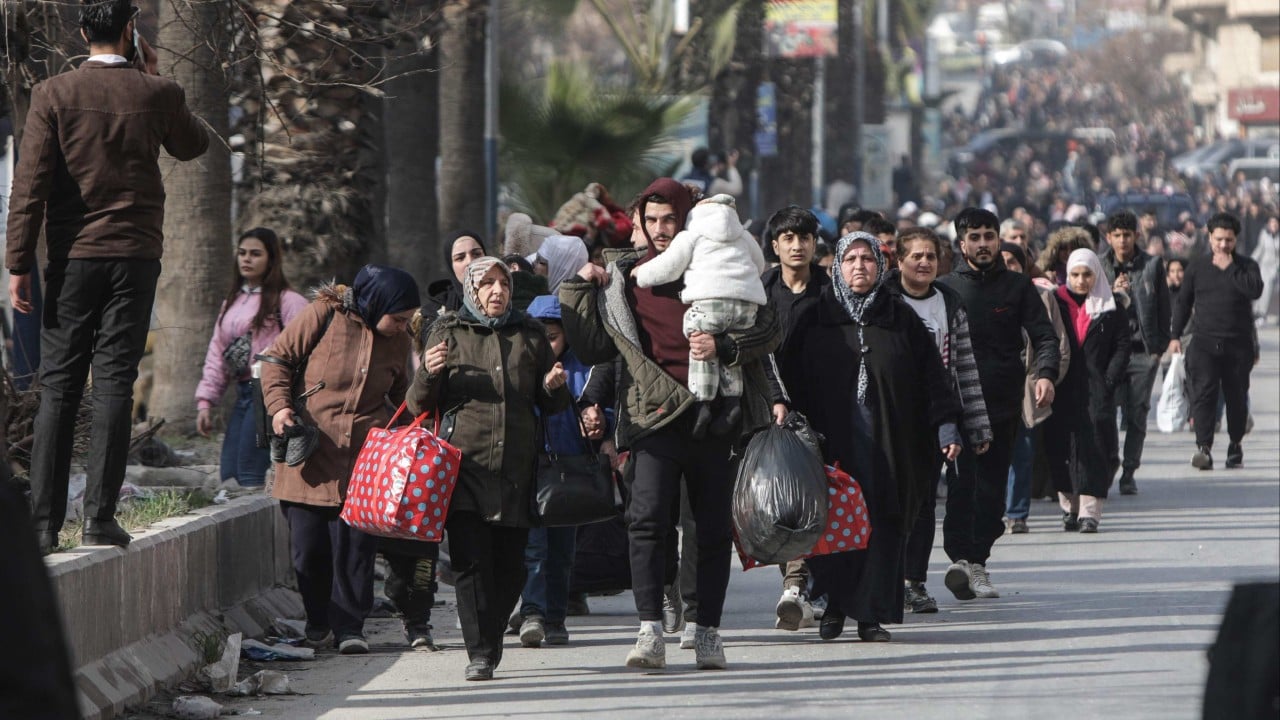
Fighting Erupts in Aleppo, Forcing Tens of Thousands to Flee as Peace Talks Fail
Fighting Erupts in Aleppo, Forcing Tens of Thousands to Flee as Peace Talks Fail Intense clashes between Syrian government forces and Kurdish-led fighters have shattered a fragile truce in Aleppo, sparking a mass exodus of civilians and threatening to unravel relative stability in northern Syria. The fighting, which erupted on Tuesday, is concentrated in the northern suburbs of the city and the surrounding province, including the Deir Hafer district [44512][49667]. Syrian state media reported clashes on key supply routes like the Castello road, while Kurdish forces were accused of shelling residential neighborhoods [43634]. The violence has forced tens of thousands of people to flee their homes, with local aid groups reporting a rapid movement of displaced families [45585][45588]. The renewed offensive follows the collapse of political talks between the Syrian government and the Kurdish-led Syrian Democratic Forces (SDF), which controls large parts of northern Syria [45585][45588]. A previous agreement to integrate the SDF into the national army by the end of 2025 has stalled, creating a vacuum that has led to direct military action [45588]. Both sides blame each other for starting the latest clashes, which have caused multiple deaths [44512]. The stalemate is deepening and becoming more deadly, displacing more families and complicating international efforts in a region already hosting millions displaced by Syria's long civil war [44512][45588]. U.S. officials are now attempting to mediate a ceasefire [44512]. The United Nations has repeatedly warned that any major new offensive in Syria risks a humanitarian catastrophe [45585]. Syria's Aleppo Truce Shatters, Thousands Flee as U.S. Mediates Aleppo Exodus: Fighting Erupts as Syria Peace Talks Fail Fresh Clashes Erupt Between Syrian Army and Kurdish Forces Syrian Army and US-Backed Forces Clash in Aleppo Syrian Army Advances on Aleppo, Sparking Mass Exodus

China Bets Billions on AI and Chips to Break US Tech "Chokehold"
China Bets Billions on AI and Chips to Break US Tech "Chokehold" A massive, state-coordinated investment push is underway in China, targeting breakthroughs in advanced semiconductors and artificial intelligence (AI) to overcome U.S.-led technological restrictions. Multiple Chinese provinces and cities are deploying tens of billions of dollars in a concerted effort to achieve self-sufficiency in these critical fields [51155][95150][86995][43531]. The eastern technology hub of Zhejiang has announced a five-year plan specifically aimed at manufacturing advanced AI chips as small as 3 nanometers, a direct counter to U.S. export controls described as a strategic "chokehold" [51155]. Similarly, Shanghai has launched a $10 billion investment plan focusing on microchips and AI among other key technologies [43531]. This provincial action aligns with a major new national strategy unveiled during China's annual political meetings. The blueprint for 2026-2030 prioritizes breaking foreign technological dependencies and directs massive state resources toward frontier sectors like AI and nuclear fusion [95150]. Analysts note this marks a definitive pivot in China's industrial strategy, from absorbing foreign technology to creating and dominating next-generation fields [59734]. Supporting this pivot, a new state-backed investment fund worth over $47 billion has been launched to bolster China's domestic semiconductor industry, with a focus on developing the advanced equipment for chip manufacturing [86995]. The overall science and technology budget for the next five years shows a significant increase, allocating over $61 billion to "future industries" including AI, satellite internet, and electric vehicles [93804]. The race for AI supremacy is highlighting a fundamental strategic divide. While U.S. development is driven by private markets, China's approach is defined by state coordination, aiming to deploy AI as a core component of national infrastructure and social management [109135]. This state-guided model is now being tested as Chinese companies, facing intense domestic competition and backed by significant subsidies, drive a new wave of high-tech exports in sectors like electric vehicles and renewables, a phenomenon some analysts call "China Shock 2.0" [128200]. China Targets 3nm AI Chips to Break US "Chokehold" China's New Plan: Beat US Tech Rivals with AI and Fusion Power China Bets $47 Billion to Break the Chip Barrier Shanghai Bets $10 Billion on Chips and AI in Tech Race China's Tech Pivot: From "Catch-Up" to Cutting-Edge China's $62 Billion Bet Mirrors Musk's Vision AI War: US Bets on Markets, China Bets on Control China's "Shock 2.0": A Flood of High-Tech Goods Reshapes Global Industries


Climate Crisis Smashes Records, Becomes "Daily Reality" in 2025
Climate Crisis Smashes Records, Becomes "Daily Reality" in 2025 A relentless barrage of extreme weather in 2025, from catastrophic floods to scorching heatwaves, has fundamentally shifted the global climate crisis from a future threat into a disruptive daily reality, scientists and major institutions warn [36941][37775]. The year, Earth's third hottest on record, was marked not just by high temperatures but by a costly series of powerful and unpredictable disasters that caused billions in damage worldwide [49594]. In Europe, a destructive cycle of severe storms, drought, fierce wildfires, and flooding pushed wildlife and landscapes to their "breaking point," according to a major conservation charity [36898]. Experts now state that such severe events may become the standard, directly linked to greenhouse gas emissions from human activity [36941]. The strain is also being felt acutely in vulnerable regions. In Eastern Africa, a "triple planetary crisis" of climate change, biodiversity loss, and pollution is directly threatening food security by ruining crops and killing livestock [91481]. Similarly, in the Democratic Republic of the Congo, rising temperatures and shifting seasons are causing beehives to fail, threatening both a key food source and a traditional income for local communities [128278]. This new normal arrives as scientists warn a powerful "super" El Niño climate pattern is very likely to form, which could supercharge extreme weather further and push global temperatures to new record highs [127634]. The scale of the challenge was underscored at the latest United Nations Environment Assembly, where the world’s top environmental decision-making body concluded with a strong call for accelerated global action to address the interconnected crises of climate change, biodiversity loss, and pollution [21446]. Europe's 2025 Weather: A New Normal of Extremes? 2025: Climate Crisis Becomes Daily Life **2025: The Year the Weather Broke** UK Wildlife Pushed to "Breaking Point" by Extreme Weather in 2025 Triple Planetary Crisis Starves East Africa Bees Vanish as Congo Feels the Sting of Climate Change "Super" El Niño Likely, Threatens Weather Chaos and Record Heat **UN Environment Assembly Demands Urgent Global Action on Climate and Biodiversity**

IMF Cuts Global Growth Forecast to 3.1%, Warns Middle East War Is Fueling Inflation
IMF Cuts Global Growth Forecast to 3.1%, Warns Middle East War Is Fueling Inflation The International Monetary Fund (IMF) has slashed its forecast for global economic growth, warning that the ongoing war in the Middle East is damaging the world economy and threatening to reignite inflation worldwide [128821][128546]. In its latest assessment, the IMF reduced its global growth projection for this year to 3.1 percent, citing the conflict as a direct cause of new economic uncertainty [128546][128821]. The crisis is disrupting key energy markets and global trade routes, which risks pushing up prices for consumers and businesses around the world [128821]. The economic shockwaves are being felt far beyond the conflict zone. The IMF specifically lowered its outlook for Sub-Saharan Africa, noting that higher oil prices and increased shipping costs from trade disruptions are major threats that could "derail an already fragile recovery" [128698]. In Ukraine, a nation already fighting a war, progress on controlling inflation has been reversed; fuel costs surged 23 percent in March due to rising global oil prices linked to the Middle East conflict, prompting the central bank to consider an interest rate hike [128542]. Diplomatic efforts to contain the crisis are struggling. Talks between the United States and Iran are stalled as military threats near the vital Strait of Hormuz—a passage for one-fifth of the world's oil—continue to rattle markets and endanger a shaky ceasefire [128707]. The instability has led to warnings that continued violence risks further damaging an already fragile global recovery [128546]. IMF Slashes Global Growth Forecast Over Middle East War IMF Slashes Global Growth Forecast, Cites War Impact IMF Cuts Africa Growth Forecast as Middle East Conflict Rises Middle East Conflict Reverses Ukraine's Wartime Inflation Progress U.S.-Iran Talks Stalled as Hormuz Threats Rattle Markets

Tourist Hotspots Ditch Crowds, Chase "Meaningful" Travel Beyond Famous Landmarks
Tourist Hotspots Ditch Crowds, Chase "Meaningful" Travel Beyond Famous Landmarks A global shift is underway as popular destinations and travelers alike move away from overcrowded city breaks, seeking deeper cultural connections and experiences driven by television and social media. Industry experts confirm the trend, noting a clear consumer pivot. "Travelers are now looking for more meaningful tourism," said Carl Cater, a tourism professor at Swansea University [36959]. This shift is predicted to define travel in 2026, moving the focus from quick photo-ops at major landmarks to personalized, story-driven trips [36959]. The change is partly inspired by entertainment. Hit TV shows like *The White Lotus* are creating new travel patterns, with viewers booking trips to filming locations instead of traditional capitals [36959]. Similarly, a single viral video turned a rooftop in a Rio de Janeiro favela into the "Gateway to Heaven," a global pilgrimage site for visitors seeking that perfect, illusionary shot [101397]. Destinations are adapting by promoting their unique heritage and culture over generic tourism. In Spain's Cantabria region, operators highlight a "30,000-year trip in 30 minutes," where visitors can see prehistoric cave art replicas, explore a preserved medieval town, and watch modern surfers on the same coast [126633]. In West Africa, Abidjan is staging energetic events like "The Night of the Galleries," where venues stay open past midnight to establish the city as a major arts capital [127337]. This search for meaning is also redirecting tourist traffic into new areas. Pioneering projects in places like the Indian Himalayas now connect travelers with remote villages through community-based walking tours, aiming to support traditional life and reduce urban migration [100125]. Even in Morocco's High Atlas Mountains, the economy has shifted from subsistence farming to guiding hikers to North Africa's highest peak [83740]. The trend underscores a broader industry movement to balance economic benefits with cultural preservation, as both tourists and hosts seek more sustainable and significant interactions [80040]. Beyond Paris: TV Drives 2026 "Meaningful Tourism" Trend Viral 'Gateway to Heaven' Rooftop Floods Rio Favela with Tourists From Cave Art to Surfboards: A 30,000-Year Trip in 30 Minutes Abidjan Art Week: Galleries Open Past Midnight as City Claims Cultural Crown Village Tourism Pioneer Fights Urban Flight in India's Himalayas From Walnuts to Tourists: A Changing Valley Leads to North Africa's Peak Tourist Destinations Hit Breaking Point: What Causes the Crush?
Climate Crisis Triggers First Official Relocations as 280 Tuvaluans Head to Australia
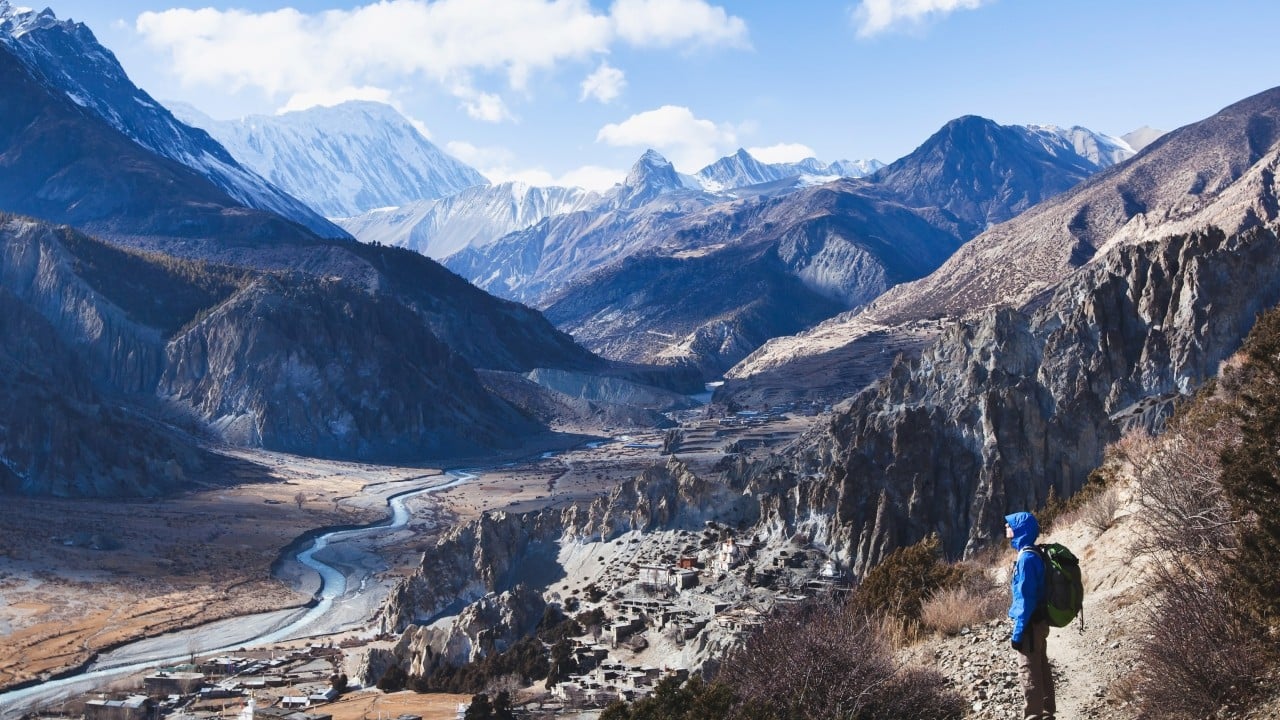
Climate Crisis Triggers First Official Relocations as 280 Tuvaluans Head to Australia A landmark migration program has begun, with the first citizens of Tuvalu arriving in Australia as officially recognized climate refugees. The new visa pathway, which permits up to 280 Tuvaluans to relocate annually, responds directly to the existential threat rising sea levels pose to the low-lying Pacific island nation [25540][10674]. The policy, part of a broader bilateral agreement, grants permanent residency rights and a clear path to Australian citizenship. It is designed as a long-term solution for a population whose homeland is becoming increasingly uninhabitable due to coastal erosion and flooding [25540][10674]. Experts warn that climate-induced environmental changes could render parts of Tuvalu unlivable within decades. The organized relocation effort marks a significant moment in global responses to climate displacement, moving from theoretical discussions to concrete action [25540]. While the program offers a lifeline, it also underscores the stark reality facing vulnerable island nations. The arrival of the first group under this special visa establishes a formal framework for climate migration, setting a precedent that other countries may follow as environmental pressures mount [10674]. Tuvalu Citizens Arrive in Australia as First Official Climate Migrants Australia Opens Special Visa Pathway for Climate-Affected Tuvaluans


Trump Revives Bid to Buy Greenland, Using Tariffs and Pressure at Davos
Trump Revives Bid to Buy Greenland, Using Tariffs and Pressure at Davos Former President Donald Trump has renewed his controversial push for the United States to purchase Greenland, combining public pressure at a global economic forum with threats of tariffs against Denmark. Speaking at the World Economic Forum in Davos, Switzerland, Trump publicly questioned the value of the North Atlantic Treaty Organization (NATO) and stated the U.S. should be allowed to acquire the autonomous Arctic island [55297]. He told attendees he does not want to use force but called for immediate negotiations to buy the territory [55327]. This public proposition follows a strategy that includes reported cash offers to Greenlanders, threats of tariffs against Denmark, and a refusal to rule out using military force [50444]. When Denmark previously rejected his interest, Trump called the response "nasty" and postponed a state visit [50444]. Experts see the effort as an attempt to apply high-pressure real estate tactics to international diplomacy [87536]. However, analysts say the approach is failing. The governments of both Greenland and Denmark have consistently and firmly stated the island is not for sale [50444][52669]. "Greenland is not for sale. Its government and people have repeatedly rejected the idea," one analysis noted, adding that tariff threats are a weak tool that could strengthen local resistance rather than force a deal [52669]. The island is of growing strategic importance due to its Arctic location, which holds value for shipping lanes and natural resources [50444]. Trump's focus on the acquisition during a major speech, alongside criticism of NATO allies for insufficient defense spending, marked a sharp departure from traditional "soft power" diplomacy [55327]. Historians have compared the territorial pursuit to 19th-century imperial behaviors, warning that such intense rivalry and expansion have historically led to conflict [58552]. Trump at Davos: Questions NATO, Wants to Buy Greenland Trump Eyes Greenland: Cash, Threats, and Military Force Trump at Davos: Skips Soft Power, Targets Greenland and NATO Allies Trump's Tariff Plan Fails to "Capture" Greenland Trump's 'New Imperialism': Land Grabs and a Rejected World Order Iran Won't Fold: Why Trump's Real Estate Tactics Fail on World Stage

Farmers Block Highways, Demand Guarantees as U.S. Trade Deal Threatens Livelihoods
Farmers Block Highways, Demand Guarantees as U.S. Trade Deal Threatens Livelihoods A wave of protests has swept across India as farmers and trade unions mobilize against a new trade agreement with the United States, fearing the pact will flood the market with cheap imports and devastate local agriculture [75183]. The nationwide strike saw farmers block major roads and railway lines, bringing traffic to a standstill in several regions [75183]. The core of their anger is a deal announced following talks between Indian Prime Minister Narendra Modi and former U.S. President Donald Trump, which protesters believe will lower tariffs on American farm goods [73750]. Farmers are specifically worried the agreement could undermine India's Minimum Support Price (MSP) system, a government mechanism that buys key staples like wheat and rice at guaranteed prices [73750]. They fear the trade terms may force India to reduce these supports or allow a surge of imports, crashing their incomes [73750]. "We don't trust the safeguards they promise," said one protest leader, referring to government assurances. "This deal is for American corporations, not for us" [75183]. In response to the escalating protests, which have included tractor blockades on highways leading into the capital, New Delhi, police have significantly increased security at the city's border points [73750]. The government maintains that the MSP system remains protected and that negotiations with farmer unions are ongoing [73750]. The unrest presents a major political challenge for Prime Minister Modi. While the agreement is viewed as a diplomatic victory for strengthening ties with Washington, the farming community represents a massive and crucial voting bloc in India [73750]. The government now faces intense pressure to reconcile its international trade ambitions with the need for domestic economic stability [73750]. Indian Farmers Strike, Fearing U.S. Trade Deal Will Flood Market India's Farmers Protest as Modi-Trump Trade Pact Threatens Key Crop Prices
U.S. Forces Capture Venezuelan President Maduro in Military Strike, Plan to "Run" Country
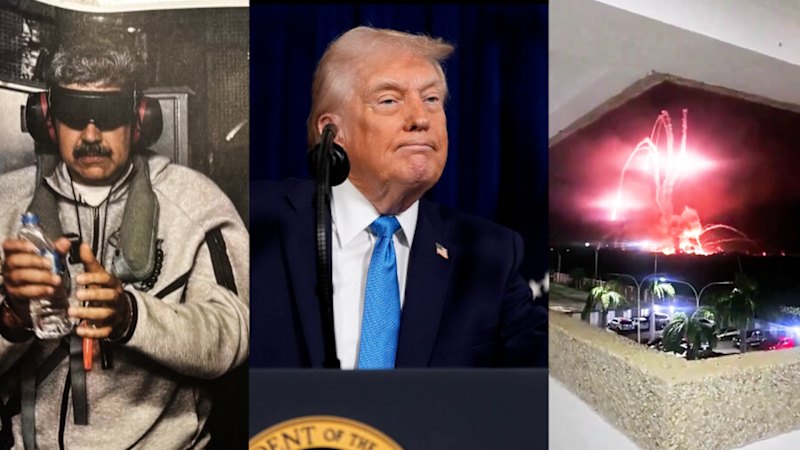
U.S. Forces Capture Venezuelan President Maduro in Military Strike, Plan to "Run" Country U.S. military forces have captured Venezuelan President Nicolás Maduro and his wife, Cilia Flores, in a direct military operation on Venezuelan soil, marking an unprecedented escalation in the long-standing political crisis [40668][40970][41088]. The strike, which former U.S. President Donald Trump described as a "large-scale" operation, occurred overnight on Saturday [40942][41088]. Following the capture, Trump announced that the United States intends to "run" Venezuela, suggesting a move toward direct American control of the South American nation [41055][42114]. He stated a key goal is to "take back the oil," referring to Venezuela's vast proven crude reserves, the largest in the world [40871][41227][41525]. Maduro and his wife were reportedly flown out of the country and are now in U.S. custody [40921][40970]. They face criminal charges in a New York court, including accusations of "narco-terrorism" and running a "narco terrorist organisation" [40942][40970]. U.S. officials have long labeled Maduro's government as illegitimate, accusing it of corruption, human rights abuses, and ties to drug cartels [40668][41136][40970]. The operation has created an immediate leadership vacuum and deep uncertainty for Venezuela's 30 million people [41136][42114]. No clear successor has been named, and it is unclear who is currently governing the country [40970][41136]. The Venezuelan government and military have not issued an immediate public response [40668][41379]. The capture of a sitting head of state by a foreign military is a rare event in modern history and is expected to trigger a major political crisis and intense international debate over sovereignty and international law [40668][40737][40942]. U.S. Forces Capture Venezuelan President in Military Strike Venezuela Leader Ousted in U.S. Strike, Faces Charges in New York US Strikes Venezuela, Captures President Maduro U.S. Captures Venezuela's President in Secret Operation U.S. Forces Capture Venezuelan President Nicolás Maduro US Strikes Venezuela, Abducts President Maduro US Captures Venezuelan President in "Large-Scale Strike" U.S. Military Strike Captures Venezuelan Leader Maduro U.S. Captures Maduro: What Now for Venezuela? US Seizes Venezuelan President, Vows to "Run" Country and "Take Back the Oil" U.S. Claims Capture of Venezuelan Leader in Military Strike U.S. Strikes Venezuela, Captures President Maduro US Captures Venezuelan President in Military Strike U.S. Strikes Venezuela, Captures President Maduro Venezuelan President Captured in U.S. Military Raid
AI and Robots Take on the World: From Bomb Hunting to Nature Patrols
AI and Robots Take on the World: From Bomb Hunting to Nature Patrols A wave of artificial intelligence and advanced robotics is moving out of labs and into the real world, tackling dangerous and complex jobs from war zones to wetlands. Governments and researchers are deploying these systems to perform tasks that are risky, tedious, or require superhuman precision, signaling a major shift in how technology is being applied to global challenges. In the United Kingdom, new drones equipped with AI software are being tested to find hidden landmines and explosives from the air. The system scans the ground to automatically identify threats, allowing military teams to survey large, dangerous areas quickly from a safe distance, a process that currently often requires soldiers to check on foot [118535]. A successful trial has shown the technology works and could significantly reduce risks during clearance operations. Halfway across the world, Hong Kong is using similar technology for environmental protection. The city’s Environmental Protection Department is testing AI-powered cameras to automatically identify bird species and a laser-scanning robot, which resembles a robotic dog, to map forests [47560]. The robot moves through wooded areas, firing safe laser pulses to create detailed 3D maps that measure tree health, size, and location. Officials say these tools eliminate human error from wildlife surveys, providing critical data to help balance major new infrastructure projects with conservation. The underlying science enabling some of these advances is emerging from specialized labs. Scientists are making breakthroughs by using imperfect diamonds, deliberately flawed at the atomic level, to build ultra-sensitive quantum sensors [37022]. These sensors could one day detect minute magnetic fields from a single brain cell and are a cornerstone for next-generation quantum technologies. Meanwhile, the push for more autonomous systems continues. A German firm, SWARM Biotactics, is developing "biohybrid" technology, fitting cockroaches with tiny electronic backpacks that allow them to be remotely controlled for reconnaissance in areas difficult for humans or robots to reach [26214]. The integration of AI is also transforming entertainment and sports analysis. A new broadcasting technology that uses AI to generate 3D models from standard footage debuted at the Winter Olympics, creating "orbiting" replays that showed figure skating jumps from impossible, rotating angles [82096]. The same system aids officials with judging and creates content for social media. These developments illustrate a clear trend: AI and robotics are no longer just concepts but are actively being deployed to scan, map, hunt, and sense, taking on some of the world's most demanding physical jobs. AI Drones Hunt Landmines: UK Tests Life-Saving Tech Hong Kong Deploys AI Robot Dogs to Scan for Wildlife Imperfect Diamonds: The New Heart of a Quantum Revolution Spy Roaches: German Firm Turns Insects into Tiny Agents AI Replay Tech Makes Olympic Jumps Spin on Screen

Latest Articles
Hemp Header Seals England's Tense Win Over Spain in World Cup Qualifier
A first-minute goal from Lauren Hemp gave England a narrow 1-0 victory against Spain at Wembley Stadium. The win is crucial for England's qualifying...
Champions League Mascots Dressed "Like a Credit Card"
The young mascots for tonight's Champions League match between Atlético Madrid and Barcelona are "living the dream," but one observer notes a sartori...
Cartoon Mocks Perpetual "Last Chance" for Middle East Peace
A new cartoon by Ella Baron critiques the endless cycle of Middle East diplomacy. The artwork humorously portrays the latest talks between Israel and...
Ex-NATO Chief Demands Billions, But Is UK Strategy Broken?
A former NATO leader has accused the UK Prime Minister of "corrosive complacency" on defence. His demand for billions in new military spending made h...
Sudan's "Bloody Unacceptable" War Enters Year Four
The United Nations' top official in Sudan has abandoned diplomatic language. Denise Brown calls the three-year conflict "bloody unacceptable." She s...
Writer Launches "Certified Human" Stamp in Fight Against AI 'Slop-inion'
A columnist is taking a stand against the rise of low-quality, AI-generated opinion pieces, or "slop-inion," by certifying his own work as human-made...
US Teen Birth Rate Hits Historic Low, Alarming Some Conservatives
A new report shows the birth rate for American teenagers fell by 7% last year. This continues a decades-long trend where teen pregnancies have droppe...
Dating's New Normal: Are You 'The One' or Just 'The One For Now'?
A new term is describing an old dating behavior made common by apps: the "placeholder partner." This is someone you date not as a lifelong match, bu...
Vatican Shopkeepers vs. U.S. Tourists: A Pope-Trump Divide
In a Roman neighborhood bordering the Vatican, an optician's shop displays photos of five popes. Its owner, Walter Colantini, once fitted glasses for...
Iranian Tankers Defy New US Blockade in Strait of Hormuz
A new US blockade targeting ships using Iranian ports is now in force. Its goal is to pressure Iran by restricting its vital oil and gas exports. Ho...
PSG's Teen Star Seeks Redemption Against Liverpool in Champions League Crunch Match
All eyes are on Paris Saint-Germain's teenage midfielder Warren Zaïre-Emery as his team faces a steep challenge against Liverpool tonight. PSG must o...
86-Year-Old French Bride Detained by ICE in Louisiana
An 86-year-old French woman is being held in a U.S. immigration detention center after moving to America to marry a man she first met in the 1950s....
Democrats Propose Commission to Declare Trump "Unfit," Force VP Vance to Act
House Democrats have introduced a measure to create a special commission. Its purpose would be to evaluate if President Donald Trump is "unfit" to se...
Israeli Ambassador Condemns Minister's 'Nazi' Attack on German Leader
Israel's ambassador to Germany has publicly condemned a fellow Israeli official for comparing Germany's leader to the Nazi regime. Ambassador Ron Pr...
Hungary's Orbán Era Ends: Can Democracy Return?
To be in Budapest last Sunday was to witness history. Euphoric crowds filled the riverbank, chanting for a new Hungary and a united Europe. Their cel...
Catastrophizing: Why Your Brain Expects Disaster
Do you assume a meeting with your boss means you will be fired? If your partner is late, do you imagine a terrible accident? Mental health experts ca...
Hathaway's Pop Star Drama "Mother Mary" Criticized as Ludicrous
A new film about a troubled music icon has drawn sharp criticism for its lack of self-awareness. "Mother Mary," starring Anne Hathaway, is described...

Turkish Journalists Sentenced to Prison, One Acquitted
A Turkish court has sentenced three journalists to prison terms. A fourth journalist was acquitted of all charges. The court found Timur Soykan guil...
Germany's Ukraine Aid Pledge Meets Mounting Pressure at Home and Abroad
Berlin has promised Kyiv that German military, civilian, and humanitarian aid will continue. The reassurance came during high-level government talks...
Venezuela's 100-Day Question: Will the Acting President Allow Elections?
The United States removed Venezuela's Nicolás Maduro from power 100 days ago. Washington then presented a three-phase political plan for the country....