Latest News
Stay updated with the latest news and articles
Top Stories
U.S. and Iran Hold High-Stakes Talks in Pakistan as Regional War Hangs in Balance
U.S. and Iran Hold High-Stakes Talks in Pakistan as Regional War Hangs in Balance A rare, high-level meeting between the United States and Iran is underway in Islamabad, Pakistan, in a bid to halt a six-week war that has spread across the Middle East [125866][125940]. The talks, which began on Saturday, represent the highest-level direct contact between the two rivals in decades [125785]. The U.S. delegation, led by Vice President JD Vance, arrived with a sharp warning for Tehran. "Now is not the time for Iran to play games with the United States," Vance stated before departing [126108]. The Iranian side is expected to be led by Parliament Speaker Mohammad Bagher Ghalibaf [125686]. A central and immediate hurdle is the conflict in Lebanon. Iran has demanded that a ceasefire between Israel and the Lebanese militant group Hezbollah, which it backs, be included in any deal [125874]. Near-daily clashes along the Israel-Lebanon border have raised fears of a full-scale war, making the situation a critical focus of the Islamabad negotiations [125652][126108]. The talks are occurring against a backdrop of severe regional violence. Recent Israeli airstrikes in Beirut have been captured in harrowing detail by civilians, including a 13-year-old girl who filmed her own escape [125829]. The conflict has also disrupted global trade, with a blockade of the strategic Strait of Hormuz—a waterway controlled by Iran—triggering a cooking gas crisis in India, which imports fuel for 1.5 billion people [125050]. Analysts note the U.S. is negotiating from a position of weakness, with Iran feeling emboldened after withstanding a major military campaign and holding control over vital oil shipping lanes [125785]. The outcome of the talks will directly impact Lebanon, which the United Nations says is caught in a "perfect storm" of crises and now waits to see if a U.S.-Iran deal can reduce the fighting on its southern border [125652]. US and Iran Meet for Talks as Middle East War Expands US and Iran Hold Rare Direct Talks in Pakistan to End Middle East War Vance to Iran: "Do Not Test Us" as Mideast Mission Begins Iran Demands Lebanon Ceasefire in Last-Minute Peace Talk Hurdle Iran and US to Meet in Pakistan as Israel-Lebanon Tensions Rise Vance's High-Stakes Iran Mission: A Weak Hand in Islamabad U.S.-Iran Ceasefire Talks Leave Lebanon in Tense Limbo


Global Conflict Drains $Billions from Asia as Investors Flee
Global Conflict Drains $Billions from Asia as Investors Flee A wave of financial panic is sweeping Asia's emerging economies as foreign investors pull billions of dollars out of the region, a direct consequence of the ongoing conflict in the Middle East. Even as diplomats work toward a potential ceasefire, the economic damage is accelerating and shows no sign of quick reversal [126095]. In March alone, overseas investors withdrew massive amounts of capital from regional stock and bond markets. This rapid exodus is putting severe pressure on local currencies and forcing central banks into difficult positions to manage the financial stress [126095]. Analysts warn that the uncertainty has fundamentally altered investor behavior, and regaining their trust will require prolonged stability, not just a geopolitical truce [126095]. The economic shockwaves are halting Asia's recent growth momentum. The Asian Development Bank (ADB) has downgraded its 2025 growth forecast for developing Asia to 5.1%, down from a previous estimate of 5.4%, citing the conflict as a "formidable test" [125429]. The bank projects that the campaign against Iran will disrupt key industries like manufacturing and tourism, with ripple effects felt across the continent [125429]. New analysis suggests the economic fallout could persist for years, creating long-term "shocks" to global trade, energy costs, and supply chains [124481]. Experts point to history as a warning, noting that the economic turmoil from World War I lasted over a decade and reshaped entire economies [124481]. Key concerns now include fractured trade alliances, sustained high prices for essential goods, and a permanent redirection of global investment flows that will not easily reverse when fighting stops [124481]. For governments from Indonesia to India, the immediate challenge is stemming the capital flight and stabilizing their financial systems, as the promised relief of peace remains a distant prospect [126095]. Iran Ceasefire? Asia's Economies Still Bleed Cash Middle East Conflict Slams Asia's Economic Growth Beyond the Battlefield: A War's Economic Shock Could Last for Years


Ukraine Trades Battlefield Drone-Killers for Gulf Fuel and Weapons in High-Stakes Deals
Ukraine Trades Battlefield Drone-Killers for Gulf Fuel and Weapons in High-Stakes Deals Ukraine is leveraging its hard-won military expertise into a series of direct barter deals with Gulf states, exchanging its advanced knowledge of counter-drone warfare for critical fuel and air defense weapons [125620][100935][112369]. President Volodymyr Zelenskyy has confirmed that Ukrainian specialists are now deployed to several Middle Eastern nations, helping them shoot down Iranian-made attack drones [125620][112369]. This disclosure comes alongside high-level security talks with countries including Oman, Kuwait, and Bahrain [125620]. The proposed and active exchanges are straightforward: Ukraine provides training in drone warfare and electronic jamming—tactics refined against thousands of Iranian "Shahed" drones used by Russian forces [125620][100935]. In return, Kyiv seeks shipments of diesel fuel and advanced air defense interceptors, such as Patriot missile batteries, which it urgently needs to defend against ongoing Russian attacks [125620][112369]. This strategy marks a significant shift, positioning Ukraine not just as an aid recipient but as a provider of vital defense technology [91239]. By sharing its battlefield experience, which is also valuable to Gulf states facing similar drone threats, Ukraine aims to build new alliances and secure essential supplies [100935][91239]. Zelenskyy has indicated that Ukrainian expert teams are already active in "a half-dozen" countries under these arrangements [112369]. Ukraine Sells Drone-Know-How to Gulf States for Fuel and Weapons Kyraine Sells Drone-Knowledge for Weapons Ukraine Trades Air Defense Secrets for Gulf's Drone-Killers Ukraine Offers Gulf States a Deal: Our Drone Hunters for Your Leverage on Russia

Catastrophic Floods and Landslides Kill Over 1,400, Devastate Southeast Asia
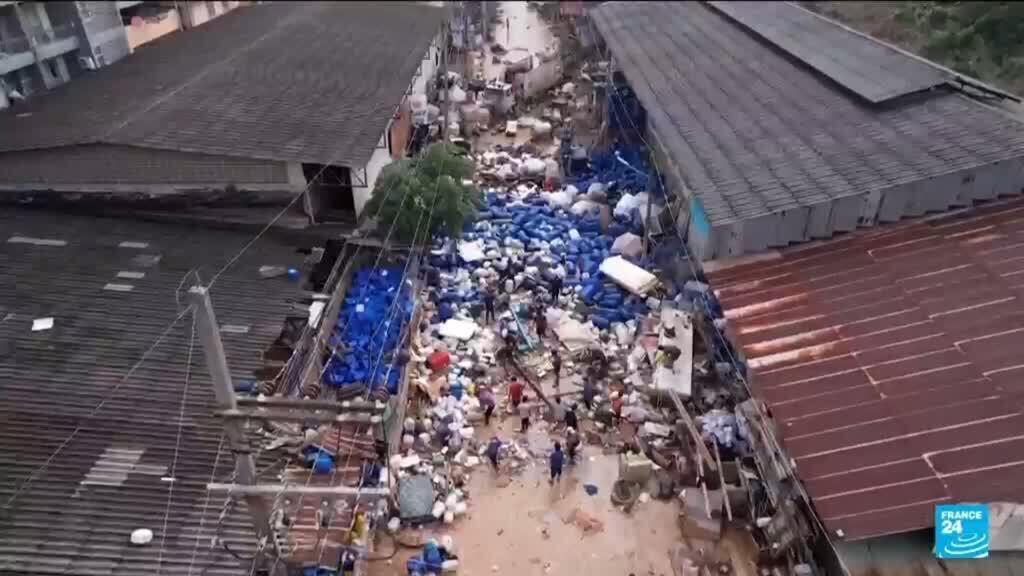
Catastrophic Floods and Landslides Kill Over 1,400, Devastate Southeast Asia A series of catastrophic floods and landslides, triggered by days of exceptionally heavy rainfall, has devastated parts of Southeast Asia, killing more than 1,400 people and affecting millions [17624][25217]. The disasters have submerged villages, severed roads, and destroyed homes and farmland across Indonesia, Sri Lanka, Thailand, and Malaysia [17624][14786][25217]. In Indonesia, the death toll has climbed to 995, with rescuers still searching for 226 missing people [25217]. Neighboring Sri Lanka reports 640 dead and 211 missing [25217]. Combined, the two nations have nearly 4 million citizens impacted by the severe weather, which has also raised fears of waterborne diseases due to damaged water supplies [25217]. Southern Thailand has suffered a severe loss of life, with authorities reporting at least 145 fatalities [14423]. The torrential rains caused rivers to overflow and saturated hillsides, leading to destructive landslides that have left communities reeling and rescue operations ongoing [14423][17624]. National governments and international aid agencies are mobilizing major relief efforts, focusing on providing emergency shelter, clean water, and medical supplies to displaced survivors [17624][20084]. The full scale of the damage is still being assessed as emergency crews work to reach isolated communities hampered by damaged infrastructure [14423][20084]. Deadly Floods and Landslides Claim Over 1,400 Lives Across Southeast Asia Massive Floods Kill Over 1,600, Affect Millions in Asia Deadly Floods and Landslides Claim Over 250 Lives in Southeast Asia Southeast Asia Reels From Widespread Flooding Deadly Floods and Landslides Claim Over 1,500 Lives Across Asia

Global Fuel Prices Skyrocket as War and Strikes Hammer Oil Infrastructure
Global Fuel Prices Skyrocket as War and Strikes Hammer Oil Infrastructure A wave of attacks on global energy infrastructure and escalating conflicts are sending fuel prices soaring worldwide, straining household budgets and triggering emergency government actions. From Europe to Africa and Asia, drivers are facing record costs at the pump. The surge is being driven by a one-two punch: Ukrainian drone strikes systematically targeting Russian oil refineries and export routes, and persistent instability in the Middle East threatening critical shipping lanes [125638][125245][97612]. In South Africa, analysts warned of a potential record increase of up to 8 Rand per litre, with the national government forced to implement a 3 Rand per litre tax cut in a failed attempt to soften the blow [95663][117581]. Despite the tax relief, citizens still faced one of the steepest price hikes in the country's history, with some metropolitan areas imposing fuel purchase limits and emergency war surcharges [117581][108127]. The strategic shift by Ukrainian forces is having a tangible global impact. A recent strike hit the "Krymskaya" oil-pumping station, a key node feeding Russia's largest Black Sea export terminal at Novorossiysk, triggering a major fire [125245]. These relentless attacks on refineries and infrastructure are damaging Russia's export capacity and injecting volatility into global markets [125638][97612]. Simultaneously, conflict in the Middle East continues to threaten supply. A drone attack that set a Kuwaiti oil tanker ablaze near the UAE sent global oil prices spiking past $115 a barrel [116225]. Fears over the stability of ceasefire talks in Gaza are also contributing to market jitters and higher costs [124783]. The financial pain is widespread. In Germany, petrol price rises have outpaced those in neighboring EU countries due to the combined effect of war-driven crude costs and national policies [124639]. In China, authorities imposed the largest single fuel price increase of the year, prompting drivers to queue at stations before the midnight deadline [109102]. The crisis has sparked civil unrest. In Ireland, protesters blockaded a major oil refinery and key terminals for a fifth day, causing hundreds of petrol stations to run dry and forcing the government to convene an emergency cabinet meeting [126425][126288]. Fuel Crisis Forces Irish Cabinet to Emergency Talks Fuel Protests Block Irish Refinery, Disrupt Travel Ukraine's Drone Surge Hits Russian Energy, Shakes Global Markets South Africa Braces for Record Fuel Price Surge Fuel Prices Climb as Gaza Ceasefire Hopes Fade Drivers Race to Pumps Ahead of China's Biggest Fuel Price Jump of 2024 South Africa Braces for R8/Litre Petrol Shock South Africa Cuts Fuel Tax, But Drivers Still Hit by Record Price Hike German Gas Prices Surge, Outpacing EU Neighbors Fuel Limits and War Surcharges Hit South African Metro Ukrainian Strike Hits Key Russian Oil Route, Triggers Major Fire Oil Prices Rocket, Hitting Drivers With Sharpest Spike Since Ukraine War Drone Attack on Tanker Sends Oil Soaring Past $115


U.S. and Iran Launch High-Stakes Talks as Lebanon Ceasefire Hangs in the Balance
U.S. and Iran Launch High-Stakes Talks as Lebanon Ceasefire Hangs in the Balance Direct negotiations between the United States and Iran have commenced, with the fragile situation on the Israel-Lebanon border serving as the central focus and a major obstacle to progress. The rare diplomatic engagement, hosted by Pakistan, aims to prevent a wider regional war but is unfolding alongside continued violence and firm preconditions from both sides. High-level officials from the U.S. and Iran began unusual talks this week, with Pakistan acting as a neutral host [126286]. The discussions center on establishing conditions for a sustainable ceasefire in Lebanon, where the Iranian-backed Hezbollah group and Israeli forces have exchanged near-daily cross-border fire for months [126254][126286]. However, the path to a deal is fraught. Iran has publicly stated that future discussions with the United States are directly tied to stability in Lebanon [125917]. Iranian officials have demanded a ceasefire on the Israel-Lebanon border must happen before any broader peace negotiations can begin [126099]. Concurrently, the United States has issued warnings against being manipulated in the discussions, with prominent political figures cautioning Iran not to "play games" [126099]. The diplomatic push comes amid a significant military escalation. Over a recent 24-hour period, Israeli forces struck more than 200 Hezbollah targets in southern Lebanon [126254]. Overnight Israeli raids have continued despite the backdrop of talks, killing at least three people in southern Lebanon [125937]. This violence underscores the precarious state of the temporary calm and the immense pressure on diplomats. Analysts suggest Iran's engagement in diplomacy is a calculated move to project strength and gain regional influence amid internal economic pressures [126394]. For the United States, the goal is de-escalation to avert a full-scale regional conflict that has drawn in multiple militias and foreign powers [126083]. The outcome of the talks is seen as pivotal for Lebanon, which the United Nations describes as facing a "perfect storm" of crises, its immediate future hinging on the success of this fragile international diplomacy [125652]. U.S., Iran, Pakistan Hold Rare Talks on Frozen Funds, Gaza Iran Links U.S. Talks to Lebanon's Safety Israel Strikes 200+ Hezbollah Targets Amid U.S.-Iran Talks Iran Demands Lebanon Ceasefire Before Talks; U.S. Warns Against "Games" Israeli Strikes Hit Lebanon After Ceasefire, Kill Three Iran Steps Into Mediator Role Amid Regional Tensions Ceasefire in Doubt as US-Iran Conflict Draws in Regional Powers U.S.-Iran Ceasefire Talks Leave Lebanon in Tense Limbo


China Bets Billions on AI and Chips to Break U.S. Tech "Chokehold"
China Bets Billions on AI and Chips to Break U.S. Tech "Chokehold" A massive, state-coordinated push is underway across China to achieve self-sufficiency and leadership in critical technologies, with a laser focus on artificial intelligence (AI) and advanced semiconductors. Provinces and major cities are rolling out multi-billion dollar investment plans targeting these sectors, aiming to break foreign dependencies and secure China's position in the global tech race [51155][95150][43531][19492]. The eastern province of Zhejiang has announced a five-year plan targeting breakthroughs in manufacturing AI chips as small as 3 nanometers, a direct effort to counter U.S. export controls described as a strategic "chokehold" [51155]. This follows a national strategy revealed during China's annual political meetings, which directs massive state resources toward frontier technologies like AI and nuclear fusion to secure a "steadier footing" in strategic industries [95150]. Concurrently, Shanghai launched a $10 billion investment plan this week, channeling most of its funds into microchips and AI [43531]. This provincial and municipal action aligns with a new state-backed semiconductor investment fund worth over $47 billion, focused on building China's own supply chain for advanced chipmaking equipment [86995]. Analysts see the concentrated spending as a direct response to restrictions on technology access imposed by the U.S. and its allies [86995]. The strategic pivot marks a shift from China's decades-long model of absorbing foreign technology to one of creating and dominating next-generation fields [59734]. President Xi Jinping recently underscored this focus during an inspection of a major technology innovation park in Beijing, emphasizing the goal of achieving "high-level" technological independence [71486]. Private Chinese tech giants are aligning with this national directive. Xiaomi's founder announced the company is intensifying a major five-year investment plan into "core technologies" like semiconductors and AI, stating that private firms must deepen such spending to ensure growth [86064]. This state-and-private sector coordination highlights a fundamental split in strategy with the United States, where AI development is primarily market-driven, while China's approach is defined by state planning and systemic integration [109135]. The outcome of this concentrated effort remains a key battlefield in the intensifying U.S.-China rivalry. While new analysis suggests China leads in the volume of AI patents and research, the U.S. currently maintains an advantage in building high-performance AI software and the advanced chips needed to run it [122661]. China's billions in targeted bets aim to close that gap and redefine the global technological balance. China Targets 3nm AI Chips to Break US "Chokehold" China's New Plan: Beat US Tech Rivals with AI and Fusion Power China's Tech Pivot: From "Catch-Up" to Cutting-Edge AI War: US Bets on Markets, China Bets on Control China Bets $47 Billion to Break the Chip Barrier Shanghai Bets $10 Billion on Chips and AI in Tech Race Chinese Provinces Prioritize Tech and Self-Reliance in New Economic Plans Xi Inspects Tech Park, Stakes Claim in Global Innovation Race U.S. and China Locked in Split AI Race, With Stakes for Global Power Xiaomi Bets Billions on Chips and AI as Rivals Build Robots


Climate Crisis Becomes Daily Reality as Extreme Weather Hammers Globe in 2025
Climate Crisis Becomes Daily Reality as Extreme Weather Hammers Globe in 2025 The year 2025 marked a grim turning point where climate change-driven extreme weather stopped being a future threat and became a disruptive, costly part of daily life across the world, according to scientific and conservation reports. Last year was Earth's third hottest on record, but the defining story was a relentless series of disasters, from catastrophic floods and severe droughts to intense storms and heatwaves [49594]. These events caused billions in damage, disrupted millions of lives, and are increasingly seen as the new normal rather than exceptional crises [37775]. Europe faced a particularly brutal year, grappling with devastating floods, scorching heatwaves, and widespread wildfires. Experts directly link the increasing frequency and intensity of these disasters to human-caused climate change and warn that without urgent action to cut greenhouse gas emissions, such extremes will become standard [36941]. The United Kingdom's wildlife and landscapes were pushed to a "breaking point" by a destructive cycle of major storms, drought, fires, and floods, described by the National Trust as "alarm signals we cannot ignore" [36898]. The human and economic toll is staggering, especially in vulnerable regions. A report from the World Meteorological Organization (WMO) confirms that extreme weather in Africa has killed thousands, impacted millions, and caused billions in economic losses [113458]. In Eastern Africa, a "triple planetary crisis" of climate change, biodiversity loss, and pollution is now directly threatening food security by ruining crops and killing livestock [91481]. The health impacts are also becoming direct and severe. In South Africa, climate change is worsening air quality by increasing wildfires and dust storms, leading to a rise in asthma, bronchitis, and other lung diseases, particularly among children and the elderly [110220]. This global shift has prompted the world's top environmental body, the United Nations Environment Assembly (UNEA-7), to issue a strong call for accelerated international cooperation to tackle the interconnected crises of climate change, biodiversity loss, and pollution [21446]. Scientists stress that the extreme weather of 2025 demonstrates a climate system under increasing stress and highlights the urgent need for action [49594]. Europe's 2025 Weather: A New Normal of Extremes? 2025: The Year the Weather Broke UK Wildlife Pushed to "Breaking Point" by Extreme Weather in 2025 2025: Climate Crisis Becomes Daily Life Triple Planetary Crisis Starves East Africa Climate Crisis Costs Africa Billions, Claims Thousands Every Breath a Risk: The Hidden Climate Threat to South Africa's Lungs UN Environment Assembly Demands Urgent Global Action on Climate and Biodiversity
U.S.-Iran Ceasefire Fails to Stop $2 Billion Asia Capital Flight
U.S.-Iran Ceasefire Fails to Stop $2 Billion Asia Capital Flight A fragile ceasefire between the United States and Iran has done little to calm global financial markets, with investors pulling over $2 billion from Asia's emerging economies in a single month as the conflict's economic fallout spreads. The two-week pause in hostilities, announced by U.S. President Donald Trump on April 7, followed a rapid escalation that drew in regional militias and foreign powers [126083]. Despite the lull, the damage to investor confidence is severe and accelerating. In March, overseas capital fled stock and bond markets across the region, placing intense pressure on currencies from Indonesia to India [126095]. Analysts say the ceasefire is too fragile and the geopolitical uncertainty too deep to quickly reverse the capital flight. "The uncertainty has already changed investor behavior," one market observer noted. "Regaining trust will take time and stability that simply isn't there yet" [126095]. The economic shockwaves are now a central point of global contention. Next week, the World Bank and International Monetary Fund (IMF) will confront the crisis directly as leaders from nearly 200 countries gather in Washington. The institutions face the unprecedented task of stabilizing a global economy pushed to the brink by the actions of two of their most powerful members, the U.S. and Israel [126037]. The conflict has also exposed vulnerabilities in hubs once considered safe. Asian tech entrepreneurs and investors are now reassessing Dubai, concerned that disruptions around the critical Strait of Hormuz threaten the city's financial stability and its reputation as a secure base [126042]. While the immediate focus is on the Middle East, the financial instability contributes to a broader picture of a shifting global order. The rapid economic damage from the conflict coincides with a measurable decline in American "soft power," particularly in Southeast Asia, where China is actively filling a vacuum left by reduced U.S. engagement [126090]. This convergence of financial shock and diplomatic recalibration is forcing nations worldwide to navigate a new and volatile reality [39519]. Iran Ceasefire? Asia's Economies Still Bleed Cash Ceasefire in Doubt as US-Iran Conflict Draws in Regional Powers World Bank, IMF Face Off Against U.S. and Israel Over Iran War Fallout Dubai's Allure Dims for Asian Tech Investors Amid Gulf Tensions US Soft Power in Freefall as China Closes Gap in Asia US Political Crisis Coincides with Major Global Shifts

Tourist Hotspots Worldwide Hit Breaking Point as Social Media Fuels Overtourism
Tourist Hotspots Worldwide Hit Breaking Point as Social Media Fuels Overtourism From a favela rooftop in Rio to a wooden dock in Venice, tourist destinations are buckling under the pressure of viral social media trends, creating overcrowding and straining local communities. The phenomenon, known as overtourism, is pushing popular spots to their limits as visitors flock to locations made famous online, often at the expense of residents' daily lives [80040]. In Rio de Janeiro, a single rooftop in the Rocinha favela has become a global pilgrimage site. Dubbed the "Gateway to Heaven," the spot offers a photo where the city's Christ the Redeemer statue appears framed in a gap between buildings. The image went viral, leading to hours-long queues. Local guides now offer motorbike taxi rides up the narrow streets, and the owner charges an access fee, illustrating how quickly online buzz can redirect massive tourist traffic into residential areas [101397]. Similarly, in Venice, a nondescript wooden jetty used by locals like a bus stop has been rebranded as the "Kardashian Jetty." It gained fame after being used during the wedding festivities of billionaire Jeff Bezos. Tourists now seek it out, along with other locations linked to the event, showing how a single celebrity moment can reshape tourist flows in a historic city [51924]. Experts say the core of the problem is the speed at which social media and cheaper travel create sudden "must-see" trends, overwhelming infrastructure [80040]. This search for the perfect photo is part of a larger shift where travelers are increasingly driven by content seen online rather than traditional guidebooks. In response, destinations are scrambling for solutions. Many local governments are now implementing tourist taxes, promoting travel during off-peak seasons, and trying to redirect visitors to less crowded areas to manage the crush and protect local life and the environment [80040]. The trend underscores a growing tension between the economic benefits of tourism and its impact on the places people rush to see. Tourist Destinations Hit Breaking Point: What Causes the Crush? Viral 'Gateway to Heaven' Rooftop Floods Rio Favela with Tourists Venice's New Tourist Hotspot: The 'Kardashian Jetty'
Latest Articles
No U.S.-Iran Deal After Marathon Talks, Says VP Vance
U.S. Vice President J.D. Vance says negotiations with Iran have failed. The talks in Pakistan lasted for 21 hours. Vance stated that Iranian officia...