Latest News
Stay updated with the latest news and articles
Top Stories
Fuel Prices Shatter Records Across Europe, Squeezing Drivers and Economies
Fuel Prices Shatter Records Across Europe, Squeezing Drivers and Economies Drivers across Europe are facing unprecedented pain at the pump as diesel and gasoline prices surge to historic highs, driven by climbing global oil costs and regional market tensions. The spike is placing severe financial strain on households, transport companies, and national economies, prompting calls for government intervention. In Germany, the cost of diesel has surged past €2 per liter, a new national record. The country's largest automobile association, the ADAC, is urgently calling for a temporary cut to Germany's high fuel taxes to provide direct relief to consumers and businesses [122922]. The situation is equally dire in Belgium, where diesel prices are predicted to hit a staggering 2.90 euros per liter, an all-time high. The sharp jump of more than 16 cents per liter is placing greater financial pressure on companies and drivers reliant on diesel vehicles [122941]. French drivers are caught in a "perfect storm" of high prices, exacerbated by a decades-old national policy. A push for diesel car use in the late 20th century made France one of the most diesel-dependent countries in the West. Now, with reduced domestic refining capacity, the country must import more diesel, leading to steeper price spikes than for gasoline as global costs rise [122900]. Industry experts and analysts consistently link the price spikes across the continent to rising global oil costs, fueled by recent geopolitical tensions. These tensions have made oil traders nervous, pushing up market prices worldwide [122922][122941]. The sustained high cost of fuel is now threatening to drive broader inflation, increasing consumer prices for goods and services [122922][122941]. The German government has so far not commented on the ADAC's proposal for a tax cut, having been hesitant to repeat a similar temporary measure enacted during the 2022 energy crisis [122922]. Germany's Diesel Hits Record High, Drivers Demand Tax Break Diesel Shock: Belgian Prices Set to Break Record Diesel Shock: Why France Can't Escape Soaring Fuel Prices


Syrian Army and Kurdish Forces Clash in Aleppo, Sparking New Civilian Exodus
Syrian Army and Kurdish Forces Clash in Aleppo, Sparking New Civilian Exodus Fresh fighting between Syrian government forces and Kurdish-led militias has erupted in and around the city of Aleppo, forcing thousands of civilians to flee and shattering a period of fragile calm [44512][45585][49667]. The clashes, concentrated in Aleppo's northern suburbs and the Deir Hafer district east of the city, have involved heavy weapons and shelling [43634][49667]. Syrian state media reports that army positions were fired upon by the Kurdish-led Syrian Democratic Forces (SDF), prompting return fire [44681]. The violence has resulted in multiple deaths and injuries, though exact casualty figures are unclear [32516][44088][44681]. In response to the escalating violence, the Syrian army has begun distributing evacuation maps to civilians in several Aleppo neighborhoods, indicating routes to safer areas [44681]. This has triggered a rapid exodus, with local aid groups reporting a sharp increase in the number of displaced families fleeing the front lines [45585][45588]. The renewed fighting breaks a recent ceasefire that was ordered by both sides after a deadly battle earlier in the week [32516]. The SDF, a coalition of Kurdish and Arab fighters that was a key U.S. ally against the Islamic State group, controls large parts of northern Syria [43634][45585]. Its relationship with the Damascus government has long been tense, with periodic clashes erupting over control of territory [44512][45585]. This latest surge in violence follows a breakdown in political talks aimed at resolving the standoff, including a stalled plan to integrate the SDF into the national army [45585][45588]. The United Nations has repeatedly warned that any major new offensive in Syria risks a humanitarian catastrophe. Aleppo province already hosts many people displaced from earlier phases of the country's long civil war [45585]. Syria's Aleppo Truce Shatters, Thousands Flee as U.S. Mediates Aleppo Exodus: Fighting Erupts as Syria Peace Talks Fail Fresh Clashes Erupt Between Syrian Army and Kurdish Forces Syrian Army and US-Backed Forces Clash in Aleppo Syrian Army Advances on Aleppo, Sparking Mass Exodus Syrian Forces and Kurds Clash, Then Halt Fire After Deadly Fighting Aleppo Clashes Follow Secret Syria-Israel Talks Syrian Army Distributes Evacuation Maps in Aleppo Amid Clashes


China Bets Billions on AI and Chips to Break U.S. Tech "Chokehold"
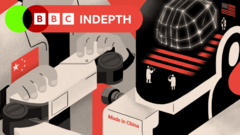
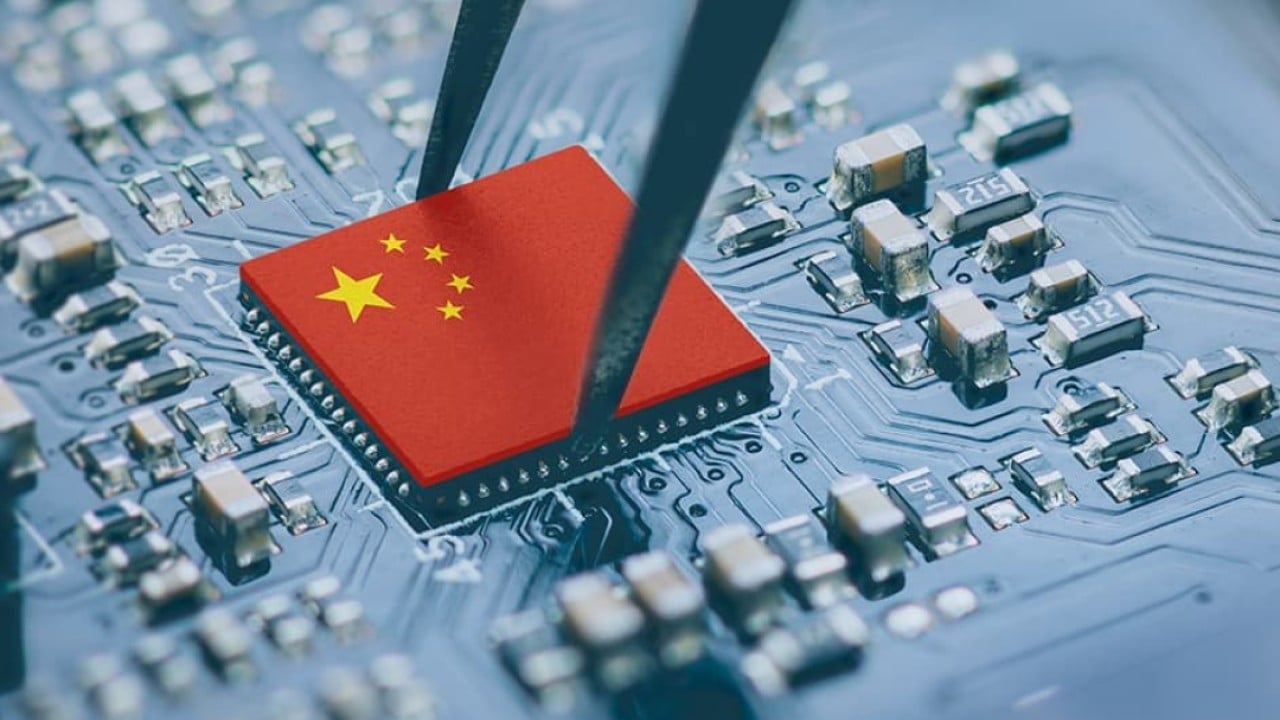
China Bets Billions on AI and Chips to Break U.S. Tech "Chokehold" A massive, state-directed investment push is underway across China, targeting breakthroughs in artificial intelligence (AI) and advanced semiconductors to overcome U.S. restrictions and achieve technological self-reliance [51155][95150][59734]. Provinces and major cities are deploying tens of billions of dollars to develop domestic capabilities in these strategic sectors, framing the effort as a critical race for economic and national security [43531][19492][71486]. The eastern technology hub of Zhejiang has unveiled a five-year plan specifically aimed at manufacturing AI chips as small as 3 nanometers, a direct counter to U.S. export controls described as a strategic "chokehold" [51155]. Similarly, Shanghai's Pudong district launched a $10 billion investment plan this week, directing most of its funds into microchips and AI [43531]. These local initiatives align with a new national strategy revealed during China's annual political meetings, which prioritizes frontier technologies like AI and nuclear fusion for the 2026-2030 period [95150]. This pivot marks a fundamental shift in China's industrial strategy, moving from absorbing foreign technology to aggressively creating its own cutting-edge innovations [59734]. The approach is characterized by intense state coordination and systemic integration, deploying AI as a core component of national infrastructure rather than solely as a market-driven tool [109135]. A new state-backed semiconductor fund worth over $47 billion exemplifies the scale of this push, focusing on building a domestic supply chain for chipmaking equipment currently dominated by the U.S. and its allies [86995]. Analysts note the competition is split, with China taking a lead in foundational research like AI patents, while the U.S. maintains an advantage in high-performance AI models and the chips needed to build them [122661]. China's strategy aims to close this gap by achieving "high-level" technological independence, a goal emphasized by President Xi Jinping during a recent inspection of a national technology innovation park [71486]. The overarching objective is to break foreign dependencies and secure leadership in the technologies that will define global power [95150][59734]. China Targets 3nm AI Chips to Break US "Chokehold" China's New Plan: Beat US Tech Rivals with AI and Fusion Power China's Tech Pivot: From "Catch-Up" to Cutting-Edge Shanghai Bets $10 Billion on Chips and AI in Tech Race Chinese Provinces Prioritize Tech and Self-Reliance in New Economic Plans Xi Inspects Tech Park, Stakes Claim in Global Innovation Race China Bets $47 Billion to Break the Chip Barrier AI War: US Bets on Markets, China Bets on Control U.S. and China Locked in Split AI Race, With Stakes for Global Power

Climate Crisis Becomes Daily Reality as Extreme Weather Hammers Europe and UK in 2025
Climate Crisis Becomes Daily Reality as Extreme Weather Hammers Europe and UK in 2025 A relentless barrage of extreme weather throughout 2025 has pushed ecosystems to the brink and signaled a dangerous new normal for Europe, scientists and conservationists warn. The year, Earth's third hottest on record, was marked by a destructive cycle of storms, heatwaves, droughts, floods, and wildfires that caused billions in damage and left nature at a "breaking point" [36898][49594]. Experts directly link the increasing frequency and intensity of these disasters to human-caused climate change, driven by greenhouse gas emissions from burning fossil fuels [36941][49594]. They caution that without urgent global action to cut emissions, such severe events will become standard [36941]. The UK experienced this pattern acutely. The year began and ended with major storms—Éowyn and Bram—bookending a sun-soaked spring and summer that led to drought and fierce heath and moorland fires. These dry periods were later broken by severe autumn floods [36898]. The National Trust's annual review described these climate extremes as "alarm signals we cannot ignore," stating they have put wildlife, plants, and landscapes under severe pressure [36898]. The continent-wide picture was similarly dire, with Europe managing a costly recovery from devastating floods, scorching heatwaves, and widespread wildfires [36941]. Scientists say rising temperatures are changing global weather patterns, leading to more powerful and unpredictable events [49594]. This shift signifies a turning point where climate impacts have moved from being seen as exceptional disasters to becoming regular, disruptive events in daily life [37775]. The data presents a clear trend of a climate system under increasing stress, with the extreme weather of 2025 demonstrating the broader, dangerous consequences of a warming planet [49594]. Europe's 2025 Weather: A New Normal of Extremes? 2025: The Year the Weather Broke UK Wildlife Pushed to "Breaking Point" by Extreme Weather in 2025 2025: Climate Crisis Becomes Daily Life

US Allies Lose Faith as Political Turmoil and Threats Reshape Global Alliances
US Allies Lose Faith as Political Turmoil and Threats Reshape Global Alliances A wave of new surveys and expert analysis reveals a sharp, widespread decline in international trust in the United States, driven by political instability and aggressive foreign policy threats. From Southeast Asia to Europe and Australia, long-standing partners are openly questioning American reliability and are actively preparing for a future with less dependable U.S. leadership. The trend is most starkly quantified in Southeast Asia. A major survey of nearly 2,000 regional experts and leaders found that when forced to choose a strategic partner, 50.5 percent would now pick China over the United States [122704]. Trust in the U.S. as a reliable partner has plummeted to 41.1%, a dramatic fall from 61.1% just five years ago [122692]. Analysts link the decline directly to concerns over U.S. political volatility, with 67 percent of respondents expressing apprehension about a potential second term for former President Donald Trump [122704]. European allies are grappling with the same doubts. A former U.S. ambassador warns that the North Atlantic Treaty Organization (NATO) is "deeply damaged" by fundamental disagreements, largely over U.S. threats of war against Iran, which have forced European capitals to question their core reliance on American military power [122777]. Geopolitics expert Manlio Graziano argues the U.S. has ceased to act as the "leader of the free world," creating an "uneasy and uncertain" relationship where Europe knows it "cannot fully trust or rely on the United States as they once did" [122895]. The anxiety extends to the Pacific. A leading Australian strategist is now urging a fundamental rethink of the nation's core defense alliance with the U.S., arguing that the America of today is not the same reliable partner it was decades ago due to profound domestic political changes [122727]. Market and diplomatic instability is being compounded by specific U.S. threats. Global markets braced for volatility as a deadline set by former President Trump for allies to fix the Iran nuclear deal approached, with investors calling it "a known unknown with a clock ticking" [122868]. Trump has also publicly threatened Iran over control of the critical Strait of Hormuz, a move analysts warn could backfire by strengthening hardliners in Tehran [122871]. Simultaneously, the U.S. is threatening a major trade investigation against the European Union, accused of unfairly targeting American tech giants like Apple and Google, which risks escalating transatlantic tensions further [122734]. The collective picture is one of a superpower whose internal divisions and unpredictable policies are systematically eroding the confidence of its closest partners, prompting them to seek new partnerships and build more independent security and economic strategies. Poll: Southeast Asia Picks China Over US, Fears Trump Most US Losing Trust in Southeast Asia, Survey Finds NATO Future in Doubt as U.S. Threats Rattle Allies US Leadership Fades: Europe's Uneasy Alliance Enters New Era Trump Era Questions: Is the US Still Australia's Reliable Ally? Markets Brace for Trump's Iran Deadline: "A Known Unknown with a Clock" Trump Threatens Iran Over Strait of Hormuz, Risks Backfire U.S. Threatens Trade Investigation Over EU Tech "Attacks"
Tourist Hotspots Hit Breaking Point as Social Media Drives Record Crowds
Tourist Hotspots Hit Breaking Point as Social Media Drives Record Crowds From the canals of Venice to the mountains of Morocco, popular travel destinations are being overwhelmed by unprecedented numbers of visitors. This global surge, often fueled by viral social media trends, is straining local infrastructure, damaging environments, and disrupting daily life for residents [80040]. Experts point to a perfect storm of cheaper travel and social media creating sudden, intense "must-see" trends that can overwhelm a location overnight [80040]. A single rooftop in Rio de Janeiro's Rocinha favela, dubbed the "Gateway to Heaven," now sees hours-long queues after videos of its view went viral, redirecting a flood of tourists into a dense residential community [101397]. Similarly, a routine wooden dock in Venice has become a pilgrimage site for fans seeking the "Kardashian Jetty," a spot used by celebrities during a high-profile wedding [51924]. The economic shift is profound. In Morocco's Atlas Mountains, home to North Africa's tallest peak, Mount Toubkal, the sound of concrete mixers repairing earthquake damage mixes with the buzz of tourism. "Most people here work in tourism now," says local guide Hussein, noting the valley's economy has transformed from subsistence farming to catering to international hikers [83740]. This pattern is repeated in Kashmir, where the government is aggressively promoting ski resorts and mountain tourism to rebuild an economy long defined by conflict, betting on hospitality jobs over military posts [46233]. In response, destinations are scrambling for solutions. Many local governments are implementing tourist taxes, promoting travel during off-peak seasons, and trying to redirect visitors to less-crowded areas to manage the crush [80040]. The industry itself is advocating for more sustainable practices, such as choosing eco-certified accommodations and traveling outside of peak periods to ease the pressure [86148]. The challenge is to balance the vital economic benefits of tourism with the need to protect local communities, cultures, and natural sites from being loved to death [80040][86148]. Tourist Destinations Hit Breaking Point: What Causes the Crush? Viral 'Gateway to Heaven' Rooftop Floods Rio Favela with Tourists Venice's New Tourist Hotspot: The 'Kardashian Jetty' From Walnuts to Tourists: A Changing Valley Leads to North Africa's Peak Ski Resorts or Soldiers? Kashmir Bets on Tourism Over Conflict The Hidden Cost of Your Vacation


Climate Crisis Creates World's First Official Climate Migrants as Pacific Islanders Relocate
Climate Crisis Creates World's First Official Climate Migrants as Pacific Islanders Relocate The first citizens of Tuvalu have arrived in Australia under a new, landmark visa program, marking them among the world's first officially recognized climate migrants [25540]. The special pathway was created specifically because rising sea levels threaten to make the low-lying Pacific island nation unlivable [10674]. Australia's policy allows up to 280 Tuvaluans to relocate each year, granting them the right to live, work, and study in Australia with a clear path to citizenship [25540]. The program is a direct response to the existential threat posed by climate change, which is eroding Tuvalu's land and increasing severe flooding [10674]. Experts have long warned that environmental changes could render parts of Tuvalu uninhabitable within decades [25540]. The arrival of the first group under this planned migration scheme represents a significant moment in global climate policy, demonstrating how nations are beginning to organize the long-term relocation of entire populations [25540]. The agreement between Australia and Tuvalu also includes funding for coastal reclamation and climate adaptation projects in Tuvalu itself [10674]. Tuvalu Citizens Arrive in Australia as First Official Climate Migrants Australia Opens Special Visa Pathway for Climate-Affected Tuvaluans

Trump Revives Bid to Buy Greenland, Mixing Real Estate Tactics with Geopolitics
Trump Revives Bid to Buy Greenland, Mixing Real Estate Tactics with Geopolitics President Donald Trump has renewed his controversial push for the United States to purchase Greenland, combining cash offers, economic threats, and a refusal to rule out military force in a strategy that mirrors his real estate career [50444]. The autonomous Danish territory, valued for its strategic Arctic location and resources, has been a persistent target for the President, who brought the proposal to the world stage at the World Economic Forum in Davos [55297][55327]. During his address in Davos, Trump publicly questioned the value of the North Atlantic Treaty Organization (NATO) while promoting the idea of acquiring Greenland, stating the U.S. should be allowed to buy it [55297]. He later clarified he did not want to use force for the purchase but called for immediate negotiations [55327]. This public proposition follows reported behind-the-scenes tactics that include direct cash offers to Greenlanders and threats to impose tariffs on Denmark if the sale is blocked [50444]. The governments of both Denmark and Greenland have consistently and firmly rejected the idea, stating the island is not for sale [50444]. Experts see Trump's approach as a conflation of genuine strategic interest with an unrealistic, expansionist vision, comparing it to 19th-century imperial land grabs [50444][58552]. They warn that applying high-pressure, transactional real estate tactics to complex international diplomacy is fraught with risk, as it underestimates the role of national sovereignty and pride [87536]. The push for Greenland forms part of a broader foreign policy vision that openly challenges the post-World War II international order built on alliances and rules [55515][58552]. At Davos, Trump's speech notably ignored traditional "soft power" diplomacy, focusing instead on direct demands to allies and economic nationalism [55327]. This stance positions him in direct opposition to the forum's long-standing ethos of multilateral cooperation, even as analysts note his wealth and brand-driven identity make him a paradoxical icon of the modern global elite [54269]. Trump Eyes Greenland: Cash, Threats, and Military Force Trump at Davos: Questions NATO, Wants to Buy Greenland Trump at Davos: Skips Soft Power, Targets Greenland and NATO Allies Trump's 'New Imperialism': Land Grabs and a Rejected World Order Iran Won't Fold: Why Trump's Real Estate Tactics Fail on World Stage Davos' World Order Crumbles as Trump Takes the Stage Trump Is the Davos Man
India's Farmers Block Highways, Fearing U.S. Trade Deal Will Crash Crop Prices
India's Farmers Block Highways, Fearing U.S. Trade Deal Will Crash Crop Prices New Delhi — Indian farmers have launched massive protests, using tractors and trucks to blockade major highways around the capital, fearing a new trade agreement with the United States will flood the market with cheap imports and devastate their livelihoods [75183]. The protests, which have drawn significant numbers from the agriculturally powerful northern states, center on concerns that the trade pact could undermine India's system of minimum support prices for staple crops like wheat and rice. Farmers fear the deal, struck during a recent high-level visit, will force India to reduce these crucial price guarantees [73750]. "The government says there are safeguards, but we don't trust these promises," said one protest leader, echoing widespread sentiment among the demonstrating groups. "This deal is made for American corporate interests, not for us" [75183]. The agreement is seen as a key diplomatic achievement for Prime Minister Narendra Modi, strengthening economic ties with a major partner. However, it has ignited immediate domestic tension with the farming community, a critical voting bloc. Police have heightened security at key entry points into New Delhi as negotiations between farmer unions and government officials continue [73750]. The protests highlight a broader vulnerability in India's economy. The nation relies heavily on imported fertilizers, with a significant portion coming through the volatile Persian Gulf. Recent conflicts in that region have raised fears of shipment delays and cost spikes, threatening the upcoming agricultural season and adding urgency to the farmers' demands for stable incomes and government protection [117032]. Government officials maintain that the minimum price system remains intact and protected under the new trade terms. They urge farmers to await the final detailed text of the agreement. Despite these assurances, the highway blockades continue, underscoring the deep anxiety within India's agricultural heartland over the forces of global trade [73750]. Indian Farmers Strike, Fearing U.S. Trade Deal Will Flood Market India's Farmers Protest as Modi-Trump Trade Pact Threatens Key Crop Prices Gulf Conflict Threatens India's Vital Fertilizer Imports
U.S. Forces Capture Venezuelan President Maduro in Military Strike, Plan to "Run" Country
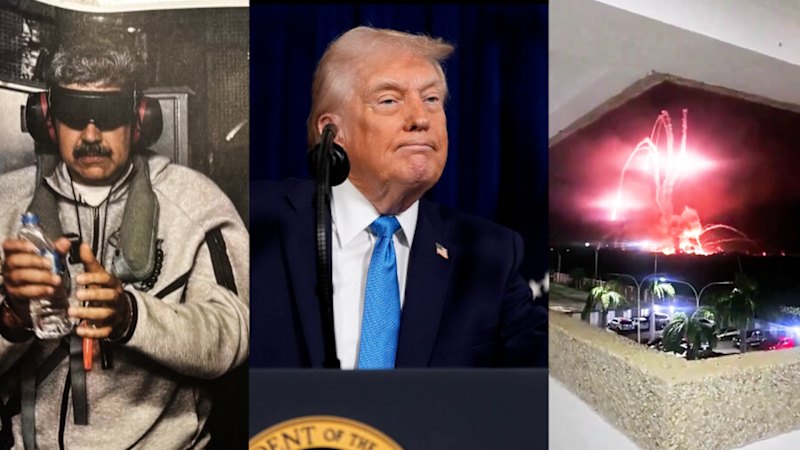
U.S. Forces Capture Venezuelan President Maduro in Military Strike, Plan to "Run" Country U.S. military forces have captured Venezuelan President Nicolás Maduro and his wife, Cilia Flores, in a direct military operation on Venezuelan soil [41033][41227][40970]. The unprecedented strike, which occurred on Saturday, January 3, 2026, marks a dramatic escalation in the long-standing conflict between Washington and Caracas [41088][40737][40921]. Following the capture, former U.S. President Donald Trump announced that the United States would now "run" Venezuela [41227][41055][42114]. He stated a key objective is to "take back the oil" and fix the country's collapsed oil infrastructure [41227][40871][41525]. Venezuela holds the world's largest proven oil reserves, but its production has plummeted amid years of economic crisis [40871][41227]. Maduro and his wife have been taken to New York, where they face criminal charges including terrorism and narcotics offenses [41136][40942][40970]. U.S. officials have long labeled Maduro's government as illegitimate, accusing it of corruption, human rights abuses, and ties to drug trafficking [41136][40668][40970]. The operation has created an immediate power vacuum and deep uncertainty for Venezuela's 30 million citizens [41136][42114]. There has been no immediate statement from the Venezuelan military or the remaining members of Maduro's government regarding succession [41379][40668]. The U.S. has recognized opposition leader Juan Guaidó as Venezuela's legitimate president since 2019, but the path forward for governance is unclear [41379][40505]. International legal experts have immediately questioned the legality of the attack, predicting the U.S. will justify it as an act of self-defense [40942]. The capture of a sitting head of state by a foreign military is a rare event in modern history and is expected to trigger a major international debate over sovereignty [40668][41088][40505]. U.S. Forces Capture Venezuelan President in Military Strike Venezuela Leader Ousted in U.S. Strike, Faces Charges in New York US Strikes Venezuela, Captures President Maduro U.S. Captures Venezuela's President in Secret Operation U.S. Forces Capture Venezuelan President Nicolás Maduro US Strikes Venezuela, Abducts President Maduro US Captures Venezuelan President in "Large-Scale Strike" U.S. Military Strike Captures Venezuelan Leader Maduro U.S. Captures Maduro: What Now for Venezuela? US Seizes Venezuelan President, Vows to "Run" Country and "Take Back the Oil" U.S. Claims Capture of Venezuelan Leader in Military Strike U.S. Strikes Venezuela, Captures President Maduro US Captures Venezuelan President in Military Strike U.S. Strikes Venezuela, Captures President Maduro Venezuelan President Captured in U.S. Military Raid
Latest Articles

Hedge Funds Bet Big Against Europe as Mideast War Fears Grow
Financial funds are placing their largest-ever bets that European stock prices will fall. This surge in "short selling" comes as traders fear the reg...

Kanye West Barred From UK, London Festival Cancelled
British authorities have banned the US rapper Kanye West from entering the United Kingdom. The decision is reportedly linked to his history of making...

UK Caps Student Loan Interest at 6% in Major Policy Shift
The UK government will cap interest rates on student loans at 6%, officials announced. The limit applies immediately. This change affects millions o...

Europe's $11 Billion Warships Can't Fight
A landmark European defense project has failed, exposing critical flaws in how the continent rearms. The €10 billion program to build four advanced F...

Lebanon: One Million Displaced as War Expands
More than one million people in Lebanon have now fled their homes since the start of the war. This sharp increase in displacement comes as Israel exp...
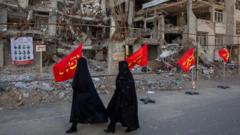
Trump's Iran Deadline Looms: No Deal in Sight
Time is running out. US President Donald Trump faces a critical deadline with Iran this Tuesday. The demand is for Iran to reopen the strategic Stra...

Lil Nas X Assault Case to Be Dropped After Mental Health Program
A judge has agreed to dismiss a misdemeanor assault case against musician Lil Nas X. The decision is conditional on the artist completing a mental he...

Lagos Erupts in Color: Centuries-Old Afro-Brazilian Carnival Returns
The Fanti Carnival filled the streets of Lagos with music and vibrant costumes on Monday. This annual event celebrates a unique historical link. It...

Taiwan Opposition Leader Meets Xi in China, Calls for "Bridge for Peace"
Taiwan's main opposition leader, Cheng Li-wun, is visiting China for a high-profile meeting with President Xi Jinping. Cheng said she "gladly accept...

Rapper Offset Survives Shooting in Florida
Rapper Offset was shot in Florida on Sunday, according to multiple reports. The incident occurred in the city of Hallandale Beach. The artist, whose...

Universal Music in $64 Billion Takeover Bid
Bill Ackman’s investment firm, Pershing Square, has made a preliminary $64 billion offer to buy Universal Music Group. Universal is the world's larg...
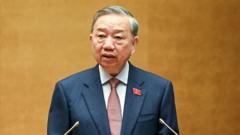
Vietnam's President and Party Chief Are Now the Same Person
Vietnam's National Assembly has elected the leader of its Communist Party, To Lam, as the country's new president. The vote was unanimous. This move...

99mph Train Collision Kills Driver; Lorry Operator Detained
A high-speed train collided with a heavy goods vehicle in northern France on Friday, resulting in the death of the train operator. The lorry driver h...

Ex-Pinochet Agent Faces Extradition from Australia After 50 Years
A Chilean woman accused of kidnappings during the Pinochet dictatorship has lost her final bid to avoid extradition from Australia. Adriana Rivas, w...
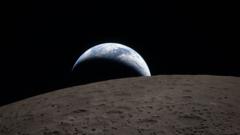
NASA's Orion Snaps Stunning 'Earthset' and Solar Eclipse from the Moon
NASA has released the first images from the Orion spacecraft's historic fly-by of the Moon. The pictures capture two rare cosmic events from a unique...
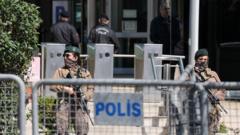
Israeli Consulate in Istanbul Attacked; Gunman Killed
A shooting at the Israeli consulate in Istanbul has left the attacker dead and two people wounded. Turkish authorities are investigating the incident...

Diesel Shock: Belgian Prices Set to Break Record
Diesel fuel prices in Belgium are predicted to reach an all-time high, according to a new report. The cost is expected to hit 2.90 euros per liter....

North Korea Accepts Apology, Signaling Rare Diplomatic Thaw
South Korea says North Korea has accepted its apology over a recent drone incident, calling the response a sign of progress. Last week, South Korea’...

Iran Threatens Decades of Global Energy Chaos if Attacked
Iran's Revolutionary Guard Corps (IRGC) has issued a stark warning to the United States: any American attack on Iranian civilian infrastructure will...

EU Warns Against Attacking Iran's Civilian Sites, Calls It 'Dangerous Escalation'
The European Union has publicly rejected threats to attack Iran's civilian infrastructure. It warned that such actions would lead to a "dangerous esc...