Latest News
Stay updated with the latest news and articles
Top Stories
2025: Climate Chaos Goes Mainstream — $Billions in Damage, Thousands Dead, No Turning Back
**2025: Climate Chaos Goes Mainstream — $Billions in Damage, Thousands Dead, No Turning Back** The year 2025 marked a brutal turning point where extreme weather—from devastating floods and scorching heatwaves to relentless droughts and wildfires—stopped being shocking exceptions and became a regular part of daily life for millions around the world [37315] [37775]. Last year was Earth's third hottest on record, but the real story was the string of catastrophic and costly weather events that struck across the globe, causing billions in damage and disrupting countless lives [49594]. Scientists say these disasters show climate change's clear influence, with rising temperatures driving more powerful and unpredictable storms, floods, and droughts [49594]. In Europe, 2025 brought a relentless year of climate disasters. Countries across the continent are still managing costly recoveries from floods, heatwaves, and wildfires [36941]. Experts warn these severe events may become standard, linking their increasing frequency to human-caused greenhouse gas emissions [36941]. The United Kingdom saw nature pushed to its "breaking point," with major storms like Éowyn and Bram bookending a year that included sun-scorched spring droughts, fierce moorland fires, and severe autumn floods [36898]. The crisis is not confined to wealthy nations. In Eastern Africa, a "triple planetary crisis" of climate change, biodiversity loss, and pollution is directly threatening food security, causing extreme droughts and floods that ruin crops and kill livestock [91481]. A major report from the World Meteorological Organization confirms the severe human and economic toll across Africa, stating that extreme weather has killed thousands, impacted millions, and caused billions in losses, with consequences that will continue for generations [113458]. The global response is accelerating. At the United Nations Environment Assembly (UNEA-7) in Nairobi, delegates committed to strengthening international cooperation on climate change, biodiversity loss, and pollution, urging countries to increase the speed and scale of their environmental interventions [21446]. Meanwhile, world leaders gathered at the COP30 climate conference in Belém, Brazil, to discuss the global response to rising temperatures [5124]. Experts warn that large-scale "mega projects," failed market-based climate policies, and increasing militarization are deepening the crisis, ensuring that climate impacts have moved from the headlines directly into everyday routines [37315] [37775]. The year 2025 is now seen as a benchmark—the point where climate disruption fully settled into the daily lives of people around the world, with no sign of turning back [37315]. 2025: The Year Climate Chaos Became Routine 2025: Climate Crisis Becomes Daily Life **2025: The Year the Weather Broke** Europe's 2025 Weather: A New Normal of Extremes? UK Wildlife Pushed to "Breaking Point" by Extreme Weather in 2025 Triple Planetary Crisis Starves East Africa Climate Crisis Costs Africa Billions, Claims Thousands **UN Environment Assembly Demands Urgent Global Action on Climate and Biodiversity** COP30: Key Facts on How a Warming Planet Affects You
U.S. Allies Flee as Trump’s “US Risk” Blows Up Global Trust
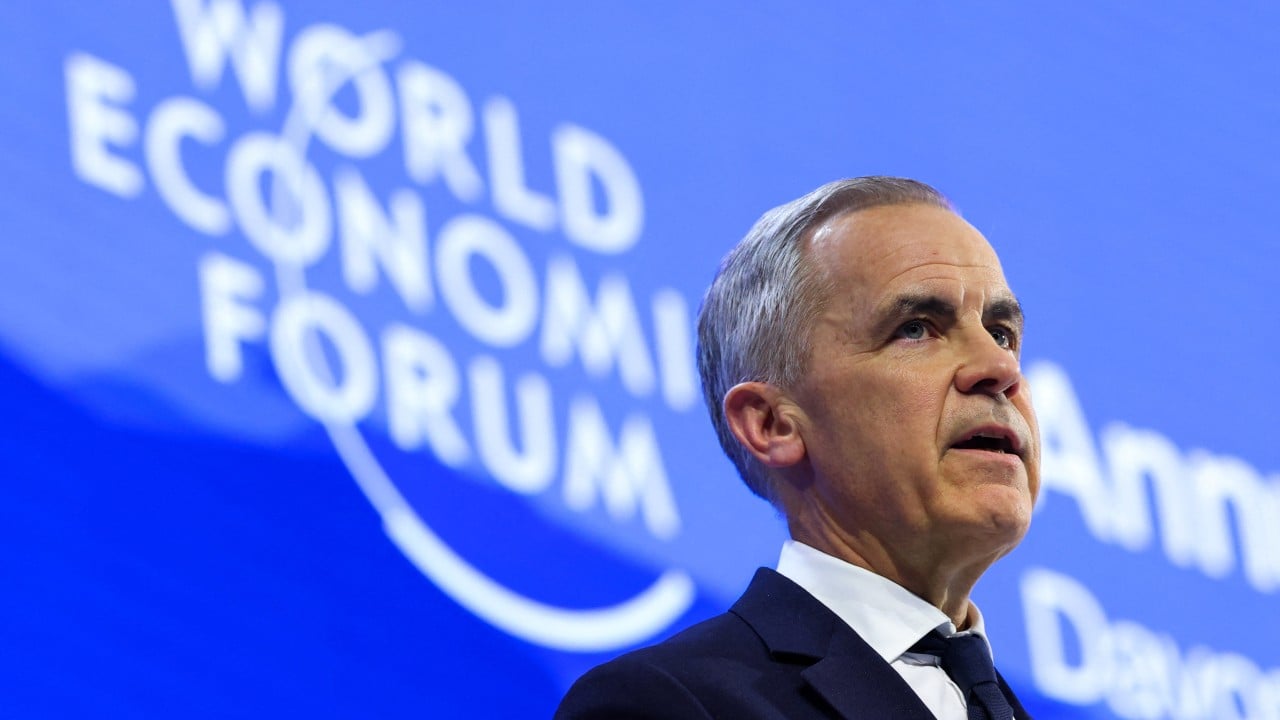
U.S. Allies Flee as Trump’s “US Risk” Blows Up Global Trust A wave of uncertainty is sweeping across the globe as President Donald Trump’s aggressive trade threats, erratic foreign policy moves, and open attacks on traditional alliances force other nations to rethink their reliance on Washington. Analysts now warn that the United States itself has become a primary source of financial and geopolitical instability—a dramatic shift from its long-held status as the world’s safest bet [35492]. At the World Economic Forum in Davos, world leaders openly questioned America’s commitment to its allies, while Canadian Prime Minister Mark Carney—elected after Trump threatened to annex Canada—declared that countries must reconsider their security and economic ties to the U.S. [55531][57549]. The crisis is accelerating a global realignment. Southeast Asian nations are actively working to reduce their economic dependence on both the United States and China, using Trump’s trade war as an opportunity to diversify supply chains and attract investment from Europe, India, and the Middle East [103588]. Meanwhile, developing nations are building new trade alliances and diversifying their currency reserves to insulate themselves from the fallout of U.S. policies [121522]. The old system, where America exported instability to the periphery, is breaking down as the Global South refuses to absorb the damage [121522]. Trump’s push to purchase Greenland and his threats to use financial tools to pressure Denmark have exposed a deeper fracture: the end of the Atlantic alliance that defined Western security for decades [57847][47725]. Experts say the world is entering a “multi-polar age,” where no single power leads unchallenged [57847]. The United States is now being judged by the same standard as other nations, with investors coining the term “US risk” to describe the growing danger of betting on American stability [35492]. As the U.S. prioritizes domestic politics over foreign commitments, traditional allies are building their own defenses and seeking new partners, leaving the international order more fragmented and unpredictable than at any point since World War II [109910]. US Political Crisis Coincides with Major Global Shifts World Shifts Toward China as Trump Upends Old Order Trump's Trade Threats Could Upend Global Finance Trump Stuns Davos: Allies Question U.S. Commitment The Atlantic Splinters: As U.S. Power Wanes, Greenland Becomes a New Front ASEAN Seeks New Partners as US-China Trade War Rages Global South Slams the Vents on US "Air Conditioner" Policy Wall Street Warns: "US Risk" Is the New Buzzword Trump's Threats Force Allies to Rethink U.S. Dependence U.S. Global Leadership Fades as Alliances Fracture, Experts Warn


Overtourism Crisis! 800 Million Travelers Are Crushing Venice, Rio & Morocco’s Hidden Costs Exposed
**Overtourism Crisis! 800 Million Travelers Are Crushing Venice, Rio & Morocco’s Hidden Costs Exposed** Popular travel spots worldwide are struggling with 'overtourism,' as too many visitors damage local life, the environment, and the very communities they come to see [80040]. From a viral rooftop in a Rio de Janeiro favela to a simple wooden dock in Venice and a shifting valley in Morocco’s Atlas Mountains, the strain of mass tourism is forcing locals and governments to act. In Rio’s Rocinha favela, a single rooftop called the "Gateway to Heaven" has become a global destination thanks to viral videos. Visitors wait for hours to snap a perfect photo framing Christ the Redeemer through a unique architectural gap. Local guides now offer motorbike taxi rides up narrow streets, and the rooftop owner charges a small access fee. While the phenomenon brings new income, it raises questions about sustainable tourism in densely populated residential areas [101397]. Venice is facing a similar celebrity-driven crush. A simple wooden dock outside the Gritti Palace hotel—now dubbed the "Kardashian jetty"—became a hotspot after billionaire Jeff Bezos’ wedding festivities in June. Tourists now flock to the spot and retrace the steps of celebrity guests, showing how a single high-profile event can reshape tourist interest in an ancient city [51924]. In Morocco’s Atlas Mountains, the local economy has pivoted dramatically. "Most people here work in tourism now," says local guide Hussein. "Twenty years ago everyone grew walnuts and subsistence food. Now we’ve still got walnuts, but we’ve also planted apple trees as a cash crop. It leaves time for the tourist work" [83740]. The region, home to North Africa’s tallest peak, is still recovering from a historic earthquake, but the shift from farming to tourism has been decisive. Kashmir, known for decades of military conflict, is betting on ski slopes and mountain resorts instead. The government is investing heavily in new hotels, direct flights, and winter sports infrastructure, especially at the famous Gulmarg ski resort. Officials believe a stronger tourism economy will bring greater stability, even as military checkpoints remain visible [46233]. Travel creates jobs and connects cultures, but mass tourism also damages environments, pushes up carbon emissions, and can support governments with poor human rights records. The industry is scrambling for solutions: tourist taxes, off-season promotions, and redirecting visitors to less crowded areas [80040]. The question remains: can we travel in a truly sustainable way? [86148] Tourist Destinations Hit Breaking Point: What Causes the Crush? Viral 'Gateway to Heaven' Rooftop Floods Rio Favela with Tourists Venice's New Tourist Hotspot: The 'Kardashian Jetty' From Walnuts to Tourists: A Changing Valley Leads to North Africa's Peak Ski Resorts or Soldiers? Kashmir Bets on Tourism Over Conflict The Hidden Cost of Your Vacation


Climate Crisis Forces First-Ever Official Relocation: 280 Tuvaluans a Year Flee Rising Seas to Australia
**Climate Crisis Forces First-Ever Official Relocation: 280 Tuvaluans a Year Flee Rising Seas to Australia** The first group of people from the Pacific island nation of Tuvalu has officially moved to Australia under a landmark visa program, becoming some of the world’s first legally recognized climate migrants [25540]. Australia created the special pathway because rising sea levels are eroding Tuvalu’s land and increasing flooding, with experts warning parts of the country could become unlivable in the coming decades [25540]. The new deal allows up to 280 Tuvaluans to relocate to Australia each year, where they receive the right to live, work, and study, along with a clear path to citizenship [10674]. The program was announced in November 2023 as part of a broader agreement that also includes funding for coastal reclamation and adaptation projects in Tuvalu [10674]. This first wave of arrivals marks a significant shift in global migration policy—moving from emergency response to planned, organized relocation of entire populations threatened by environmental collapse [25540]. The visa is a direct response to the existential challenge facing the low-lying nation, where scientists say climate change is already making daily life unsustainable [10674].

Trump’s Brand Shakedown: Demands Billions in Cash to Rename Penn Station After Himself
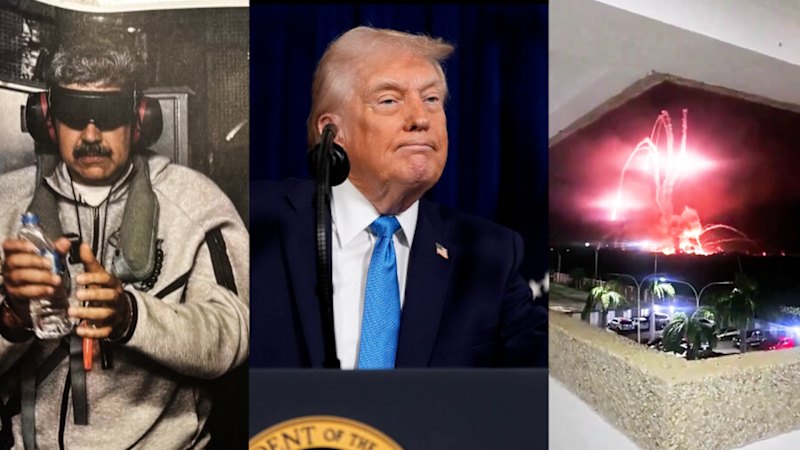
**Trump’s Brand Shakedown: Demands Billions in Cash to Rename Penn Station After Himself** President Donald Trump is pushing a new playbook that blends personal branding with government power: he’s demanding billions in federal infrastructure cash in exchange for renaming New York’s Penn Station and Washington Dulles International Airport after himself [80945]. The move comes as critics say he’s treating the presidency like a licensing deal, profiting off his name without investing his own money [36135]. According to sources, Trump told Senate Minority Leader Chuck Schumer he would release billions of dollars for a major Northeast infrastructure project—but only if Schumer backed renaming the two sites [80945]. It’s the latest example of Trump linking public funds to permanent, self-promoting tributes. He’s already placed his name on federal properties, including a performing arts center and a class of Navy ships [80945]. This isn’t just about ego—it’s a tactic. Trump’s business history shows he often collected fees without risking his own capital, and his companies filed for bankruptcy six times [36135]. Now, as president, he’s using federal money as leverage to cement his brand on the national landscape. Critics call it a “shakedown” [80945]. Meanwhile, on the global stage, Trump is applying the same real estate-style pressure. At the World Economic Forum in Davos, he questioned the NATO alliance and demanded the U.S. buy Greenland from Denmark—a territory not for sale [55297][50444]. He’s offered cash to Greenlanders, threatened tariffs, and refused to rule out military force [50444]. Analysts say this approach—mixing strategic interests with expansionist fantasies—mirrors 19th-century imperialism [58552]. Back home, Trump is using lawsuits to pressure universities, seeking billions in damages and aiming to force policy changes on campus [62334]. He’s also slammed the NIL system allowing college athletes to earn money, calling it a “disaster” for sports [25423]. Experts warn that Trump’s “maximum pressure” style works in real estate but backfires in international relations. Trying to humiliate Iran, for instance, often leads to defiance, not surrender [87536]. And his proposed “board of peace” for Gaza—featuring Vladimir Putin and Recep Tayyip Erdoğan—has been slammed as neocolonial control, not peace [53785]. The bottom line: Trump is treating the nation like a branding opportunity, trading public funds for personal monuments and pushing deals that critics say benefit only his name and power. Trump's 'Brand America' Push: Putting His Name on the Nation Trump at Davos: Questions NATO, Wants to Buy Greenland Trump Eyes Greenland: Cash, Threats, and Military Force Trump's 'New Imperialism': Land Grabs and a Rejected World Order Trump Ties Infrastructure Funds to Renaming Landmarks After Himself Trump Sues Universities for Billions: A Political Strategy? Iran Won't Fold: Why Trump's Real Estate Tactics Fail on World Stage Trump's 'Board of Peace' Includes Putin, Erdoğan; Critics Call It Neocolonial Trump Slams NIL as "Disaster" for College Sports, Olympics
India's Farmers Mobilize Nationwide, Fearing U.S. Trade Deal Will Crash Crop Prices
India's Farmers Mobilize Nationwide, Fearing U.S. Trade Deal Will Crash Crop Prices A wave of protests has swept across India as farmers and trade unions mobilize against a newly announced trade agreement with the United States, fearing the pact will flood the market with cheap imports and devastate their livelihoods [75183]. The protests, which included a nationwide strike, saw farmers block major highways and railway lines using tractors and trucks. The core of their anger is a concern that the deal will lower import taxes on American agricultural goods, allowing subsidized U.S. produce to undercut local farmers [75183][73750]. At the heart of the dispute are government-guaranteed minimum support prices for staple crops like wheat and rice. Farmers fear the trade terms could force India to reduce these crucial price floors, which would directly crash their incomes [73750]. Protest leaders have demanded the government pass a law to permanently guarantee the current price system and have expressed deep distrust of official promises that the sector will be protected [75183][73750]. The agreement, struck during a visit by former U.S. President Donald Trump, represents a significant diplomatic achievement for Prime Minister Narendra Modi in strengthening ties with a key partner [73750]. However, it has ignited immediate domestic tension with the politically powerful farming community, a crucial voting bloc [73750]. Government officials have stated that the minimum price system remains safeguarded under the deal and that negotiations with farmer leaders are ongoing [73750]. Despite these assurances, the large-scale protests highlight the intense pressure on New Delhi to balance its international trade ambitions with the need for domestic economic stability and food security [73750]. Indian Farmers Strike, Fearing U.S. Trade Deal Will Flood Market India's Farmers Protest as Modi-Trump Trade Pact Threatens Key Crop Prices
U.S. Forces Capture Venezuelan President Maduro in Military Strike, Plan to "Run" Country
U.S. Forces Capture Venezuelan President Maduro in Military Strike, Plan to "Run" Country In an unprecedented military escalation, United States forces have captured Venezuelan President Nicolás Maduro and his wife, Cilia Flores, during a large-scale strike on Venezuelan territory. The operation, ordered by the Trump administration, has removed the long-time leader from power and plunged the South American nation into a leadership crisis [41033][41227][41379]. The capture occurred during an overnight operation on Saturday, January 3, 2026, which included airstrikes on targets in the capital, Caracas [40921][41055]. U.S. President Donald Trump announced the action, stating that American forces had successfully detained the Venezuelan leader [40505][41088]. Following the capture, President Trump declared that the United States would now "run" Venezuela, with a stated goal of taking control of the country's vast oil reserves [41227][41525][42114]. Maduro and his wife have been transported out of Venezuela and are expected to face criminal charges in a New York court. The specific charges reportedly include narco-terrorism and drugs charges, with U.S. officials accusing Maduro of running a "narco terrorist organisation" [40942][40970][41136]. The U.S. government has long labeled Maduro's rule illegitimate, accusing his administration of corruption, human rights abuses, and stealing elections [40668][41136][41525]. For years, the United States has recognized opposition leader Juan Guaidó as Venezuela's legitimate president and imposed crippling economic sanctions on the country [41379][40505]. The immediate aftermath has created a dangerous power vacuum, with no clear successor named to lead Venezuela's government of 30 million people [41136][42114]. While President Trump suggested that Maduro's deputy, Delcy Rodríguez, should follow U.S. orders as an interim leader, she has so far defied those instructions [41525]. The Venezuelan military and remaining members of Maduro's government have not issued an immediate public statement [40668][41379]. The operation marks a direct and dramatic break from established international law, with analysts warning it sets a dangerous global precedent for military intervention in sovereign nations [40737][40942][41525]. The long-term plan for governing Venezuela, a country suffering from hyperinflation, food shortages, and a collapsed economy despite holding the world's largest proven oil reserves, remains unclear [40871][42114]. U.S. Forces Capture Venezuelan President in Military Strike Venezuela Leader Ousted in U.S. Strike, Faces Charges in New York US Strikes Venezuela, Captures President Maduro U.S. Captures Venezuela's President in Secret Operation U.S. Forces Capture Venezuelan President Nicolás Maduro US Strikes Venezuela, Abducts President Maduro US Captures Venezuelan President in "Large-Scale Strike" U.S. Military Strike Captures Venezuelan Leader Maduro U.S. Captures Maduro: What Now for Venezuela? US Seizes Venezuelan President, Vows to "Run" Country and "Take Back the Oil" U.S. Claims Capture of Venezuelan Leader in Military Strike U.S. Strikes Venezuela, Captures President Maduro US Captures Venezuelan President in Military Strike U.S. Strikes Venezuela, Captures President Maduro Venezuelan President Captured in U.S. Military Raid
AI Replay Tech Makes Olympic Jumps Spin: New System Debuts at 2026 Winter Games
AI Replay Tech Makes Olympic Jumps Spin: New System Debuts at 2026 Winter Games A new artificial intelligence (AI) broadcasting system that shows athletic moves from impossible angles made its global debut at the 2026 Milano Cortina Winter Olympics [82096]. The technology creates startling replays, such as making a figure skater's quadruple jump appear to orbit in mid-air, by generating detailed three-dimensional models from standard camera footage [82096]. The innovation was showcased when American skater Ilia Malinin performed his jump. For viewers, the replay presented his four revolutions from a perspective that seemed to circle the athlete, a view impossible for any physical camera to capture [82096]. This "orbiting" replay is one of many new vantage points the AI system can create [82096]. Beyond enhancing television broadcasts, the technology is also being used to assist officials with judging and to generate content for social media platforms [82096]. The system's ability to construct a 3D model from existing video feeds allows broadcasters to show replays from any chosen angle after the fact [82096]. The Games also featured a blend of old and new technology, with photographers using adapted 70-year-old Graflex cameras from the 1950s to honor the 1956 Winter Games hosted in Cortina [79782]. These vintage cameras have been modified to transmit their images live to smartphones, meeting modern demands for instant content while connecting to Olympic history [79782]. AI Replay Tech Makes Olympic Jumps Spin on Screen Vintage Cameras Capture 2026 Olympics for Modern Crowd


Court Overturns AFCON Final, Strips Senegal of Title and Awards Trophy to Morocco
Court Overturns AFCON Final, Strips Senegal of Title and Awards Trophy to Morocco In an unprecedented move that has sent shockwaves through African football, the sport's highest court has overturned the result of the 2023 Africa Cup of Nations (AFCON) final, stripping Senegal of its championship and declaring Morocco the winner [105769]. The stunning decision was announced Tuesday by the Court of Arbitration for Sport (CAS) [105769]. Judges overturned the result of the tournament's final, which was played in January and originally won by Senegal [105769]. The ruling is final and cannot be appealed [105769]. No official reason for the dramatic overturn was provided in the court's initial brief announcement [105769]. The Confederation of African Football, the sport's continental governing body, stated it will release the full details and reasoning behind the judgment later this week [105769]. The decision erases Senegal's celebrated first continental title from the record books, rewriting the recent history of African football [105769]. The tournament's chaotic final, which initially ended in Senegalese victory, was referred to CAS by the African football governing body for review [105769]. The Africa Cup of Nations is the continent's premier international football competition [32394]. The 2023 edition kicked off in Ivory Coast with dramatic moments, such as Zambia's last-gasp 1-1 draw with Mali in the group stage [32394]. The tournament proceeded through to a final that has now been nullified by the highest authority in sports arbitration [105769]. Court Shocker: Morocco Awarded Africa Cup Title, Overturning Senegal's Win Daka's Last-Minute Header Stuns Mali in AFCON Opener


From Tattoo Needles to Viral Buttons: How Cultural Traditions Fight to Survive in the Modern World
From Tattoo Needles to Viral Buttons: How Cultural Traditions Fight to Survive in the Modern World From the Arctic to the Middle East, communities around the globe are mobilizing to protect their unique cultural practices against the pressures of modernization, war, and fleeting online trends. These efforts highlight culture not merely as entertainment, but as a vital, living core of identity and resilience. In Burundi, writer Aïta Chancella Kanyange, 33, is using children’s books to safeguard national heritage. She writes simple stories for young children to pass on important customs and values, believing these tales are a key tool for preserving Burundi's traditions for the next generation [129635]. This struggle for preservation is stark in places affected by conflict. In Syria, a German scholar has highlighted the ancient craft of embroidery as a powerful symbol of living cultural identity that has survived widespread destruction from war. Researcher Heike Weber emphasized that this intangible heritage remains a deeply rooted form of expression passed through generations [47200]. Meanwhile, Syria's Circassian community is noted as a model of cultural diversity, having preserved its ancient language and customs for over a century while fully integrating into Syrian society [36001]. Indigenous groups are also finding new platforms. A Sámi DJ duo from Norway’s remote Arctic north is gaining international success by blending modern electronic music with traditional Sámi rhythmic singing, known as joik. Their work meets a growing audience appetite for Indigenous culture in global club music [79759]. In Ukraine, a new collection of Christmas carols, or *koliadky*, connects centuries-old folk chants to the present. Music scholars note these songs have long preserved language and culture during periods of oppression, with many carrying subtle messages of resistance and national identity [32337]. Some communities are seeking formal recognition for their traditions. Malaysia and Singapore have submitted a joint application to UNESCO to have the Chingay parade—a century-old festival featuring performers balancing towering flagpoles on their chins—listed as Intangible Cultural Heritage. Organizers believe the designation would help protect and promote the unique art form [31985]. Even in viral trends, the tension between appreciation and appropriation emerges. The recent "Chinamaxxing" trend saw people globally adopting Chinese cultural habits like drinking hot water and using chopsticks, gathering hundreds of thousands of views online. For many Chinese people, however, watching lifelong customs become short-lived internet memes has been a strange experience, raising questions about the durability of such online appreciation [109231]. These parallel efforts underscore a global movement to ensure that the defining practices of communities endure as more than history, but as active, evolving parts of modern life. Burundian Author Fights to Save Culture with Children's Books Syrian Embroidery Survives War, Defines Identity Syria's North Caucasus Legacy: The Circassians' Enduring Identity Remote DJs Rise with Sámi Sound, Fueling Indigenous Pride Ukrainian Christmas Carols: Ancient Sounds of Defiance and Hope Malaysia's Chin-Balancing Spectacle Aims for UNESCO Glory Chinamaxxing: When Your Culture Becomes a Viral Meme

Latest Articles

Top UK Diplomat Quits After Clashing Over Cuts
A senior British civil servant, brought in to slash costs at the Foreign Office, has resigned after a short and turbulent tenure. Olly Robbins, a po...