Latest News
Stay updated with the latest news and articles
Top Stories
World Leaders Sound Alarm as "Geoeconomic Warfare" Tops Global Threat List for 2026
World Leaders Sound Alarm as "Geoeconomic Warfare" Tops Global Threat List for 2026 A new report from the World Economic Forum (WEF) has identified "geoeconomic confrontation" as the most severe near-term threat to global stability, warning that nations are increasingly weaponizing trade and investment in strategic rivalries [49991]. This finding comes as the head of the International Monetary Fund (IMF) warns the global economy is at a critical "turning point" [126881]. The WEF's annual Global Risks Report, set for discussion at its Davos meeting, ranks economic conflict between states above all other dangers for the next two years [49991]. The report details a short-term outlook dominated by three interconnected threats: geopolitical rivalry, the rapid spread of misinformation, and severe social and political polarization [49991]. Analysts warn these forces are creating a volatile environment where countries use economic tools as weapons, directly threatening international stability and growth [49991]. This assessment of a fragmenting economic landscape is echoed by international financial leaders. IMF Managing Director Kristalina Georgieva has detailed critical challenges facing the world economy, including global debt, inflation, and the trend of economic fragmentation [126881]. The IMF, a major agency focused on global monetary cooperation, is providing policy guidance for what it calls an "uncertain period" [126881]. Despite these tensions, some analysis suggests a complete reversal of globalization is unlikely. Economic data indicates that a century of integrated trade has created deep interdependence, making most nations less willing to pick sides in a major power rivalry and invested in maintaining stable relationships [6971]. However, the overarching geopolitical climate is expected to be decisively shaped by the 2024 U.S. presidential election and its ongoing global fallout, with international correspondents identifying the 2026 U.S. race as the defining global story for that year [35508][42503]. Geoeconomic Warfare Named Top Global Threat for 2026 IMF Chief Warns: Global Economy at a "Turning Point" Globalization Shifts, But It Doesn't Reverse 2026: A World Shaped by Washington **Six Global Flashpoints That Will Define 2026

Governments Unleash 10,000+ Homes and Major Bills in Global Push to Fix Housing Shortages
Governments Unleash 10,000+ Homes and Major Bills in Global Push to Fix Housing Shortages Facing severe housing shortages that are driving up costs and displacing residents, governments from Hawaii to the Netherlands and the United States are taking direct, large-scale action to boost supply and reclaim homes for locals. In a dramatic move targeting its tourism economy, Hawaii's governor has ordered the conversion of 10,000 short-term rental units into long-term housing for residents [61634]. Officials blame the proliferation of vacation rentals for shrinking supply and skyrocketing prices, which are pushing local workers out of the state. The plan will use new laws and tax rules to return thousands of condos and houses to the local rental market [61634]. Similarly, the new housing minister of the Netherlands, a former top military officer, has launched a mission to break a construction deadlock by building 100,000 homes a year [108952]. With the country needing an estimated 400,000 new homes, her strategy focuses on cutting complex rules and speeding up a slow planning process to meet the urgent demand [108952]. In the United States, the Senate has passed the most significant housing legislation in decades with strong bipartisan support [100719]. The bill aims to "bring down housing costs by just having more of it," as one sponsor stated, by funding and encouraging the construction of new homes to increase overall supply [100991]. However, the package now faces an uncertain future as it moves to the House of Representatives [100719]. These governmental interventions highlight a common diagnosis of the crisis: a critical lack of available housing. The situation in popular tourist destinations like Cape Town illustrates the consequences, where a boom in short-term rentals for visitors reduces long-term stock, forcing local workers into illegal or unsafe housing far from their jobs [39353]. This creates stark divides, with luxury tourist villas standing alongside informal shacks in coastal areas [117472]. While these large-scale public efforts move forward, the pressure on individuals continues. In cities like Seoul, soaring rents are forcing young professionals back into tiny, windowless dormitory rooms known as *goshiwon* [21300]. In Britain, high costs are leading to multigenerational house-sharing, with both young adults and older renters finding they cannot afford to live alone [70584]. Hawaii to Seize 10,000 Vacation Rentals in Housing Crisis Move From Battlefield to Building Sites: Ex-General Takes On Dutch Housing Crisis Senate Passes Bill to "Flood the Market" with New Homes U.S. Senate Passes Major Housing Bill, But House Hurdle Looms Tourism Boom Pushes Workers Into Illegal Homes Tourists in Luxury, Locals in Shacks: Cape Town's Coastal Divide Soaring Rents in Seoul Force Workers Back into Tiny 'Goshiwon' Rooms Britain's Unlikely Housemates: From Students to Seniors

Turkish Stocks Surge and Plunge in Rollercoaster Week of Wild Swings
Turkish Stocks Surge and Plunge in Rollercoaster Week of Wild Swings Turkey's benchmark stock index experienced extreme volatility this week, swinging dramatically from sharp rallies to steep losses in a display of intense market instability. The BIST 100 index, which tracks Turkey's top 100 companies, opened the week with a powerful surge. On Tuesday morning, the index gained 20.8 points at the opening bell [21230]. This positive start was short-lived, however, as the index reversed course and closed Tuesday's session down 30.85 points [12525]. The volatility continued into midweek. On Wednesday, the market opened sharply higher, with the BIST 100 gaining approximately 99.1 points at the start of trading [110976]. This rally was partly fueled by a major new move from the Central Bank of the Republic of Turkey (CBRT), which announced a new funding strategy to provide cheaper financing to lenders who increase their purchases of domestic stocks. Following this policy shift, the index closed Wednesday with a strong increase of 32.6 points [80220]. The whipsaw action did not stop there. In a separate session, the index opened higher on Wednesday, gaining 26.64 points [33768], only to be followed by a significant plunge on another day. Mirroring a global sell-off, the BIST 100 dropped 20.7 points in a single session as investor caution swept through international markets [33252]. Amid the turbulence, the market managed to post a significant single-day rally on Monday, with the BIST 100 jumping 2.34%, a gain of approximately 316.4 points by the close [71758]. The index also opened higher on Thursday, gaining more than 55 points at the start of trading [8749]. Analysts monitor the BIST 100 as a key indicator of Turkey's financial health and market sentiment. The recent series of sharp, opposing movements highlights a period of significant uncertainty, with investors reacting swiftly to both domestic policy changes and broader global economic trends. Turkish Stock Market Rises in Early Tuesday Trading Turkish Stocks Surge 2.3% in Single-Day Rally Turkish Stock Market Plunges Amid Global Sell-Off Turkish Stock Index Rises in Thursday Trading Turkish Stock Market Surges on Central Bank Boost Turkish Stocks Surge at Midweek Open Turkish Stock Market Drops on Tuesday Turkish Stock Market Opens Higher on Tuesday Turkish Stocks Surge in Midweek Rally Turkish Stock Market Surges in Tuesday Rally

Russia Seizes US-Linked Factory While Seeking Washington's Friendship in High-Stakes Diplomatic Gambit
Russia Seizes US-Linked Factory While Seeking Washington's Friendship in High-Stakes Diplomatic Gambit A senior Russian envoy has arrived in Washington for urgent talks on sanctions and potential peace negotiations, even as the Kremlin ordered the seizure of a major U.S.-linked factory on Russian soil. The conflicting actions reveal a dual-track strategy aimed at dividing Western allies and securing economic relief while maintaining military pressure. Kirill Dmitriev, Russia's envoy for international energy cooperation, landed in the U.S. capital just days before a critical deadline. A 30-day American waiver, which allows some nations to purchase Russian oil despite sanctions, is set to expire on April 11 [125617]. Dmitriev's discussions are expected to focus on having these "illegal" sanctions removed and calculating financial losses from halted trade [82150][125617]. Simultaneously, President Vladimir Putin issued a decree seizing control of a $700 million beverage can factory owned by CANPACK, a global packaging firm whose parent group is headquartered in Pennsylvania [126123]. The move is part of a wider pattern of asset seizures targeting foreign companies that left Russia after its invasion of Ukraine [126123]. Analysts describe the approach as a calculated two-pronged message. To European audiences, Russian officials maintain an aggressive tone, blaming the West for the conflict [82150]. To Washington, however, the Kremlin pushes for a return to business discussions and sanctions relief [82150][125617]. This strategy appears designed to exploit political divisions between the United States and its European allies [82150]. The diplomatic outreach occurs as Russia faces significant financial strain from the war. The country's defence budget surged by 42% last year, and President Putin has reportedly asked wealthy oligarchs for direct donations to support military spending [112938]. U.S. sanctions have also forced Russia to sell its oil at large discounts, reducing state income [112938]. Despite the economic pressure and the ongoing high-level contact, experts see no shift in Russia's core strategic goals in Ukraine [17910]. Recent diplomatic talks indicate Putin remains committed to a prolonged military campaign, believing his strong battlefield position means he can afford to wait for a favourable deal [17045][17910]. Russia Seizes US-Linked Firm While Seeking Washington's Friendship Russian Sanctions Deadline Looms as Kremlin Envoy Flies to Washington Russia's Dual Strategy: Talk War with Europe, Talk Trade with America Putin Seeks Oligarch Donations to Fund War as Defence Budget Strains Russia Holds Advantage, In No Rush on Ukraine Deal, Expert Says Putin Signals Long War in Ukraine Amid Economic Strain

Hungary's Election Battle: A Scandal Over a Lake and a System "Built to Win" Threatens Orban's 16-Year Rule
Hungary's Election Battle: A Scandal Over a Lake and a System "Built to Win" Threatens Orban's 16-Year Rule Hungarians head to the polls on Sunday in a pivotal national election that could end Prime Minister Viktor Orbán's 16-year grip on power, fueled by voter anger over corruption and an electoral system critics say is tilted in his favor [126482][126669]. The campaign has been defined by a potent symbol: Lake Balaton. The beloved national vacation spot is at the center of a scandal where its shores are being sold for luxury developments that allegedly benefit allies of Orbán's government. Local resentment over being priced out and losing access has united opposition voters and become a direct threat to his rule [126984]. Orbán faces his most formidable challenge in years from Péter Magyar, a new conservative opposition figure who promises stronger ties with the European Union and has rallied supporters around a message of "hope" [126673]. A defeat for Orbán would resonate globally, striking a blow to the nationalist "illiberal democracy" model he champions and which has inspired conservative movements worldwide, including that of former U.S. President Donald Trump [126158][126318]. However, before a single vote is counted, Orbán holds a structural advantage. After 16 years in office, his Fidesz party has repeatedly changed election rules, redrawn district maps, and modified campaign regulations. Experts describe the system as free but not entirely fair, engineered so that Fidesz can secure a parliamentary majority even if opposition parties win more total votes [126605]. Public displays of dissent have grown, including a recent Budapest concert where attendees and performers openly booed the prime minister's government [126480]. The election is seen as a major test not only for Hungary but for Europe, as Orbán maintains close alliances with both Trump and Russian President Vladimir Putin [126318][126482]. Lake Balaton Sells Out: Local Anger Threatens Orban's Rule Orban vs. Magyar: Hungary's Election Battle Defined by a Single Word Hungary Votes: Can a New Face Topple Orban's 16-Year Rule? Orban's Election Edge: A System He Built to Win Orbán Booed at Budapest Concert as Election Nears Hungary Votes: End of Orban's 16-Year Rule? Trump, Putin Back Orban in Key Hungary Election Orban Loses? A Blow to Global Conservatives.
US Tech Giants and White House Form "Pincer Attack" to Reshape Europe, Report Warns
US Tech Giants and White House Form "Pincer Attack" to Reshape Europe, Report Warns A new report from a leading European think tank warns that the United States government, in alliance with its Silicon Valley tech giants, is conducting a coordinated campaign to pressure the European Union into abandoning its regulatory sovereignty. The strategy reportedly exploits Europe's military dependence on Washington and leverages far-right political movements within Europe to force policy changes [44570]. The analysis, authored by Armida van Rij of the Centre for European Reform, claims the ultimate goal is to dismantle a global system based on international rules and replace it with one dictated by raw power and U.S. commercial interests. A central pillar of this effort is the collaboration between major American technology firms and the White House, who use Europe's reliance on U.S. security guarantees as political leverage [44570]. This creates what the report describes as a "pincer attack" on European regulators, squeezing them from both external and internal fronts. The aggressive tactics are seen as an attempt to weaken the EU's distinctive social and economic model, which includes strong digital privacy rules, worker protections, and public healthcare systems—policies often at odds with U.S. corporate practices [44570] [78938]. The pressure highlights Europe's critical vulnerability: its deep dependence on the very American digital infrastructure it seeks to regulate. The EU relies on U.S. companies for essential cloud computing, professional software, social media, and payment systems, making any serious restrictions difficult to enforce [58167]. This digital reliance compounds a broader strategic dependence, which a separate analysis argues was a deliberate policy choice that has left the EU economically and militarily vulnerable as global tensions rise [69895]. Despite the intense pressure, the report concludes Europe is not without options. It suggests the European Union can resist by strengthening its own internal unity and building alliances beyond Washington. The call comes as a senior Belgian minister accused the U.S. of waging an "ideological attack" against Europe's social welfare systems, arguing the EU must act as a "protective shield" for its citizens [78938]. US Tech Giants and White House Ally to Pressure EU, Report Warns Belgian Minister: U.S. Waging "Ideological Attack" on Europe Europe's Digital Dilemma: Reliant on US Tech It Seeks to Curb **Trump Era Demands "Political Adults" in EU, Analysts Warn
AI "Officers" and Robot Brains: The Global Rush to Militarize and Embody Artificial Intelligence
AI "Officers" and Robot Brains: The Global Rush to Militarize and Embody Artificial Intelligence A quiet but intense global competition is underway to develop a new generation of artificial intelligence that can see, act, and command in the real world. From military command posts to robotics labs, nations and corporations are pouring billions into AI systems designed to interact with—and dominate—the physical environment. In a significant military development, China has tested a new AI that acts as a digital staff officer. During a simulated amphibious assault, the AI was deployed in a battalion command tent to cut through the "fog of war"—the confusion inherent in battle [124817]. The system processed chaotic battlefield reports and radio traffic, providing decision-making support to the human commander at a speed that reportedly surpassed human capabilities in the high-pressure scenario [124817]. This move highlights a global race to integrate AI directly into tactical military operations, a shift experts warn could dramatically accelerate the pace of future wars [124817]. Simultaneously, the commercial AI sector is making a strategic pivot toward "embodied intelligence." Chinese tech giant SenseTime is betting its future on AI that powers robots and autonomous agents, leveraging its long history with visual recognition technology [22794]. "Our expertise in vision-based AI puts us in a strong position," said company co-founder Lin Dahua, arguing that understanding the physical world is the next critical frontier [22794]. This vision is shared in the West. French AI startup AMI announced a massive $1 billion funding round on Tuesday with the explicit goal of building AI that learns "in the way animals and humans do" [98165]. The company aims to create systems that understand real-world physics and environments directly, moving beyond the text-and-chat paradigm of current models like ChatGPT [98165]. AMI stated it expects to develop "fairly universal intelligent systems" within five years [98165]. The push into physical and military AI represents a major new direction for the industry, signaling that the future of the technology lies not just in conversation, but in action and perception. China's New AI "Officer" Outsmarts Humans in War Games SenseTime Bets on Robot AI to Regain Lead French AI Startup Aims for Animal-Like Intelligence with $1 Billion Boost


Turkey Takes Charge: Commands Key NATO Naval Force and Deploys Troops for Major 2024 Drills
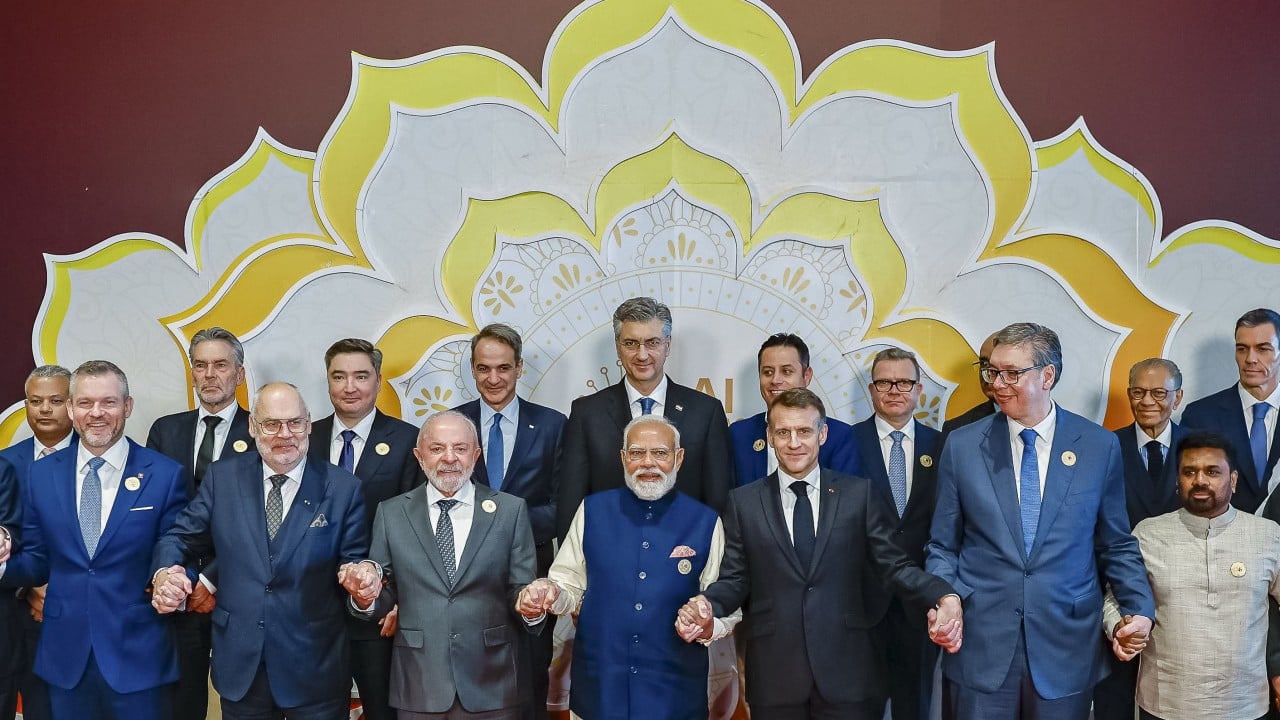
Turkey Takes Charge: Commands Key NATO Naval Force and Deploys Troops for Major 2024 Drills Turkey has assumed command of a critical NATO naval strike force and is deploying thousands of troops to Germany, playing a central role in the alliance's largest military exercises this year. The Turkish Naval Forces formally took control of the NATO Amphibious Task Force and its Landing Force Command on July 1 [54453]. This command, which will last for one year, puts Turkey in charge of planning and leading NATO's amphibious exercises and potential missions in the region [54453]. An amphibious task force is a powerful naval group designed for assaults from sea to land. Simultaneously, the first Turkish military aircraft have landed in Germany, marking the start of Turkey's participation in NATO's Steadfast Defender 24 exercise [70222]. Approximately 2,000 Turkish troops are deploying to Wunstorf Air Base for the drills, which run from February 8 to February 20 across Europe [70222]. The exercise is a key part of NATO's efforts to reinforce its eastern flank and demonstrate rapid deployment capabilities [70222]. In a separate but related NATO drill, Turkish naval and army units are conducting joint amphibious operations in Germany as part of Exercise Steadfast Dart 2026 [80228]. A notable aspect of Turkey's involvement is the prominent use of its own domestically produced defense platforms during the live exercises [80228]. These moves highlight Turkey's active and multifaceted role within the NATO military structure, from high-level command rotations to large-scale troop contributions for readiness training. Turkey Assumes Command of Key NATO Naval Strike Force NATO's Biggest 2024 Drill Begins with Turkish Troops Landing in Germany Turkish Forces Deploy Homegrown Tech in Major NATO Drill


Ukraine Ditches Truce Talk, Vows to Hit Back Hard as Fighting Surges
Ukraine Ditches Truce Talk, Vows to Hit Back Hard as Fighting Surges Ukraine has declared it will directly match Russian attacks blow-for-blow, signaling an end to diplomatic pauses as fierce fighting resumes across the front lines following a failed Easter ceasefire [126699][126283]. The 32-hour truce, proposed for the Orthodox Easter holiday, was marred by accusations from both sides of thousands of violations, with reports of shelling continuing in some areas [126765][126283]. The brief pause offered civilians a tense respite to bake traditional bread or visit loved ones, but did little to inspire hope, with residents in cities like Kharkiv bracing for an immediate return to combat [126704][126537]. In response to the deteriorating situation, Ukrainian President Volodymyr Zelenskyy stated his forces would now respond "symmetrically" to any Russian aggression, a policy of direct retaliation [126699]. This warning comes as military analysts anticipate a critical new phase in the war, now in its third year with no diplomatic resolution in sight [126704][126699]. The renewed hostilities follow a significant Ukrainian deep-strike operation that successfully hit a Russian drone command center, ammunition depots, and fuel storage facilities in a single coordinated attack, aiming to degrade enemy logistics [126360]. Simultaneously, Ukraine is leveraging its battlefield expertise, offering drone warfare training to Gulf states in exchange for vital supplies like fuel and air defense interceptors [125620]. On the defensive front, President Zelenskyy warned that a retreat from current positions in the Donbas region would open a direct path for Russian forces to advance on major Ukrainian cities, a strategic risk the military cannot afford [125606]. As Russia shifts tactics from targeting the power grid to attacking water infrastructure, Ukrainian authorities have begun a major project to decentralize and protect the national water supply network [125612]. Ukraine Vows "Symmetrical" Response to Russian Attacks Ukraine, Russia Trade Blame as Easter Cease-Fire Falters Easter Truce Brings Ukrainians Fear, Not Faith Easter Truce Breaks, But Not the War Easter Ceasefire Begins: Ukraine Vows to Match Russian Actions Ukraine Strikes Deep: Drone Command, Ammo, and Fuel Hit in One Night Ukraine Sells Drone-Know-How to Gulf States for Fuel and Weapons Zelenskyy: Retreat from Donbas Would Open Path to Ukraine's Heartland Russia Targets Ukraine's Water After Power Grid Withstands Winter Assault
Global Powers Scramble for Africa's Resources and Loyalty in High-Stakes 2026
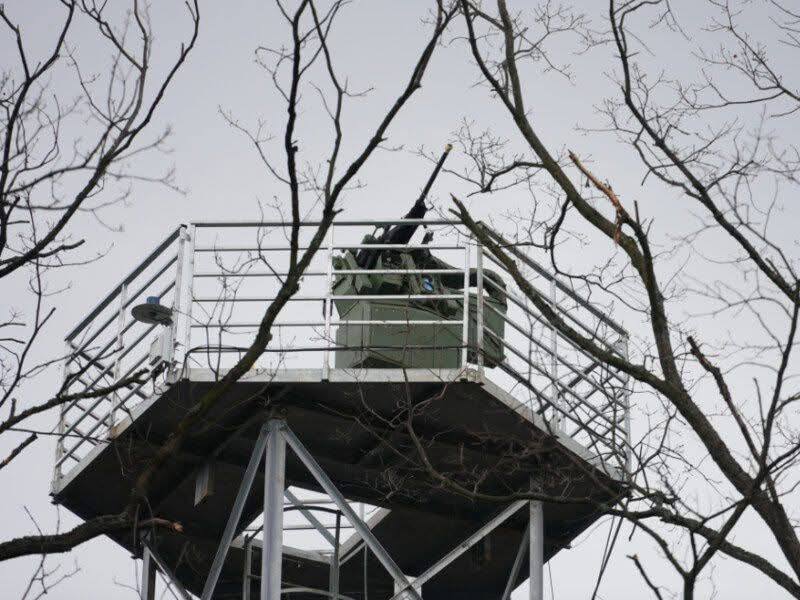
Global Powers Scramble for Africa's Resources and Loyalty in High-Stakes 2026 A renewed and intense competition for influence, security partnerships, and critical minerals is drawing global powers back to Africa, forcing the continent's leaders to navigate a complex geopolitical landscape while defending their own economic interests. The strategic rivalry is most visible in the security sphere, where Russia is rapidly expanding its military footprint. In the Sahel nations of Mali, Niger, and Burkina Faso, new military governments have expelled French forces and embraced security support from Russia's Africa Corps [67411]. This shift has prompted the United States to urgently revise its own strategy in the region to counter waning influence [67411]. Simultaneously, a "silent scramble" is underway for the minerals essential to the global green energy transition, including lithium, cobalt, and rare earth elements [83553]. This industrial race, driven by soaring demand, presents African nations with both a major economic opportunity and the risk of being pressured into unfair, piecemeal deals [83553]. The competition extends to information and infrastructure. The U.S. and China are actively battling for the allegiance of Africa's large youth population through targeted media campaigns, each seeking to damage the other's image and present itself as the preferable partner [126737]. Meanwhile, Ethiopia's push for sea access has turned an African Union summit into a stage for rivalry, with the U.S., China, Turkey, and Gulf states all vying for naval and economic positioning in the Horn of Africa [87433]. This multifaceted pressure comes as African nations increasingly pursue a strategy of "multi-alignment," pivoting from traditional Western partners to forge new bilateral agreements with Russia, China, and other Global South nations [44946]. The collective moves signal a growing focus on leveraging the continent's resources and unified voice to maximize its own development, even as external powers intensify their courtship [35302]. U.S. and Russia in High-Stakes Scramble for Africa's Sahel The New Scramble: Africa's Minerals and the Silent Race Superpowers Battle for Africa's Youth Through Media Global Powers Rush for Africa's Coast as Ethiopia Seeks a Port African Nations Pivot from West to Russia and China Amid Economic Strain Africa Gains Global Ground Amid U.S. Turmoil


Latest Articles

23-Story Miami Hotel Vaporized in 60 Seconds
A landmark Miami hotel was reduced to rubble in seconds on Sunday. Crowds watched as the former 23-story Mandarin Oriental on Brickell Key was demoli...

Israeli Strikes Hit Beirut, Emergency Crews Search Rubble
Emergency workers in Beirut are digging through rubble with basic tools. They are searching a strike site after Israel launched a major wave of attac...

Pope Warns of "Point of No Return" in U.S.-Iran Conflict
Pope Leo has issued his most urgent plea for peace since the war between the United States and Iran began. Speaking from the Vatican, the Pope warne...

Manhattan DA Opens Probe into Congressman Eric Swalwell
The Manhattan District Attorney's Office has launched an investigation into U.S. Representative Eric Swalwell, a source confirms. The probe follows a...

Cuba to US: "No Reason" to Remove Me, Warns Against Attack
Cuban President Miguel Díaz-Canel has issued a direct warning to the United States. He stated there is no valid reason for the US to try to remove hi...

Orbán's Party Loses After 16 Years in Power
Hungarian Prime Minister Viktor Orbán has conceded defeat following a significant election loss. His party, Fidesz, failed to win a majority in the E...
Woman Raped Outside Church After Leaving Surrey Nightclub
A woman in her 20s was raped by several men outside a church in Surrey, police report. The attack occurred between 2 a.m. and 4 a.m. last Saturday....
Family Dog Kills Teenager; Second Fatal Attack in Days
A 19-year-old woman has died after being attacked by a family dog in Essex, UK. Police have named the victim as Jamie-Lea Biscoe. Emergency services...
Hungary Votes: Could 16 Years of Orbán Rule End?
Hungarians voted Sunday in a tense election. The opposition presents its strongest-ever challenge to Prime Minister Viktor Orbán, who has led for 16...
Trump Threatens Hormuz Blockade, Strikes on Iran After Talks Fail
Former US President Donald Trump has declared the United States will begin a blockade of the Strait of Hormuz. The announcement follows the collapse...
Orbán Era Ends: Opposition Wins Hungarian Election After 16 Years
Hungary’s political landscape has shifted dramatically. The opposition Tisza party, led by Péter Magyar, has won the national election. The result e...
Nigerian Military Airstrike Kills Over 100 Civilians at Market
A Nigerian military airstrike has killed more than 100 civilians at a market in the country's northeast. The air force was targeting jihadist rebels...
Trump Cartoon Imagines Hormuz Crisis in 2026
A new editorial cartoon depicts former U.S. President Donald Trump in a hypothetical 2026 crisis. The illustration, by artist Nicola Jennings, presen...
AI Boom Backlash: US Communities Unite to Block Data Centers
A powerful political movement is forming across the United States to oppose the rapid construction of AI data centers. This movement is creating unus...
Trump Watches UFC as Iran Talks Fail, Risking War
American Vice President JD Vance announced the collapse of high-stakes talks with Iran after 21 hours of diplomacy in Pakistan. The failure pushes a...
De Zerbi's First Spurs Loss Sparks Relegation Fear
New Tottenham manager Roberto De Zerbi says his team must "win a game" to change their season after a losing start. Spurs lost 1-0 away to Sunderlan...
Sinner Topples Alcaraz, Seizes World No. 1 in Monte Carlo
Jannik Sinner defeated Carlos Alcaraz on Sunday to win the Monte Carlo Masters and reclaim the top spot in men's tennis. The Italian won 7-6 (5), 6-...
Title: City Smell Blood: Chelsea Rout Puts Title Race in Their Grasp
Manchester City have returned to their brilliant best at the perfect time. Their 3-0 demolition of Chelsea has sent a powerful message in the Premier...
Justin Bieber's Coachella Return: Low-Energy Set, Golden Voice
Fans pushed to the front of the stage hours early, not for the band playing, but for the night's main act: Justin Bieber. The star's Coachella perfor...
Iran War Fuel Shock Drives Europeans to Electric Cars
A major conflict has sparked a dramatic shift in how Europeans shop for cars. Since the war in Iran began in February, interest in electric vehicles (...