Latest News
Stay updated with the latest news and articles
Top Stories
India's Farmers Block Highways, Fearing U.S. Trade Deal Will Crash Crop Prices
India's Farmers Block Highways, Fearing U.S. Trade Deal Will Crash Crop Prices Thousands of Indian farmers have taken to the streets and blocked major highways, launching protests against a newly announced trade agreement with the United States that they fear will flood the market with cheap imports and devastate their livelihoods [75183]. The protests, which have seen tractors and trucks used to barricade roads around the capital, New Delhi, center on concerns that the deal could undermine India's system of minimum support prices for key staples like wheat and rice [73750]. Farmers argue that lowering import taxes on American agricultural goods as part of the pact would allow subsidized U.S. produce to undercut local farmers, threatening their incomes and way of life [75183]. The Indian government has stated that the trade agreement includes safeguards to protect the domestic agriculture sector from sudden price shocks [75183]. Officials maintain that the minimum price system remains intact [73750]. However, protest leaders express deep distrust of these assurances and are demanding the government reject the deal entirely, arguing it primarily serves U.S. corporate interests [75183]. The demonstrations highlight the tense balancing act facing Prime Minister Narendra Modi's administration. While the agreement is viewed as a diplomatic victory that strengthens ties with a key global partner, the farming community represents a massive and politically crucial voting bloc [73750]. The government now faces significant pressure to reconcile its international trade ambitions with the need for domestic economic stability and food security. Negotiations between farmer union leaders and government officials are ongoing, with security heightened at key entry points to the capital [73750]. Indian Farmers Strike, Fearing U.S. Trade Deal Will Flood Market India's Farmers Protest as Modi-Trump Trade Pact Threatens Key Crop Prices
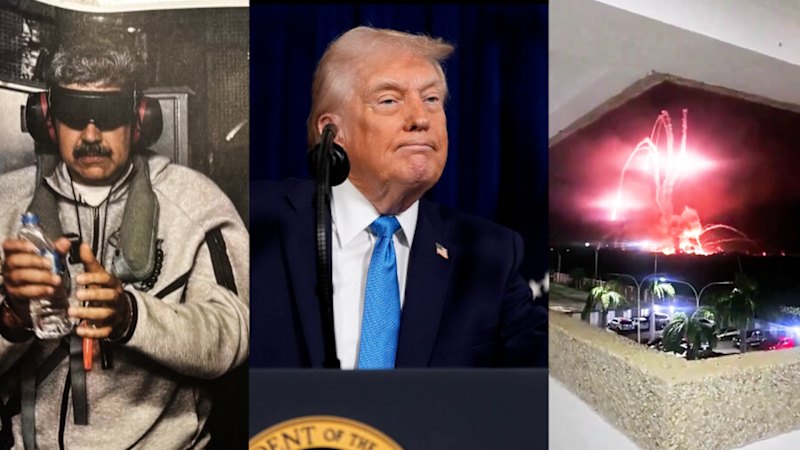
U.S. Forces Capture Venezuelan President Maduro in Military Strike, Plan to "Run" Country
U.S. Forces Capture Venezuelan President Maduro in Military Strike, Plan to "Run" Country U.S. military forces have captured Venezuelan President Nicolás Maduro and his wife, Cilia Flores, in a direct military operation on Venezuelan soil, marking an unprecedented escalation in the long-standing political crisis [41033][41227][41379]. The strike, which occurred on a Saturday, resulted in the detention of the sitting head of state and his removal from power [41136][41088]. Following the capture, former U.S. President Donald Trump stated that the United States will now "run" Venezuela, with a stated goal to "take back the oil" and fix the country's collapsed oil infrastructure [41227][40871][41525]. Venezuela holds the world's largest proven oil reserves, but its production has plummeted amid economic crisis [40871][42114]. Maduro and his wife have been flown to the United States and are expected to face criminal charges in a New York court [41136][40970]. The specific charges include accusations of "narco-terrorism," with Trump accusing the Venezuelan leader of running a "narco terrorist organisation" [40942][40970]. The U.S. government has long labeled Maduro's rule as illegitimate, recognizing opposition leader Juan Guaidó as the country's legitimate president since 2019 [41379][40505]. The operation creates an immediate power vacuum and deep uncertainty for Venezuela's 30 million people, with no clear successor named [41136][42114]. The Venezuelan government has not issued an immediate public response to the capture of its leader [40668][41379]. U.S. Forces Capture Venezuelan President in Military Strike Venezuela Leader Ousted in U.S. Strike, Faces Charges in New York US Strikes Venezuela, Captures President Maduro U.S. Captures Venezuela's President in Secret Operation U.S. Forces Capture Venezuelan President Nicolás Maduro US Captures Venezuelan President in "Large-Scale Strike" U.S. Military Strike Captures Venezuelan Leader Maduro U.S. Captures Maduro: What Now for Venezuela? US Seizes Venezuelan President, Vows to "Run" Country and "Take Back the Oil" U.S. Claims Capture of Venezuelan Leader in Military Strike U.S. Strikes Venezuela, Captures President Maduro US Captures Venezuelan President in Military Strike U.S. Strikes Venezuela, Captures President Maduro Venezuelan President Captured in U.S. Military Raid
AI Takes the Field: How New Tech is Changing the Olympics and War Games
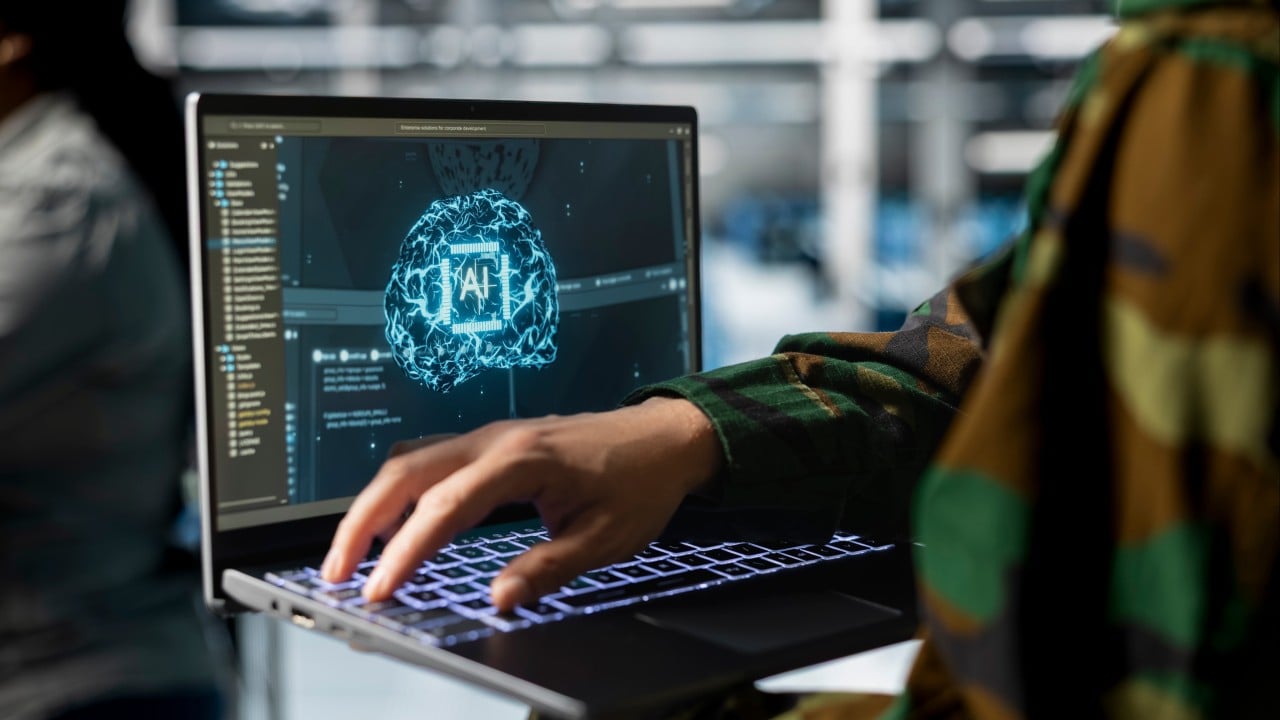
AI Takes the Field: How New Tech is Changing the Olympics and War Games From the ice rinks of the Winter Olympics to simulated military command tents, artificial intelligence is rapidly transforming how major events are analyzed and broadcast. New AI systems are creating unprecedented views for spectators and providing strategic support in high-stakes scenarios, marking a significant leap in the technology's practical applications. At the recent Milano Cortina Winter Olympics, a new broadcasting technology made its global debut. It used AI to show athletic moves from impossible angles, such as making a figure skater's quadruple jump appear to orbit around him in mid-air during a replay [82096]. The system creates detailed 3D models from standard camera footage, allowing broadcasters to generate replays from any vantage point, a tool also used to aid officials with judging and create social media content. In a parallel development, China's military has tested a new AI designed to act as a digital staff officer. In a simulated amphibious assault, the AI was tasked with cutting through the "fog of war"—the confusion inherent in battle—by processing chaotic battlefield reports and radio traffic. It then provided rapid decision-making support to the human commander, with reports indicating its performance surpassed human planning speed in the high-pressure scenario [124817]. The AI is designed to operate at the battalion level, suggesting integration into frontline command structures. This trend extends to other fields where rapid analysis is critical. The United Kingdom is testing drones that use AI to scan the ground and automatically identify landmines and hidden explosives from a safe distance, a system proven in successful trials to make bomb disposal faster and safer [118535]. Similarly, Hong Kong’s environmental agency is using AI-powered cameras to automatically identify bird species as part of environmental reviews for major construction projects [47560]. The underlying technology enabling these feats is advancing on multiple fronts. Scientists are now using imperfect diamonds with tiny atomic flaws to create powerful quantum sensors, which could one day detect the minute magnetic fields from a single brain cell [37022]. Meanwhile, Chinese researchers have developed a "smart surface" that can transform electromagnetic waves, like radar signals, into electricity—a breakthrough that could one day allow stealth aircraft to use enemy radar as a power source and also aid in building next-generation 6G networks [36179]. AI Replay Tech Makes Olympic Jumps Spin on Screen China's New AI "Officer" Outsmarts Humans in War Games AI Drones Hunt Landmines: UK Tests Life-Saving Tech Hong Kong Deploys AI Robot Dogs to Scan for Wildlife Imperfect Diamonds: The New Heart of a Quantum Revolution Chinese Stealth Tech Could Turn Enemy Radar into a Power Source
Court Overturns African Soccer Final, Strips Senegal of Title and Awards Trophy to Morocco
Court Overturns African Soccer Final, Strips Senegal of Title and Awards Trophy to Morocco In an unprecedented move that has upended the recent history of African football, the Court of Arbitration for Sport (CAS) has stripped Senegal of its Africa Cup of Nations championship and declared Morocco the winner [105769]. The stunning decision, announced Tuesday, overturns the result of the tournament final played in January. Senegal had originally won the match to claim its first continental title, but the case was later referred to the sport's highest court by the Confederation of African Football (CAF) [105769]. The court's ruling is final and cannot be appealed. No official reason for the dramatic overturn was provided in the initial brief announcement. CAF stated it will release the full details and reasoning behind the judgment later this week [105769]. The decision immediately erases Senegal's celebrated victory from the record books and awards the championship to Morocco. The Africa Cup of Nations (AFCON) is the continent's premier international football competition [32394]. The tournament's group stage recently concluded, with some final matches, like one between already-qualified Ivory Coast and eliminated Gabon, carrying no weight for the standings but being played for pride and momentum [38697]. This court ruling marks a chaotic and controversial end to the latest edition of the championship, fundamentally altering its official outcome. Court Shocker: Morocco Awarded Africa Cup Title, Overturning Senegal's Win Daka's Last-Minute Header Stuns Mali in AFCON Opener AFCON Finale: Why Play a Game That Doesn't Matter?

How Ancient Traditions Are Becoming Modern Acts of Defiance and Identity
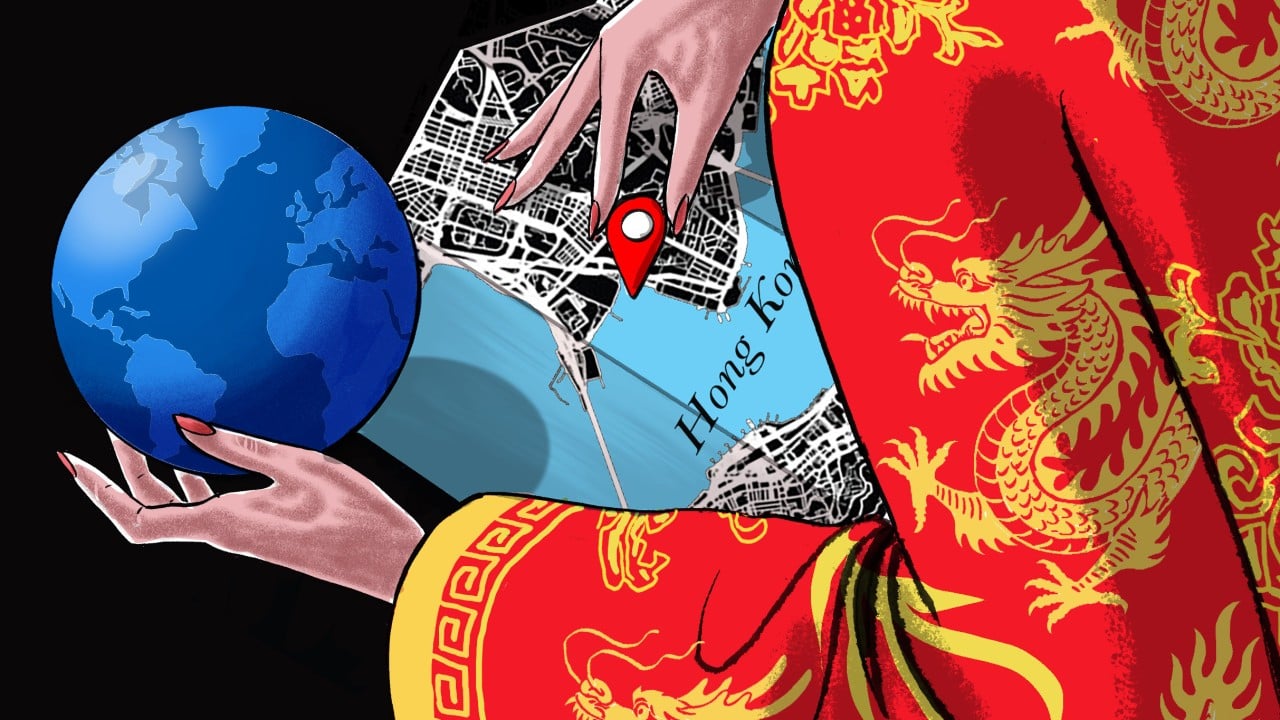
How Ancient Traditions Are Becoming Modern Acts of Defiance and Identity From the Arctic to Arizona, and from Ukraine to China, communities around the world are turning to their deepest cultural roots, not merely to remember the past, but to assert their identity in the present. Faced with the pressures of globalization, conflict, and digital homogenization, people are revitalizing ancient rituals, songs, and art forms, transforming them into powerful, modern statements of resilience and self-definition. In China, young people are reimagining the centuries-old Qingming tomb-sweeping festival. While still honoring ancestors with traditional rituals, they now document their visits on social media, research family histories online, and leave modern offerings like letters and snacks at gravesides. This shift turns a private duty into a proud, creative act of shared cultural identity [123476]. Similarly, writer Feng Jicai emphasizes that the Chinese Spring Festival is far more than fireworks and feasts; it is the unbroken "cultural river" and living heartbeat of Chinese heritage, providing a vital link to history in the modern age [84043]. This cultural fortification is starkly evident in Ukraine, where ancient Christmas carols, or *koliadky*, are being celebrated as sounds of defiance and hope. A new collection highlights songs that have preserved language and national identity through centuries of oppression, connecting historic folk chants to the current conflict. Scholars argue that Ukraine’s focus on defending its unique literature, art, and history resonates more deeply than graphic war imagery, framing the struggle as a fight for cultural truth and the right to exist [32337][122155]. Indigenous communities are also leveraging culture as a tool of pride and continuity. In the remote Arctic, a Sámi DJ duo is gaining international acclaim by blending modern electronic beats with traditional *joik* singing. Their success feeds a growing global appetite for Indigenous sounds, proving that their heritage is a unique advantage, not a barrier [79759]. Thousands of miles away, a viral video shows a nine-month-old baby in Arizona enthusiastically attempting the Māori haka. The powerful dance, performed to show strength and mark important occasions, serves as a living connection to heritage, taken up by the newest generation [122617]. Even in the realm of fashion and daily life, cultural symbols are being reclaimed. In Hong Kong, women tattoo artists are channeling traditional Chinese painting, calligraphy, and Buddhist philosophy into their work, creating a poetic form of self-expression [44500]. However, this resurgence can sometimes clash with fleeting online trends, as seen with "Chinamaxxing," where core Chinese habits became a viral meme. For many, watching lifelong customs be adopted as short-lived internet content is a strange and unsettling experience [109231]. Together, these movements reveal a global pattern: in an era of uncertainty, people are digging into their cultural foundations, not for nostalgia, but to forge a resilient identity for the future. Young Chinese Reimagine Ancient Tomb-Sweeping Ritual Feng Jicai: Chinese New Year is More Than Fireworks Ukrainian Christmas Carols: Ancient Sounds of Defiance and Hope Why Showing Atrocities Fails: A Scholar's View on Ukraine's Cultural War Remote DJs Rise with Sámi Sound, Fueling Indigenous Pride Arizona Baby's First Words? A Haka. Hidden Stories: From Tattoo Needles to Viral Buttons Chinamaxxing: When Your Culture Becomes a Viral Meme

Get Fit, Not Hurt: How Extreme Exercise Trends Are Sending Young People to the Hospital
Get Fit, Not Hurt: How Extreme Exercise Trends Are Sending Young People to the Hospital A surge in extreme and unsupervised fitness trends, particularly among young adults, is causing severe health injuries and alarming medical professionals worldwide. From dangerous viral challenges to self-imposed intense regimens, doctors warn that the pursuit of health is backfiring with cases of spinal damage, hormonal collapse, and permanent injury. In China, a hazardous trend known as "neck-hanging" has spread rapidly online. Participants suspend their full body weight by their head from tree branches, attempting to mimic professional cervical traction therapy [122710]. Medical experts urgently warn the practice can cause ligament damage, paralysis, and even stroke. The trend follows a national report indicating over 200 million people in China suffer from cervical spine disorders, with more than 40% of patients under age 30 [122710]. Similarly, extreme workout routines are leading to serious internal health crises. A 23-year-old woman in China stopped menstruating after an intense regimen of six workouts per week caused rapid weight loss [46995]. Hospital tests revealed her female hormone levels were comparable to those of a 50-year-old, and she was diagnosed with symptoms of kidney deficiency, requiring immediate cessation of all exercise and significant medical intervention [46995]. Health professionals stress that effective fitness does not require extreme measures. Experts advocate for simpler, evidence-backed approaches, arguing that consistency with basic exercises like brisk walking, body-weight strength training, and scheduled movement is far more sustainable and safer than dangerous trends or unsustainable intensity [37303][49278]. The focus, they say, should be on smarter, controlled exercise rather than harder, risky模仿 (imitation) of medical procedures or pushing the body to its breaking point [37303][122710]. Dangerous "Neck-Hanging" Trend Alarms Doctors in China Young Woman's Extreme Fitness Halts Her Periods Forget the Gym: Three Simple Shifts for a Fitter 2026 Forget Wellness Trends: A Doctor's Six Rules to Cut for Real Health


U.S. Forces Seize Venezuelan President Maduro in Unprecedented Cross-Border Raid
U.S. Forces Seize Venezuelan President Maduro in Unprecedented Cross-Border Raid In a dramatic escalation, U.S. military forces captured Venezuelan President Nicolás Maduro in a surprise operation in Caracas, marking the first direct American military attack on a South American nation and sending shockwaves across the region [41064]. The detained leader, now held in New York, is set to face drug trafficking charges in a U.S. federal court [41880]. President Donald Trump announced the capture, stating the U.S. would oversee Venezuela's government and vowing that "American dominance in the western hemisphere will never be questioned again" [41064]. The precision strike, which also detained Maduro's wife, was executed without the consent of the Venezuelan government, an act described by analysts as an "extraterritorial apprehension" [47297]. The operation has exposed a deep political rift among Latin American nations. Governments historically critical of Maduro, including Colombia and Brazil, have offered cautious support, while others like Mexico and Bolivia have condemned it as a blatant violation of international law and sovereignty [47297]. This public division, however, masks a private anxiety shared by leaders across the political spectrum, who are now urgently assessing their own vulnerability to similar foreign interventions [47126]. Analysts warn the move aggressively revives the long-dormant Monroe Doctrine, a U.S. policy opposing foreign powers in the Americas, and is intended to challenge China's rapidly expanding economic and diplomatic influence in the region [41460]. China has become the leading trading partner and lender for many South American nations in recent years [45747]. The capture of Maduro, a key Chinese partner, is seen as a direct test of Beijing's regional partnerships and a signal to other nations considering deeper ties with China [41460]. The United Nations Security Council has called an emergency meeting at Venezuela's request to address the incident [41880]. The action represents a stark return to a century-old pattern of U.S. intervention to remove Latin American leaders perceived as adversaries, a strategy with a mixed record of creating lasting stability [41465]. The precedent set by this operation has fundamentally altered the geopolitical landscape, forcing every capital in the hemisphere to re-examine its relationships with Washington and its own domestic political opponents [47126]. U.S. Capture of Venezuela's Maduro Sends Shockwaves Through Latin America U.S. Capture of Maduro Sends Shockwave Through Latin America U.S. Captures Venezuela's Leader, Challenging China's Regional Reach Venezuela's President Seized by U.S., Faces Court in New York Trump Revives US Habit of Ousting Latin American Leaders Trump Orders First Direct US Military Attack on South America
U.S.-Iran War Serves as Real-Time Military Classroom for China and the World
U.S.-Iran War Serves as Real-Time Military Classroom for China and the World The ongoing conflict between the United States, Israel, and Iran is being closely studied by global military strategists, with China emerging as a primary observer analyzing American capabilities and the new realities of modern warfare [123483]. Military analysts report that the war is a live demonstration of evolving combat, defined by the extensive use of drones, precision-guided missiles, and cyber attacks that blur the lines between military and civilian targets [122761]. For China, the engagement provides critical data on U.S. military resilience, including how America manages its stockpiles of advanced munitions and the strain on its defense industrial supply chains during a sustained conflict [123483]. The conflict's impact extends beyond the battlefield, destabilizing global energy security and testing international alliances [123483]. Experts conclude that the tactical and strategic lessons learned from this war will shape how future conflicts are planned and fought by nations worldwide, regardless of the conflict's eventual outcome [122761][123483]. U.S.-Israel War on Iran: A Real-Time Lesson for China Iran War: A Live Blueprint for Modern Conflict
Governments Unleash 10,000+ Homes in Crackdown on Vacation Rentals and Red Tape
Governments Unleash 10,000+ Homes in Crackdown on Vacation Rentals and Red Tape Facing a severe shortage of affordable housing, governments from Hawaii to the Netherlands are taking direct action, seizing thousands of properties from the tourist rental market and slashing construction rules to "flood the market" with new homes [61634][100991]. In the most aggressive move, Hawaii's governor has ordered the conversion of 10,000 short-term rental units into local housing. The plan will use new laws and tax rules to force condos and houses currently used for tourist vacations back into the long-term rental market for residents [61634]. Officials blame the large number of platforms like Airbnb for driving up prices and driving local workers out, creating a crisis in the tourism-dependent state [39353]. A similar dynamic is playing out in Cape Town, South Africa, where a boom in luxury villas and short-term rentals for tourists in scenic coastal areas is pushing residents to distant outskirts. This has created stark divides, with multi-million dollar homes standing next to informal metal shacks, as locals are priced out of their own city [117472]. Meanwhile, in the Netherlands, the new housing minister—a former top military officer—has been given a mission to build 100,000 homes a year to tackle one of Europe's worst shortages [108952]. Her strategy is to cut complex regulations and speed up a notoriously slow planning process. "Luxury takes time. We don’t have time," she stated, aiming to break the current construction deadlock [108952]. This push to boost supply is echoed in the United States, where the Senate has passed the most significant housing bill in decades with strong bipartisan support [100719]. The core of the legislation, according to sponsor Senator Elizabeth Warren, is simple: "It will bring down housing costs by just having more of it" [100991]. The package aims to increase construction and help first-time buyers, though it now faces an uncertain path in the House of Representatives [100719]. The combined actions represent a growing governmental response to a global affordability crisis, directly targeting the conversion of housing from tourist assets to resident homes and removing barriers to new construction. Hawaii to Seize 10,000 Vacation Rentals in Housing Crisis Move Tourism Boom Pushes Workers Into Illegal Homes Tourists in Luxury, Locals in Shacks: Cape Town's Coastal Divide From Battlefield to Building Sites: Ex-General Takes On Dutch Housing Crisis Senate Passes Bill to "Flood the Market" with New Homes U.S. Senate Passes Major Housing Bill, But House Hurdle Looms

Markets Soar, Richest Gain $265 Billion as U.S.-Iran Ceasefire Eases War Fears
Markets Soar, Richest Gain $265 Billion as U.S.-Iran Ceasefire Eases War Fears Global financial markets surged and oil prices crashed this week following the announcement of a ceasefire between the United States and Iran, delivering a massive windfall to the world's wealthiest individuals and temporary relief from fears of a wider Middle East war. The world's 500 richest people saw their combined fortunes jump by $265 billion in a single day, marking the second-largest daily wealth increase on record, as stock markets rallied on the news [124364]. Major U.S. indexes soared, with the Dow Jones Industrial Average rocketing over 1,000 points in one session and posting gains of up to 2.85% [124317][124377]. The S&P 500 climbed about 3%, marking one of its best trading days of the year [124188]. The immediate trigger was President Donald Trump's confirmation of a two-week "humanitarian pause" in hostilities, a move that investors immediately interpreted as a major reduction in geopolitical risk [124086][124524]. In a pattern some traders call the "TACO trade"—an acronym for "Trump Always Chickens Out"—markets rebounded sharply from earlier losses based on the expectation that initial threats would de-escalate [124317]. The ceasefire news triggered a dramatic reversal in key commodities. The price of Brent crude oil, a global benchmark, plummeted by over 3%, reflecting expectations that the critical Strait of Hormuz would reopen and Middle Eastern oil supplies would stabilize [123644][124086]. The sharp drop in oil prices boosted sectors like airlines and shipping, which benefit from lower fuel costs [123644]. Analysts warned that the rally was driven by relief rather than a permanent solution. "The ceasefire is a pause, not a peace deal," said a senior strategist in Singapore [124578]. Experts note the underlying energy crisis, exacerbated by damage to regional infrastructure, remains unresolved and could keep supplies tight for years [124341]. For now, the market's "fear gauge," the VIX index, fell sharply by 18.39%, signaling a dramatic drop in investor anxiety [124377]. The focus now shifts to whether the temporary truce can hold and lead to a more durable de-escalation. World's Richest Gain $265 Billion in One Day on Peace Hopes TACO Trade: Investors Bet Trump Will "Chicken Out" Markets Soar as Iran Tensions Ease Markets Surge 3% on Gaza Ceasefire Deal Iran Ceasefire Sends Stocks Soaring, Oil Crashing Markets Surge as U.S.-Iran Ceasefire Declared Markets Surge as US-Iran Tensions Ease Markets Hold Breath as Middle East Ceasefire Holds Markets Surge as U.S. and Iran Agree to Ceasefire Markets Surge as U.S.-Iran Ceasefire Eases Oil Fears Oil Prices Plunge on Ceasefire, But Energy Crisis Deepens

Latest Articles

Pentagon Confronts Vatican Envoy Over Pope's Anti-War Stance
The U.S. Department of Defense summoned the Vatican's top diplomat in Washington. The meeting was called to address recent public remarks by Pope Leo...
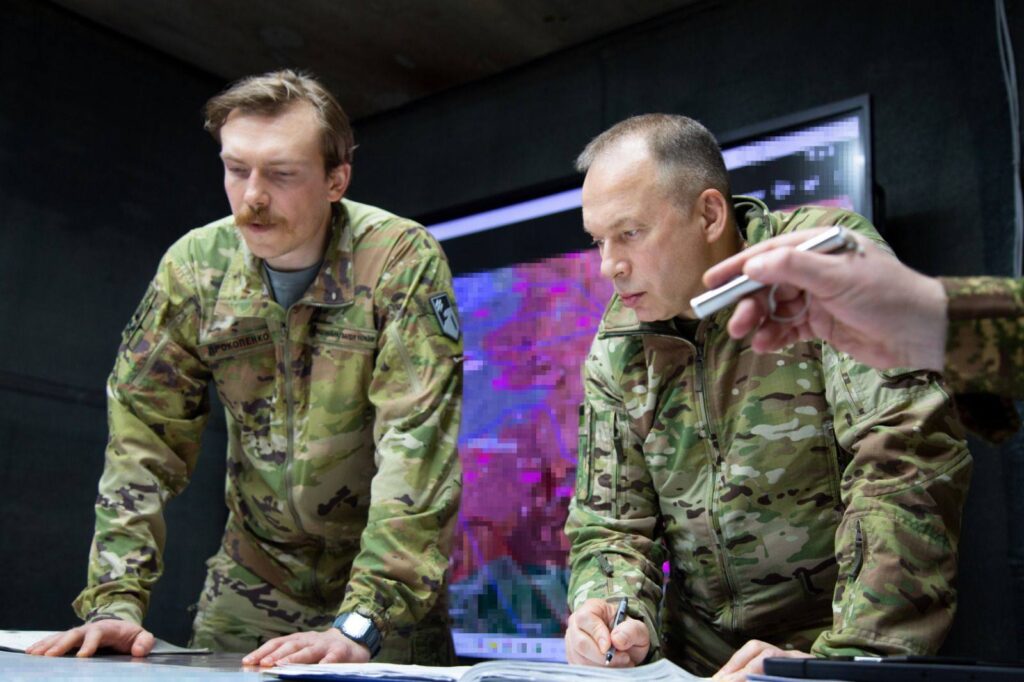
Russia Aims to Triple Its 'Drone Army' by 2025, Ukraine Claims
Ukraine's top military commander says his forces are destroying Russian soldiers faster than the Kremlin can replace them, using drones. But new inte...

German Far-Right Party Moves to Expel Pro-Russia Chechen Member
Germany's Alternative for Germany (AfD) party has begun proceedings to expel a member with Chechen roots. The move follows reports of his activities...
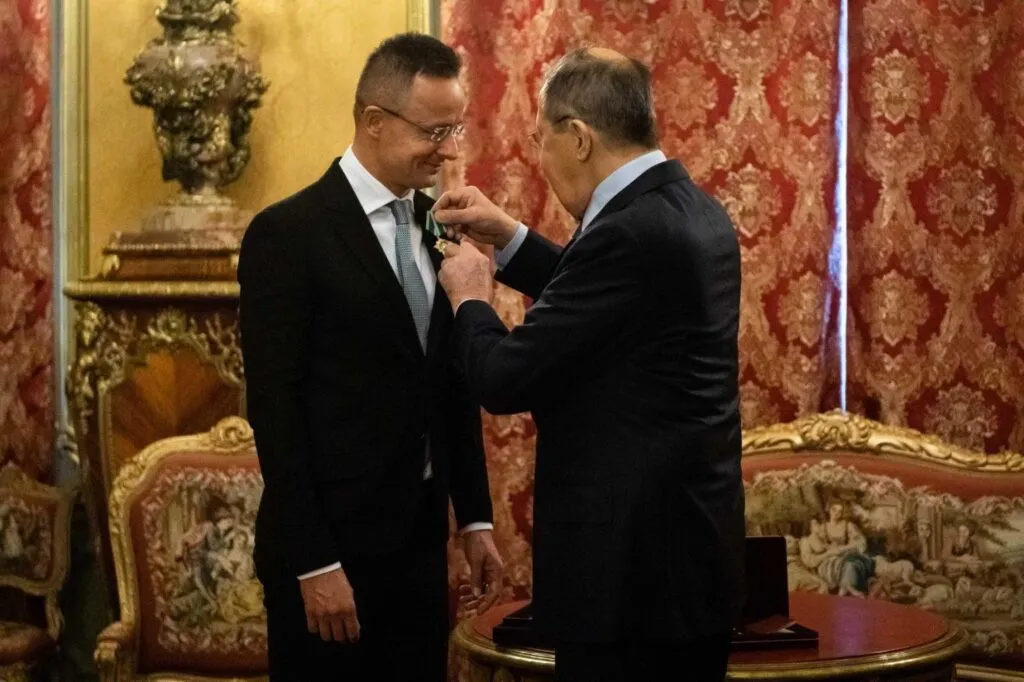
Hungary Accused of Spying for Russia Inside EU Meetings
France has publicly called Hungary a "traitor" to the European Union. The accusation follows the leak of recorded phone calls. The recordings appear...
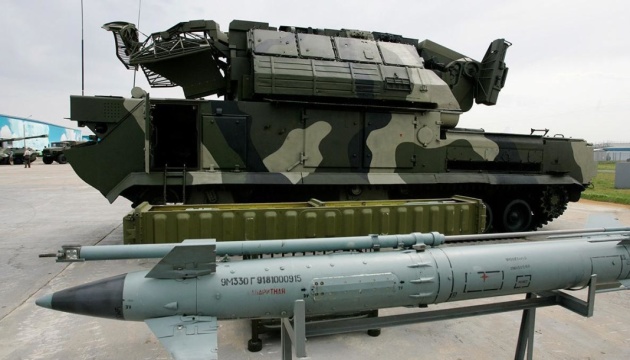
Ukraine Wipes Out Russian Air Defenses: Ninth Tor-M1 Destroyed in Nine Days
Ukrainian drone units have eliminated another Russian Tor-M1 air defense system in occupied Donetsk Oblast. This is the ninth such system destroyed i...
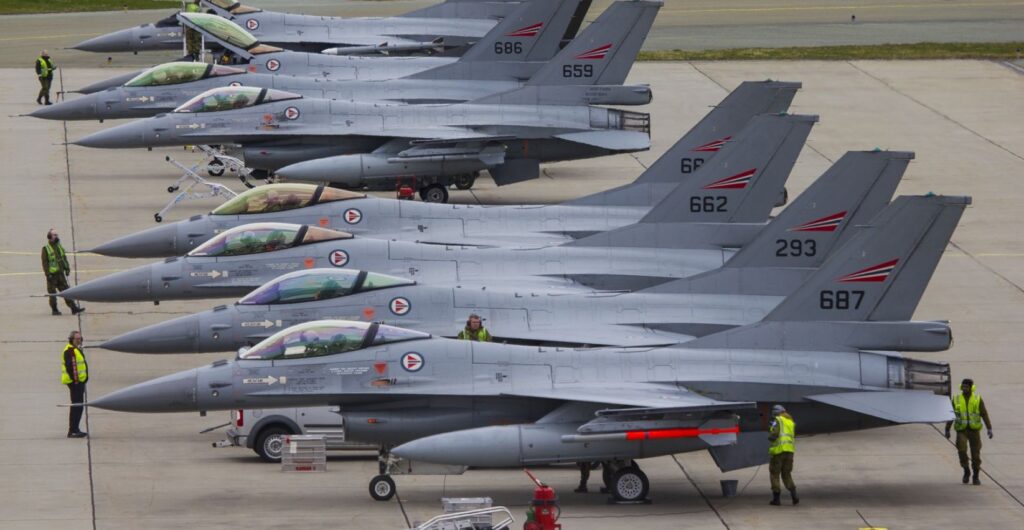
NATO's F-16s for Ukraine: Promised in 2023, Still Stuck in Belgium
Norway’s pledged F-16 fighter jets have not yet reached Ukraine, a Western advisor confirms. The aircraft remain grounded in Belgium. The advisor st...
Teen Jailed After Threatening Chicken Shop Worker With Gun Over Sauce
A teenager has been sentenced to prison after pulling a gun on a fast-food worker who gave him the wrong dipping sauce. The incident began as a rout...
Emperor Penguins Now "Endangered" as Sea Ice Vanishes
The emperor penguin is officially at risk of extinction. The International Union for Conservation of Nature (IUCN) has moved the species to its "Enda...