Latest News
Stay updated with the latest news and articles
Top Stories
Pentagon Defends Commander's Calls in Back-to-Back "Fog of War" Strikes
Pentagon Defends Commander's Calls in Back-to-Back "Fog of War" Strikes The U.S. Department of Defense is mounting a robust, multi-front defense of its commanders' decisions to launch controversial military strikes in Venezuela and the Caribbean, citing the inherent confusion of combat and rigorous legal review. The public campaign began after U.S. naval forces executed a strike on a target in Venezuelan waters, followed by a second strike on the same vessel. Secretary of Defense Pete Hegseth defended the decision to fire twice, attributing it to the "fog of war." He stated he saw no survivors after the initial attack but supported the admiral's choice to fire again to "eliminate the threat" [17273]. Separately, a Pentagon spokesperson offered full institutional backing for the senior commander, Admiral Bradley, who authorized the broader operation. "These actions were approved by the best military and civilian lawyers throughout the chain of command," the spokeswoman said, confirming the strikes underwent a strict legal review [17258]. In a related statement addressing ongoing operations, Hegseth also publicly asserted that all U.S. military activities in the Caribbean region are lawful. "Our current operations in the Caribbean are lawful under both U.S. and international law," he stated [15064]. The defense comes as Senate Republicans move to shield the legal authority used for the Venezuela operation. They are attempting to block a Democratic effort to repeal the 2001 Authorization for Use of Military Force (AUMF) that justified the mission, arguing such a repeal would weaken presidential authority during ongoing threats [50051]. Pentagon Defends Second Strike in "Fog of War" Incident Pentagon Defends Commander's Decision in Venezuela Strikes Pentagon Official Defends Legality of Caribbean Operations Senate Republicans Move to Shield Trump's War Powers

Peru's Election Descends Into Chaos as Voting Stretches Into Second Day
Peru's Election Descends Into Chaos as Voting Stretches Into Second Day Peruvians faced a second day of voting on Monday after severe logistical failures derailed the national election, plunging the process into confusion and raising fears of further instability in the politically turbulent nation [127954][128195][127769]. The election, to choose a new president and members of Congress, was scheduled for a single day, Sunday. However, widespread reports emerged of missing ballots, unprepared staff, and polling stations that simply never opened, leaving many citizens unable to find their designated place to vote [127954][127224]. The National Election Authority was forced to extend voting into Monday to allow all registered voters a chance to cast their ballots [128195][127769]. The exact cause of the delivery fiasco is under investigation, but the result was long delays and frustration across the country [128195]. The extension creates significant uncertainty around the timing of results in a nation still reeling from the 2021 ouster and imprisonment of leftist President Pedro Castillo [128122]. Early results from the first day of voting show a strong lead for right-wing candidates, marking a sharp shift from the previous election [128122]. With a fragmented field of over 30 presidential candidates, no single contender is expected to win the required majority, making a runoff vote highly likely [127616]. The two emerging front-runners appear to be Keiko Fujimori, the daughter of imprisoned former President Alberto Fujimori, and conservative businessman Rafael Lopez Aliaga [127954][127616]. Voters now hope the eventual winner can provide stability after years of relentless political crises [128122]. The final results are expected later than originally planned as officials scramble to complete the chaotic voting process [128195]. Peru Extends Chaotic Election After Polling Stations Vanish Peru Election: Right-Wing Leads as Leftist President Sits in Jail Peru's Election Stalls: Voting Stretches Into Second Day Peruvians are still voting for a new president and congress after a major disruption. Peru Extends Voting Amid Irregularity Claims Fujimori Eyes Comeback: Peru Braces for Presidential Runoff


U.S. Reroutes Carrier, Gulf Braces for Blockade as Iran Tensions Spike
U.S. Reroutes Carrier, Gulf Braces for Blockade as Iran Tensions Spike A major U.S. aircraft carrier strike group has taken a highly unusual and lengthy detour around Africa, a move that coincides with heightened military posturing and fears of a blockade around the world's most critical oil chokepoint, the Strait of Hormuz [128185]. The USS George H.W. Bush and its accompanying warships were rerouted away from the standard path through the Red Sea and Suez Canal. Instead, the group sailed around the Cape of Good Hope at the southern tip of Africa, adding significant time and distance to its journey toward the Middle East [128185]. Military analysts note this rare operational choice suggests the U.S. is keeping its most valuable warships outside potential threat ranges during a period of escalating tensions [128185]. The strategic shift follows statements from former U.S. President Donald Trump, who announced a plan for the U.S. Navy to break an Iranian blockade of the Strait of Hormuz, claiming divine backing for the move [128054]. Over 20% of the world's seaborne oil exports pass through the narrow waterway [128054]. A senior political adviser to the Australian Prime Minister warned that any American move to blockade the strait would be a "bad thing" that risks significantly worsening the regional crisis [127165]. The heightened military activity is unfolding against a backdrop of severe regional instability. A top global energy official warns that more than 80 energy facilities across the Middle East have been damaged in recent conflicts, with over one-third severely impacted [127749]. Fatih Birol, head of the International Energy Agency (International Energy Agency), stated that restoring regional energy supplies to pre-crisis levels could take up to two years, threatening prolonged disruption to global markets [127749]. The conflict has already disrupted global trade. Major shipping companies have suspended travel through the Red Sea following military actions between Iran and Israel, forcing vessels onto a much longer route around Africa [127257]. This has directly impacted specialized exports, with Japanese shipments of perishable luxury goods like wagyu beef and premium tuna facing delays of roughly two weeks [127257]. Regional diplomacy is attempting to keep pace with the military maneuvers. High-level talks between the United States and Iran began in Islamabad over the weekend, hosted by Pakistan, a country that shares a border with Iran [125866]. Concurrently, Pakistan has deployed warplanes to a Saudi airbase on the Gulf coast, a move analysts say complicates Iran's strategic calculations by presenting a potential new adversary if conflict with Saudi Arabia resumes [128037]. U.S. Aircraft Carrier Avoids Mideast, Sails Around Africa Amid Iran Tensions Trump Claims Divine Backing for Military Action Against Iran Australian PM's Adviser Warns: US Strait of Hormuz Blockade Could Inflame Middle East Crisis War Damage to 80+ Mideast Energy Sites Could Disrupt Supply for Years Iran-Israel Conflict Disrupts Japan's Luxury Exports to Middle East US and Iran Meet for Talks as Middle East War Expands Pakistan's Jets in Saudi Arabia Send a Warning to Iran

U.S. Aircraft Carrier Avoids Mideast, Sails Around Africa Amid Iran Tensions
Israel Plans "Gaza Playbook" for Southern Lebanon, Displacing 1.2 Million

War Damage to 80+ Mideast Energy Sites Could Disrupt Supply for Years
Global Economy Braces for Long-Term Hit as Iran Conflict Shatters 2026 Outlook
**Global Economy Braces for Long-Term Hit as Iran Conflict Shatters 2026 Outlook** The global economy, already strained by persistent inflation and volatile markets, now faces a severe and prolonged threat from the escalating conflict involving Iran, with economists warning of years of disruption to energy supplies, trade routes, and financial stability [128258]. A major regional war risks triggering a sharp spike in global oil prices, which would fuel inflation worldwide and force central banks into difficult policy decisions [128258]. Unlike the economic impact of the Russia-Ukraine war, which was more contained, analysts warn the fallout from a wider Middle East conflict could create lasting "economic shocks" that reshape trade and investment patterns for a decade or more [124481]. Governments are already taking emergency action. Germany's coalition government announced a package to shield its economy, including a 17-cent-per-liter cut in fuel taxes and a plan for employers to offer workers a one-time bonus of up to 1,000 euros to counter war-driven inflation [128123]. The crisis shatters what had been a cautiously positive outlook for 2026, presenting the ultimate test for global economic resilience [128258]. The situation exacerbates an already confusing global picture, where high inflation coexists with strong consumer spending and tight job markets show early signs of cooling [126159]. This contradictory data leaves central banks worldwide in a dilemma, forced to choose between aggressively fighting inflation and risking a deep recession [126159]. The persistent danger is that inflation fears become self-fulfilling. Economists warn of an "inflation mentality," where consumers and businesses, expecting continuous price rises, change their behavior in ways that lock in higher costs, potentially forcing more aggressive interest rate hikes that could trigger a recession [128108]. The emerging consensus is that the global economy is settling into a new, complex state defined by volatility and conflicting signals, where agility for businesses and governments is more critical than prediction [126159]. The conflict in Iran now threatens to define this uncertain era, with its economic consequences likely to linger long after any ceasefire is signed [124481]. Iran War Could Break Global Economy Beyond the Battlefield: A War's Economic Shock Could Last for Years Germany Cuts Fuel Tax, Offers Worker Bonus to Counter War-Driven Inflation April's Contradictions: A New Economic Reality Emerges "Inflation Mentality" Could Trigger Recession, Economist Warns

Ukraine Trades Battlefield Drone-Knowledge for Weapons and Fuel in Gulf Deals
Ukraine Trades Battlefield Drone-Knowledge for Weapons and Fuel in Gulf Deals Ukraine is leveraging its hard-won military expertise to secure vital weapons, fuel, and diplomatic support through direct exchanges with Gulf states, turning its battlefield experience into a critical strategic resource. Ukrainian specialists are now deployed to several Middle Eastern nations, providing advanced training on how to identify and shoot down Iranian-designed attack drones [112369]. This knowledge is in high demand, as the same Iranian-made "Shahed" drones used by Russian forces against Ukraine are also a threat to infrastructure and security in the Gulf region [100935]. In return for this expertise, Kyiv seeks concrete military and economic support. The proposed exchanges include requests for advanced air defense systems, such as Patriot missile batteries, and shipments of diesel fuel and other weapons [112369][125620]. President Volodymyr Zelenskyy confirmed that Ukrainian teams are already active in "a half-dozen" countries as part of these arrangements [112369]. The strategy represents a pragmatic shift for Ukraine, positioning it as a provider of essential defense technology rather than solely a recipient of aid [91239]. By sharing its effective, low-cost counter-drone tactics—honed from defending against thousands of aerial attacks—Ukraine aims to bolster its own defenses while building new international alliances [125620]. High-level security talks are now underway with nations including Oman, Kuwait, and Bahrain to formalize these exchanges [125620]. In some proposals, Ukraine has directly linked its security assistance to a request for Gulf partners to use their economic leverage over Russia to push for peace [91239]. Kyraine Sells Drone-Knowledge for Weapons **Ukraine Trades Air Defense Secrets for Gulf's Drone-Killers** Ukraine Sells Drone-Know-How to Gulf States for Fuel and Weapons **Ukraine Offers Gulf States a Deal: Our Drone Hunters for Your Leverage on Russia**

Catastrophic Floods and Mudslides Kill Over 1,400, Devastate Southeast Asia
Catastrophic Floods and Mudslides Kill Over 1,400, Devastate Southeast Asia A series of catastrophic floods and landslides, triggered by days of exceptionally heavy rain, has left a trail of devastation across Southeast Asia, killing more than 1,400 people and affecting millions [17624][25217][20084]. The disasters have submerged villages, severed roads, and buried homes in mud, with Indonesia, Sri Lanka, Thailand, and Malaysia among the hardest-hit nations [17624][14786]. In Indonesia, the death toll has climbed to 995, with rescuers still searching for 226 missing people [25217]. Neighboring Sri Lanka reports 640 dead and 211 missing [25217]. Combined, the two nations have nearly 4 million citizens impacted by the destruction of homes, roads, and farmland [25217]. Southern Thailand has also suffered a severe loss of life, with authorities reporting at least 145 fatalities [14423]. The torrential downpours caused rivers to overflow and saturated hillsides, leading to destructive landslides across the region [14423][17624]. Emergency crews are working to provide aid and reach isolated communities, but their efforts are hampered by damaged infrastructure and continuing access problems [20084]. National governments and international aid agencies are mobilizing large-scale relief efforts, focusing on providing emergency shelter, clean water, and medical supplies to displaced survivors [17624][20084]. Authorities have warned of additional dangers, including further landslides and the spread of waterborne diseases in the aftermath of the floods [11385]. The full scale of the damage is still being assessed as rescue operations continue [14423][14786]. Deadly Floods and Landslides Claim Over 1,400 Lives Across Southeast Asia Massive Floods Kill Over 1,600, Affect Millions in Asia Deadly Floods and Landslides Claim Over 1,500 Lives Across Asia Deadly Floods and Landslides Claim Over 250 Lives in Southeast Asia Southeast Asia Reels From Widespread Flooding Deadly Floods and Landslides Claim Lives Across Southeast Asia

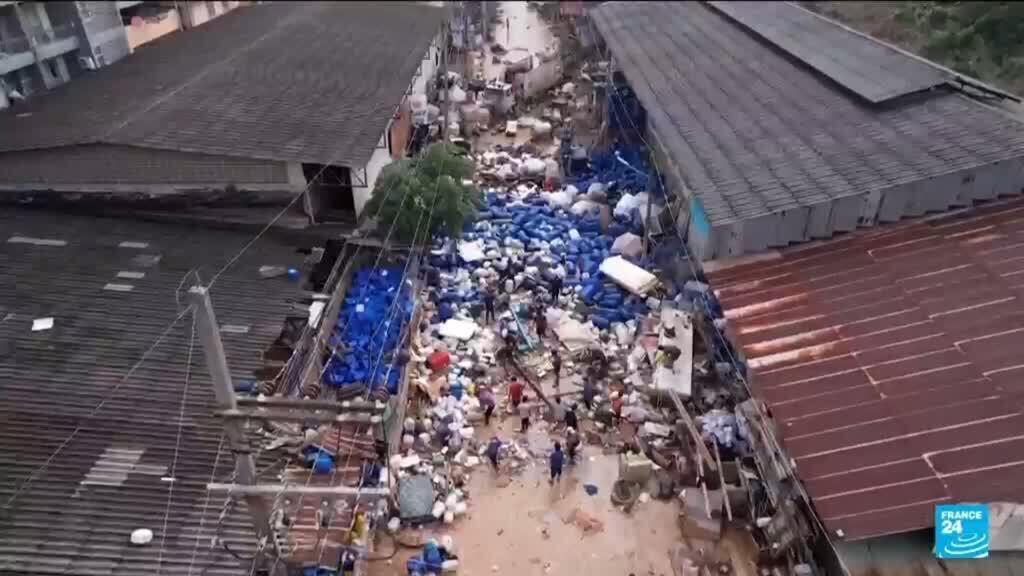
Fuel Crisis Sparks Global Panic: Protests, Price Hikes, and Emergency Government Measures
Fuel Crisis Sparks Global Panic: Protests, Price Hikes, and Emergency Government Measures A global fuel crisis, triggered by conflict in the Middle East, is sending shockwaves through the world economy, forcing emergency government action and sparking protests as pump prices hit historic highs. The immediate trigger is the war in Iran and attacks on key oil infrastructure, which have severely disrupted global supplies [128123] [117884] [127109] [95663]. This has caused the international price of crude oil to rocket, delivering the sharpest spike in fuel costs since the Ukraine war began [97612]. The impact is direct and severe for consumers. In South Africa, drivers rushed to gas stations ahead of a record midnight price hike [117884], with one predicted increase reaching up to 8 Rand per litre [95663]. Despite a government tax cut of 3 Rand per litre, the surge in global prices resulted in one of the steepest increases the country has ever recorded [117581]. The diesel price alone jumped by R7.51 in a single day [118106]. The crisis is forcing governments to intervene. Germany announced an emergency package, cutting fuel tax by 17 cents per litre and encouraging employers to give workers a one-time bonus of up to 1,000 euros to counter war-driven inflation [128123]. In Ireland, the cabinet held an emergency meeting in response to nationwide fuel protests that have entered a fifth day, with hundreds of petrol stations running dry after blockades of oil terminals [126425]. Supply chain bottlenecks are exacerbating the problem. Analysts note that even as crude oil prices steady, the key Strait of Hormuz shipping route remains closed, disrupting the global movement of refined fuel and keeping pump prices painfully high [116592]. The soaring costs are now rippling through the entire economy. In South Africa, security companies and water suppliers have immediately added surcharges to bills, while taxi associations warn of imminent fare increases [118106]. Hong Kong, which already pays the world's highest fuel prices, is bracing for a wave of "imported inflation" that will make everything from toilet paper to road maintenance more expensive within months [127109]. In China, drivers raced to pumps ahead of the country's biggest official fuel price jump of 2024 [109102]. Market analysts broadly warn that with Middle East tensions high, significant price relief for motorists is not expected in the near future [124783]. Germany Cuts Fuel Tax, Offers Worker Bonus to Counter War-Driven Inflation South Africa Braces for Record Fuel Price Surge Hong Kong Braces for Price Surge as Oil Crisis Hits Home Drivers Race to Pumps Ahead of China's Biggest Fuel Price Jump of 2024 **Fuel Crisis Forces Irish Cabinet to Emergency Talks** South Africa Braces for R8/Litre Petrol Shock South Africa Cuts Fuel Tax, But Drivers Still Hit by Record Price Hike Fuel Limits and War Surcharges Hit South African Metro Fuel Prices Climb as Gaza Ceasefire Hopes Fade Oil Prices Rocket, Hitting Drivers With Sharpest Spike Since Ukraine War Oil Prices Steady, So Why Is Petrol So Expensive? Fuel Shockwave: Water, Security Prices Surge After Diesel Spike


Syrian Army Clashes with Kurdish Forces in Aleppo, Sparking Mass Exodus of Tens of Thousands
Syrian Army Clashes with Kurdish Forces in Aleppo, Sparking Mass Exodus of Tens of Thousands Intense fighting has erupted between Syrian government forces and Kurdish-led militias in and around the city of Aleppo, shattering a fragile calm and triggering a new wave of mass displacement [44512][45585][45588]. The clashes, concentrated in the city's northern suburbs and key areas like the Castello road, have forced tens of thousands of civilians to flee their homes [43634][45588][44681]. The Syrian army has begun distributing evacuation maps to residents, indicating preparations for further military operations and urging people to leave for their safety [44681]. The violence pits the Syrian Arab Army against the US-backed Syrian Democratic Forces (SDF), a Kurdish-led coalition that controls large parts of northeastern Syria [43634][45585]. Both sides have exchanged artillery and small-arms fire, with each blaming the other for initiating the hostilities [44512][44088]. The fighting marks a significant escalation in long-running tensions over control of northern Syria [45585][49667]. This surge in violence follows a breakdown in political talks aimed at resolving the standoff between the Damascus government and the SDF [45585][45588]. A previous agreement to integrate the SDF into the national army has stalled, creating a vacuum that has now been filled with military action [45588]. Local aid groups report a rapid movement of displaced families seeking safety away from the front lines, though the exact number of people displaced is still being assessed [45585]. Those escaping join millions of other Syrians already displaced by the country's protracted civil war [45588]. The situation remains tense despite a brief ceasefire ordered after initial clashes, with analysts warning the violence threatens to unravel the relative stability in the region and could signal a dangerous new phase of conflict [32516][44512][49667]. Syria's Aleppo Truce Shatters, Thousands Flee as U.S. Mediates Aleppo Exodus: Fighting Erupts as Syria Peace Talks Fail Syrian Army Advances on Aleppo, Sparking Mass Exodus Syrian Army and US-Backed Forces Clash in Aleppo Syrian Army Distributes Evacuation Maps in Aleppo Amid Clashes Fresh Clashes Erupt Between Syrian Army and Kurdish Forces Syrian Forces and Kurds Clash, Then Halt Fire After Deadly Fighting Aleppo Clashes Follow Secret Syria-Israel Talks Syria Detains, Expels Kurds in Aleppo as US Bombs ISIS
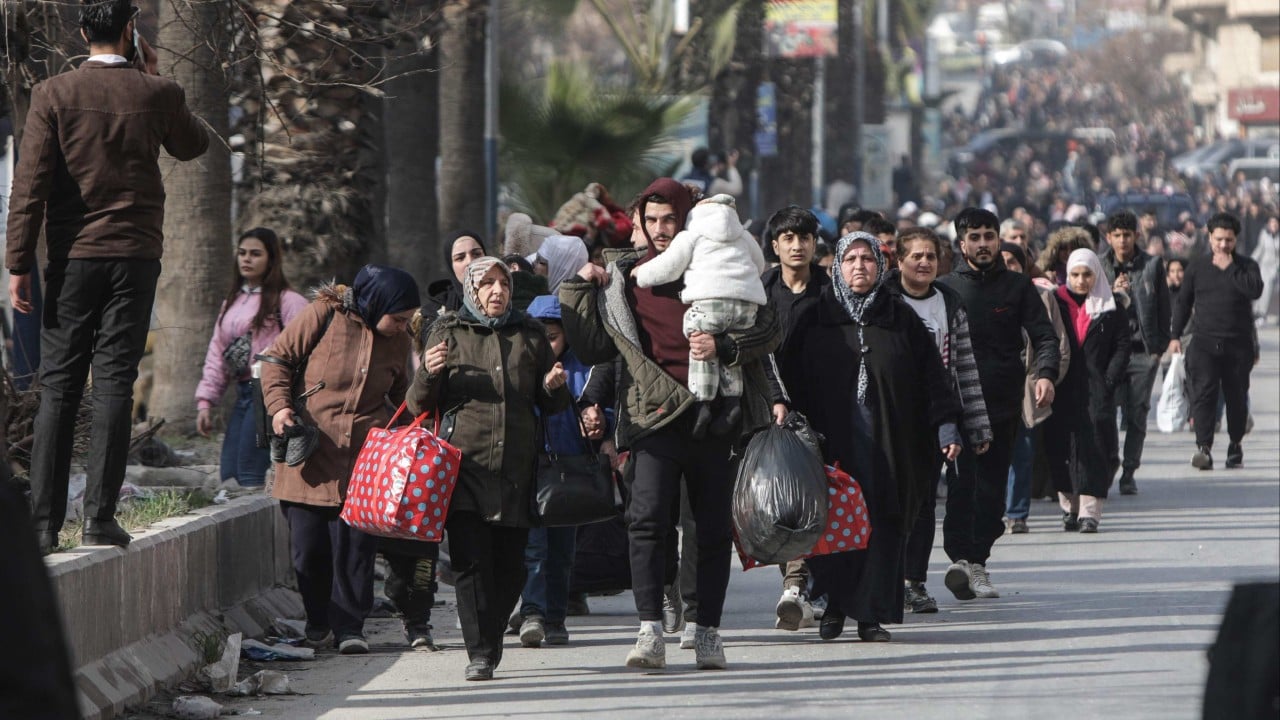
China Bets Billions on AI and Chips to Break US Tech "Chokehold"
China Bets Billions on AI and Chips to Break US Tech "Chokehold" A massive, state-coordinated push to achieve technological self-sufficiency is reshaping the global tech landscape, as China directs hundreds of billions of dollars toward breaking foreign dependencies in semiconductors and artificial intelligence (AI) [51155][95150][86995]. The drive is a direct response to U.S. export controls that restrict China's access to cutting-edge chipmaking technology, a strategy experts describe as a strategic "chokehold" [51155][86995]. In response, Chinese provinces and cities are launching enormous investment funds targeting these critical sectors. Shanghai recently unveiled a $10 billion plan focusing on microchips and AI, among other advanced industries [43531]. This follows the launch of a new national semiconductor fund worth over $47 billion, aimed at building a domestic supply chain for chip manufacturing equipment [86995]. Simultaneously, the eastern tech hub of Zhejiang announced a five-year plan to develop advanced AI chips as small as 3 nanometers [51155]. This investment surge is part of a formal national strategy outlined in China's latest five-year plan, which prioritizes frontier technologies like AI and nuclear fusion to secure a "steadier footing" and reduce reliance on other nations [95150]. Analysts note a clear strategic pivot from a decades-long policy of absorbing foreign technology to one focused on creating and dominating next-generation fields [59734]. The approach highlights a fundamental divide in the U.S.-China tech race. While American development is largely market-driven, China's strategy is defined by state coordination, deploying AI as a core component of national infrastructure aligned with government planning [109135]. The goal is to transition Chinese firms from followers to global leaders in high-tech industries [59734][18411]. The scale of China's manufacturing capacity and state support is leading to what analysts call "China Shock 2.0"—a potential flood of advanced goods like electric vehicles and semiconductors that could lower global prices and disrupt established international companies [128200]. This competition extends beyond factories to a broader "quiet war" for resources and supply chain control, as both superpowers race to secure the minerals and technologies that power the modern economy [47692]. AI Power Demand Positions China's "Electrostate" for Gain Amid Middle East Conflict China's New Plan: Beat US Tech Rivals with AI and Fusion Power China Bets $47 Billion to Break the Chip Barrier Shanghai Bets $10 Billion on Chips and AI in Tech Race China's Tech Pivot: From "Catch-Up" to Cutting-Edge AI War: US Bets on Markets, China Bets on Control China's "Shock 2.0": A Flood of High-Tech Goods Reshapes Global Industries The New Great Game: A U.S.-China Clash Over Resources Begins China’s Corporate Giants Seek New Frontiers Abroad


Climate Crisis Hammers Global South, Killing Thousands and Costing Billions
Climate Crisis Hammers Global South, Killing Thousands and Costing Billions A cascade of climate-driven disasters is exacting a devastating human and economic toll across the world's most vulnerable regions, with new reports confirming thousands of deaths and economic losses in the billions. The impacts, from vanishing livelihoods to crippling food insecurity, underscore how the planetary ecological crisis is now a daily reality for millions. In Africa, extreme weather linked to climate change killed thousands of people, impacted millions more, and caused billions of dollars in economic losses in 2025 alone [113458]. The continent is experiencing rapid environmental disruption from record levels of heat-trapping greenhouse gases, with consequences that scientists warn will persist for generations [113458]. The crisis is stripping communities of their means of survival. In the Democratic Republic of the Congo, rising temperatures and shifting seasons are causing beehives to fail, threatening both a key food source and a critical traditional income for families [128278]. This collapse of a vital pollination service further jeopardizes local food security [128278]. Eastern Africa faces a dire "triple planetary crisis," where climate change, biodiversity loss, and pollution converge to starve the region [91481]. Extreme droughts and floods ruin crops and kill livestock, while pollution degrades the soil and water needed for agriculture [91481]. The region's Ministry of Planning and Development has issued an official warning that these interconnected environmental threats pose a fundamental challenge to stability and development [91481]. The pattern of intensifying extremes is becoming the new normal globally. The year 2025, Earth's third hottest on record, was marked not just by heat but by a global series of catastrophic floods, severe droughts, and unusually intense storms that caused billions in damage [49594]. Scientists state these disasters show the clear influence of climate change, which is altering weather patterns and leading to more powerful, unpredictable events [49594]. In Europe, a relentless year of climate disasters in 2025—from floods to heatwaves and wildfires—has experts warning that such severe events may become standard, driven by greenhouse gas emissions from human activities [36941]. The UK's National Trust reported that extreme weather pushed the nation's wildlife and landscapes to a "breaking point," with a destructive cycle of storms, heat, drought, and floods [36898]. The world's top environmental body, the United Nations Environment Assembly, recently concluded with a strong call for accelerated global action on the interconnected crises of climate change, biodiversity loss, and pollution [21446]. Delegates committed to strengthening international cooperation, urging countries to increase the speed and scale of their interventions to build planetary resilience [21446]. Climate Crisis Costs Africa Billions, Claims Thousands Bees Vanish as Congo Feels the Sting of Climate Change Triple Planetary Crisis Starves East Africa 2025: The Year the Weather Broke Europe's 2025 Weather: A New Normal of Extremes? UK Wildlife Pushed to "Breaking Point" by Extreme Weather in 2025 UN Environment Assembly Demands Urgent Global Action on Climate and Biodiversity


Latest Articles

Orban Era Ends: Hungary Votes Out Far-Right Leader
Hungary's long-serving Prime Minister Viktor Orban has been voted out of office after 16 years in power. A record number of voters turned out on Sund...

Hezbollah Rejects Talks Before They Begin as US Mediates Lebanon-Israel Meeting
A new round of talks aimed at ending the conflict along the Lebanon-Israel border faces immediate rejection. Lebanese and Israeli officials are meeti...

Trump Orders Navy: Destroy Iranian Boats That Approach U.S. Ships
President Donald Trump announced a new U.S. naval operation against Iran on Monday. He warned that American forces will "destroy" any Iranian fast-at...

Hezbollah Rejects Talks Before US-Mediated Lebanon-Israel Meeting
Representatives from Lebanon and Israel will meet in Washington on Tuesday for U.S.-mediated talks. The goal is to end the ongoing conflict along the...

Iran War Hits China's Factories: Export Growth Slows to 2.5%
China's export growth slowed sharply to 2.5% in March, new data shows. The main cause is the ongoing war in Iran. The conflict has closed the Strait...

Sudan's Silent Killer: Drones Claim 700 Civilian Lives in 3 Months
The United Nations reports a grim new tactic in Sudan's civil war. In just the first three months of this year, nearly 700 civilians have been killed...

Freed After Four Years: French Hostages Detail Iran Ordeal
French citizens Cecile Kohler and Jacques Paris have given their first television interview since their release from Iran. They were detained in 2022...

Trump Shares AI Image as 'Digital Christ' Amid Pope Feud
U.S. President Donald Trump posted and later deleted an AI-generated image depicting himself as a Jesus-like figure. The move drew criticism from som...

Election Officials Arrested After Chaotic Peru Vote
Peruvians are waiting to see who will face conservative frontrunner Keiko Fujimori in a presidential runoff. This follows a first round of voting mar...

Maradona Death Trial: Doctors Face Homicide Charges
A new trial begins Tuesday in Argentina for seven medical professionals charged in the death of football icon Diego Maradona. The defendants, all pa...

Escobar's Hippos to be Culled in Colombia
Colombia has approved a plan to kill dozens of invasive hippopotamuses. The animals, descended from a small herd imported by late drug lord Pablo Esc...

Trump Posts AI Image as Jesus, Deletes After Backlash
Former U.S. President Donald Trump is facing criticism after sharing, and then deleting, an artificial intelligence-generated image that depicted him...

Civilians Killed in Iran-US Shadow War: Iraqi Kurdistan's Despair
Residents of Iraqi Kurdistan are exhausted after living under drone threats for over a month. They feel caught in a conflict they did not choose. "W...

Pope Follows Ancient Saint's Path in Algeria
Pope Leo XIV continued his historic visit to Algeria on Tuesday. He traveled to the coastal city of Annaba. This city holds deep religious significa...

DOJ Accused of Biased Enforcement in Abortion Clinic Cases
A new report accuses the U.S. Justice Department of applying a federal law unevenly. It claims the department favored only one side in abortion-relat...

U.S. Blockades Iran as Peace Talks Push Restarts
American and Iranian officials face renewed pressure to resume nuclear negotiations. This push comes as a U.S. naval blockade of Iran's major ports c...

Congress Returns Amid Escalating Iran Conflict
U.S. lawmakers are back in Washington after a two-week break, facing immediate pressure over the ongoing war involving Iran. The conflict, which has...

Astronaut's Dog Steals Spotlight After Moon Mission
A NASA astronaut's return to Earth became a viral moment—thanks to her dog. Christina Koch recently completed a long, record-setting deep-space miss...

Title: Artemis Astronaut's Surprise Welcome: Neighbors Cheer Record-Breaking Return
**Article:** Neighbors in Texas held a surprise celebration Sunday for astronaut Victor Glover. They welcomed him home after his historic mission. G...

Harry and Meghan Return to Australia on Private Trip
Prince Harry and Meghan, the Duchess of Sussex, have arrived in Australia. This marks their first visit to the country since their official 2018 tour...