Latest News
Stay updated with the latest news and articles
Top Stories
U.S. Forces Capture Venezuelan President Maduro in Military Strike, Plan to "Run" Country
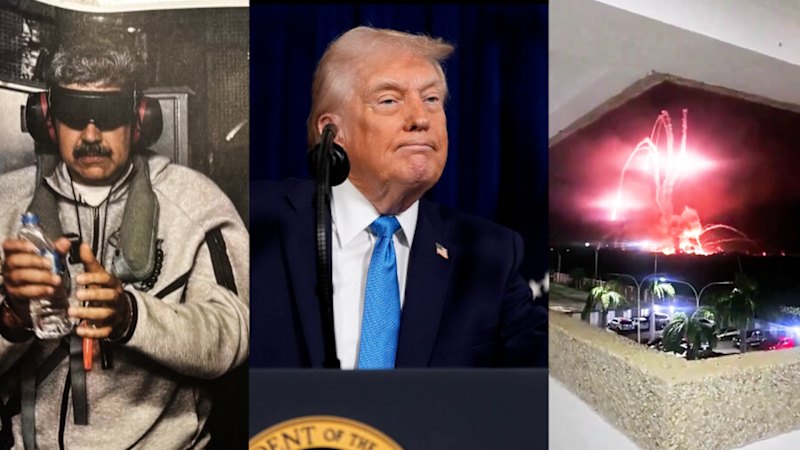
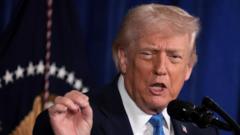
U.S. Forces Capture Venezuelan President Maduro in Military Strike, Plan to "Run" Country In an unprecedented military escalation, United States forces have captured Venezuelan President Nicolás Maduro and his wife, Cilia Flores, following a series of strikes on Venezuelan territory. The operation, which occurred on Saturday, January 3, has removed the long-time leader from power and prompted U.S. officials to announce they will now directly administer the crisis-stricken South American nation [41033][41227][41055]. Former U.S. President Donald Trump, who announced the operation, stated the United States will "run" Venezuela to "fix" its collapsed oil infrastructure and "take back the oil" [41227][40871][41525]. Venezuela holds the world's largest proven oil reserves, but its production has plummeted after years of economic mismanagement and crippling U.S. sanctions [41227][40871]. Maduro and his wife were reportedly flown out of Venezuela and are expected to face criminal charges, including terrorism and narcotics offenses, in a New York court [41136][40871][40942]. The U.S. has long labeled Maduro's government as illegitimate, accusing it of corruption, human rights abuses, and stealing the 2018 election [41136][40668][41525]. The immediate aftermath has created a dangerous power vacuum in Venezuela, with no clear successor named [41136]. While the U.S. has recognized opposition leader Juan Guaidó as the country's legitimate president since 2019, Trump suggested Maduro's deputy, Delcy Rodríguez, should follow U.S. orders, though she has so far defied them [41379][41525]. The military action represents a direct and historic intervention in the Western Hemisphere, marking the first major U.S. military attack on South American land in decades [41525]. International legal experts have immediately questioned the operation's legality, predicting the U.S. will justify it as an act of self-defense [40942]. With Maduro's capture, the U.S. now controls a nation of 30 million people suffering from hyperinflation, severe food shortages, and a profound humanitarian crisis [42114]. The long-term plan for Venezuela's governance and stability remains unclear, as the world awaits reactions from regional allies and global powers [41055][40505]. U.S. Forces Capture Venezuelan President in Military Strike Venezuela Leader Ousted in U.S. Strike, Faces Charges in New York US Strikes Venezuela, Captures President Maduro U.S. Captures Venezuela's President in Secret Operation U.S. Forces Capture Venezuelan President Nicolás Maduro US Strikes Venezuela, Abducts President Maduro US Captures Venezuelan President in "Large-Scale Strike" U.S. Military Strike Captures Venezuelan Leader Maduro U.S. Captures Maduro: What Now for Venezuela? US Seizes Venezuelan President, Vows to "Run" Country and "Take Back the Oil" U.S. Claims Capture of Venezuelan Leader in Military Strike U.S. Strikes Venezuela, Captures President Maduro US Captures Venezuelan President in Military Strike U.S. Strikes Venezuela, Captures President Maduro
AI Takes Over the Olympics: New Tech Spins Jumps, Maps Trees and Hunts Landmines
AI Takes Over the Olympics: New Tech Spins Jumps, Maps Trees and Hunts Landmines From the Winter Games to environmental surveys and bomb disposal, artificial intelligence is rapidly moving from labs to real-world tasks, creating new angles for viewers and new tools for critical operations. A new broadcasting technology that uses artificial intelligence (AI) to show athletic moves from impossible angles made its global debut at this month's Winter Olympics [82096]. When American figure skater Ilia Malinin performed a quadruple jump, the replay showed his four revolutions with video frames that appeared to orbit around him in mid-air [82096]. The system creates detailed 3D models from standard camera footage, allowing broadcasters to show replays from any vantage point [82096]. This AI is doing more than just improving television; it is also assisting officials with judging and generating content for social media [82096]. Beyond sports, similar AI-powered systems are being deployed for safety and environmental protection. The United Kingdom is testing drones that use AI to scan the ground and automatically identify hidden landmines and explosives from a safe distance [118535]. Officials say a successful trial has shown the system works and could significantly reduce risks to military personnel during clearance operations [118535]. In Hong Kong, an AI-powered camera system is being used to automatically identify bird species, while a laser-scanning robot, resembling a robotic dog, moves through wooded areas to create detailed 3D maps of trees [47560]. Officials state these tools eliminate human error from wildlife surveys, providing critical data to balance new infrastructure projects with sustainable development [47560]. Meanwhile, the relentless demand for more powerful AI is driving a race for better hardware. Chinese scientists announced a new method to grow next-generation "2D" semiconductors—ultra-thin materials often just one atom thick—reportedly 1,000 times faster than before, which could accelerate production of advanced chips [126743]. AI Replay Tech Makes Olympic Jumps Spin on Screen AI Drones Hunt Landmines: UK Tests Life-Saving Tech Hong Kong Deploys AI Robot Dogs to Scan for Wildlife China Claims 1,000x Faster Chip Breakthrough

Court Overturns African Football Champion, Strips Senegal of Title in Unprecedented Move
Court Overturns African Football Champion, Strips Senegal of Title in Unprecedented Move A top international sports court has made a stunning decision, stripping Senegal of its Africa Cup of Nations championship and awarding the title to Morocco instead. The ruling was issued Tuesday by the Court of Arbitration for Sport (CAS), the highest legal authority in global sports disputes [105769]. The court overturned the result of the tournament's final, which was played in January and originally won by Senegal [105769]. The African football governing body had referred the controversial case to the court for a final judgment [105769]. No official reason for the dramatic reversal was provided in the court's initial announcement [105769]. The full details of the ruling are expected to be released later this week by the Confederation of African Football [105769]. The decision is final and cannot be appealed [105769]. This unprecedented action rewrites the recent history of the continent's premier international football competition [105769]. Senegal's celebrated first continental title, a landmark moment for the nation, has now been erased from the official record books [105769]. The Africa Cup of Nations tournament, often referred to as AFCON, kicked off earlier this year in Ivory Coast [40057]. The competition is known for its dramatic moments, such as Zambia's last-gasp equalizer against Mali in the group stage, secured by a stoppage-time diving header from Patson Daka [32394]. The final verdict from the sports court, however, has created the most significant and controversial development of the tournament cycle. Court Shocker: Morocco Awarded Africa Cup Title, Overturning Senegal's Win Sports Weekend: Darts Final, Cricket, and Africa's Cup Kick Off Daka's Last-Minute Header Stuns Mali in AFCON Opener

Viral Trends and Ancient Crafts: How Digital Fame Tests the Heart of Cultural Identity
Viral Trends and Ancient Crafts: How Digital Fame Tests the Heart of Cultural Identity From the Arctic to Syria, and across social media platforms, communities are navigating a complex moment where their deepest cultural expressions are simultaneously celebrated, commodified, and fought for. As ancient traditions seek preservation and viral memes spark global imitation, a central question emerges: what happens when your heritage becomes a trend? In Scandinavia, the Indigenous Sámi people are experiencing a surge of interest in their culture through music. A DJ duo from Norway’s remote Sápmi region is gaining international acclaim by blending modern electronic beats with traditional Sámi rhythmic singing, known as joik [79759]. Their success taps into a growing audience appetite for authentic Indigenous sounds in global club culture, turning their geographic isolation into a creative advantage. Meanwhile, in war-torn Syria, cultural resilience takes a different form. A German scholar recently highlighted the nation’s ancient craft of embroidery as a powerful, living symbol of identity that has endured despite widespread physical destruction [47200]. Similarly, the Circassian community in Syria has maintained its unique language and customs for over a century while fully integrating into national society, demonstrating a model of cultural preservation [36001]. This global spotlight on specific traditions contrasts sharply with a fleeting digital phenomenon. A viral trend dubbed "Chinamaxxing" saw people worldwide adopting Chinese cultural habits—like drinking hot water and wearing house slippers—driving content that gathered hundreds of thousands of views on platforms like TikTok and Instagram [109231]. For many of Chinese heritage, watching lifelong practices become short-lived internet memes has been a strange and unsettling experience, raising doubts about the depth and longevity of such online appreciation. The tension between meaningful preservation and superficial trendiness is being formally addressed in some regions. In Malaysia, the annual Chingay parade, featuring performers who balance towering flagpoles on their chins, is at the center of a joint UNESCO Intangible Cultural Heritage application with Singapore [31985]. Organizers hope the designation will protect and promote the century-old art form, securing its status beyond passing fads. From the rhythmic joiks of the Sámi to the intricate stitches of Syrian embroidery, communities are working to ensure their cultural “heartbeat,” as Chinese writer Feng Jicai described the Spring Festival, continues to define them—whether the algorithm is watching or not [84043]. Remote DJs Rise with Sámi Sound, Fueling Indigenous Pride Syrian Embroidery Survives War, Defines Identity Syria's North Caucasus Legacy: The Circassians' Enduring Identity Chinamaxxing: When Your Culture Becomes a Viral Meme Malaysia's Chin-Balancing Spectacle Aims for UNESCO Glory Feng Jicai: Chinese New Year is More Than Fireworks


China's Extreme Fitness Trends Spark Severe Health Warnings
China's Extreme Fitness Trends Spark Severe Health Warnings A dangerous new fitness trend is spreading among young people in China. Doctors are warning it can cause severe spinal damage, while another case highlights the risks of excessive exercise on reproductive health. The activity, called "neck-hanging exercise," involves people suspending their full body weight by their head from tree branches. Participants aim to mimic professional cervical traction therapy, a medical treatment for neck pain [122710]. This trend follows a reported rise in cervical spine disorders. An official 2024 health report states over 200 million people in China suffer from such conditions. Notably, more than 40% of patients are under age 30 [122710]. Medical experts strongly warn against the practice. They state that unsupervised spinal traction can lead to permanent injury, including ligament damage, paralysis, and stroke. Professional therapy uses controlled, measured force applied by specialists [122710]. In a separate but related health incident, a 23-year-old woman in China has stopped menstruating after an intense exercise regimen caused rapid weight loss. Hospital tests revealed her female hormone levels were similar to those of a typical 50-year-old [46995]. Doctors diagnosed her with clear symptoms of kidney deficiency, a concept in Traditional Chinese Medicine (TCM). They instructed her to stop all workouts immediately and prescribed significant amounts of TCM to recover [46995]. The "neck-hanging" trend continues to gain popularity online despite urgent medical warnings [122710]. Dangerous "Neck-Hanging" Trend Alarms Doctors in China Young Woman's Extreme Fitness Halts Her Periods
U.S. Forces Capture Venezuelan President Maduro in Shock Raid, Sparking Regional Crisis
U.S. Forces Capture Venezuelan President Maduro in Shock Raid, Sparking Regional Crisis U.S. military forces have captured Venezuelan President Nicolás Maduro, removing him from his country to face drug trafficking charges in a New York court. The unprecedented operation has sent shockwaves across Latin America, dividing governments and raising fears of a new era of intervention [41460][41880]. President Donald Trump announced the capture, stating that U.S. forces conducted a "precision operation" in Caracas on Saturday, detaining Maduro, 63, and his wife [41460][41880]. The Venezuelan leader is scheduled for a court appearance in New York on Monday [41880]. The United Nations Security Council will convene an emergency meeting at Venezuela's request to address the incident [41880]. The dramatic seizure has split regional governments. While nations historically critical of Maduro, including Colombia and Brazil, have offered cautious support, others like Mexico and Bolivia have condemned the act as a blatant violation of international law and sovereignty [47297]. Analysts note that behind the public divisions, a private fear is spreading among leaders of all political stripes, who are now urgently assessing their own vulnerability to similar foreign actions [47126][47297]. The operation marks a stark revival of long-standing U.S. interventionist practices in the hemisphere, directly challenging other global powers with interests in the region [41465][41460]. Experts warn the move reasserts the "Monroe Doctrine," a U.S. policy historically used to oppose foreign influence in the Americas, and is intended to discourage Latin American nations from deepening partnerships with rivals like China [41460]. Beijing has become a leading trade partner and investor for many South American countries in recent years [45747]. The immediate focus remains on the escalating crisis in Venezuela and the legal proceedings against its deposed president. However, the long-term effect is a continent-wide atmosphere of suspicion and heightened geopolitical tension, as capitals recalibrate their relationships with Washington and each other [47126][47297]. U.S. Captures Venezuela's Leader, Challenging China's Regional Reach Venezuela's President Seized by U.S., Faces Court in New York U.S. Capture of Maduro Sends Shockwave Through Latin America U.S. Capture of Venezuela's Maduro Sends Shockwaves Through Latin America Trump Revives US Habit of Ousting Latin American Leaders Trump Targets Latin America, But China Holds the Lead
World Braces for Economic Warfare as Top Global Threat in 2026
World Braces for Economic Warfare as Top Global Threat in 2026 A new report from the World Economic Forum (WEF) has identified economic conflict between nations as the most severe and immediate danger to global stability. The warning highlights a world where geopolitical rivalry is increasingly fought with the weapons of trade, supply chains, and investment [49991]. The WEF's latest Global Risks Report states that this "geoeconomic confrontation" now ranks above all other global dangers for the next two years. The short-term outlook is dominated by three interconnected threats: geopolitical rivalry, the rapid spread of misinformation, and severe social and political polarization [49991]. This shift signifies a decisive move away from decades of economic cooperation. States are now actively weaponizing economic tools in their strategic competitions, creating a volatile environment that threatens international stability and growth [49991]. The findings will be a central topic at the WEF's annual meeting in Davos, Switzerland, next week [49991]. The warning comes as the global economy faces a critical "turning point," according to the International Monetary Fund (IMF). IMF Managing Director Kristalina Georgieva has detailed the challenges of global debt, inflation, and economic fragmentation in a recent interview [126881]. While some analysts point to deep economic interdependence that makes countries reluctant to pick sides, the new report suggests national strategies are overriding these ties [6971]. The resulting fragmentation is seen as a primary risk, with the potential to disrupt recovery and amplify uncertainty worldwide [49991]. Geoeconomic Warfare Named Top Global Threat for 2026 IMF Chief Warns: Global Economy at a "Turning Point" Globalization Shifts, But It Doesn't Reverse
Governments Unleash 10,000 Homes, Major Bills to Tackle Global Housing Crunch
Governments Unleash 10,000 Homes, Major Bills to Tackle Global Housing Crunch From Hawaii to Washington D.C., governments are taking aggressive, direct action to combat severe housing shortages by increasing supply and reclaiming homes from the tourist market. The moves represent a significant shift in policy to address a crisis driving residents out of cities and into cramped or illegal living conditions. In a dramatic move targeting its tourism economy, Hawaii's governor has ordered the conversion of 10,000 short-term rental units into local housing [61634]. The plan will use new laws and tax rules to force condos and houses currently used as vacation rentals back into the long-term market for residents. Officials directly blame the large number of short-term rentals for reducing supply, increasing prices, and driving local residents away [61634]. Simultaneously, the U.S. Senate has passed its most significant housing legislation in decades, a major bipartisan package aimed at reducing costs by funding and encouraging the construction of new homes [100719]. Senator Elizabeth Warren, a key proponent, stated the core idea is to "bring down housing costs by just having more of it" [100991]. The bill's goal is to increase supply to address a primary driver of high prices, though it now faces an uncertain path in the House of Representatives [100719]. These supply-side interventions come as cities worldwide grapple with the consequences of housing scarcity. In Cape Town, a surge in tourism and short-term rentals is forcing low-income residents out of the central city and into illegal, unsafe housing, as property prices soar [39353]. The city highlights a global conflict where the economic benefits of tourism create severe housing shortages for local workers [117472]. The crisis is forcing extreme adaptations. In Seoul, soaring rents are pushing young professionals back into tiny, windowless *goshiwon* rooms—ultra-basic dormitory-style accommodations they thought they had left behind [21300]. In Britain, high costs are creating multigenerational groups of flatmates, with people in their 40s and beyond sharing houses because they cannot afford to buy or rent alone [70584]. While the new government actions are substantial, experts note that success requires consistent funding, clear rules, and faster construction to meet overwhelming demand [108999]. Hawaii to Seize 10,000 Vacation Rentals in Housing Crisis Move U.S. Senate Passes Major Housing Bill, But House Hurdle Looms Senate Passes Bill to "Flood the Market" with New Homes Tourism Boom Pushes Workers Into Illegal Homes Tourists in Luxury, Locals in Shacks: Cape Town's Coastal Divide Soaring Rents in Seoul Force Workers Back into Tiny 'Goshiwon' Rooms Britain's Unlikely Housemates: From Students to Seniors Nigeria's Housing Crisis: Can a "Diaspora Mortgage" Help?

Turkish Stocks Surge 2.1% in 2026's First Session as Central Bank Fuels Rally
Turkish Stocks Surge 2.1% in 2026's First Session as Central Bank Fuels Rally Turkey's stock market is experiencing a period of intense volatility and sharp rallies, driven primarily by direct intervention from the country's central bank and shifting investor sentiment. The benchmark BIST 100 index, which tracks Turkey's top 100 companies, opened the first trading day of 2026 with a powerful surge, jumping 2.1% and gaining 236.86 points [40181]. This followed a pattern of significant single-day gains, including a previous rally where the index closed up 2.34%, or approximately 316.4 points [71758]. A major catalyst for the market's upward moves is a new policy from the Central Bank of the Republic of Turkey (CBRT). The bank has begun providing cheaper financing to lenders who increase their purchases of domestic stocks, a strategy designed to directly pump money into the equity market [80220]. This intervention has led to sharp increases, such as a 32.6-point gain on the day the policy was announced [80220]. The market's trajectory, however, has been uneven. The BIST 100 has shown itself to be highly reactive, capable of strong opens, like a 99.1-point gain at a midweek session [110976] or a 40.2-point rise on a Tuesday morning [12090]. Yet these gains are not always sustained, and the index has also posted notable single-day declines, including a drop of 30.85 points [12525]. Analysts note the market is emerging from a period of high volatility and investors are watching for signs of broader economic stability [40181]. The performance highlights a market increasingly influenced by domestic monetary policy. The central bank's direct support for equities marks a clear shift, with its tools now being used to encourage investment in local stocks [80220]. Market observers are monitoring whether this government-fueled positive trend will hold in the coming weeks. Turkish Stocks Soar 2.1% in First Session of 2026 Turkish Stocks Surge 2.3% in Single-Day Rally Turkish Stock Market Surges on Central Bank Boost Turkish Stocks Surge in Midweek Rally Turkish Stock Market Opens Higher on Tuesday Turkish Stock Market Drops on Tuesday

Russia Spends $130 Billion on Sanctions Dodge, Still Can't Get Key Tech
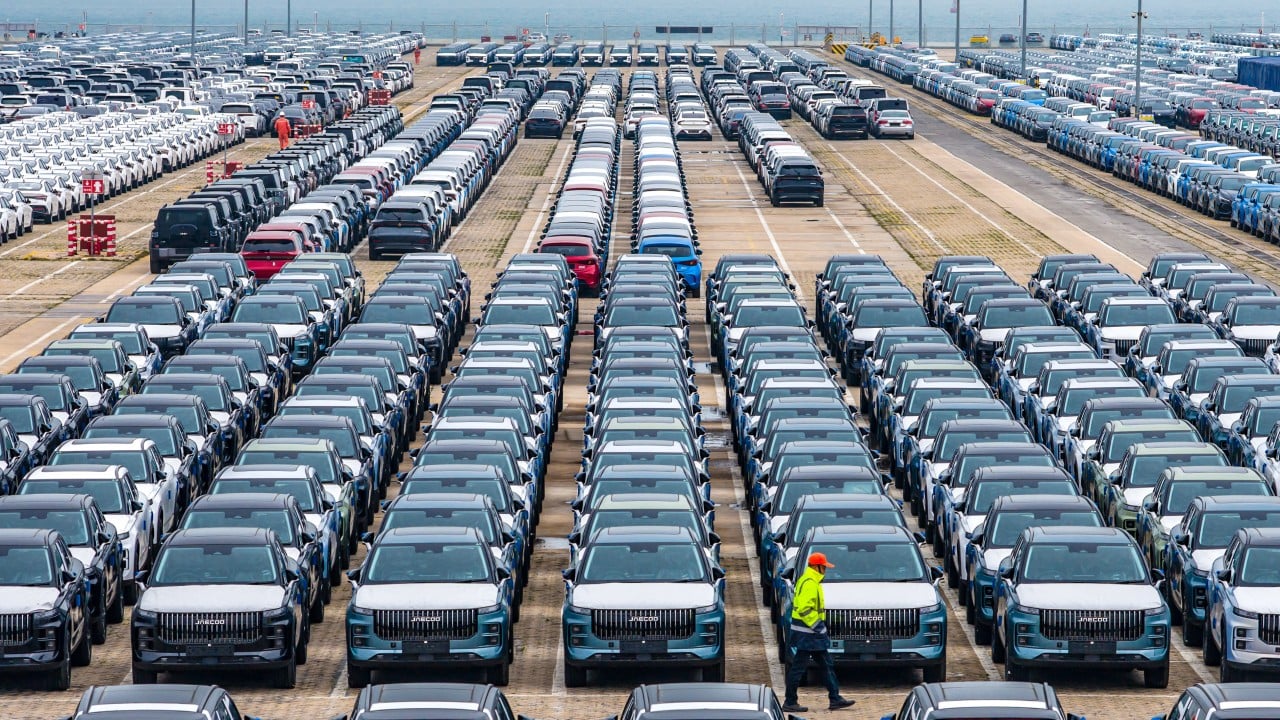
Russia Spends $130 Billion on Sanctions Dodge, Still Can't Get Key Tech Russia has funneled over $130 billion into a massive, clandestine effort to bypass Western sanctions since its 2022 invasion of Ukraine, according to a new intelligence report. Despite the enormous expenditure, the Kremlin remains unable to acquire critical high-tech components for its military and industries, even as it adopts new, deadly combat tactics and seeks financial lifelines from its oligarchs and foreign partners [127597]. The staggering sum, revealed by Latvia’s State Security Service (VDD), represents the premium Russia is paying to smuggle sanctioned goods through complex networks of third countries. The report indicates that Russian President Vladimir Putin is likely receiving reports that downplay the full scale of these economic losses, potentially blinding him to the true cost of the war [127597]. To sustain its military campaign, the Kremlin is turning to domestic billionaires for direct cash injections. Putin has personally solicited donations from Russian oligarchs to fund the war effort, highlighting the severe strain on state finances from a defence budget that surged 42% last year [112938]. This internal pressure coincides with a new battlefield strategy in Ukraine: using pairs of Iranian-made "Shahed" drones. The first acts as a decoy to expose Ukrainian air defence teams, while a second immediately attacks the revealed position [127820]. Internationally, Russia is working to solidify economic alliances to offset Western isolation. Foreign Minister Sergey Lavrov traveled to Beijing for high-level talks with Chinese officials, coordinating their positions amid global crises [127451]. Meanwhile, India and Russia are finalizing a major, long-term oil and gas deal, securing a guaranteed buyer for Russian energy and a stable supply for New Delhi [127258]. Despite these efforts, Russia continues to seize assets from foreign companies that left the country after the invasion. In a conflicting move, Putin ordered the seizure of a $700 million beverage can factory owned by a U.S.-linked firm, even as other officials push for renewed diplomacy with Washington [126123]. Expert analysis suggests the Kremlin feels no urgency to end the conflict, believing its current battlefield position is strong enough to wait out Western resolve [17045]. Putin's public demands for peace talks continue to require Ukrainian surrender of territory, with the goal of ending Ukraine's sovereignty [80394]. This determination for a long war persists despite the compounding economic damage from the costly sanctions evasion campaign [17910]. Russia Spent $130 Billion to Dodge Sanctions, Key Goods Still Missing Putin Seeks Oligarch Donations to Fund War as Defence Budget Strains Russia's New Tactic: One Drone to Distract, a Second to Kill Russia's Lavrov Flies to China as US-Iran Crisis Simmers India and Russia to Seal Major Energy Deal as Iran Tensions Rise Russia Seizes US-Linked Firm While Seeking Washington's Friendship Russia Holds Advantage, In No Rush on Ukraine Deal, Expert Says Putin's "Peace" Talks Demand Ukraine's Surrender Putin Signals Long War in Ukraine Amid Economic Strain


Latest Articles

Pope and President in Rare Public Clash
A sharp, public disagreement between Pope Francis and former U.S. President Donald Trump has broken with long-standing Vatican tradition. Conflicts...

Trump Criticizes Pope Over Immigration, Iran Remarks
President Donald Trump has publicly criticized Pope Leo for a second time. The comments came after the Pope questioned U.S. immigration policies and...

U.S. Warships Blockade Iranian Oil Ports
At least thirteen U.S. warships are now blocking all tanker traffic to and from Iranian ports. The move is a direct effort to choke off Iran's econo...

Congressman Eric Swalwell Resigns Amid Allegations
U.S. Representative Eric Swalwell of California announced his resignation on Monday. He is leaving Congress while facing multiple investigations. Th...

FBI Hunts Suspect in Firebomb Attack on OpenAI CEO's Home
The FBI has released images of a suspect wanted for attacking the home of OpenAI CEO Sam Altman. On Monday, federal investigators published the firs...

Wife Feared Husband Two Years Before Vanishing at Sea
Newly revealed text messages show Lynette Hooker expressed concerns about her husband long before she disappeared. The messages, sent to a friend in...

NBA Game Argument Goes Viral: "We're Done!"
A couple's intense argument at a basketball game has become a global talking point after video of the incident spread online. The exchange happened...

Pakistan Seeks to Revive U.S.-Iran Talks After Failed Negotiations
A senior Pakistani official says the country is working to restart talks between the United States and Iran. This effort follows a recent round of ne...

Suspect Photographed at AI CEO's Home Before Firebombing
Newly released images show a suspect outside the home of OpenAI CEO Sam Altman on the night it was attacked. Surveillance photos reveal an individua...

Husband Freed After Wife Vanishes at Sea
American Brian Hooker has been released from custody in The Bahamas. He was questioned for days about the disappearance of his wife, Lynette. Author...

Search for Missing American Woman in Bahamas Now "Recovery" Operation, Husband Released
Bahamian authorities have announced a grim shift in the case of missing American tourist Lynette Hooker. The search for the woman, who disappeared du...

Trump Attacks Pope, Senior Democrat Announces Sudden Exit
Former U.S. President Donald Trump has again criticized Pope Francis for the Catholic leader's opposition to Iran. Trump made the comments on his soc...

Woman Missing: Two Years Ago, She Feared Being "Out There" With Husband
Two years before she vanished, Lynette Hooker expressed serious fear of her husband, Brian. In a 2024 text message to a friend, Hooker revealed a te...

Husband's 40-Minute Call Details Night Wife Vanished in Bahamas
Brian Hooker gave friends a detailed account of the events leading to his wife's disappearance during a nearly 40-minute phone call. Hooker describe...

U.S. Navy Kills 2 in Pacific Drug Boat Strike, Death Toll Hits 170
The U.S. military has killed two more people in a strike on a suspected drug-trafficking boat in the eastern Pacific Ocean. This latest incident is...

Seaplane Dodges Traffic in Emergency Road Landing
Newly released CCTV footage shows a private seaplane making a dramatic emergency landing on a Phoenix, Arizona road. The aircraft avoided multiple c...

Trump Administration to Fly Pride Flag at Stonewall After Lawsuit
The Trump administration has agreed to fly the rainbow Pride flag at the Stonewall National Monument in New York City. This decision resolves a recen...

Husband Released After Wife Lost at Sea in Bahamas
Bahamian police have released the husband of a missing American woman after questioning. The investigation into Lynette Hooker's disappearance contin...
Iran Unfreezes Captain's Assets After Asylum U-Turn
Iran has released the frozen assets of women's football team captain Zahra Ghanbari. The judiciary announced the move on Monday. It cited a "change i...
US Enforces Naval Blockade on Iran, Risking Global Oil Prices
The United States has begun a naval blockade of Iranian ports in the Gulf. The action, which started Monday evening, aims to pressure Iran economical...