Latest News
Stay updated with the latest news and articles
Top Stories
U.S. Forces Capture Venezuelan President Maduro in Unprecedented Military Raid
U.S. Forces Capture Venezuelan President Maduro in Unprecedented Military Raid In a dramatic escalation of tensions, United States military forces captured Venezuelan President Nicolás Maduro in a surprise operation in Caracas, sending shockwaves across Latin America and challenging international norms. The sitting head of state and his wife were seized on Saturday and subsequently transported to New York, where Maduro faces a federal court on drug trafficking charges [41880]. The operation, ordered by President Donald Trump, marks the first direct U.S. military attack on a South American nation in history [41064]. It represents a stark revival of long-standing U.S. interventionist practices in the hemisphere, setting a precedent for the extraterritorial apprehension of a foreign leader without host country consent [47297]. Following the capture, President Trump declared that "American dominance in the western hemisphere will never be questioned again" [41064]. The action has triggered a deep political split across the region [47126]. Governments historically critical of Maduro's regime, including Colombia and Brazil, have offered cautious support for the move [47297]. Conversely, nations such as Mexico and Bolivia have issued sharp condemnations, labeling the operation a dangerous violation of Venezuelan sovereignty and international law [47297]. Analysts note the public division masks a private anxiety shared by leaders across the political spectrum, who are now urgently reviewing their own vulnerability to similar foreign actions [47297]. The United Nations Security Council has scheduled an emergency meeting at Venezuela's request to address the incident [41880]. President Trump announced that the U.S. will oversee Venezuela's government but provided no timeline for new elections [41460]. The bold strike is widely seen as a direct challenge to China's expanding economic and diplomatic influence in Latin America, a region where Beijing has become the leading trading partner for many nations [41460][45747]. U.S. Capture of Venezuela's Maduro Sends Shockwaves Through Latin America U.S. Capture of Maduro Sends Shockwave Through Latin America U.S. Captures Venezuela's Leader, Challenging China's Regional Reach Venezuela's President Seized by U.S., Faces Court in New York Trump Revives US Habit of Ousting Latin American Leaders Trump Orders First Direct US Military Attack on South America

U.S.-Iran Conflict Serves as Global "Live Fire" Exercise for Militaries Worldwide
U.S.-Iran Conflict Serves as Global "Live Fire" Exercise for Militaries Worldwide The ongoing military confrontation between the United States, Israel, and Iran is being closely studied by global powers as a real-time blueprint for modern warfare, with China identified as a key observer analyzing American capabilities and vulnerabilities [122761][123483]. Military analysts report that the conflict is defined by the extensive use of drones, precision-guided missiles, and cyber attacks, creating a battlefield where information is instant and strikes are highly accurate [122761]. This shift demonstrates how warfare now blurs the lines between military and civilian domains, with effects felt far beyond traditional front lines [122761]. For strategic competitors like China, the war offers critical data on U.S. military resilience. Beijing is specifically monitoring the strain on American supply chains and industrial capacity to replenish advanced munitions during a sustained engagement [123483]. The conflict also provides a live case study in how the U.S. coordinates with allies and projects power across great distances—factors crucial to China's own strategic calculations in the Pacific region [123483]. Beyond immediate battlefield tactics, the war is reshaping broader global dynamics. It has destabilized energy security by threatening oil supplies and is testing international alliances, forcing nations to recalibrate their positions [123483]. Experts conclude that the lessons learned from this conflict will directly shape how future wars are fought by nations around the world, regardless of the conflict's duration [122761][123483]. Iran War: A Live Blueprint for Modern Conflict U.S.-Israel War on Iran: A Real-Time Lesson for China

Governments Target Vacation Rentals to Free Up Homes for Locals
Governments Target Vacation Rentals to Free Up Homes for Locals Facing severe housing shortages, governments in popular tourist destinations are taking dramatic steps to reclaim thousands of homes from the short-term rental market for local residents. In a landmark move, Hawaii's governor has ordered the conversion of 10,000 short-term rental units into local housing [61634]. The plan directly targets condos and houses currently used for tourist vacations, aiming to return them to the long-term rental market. Officials blame the large number of vacation rentals for reducing supply and driving up prices, which is forcing local residents to leave the state [61634]. This conflict is playing out globally in cities dependent on tourism. In Cape Town, South Africa, a surge in tourism and platforms like Airbnb has caused property prices and rents in the central area to soar [39353]. This is pushing low-income service workers, essential to the city's economy, into illegal and unsafe housing on the outskirts because they can no longer afford to live near their jobs [39353][117472]. The city now shows stark divides, with luxury villas and tourist rentals in scenic coastal areas standing next to informal metal shacks where locals live [117472]. The economic benefits of tourism are creating a severe housing shortage for permanent residents in these locations [39353]. While officials in places like Cape Town acknowledge the crisis and the challenge of balancing tourism revenue with housing needs, Hawaii's aggressive action represents a major shift for its tourism-dependent economy, which may result in fewer rental options for visitors [61634][117472]. Hawaii to Seize 10,000 Vacation Rentals in Housing Crisis Move Tourism Boom Pushes Workers Into Illegal Homes Tourists in Luxury, Locals in Shacks: Cape Town's Coastal Divide

Markets Soar as Iran-Israel Conflict De-escalates, Oil Prices Plunge 3%
Markets Soar as Iran-Israel Conflict De-escalates, Oil Prices Plunge 3% Global financial markets rallied sharply this week as tensions between Iran and Israel showed signs of easing, sparking a wave of investor relief and a significant drop in oil prices. The shift in sentiment began after Iran signaled it viewed its recent drone and missile attack on Israel as concluded, with no immediate plans for further strikes [123469]. This was followed by reports of progress toward a potential ceasefire between the United States and Iran, a deal that could involve easing some sanctions on Iranian oil exports [123644]. Investors reacted immediately to the reduced risk of a wider Middle East war. In Asia, Japan's Nikkei index jumped over 1%, with stocks in South Korea, Australia, and Hong Kong also posting significant gains [123469][123644]. The positive momentum carried into U.S. markets, where the S&P 500 rose 0.44% and the Nasdaq Composite climbed 0.54% on hopes a deal could stabilize the region [122259]. The most dramatic move was in the oil market. The price of Brent crude, a global benchmark, fell by over 3% as the threat of supply disruptions from a broader conflict receded [123644]. Lower oil prices ease worldwide inflation concerns and boost sectors like airlines and shipping, which benefit from cheaper fuel [123644]. Market analysts describe the rally as a classic "de-risking" move, where investors feel more confident and move money into stocks [122259]. The reaction underscores the extreme sensitivity of global finance to geopolitical stability in the Middle East, where conflict can threaten energy supplies and trade routes [122259][123644]. While the situation remains fluid and official details of any agreement are pending, the initial market response signals strong investor relief after a period of heightened anxiety [123644]. Markets Surge as US-Iran Tensions Ease Iran Stands Down: Asian Markets Rally, Oil Prices Drop Iran Ceasefire Hopes Lift US Markets Trump's Iran Deadline Nears, Markets Stumble

Ukraine Unleashes Drone Blitz, Striking Russia's Key Oil Lifeline in the Baltic
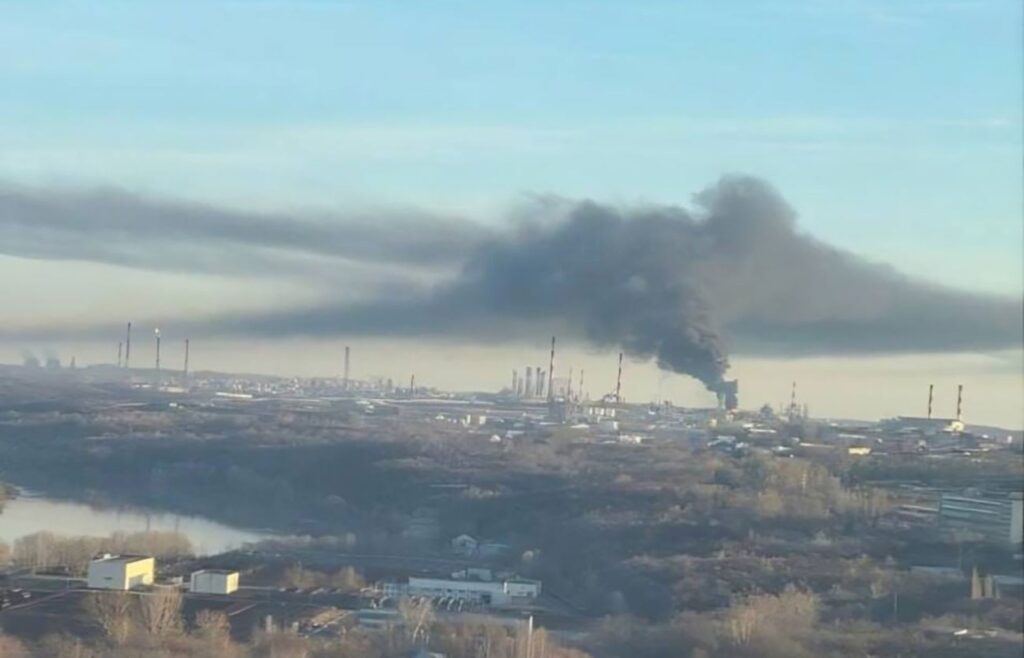
Ukraine Unleashes Drone Blitz, Striking Russia's Key Oil Lifeline in the Baltic Ukraine has dramatically escalated its long-range campaign against Russia's war economy, launching a series of drone strikes that have successfully hit a critical oil export terminal on the Baltic Sea. The attacks target the Ust-Luga complex, a facility that handles a significant portion of Russia's fuel exports [123057]. The strategy aims to cripple a primary source of revenue funding the Russian military's invasion. By systematically attacking refineries and shipping infrastructure deep inside Russia, Ukrainian forces seek to reduce the billions of dollars in oil income that flow to the Kremlin [123057][122745]. Recent strikes have caused significant fires and operational disruptions at the terminal, with Russian officials confirming damage to the facility [123057]. This offensive expansion showcases Ukraine's growing technological capability. Military analysts note the repeated strikes on the same high-value target demonstrate an advanced ability to identify and exploit vulnerabilities in Russian defenses far from the front lines [123057]. The Ust-Luga terminal is a major gateway for processed natural gas and oil products destined for international markets [123057]. The campaign has a dual strategic purpose. Beyond directly harming Russian military funding, it also indirectly targets the finances of Iran, a major supplier of drones and missiles to Russia [123062]. Analysts state that Iran's support has been bankrolled by a surge in its own oil sales, a surge exacerbated by recent global instability that raised prices [123062]. By reducing Russia's oil income, Ukraine hopes to limit the funds available for Moscow to purchase Iranian weapons [123062]. The financial pressure on Russia is mounting from multiple directions. Alongside these attacks, reports indicate Russian President Vladimir Putin has asked the country's wealthy oligarchs for direct donations to support the military budget, highlighting the strain of the war [112938]. Russia's defence spending surged by 42% last year, forcing the government to raise taxes to stabilize the economy [112938]. The long-term impact on Russian oil exports is still being assessed, but the attacks have already forced logistical changes and increased security costs for Russia's critical energy sector [123057]. The move marks a significant shift in the conflict, as Ukraine takes the fight directly to the economic infrastructure sustaining the invasion. Ukraine Strikes Russian Oil, Targeting Iran's War Profits Ukraine Targets Russia's Baltic Oil Lifeline Ukraine Strikes Russian Oil to Hit Iran War Profits Russia's War Gains: How Iran's Weapons Are Changing the Battle in Ukraine Putin Seeks Oligarch Donations to Fund War as Defence Budget Strains

Lawmakers in Two Parties Push to Oust Trump Over Iran Threat, Citing 25th Amendment
**Lawmakers in Two Parties Push to Oust Trump Over Iran Threat, Citing 25th Amendment** A bipartisan group of U.S. lawmakers is calling for the immediate removal of President Donald Trump from office, invoking the Constitution's 25th Amendment following his threats of military action against Iran [123298][123221]. The push began after Trump posted on his Truth Social platform, threatening a "severe response" if Iran attacked Americans and specifically mentioning targeting 52 sites, including cultural locations [123221][122989]. Some lawmakers and legal experts argue that threatening cultural heritage sites violates international laws of armed conflict and could constitute a war crime [123221]. "The President's threats of mass killings and war crimes are exactly why the 25th Amendment was created," said Congresswoman Deb Haaland (D-NM), one of the officials supporting the action [123221]. The amendment allows the Vice President and a majority of the Cabinet to declare a president unfit to discharge the powers of the office. The effort has gained some Democratic support in Congress but faces steep odds. A leading Democratic senator publicly called the move "not realistic," noting it would require the support of Vice President Mike Pence and a majority of Trump's own Cabinet, which is seen as highly unlikely [123298]. The controversy has also drawn criticism from an unexpected international figure. Nigel Farage, leader of the UK's Reform party and a longtime Trump ally, said he was "shocked" by the former president's remarks, calling them "over the top in every single way" [123138]. Despite the low probability of success, the coordinated calls for removal highlight the intense political and constitutional crisis triggered by the President's statements in his final days in office [123298]. Democrats Seek Trump's Removal After Iran Threat; Key Senator Calls Move "Unrealistic" Lawmakers Urge 25th Amendment Removal Over Trump War Crime Threats Trump's Profane Post: A Calculated Strategy for Permanent Conflict? Nigel Farage: Trump's Iran Threat 'Went Way Too Far'


US Tech Giants and White House Team Up to Pressure Europe, Report Warns
US Tech Giants and White House Team Up to Pressure Europe, Report Warns A new report from a leading European think tank has revealed a coordinated campaign by the United States to reshape global rules in its favor, using its tech giants and military alliance as leverage against the European Union [44570]. The strategy represents a fundamental challenge to the international order, aiming to replace a system based on multilateral rules with one dictated by raw power dynamics. According to the analysis by the Centre for European Reform, U.S. technology firms are working in concert with the White House to pressure European regulators [44570]. The report details how America leverages Europe's continued dependence on U.S. security guarantees through NATO to force policy concessions, creating a "pincer attack" on European sovereignty [44570]. This dependence, the report argues, was a deliberate policy choice that has left the EU economically vulnerable and strategically exposed [69895]. The aggressive U.S. posture is part of a broader ideological attack on Europe's social and economic model, which prioritizes public services and worker protections [78938]. A senior Belgian minister accused the U.S. of pressuring Europe to dismantle these systems, stating that the EU must act as a "protective shield" for its citizens against such external intimidation [78938]. This pressure exposes a critical contradiction for Europe. While EU leaders threaten regulatory action against dominant U.S. tech platforms, the bloc remains deeply reliant on them for essential digital infrastructure, from cloud computing to professional software and payment systems [58167]. This reliance makes any serious attempt at "digital sovereignty"—controlling its own digital destiny—extremely difficult to enforce [58167]. Economist Thomas Piketty argues that recent U.S. military interventions signal an "admission of weakness," a form of "military agitation" to prop up its own economy as its global dominance wanes [95616]. However, Europe's fractured response to such aggression highlights its own weaknesses. Analysts describe the bloc as "extremely weak" and "woefully unprepared" to counter unilateral U.S. moves, citing internal political divisions and a fraying transatlantic relationship [43628]. The report concludes that Europe is not without options. To resist this pressure, the EU must move beyond reliance on moral arguments and regulation and build tangible economic and military power, while forging its own global alliances [44570][69895]. US Tech Giants and White House Ally to Pressure EU, Report Warns Trump Era Demands "Political Adults" in EU, Analysts Warn Belgian Minister: U.S. Waging "Ideological Attack" on Europe Europe's Digital Dilemma: Reliant on US Tech It Seeks to Curb Piketty: U.S. Military Moves Signal Weakness, Not Strength US "Donroe Doctrine" Sparks Global Alarm: "Resources Belong to Us"

AI Reshapes Over Half of U.S. Jobs, Study Finds, But Mass Replacement Unlikely
AI Reshapes Over Half of U.S. Jobs, Study Finds, But Mass Replacement Unlikely A new analysis reveals artificial intelligence (AI) is poised to transform the majority of jobs in the United States, though researchers conclude it is more likely to change how work is done than to cause mass unemployment [123388]. The key finding is that AI will impact more than half of all U.S. jobs, primarily by augmenting or altering tasks rather than eliminating entire roles. This suggests a future where workers will need to adapt and collaborate with new technologies [123388]. This shift towards job transformation, not destruction, is echoed by experts who argue that fears of AI making human labor obsolete are overblown. They note that AI lacks general human understanding and empathy, meaning many roles requiring complex social interaction will remain [123624]. The historical pattern of new tools creating new forms of work also supports the view of AI as a collaborator, not just a replacement [123624]. The practical need for workforce adaptation is already visible. Skilled professionals, facing a difficult job market, are increasingly turning to training AI systems as a source of income, highlighting the immediate demand for human oversight of the technology [122822]. The corporate push to develop these transformative AI tools is intense. Companies like SenseTime are betting on next-generation "embodied intelligence" for robots and digital agents to regain a competitive edge [22794]. Meanwhile, the methods used to train leading AI models are raising ethical questions, with reports of gig workers harvesting data from social media, copyrighted work, and other sensitive sources to refine corporate systems [122801]. As AI integration accelerates, the focus is turning to implementation. Hong Kong, for example, is launching a new AI research institute this month as part of a strategic "AI for all" push to boost government capabilities and spread the technology's benefits across its economy [123481]. This effort is a key part of its plan to deploy applied AI in sectors like transport and healthcare to improve public services [123655]. AI Will Reshape Most U.S. Jobs, Not Replace Them, Study Finds AI Won't Steal Your Purpose: Experts Challenge "Uselessness" Fears Desperate for Work, Skilled Professionals Turn to AI Training SenseTime Bets on Robot AI to Regain Lead Meta's AI Trained by Gig Workers Scraping Social Media, Copyrighted Work, and Porn Hong Kong Launches AI Institute for "AI for All" Strategy Hong Kong Bets on AI to Build a "Smart" Future


Turkey Assumes Command of Key NATO Forces, Deploys Thousands to Major 2024 Drills
Turkey Assumes Command of Key NATO Forces, Deploys Thousands to Major 2024 Drills Turkey has taken command of a major NATO naval strike force and is deploying thousands of troops to participate in the alliance's largest exercises this year, underscoring its active role in Western military readiness [54453][70222]. The Turkish Naval Forces formally assumed leadership of the NATO Amphibious Task Force and its Landing Force Command on July 1. In this role, which will last for one year, Turkey is responsible for planning and leading the alliance's amphibious exercises and potential missions in the region [54453]. Concurrently, the first Turkish military aircraft have landed in Germany, marking the start of Turkey's participation in NATO's Steadfast Defender 2024 drills. Approximately 2,000 Turkish troops are deploying to Germany’s Wunstorf Air Base for the exercises, which run from February 8 to February 20 across Europe [70222]. In a separate but related NATO exercise, Turkish naval and army units are conducting joint amphibious operations in Germany this week as part of Steadfast Dart 2026. A key feature of Turkey's involvement is the operational use of its own domestically produced defense platforms on the international stage [80228]. These movements are part of NATO's broader reinforcement of its capabilities and demonstrate the alliance's focus on rapid deployment across member states. The assignment of command is a routine rotation among member nations, but the scale of Turkey's simultaneous participation in major exercises highlights its significant contribution to collective defense operations [54453][70222]. Turkey Assumes Command of Key NATO Naval Strike Force **NATO's Biggest 2024 Drill Begins with Turkish Troops Landing in Germany** Turkish Forces Deploy Homegrown Tech in Major NATO Drill

Ukraine Proposes "Energy Ceisefire" as Drone Strikes Cripple Russian Oil Exports
Ukraine Proposes "Energy Ceisefire" as Drone Strikes Cripple Russian Oil Exports Ukraine has offered Russia a mutual halt to attacks on energy infrastructure, a proposal made as Kyiv's long-range drone campaign has severely damaged Russia's oil export capacity. President Volodymyr Zelensky stated the offer was communicated through mediators. "If Russia stops strikes on our energy sector, we will be ready to respond in kind," he said in an address [122336]. The proposal, termed an "energy ceasefire," would see Ukraine stop its strikes on Russian oil facilities if Moscow ceases its bombardment of Ukraine's civilian power grid [122401]. The offer comes amid a highly effective Ukrainian campaign targeting Russia's critical energy infrastructure. Ukrainian forces have launched repeated drone strikes on major oil export terminals. In the Baltic Sea, the key Ust-Luga complex—a major gateway for Russian fuel exports—has been hit twice in three days, just as it resumed operations from a previous attack [123064]. These ports handle approximately 40% of Russia's crude oil exports [123062]. Separate strikes have hit the Sheskharis oil terminal in Novorossiysk, a critical hub that handles millions of tonnes of Russian crude monthly. Analysts confirmed multiple direct hits on the facility [122400]. Another attack damaged a terminal near Novorossiysk used by the Caspian Pipeline Consortium, one of the world's largest pipelines [122908]. Western intelligence suggests these attacks have disrupted over 40% of Russia's seaborne oil exports [122401]. Ukrainian officials claim their strikes have disabled a similar portion of Russia's seaborne oil capacity and destroyed infrastructure worth an estimated $1 billion in just five attacks [122401][122398]. The strategy aims to cripple a primary source of revenue funding Russia's military operations. Analysts note the strikes demonstrate Ukraine's growing long-range drone capabilities and its ability to identify and exploit vulnerabilities in Russian defenses far from the front lines [123057]. There has been no public indication that Russia will accept the Ukrainian proposal. The Kremlin has previously dismissed similar offers [122401]. The offer highlights a new phase in the conflict, where both sides possess the capability to strike critical energy targets deep behind enemy lines. Ukraine Targets Russia's Baltic Oil Lifeline Ukraine Proposes "Energy Truce" to Russia, Zelensky Says Ukraine Strikes Key Russian Oil Port—Again Ukraine Hits Key Russian Oil Terminal, But Target Disputed Ukraine Strikes Key Russian Oil Hub and Military Aircraft in Crimea Ukraine Offers to Halt Oil Strikes if Russia Stops Bombing Power Grid Ukraine Proposes "Energy Truce" to Russia Ukraine Proposes "Energy Ceasefire" After Hitting Russian Oil Ukraine Strikes Russian Oil, Targeting Iran's War Profits
Latest Articles
Power Your Home When the Grid Fails: A Surge in Self-Sufficiency
Record energy prices, extreme heat, and blackouts are pushing homeowners to a radical solution: generating their own electricity. The appeal of pers...
U.S., Iran Agree to Two-Week Ceasefire After Trump Receives Tehran's Proposal
President Donald Trump has stepped back from recent threats against Iran. The U.S. has instead agreed to a temporary, two-week ceasefire. The shift...
Journalist Jailed for Six Weeks Over Alleged Presidential "Insult"
A reporter for the German international broadcaster DW has been held in a Turkish prison for six weeks. Alican Uludag, a correspondent based in Istan...
Ukraine's Hungarian Minority Trapped by Politics and War
Approximately 80,000 ethnic Hungarians live in western Ukraine. They now find themselves caught between a war and a political campaign. The communit...
India Votes: Key State Elections Test National Mood
Voters in three Indian regions will elect new local governments on Wednesday. The elections are being watched as a sign of public sentiment ahead of...
Germany Halts Military Travel Rule for Men, Issues Router Warning
Germany has paused a new rule requiring military-aged men to get permission for long trips abroad. Defense Minister Boris Pistorius confirmed the me...

AI Office Exodus: Tech Threatens Empty Skyscrapers
Artificial intelligence is now targeting the office itself. Analysts warn that AI is causing a "paradigm shift" in commercial real estate. The techn...
US Accused of "History Repeating" in New Cold War Tactics
Sixty years after supporting the Indonesian army's violent destruction of a major communist party, the United States faces renewed accusations of usi...
Influencers Spark Outrage by Promoting Taliban-Ruled Afghanistan
Some travel influencers are facing sharp criticism for their videos and posts from Afghanistan. Critics accuse them of ignoring the country's dangero...
Taiwan Opposition Leader in China Calls for "Unity" Amid Tensions
The leader of Taiwan's main opposition party has made a rare visit to mainland China. He called for improved relations during a trip that highlights...

India Launches Digital Census Amid Fears of Political Use
India has begun its first fully digital census. The massive project will count the nation's 1.4 billion people using a smartphone app. Millions of c...
France Frees Iranian Agent in Swap for Hostages
Iran has released two French citizens after a prisoner exchange with France. The deal freed Cécile Kohler and Jacques Paris. They were detained in I...
Freed: French Hostages Home After 3 Years in Iran Prison
Two French citizens, Cécile Kohler and Jacques Paris, returned to Paris on Wednesday. They had been imprisoned in Iran for over three years. Iranian...
Trump Announces Sudden Ceasefire with Iran, Opens Diplomatic Window
President Donald Trump announced a surprise ceasefire with Iran on Tuesday evening. The move de-escalates a period of extreme tension. The President...