Latest News
Stay updated with the latest news and articles
Top Stories
Iranian Women Footballers Granted Asylum, Train with Australian Club
Iranian Women Footballers Granted Asylum, Train with Australian Club Two members of Iran's women's national football team have been granted asylum in Australia and have begun training with a professional club as they seek to rebuild their sporting careers. Fatemeh Pasandideh and Atefeh Ramezanisadeh decided to remain in Australia after a tournament earlier this year [131273]. They have now started training with the Brisbane Roar, a club in Australia's top professional women's league [131273]. In a statement, the players expressed gratitude for the support they have received but have asked for privacy as they focus on their new lives [131273]. They stated their intention to return to elite football while establishing themselves away from the public spotlight [131273]. The development highlights the ongoing challenges faced by female athletes from countries with restrictive policies. In a separate but related context, when the Taliban retook control of Afghanistan in 2021 and banned women's sports, it forced many female athletes to flee and seek refuge elsewhere, where they have worked to reform teams and communities through sport [20194]. The Iranian players' asylum grants and subsequent club training mark a significant step in their efforts to continue their professional dreams in a new country [131273]. Iranian Footballers Seek Asylum, Train with Australian Club Afghan Refugee Women Build New Team and Community on the Soccer Field

From TikTok Trends to Arctic Beats: How Communities Are Fighting to Keep Their Cultures Alive
From TikTok Trends to Arctic Beats: How Communities Are Fighting to Keep Their Cultures Alive Around the world, from viral social media trends to ancient rituals, communities are actively working to preserve and celebrate their cultural identities in the face of globalization and modernization. These efforts highlight culture not just as heritage, but as a living, evolving form of expression and resilience. In Burundi, writer Aïta Chancella Kanyange, 33, is using children’s books to safeguard national traditions for the next generation [2]. Her simple stories for young children focus on Burundi’s customs and values, serving as a direct tool to maintain cultural identity. This theme of cultural preservation through art extends to music. In Ukraine, a new collection of Christmas carols, known as *koliadky*, connects centuries-old folk chants to the present day [6]. Scholars note these songs have historically preserved language and identity during periods of oppression, with many containing subtle messages of resilience. Similarly, a Sámi DJ duo from the Arctic is finding success by blending modern electronic music with traditional Indigenous elements like *joik*, a rhythmic singing style [14]. Their rise meets a growing audience appetite for Indigenous culture in global music scenes, proving that remote locations can become centers of cultural innovation [14]. Meanwhile, in Gabon, a coastal community performed an ancient animist ritual, presenting offerings to the spirits of the sea in an effort to combat coastal erosion [12]. This practice demonstrates how cultural traditions are being applied to address contemporary environmental challenges, blending spiritual belief with practical concern. However, the digital age presents new complexities. The recent viral trend "Chinamaxxing," where people adopted Chinese habits like drinking hot water and wearing house slippers, gathered hundreds of thousands of views online [9]. For many of Chinese heritage, watching lifelong customs become short-lived internet memes has been a strange experience, raising questions about the depth of online cultural appreciation [9]. These parallel stories show a global pattern: whether through children’s literature, music, ritual, or digital media, the active defense and adaptation of cultural identity is a powerful, ongoing force in communities worldwide. Burundian Author Fights to Save Culture with Children's Books Ukrainian Christmas Carols: Ancient Sounds of Defiance and Hope Remote DJs Rise with Sámi Sound, Fueling Indigenous Pride Gabonese Village Fights Erosion with Ancient Ritual Chinamaxxing: When Your Culture Becomes a Viral Meme
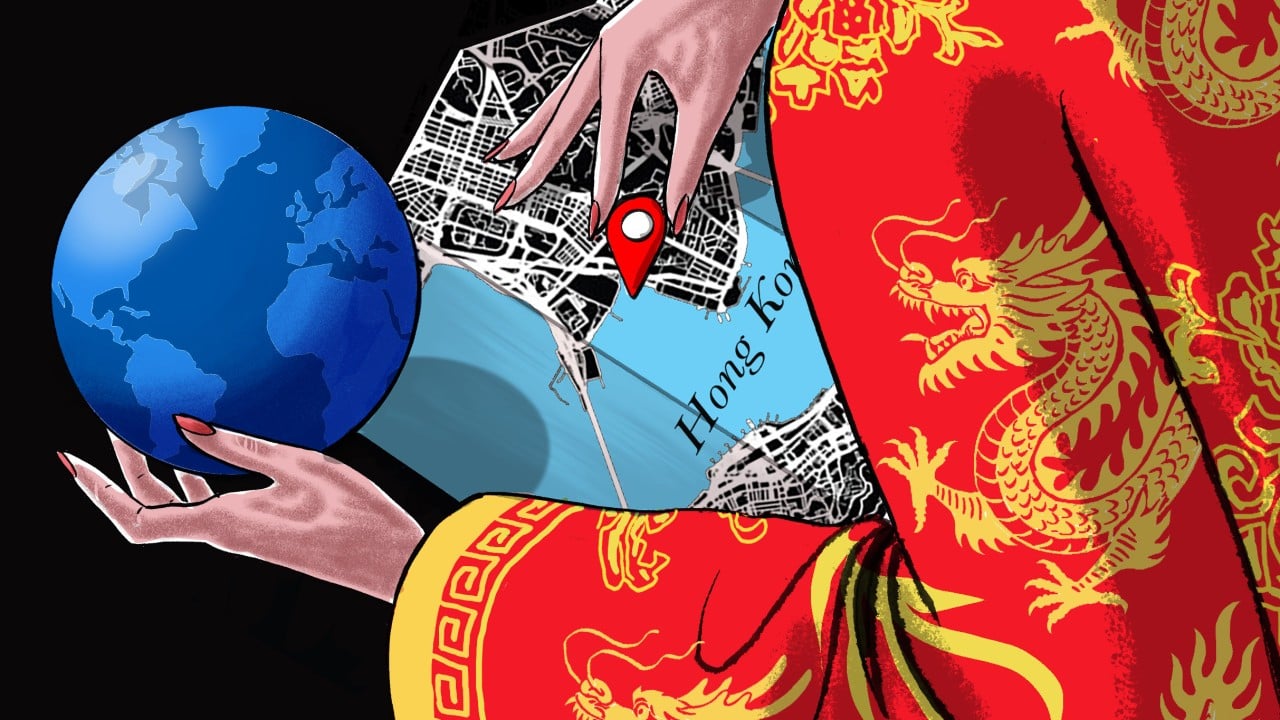

Dangerous DIY "Neck-Hanging" Fitness Trend Alarms Chinese Doctors, Sparks Online Frenzy
Dangerous DIY "Neck-Hanging" Fitness Trend Alarms Chinese Doctors, Sparks Online Frenzy A dangerous fitness trend where young people hang their full body weight by their necks from tree branches is spreading rapidly in China, prompting urgent warnings from medical experts of potential paralysis and stroke. The activity, known as "neck-hanging exercise," attempts to mimic professional cervical traction therapy, a medical treatment for neck pain administered under strict clinical supervision [122710]. Doctors state that performing such extreme, unsupervised spinal traction can cause severe ligament damage, paralysis, and even stroke [122710]. The trend follows a reported surge in cervical spine disorders across the country. An official 2024 health report indicates over 200 million people in China suffer from such conditions, with more than 40% of patients under the age of 30 [122710]. This has fueled a search for quick fixes, despite the severe risks. In a separate but related incident highlighting the dangers of extreme exercise, a 23-year-old woman from Zhejiang province stopped menstruating after an intense workout regimen caused rapid weight loss [46995]. Hospital tests revealed her hormone levels were comparable to those of a typical 50-year-old woman, and she was diagnosed with symptoms of kidney deficiency, a concept in Traditional Chinese Medicine [46995]. Doctors ordered her to cease all exercise immediately and prescribed significant amounts of TCM to recover [46995]. Meanwhile, health experts are advocating for simpler, safer fitness approaches. They recommend turning daily walks into cardio by increasing pace and adding hills, and building strength at home using bodyweight exercises like push-ups and planks [37303]. The key, they say, is consistent, smart exercise rather than dangerous, intense trends [37303]. Despite the clear medical warnings, the "neck-hanging" trend continues to gain popularity online, alarming public health officials [122710]. **Dangerous "Neck-Hanging" Trend Alarms Doctors in China** **Young Woman's Extreme Fitness Halts Her Periods** **Forget the Gym: Three Simple Shifts for a Fitter 2026**
U.S. Forces Seize Venezuelan President Maduro in Unprecedented Military Raid
U.S. Forces Seize Venezuelan President Maduro in Unprecedented Military Raid In a dramatic escalation, United States military forces captured Venezuelan President Nicolás Maduro in a surprise operation in Caracas, sparking a continental crisis and reviving fears of American interventionism across Latin America [41460][41880]. President Donald Trump announced the operation, which resulted in the detention of Maduro, 63, and his wife. They were subsequently transported to the United States, where Maduro is scheduled to face drug trafficking charges in a New York federal court [41880]. The direct military seizure of a sitting head of state from the region is an unprecedented act of extraterritorial apprehension [47297]. The bold strike has exposed deep divisions among Latin American governments. While nations like Colombia and Brazil have offered cautious support, others, including Mexico and Bolivia, have condemned it as a blatant violation of international law and Venezuelan sovereignty [47297]. Publicly, reactions are split between approval and outrage [47126]. Privately, however, analysts report a shared anxiety gripping capitals from Mexico City to Buenos Aires. Leaders across the political spectrum are conducting urgent internal reviews, forced to ask: "Who could be next?" [47297]. The operation has set a powerful precedent, compelling every nation to re-examine its relationships with Washington and its own domestic political stability [47126]. The long-term implications are profound. Experts warn the action represents a forceful revival of the Monroe Doctrine, the historic U.S. policy of opposing foreign influence in the Americas [41460]. It is also seen as a direct challenge to China, which has built deep economic ties as the top trading partner for many South American nations [41460][45747]. President Trump framed the capture as a definitive statement, declaring that "American dominance in the western hemisphere will never be questioned again" [41064]. The United Nations Security Council has called an emergency meeting at Venezuela's request to address what many diplomats consider a dangerous breach of national sovereignty [41880]. The event has fundamentally altered the geopolitical landscape, injecting a new atmosphere of suspicion and tension into inter-American relations [47126]. U.S. Capture of Venezuela's Maduro Sends Shockwaves Through Latin America U.S. Capture of Maduro Sends Shockwave Through Latin America U.S. Captures Venezuela's Leader, Challenging China's Regional Reach Venezuela's President Seized by U.S., Faces Court in New York Trump Revives US Habit of Ousting Latin American Leaders Trump Orders First Direct US Military Attack on South America
World Braces for Economic Warfare as Top Global Threat in 2026
World Braces for Economic Warfare as Top Global Threat in 2026 A new report from the World Economic Forum (WEF) has identified "geoeconomic confrontation" as the most severe and immediate risk facing the world, warning that nations are increasingly weaponizing trade, supply chains, and investment in their strategic rivalries [49991]. The WEF's latest Global Risks Report places economic conflict between countries above all other dangers for the next two years. It states that geopolitical competition is driving this shift, creating a volatile environment that threatens international stability and growth [49991]. This economic fragmentation is unfolding against a backdrop of deep global interdependence, where countries remain closely linked by decades of trade [6971]. However, the report warns that the short-term outlook is dominated by three interconnected threats: geopolitical rivalry, the rapid spread of misinformation, and severe social and political polarization [49991]. The findings will be a central topic at the WEF's annual meeting in Davos, Switzerland, next week as global leaders confront a landscape where economic tools are becoming primary instruments of state competition [49991]. Geoeconomic Warfare Named Top Global Threat for 2026 Globalization Shifts, But It Doesn't Reverse
Tourists Are Grabbing Homes: Cities Crack Down on 10,000+ Short-Term Rentals
Tourists Are Grabbing Homes: Cities Crack Down on 10,000+ Short-Term Rentals A global clash between tourism and housing is forcing governments to take drastic action, as popular destinations move to reclaim thousands of homes from the short-term rental market for local residents. The conflict is most acute in cities where booming vacation rentals have driven up rents and pushed workers into illegal or substandard housing. In a landmark move, Hawaii's governor has ordered the conversion of 10,000 short-term rental units into long-term local housing [61634]. Officials blame the large number of properties listed for tourists for severely reducing supply and driving residents away from the islands [61634]. A similar crisis is unfolding in Cape Town, South Africa, where a surge in tourism and platforms like Airbnb has sent property prices soaring in the central business district [39353]. This forces essential service workers into informal settlements or unsafe, illegal housing far from their jobs [39353]. The city now features stark inequalities, with luxury villas and tourist rentals sitting alongside metal shacks in coastal areas [117472]. The phenomenon is not confined to vacation hotspots. In Seoul, soaring rents are pushing young professionals out of studio apartments and back into tiny, windowless *goshiwon* rooms—a type of ultra-basic dormitory accommodation [21300]. An office worker, identified only as Kim, said moving back to a *goshiwon* was her "only option" after her rent became unaffordable [21300]. In response, legislative action is advancing in some regions. The U.S. Senate recently passed a major bipartisan bill aimed at lowering housing costs by funding and encouraging the construction of new homes [100991][100719]. While its future in the House of Representatives is uncertain, supporters argue increasing supply is critical to addressing the core shortage [100991]. Meanwhile, in Madrid, a court is set to rule on whether major renovations conducted by investment funds constitute illegal "housing harassment" designed to force tenants out [82743]. Residents describe the tactic, which follows notices of non-renewed leases, as a form of "psychological torture" [82743]. The collective actions highlight a growing consensus that the financialization of housing as a tourist asset is creating unsustainable crises for local communities. Hawaii to Seize 10,000 Vacation Rentals in Housing Crisis Move Tourism Boom Pushes Workers Into Illegal Homes **Tourists in Luxury, Locals in Shacks: Cape Town's Coastal Divide** Soaring Rents in Seoul Force Workers Back into Tiny 'Goshiwon' Rooms Senate Passes Bill to "Flood the Market" with New Homes U.S. Senate Passes Major Housing Bill, But House Hurdle Looms Madrid Court to Rule: Is Renovation a Form of Tenant Harassment

Turkish Stock Market Sees Wild Swings, Rockets 2.3% in a Day After Central Bank Pumps In Cash
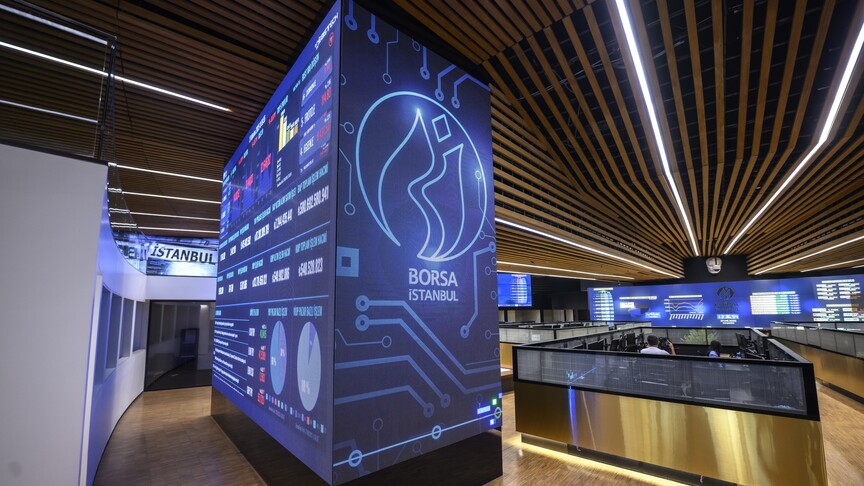
Turkish Stock Market Sees Wild Swings, Rockets 2.3% in a Day After Central Bank Pumps In Cash Turkey's benchmark stock index is on a rollercoaster, posting dramatic single-day gains and losses as investor sentiment swings sharply and the central bank intervenes directly to prop up markets. The BIST 100 index, which tracks Turkey's top 100 companies, has experienced extreme volatility, surging over 2% in a single session on multiple occasions only to plunge days later [71758][40181][33252]. The market opened the 2026 trading year with a powerful 2.1% jump, gaining 236.86 points [40181]. Just days earlier, it had closed a Tuesday session down 30.85 points [12525]. A major catalyst for one of the largest rallies was a new policy from the Central Bank of the Republic of Turkey (CBRT). On Wednesday, the bank announced it would provide cheaper financing to lenders who increased their purchases of domestic stocks, a move designed to directly support equity prices [80220]. Following this announcement, the BIST 100 closed with a strong increase of 32.6 points [80220]. The market's movements are not solely driven by local policy. Analysts note that Turkey's market often mirrors global trends, falling sharply in tandem with international sell-offs during "risk-off" environments where investors flee emerging markets [33252]. Conversely, isolated surges of over 1%, like a 143-point gain on a recent Tuesday, have marked positive sessions for the key emerging market [128734]. Daily trading frequently begins on a positive note, with the index regularly opening higher by tens of points—such as a 34.58-point gain on a Friday or a 99.1-point surge at a midweek open—though these early gains do not always hold through the closing bell [131327][110976][21230]. The constant fluctuations point to a market heavily influenced by both domestic intervention and fragile global investor confidence. Turkish Stock Market Opens Strong, Gaining 34 Points Turkish Stocks Surge as Key Index Jumps Over 1% Turkish Stock Market Rises in Early Tuesday Trading Turkish Stocks Surge 2.3% in Single-Day Rally Turkish Stock Market Plunges Amid Global Sell-Off Turkish Stock Index Rises in Thursday Trading Turkish Stock Market Surges on Central Bank Boost Turkish Stocks Surge at Midweek Open Turkish Stock Market Drops on Tuesday Turkish Stock Market Opens Higher on Tuesday Turkish Stocks Soar 2.1% in First Session of 2026 Turkish Stocks Surge in Midweek Rally

Putin Demands Oligarch Cash and Digs In for Long War as Ukraine Fight Drains Russia
Putin Demands Oligarch Cash and Digs In for Long War as Ukraine Fight Drains Russia Facing mounting financial strain from its war in Ukraine, the Kremlin is turning to Russia's wealthy elite for direct funding while signaling a commitment to a prolonged conflict, regardless of diplomatic outreach. President Vladimir Putin has personally asked the country's oligarchs for donations to support the military budget, highlighting the growing pressure on state finances [112938]. This move comes as Russia's defense spending surged by 42% last year, and the government has raised taxes to stabilize the economy [112938]. The budget deficit has widened sharply, partly due to U.S. sanctions forcing Russia to sell oil at large discounts [112938]. Analysts observing the situation report a firm, unchanged stance from the Russian leadership, suggesting a strategy geared toward a long war despite the economic difficulties [17910]. An expert on U.S.-Europe relations stated that Russia, believing it holds a strong battlefield position, feels no urgency to negotiate a peace deal [17045]. This determination was underscored by Putin himself, who declared that Moscow's goals in Ukraine "will be met," whether through diplomacy or continued military force [28790]. He framed negotiations not as a path to compromise, but as a potential tool to secure the same objectives sought on the battlefield [28790]. Parallel to these domestic financial and strategic shifts, Russia is pursuing a two-track diplomatic strategy. To European leaders, Russian officials deliver aggressive messages blaming the West for the conflict [82150]. Simultaneously, they are sending a different signal to Washington, asking for sanctions to be lifted and seeking to calculate losses from halted trade [82150]. Experts say this approach aims to create division between allied nations [82150]. U.S. intelligence assessments support the view of a prolonged conflict, reporting that Putin's ultimate aim extends beyond Ukraine to reclaiming influence over the former Soviet sphere, making any ceasefire likely a tactical pause rather than a true peace [31282]. Putin Seeks Oligarch Donations to Fund War as Defence Budget Strains Putin Signals Long War in Ukraine Amid Economic Strain Russia Holds Advantage, In No Rush on Ukraine Deal, Expert Says Putin: Russia Will Take Ukraine by "Force or Diplomacy" Russia's Dual Strategy: Talk War with Europe, Talk Trade with America U.S. Intelligence: Putin's Goal is "Former Soviet Empire"

Turkish Opposition Leaders Decry "Political Operations" as Government Crackdown Intensifies
Turkish Opposition Leaders Decry "Political Operations" as Government Crackdown Intensifies Prominent figures from Turkey's political opposition are publicly accusing the government of orchestrating a series of politically motivated legal crackdowns, claiming the country's rule of law is being undermined [73277]. The accusations follow the recent detention of a former mayor from the main opposition Republican People's Party (CHP) and other officials. CHP MP Akın Gürlek condemned the actions, stating, "This is a political operation, not rule of law" [73277]. He argued the detentions lack legitimate legal foundation and are intended to silence government critics. The tension escalated with the conclusion of a major trial involving Istanbul's opposition mayor, Ekrem İmamoğlu. Speaking outside the courthouse, İmamoğlu declared the proceedings were "political from the start" [98374]. He used stark imagery to accuse a leading prosecutor of being a "politician in disguise" who used "the tentacles of an octopus" to send political messages to the capital, Ankara [98374]. CHP leader Özgür Özel warned of increasing pressure, telling supporters, "Tomorrow morning will be harder than this morning. Let no one have any doubt about that" [73277]. The unified message from opposition leaders frames the recent police operations and court cases as a coordinated assault on their ranks. Separately, a senior female opposition politician linked the government's approach to a broader democratic deficit. Halide Türkoğlu argued that the state's failure to recognize the political struggle of women, amidst what she described as sexist language and policies of impunity, prevents true democratization [92666]. She stated, "The political institution itself is becoming the most fundamental obstacle in front of women" [92666]. The combined statements from multiple opposition sources depict a political climate where legal and state institutions are being weaponized against government rivals, raising alarms about the health of Turkish democracy. Turkish Opposition MP: "This is a Political Operation, Not Rule of Law" Istanbul Mayor: "This Trial Was Political From the Start" "State Must Recognize Women's Struggle to Become Democratic, Says Turkish Politician"
US Tech Giants and White House Ally to Pressure EU on Policy, Report Warns
US Tech Giants and White House Ally to Pressure EU on Policy, Report Warns A new report from a leading European think tank warns that the United States, in concert with its major technology corporations, is conducting a coordinated campaign to force Europe to abandon its regulatory model and weaken its social welfare systems [44570]. The strategy allegedly uses Europe's military dependence on the US as leverage and cultivates political allies within the bloc to create a "pincer attack" on European sovereignty [44570]. The analysis, by the Centre for European Reform, identifies Silicon Valley firms as active participants in this push, working alongside the White House to pressure European regulators [44570]. This comes as a senior Belgian minister publicly accused the US of waging an "ideological attack" aimed at dismantling Europe's economic model of strong worker protections and public healthcare [78938]. "The European Union is a protective shield against bilateral intimidation," stated Belgian Deputy Prime Minister Frank Vandenbroucke. "We should make this much clearer to our citizens" [78938]. The comments underscore a growing transatlantic rift over fundamental economic philosophy, with Europe defending its social market system against perceived American pressure to conform. The US approach is reportedly part of a broader goal to replace a global system based on international rules with one driven by raw power dynamics [44570]. However, the report concludes that Europe is not without options, suggesting the bloc can resist by building its own alliances and asserting its strategic independence [44570]. This pressure campaign exposes Europe's critical vulnerabilities. Analysts note the EU has become dangerously unprepared for a potential shift in US policy, having relied too heavily on regulation while its industrial and military capacity declined [69895]. This dependence is particularly acute in the digital sphere, where Europe relies on the very US tech giants—for cloud computing, software, and payments—that it seeks to regulate, making enforcement difficult [58167]. The internal European response remains fractured. While some leaders call for urgent reforms and a stronger, more united European front to ensure security and reduce foreign dependencies [131265], domestic political gridlock in key states like Germany hampers decisive action [131417]. US Tech Giants and White House Ally to Pressure EU, Report Warns Belgian Minister: U.S. Waging "Ideological Attack" on Europe **Trump Era Demands "Political Adults" in EU, Analysts Warn Europe's Digital Dilemma: Reliant on US Tech It Seeks to Curb Germany's Finance Minister: A Strong Europe Needs a Strong Germany Germany Stagnates as EU Tightens Grip, Merz Paralyzed by Coalition

Latest Articles

Top UK Diplomat Quits After Clashing Over Cuts
A senior British civil servant, brought in to slash costs at the Foreign Office, has resigned after a short and turbulent tenure. Olly Robbins, a po...