Latest News
Stay updated with the latest news and articles
Top Stories
Turkish Stocks Surge 2.3% in Single-Day Rally as Central Bank Fuels Market
Turkish Stocks Surge 2.3% in Single-Day Rally as Central Bank Fuels Market Turkey's main stock market index has rocketed higher, driven by a direct intervention from the country's central bank to boost local equities. The BIST 100 index, which tracks Turkey's top 100 companies, closed with a powerful gain of 2.34% in a single session [71758]. The surge followed a major policy announcement from the Central Bank of the Republic of Turkey (CBRT). The bank unveiled a new strategy to provide cheaper financing to lenders who increase their purchases of domestic stocks, a move designed to directly pump money into the market [80220]. Analysts say the policy signals a clear shift, with the central bank actively using its tools to encourage investment in local shares. This rally is part of a pattern of sharp, policy-driven movements for Turkish stocks. The market opened the first trading session of 2026 with a 2.1% jump, gaining 236.86 points [40181]. Similar strong openings have been recorded repeatedly, with the index gaining 99.1 points at a midweek open [110976], 40.2 points on a Tuesday [12090], and 26.64 points on a Wednesday [33768]. The market's performance, however, remains highly volatile and reactive to both local policy and global trends. The same index has experienced significant single-day drops, including a recent decline of 20.7 points amid a worldwide market sell-off [33252]. Analysts monitor the BIST 100 as a key indicator of financial health and investor sentiment in Turkey, which has been subject to periods of intense fluctuation [33768]. Turkish Stocks Surge 2.3% in Single-Day Rally Turkish Stock Market Surges on Central Bank Boost Turkish Stocks Soar 2.1% in First Session of 2026 Turkish Stocks Surge in Midweek Rally Turkish Stock Market Opens Higher on Tuesday Turkish Stocks Surge at Midweek Open Turkish Stock Market Plunges Amid Global Sell-Off

Russia Escalates Nuclear Threats and Economic Pressure as Ukraine War Grinds On
Russia Escalates Nuclear Threats and Economic Pressure as Ukraine War Grinds On Russia is intensifying its nuclear rhetoric and seizing foreign assets while simultaneously pushing for diplomatic talks with the United States, a dual strategy analysts say is aimed at fracturing Western support for Ukraine as the war enters a protracted phase. The moves come as the Kremlin seeks new economic partnerships to offset sanctions and pressures its own oligarchs to fund the ongoing military campaign. President Vladimir Putin has ordered Russia's nuclear forces onto higher alert, a direct response to what he termed "aggressive statements" from NATO countries [126171]. This marks the first such alert since the Soviet era, raising global alarm about the risk of catastrophic miscalculation. Concurrently, the Kremlin is leveraging the New START nuclear arms treaty as a bargaining chip, using its impending expiration in 2026 to pressure Washington away from backing a Ukrainian peace settlement [60361]. On the economic front, Putin has ordered the seizure of a major beverage can factory owned by CANPACK, a global packaging firm with strong ties to Pennsylvania in the United States. The $700 million asset transfer is part of a wider pattern of taking control of foreign companies that left Russia after the invasion of Ukraine [126123]. Domestically, the financial strain of the war is evident, with Putin personally soliciting direct donations from Russian oligarchs to support the military budget. This follows a 42% surge in defence spending last year and a widening budget deficit [112938]. Despite these aggressive postures, Russian officials are sending a contrasting message to Washington, asking for sanctions to be lifted and seeking to calculate financial losses from halted trade—a clear attempt to drive a wedge between the U.S. and its European allies [82150]. This two-track approach unfolds as analysts note Russia feels no urgency to negotiate a peace deal, believing its current battlefield position affords it the advantage to wait out Western resolve [17045]. The Kremlin's long-term strategic goals appear unchanged. Recent diplomatic signals indicate Putin's commitment to the military campaign persists despite growing economic strain, pointing to a strategy that prioritizes long-term geopolitical aims over immediate stability [17910]. In a further escalation of accusations, Putin has alleged, without providing evidence, that Ukraine is plotting attacks on key Russian gas pipelines in the Black Sea, including the vital TurkStream and Blue Stream routes [85302].

Trump Slams 19th-Century Pope as "Weak on Crime" and "Too Liberal"
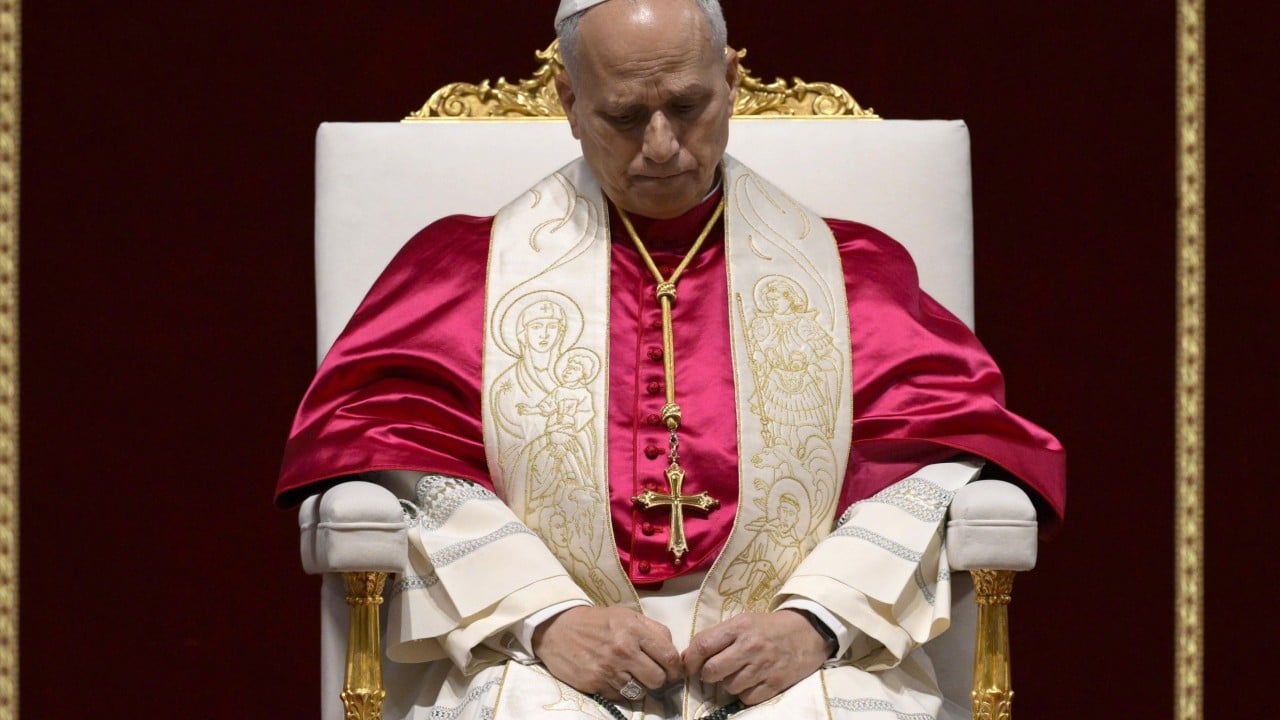
Trump Slams 19th-Century Pope as "Weak on Crime" and "Too Liberal" Former U.S. President Donald Trump has launched an unusual public attack on a long-deceased pontiff, criticizing Pope Leo XIII as too liberal and ineffective on law and order [127276][127306]. In a lengthy social media post, Trump described the late Pope, who led the Catholic Church from 1878 to 1903, as "weak on crime" and stated, "I'm not a fan" [127306][127276]. He continued his criticism upon landing in Washington, urging the global leader of the Catholic Church to "stop catering to the Radical Left" [127276]. The broadside deepens a visible rift between Trump and the current Papacy, which has been a prominent voice for diplomacy [127276]. Pope Leo, the first American-born pope, has repeatedly condemned the war in Iran and U.S. policies of mass migrant deportation [127210]. His stance has given senior U.S. church leaders confidence to voice similar concerns, with influential American cardinals now publicly opposing key Trump administration policies on those issues [127210]. Analysts note the post continues Trump's pattern of using strong, confrontational language against a wide range of opponents, both past and present [127306]. Trump Attacks Pope: "Not a Fan," Says Pontiff Too Liberal Trump Targets Pope: Criticizes 19th-Century Pontiff as "Weak on Crime" U.S. Cardinals Challenge Trump on Iran and Immigration, Backed by Pope
US Tech Giants and White House Ally to Pressure EU on Policy and Defense, Reports Warn
US Tech Giants and White House Ally to Pressure EU on Policy and Defense, Reports Warn A coordinated campaign by the United States government and its largest technology companies is applying intense pressure on the European Union to reshape its regulations and strategic autonomy, according to multiple analyses and officials. The tactics reportedly use Europe's military dependence on the U.S. as leverage to advance American economic and ideological interests [44570]. A new report from the Centre for European Reform describes a "pincer attack" where Silicon Valley firms work alongside the White House, exploiting Europe's need for U.S. security guarantees to force policy changes [44570]. The goal, the analysis states, is to replace an international rules-based order with one driven purely by power dynamics. This approach is seen as part of a broader "ideological attack" on Europe's social welfare model, which includes strong worker protections and public healthcare systems [78938]. The pressure comes as Europe grapples with the staggering cost of true military independence. Outgoing Dutch Prime Minister Mark Rutte stated that for Europe to build a fully autonomous "war-winning" defense industry, it would need to spend up to €1 trillion, or about 10% of its total economic output—a figure deemed impractical [60363]. This leaves the bloc reliant on NATO and vulnerable to external pressure. France's own audit body has warned that its planned military expansion is financially "incompatible" with EU spending rules, highlighting the internal fiscal constraints that limit strategic options [125637]. Europe's deep technological dependence complicates any pushback. Despite political threats from leaders like France's Emmanuel Macron to curb U.S. tech firms, the EU relies on American companies for essential cloud computing, software, and digital payment systems [58167]. This reliance makes enforcing restrictions or achieving "digital sovereignty" extremely difficult. While some argue Europe should focus on being the world's leading user and integrator of technology rather than trying to create its own giants, this still entrenches external control over critical infrastructure [53007]. The combined pressure affects core areas of European policy. Analysts warn the EU is "woefully unprepared" to counter aggressive U.S. foreign policy moves, such as the so-called "Donroe Doctrine" which asserts U.S. dominance over resources in Latin America [43628]. Furthermore, European leaders are facing direct U.S. pressure to accept a Ukraine peace deal that critics say would favor American and Russian interests over Ukrainian sovereignty, prompting emergency European meetings to find financial countermeasures [23057]. Belgian Health Minister Frank Vandenbroucke has argued that the EU must act as a "protective shield" for its social model against this bilateral intimidation and make this defensive role clearer to its citizens [78938]. However, a separate analysis concludes that years of relying on regulation over building real economic and military power has left the EU dangerously exposed and dependent as it faces a potential second Trump presidency [69895]. US Tech Giants and White House Ally to Pressure EU, Report Warns Belgian Minister: U.S. Waging "Ideological Attack" on Europe Europe's €1 Trillion Question: Can It Buy Military Independence? France's Military Ambitions Clash With Budget Reality Europe's Digital Dilemma: Reliant on US Tech It Seeks to Curb US "Donroe Doctrine" Sparks Global Alarm: "Resources Belong to Us" Trump's America Bullies Europe for a Ukraine Deal It Wants Trump Era Demands "Political Adults" in EU, Analysts Warn


China's Military AI Outsmarts Humans in War Games, Raising Global Arms Race Fears
China's Military AI Outsmarts Humans in War Games, Raising Global Arms Race Fears China is integrating advanced artificial intelligence directly into its military command structure, with a new AI "officer" demonstrating superior speed and planning to human counterparts in simulated combat. This development signals a rapid acceleration in the global militarization of AI, focusing on tactical battlefield dominance [124817]. In a recent simulation of an amphibious assault, the AI system was deployed in a battalion command tent—a key frontline tactical unit. Its primary role was to cut through the "fog of war," the confusion caused by chaotic and incomplete battlefield information. The AI processed disjointed reports and radio traffic, providing rapid decision-making support to the human commander. Its performance in the high-pressure scenario reportedly surpassed human capabilities in both speed and strategic planning [124817]. This move is part of a broader national strategy to achieve technological supremacy. Parallel to the military push, China's government has launched a nationwide "AI+ Education" action plan, mandating that artificial intelligence be taught at all levels of schooling, from primary to university and adult training. The directive aims to embed AI as a core national competency to prepare the workforce for intense global competition [127274]. The country's tech sector is aligning with this strategic focus. Major AI firm SenseTime is pivoting its research toward "embodied intelligence," developing AI for robots and autonomous agents that interact with the physical world. The company believes its expertise in visual AI provides a crucial advantage in this next-generation race [22794]. Simultaneously, Chinese researchers are demonstrating AI's potential for independent scientific discovery. A team from Peking University recently announced that an AI framework solved a mathematical puzzle that had stumped experts for over a decade. The system used two AI "agents" that collaborated to analyze decades of research, finding a solution in mere hours without human intervention [127270]. The convergence of these advancements—in military command, national education, corporate research, and fundamental science—underscores China's systematic effort to lead in critical AI domains. The explicit testing of AI in battalion-level war games highlights a focus on near-term, tactical military applications that could fundamentally alter the pace and nature of future conflicts [124817]. China's New AI "Officer" Outsmarts Humans in War Games China Orders AI Lessons for All Students, From Primary School Up SenseTime Bets on Robot AI to Regain Lead AI Solves Decade-Old Math Puzzle, No Humans Needed


Turkey Takes Command and Showcases Homegrown Tech in Major NATO Drilling Exercises
Turkey Takes Command and Showcases Homegrown Tech in Major NATO Drilling Exercises Turkey is assuming a more prominent role within the North Atlantic Treaty Organization (NATO), taking command of a key naval force and deploying its domestically developed military technology in the alliance's largest exercises this year. The Turkish Naval Forces formally took command of NATO's Amphibious Task Force and its Landing Force Command on July 1, a leadership role it will hold for one year [54453]. This command position makes Turkey responsible for planning and leading NATO's amphibious exercises and potential missions in the region [54453]. Concurrently, thousands of Turkish troops are participating in two major NATO drills across Europe. Approximately 2,000 Turkish Armed Forces personnel have deployed to Germany to take part in the extensive Steadfast Defender 24 exercise, which began this month [70222]. In a separate exercise, Turkish naval and army units are conducting joint amphibious operations in Germany as part of the NATO drill Steadfast Dart 2026 [80228]. A significant feature of Turkey's participation is the operational use of its own domestically produced defense platforms during these live exercises [80228]. This showcases the country's growing defense industry capabilities on a major NATO stage. The command assignment and exercises are part of NATO's routine rotation of duties and ongoing readiness training. They demonstrate the alliance's focus on coordinated operations and rapid deployment across member states [54453][70222]. Turkey Assumes Command of Key NATO Naval Strike Force **NATO's Biggest 2024 Drill Begins with Turkish Troops Landing in Germany Turkish Forces Deploy Homegrown Tech in Major NATO Drill


Easter Truce Collapses as Ukraine Vows to Match Russian Attacks Blow-for-Blow
Easter Truce Collapses as Ukraine Vows to Match Russian Attacks Blow-for-Blow A brief ceasefire for the Orthodox Easter holiday has shattered, with Ukraine and Russia trading thousands of accusations over violations and Kyiv promising a forceful military response. The attempted truce, which took effect in some areas on Sunday, broke down amid mutual claims of shelling and continued combat operations. Ukrainian officials reported Russian attacks in the eastern Donetsk region during the ceasefire period, while Russian authorities claimed Ukrainian forces never stopped fighting [127058][126765]. In response to the surge in hostilities, Ukrainian President Volodymyr Zelensky declared that his military would answer Russian attacks with equal force. He described the planned response as "symmetrical," signaling a potential escalation in the conflict [127229][126699]. The failure of the temporary peace follows a long pattern of collapsed humanitarian pauses since the war began. The rapid return to active combat underscores the deep distrust between the warring sides, with no new peace talks currently scheduled [127058]. In cities like Kharkiv, the brief lull brought little relief. Residents reported spending the holiday in basements, using moments of quiet to cook traditional Easter bread but expecting fighting to resume. "We need real peace, not just a pause," one Kharkiv resident said, a sentiment echoed by others who have seen similar truces fail [126704][126537]. Military analysts warn that intense combat is likely to restart, with both sides preparing for what may be a critical new phase of the war [126704]. Ukraine Vows "Symmetrical" Response to Russian Attacks Easter Truce Shattered, Russia and Ukraine Trade Blame Ukraine Vows "Symmetrical" Response to Russian Attacks Ukraine, Russia Trade Blame as Easter Cease-Fire Falters Easter Truce Brings Ukrainians Fear, Not Faith Easter Truce Breaks, But Not the War

Global Powers Scramble for Africa's Resources and Influence in 2025
Global Powers Scramble for Africa's Resources and Influence in 2025 A quiet but intense competition is unfolding across Africa as world powers, including the United States, China, and Russia, vie for strategic influence, military access, and control of critical resources, forcing African nations to navigate a complex new geopolitical landscape. The rivalry was on full display at a recent African Union summit in Addis Ababa, where discussions on water security were overshadowed by talks of port access and foreign military bases [87433]. The gathering highlighted Ethiopia's aggressive push for a sea port, attracting a flurry of attention from global players seeking a foothold in the strategic Horn of Africa [87433]. This scramble extends beyond ports. The United States and China are engaged in a direct information war, using targeted media to sway African public opinion, particularly among the continent's massive youth population [126737]. U.S. military publications criticize Chinese practices, while Chinese state media highlights U.S. policy failures, each aiming to be seen as the preferred partner for Africa's future [126737]. In West Africa's Sahel region, a high-stakes security contest is underway. Following a series of coups, the military governments of Mali, Niger, and Burkina Faso have expelled French forces and turned to Russia for security assistance [67411]. Russia's "Africa Corps" is deepening its military and political footprint, compelling the United States to urgently revise its counter-terrorism and diplomatic strategy in the region [67411]. The competition is also economic. A major European Union-Africa summit focused heavily on trade and securing access to Africa's critical minerals, a response to the growing influence of other global powers on the continent [11355]. Meanwhile, instability in the Middle East is redirecting global oil buyers toward African producers like Nigeria, potentially boosting the continent's energy market influence [121967]. African leaders are responding to this renewed foreign interest by pursuing a strategy of "multi-alignment," engaging with diverse powers to advance their own development and diplomatic interests independently [35302]. Analysts warn that this global rivalry creates difficult choices for African governments, who must balance development needs against the risks of external interference [71659]. Global Powers Rush for Africa's Coast as Ethiopia Seeks a Port Superpowers Battle for Africa's Youth Through Media U.S. and Russia in High-Stakes Scramble for Africa's Sahel EU-Africa Summit Focuses on Trade and Minerals Amid Global Tensions Middle East Turmoil Shifts Oil Focus to Africa Africa Gains Global Ground Amid U.S. Turmoil Seven Urgent Threats Africa Must Face in 2026


Governments and Courts Clash Over Human Rights in Global Crackdowns
Governments and Courts Clash Over Human Rights in Global Crackdowns A series of recent rulings and reports from international bodies and domestic courts reveal a stark global confrontation over fundamental human rights, with governments facing direct accusations of violating international law in the name of security and political control. In India, United Nations human rights experts have formally accused authorities of breaching international law during counter-terrorism operations in Jammu and Kashmir [12511]. The experts cited arbitrary arrests, property demolitions, communication blackouts, and forced expulsions following an attack in April, alleging these acts amount to collective punishment targeting Muslim minorities [12511]. This comes alongside a landmark domestic ruling where India’s Supreme Court declared menstrual health and hygiene a fundamental right, linking it to dignity, life, and equality [79316]. In Russia, the Supreme Court took a drastic step against civil society, ordering the closure of the historic human rights group Memorial, labeling it an "extremist organization" [126183]. The ruling, which Memorial will appeal, ends decades of work documenting past political repression and current abuses, a move experts call a major escalation in state repression [126183]. Turkey is also a focal point, where rights groups report ongoing violations. The Human Rights Association (İHD) warned that the continued detention of a critically ill prisoner, Mehmet Emin Çam, violates his fundamental right to life [107236]. Separately, a coalition of rights organizations demanded the immediate release of 84 people detained in a police operation targeting a left-wing political party, alleging detainees are denied lawyers and that women are subjected to invasive strip searches by male officers [125684]. In Africa, a pivotal case before the Africa Court on Human and Peoples’ Rights could establish a government’s duty to protect citizens displaced by climate change, arguing that failure to do so violates their rights [115873]. Meanwhile, in Nigeria, Amnesty International reported that a military airstrike killed dozens of civilians in a northeastern village, contradicting the air force's initial claim it targeted a terrorist enclave [127048]. A separate Nigerian rights group marked World Human Rights Day by demanding the government close long-term displacement camps and create a permanent resettlement plan [26326]. In Europe, nine United Nations experts demanded the United Kingdom and France abandon a controversial "one in, one out" asylum deal, warning it could lead to serious breaches of international human rights law [69103]. The experts made their letter public after receiving no satisfactory reply from the governments within a 60-day deadline [69103]. UN Experts Allege Human Rights Violations in Indian Counter-Terrorism Operations India's Supreme Court: Menstrual Health is a Fundamental Right Russia's Supreme Court Bans Memorial as "Extremist" Critically Ill Prisoner's Detention Violates Right to Life, Says Rights Group **Title:** "No Lawyer, No Privacy: Rights Groups Demand Immediate Release of 84 Detainees" **Climate Refugees Ask African Court: Is Our Home a Human Right? Nigerian Military Airstrike Kills Dozens of Civilians, Amnesty Reports Rights Group to Nigeria: "Close the Camps" UN Experts: UK-France Asylum Deal May Break Human Rights Law



Pentagon Defends Multiple Military Strikes, Citing Law and "Fog of War"
Pentagon Defends Multiple Military Strikes, Citing Law and "Fog of War" The U.S. Department of Defense has issued a series of public defenses for recent military actions, consistently asserting their legality and necessity amid complex combat situations. In one instance, the Pentagon publicly supported a senior commander's decision to authorize strikes in Venezuela. A spokesperson stated that the actions taken by Admiral Bradley followed proper legal procedures and were approved by military and civilian lawyers throughout the chain of command [17258]. Separately, U.S. Secretary of Defense John Hegseth defended a naval engagement where forces struck the same boat twice, attributing the decision to the inherent confusion of combat. Hegseth stated he did not see survivors after the initial attack but fully supported the admiral's choice to fire again to "eliminate the threat" [17273]. In a broader legal stance, a senior defense official, Pete Hegseth, stated that recent U.S. military actions in the Caribbean are lawful under both U.S. and international law. The statement directly addressed growing questions about the mission's legal basis [15064]. The Pentagon is also actively defending new rules that restrict some media outlets, arguing in a legal response that the measures are needed to protect national security and stop activity that could compromise it. This defense comes in response to a lawsuit filed by The New York Times challenging the policy [64596]. Concurrently, Senate Republicans are taking procedural steps to shield the presidential war powers used to authorize a recent Venezuela operation. They aim to block a Democratic effort to repeal the 2001 Authorization for Use of Military Force (AUMF) that justified the mission, arguing such a repeal would weaken executive authority during ongoing threats [50051]. Pentagon Defends Commander's Decision in Venezuela Strikes **Pentagon Defends Second Strike in "Fog of War" Incident** Pentagon Official Defends Legality of Caribbean Operations Pentagon Cites National Security in Media Lawsuit Defense Senate Republicans Move to Shield Trump's War Powers
Latest Articles

EU Single Market "Failing," Warns Top Official, Citing War and High Costs
Former Italian Prime Minister Enrico Letta has issued a stark warning: Europe's fragmented Single Market is a "big problem" for the continent's abili...

Hungary's "Third Revolution": Voters Reject "Mafia State" for EU and NATO
Hungary's recent election saw one of the highest voter turnouts in decades. The landslide victory for Péter Magyar's movement signals a major politic...

Pope's Africa Trip Begins Amid Trump Criticism
Pope Leo XIV arrived in Algeria on Monday. This is the first-ever papal visit to the Muslim-majority nation. His 11-day tour of Africa risks being o...

Hungary's Orban Ousted After 16 Years in Power
Thousands of Hungarians celebrated in Budapest on Sunday. The celebrations came after parliamentary election results showed a clear win for challenge...

Lost Meliès Film Found in U.S. Attic After 100 Years
A lost film by French cinematic pioneer Georges Méliès has been discovered in an American attic. The silent short film was found spliced into one of...

Peru Election Results Delayed After Voting Extension for Thousands
Peru will not have a presidential winner until at least Monday, following an election day marred by major logistical problems. Thousands of people i...

Orban Ousted? European Press Hails Historic Hungarian Election Result
Hungarian newspapers are declaring "love has triumphed" after voters ended Prime Minister Viktor Orban's long rule in parliamentary elections. The de...

Israel, Lebanon to Talk as Leaders Clash Over War's End
Lebanese and Israeli officials will meet in Washington on Tuesday for high-stakes talks, even as their leaders publicly disagree on ending the confli...

China Warns US Over Threat to Blockade Key Oil Strait
China has called for "calm and restraint" after US President Donald Trump threatened a naval blockade of the Strait of Hormuz. The statement came fr...

Trump Orders U.S. Navy to Block Key Oil Passage
President Donald Trump has ordered the U.S. Navy to block the Strait of Hormuz. The order came Sunday after peace talks with Iran in Pakistan ended w...

Hungary's Orban Era Ends as Opposition Wins Historic Vote
Budapest erupted in celebration early Monday after a national election ended Prime Minister Viktor Orban's 16-year rule. Supporters of the opposition...

Trump Threatens Key Oil Strait, Prices Jump 8%
Oil prices surged dramatically after former U.S. President Donald Trump vowed to blockade the Strait of Hormuz if re-elected. This key global shippin...

Netanyahu Visits Lebanon Border, Declares Invasion Threat "Eliminated"
Israeli Prime Minister Benjamin Netanyahu visited the border with southern Lebanon for the first time since the war there began. He stated that Israe...

France Debates Returning Colonial-Era Looted Art
French lawmakers will debate a bill this week to permanently return artworks and artifacts taken during the colonial period. The proposed law would...

Insider's Revolt: Hungary's Orban Ousted by His Own Protégé
A former insider has toppled the system he once served. Peter Magyar, Hungary's new prime minister, led his opposition party to a stunning election v...

Pope's Historic Algeria Visit Opens Africa Tour
Pope Leo XIV arrived in Algeria on Monday, marking the first-ever papal visit to the North African nation. The trip aims to strengthen ties between C...

U.S. to Blockade Iranian Ports, Sending Oil Prices Soaring
The United States military will begin a full maritime blockade of Iran on Monday. The announcement follows the collapse of weekend talks aimed at end...

Britney Spears Enters Rehab After March DUI Arrest
Pop star Britney Spears has voluntarily entered a rehabilitation facility, her representative confirmed. This follows her arrest for driving under t...

Trump's EPA Rule Change Hits One Pennsylvania Town Hard
A small town in Pennsylvania is now dealing with the direct consequences of a major environmental rule change by the Trump administration. The chang...