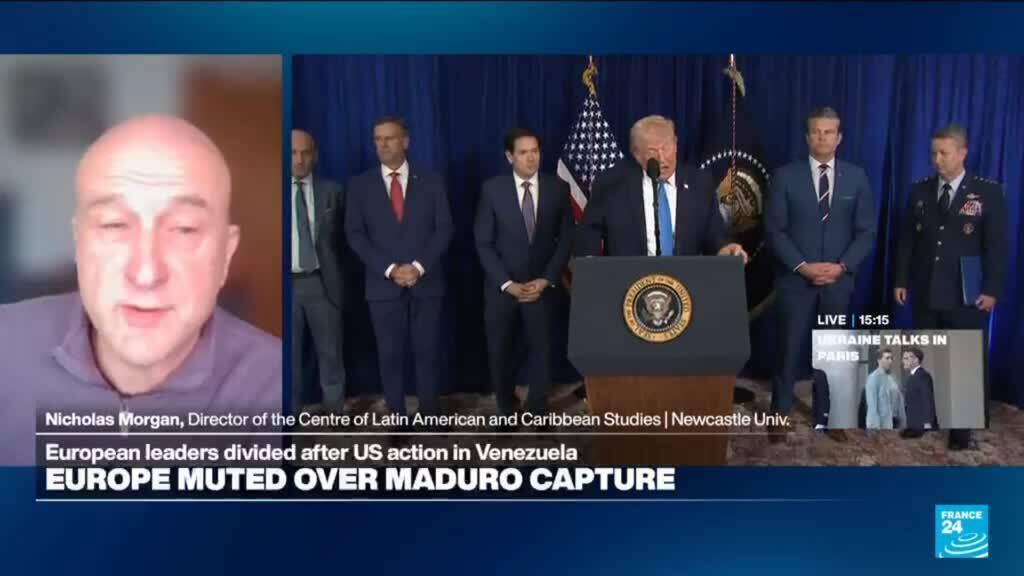
US Tech Giants and White House Ally to Pressure EU on Policy and Defense, Reports Warn
US Tech Giants and White House Ally to Pressure EU on Policy and Defense, Reports Warn A coordinated campaign by the United States government and its largest technology companies is applying intense pressure on the European Union to reshape its regulations and strategic autonomy, according to multiple analyses and officials. The tactics reportedly use Europe's military dependence on the U.S. as leverage to advance American economic and ideological interests [44570]. A new report from the Centre for European Reform describes a "pincer attack" where Silicon Valley firms work alongside the White House, exploiting Europe's need for U.S. security guarantees to force policy changes [44570]. The goal, the analysis states, is to replace an international rules-based order with one driven purely by power dynamics. This approach is seen as part of a broader "ideological attack" on Europe's social welfare model, which includes strong worker protections and public healthcare systems [78938]. The pressure comes as Europe grapples with the staggering cost of true military independence. Outgoing Dutch Prime Minister Mark Rutte stated that for Europe to build a fully autonomous "war-winning" defense industry, it would need to spend up to €1 trillion, or about 10% of its total economic output—a figure deemed impractical [60363]. This leaves the bloc reliant on NATO and vulnerable to external pressure. France's own audit body has warned that its planned military expansion is financially "incompatible" with EU spending rules, highlighting the internal fiscal constraints that limit strategic options [125637]. Europe's deep technological dependence complicates any pushback. Despite political threats from leaders like France's Emmanuel Macron to curb U.S. tech firms, the EU relies on American companies for essential cloud computing, software, and digital payment systems [58167]. This reliance makes enforcing restrictions or achieving "digital sovereignty" extremely difficult. While some argue Europe should focus on being the world's leading user and integrator of technology rather than trying to create its own giants, this still entrenches external control over critical infrastructure [53007]. The combined pressure affects core areas of European policy. Analysts warn the EU is "woefully unprepared" to counter aggressive U.S. foreign policy moves, such as the so-called "Donroe Doctrine" which asserts U.S. dominance over resources in Latin America [43628]. Furthermore, European leaders are facing direct U.S. pressure to accept a Ukraine peace deal that critics say would favor American and Russian interests over Ukrainian sovereignty, prompting emergency European meetings to find financial countermeasures [23057]. Belgian Health Minister Frank Vandenbroucke has argued that the EU must act as a "protective shield" for its social model against this bilateral intimidation and make this defensive role clearer to its citizens [78938]. However, a separate analysis concludes that years of relying on regulation over building real economic and military power has left the EU dangerously exposed and dependent as it faces a potential second Trump presidency [69895]. US Tech Giants and White House Ally to Pressure EU, Report Warns Belgian Minister: U.S. Waging "Ideological Attack" on Europe Europe's €1 Trillion Question: Can It Buy Military Independence? France's Military Ambitions Clash With Budget Reality Europe's Digital Dilemma: Reliant on US Tech It Seeks to Curb US "Donroe Doctrine" Sparks Global Alarm: "Resources Belong to Us" Trump's America Bullies Europe for a Ukraine Deal It Wants Trump Era Demands "Political Adults" in EU, Analysts Warn
Articles in this Cluster
US Tech Giants and White House Ally to Pressure EU, Report Warns

Belgian Minister: U.S. Waging "Ideological Attack" on Europe

Europe's €1 Trillion Question: Can It Buy Military Independence?
U.S. Doubles Down on Fossil Fuels as Europe Cashes In on Green Energy

EU Warns: Energy Bailouts Could Trigger New Fiscal Crisis

Trump Era Demands "Political Adults" in EU, Analysts Warn
Trump's NATO Threats Meet Hard Reality: Alliance Built to Last
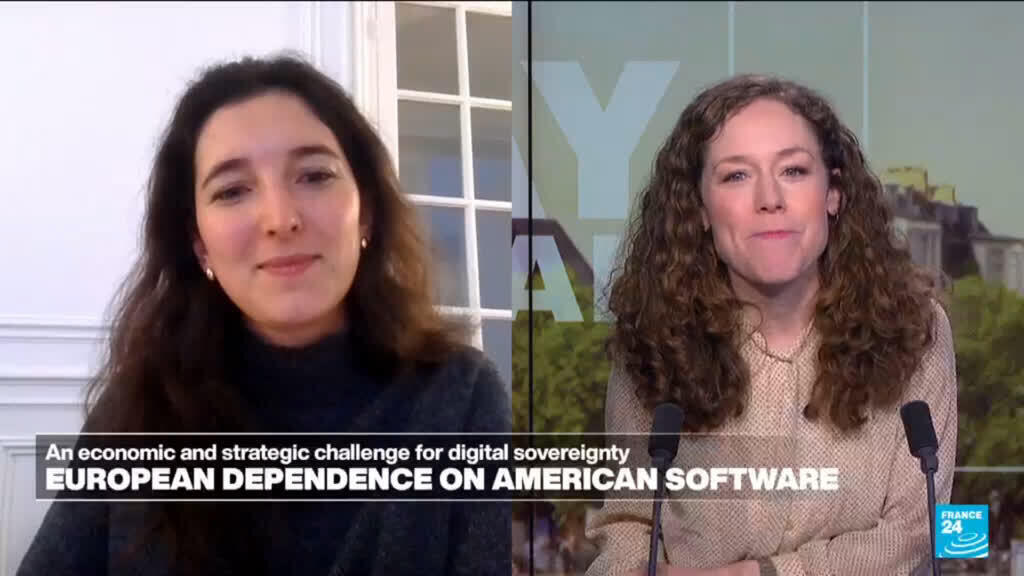
Europe's Digital Dilemma: Reliant on US Tech It Seeks to Curb
Piketty: U.S. Military Moves Signal Weakness, Not Strength

Europe's Tech Edge: It's Not About Giants, But How You Use Them