Latest News
Stay updated with the latest news and articles
Top Stories
Women's Sports Revenue on Track to Smash $3 Billion Milestone by 2026
Women's Sports Revenue on Track to Smash $3 Billion Milestone by 2026 Global revenue for women's sports is accelerating toward a major financial milestone, with new projections showing it will surpass $3 billion in 2026 [125062]. This figure represents rapid commercial growth, following an expected total of $2.4 billion in 2025 [125062]. Industry analysts describe the trend as building significant momentum, signaling a major turning point for the economic power of women's athletics worldwide [125062]. The growth coincides with high-profile events driving viewership and interest. The NCAA women's basketball Final Four tipped off this weekend, featuring a marquee matchup between the defending champion University of Connecticut Huskies and the South Carolina Gamecocks [120219]. Meanwhile, the 2026 Women's Six Nations rugby tournament begins this weekend with world champion England as the clear favorite to repeat its grand slam victory from last year [124683]. The rising commercial tide is also creating opportunities for new stories and communities. In Houston, Texas, a group of Afghan refugee women who fled after the Taliban banned women's sports have formed a soccer team, rebuilding their lives and community around the game [20194]. In elite competition, American Paralympian Dani Aravich is attempting a rare feat by competing in both track sprints and the long jump, using her platform to increase awareness for Paralympic sports [95020]. Despite progress, gaps remain. Nordic combined is still the only Olympic sport without a women's event, and athletes are hoping strong viewership for the men's competition this week will prove the interest needed for inclusion by the 2030 Winter Games [77899]. Women's Sports to Top $3 Billion in 2026 Final Four Live: Can Anyone Stop UConn's Repeat Bid? England Target Repeat Grand Slam in Women's Six Nations Afghan Refugee Women Build New Team and Community on the Soccer Field Paralympian Races for Two Medals, One Mission One Sport Bans Women. This Week's TV Ratings Could End It.


Viral Trends and Grandmas: How Everyday Culture Is Going Global Online
Viral Trends and Grandmas: How Everyday Culture Is Going Global Online From Italian slang lessons to Chinese daily habits, intimate slices of cultural life are exploding in popularity on social media, creating massive—if sometimes fleeting—global audiences. This digital surge is turning personal heritage into public spectacle, with millions tuning in to learn traditions directly from their practitioners. In Canada, a teacher and his grandmother have become unlikely online stars by sharing their Italian heritage. Johnny D'Ambrosio creates short, musical videos with his 88-year-old *nonna*, humorously explaining traditions, slang, and family life [80130]. One of their videos has been viewed over 20 million times on TikTok and Instagram. D'Ambrosio says their goal is to share the joy of their heritage, focusing on universal themes like food and intergenerational bonding [80130]. Meanwhile, a separate viral trend dubbed "Chinamaxxing" saw people worldwide adopting Chinese cultural habits, regardless of their background. Popular videos showed creators drinking hot water, wearing house slippers, and using chopsticks, gathering hundreds of thousands of views [109231]. London-based fashion label owner Michelle She observed, “people are trying to be more Chinese regardless of what their heritage is” [109231]. For many Chinese people, watching lifelong customs become a short-lived internet meme has been a strange experience [109231]. The phenomenon extends to other crafts. In Hong Kong, a group of women tattoo artists are gaining attention by using their needles to channel traditional Chinese culture, incorporating elements of painting, calligraphy, and Buddhist philosophy into their work [44500]. Similarly, the sudden popularity of traditional "frog buttons" on a viral Adidas jacket at Shanghai Fashion Week highlighted a renewed interest in heritage design details [44500]. These online movements demonstrate a powerful, algorithm-driven appetite for authentic cultural expression, even as communities navigate the line between meaningful sharing and temporary trend. Grandma's Viral Hits: Italian Lessons for Millions Chinamaxxing: When Your Culture Becomes a Viral Meme **Hidden Stories: From Tattoo Needles to Viral Buttons**


Patients Sleep in Cars for Days as Free Pop-Up Clinics See Surge in Demand
Patients Sleep in Cars for Days as Free Pop-Up Clinics See Surge in Demand Across the United States, people are arriving up to two days early and sleeping in their vehicles to secure free medical care at temporary pop-up clinics [126324]. The scenes highlight a growing gap in the healthcare system, where basic procedures have become financially out of reach for many, even those with insurance [126324]. The clinics are run by the charity Remote Area Medical (RAM), which sets up operations in underserved areas to provide dental work, eye exams, and general medical care at no cost through volunteer staff [126324]. RAM's CEO, Chris Hall, reports a significant surge in demand, directly attributing it to soaring healthcare costs [126324]. The long lines and overnight waits underscore the burden of high deductibles and out-of-pocket expenses that prevent many Americans from accessing routine care [126324]. For those waiting, the charity clinic often represents their only chance to address neglected health issues without facing crippling debt [126324]. Americans Sleep in Cars for Free Healthcare

U.S. Forces Capture Venezuelan President Maduro in Unprecedented Military Raid
U.S. Forces Capture Venezuelan President Maduro in Unprecedented Military Raid In a dramatic escalation of tensions, United States military forces have captured Venezuelan President Nicolás Maduro, marking the first direct U.S. military attack on a South American nation in history [41064]. The surprise operation in Caracas on Saturday detained Maduro, 63, and his wife, who were subsequently transported to New York to face drug trafficking charges [41880]. President Donald Trump announced the capture, stating the U.S. will oversee Venezuela's government and declaring that "American dominance in the western hemisphere will never be questioned again" [41064]. The precision strike, described by analysts as an act of "extraterritorial apprehension," involved capturing a sitting head of state outside U.S. borders without the host country's consent [47297]. The action has sent shockwaves across Latin America, creating a deep political split among regional governments [47126]. While nations like Colombia and Brazil have offered cautious support, others, including Mexico and Bolivia, have condemned it as a dangerous violation of sovereignty and international law [47297]. Despite public divisions, analysts report a private, shared fear among leaders who are now asking, "Who could be next?" and conducting urgent internal reviews of their own vulnerability [47297]. The United Nations Security Council will hold an emergency meeting on Monday at Venezuela's request to address the incident [41880]. The operation is seen as a direct challenge to China's growing economic and diplomatic influence in the region, where Beijing has become a leading trade partner and lender [41460]. Experts warn the move revives the long-standing U.S. "Monroe Doctrine," a policy opposing foreign powers in the Americas, and sets a major precedent for direct foreign intervention [41460][47297]. U.S. Capture of Venezuela's Maduro Sends Shockwaves Through Latin America U.S. Capture of Maduro Sends Shockwave Through Latin America U.S. Captures Venezuela's Leader, Challenging China's Regional Reach Venezuela's President Seized by U.S., Faces Court in New York Trump Orders First Direct US Military Attack on South America Trump Revives US Habit of Ousting Latin American Leaders
World Braces for Economic Warfare as Top Global Threat in 2026
World Braces for Economic Warfare as Top Global Threat in 2026 A new report from the World Economic Forum (WEF) has identified "geoeconomic confrontation" as the most severe risk facing the world over the next two years, warning that nations are increasingly weaponizing trade and supply chains in a dangerous new form of conflict [49991]. The WEF's latest Global Risks Report, set to be discussed at its annual meeting in Davos, Switzerland, ranks economic conflict between nations above all other immediate dangers [49991]. The report states that geopolitical rivalry is forcing countries to turn economic tools into weapons, threatening international stability and growth [49991]. This volatile environment is dominated by three interconnected threats: geopolitical rivalry, the rapid spread of misinformation, and severe social and political polarization [49991]. Analysts observe that this shift signals a decisive break from the existing international order, with a global transformation in power now broadly recognized [54213]. Despite this fracturing, a century of globalized trade has created deep economic interdependence that makes most nations reluctant to pick sides in a major power rivalry, shaping 21st-century geopolitics [6971]. The defining global story of 2026, however, will be the U.S. presidential election, which international correspondents say will influence critical issues everywhere, from the war in Ukraine to competition with China and global climate policy [35508]. Every international move by the current or next U.S. administration will be seen through a political lens as allies and rivals prepare for the outcome [35508]. Geoeconomic Warfare Named Top Global Threat for 2026 Trump's Plan to Remake the World Order Begins Globalization Shifts, But It Doesn't Reverse 2026: A World Shaped by Washington
Tourists Grab Homes, Locals Get Squeezed: Global Housing Crisis Hits Boiling Point
Tourists Grab Homes, Locals Get Squeezed: Global Housing Crisis Hits Boiling Point From the beaches of Hawaii to the streets of Cape Town, a stark pattern is emerging: the global explosion of tourism and short-term rentals is colliding with local housing markets, pushing residents out of their own cities and into crisis. Governments are now scrambling with aggressive, unprecedented measures to reclaim homes for their citizens. In the most dramatic move, Hawaii's Governor has ordered the conversion of 10,000 short-term rental units back into local housing, directly targeting the state's severe shortage [61634]. Officials blame the vast number of properties listed for tourists for driving up prices and forcing residents to leave the islands. The same conflict is playing out in South Africa. In Cape Town, a surge in tourism and platforms like Airbnb has sent property prices and rents in the central district soaring, forcing low-income workers into illegal and unsafe housing on the city's outskirts [39353]. The city now features luxury villas and tourist rentals standing next to informal metal shacks, highlighting a severe and visible divide [117472]. The crisis is not confined to tourist hotspots. In Seoul, soaring rents are forcing young professionals like office worker Kim, 31, out of studio apartments and back into tiny, windowless dormitory rooms known as *goshiwon* [21300]. In Britain, high costs are creating unlikely multigenerational flatmates, with people in their 40s and beyond sharing homes because they cannot afford to buy or rent alone [70584]. Facing intense pressure, legislators are attempting large-scale solutions. The U.S. Senate recently passed a major bipartisan housing bill with the explicit goal of lowering costs by flooding the market with new home construction [100991][100719]. Meanwhile, the Netherlands' new housing minister, a former top military officer, has been tasked with a battle-plan mission to cut red tape and build 100,000 homes a year to break a national construction deadlock [108952]. These widespread struggles underscore a global reckoning, as cities and nations attempt to rebalance the economics of housing between visitors and the communities that sustain them. Hawaii to Seize 10,000 Vacation Rentals in Housing Crisis Move Tourism Boom Pushes Workers Into Illegal Homes Tourists in Luxury, Locals in Shacks: Cape Town's Coastal Divide Soaring Rents in Seoul Force Workers Back into Tiny 'Goshiwon' Rooms Britain's Unlikely Housemates: From Students to Seniors Senate Passes Bill to "Flood the Market" with New Homes U.S. Senate Passes Major Housing Bill, But House Hurdle Looms From Battlefield to Building Sites: Ex-General Takes On Dutch Housing Crisis

Turkish Stocks Surge 2.3% in Single-Day Rally as Central Bank Fuels Market
Turkish Stocks Surge 2.3% in Single-Day Rally as Central Bank Fuels Market Turkey's main stock market index has surged in a series of sharp rallies, with the most dramatic gains following direct intervention by the country's central bank to support equity prices. The benchmark BIST 100 index, which tracks Turkey's top 100 companies, jumped 2.34% in a single session on Monday, closing with a gain of approximately 316.4 points [71758]. This rally was part of a broader pattern of significant volatility and growth. The index opened the first trading day of 2026 with a powerful 2.1% surge, adding 236.86 points [40181]. The most direct catalyst for the market's rise came on Wednesday, when the BIST 100 closed with a strong increase of 32.6 points following a major policy announcement from the Central Bank of the Republic of Turkey (CBRT) [80220]. The bank unveiled a new funding strategy designed to provide cheaper financing to lenders who increase their purchases of domestic stocks, a move analysts say is intended to directly support the Turkish equity market [80220]. This central bank action punctuated a week of notable swings. The index had opened higher on the previous Tuesday, gaining 20.8 points [21230], and again on Thursday, rising more than 55 points at the start of trading [8749]. The positive momentum carried into the following week, with the BIST 100 opening sharply higher on Wednesday with a gain of approximately 99.1 points [110976] and rising 26.64 points at the midweek open [33768]. However, the market's trajectory has not been uniformly upward, highlighting its volatility. The index closed lower on a recent Tuesday, finishing down 30.85 points [12525], and experienced a sharper single-day decline of 20.7 points during a period of global investor caution [33252]. Analysts view the BIST 100 as a key indicator of Turkey's financial health and investor sentiment [71758]. Turkish Stocks Surge 2.3% in Single-Day Rally Turkish Stocks Soar 2.1% in First Session of 2026 Turkish Stock Market Surges on Central Bank Boost Turkish Stock Market Rises in Early Tuesday Trading Turkish Stock Index Rises in Thursday Trading Turkish Stocks Surge in Midweek Rally Turkish Stocks Surge at Midweek Open Turkish Stock Market Drops on Tuesday Turkish Stock Market Plunges Amid Global Sell-Off


Russia's Oil Lifeline Under Fire as Ukraine Drone War Hits Home
Russia's Oil Lifeline Under Fire as Ukraine Drone War Hits Home Russia's critical energy industry is facing a sustained and damaging assault from Ukrainian drones, striking at the financial heart of its war machine. A record surge of long-range Ukrainian attacks in March has successfully targeted oil refineries and storage facilities deep inside Russian territory, shaking global energy markets and threatening a key source of Kremlin revenue [125638]. This strategic shift by Ukraine aims to cripple the export revenue that funds Russia's military operations. The damage is already translating to increased volatility and rising prices in global energy markets [125638]. The campaign exploits a growing technological edge, with Ukrainian forces leveraging advanced drones to change the dynamics of the air war [125638]. The economic pressure is compounding existing strains within Russia. A leading economist, Vladislav Inozemtsev, notes that while high global oil prices provide a financial cushion, the refinery strikes are creating a major problem by reducing Russia's capacity to process crude into more valuable fuels [125622]. He describes an economy under slow siege, further burdened by a severe labor shortage caused by mass mobilization and emigration, which drives up wages and hurts productivity [125622]. Despite these challenges, Inozemtsev argues a sudden economic collapse is unlikely. He states that the war's ultimate outcome will be decided "on the ground" by military success, not by economic pressure alone [125622]. The Kremlin's financial demands are growing, with President Vladimir Putin reportedly seeking direct donations from oligarchs to support the swelling defense budget [112938]. Concurrently, Russia is adapting its military tactics within Ukraine. After failing to destroy Ukraine's power grid over the winter, Western intelligence reports a new focus on attacking the country's water supply infrastructure, targeting pumping stations and filtration plants to cause long-term damage [125612]. Ukrainian authorities have responded by launching a major project to decentralize and protect their water network [125612]. The drone warfare has also become a diplomatic and strategic commodity. Ukraine has begun sharing its hard-won expertise in countering Iranian-made drones with Middle Eastern nations, engaging in talks with Oman, Kuwait, and Bahrain to trade this knowledge for vital supplies like diesel fuel and air defense weapons [125620]. This exchange has drawn the ire of Moscow, which formally protested a Japanese company's planned investment in a Ukrainian drone manufacturer, seeing it as a step toward Japan directly arming Ukraine [125426]. Ukraine's Drone Surge Hits Russian Energy, Shakes Global Markets Russian Economy Under Siege: Economist Says No Collapse, But War Will Be Decided on Battlefield Putin Seeks Oligarch Donations to Fund War as Defence Budget Strains Russia Targets Ukraine's Water After Power Grid Withstands Winter Assault Ukraine Sells Drone-Know-How to Gulf States for Fuel and Weapons Japan's Drone Deal with Ukraine Draws Russian Fury
Latest Articles
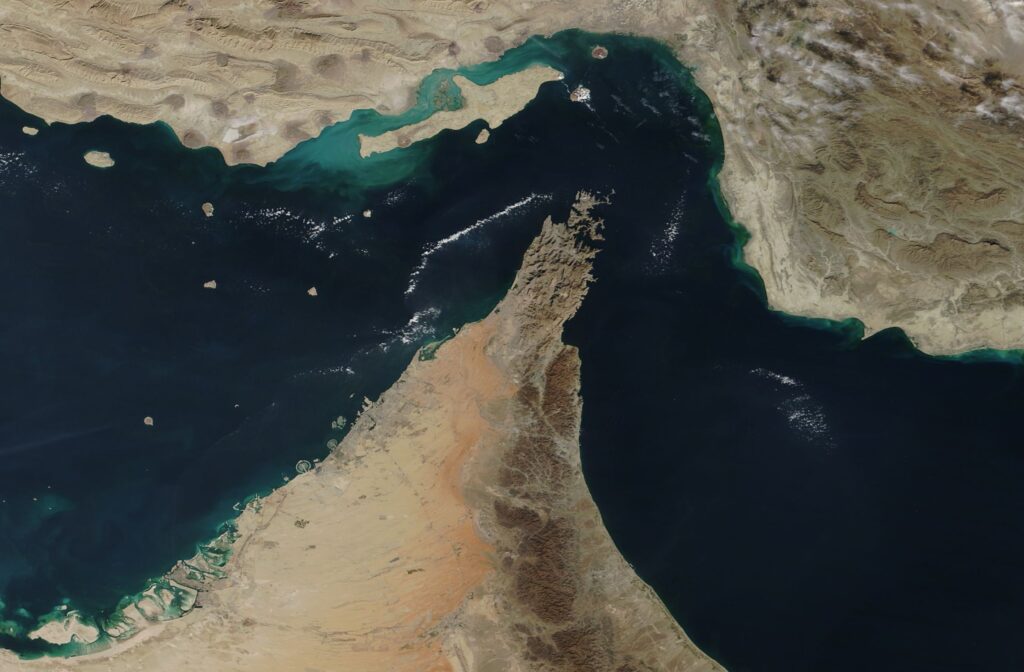
US Warships Clear Mines in Hormuz as US-Iran Talks Continue
Two U.S. warships have started a mission to clear mines from the Strait of Hormuz, according to a U.S. military statement. The strategic waterway is...
Germans to Government: Your Red Tape Promises Are Tied Up in Bureaucracy
Most people and businesses in Germany report no reduction in bureaucracy. This comes despite clear promises from Chancellor Friedrich Merz's governme...
UFO Hotline Reveals Surprising Caller Habit
For over 50 years, Hansjürgen Köhler has volunteered as a UFO investigator in Germany. He approaches each report as a scientific puzzle. But he has n...
Trump Endorses Orban: Will It Matter in Hungary?
U.S. President Donald Trump has formally endorsed Hungarian Prime Minister Viktor Orban ahead of Hungary's national election. President Trump praised...
Nigeria Convicts 386 in Mass Militant Trial
A Nigerian court has convicted 386 suspects linked to Islamist militant groups in a single, large-scale trial. Prosecutors secured the convictions a...
Macron to Iran: Use Talks to Stop Escalation Now
French President Emmanuel Macron says he has urged Iran to seek a permanent reduction in tensions. He made the appeal as top U.S. and Iranian officia...
Youth Power: Massive Concert Rally Shakes Hungarian Politics
Tens of thousands of young Hungarians packed a Budapest park for a major political concert ahead of critical national elections. The "End the System...
Lebanon's Deadliest Day: 'We Are Not Just Numbers'
A single Israeli airstrike killed Fatima Imtaz, a 33-year-old pharmacist. Her family buried her on Wednesday in the town of Qamatiyé, near Beirut. S...
Inbred to Thriving: The Island Saving Australia's Koalas
An isolated koala population, once doomed by severe inbreeding, has made a stunning recovery. It is now the most thriving group in all of Australia....

Ukraine Strikes Deep: Drone Command, Ammo, and Fuel Hit in One Night
A coordinated Ukrainian attack struck multiple high-value Russian targets far from the front lines overnight. The operation disrupted critical milita...

Ukraine General Admits: "We Lost Siversk"
A top Ukrainian commander has publicly confirmed the loss of the town of Siversk to Russian forces. This rare admission breaks from typical wartime c...

Ukraine Offers Norway Exclusive Access to Drone Warfare Secrets
Ukraine has arrived at a key meeting of allied defense ministers with a new proposal: sharing its hard-won combat experience for advanced weapons. A...

Ukrainian Soldier Returns Home Unrecognizable After Years in Russian Captivity
A Ukrainian soldier has returned home after years as a prisoner of war in Russia. His wife says she barely recognized him due to severe weight loss....
Ukraine's Drone Edge at Risk, Warns UK Defense Chief
Ukraine possesses the world's most advanced battlefield drone technology. But a top British defense official warns this lead is temporary. The UK's...

Ukraine Returns 182 Prisoners of War in Major Easter Swap
Ukraine has secured the return of 182 soldiers and civilians from Russian captivity. The prisoner exchange occurred just before the Orthodox Easter h...
The Athletic Probes Reporter After Photo with NFL Coach Surfaces
The Athletic has launched an internal review of one of its reporters, Dianna Russini. This follows the publication of photographs showing her with Mi...
Iranian Activist Found Dead After Naming His Alleged Killers
The body of a prominent Iranian activist has been found in Vancouver, Canada. This follows his public accusation that two fellow Iranians were plotti...
2028 Democratic Race Begins: Early Contenders Emerge at Key Convention
The first major gathering of potential 2028 Democratic presidential candidates has concluded. It revealed a party with a unified message but no clear...
America's Enduring Strength Meets Its Repeating Mistake
The United States has a pattern of overreaching in the Middle East. Yet, its global power persists. This cycle is now repeating with Iran. The recen...
U.S. Postal Service Proposes Slower Mail, Higher Prices
The U.S. Postal Service is running out of money. To survive, it now proposes a plan that could mean slower mail delivery and more expensive stamps fo...