Latest News
Stay updated with the latest news and articles
Top Stories
Governments Target Short-Term Rentals to Reclaim Housing for Residents
Governments Target Short-Term Rentals to Reclaim Housing for Residents Facing severe housing shortages, governments from Hawaii to Cape Town are taking direct action to convert thousands of short-term vacation rentals into long-term housing for local residents. In a dramatic move, Hawaii's Governor has ordered the conversion of 10,000 short-term rental units back into the local housing market [61634]. Officials blame the proliferation of vacation rentals for reducing supply and driving prices to unsustainable levels, forcing local residents to leave the islands. The state plans to use new laws and tax rules to enforce the shift, marking a major change for its tourism-dependent economy [61634]. A similar crisis is unfolding in Cape Town, South Africa, where a surge in tourism and platforms like Airbnb has sent property prices and rents soaring in the central city [39353]. This has pushed low-income workers essential to the city's economy into illegal and unsafe housing on the outskirts, creating a stark divide between luxury tourist accommodations and local communities [117472]. City officials acknowledge the challenge of balancing tourism revenue with the acute need for affordable homes for residents [117472]. The strategy of restricting short-term rentals to increase long-term supply is gaining traction as a policy response. In the United States, the recently passed Senate housing bill, which aims to lower costs by increasing overall housing supply, reflects a similar legislative focus on tackling the core issue of availability [100991] [100719]. These actions highlight a growing global conflict in popular destinations, where the economic benefits of tourism are directly clashing with the basic housing needs of the permanent population [39353]. The success of these measures in returning homes to residents will be closely watched by other cities grappling with the same affordability crisis. Hawaii to Seize 10,000 Vacation Rentals in Housing Crisis Move Tourism Boom Pushes Workers Into Illegal Homes Tourists in Luxury, Locals in Shacks: Cape Town's Coastal Divide Senate Passes Bill to "Flood the Market" with New Homes U.S. Senate Passes Major Housing Bill, But House Hurdle Looms

Markets Soar, Oil Crashes as U.S. and Iran Agree to Ceasefire
Markets Soar, Oil Crashes as U.S. and Iran Agree to Ceasefire Global financial markets surged and oil prices plummeted on Wednesday after the United States and Iran agreed to a ceasefire, dramatically reducing fears of a wider conflict in the Middle East [124099][123953]. The rally was immediate and widespread. Major U.S. stock indexes jumped, with the S&P 500 posting a gain of approximately 3% in one of its best trading days this year [124188]. The price of Brent crude oil, a key international benchmark, fell sharply as the deal promised greater stability for world energy supplies [123953][124086]. Investors welcomed the news as a major reduction in geopolitical risk that has pressured markets and fueled inflation for months [123953]. The ceasefire, confirmed by President Trump, is initially set for two weeks and is contingent on Iran reopening the Strait of Hormuz, a critical waterway for global oil shipments [124086]. The potential easing of the global energy crisis triggered the swift market reaction [123953]. The shift in sentiment was felt worldwide. Asian stock markets, including Japan's Nikkei and Hong Kong's Hang Seng, saw significant gains earlier in the day [123644][123469]. Analysts noted the broad rally showed how sensitive global finance is to news of reduced conflict in the volatile Middle East region [124099]. Market experts caution that the agreement is preliminary, and further moves will depend on the durability of the pause in tensions and the formal reopening of the Strait [124086]. However, the immediate investor relief was clear, with heavy trading volume as markets priced in the lower risk of a disruptive regional war [124188]. Markets Surge as U.S. and Iran Agree to Ceasefire Markets Surge 3% on Gaza Ceasefire Deal Iran Ceasefire Sends Stocks Soaring, Oil Crashing Markets Surge as U.S.-Iran Ceasefire Eases Oil Fears Markets Surge as US-Iran Tensions Ease Iran Stands Down: Asian Markets Rally, Oil Prices Drop Iran Ceasefire Hopes Lift US Markets


Ukraine Intensifies Drone Blitz, Striking 40% of Russia's Baltic Oil Exports
Ukraine Intensifies Drone Blitz, Striking 40% of Russia's Baltic Oil Exports Ukraine is systematically attacking Russia's most critical oil export terminals with long-range drones, aiming to cripple a financial lifeline that funds the Kremlin's war machine. Recent strikes have repeatedly hit the Ust-Luga complex, a key Baltic Sea facility that handles 40% of Russia's crude oil exports [123062]. The strategy targets refineries and shipping infrastructure deep inside Russia to reduce the state's oil revenue, which has surged due to higher global prices [122745]. Military analysts say these coordinated attacks demonstrate Ukraine's growing capability to identify and exploit vulnerabilities far from the front lines, causing significant fires and operational disruptions at major facilities [123057]. This campaign has a dual objective. By slashing Russia's oil income, Ukraine hopes to directly undermine the billions of dollars available for military spending [123057]. Furthermore, it seeks to indirectly impact Iran, a major supplier of drones and missiles to Russia. Analysts note that Iran's support has been bankrolled by its own increased oil sales, a revenue stream that grew after Middle East tensions raised global prices. Reducing Russia's oil profits could therefore limit the funds Russia uses to purchase Iranian weapons [123062]. The repeated strikes mark a major escalation in Ukraine's effort to bring the economic war home to Russia. While Ukrainian air defenses are also improving at shooting down incoming Iranian drones used by Russian forces [122767], the focus on oil infrastructure represents a proactive strike at the heart of the Kremlin's war financing [123062]. Ukraine Strikes Russian Oil, Targeting Iran's War Profits Ukraine Targets Russia's Baltic Oil Lifeline Ukraine Strikes Russian Oil to Hit Iran War Profits Russia's War Gains: How Iran's Weapons Are Changing the Battle in Ukraine


U.S.-Iran Ceasefire Sparks Fierce Debate in Israel and Washington
U.S.-Iran Ceasefire Sparks Fierce Debate in Israel and Washington A new, indirect ceasefire between the United States and Iran has triggered immediate political backlash in Washington and a heated security debate in Israel, as officials grapple with the deal's implications. The agreement, which recently took effect, aims to lower tensions and includes conditions such as a halt to attacks on U.S. forces by Iran-backed groups [124013]. In Washington, prominent Republican Senator Lindsey Graham slammed the deal as "troubling," arguing any diplomatic solution must force Iran to completely halt its nuclear enrichment program [124218]. The criticism was echoed in Israel, where analysts and politicians are deeply divided. Some see the ceasefire as a necessary step to prevent a wider regional war [124013]. Others warn it is a dangerous move that provides Iran with resources and time to build up its military power [124013]. Opposition leader Yair Lapid directly criticized the Israeli government, accusing it of political ineffectiveness and losing influence with its U.S. ally over the deal [124013]. The Israeli government has not yet issued an official statement on the ceasefire as officials continue to assess its impact [124013]. The debate underscores the fragile nature of the agreement as it faces scrutiny from key American allies and domestic political opponents in the U.S. [124218][124013]. Graham Slams New Iran Deal as Ceasefire Begins Israel Debates U.S.-Iran Ceasefire: Security Fears and Political Blame Game

Europe's Green Energy Pivot Pays Off as U.S. Doubles Down on Fossil Fuels
Europe's Green Energy Pivot Pays Off as U.S. Doubles Down on Fossil Fuels A stark energy divide is opening between Europe and the United States, with the European Union's aggressive push for renewables now delivering tangible economic benefits while American policy remains anchored to fossil fuels [88037]. The EU's focus on energy efficiency and low-cost wind and solar power is generating significant savings and bolstering the bloc's energy independence [88037]. This strategic shift comes as global conflicts repeatedly expose the dangers of fossil fuel dependence, sending energy prices soaring and threatening economic stability worldwide [122799]. The current turmoil underscores what United Nations climate chief Simon Stiell called the destruction of energy security by global fossil fuel dependency, which "creates subservience and rising costs" [122799]. Meanwhile, the U.S. continues to prioritize oil and gas development, a strategy focused on traditional energy security and domestic production [88037]. The transatlantic split highlights fundamentally different approaches to achieving energy stability and economic growth. Europe's growing confidence in its green transition exists alongside deep anxieties over its broader strategic vulnerabilities. A new analysis warns the European Union is dangerously unprepared for global power shifts, having relied too heavily on regulation instead of building concrete economic and military power [69895]. This has led to a critical dependence that both the United States and China have exploited, leaving Europe's global relevance in question [69895]. This dependence is particularly acute in the digital sphere, where European threats to regulate U.S. tech giants clash with the bloc's deep reliance on their cloud computing, software, and payment systems [58167]. The struggle for "digital sovereignty"—control over its own digital infrastructure—remains a major challenge [58167]. The geopolitical landscape is further complicated by a perceived decline in reliable American leadership, pushing Europe toward building its own alliances. Geopolitics expert Manlio Graziano argues the U.S. has stopped acting as the "leader of the free world," creating an era of strategic incoherence that forces Europe into an uneasy and uncertain partnership [122895]. Economist Thomas Piketty interprets recent U.S. military actions as an "admission of weakness," arguing they signal a country trying to project power amid internal challenges [95616]. In response, the EU is actively constructing a "hedging alliance" with Indo-Pacific nations, aiming to reduce reliance on any single global power by integrating defense industries and coordinating economic policy [123271]. However, the cost of true strategic independence remains prohibitive. Outgoing Dutch Prime Minister Mark Rutte estimated that full European military autonomy from the U.S. could require spending up to €1 trillion, or 10% of the bloc's economic output [60363]. U.S. Doubles Down on Fossil Fuels as Europe Cashes In on Green Energy Fossil Fuel Giants Profit as War Exposes a Dangerous Global Dependency Trump Era Demands "Political Adults" in EU, Analysts Warn Europe's Digital Dilemma: Reliant on US Tech It Seeks to Curb US Leadership Fades: Europe's Uneasy Alliance Enters New Era Piketty: U.S. Military Moves Signal Weakness, Not Strength EU Seeks New Allies to Counter U.S.-China Rivalry Europe's €1 Trillion Question: Can It Buy Military Independence?
AI Reshapes 56% of U.S. Jobs, Experts Warn of Widening Wealth Gap
AI Reshapes 56% of U.S. Jobs, Experts Warn of Widening Wealth Gap A wave of new analyses and reports confirms that artificial intelligence is set to transform the global workforce and economy, with a dominant focus on how it will change jobs and potentially deepen inequality, rather than simply replace humans outright. A major study finds that artificial intelligence will impact more than half of all jobs in the United States [123388]. However, the research concludes that widespread job elimination is not the most likely outcome. Instead, AI is expected to fundamentally alter how work is performed, with most affected roles seeing tasks augmented or managed by new AI tools [123388]. This shift will require significant worker adaptation and new skills across a wide range of professions. Concurrently, economists are warning that this technological transformation risks dramatically increasing economic inequality if left unchecked [123690]. The core concern is that AI will automate many tasks, concentrating profits and power among the companies and investors who control the technology, while leaving displaced workers behind [123690]. This could create a sharper divide between economic "winners and losers," leading to significant societal strain [123690]. The pressure is already visible in the job market. Skilled professionals with degrees and years of experience are reporting desperate struggles to find traditional employment, with some turning to low-paid, project-based AI training work as a last resort [122822]. This trend underscores the brutal transition many workers face as the economy begins to shift. Despite fears that AI will render human labor obsolete, a growing number of experts are challenging what they call a "dystopian fantasy of uselessness" [123624]. They argue that human purpose has always extended beyond paid work and that AI lacks general human understanding, empathy, and physical dexterity, ensuring many complex roles remain [123624]. The debate centers on whether society can successfully redefine value and create new forms of meaningful work as technology changes the nature of old ones [123624]. The combined evidence points to a future defined by job transformation, not mere destruction, but one that demands deliberate policy to manage the transition. Economists suggest governments may need new strategies, including potential taxes on AI-driven profits, improved retraining programs, and stronger social safety nets to ensure the benefits of AI are shared broadly and prevent deeper social division [123690]. AI Will Reshape Most U.S. Jobs, Not Replace Them, Study Finds AI to Widen Wealth Gap, Warn Experts Desperate for Work, Skilled Professionals Turn to AI Training AI Won't Steal Your Purpose: Experts Challenge "Uselessness" Fears

Turkey Assumes Command of Key NATO Naval Force as 2,000 Troops Deploy for Major Drills
Turkey Assumes Command of Key NATO Naval Force as 2,000 Troops Deploy for Major Drills Turkey is taking on a prominent role in NATO's military readiness this year, assuming command of a key naval strike force while deploying thousands of troops for the alliance's largest exercises. The Turkish Naval Forces formally took command of the NATO Amphibious Task Force and its Landing Force Command on July 1. [54453] This command, which will last for one year, gives Turkey responsibility for planning and leading NATO exercises and potential missions involving complex assaults from sea to land. [54453] Concurrently, approximately 2,000 Turkish troops have deployed to Germany to participate in NATO's Steadfast Defender 24 exercise, the alliance's biggest drill this year. [70222] The first Turkish military aircraft landed at Germany’s Wunstorf Air Base, marking the start of the Turkish contingent's involvement in the wide-ranging drills scheduled across Europe. [70222] In a related demonstration of capability, Turkish naval and army units are also conducting joint amphibious operations in Germany as part of the separate Steadfast Dart 2026 exercise. [80228] A key feature of Turkey's participation in these drills is the operational use of its own domestically produced defense platforms. [80228] These moves underscore Turkey's active role within the North Atlantic Treaty Organization (NATO) framework, contributing significant personnel and taking on leadership responsibilities in critical military domains. The exercises are designed to test and demonstrate the alliance's ability to rapidly deploy forces and operate together in a coordinated manner. [80228][70222] Turkey Assumes Command of Key NATO Naval Strike Force **NATO's Biggest 2024 Drill Begins with Turkish Troops Landing in Germany** Turkish Forces Deploy Homegrown Tech in Major NATO Drill

Ukraine Unleashes Drone Blitz, Crippling 40% of Russia's Oil Exports
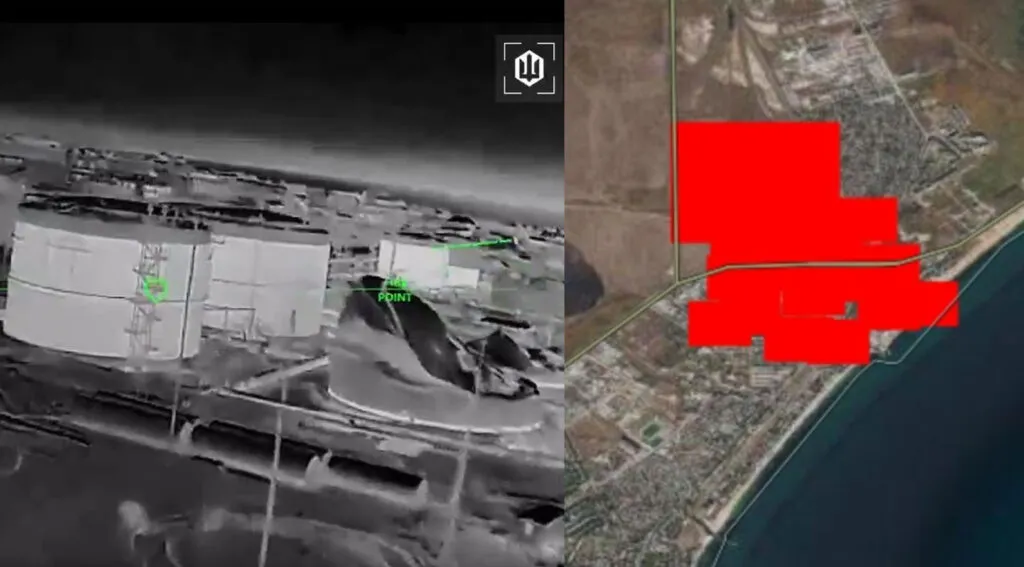
Ukraine Unleashes Drone Blitz, Crippling 40% of Russia's Oil Exports Ukraine is systematically dismantling Russia's critical oil export network with a wave of long-range drone strikes, targeting terminals that handle nearly half of the Kremlin's seaborne crude shipments in a bid to slash the revenue funding its war machine. In a series of precise attacks over recent days, Ukrainian forces have repeatedly hit major Russian oil hubs on the Baltic and Black Seas. The campaign has focused on the Ust-Luga complex on the Baltic Sea, a vital gateway for Russian fuel, striking it twice within 72 hours and forcing temporary shutdowns [123057][123064]. Another successful strike damaged the Sheskharis oil terminal in Novorossiysk, a facility that handles between 3.5 and 4.5 million tonnes of crude monthly [122400]. Ukrainian officials state these strikes have disabled over 40% of Russia's seaborne oil export capacity [122398]. The strategy aims to choke off a primary source of state income, which has surged due to higher global oil prices, money that is then used to purchase weapons from allies like Iran [123062]. "The goal is to damage a key source of funding for the Russian military," a military analyst said of the coordinated strategy [123057]. The operations demonstrate Ukraine's growing technological reach. Drones have struck targets hundreds of kilometers from the front line, including deep in occupied Crimea where a fuel depot at the Feodosiia Marine Oil Terminal was set ablaze in an attack visible from space [123982]. In a separate tactical victory, Ukrainian forces destroyed advanced Russian air defense systems, including a Buk-M3 and a Tor-M2 launcher, in occupied Luhansk Oblast [123982]. Beyond energy, Ukraine continues to pressure Russian military assets in the Black Sea. In a major escalation, powerful naval drones targeted the Russian Black Sea Fleet's new flagship, the frigate *Admiral Makarov* [122549]. This follows the combat debut of the Swedish-supplied RBS 15 "sea skimmer" missile, a weapon designed to sink warships that Ukraine has adapted for ground launches [123056]. Despite the offensive campaign, President Volodymyr Zelensky has proposed a temporary "energy ceasefire" to the United States mediators, offering to halt strikes on Russian energy infrastructure if Moscow stops attacking Ukrainian power plants and electrical grids [122336]. Ukraine Strikes Russian Oil Hub, Hunts Air Defenses Deep in Occupied Territory Ukraine Targets Russia's Baltic Oil Lifeline Ukraine Strikes Russian Oil, Targeting Iran's War Profits Ukraine Strikes Key Russian Oil Port—Again Ukraine Hits Key Russian Oil Terminal, But Target Disputed Ukraine Strikes Key Russian Oil Hub and Military Aircraft in Crimea Ukraine Targets Russia's New Black Sea Flagship in Major Drone Strike Ukraine Fires Swedish "Sea Skimmer" Missile in Combat Debut Ukraine Proposes "Energy Ceasefire" After Hitting Russian Oil Ukraine Proposes "Energy Truce" to Russia, Zelensky Says

Global Powers Scramble for Africa's $450 Billion Mineral Prize as New "Scramble" Heats Up
Global Powers Scramble for Africa's $450 Billion Mineral Prize as New "Scramble" Heats Up A new and intense competition for Africa's vast mineral wealth is reshaping the continent's economic and strategic landscape, as world powers seek to secure the critical resources needed for modern technology and green energy. This modern-day "scramble" is driven by geopolitical rivalry and the global shift away from fossil fuels, placing African nations at the center of a high-stakes contest for influence and supply chains [83553]. The race focuses on minerals like cobalt, graphite, lithium, and rare earth elements, which are essential for manufacturing electric vehicle batteries, smartphones, renewable energy systems, and advanced military equipment [123980] [83553]. Unlike historical conquests, this competition is playing out through high-value deals, security partnerships, and infrastructure investments. Russia has recently secured a major foothold, finalizing an agreement with Mozambique for extensive mining rights to cobalt and graphite. Crucially, the deal also grants Russia operational control over the deep-water port of Pemba, providing a strategic naval and trade hub on the Indian Ocean [123980]. Simultaneously, Russia is expanding its military influence in West Africa's Sahel region through its "Africa Corps," gaining leverage with the military governments of Mali, Niger, and Burkina Faso [67411]. This expansion is forcing a strategic rethink by Western powers. The United States and Japan are actively working to build the Philippines into an alternative mineral supplier to reduce reliance on China, highlighting a global pattern of seeking secure sources outside dominant supply chains [123895]. In Africa, the European Union is seeking to strengthen its own partnership with the continent, with a recent summit focusing on trade and critical minerals amid the growing influence of other global players [11355]. Analysts note that the combined forces of geopolitical rivalry and the pursuit of strategic technologies like artificial intelligence are breaking traditional economic rules, making national security a primary factor in trade and investment decisions [123918]. This environment creates both significant opportunity and risk for African nations. Experts warn that without strong coordination, individual countries could be pressured into unfair deals that fail to maximize local benefits [83553]. The long-term impact on global markets and regional stability remains a key question, as the silent race for resources accelerates [123980] [83553]. Russia Secures Key Minerals, Strategic Port in Africa The New Scramble: Africa's Minerals and the Silent Race U.S. and Russia in High-Stakes Scramble for Africa's Sahel EU-Africa Summit Focuses on Trade and Minerals Amid Global Tensions US, Japan Target Philippines to Rival China in Minerals Race AI and Rivalry Redraw the World's Economic Map

Roma Groups Demand Real Power and Policy on World Roma Day
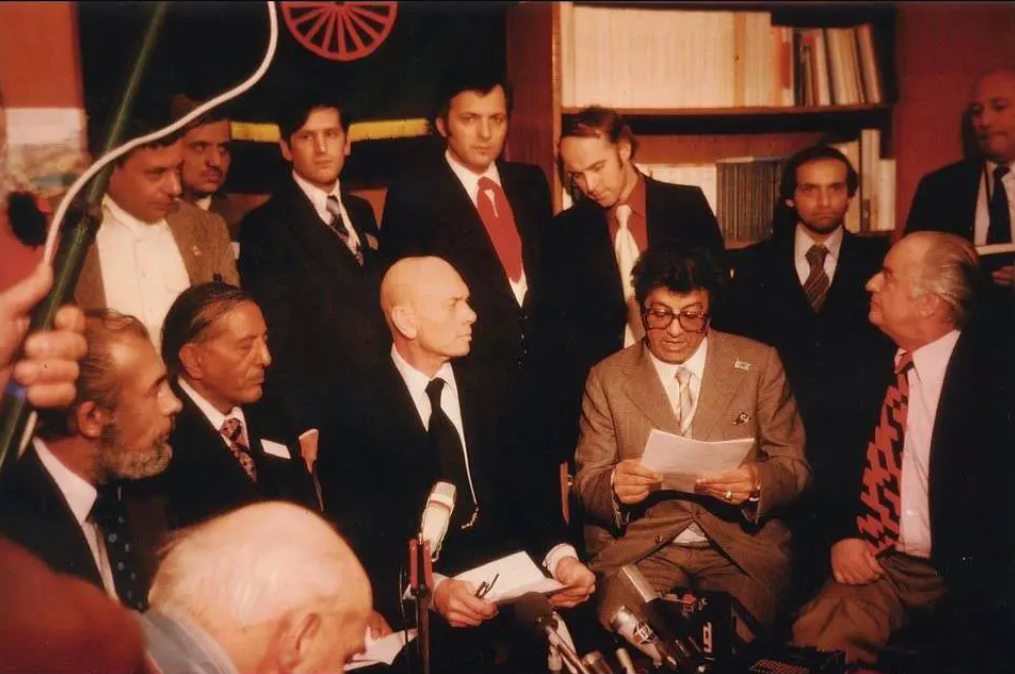
Roma Groups Demand Real Power and Policy on World Roma Day Roma rights organizations marked World Roma Day with a unified call for governments to stop designing policies from afar and instead create binding, concrete plans in direct partnership with Roma communities themselves [124005]. The demand for a shift from talking to tangible action was the dominant theme of the day. The Turkish DEM Party's Peoples and Faiths Commission issued a statement calling for "equal citizenship, justice, and a dignified life" for Roma people, highlighting persistent discrimination and poverty [124006]. Echoing this, the international group Romani Godi stressed that effective policy must be made *with* Roma people, not *about* them, to combat deep-rooted, "multi-layered discrimination" [124005]. Both groups emphasized that discrimination is not uniform and often falls hardest on the most vulnerable within Roma communities. Romani Godi specifically noted that young people, women, and LGBTQ+ individuals face the strongest inequalities [124005]. The parallel discussions extended to questions of identity and recognition. Experts pointed to the struggle of some Dom people, who feel pressured to publicly identify as Romani for wider acceptance. They argue that true equal citizenship requires a system that recognizes and accepts people for who they say they are, without forcing name changes or assimilation [123723]. The collective statements frame World Roma Day not just as a cultural celebration but as a direct challenge to governments. The core message is that achieving justice requires moving beyond symbolic statements to inclusive policymaking and the recognition of self-identified community identity. Turkish Party Marks World Roma Day, Calls for Equality and Justice Roma Rights Group: "Stop Making Policy About Us, Start Making It With Us" Who Must You Be? The Fight for Names and Equal Citizenship


Latest Articles
Ceasefire in Peril: Israel Bombs Lebanon, Iran Blocks Oil
A fragile ceasefire in the Middle East is under immediate threat, just one day after it was agreed. Major disagreements over whether the truce include...