Latest News
Stay updated with the latest news and articles
Top Stories
U.S. Forces Capture Venezuelan President Maduro in Military Strike, Plan to "Run" Country
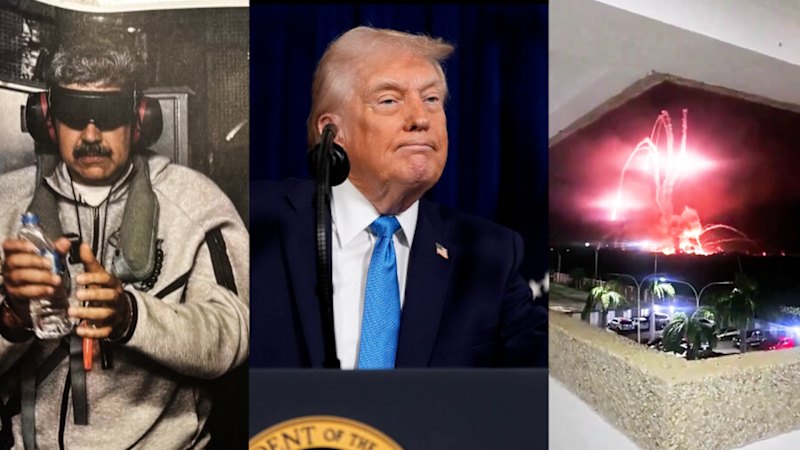
U.S. Forces Capture Venezuelan President Maduro in Military Strike, Plan to "Run" Country In an unprecedented military escalation, United States forces have captured Venezuelan President Nicolás Maduro and his wife, Cilia Flores, during a large-scale strike on Venezuelan territory [41033][41227][40942]. The operation, ordered by the Trump administration, has removed the long-time leader from power and plunged the oil-rich nation into immediate uncertainty [42114]. The capture occurred overnight on Saturday, with reports indicating the couple was taken from their home in the capital, Caracas [40970]. Following the operation, former U.S. President Donald Trump announced that the United States would now "run" Venezuela, with a stated goal to "take back the oil" and fix the country's collapsed energy infrastructure [41227][40871][41525]. Venezuela holds the world's largest proven oil reserves, but its production has cratered amid years of economic crisis [40871]. Maduro and Flores are now in U.S. custody and have been flown to New York to face criminal charges, which include accusations of narco-terrorism and running a "narco terrorist organisation" [41136][40942][40970]. U.S. officials have long labeled Maduro's government as illegitimate, accusing it of corruption, human rights abuses, and stealing elections [41136][40668][41525]. The direct military intervention and capture of a sitting head of state marks a dramatic break from established international law and sets a dangerous global precedent, analysts say [40737][41525]. The action creates a severe power vacuum in Caracas, with no clear successor named and the status of the remaining government unclear [41136][41379]. While the U.S. has recognized opposition leader Juan Guaidó as Venezuela's legitimate president since 2019, Trump has suggested Maduro's deputy, Delcy Rodríguez, should follow U.S. orders, though she has so far defied them [41379][41525]. The immediate military action appears complete, but the long-term plan for governing a nation of 30 million people suffering from hyperinflation and humanitarian crisis remains undefined [42114][41055]. The international community is awaiting further details and confirmation, with reactions from global capitals still emerging [40668][40505]. U.S. Forces Capture Venezuelan President in Military Strike Venezuela Leader Ousted in U.S. Strike, Faces Charges in New York US Strikes Venezuela, Captures President Maduro U.S. Captures Venezuela's President in Secret Operation U.S. Forces Capture Venezuelan President Nicolás Maduro US Captures Venezuelan President in "Large-Scale Strike" U.S. Military Strike Captures Venezuelan Leader Maduro U.S. Captures Maduro: What Now for Venezuela? US Seizes Venezuelan President, Vows to "Run" Country and "Take Back the Oil" U.S. Claims Capture of Venezuelan Leader in Military Strike US Captures Venezuelan President in Military Strike U.S. Strikes Venezuela, Captures President Maduro Venezuelan President Captured in U.S. Military Raid
Spy Tech Gets Cheap: Military-Grade Sensors Now Cost Less Than a Video Game
**Spy Tech Gets Cheap: Military-Grade Sensors Now Cost Less Than a Video Game** A technological breakthrough in China is poised to flood the global market with advanced surveillance and targeting systems, drastically lowering the cost of military-grade hardware. Researchers have successfully manufactured high-performance infrared imaging chips for just dozens of U.S. dollars, down from thousands [122499]. The innovation, led by a team at Xidian University, replaces rare and expensive materials with standard silicon manufacturing techniques. These chips detect heat signatures rather than visible light, forming the core technology for night-vision equipment, missile guidance systems, and long-range surveillance [122499]. The collapse in price could make these powerful sensors widely accessible. This shift is accelerating a broader, invisible arms race defined by surveillance and data control. Across the Asia-Pacific region, power is increasingly determined not by ship tonnage but by who controls information. Satellites, digital tracking, and artificial intelligence now monitor fishing fleets, trade routes, and military movements in real-time, granting unprecedented maritime awareness [122500]. The same university behind the cheap infrared chips has also pioneered a "smart surface" that can harvest enemy radar signals and convert them into electricity. This dual-use technology could enable next-generation stealth systems for military aircraft while also forming the backbone of future 6G wireless networks [36179]. Meanwhile, the proliferation of surveillance is evolving beyond traditional methods. Experts warn that as certain technologies, like fixed security cameras, face restrictions, the threat is migrating to more agile platforms. Smaller, harder-to-detect spy drones are rapidly being adopted for intelligence gathering, creating new challenges for security agencies [122343]. Mass production of the low-cost infrared chips is scheduled to begin before the end of the year. Their potential applications extend beyond defense, promising upgrades to smartphone cameras, autonomous vehicle navigation, and industrial safety systems [122499]. The development signals a fundamental democratization of technology that was once the exclusive domain of major militaries, potentially altering global security and industry dynamics. Chinese Military-Grade Tech Now Costs Less Than a Video Game Satellite Spy Wars: The Invisible Fight for Asia's Seas Chinese Stealth Tech Could Turn Enemy Radar into a Power Source US Ban on Spy Cameras Backfires, Fuels Drone Threat

Court Overturns African Football Champion, Strips Senegal of Title in Unprecedented Ruling
Court Overturns African Football Champion, Strips Senegal of Title in Unprecedented Ruling A top sports court has made a historic and shocking decision, stripping Senegal of its 2023 Africa Cup of Nations championship and awarding the title to Morocco instead [105769]. The Court of Arbitration for Sport (CAS) announced the ruling on Tuesday, overturning the result of the tournament's final, which was played in January [105769]. Senegal had originally won the match to claim its first-ever continental title, but the case was later referred to the court by the Confederation of African Football (CAF), the sport's governing body on the continent [105769]. The court's decision is final and cannot be appealed [105769]. No official reason for the overturn was provided in the initial announcement, with CAF stating it would release the full details of the judgment later this week [105769]. The ruling immediately rewrites the recent history of African football, erasing Senegal's celebrated victory from the record books [105769]. The Africa Cup of Nations is the continent's premier international football competition [32394]. The unprecedented move comes after a tournament that featured dramatic moments on the field, including a last-minute equalizer by Zambia's Patson Daka against Mali in the group stage [32394]. The final group stage matches included one seemingly meaningless game between already-qualified Ivory Coast and eliminated Gabon, played for pride and momentum under tournament rules [38697]. Court Shocker: Morocco Awarded Africa Cup Title, Overturning Senegal's Win Daka's Last-Minute Header Stuns Mali in AFCON Opener AFCON Finale: Why Play a Game That Doesn't Matter?


Young People Around the World Are Reinventing Ancient Traditions to Reclaim Their Roots
Young People Around the World Are Reinventing Ancient Traditions to Reclaim Their Roots From the Arctic Circle to Latin America, a global generation is breathing new life into ancient cultural practices, blending them with modern life to forge powerful identities. This movement sees young people not as passive inheritors of tradition, but as active creators, using tools from social media to electronic music to ensure their heritage thrives. In China, the solemn Qingming tomb-sweeping festival is being transformed. Young people are documenting their family outings online, researching ancestral histories, and leaving modern letters and snacks at gravesides, turning a private duty into a proud, shared act of cultural identity [123476]. Similarly, the Chinese Spring Festival is celebrated not just for its fireworks, but as a vital, unbroken "cultural river" linking millions to their history [84043]. This revival is happening far beyond Asia. In Norway, a Sámi DJ duo is gaining international acclaim by blending modern electronic beats with traditional Indigenous *joik* singing, meeting a growing global appetite for authentic cultural sounds [79759]. In Ukraine, ancient Christmas carols, or *koliadky*, are being shared in new playlists, carrying messages of resilience and connecting a nation’s past to its present struggle [32337]. The trend also highlights how culture spreads and adapts. Across Latin America, Korean culture has become a major influence, with young people learning K-pop dance routines in public squares, signaling a significant shift in the region's cultural landscape [118721]. Even for the very young, cultural roots run deep, as seen in an Arizona family where a nine-month-old baby enthusiastically attempts the traditional Māori haka dance [122617]. Experts note that this cultural engagement is more than nostalgia; it is a form of resilience. An American scholar studying Ukraine argues that defending unique literature, art, and history can make a fight for survival more relatable and powerful than graphic imagery alone [122155]. For communities like the Circassians in Syria, maintaining a distinct language and customs across generations while integrating into national society demonstrates a successful model of cultural preservation [36001]. The movement shows that in a globalized world, the desire to connect with a unique heritage is stronger than ever, with a new generation using the tools of the present to safeguard the treasures of the past. Young Chinese Reimagine Ancient Tomb-Sweeping Ritual Feng Jicai: Chinese New Year is More Than Fireworks Remote DJs Rise with Sámi Sound, Fueling Indigenous Pride Ukrainian Christmas Carols: Ancient Sounds of Defiance and Hope Korean Wave Washes Over Latin America, Shifting Cultural Tides Arizona Baby's First Words? A Haka. Why Showing Atrocities Fails: A Scholar's View on Ukraine's Cultural War Syria's North Caucasus Legacy: The Circassians' Enduring Identity



Africa's Health Leaders Take Charge to Fight Rising Disease Crisis
Africa's Health Leaders Take Charge to Fight Rising Disease Crisis A new public health initiative is launching across Africa to combat a sharp increase in serious, long-term diseases. The effort focuses on using technology and cross-border cooperation to strengthen the continent's medical defenses. The Academy of Public Health (APH) has formally inducted new leaders to address the growing burden of non-communicable diseases (NCDs) [13670]. These illnesses, which include cancer, diabetes, and heart disease, are not passed from person to person but are becoming more prevalent [13670]. The academy's strategy calls for accelerated digital innovation and shared leadership among nations to build a unified response [13670]. This push comes as global health experts highlight both historic progress and a critical next phase. Over the past two decades, millions more people have gained access to basic care, and significant investments in primary health clinics and HIV treatment have saved lives and raised life expectancy [23147]. The current focus is on achieving universal health coverage for all by 2030, a goal experts say will require a major effort, particularly in Africa [23147]. Part of that effort involves safeguarding recent successes. Malawi, for instance, is being praised as a top performer in Africa for improving adolescents' sexual and reproductive health through better access to services and contraception [121979]. However, experts warn that persistent poverty, gender inequality, and rural healthcare gaps threaten to reverse these gains, underscoring the need for continued investment [121979]. The new APH initiative aims to build more resilient health systems to manage and prevent these long-term challenges continent-wide [13670]. New Health Leaders to Combat Africa's Rising Disease Challenge Africa's Health Revolution: Can 2030 Goals Be Met? Malawi's Teen Health Success Faces Old Threats


U.S. Forces Capture Venezuelan President Maduro in Unprecedented Military Raid
U.S. Forces Capture Venezuelan President Maduro in Unprecedented Military Raid In a dramatic escalation of tensions, United States military forces captured Venezuelan President Nicolás Maduro in a surprise operation in Caracas, sending shockwaves across Latin America and challenging international norms. The sitting head of state and his wife were seized on Saturday and subsequently transported to New York, where Maduro faces a federal court on drug trafficking charges [41880]. The operation, ordered by President Donald Trump, marks the first direct U.S. military attack on a South American nation in history [41064]. It represents a stark revival of long-standing U.S. interventionist practices in the hemisphere, setting a precedent for the extraterritorial apprehension of a foreign leader without host country consent [47297]. Following the capture, President Trump declared that "American dominance in the western hemisphere will never be questioned again" [41064]. The action has triggered a deep political split across the region [47126]. Governments historically critical of Maduro's regime, including Colombia and Brazil, have offered cautious support for the move [47297]. Conversely, nations such as Mexico and Bolivia have issued sharp condemnations, labeling the operation a dangerous violation of Venezuelan sovereignty and international law [47297]. Analysts note the public division masks a private anxiety shared by leaders across the political spectrum, who are now urgently reviewing their own vulnerability to similar foreign actions [47297]. The United Nations Security Council has scheduled an emergency meeting at Venezuela's request to address the incident [41880]. President Trump announced that the U.S. will oversee Venezuela's government but provided no timeline for new elections [41460]. The bold strike is widely seen as a direct challenge to China's expanding economic and diplomatic influence in Latin America, a region where Beijing has become the leading trading partner for many nations [41460][45747]. U.S. Capture of Venezuela's Maduro Sends Shockwaves Through Latin America U.S. Capture of Maduro Sends Shockwave Through Latin America U.S. Captures Venezuela's Leader, Challenging China's Regional Reach Venezuela's President Seized by U.S., Faces Court in New York Trump Revives US Habit of Ousting Latin American Leaders Trump Orders First Direct US Military Attack on South America
U.S.-Iran Conflict Serves as Global "Live Fire" Exercise for Militaries Worldwide
U.S.-Iran Conflict Serves as Global "Live Fire" Exercise for Militaries Worldwide The ongoing military confrontation between the United States, Israel, and Iran is being closely studied by global powers as a real-time blueprint for modern warfare, with China identified as a key observer analyzing American capabilities and vulnerabilities [122761][123483]. Military analysts report that the conflict is defined by the extensive use of drones, precision-guided missiles, and cyber attacks, creating a battlefield where information is instant and strikes are highly accurate [122761]. This shift demonstrates how warfare now blurs the lines between military and civilian domains, with effects felt far beyond traditional front lines [122761]. For strategic competitors like China, the war offers critical data on U.S. military resilience. Beijing is specifically monitoring the strain on American supply chains and industrial capacity to replenish advanced munitions during a sustained engagement [123483]. The conflict also provides a live case study in how the U.S. coordinates with allies and projects power across great distances—factors crucial to China's own strategic calculations in the Pacific region [123483]. Beyond immediate battlefield tactics, the war is reshaping broader global dynamics. It has destabilized energy security by threatening oil supplies and is testing international alliances, forcing nations to recalibrate their positions [123483]. Experts conclude that the lessons learned from this conflict will directly shape how future wars are fought by nations around the world, regardless of the conflict's duration [122761][123483]. Iran War: A Live Blueprint for Modern Conflict U.S.-Israel War on Iran: A Real-Time Lesson for China

Governments Target Vacation Rentals to Free Up Homes for Locals
Governments Target Vacation Rentals to Free Up Homes for Locals Facing severe housing shortages, governments in popular tourist destinations are taking dramatic steps to reclaim thousands of homes from the short-term rental market for local residents. In a landmark move, Hawaii's governor has ordered the conversion of 10,000 short-term rental units into local housing [61634]. The plan directly targets condos and houses currently used for tourist vacations, aiming to return them to the long-term rental market. Officials blame the large number of vacation rentals for reducing supply and driving up prices, which is forcing local residents to leave the state [61634]. This conflict is playing out globally in cities dependent on tourism. In Cape Town, South Africa, a surge in tourism and platforms like Airbnb has caused property prices and rents in the central area to soar [39353]. This is pushing low-income service workers, essential to the city's economy, into illegal and unsafe housing on the outskirts because they can no longer afford to live near their jobs [39353][117472]. The city now shows stark divides, with luxury villas and tourist rentals in scenic coastal areas standing next to informal metal shacks where locals live [117472]. The economic benefits of tourism are creating a severe housing shortage for permanent residents in these locations [39353]. While officials in places like Cape Town acknowledge the crisis and the challenge of balancing tourism revenue with housing needs, Hawaii's aggressive action represents a major shift for its tourism-dependent economy, which may result in fewer rental options for visitors [61634][117472]. Hawaii to Seize 10,000 Vacation Rentals in Housing Crisis Move Tourism Boom Pushes Workers Into Illegal Homes Tourists in Luxury, Locals in Shacks: Cape Town's Coastal Divide

Markets Soar as Iran-Israel Conflict De-escalates, Oil Prices Plunge 3%
Markets Soar as Iran-Israel Conflict De-escalates, Oil Prices Plunge 3% Global financial markets rallied sharply this week as tensions between Iran and Israel showed signs of easing, sparking a wave of investor relief and a significant drop in oil prices. The shift in sentiment began after Iran signaled it viewed its recent drone and missile attack on Israel as concluded, with no immediate plans for further strikes [123469]. This was followed by reports of progress toward a potential ceasefire between the United States and Iran, a deal that could involve easing some sanctions on Iranian oil exports [123644]. Investors reacted immediately to the reduced risk of a wider Middle East war. In Asia, Japan's Nikkei index jumped over 1%, with stocks in South Korea, Australia, and Hong Kong also posting significant gains [123469][123644]. The positive momentum carried into U.S. markets, where the S&P 500 rose 0.44% and the Nasdaq Composite climbed 0.54% on hopes a deal could stabilize the region [122259]. The most dramatic move was in the oil market. The price of Brent crude, a global benchmark, fell by over 3% as the threat of supply disruptions from a broader conflict receded [123644]. Lower oil prices ease worldwide inflation concerns and boost sectors like airlines and shipping, which benefit from cheaper fuel [123644]. Market analysts describe the rally as a classic "de-risking" move, where investors feel more confident and move money into stocks [122259]. The reaction underscores the extreme sensitivity of global finance to geopolitical stability in the Middle East, where conflict can threaten energy supplies and trade routes [122259][123644]. While the situation remains fluid and official details of any agreement are pending, the initial market response signals strong investor relief after a period of heightened anxiety [123644]. Markets Surge as US-Iran Tensions Ease Iran Stands Down: Asian Markets Rally, Oil Prices Drop Iran Ceasefire Hopes Lift US Markets Trump's Iran Deadline Nears, Markets Stumble

Ukraine Unleashes Drone Blitz, Striking Russia's Key Oil Lifeline in the Baltic
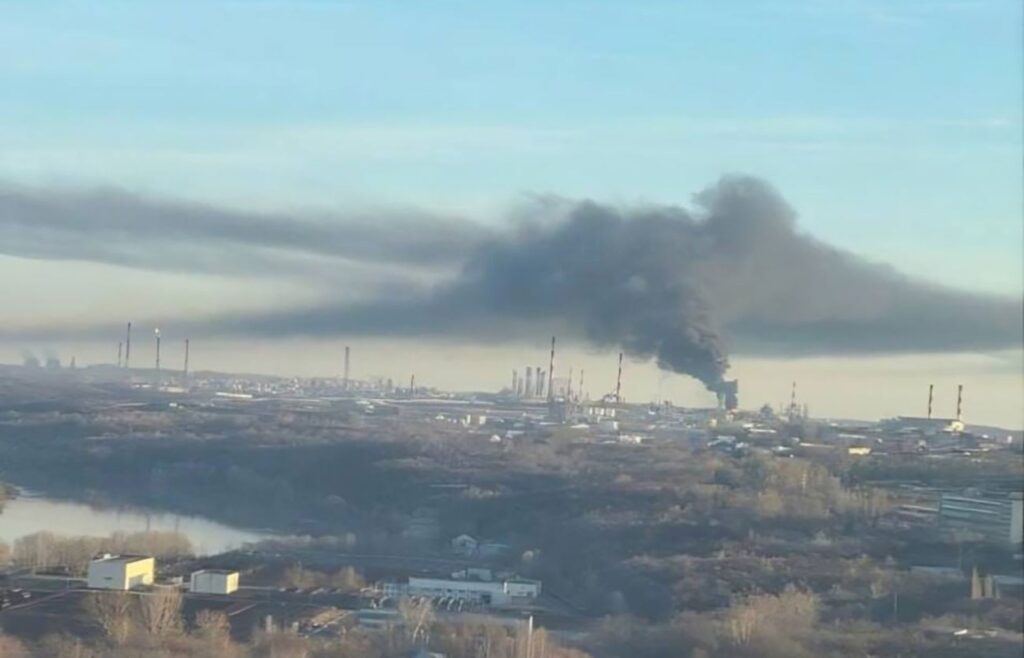
Ukraine Unleashes Drone Blitz, Striking Russia's Key Oil Lifeline in the Baltic Ukraine has dramatically escalated its long-range campaign against Russia's war economy, launching a series of drone strikes that have successfully hit a critical oil export terminal on the Baltic Sea. The attacks target the Ust-Luga complex, a facility that handles a significant portion of Russia's fuel exports [123057]. The strategy aims to cripple a primary source of revenue funding the Russian military's invasion. By systematically attacking refineries and shipping infrastructure deep inside Russia, Ukrainian forces seek to reduce the billions of dollars in oil income that flow to the Kremlin [123057][122745]. Recent strikes have caused significant fires and operational disruptions at the terminal, with Russian officials confirming damage to the facility [123057]. This offensive expansion showcases Ukraine's growing technological capability. Military analysts note the repeated strikes on the same high-value target demonstrate an advanced ability to identify and exploit vulnerabilities in Russian defenses far from the front lines [123057]. The Ust-Luga terminal is a major gateway for processed natural gas and oil products destined for international markets [123057]. The campaign has a dual strategic purpose. Beyond directly harming Russian military funding, it also indirectly targets the finances of Iran, a major supplier of drones and missiles to Russia [123062]. Analysts state that Iran's support has been bankrolled by a surge in its own oil sales, a surge exacerbated by recent global instability that raised prices [123062]. By reducing Russia's oil income, Ukraine hopes to limit the funds available for Moscow to purchase Iranian weapons [123062]. The financial pressure on Russia is mounting from multiple directions. Alongside these attacks, reports indicate Russian President Vladimir Putin has asked the country's wealthy oligarchs for direct donations to support the military budget, highlighting the strain of the war [112938]. Russia's defence spending surged by 42% last year, forcing the government to raise taxes to stabilize the economy [112938]. The long-term impact on Russian oil exports is still being assessed, but the attacks have already forced logistical changes and increased security costs for Russia's critical energy sector [123057]. The move marks a significant shift in the conflict, as Ukraine takes the fight directly to the economic infrastructure sustaining the invasion. Ukraine Strikes Russian Oil, Targeting Iran's War Profits Ukraine Targets Russia's Baltic Oil Lifeline Ukraine Strikes Russian Oil to Hit Iran War Profits Russia's War Gains: How Iran's Weapons Are Changing the Battle in Ukraine Putin Seeks Oligarch Donations to Fund War as Defence Budget Strains

Latest Articles

Trump Calls Off Iran Strike Minutes Before Deadline
U.S. President Donald Trump said late Tuesday he is pulling back from threats to launch military strikes against Iran. The decision came less than tw...

Belgian-Portuguese Aid Worker Freed, Leaves Central African Republic
A Belgian-Portuguese humanitarian worker has been freed and has left the Central African Republic (CAR). He had been serving a 10-year sentence for c...

U.S. Diplomat Takes Helm of UN's Largest Mission as Congo Demands Exit
James Swan, an experienced American diplomat, is now leading the United Nations' largest peacekeeping operation. He officially began his role as head...

Reform UK Vows Visa Ban for Nations Seeking Slavery Reparations
Nigel Farage's Reform UK party has proposed blocking visas for citizens of countries that pursue financial compensation for the transatlantic slave t...

M23 Holds 5,000 Captured Soldiers in Limbo, Stalling DRC Deal
Five thousand soldiers from the Democratic Republic of Congo's army remain in a state of uncertainty. The rebel group M23 announced their capture and...
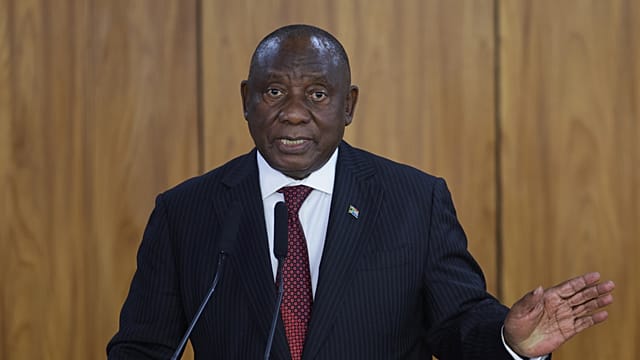
U.S. Sends New Ambassador to South Africa Amid Diplomatic Chill
President Cyril Ramaphosa formally accepted the credentials of the new U.S. Ambassador to South Africa on Wednesday. The diplomatic ceremony comes a...

Satellites vs. Sprawl: Rwanda's High-Tech Fight for Farmland
The thud of farmers' hoes now competes with construction noise in Rwanda. As one of Africa's most densely populated nations, Rwanda is losing preciou...

Deadly Deluge: Angola Floods Kill Dozens
Torrential rains in Angola have killed approximately 40 people, according to national authorities. Several more individuals are reported missing. Th...

Pakistan Hosts Iran-US Ceasefire Talks After Surprise Diplomatic Move
Pakistan announced on Wednesday that it helped broker a two-week ceasefire between Iran and the United States. The country's prime minister, Shehbaz...

Iran Unveils 10-Point Plan to End War, Trump Calls It "Workable"
Iran has presented a detailed proposal to stop its ongoing conflict with the United States and Israel. The 10-point plan was announced early Wednesd...

Freed After Three Years: French Prisoners of Iran Meet Macron
A French couple detained in Iran for over three years has returned home. They met with President Emmanuel Macron in Paris on Wednesday. Cecile Kohle...

US, Iran Agree to Two-Week Ceasefire After Trump Threat
The United States and Iran agreed to a two-week ceasefire on Wednesday. The deal was reached just hours before a deadline set by U.S. President Donal...

Two-Week Ceasefire Reached as Trump's Iran Deadline Passes
The United States, Israel, and Iran agreed to a two-week ceasefire on Wednesday. The deal came just hours before a U.S. deadline for military action....

U.S.-Iran Ceasefire Brings Relief, But Future Uncertain
A new, two-week ceasefire between the United States and Iran offers "relief" but leaves major questions unanswered, an expert says. Myriam Benraad,...

Orban's Re-Election Gamble: Russian Gas vs. Cheap Bills
Hungarian Prime Minister Viktor Orban is making the country's energy costs the central issue of his re-election campaign. Facing a global energy cri...

U.S. Papers Question Trump's Fitness After "Stunning" Iran Threat
Major newspapers are openly questioning U.S. President Donald Trump's mental state following what they call a "stunning" threat against Iran. Headli...

Iranian Strikes Hit Gulf States Despite Ceasefire Deal
Several Gulf nations came under attack by Iranian missiles this week, despite a ceasefire agreement between Iran, the US, and Israel. Qatar and the...

Iran Hails Ceasefire as U.S. "Retreat"
Iranian state media is declaring victory after a two-week ceasefire was agreed with the United States and Israel. The reports frame the deal as a sign...

Trump Contradicts Iran Ceasefire Terms, Cites Different "Plans"
President Donald Trump has created fresh confusion over the recently announced U.S.-Iran ceasefire. In an interview, he told AFP that the United Stat...

Oil Prices Plunge as US-Iran Ceasefire Eases Market Fears
A temporary ceasefire between the United States and Iran has triggered a sharp fall in global oil prices and lifted stock markets. The two-week agre...