Latest News
Stay updated with the latest news and articles
Top Stories
Turkish Stocks Soar 2.3% in Single-Day Rally, Fueled by Central Bank's Market Boost
Turkish Stocks Soar 2.3% in Single-Day Rally, Fueled by Central Bank's Market Boost Turkey's main stock market index surged on Wednesday after the country's central bank announced a new policy designed to directly funnel money into local equities. The benchmark BIST 100 index closed the trading day with a substantial gain of 2.34%, adding approximately 316.4 points [71758]. The rally was triggered by a new funding strategy from the Central Bank of the Republic of Turkey (CBRT), which will provide cheaper financing to banks that increase their purchases of domestic stocks [80220]. Analysts described the move as a clear shift in policy, with the central bank actively using its tools to support the stock market [80220]. The significant single-day increase marks a sharp reversal from recent sessions characterized by volatility, where the index has experienced both sharp drops and strong gains [33252][33768]. The BIST 100, which tracks Turkey's top 100 companies, is a key indicator of financial health and investor sentiment in the country [71758]. Wednesday's powerful performance signals a temporary wave of confidence following the central bank's intervention, though market observers caution that the sustainability of the rally depends on broader economic conditions [80220]. Turkish Stocks Surge 2.3% in Single-Day Rally Turkish Stock Market Surges on Central Bank Boost Turkish Stock Market Plunges Amid Global Sell-Off Turkish Stocks Surge at Midweek Open


Ukraine Unleashes Drone Blitz, Crippling 40% of Russia's Oil Exports
Ukraine Unleashes Drone Blitz, Crippling 40% of Russia's Oil Exports Ukraine is systematically dismantling Russia's critical oil export infrastructure through a sustained campaign of long-range drone strikes, targeting a primary source of funding for the Kremlin's war machine. The focus of the offensive is the Ust-Luga complex, a major oil terminal on the Baltic Sea that handles 40% of Russia's seaborne crude exports [123062]. Recent attacks have caused significant fires and disrupted operations at the facility, which processes natural gas and ships oil products worth billions of dollars to international markets [123057]. Ukrainian officials state the strategy has a dual purpose: to slash the revenue Moscow uses to finance its invasion and to indirectly pressure Iran, a key military supplier to Russia [123062]. Analysts note that a surge in global oil prices has doubled the Kremlin's oil income since May, providing it with increased funds to purchase Iranian drones and missiles [123062]. By striking the export terminals, Ukraine aims to sever this financial pipeline [122745]. "The goal is to damage a key source of funding for the Russian military," one report on the Ust-Luga strikes confirmed [123057]. The attacks demonstrate Ukraine's growing capability to identify and exploit vulnerabilities in Russian defenses far from the front lines [123057]. In response to the successful strikes, Ukraine has proposed an "energy ceasefire," calling for a temporary halt to attacks on each other's energy infrastructure. This followed Ukrainian claims that its campaign has disabled over 40% of Russia's seaborne oil export capacity [122398]. The intensified drone campaign marks a significant strategic shift, moving the conflict directly onto Russian economic terrain and challenging the security of its most lucrative sector. Ukraine Strikes Russian Oil, Targeting Iran's War Profits Ukraine Targets Russia's Baltic Oil Lifeline Ukraine Strikes Russian Oil to Hit Iran War Profits Ukraine Proposes "Energy Ceasefire" After Hitting Russian Oil Russia's War Gains: How Iran's Weapons Are Changing the Battle in Ukraine


U.S. Lawmakers Move to Curb President, Impeach Defense Secretary Over Iran Threats
U.S. Lawmakers Move to Curb President, Impeach Defense Secretary Over Iran Threats A growing number of U.S. lawmakers are taking formal action to restrain the executive branch, citing threats of military action against Iran that they argue risk war crimes and violate constitutional authority. The push comes after former President Donald Trump posted a social media message suggesting military strikes against Iranian infrastructure, using aggressive and profane language [122989]. In response, a group of lawmakers is invoking the 25th Amendment, a constitutional process allowing the Vice President and Cabinet to declare a president unfit for office. They cite Trump's specific threat to target 52 Iranian sites, including cultural locations protected under international law [123221]. "Threatening mass killings and war crimes is exactly why the amendment was created," said Congresswoman Deb Haaland, who supports the action [123221]. The effort is considered unlikely to succeed, as it would require approval from Vice President Mike Pence and a majority of the cabinet. Simultaneously, a separate impeachment effort is targeting Defense Secretary Pete Hegseth. Representative Yassamin Ansari announced she is introducing articles of impeachment, accusing Hegseth of being "complicit" in planning and executing military operations in Iran without the congressional approval required by U.S. law [122653]. The twin actions reflect deepening alarm over the potential for a major conflict. Some analysts have drawn extreme historical parallels, comparing the administration's "maximum pressure" strategy to General William Tecumseh Sherman's brutal "March to the Sea" during the U.S. Civil War—a comparison critics call dangerously misguided [122733]. The controversy has also drawn sharp criticism from a key U.S. ally. Reform UK leader Nigel Farage, typically a Trump supporter, said he was "shocked" by the threats, calling them "over the top in every single way" [123138]. Trump's Profane Post: A Calculated Strategy for Permanent Conflict? Lawmakers Urge 25th Amendment Removal Over Trump War Crime Threats U.S. Lawmaker Seeks to Impeach Defense Secretary Over Iran Actions Nigel Farage: Trump's Iran Threat 'Went Way Too Far' Trump's Iran Threat Echoes Sherman's Brutal March

Europe's Green Energy Pivot Pays Off as U.S. Doubles Down on Fossil Fuels
Europe's Green Energy Pivot Pays Off as U.S. Doubles Down on Fossil Fuels A stark energy divide is opening between the United States and Europe, with the European Union's aggressive push toward renewables now generating significant economic savings and greater energy independence. While American policy continues to emphasize oil and gas production, Europe is capitalizing on its investments in wind, solar, and efficiency [88037]. The contrast comes as global conflict has again exposed the dangers of fossil fuel dependence, sending energy prices soaring and benefiting the world's largest polluting companies [122799]. European households and industries have been shielded from the worst of this volatility by the growing share of low-cost renewable power in their energy mix [88037]. This strategic shift is not without fiscal risks. The European Commission has warned member states that their massive emergency spending to protect consumers from high prices could trigger a new debt crisis if not carefully targeted [121783]. Officials are urging governments to make support temporary and focused on the most vulnerable while encouraging permanent energy savings [121783]. The EU's green transition is also a competitive gambit. Analysts frame it not merely as ecological policy but as Europe's bid for technological and industrial dominance through "green capitalism" [88037]. This approach leverages strict regulations and high standards to set global norms for how advanced technology is integrated into industry and society [53007]. However, Europe's position remains constrained by its reliance on American security and digital technology. Experts warn that deep dependence on U.S. tech firms for cloud computing, software, and digital infrastructure makes it difficult for Europe to enforce its own regulations or achieve true "digital sovereignty" [58167]. Simultaneously, the potential for a more unilateral U.S. foreign policy raises questions about the stability of the security alliance Europe still needs [69895]. The result is an uneasy balancing act. Europe is advancing a model that delivers tangible economic benefits from clean energy [88037], but it must navigate this path while managing fiscal pressures [121783] and dependencies that limit its strategic autonomy [58167][69895]. U.S. Doubles Down on Fossil Fuels as Europe Cashes In on Green Energy Fossil Fuel Giants Profit as War Exposes a Dangerous Global Dependency EU Warns: Energy Bailouts Could Trigger New Fiscal Crisis Europe's Tech Edge: It's Not About Giants, But How You Use Them Europe's Digital Dilemma: Reliant on US Tech It Seeks to Curb Trump Era Demands "Political Adults" in EU, Analysts Warn


AI Giants Scrape Your Photos, Books, and Even Porn to Train Their Models
AI Giants Scrape Your Photos, Books, and Even Porn to Train Their Models A major artificial intelligence company, part-owned by social media giant Meta, is paying tens of thousands of gig workers to harvest personal, copyrighted, and explicit content from the internet to train its AI systems, according to worker accounts and company practices [122801]. Scale AI, which is 49% controlled by Meta, recruits credentialed professionals through its Outlier platform for flexible work training AI models. However, the reality of the job involves desperate measures, with workers tasked with scraping public Instagram profiles, transcribing audio from adult videos, and using copyrighted books and articles—often without the creators' knowledge or consent [122801]. This practice forms the hidden backbone of the AI boom, raising serious ethical and legal questions about how the world's most advanced AI systems are built. The data collection relies on vast amounts of personal and proprietary information to refine the models used by Meta and other technology giants [122801]. The scramble for training data comes as companies face an explosion of AI-generated computer code, a problem dubbed "AI tech debt," which is creating a massive backlog of messy, unmanageable software that human engineers must clean up [122144]. Simultaneously, skilled professionals, unable to find traditional employment, are turning to this low-paid, project-based AI training work as a critical last resort, highlighting a brutal shift in the job market [122822]. The UN has warned that the global development of AI, dominated by corporate and state powers outside the continent, risks a new form of "digital colonisation" in regions like Africa, where imported systems may not reflect local needs and could deepen global inequality [121720]. Meta's AI Trained by Gig Workers Scraping Social Media, Copyrighted Work, and Porn Desperate for Work, Skilled Professionals Turn to AI Training AI Code Explosion: Companies Can't Keep Up UN Scientist Warns of AI 'Digital Colonisation' in Africa
Turkey Takes Helm of Major NATO Forces, Deploys Troops and Tech in Major Drills
Turkey Takes Helm of Major NATO Forces, Deploys Troops and Tech in Major Drills Turkey is assuming a series of high-profile command and operational roles within the North Atlantic Treaty Organization (NATO), showcasing its growing military capabilities and integration into the alliance's defense structure. This week, Turkish military aircraft landed in Germany, deploying personnel for NATO's largest exercise of the year, Steadfast Defender 2024 [70222]. Approximately 2,000 Turkish troops will participate in the drills, which are part of the alliance's broader reinforcement of its eastern flank [70222]. Simultaneously, the Turkish Naval Forces have formally taken command of a key NATO naval strike group. As of July 1, Turkey leads the NATO Amphibious Task Force and its Landing Force Command, a role it will hold for one year [54453]. This command position makes Turkey responsible for planning and leading NATO exercises and potential missions involving sea-to-land assaults in the region [54453]. In a parallel development, Turkish naval and army units are actively conducting joint amphibious operations in Germany as part of a separate large-scale NATO exercise, Steadfast Dart 2026 [80228]. A notable aspect of Turkey's participation is the prominent use of its own domestically produced defense platforms, which the exercise serves to showcase [80228]. These moves come as Turkey sets an ambitious economic target for its defense sector, aiming for its companies to achieve an average export turnover of $300,000 per employee by 2026, a benchmark based on the world's top defense firms [63530]. Turkey Assumes Command of Key NATO Naval Strike Force **NATO's Biggest 2024 Drill Begins with Turkish Troops Landing in Germany** Turkish Forces Deploy Homegrown Tech in Major NATO Drill Turkey Aims for Elite Status, Sets $300,000-Per-Employee Export Goal



Ukraine Unleashes Drone Blitz, Crippling 40% of Russia's Oil Exports in Relentless Campaign
Ukraine Unleashes Drone Blitz, Crippling 40% of Russia's Oil Exports in Relentless Campaign Ukraine is systematically dismantling Russia's critical oil export infrastructure in a sustained campaign of long-range drone strikes, targeting the very revenue that funds the Kremlin's war machine. In a series of precise attacks, Ukrainian forces have repeatedly hit major terminals on the Baltic and Black Seas, with officials claiming the strikes have already disabled over 40% of Russia's seaborne oil export capacity [122398][122401]. The strategy focuses on high-value economic targets far from the front lines. One key hub, the Ust-Luga complex on the Baltic Sea, has been struck at least twice in three days, forcing it to halt and restart operations amid significant damage [123057][123064]. This terminal alone is a vital gateway for Russian fuel exports. Simultaneously, Ukraine has struck the Sheskharis oil terminal in Novorossiysk on the Black Sea, a facility that handles millions of tonnes of crude monthly [122400]. Another attack damaged facilities at the Caspian Pipeline Consortium terminal in the same region, a crucial outlet for global oil supply [122908][122572]. Military analysts note the attacks demonstrate Ukraine's growing and adaptable long-range strike capability [123057]. The campaign has a clear dual objective: to slash Russian state revenue and disrupt the military's fuel logistics [123062][123064]. Western intelligence assessments suggest the damage is substantial, with Ukraine claiming the destruction of $1 billion worth of Russian oil infrastructure in just five strikes [122401]. In response to the devastation of its own power grid by Russian missiles, Kyiv has proposed a unique "energy ceasefire." President Volodymyr Zelenskyy has stated that Ukraine is prepared to halt its strikes on Russian oil facilities if Moscow stops attacking Ukrainian energy infrastructure [122336][122401]. The offer, communicated through intermediaries, has so far been met with silence or dismissal from the Kremlin [122572]. The sustained offensive extends beyond land-based targets. Ukraine has also launched major naval drone attacks against Russia's Black Sea Fleet, targeting its new flagship, the *Admiral Makarov*, in an effort to challenge Russian dominance of the waterway [122549]. Further demonstrating tactical innovation, Ukraine recently deployed a powerful Swedish-made RBS 15 anti-ship missile in combat for the first time, using the ground-launched "sea skimmer" against Russian land targets [123056]. Ukraine Fires Swedish "Sea Skimmer" Missile in Combat Debut Ukraine Targets Russia's Baltic Oil Lifeline Ukraine Strikes Russian Oil, Targeting Iran's War Profits Ukraine Strikes Key Russian Oil Port—Again Ukraine Hits Key Russian Oil Terminal, But Target Disputed Ukraine Proposes "Energy Ceasefire" After Hitting Russian Oil Ukraine Proposes "Energy Truce" to Russia, Zelensky Says Ukraine Targets Russia's New Black Sea Flagship in Major Drone Strike Ukraine Strikes Key Russian Oil Hub and Military Aircraft in Crimea Zelenskyy's Easter Truce Offer: "For Russia, Nothing is Sacred" Ukraine Offers to Halt Oil Strikes if Russia Stops Bombing Power Grid

Global Conflict Sparks Fuel Crisis, Africa's Mega-Refinery Steps Up as Regional Lifeline
Global Conflict Sparks Fuel Crisis, Africa's Mega-Refinery Steps Up as Regional Lifeline A major conflict in the Middle East is disrupting global fuel supplies, triggering shortages across Africa and forcing a historic shift in the continent's energy landscape. In response, Africa's largest oil refinery is rapidly increasing exports to neighboring nations, positioning itself as a critical new supplier for the region. The Dangote Refinery in Nigeria is boosting shipments of diesel, aviation fuel, and petrol to West African countries including Togo, Senegal, and Ghana [122630][122838]. This surge in exports comes at a critical time, as attacks on shipping and refinery operations linked to the Middle East war have severely disrupted normal trade flows through key routes like the Red Sea [122630]. The $20 billion facility has already dispatched multiple fuel cargoes to address the emerging crisis [122838]. Analysts state the refinery's new role could help stabilize regional markets and reduce Africa's dependence on fuel imports from distant, unstable markets [122630]. The instability is causing traditional global buyers to seek more secure sources, with energy analysts predicting a significant rise in demand for oil from African producers like Nigeria and Angola [121967]. The economic shockwaves from the distant conflict are severe, prompting the African Export-Import Bank (Afreximbank) to launch a $10 billion financial defense program [123145]. The Gulf Crisis Response Programme is designed to protect African economies from damage caused by trade disruption and rising costs stemming from the war [123145]. Beyond fuel, the crisis is having a dire human cost, delaying shipments of vital medicine and humanitarian aid to African nations already in crisis, such as Sudan and Mali [122601]. The delays highlight how regional conflicts can have cascading global effects, endangering civilians who rely on regular aid deliveries [122601]. Concurrently, the Dangote facility is also preparing to export urea, a key fertilizer ingredient, providing a dual lifeline for the continent's energy and agricultural sectors [122630][122838]. Dangote Refinery Powers Up as Global Conflict Disrupts African Supplies Middle East Turmoil Shifts Oil Focus to Africa Afreximbank Launches $10 Billion Shield Against Middle East Crisis Dangote Refinery Sends Fuel Lifeline to Africa Amid Global Shortage Middle East War Delays Vital Medicine to Sudan, Mali

Climate Court Showdown: African Villagers Demand Governments Protect 100 Million From Climate Displacement
Climate Court Showdown: African Villagers Demand Governments Protect 100 Million From Climate Displacement A landmark legal case in Africa is challenging governments to recognize the homes of millions displaced by climate change as a fundamental human right. The case, heard by the Africa Court on Human and Peoples’ Rights, was brought by people forced from Tanzania’s Rufiji Delta by rising seas and floods [115873]. The plaintiffs argue their government failed to protect them from climate impacts, violating their rights. A ruling in their favor would set a major precedent, establishing that governments have a duty to provide "rights-based adaptation" for people displaced by environmental disasters [115873]. This could force nations to create long-term solutions like safer housing and relocation support for vulnerable communities [115873]. The case highlights a crisis affecting millions across the continent who are at risk from droughts, floods, and coastal erosion [115873]. It comes as a new report from Amnesty International warns that climate disasters like droughts and wildfires disproportionately hit already marginalized groups [121912]. "The climate crisis does not impact everyone equally," said lawyer Özlem Altıparmak, who contributed to the Amnesty report. "Ecological destruction hits already vulnerable groups much harder" [121912]. The report urges governments to center human rights in their climate plans ahead of key UN negotiations [121912]. In a separate but related struggle, Turkish villagers from İkizköy protested outside their nation’s high court this week, fighting a government decree that allows a mining company to seize their land and cut down ancient olive groves [123086]. Their protest underscores the global conflict between community rights, environmental protection, and state or corporate power. Meanwhile, a human rights group in South Africa is applying a similar rights-based framework on the ground. Cape Mental Health advocates for people with intellectual disabilities, insisting they be seen as full rights holders, not just patients [118756]. The organization works to champion their dignity, legal protection, and inclusion in community life [118756]. Climate Refugees Ask African Court: Is Our Home a Human Right? Climate Crisis Hits Vulnerable Hardest, Amnesty Warns Before Key UN Summit **Turkish Villagers to High Court: "Justice Delayed is Justice Denied"** Cape NGO Fights for the Voiceless: "Not Patients, But People With Rights"

Pentagon Defends Back-to-Back Strikes, Citing "Fog of War" and Legal Reviews
Pentagon Defends Back-to-Back Strikes, Citing "Fog of War" and Legal Reviews The United States Department of Defense is publicly defending a series of recent military strikes, with top officials citing operational confusion and rigorous legal approval to justify the actions. In one incident, U.S. Secretary of Defense John Hegseth defended naval forces for striking the same boat twice. He stated the decision was made in the "fog of war," a term for the confusion inherent in combat. Hegseth said he did not see survivors after the initial attack but fully supported the commander's choice to fire again to "eliminate the threat" [17273]. Separately, the Pentagon has offered full institutional support for a senior commander's decision to authorize strikes in Venezuela. A spokesperson stated that the actions taken by Admiral Bradley followed proper legal procedures and were "approved by the best military and civilian lawyers throughout the chain of command" [17258]. This defense reinforces the military's position that the operation was lawful. In related statements, a senior U.S. defense official, Pete Hegseth, asserted that ongoing American military activities in the Caribbean are "lawful under both U.S. and international law" [15064]. The statement directly addresses growing questions about the legal basis for missions in the region. The coordinated defenses come as Senate Republicans are taking a rare procedural step to shield the presidential authority used for a recent Venezuela operation. They aim to block a Democratic effort to repeal the 2001 Authorization for Use of Military Force (AUMF) that justified the action, arguing such a repeal would weaken command during ongoing threats [50051]. Pentagon Defends Second Strike in "Fog of War" Incident Pentagon Defends Commander's Decision in Venezuela Strikes Pentagon Official Defends Legality of Caribbean Operations Senate Republicans Move to Shield Trump's War Powers

Latest Articles

Russian Hackers Hijack British Internet Traffic
The UK's National Cyber Security Centre (NCSC) has issued a stark warning: Russian military hackers are actively rerouting internet traffic from Brit...

Ackman's Universal Bid Hinges on One Rival: Bolloré
Financier Bill Ackman is pursuing a bid for Universal Music Group. However, his plan faces a major obstacle. Ackman requires the cooperation of Vinc...

IMF Warns: Hedge Fund "Fast Money" Endangers Emerging Markets
The International Monetary Fund (IMF) warns that hedge funds pose a major risk to developing nations. New analysis shows these "non-bank" lenders can...

Exodus from UAE: One in Eight British Residents Leaves Since Iran Tensions
New data reveals a significant drop in the British population of the United Arab Emirates. Since the threat of open war between Iran and Israel escal...

Prediction Markets: A New Front in the U.S. Power Struggle
A quiet legal revolution is underway in the United States, centered on "prediction markets." These are platforms where people trade contracts on futu...

Iranians Fear U.S. "Economic War" Targets Nation's Fabric
Iranians are expressing deep concern that recent threats from U.S. President Donald Trump form part of a broader assault on their country's economic...

UK Refuses US Request to Attack Iran from British Bases
The United Kingdom has signaled it will not allow American forces to use British military bases to strike Iran's civilian infrastructure. A spokespe...

Iranians Form Human Shields at Key Sites After Trump Threat
Iranian state media has called on citizens to form human chains at sensitive locations. The call comes after former U.S. President Donald Trump sugge...

Search Intensifies for U.S. Tourist Swept to Sea in Bahamas
Bahamian police are searching for a missing American woman after her husband reported she fell from their small boat. The incident occurred Saturday...

Ben Roberts-Smith, War Hero, Charged with War Crimes
Australia's most decorated living soldier, Ben Roberts-Smith, has been formally charged with alleged war crimes committed in Afghanistan. Mr. Robert...

Train Driver Killed in 99mph Collision with Lorry in France
French police have detained a lorry driver after a high-speed train collision killed the train's operator. The incident occurred in northern France...

Ex-Pinochet Agent Faces Extradition from Australia After 50 Years
A Chilean woman accused of kidnappings during the Pinochet dictatorship has lost her final bid to avoid extradition from Australia. Adriana Rivas, w...

WHO Halts Gaza Medical Evacuations After Contractor Killed by Israeli Fire
The World Health Organization has suspended its medical evacuation missions from Gaza after a member of its contracted staff was killed. The inciden...

U.S. Journalist Freed by Iraqi Militia on Condition of Immediate Expulsion
An American journalist held captive in Iraq is set to be released, according to the militia that kidnapped her. The group, Kataib Hezbollah, stated t...

NASA's Moon Landing Test: Did Artemis II Pass?
NASA's Artemis II mission performed almost perfectly. But a key question remains: is the US space agency now ready to send astronauts back to the Moo...

Kanye West Ban Forces Festival Cancellation
A major UK music festival has been cancelled after headliner Kanye West was barred from entering the country. The artist, now known as Ye, was sched...
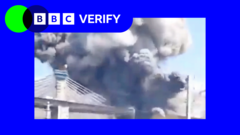
U.S., Israeli Strikes Hit Iran's Bridges, Factories
Recent attacks have damaged key infrastructure inside Iran. Verified videos show the strikes hit bridges, steel plants, and pharmaceutical facilities...

Lawmakers Urge 25th Amendment Removal Over Trump War Crime Threats
A group of U.S. lawmakers is calling for the removal of President Donald Trump. They cite his recent threats against Iran. The push uses the 25th Am...

U.S. Hints at Iran Breakthrough Before Critical Deadline
A senior U.S. official has signaled a potential development in the Iran nuclear standoff. The update could come before a major deadline set by Presid...

Erdogan Urges Peace: Turkey, Spain Leaders Discuss Gaza, Ukraine in Call
Turkish President Recep Tayyip Erdogan and Spanish Prime Minister Pedro Sánchez held a phone call to discuss international conflicts and bilateral re...