Latest News
Stay updated with the latest news and articles
Top Stories
U.S. Forces Capture Venezuelan President Maduro in Unprecedented Military Strike
U.S. Forces Capture Venezuelan President Maduro in Unprecedented Military Strike In a dramatic escalation of tensions, United States military forces have captured Venezuelan President Nicolás Maduro, marking the first direct U.S. military attack on a South American nation [41064]. The operation, which took place in Caracas on Saturday, detained Maduro and his wife before transporting them to New York to face drug trafficking charges [41880]. President Donald Trump announced the capture, stating the U.S. will oversee Venezuela's government and vowing that "American dominance in the western hemisphere will never be questioned again" [41064]. The precision strike has sent shockwaves across Latin America, reviving historical fears of U.S. intervention [41465]. The action has sharply divided regional governments. Nations like Colombia and Brazil have offered cautious support, while others, including Mexico and Bolivia, have condemned it as a blatant violation of international law and sovereignty [47297]. Analysts note that despite public disagreements, leaders across the political spectrum are privately reassessing their own vulnerability to similar foreign actions [47126]. The United Nations Security Council has called an emergency meeting for Monday at Venezuela's request [41880]. Experts warn the operation represents a stark revival of the Monroe Doctrine, the long-standing U.S. policy of opposing foreign influence in the Americas, and is seen as a direct challenge to China's growing economic partnerships in the region [41460]. U.S. Capture of Venezuela's Maduro Sends Shockwaves Through Latin America U.S. Capture of Maduro Sends Shockwave Through Latin America U.S. Captures Venezuela's Leader, Challenging China's Regional Reach Trump Revives US Habit of Ousting Latin American Leaders Venezuela's President Seized by U.S., Faces Court in New York Trump Orders First Direct US Military Attack on South America

Global Powers Weaponize Trade as Top Threat for 2026, Report Warns
Global Powers Weaponize Trade as Top Threat for 2026, Report Warns A new report from the World Economic Forum (WEF) has identified economic warfare between nations as the most severe and immediate threat to global stability in the next two years [49991]. The warning highlights a world where geopolitical rivalry is increasingly fought with the tools of trade, supply chains, and investment, creating a volatile environment for growth and security. The WEF's latest Global Risks Report states that this "geoeconomic confrontation" now ranks above all other global dangers [49991]. The short-term outlook is dominated by three interconnected threats: intense geopolitical rivalry, the rapid spread of misinformation, and severe social and political polarization [49991]. Analysts note that this shift represents a move away from traditional military competition toward using economic policy as a primary instrument of state power [49991]. This strategy threatens to fragment the global economy and undermine decades of trade integration. Despite this trend toward confrontation, deep economic interdependence built over a century of globalization continues to shape international relations [6971]. Most countries remain heavily linked by trade and have a strong interest in maintaining stable economic relationships, making them reluctant to fully choose sides in a major power rivalry [6971]. The findings will be a central topic at the WEF's annual meeting in Davos, Switzerland, next week as global leaders grapple with the risks of a fractured economic landscape [49991]. Geoeconomic Warfare Named Top Global Threat for 2026 Globalization Shifts, But It Doesn't Reverse
Governments Unleash 10,000+ Homes and Major Bills to Tackle Global Housing Crunch
Governments Unleash 10,000+ Homes and Major Bills to Tackle Global Housing Crunch Facing severe housing shortages, governments around the world are taking dramatic steps to boost supply and curb soaring costs, from seizing tourist rentals to passing landmark legislation. In Hawaii, the governor has ordered the conversion of 10,000 short-term vacation rental units into long-term housing for local residents [61634]. Officials blame the proliferation of tourist rentals for driving up prices and forcing locals to leave, marking a major shift for the tourism-dependent state's economy [61634]. In the United States, the Senate passed its most significant housing bill in decades with strong bipartisan support [100719]. The legislation aims to "bring down housing costs by just having more of it," according to Senator Elizabeth Warren, by funding and encouraging new construction to increase supply [100991]. The bill's future now rests with the House of Representatives [100719]. Similarly, the Netherlands' new housing minister, a former top military officer, has launched a campaign to build 100,000 homes a year to break a construction deadlock [108952]. Her strategy focuses on cutting complex rules and speeding up a slow planning process to address an estimated shortage of 400,000 homes [108952]. The crisis is also prompting action at the local level. In Hong Kong, officials are scrambling to secure land to build subsidized housing for dozens of residents left homeless by a deadly fire [25239]. In Nigeria's Delta State, the government has approved a large-scale project to build new student hostels across nine institutions to address severe accommodation shortages [103687]. These government interventions highlight a widespread recognition that housing shortages are a critical problem requiring direct policy action. The moves come as cities from Cape Town to Seoul grapple with affordability crises that push workers into illegal dwellings or tiny, dormitory-style rooms [39353][21300]. Hawaii to Seize 10,000 Vacation Rentals in Housing Crisis Move Senate Passes Bill to "Flood the Market" with New Homes U.S. Senate Passes Major Housing Bill, But House Hurdle Looms From Battlefield to Building Sites: Ex-General Takes On Dutch Housing Crisis Hong Kong Scrambles to Rehouse Deadly Fire Victims Delta State Tackles Student Housing Crisis with Major Hostel Expansion

Turkish Stock Market Sees Wild Swings, Surging Over 2% in Volatile Sessions
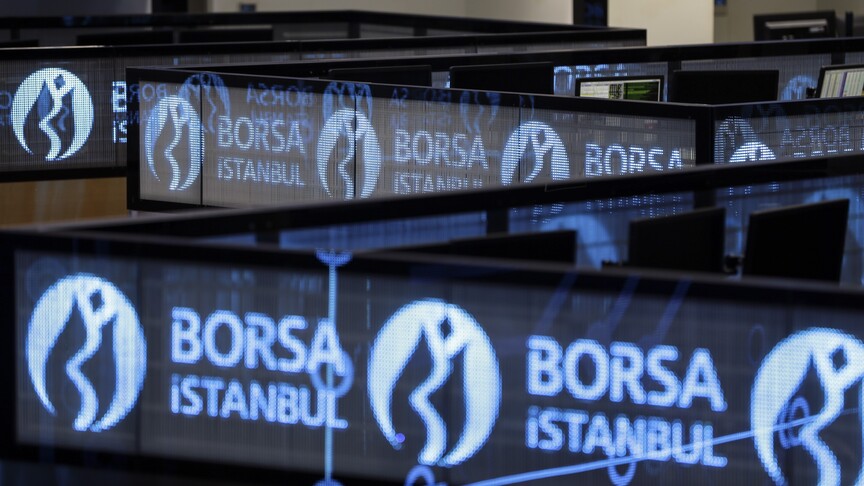
Turkish Stock Market Sees Wild Swings, Surging Over 2% in Volatile Sessions Turkey's benchmark stock index is experiencing dramatic daily swings, repeatedly posting sharp gains and sudden drops as investor sentiment shifts rapidly. The BIST 100 index, which tracks the top 100 companies on the Istanbul stock exchange, has recorded multiple single-day rallies exceeding 1-2%, followed by periods of decline, highlighting a period of intense volatility [71758][128734][40181]. The market opened the first trading session of 2026 with a powerful surge, jumping 2.1% or 236.86 points [40181]. Similar strong single-day performances have been common, with the index closing up 2.34% on one Monday [71758] and gaining over 1% on a recent Tuesday [128734]. These rallies often begin at the opening bell, with the index frequently starting sessions with immediate gains of 20 to over 99 points [131327][21230][110976]. Analysts note the market's movements are a key indicator of financial health and investor confidence in Turkey [71758][33768]. The volatility follows a period where the Central Bank of the Republic of Turkey (CBRT) took direct action to support equities, introducing a new funding strategy that provides cheaper financing to lenders who buy more domestic stocks. This policy was followed by a strong market increase [80220]. However, the gains are punctuated by sharp downturns. The index has also closed sessions in negative territory, including a drop of 30.85 points on one Tuesday [12525] and a decline of 20.7 points during a global sell-off [33252]. Market experts state that Turkish markets often mirror declines in major international exchanges, with global economic concerns triggering sell-offs in emerging markets like Turkey [33252]. Turkish Stock Market Opens Strong, Gaining 34 Points Turkish Stocks Surge as Key Index Jumps Over 1% Turkish Stock Market Rises in Early Tuesday Trading Turkish Stocks Surge 2.3% in Single-Day Rally Turkish Stock Market Plunges Amid Global Sell-Off Turkish Stock Index Rises in Thursday Trading Turkish Stock Market Surges on Central Bank Boost Turkish Stocks Surge at Midweek Open Turkish Stock Market Drops on Tuesday Turkish Stock Market Opens Higher on Tuesday Turkish Stocks Soar 2.1% in First Session of 2026 Turkish Stocks Surge in Midweek Rally


Russia's War Push Strains Economy, Forces Putin to Shake Down Oligarchs for Cash
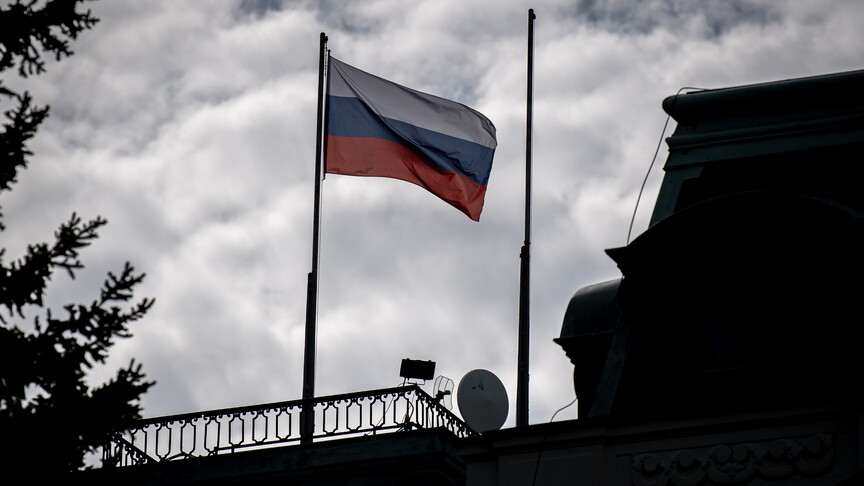
Russia's War Push Strains Economy, Forces Putin to Shake Down Oligarchs for Cash Russia is intensifying its military campaign in Ukraine while facing severe financial strain at home, leading President Vladimir Putin to directly solicit funds from the country's wealthiest oligarchs to support the war effort [112938]. This move underscores the mounting economic pressure from the conflict, even as the Kremlin signals its intent to fight a long war and refuses to rush into any peace deal that doesn't meet its goals [17910][17045]. According to a report, Putin recently asked oligarchs for direct donations to bolster Russia's military budget, with at least two businessmen agreeing to contribute [112938]. The request comes as Russia's defense spending surged by 42% last year, widening the budget deficit [112938]. To stabilize finances, the government has raised taxes, including an increase in value-added tax (VAT) [112938]. Despite the economic crunch, analysts note Putin's strategic goals remain unchanged, with no urgency to negotiate from a position he perceives as strong [17045]. U.S. intelligence assessments support this view, indicating Putin's ultimate aim extends beyond Ukraine to reclaiming influence over former Soviet states, suggesting a prolonged conflict [31282]. On the diplomatic front, Russia is employing aggressive tactics to deter international support for Ukraine. The Czech Republic summoned Russia's ambassador after Moscow declared European companies supplying drones to Ukraine as "legitimate military targets," a significant escalation aimed at private firms in NATO and European Union states [131324]. Simultaneously, the Kremlin is accused of using major agreements like the New START nuclear treaty as a bargaining chip to pressure the United States away from backing a Ukraine peace settlement [60361]. While talking war to Europe, Russian officials have pursued a separate track with Washington, asking for sanctions to be lifted and seeking to calculate financial losses from halted trade—a strategy analysts say aims to create divisions among Ukraine's allies [82150]. The financial demands on oligarchs highlight the war's deepening impact on Russia's economy, which is strained by sanctions that force it to sell oil at a discount [112938]. In a meeting with business leaders, Putin advised a "moderately conservative approach" to spending any extra revenue from higher global oil prices [112938]. The Kremlin maintains it is open to U.S.-mediated peace talks but states major issues, including territory, remain unresolved [112938]. Putin Seeks Oligarch Donations to Fund War as Defence Budget Strains Putin Signals Long War in Ukraine Amid Economic Strain Russia Holds Advantage, In No Rush on Ukraine Deal, Expert Says U.S. Intelligence: Putin's Goal is "Former Soviet Empire" Russia Threatens European Drone Makers, Sparking Diplomatic Fury in Prague Russia Uses Nuclear Treaty as Bargaining Chip on Ukraine, Analysts Say Russia's Dual Strategy: Talk War with Europe, Talk Trade with America

Trump's Fed Pick Puts Central Bank Independence on the Line as Senators Grill Warsh
Trump's Fed Pick Puts Central Bank Independence on the Line as Senators Grill Warsh The U.S. Senate is wrestling with a fundamental question about the future of the American economy: can a Federal Reserve nominee chosen by former President Donald Trump be truly independent from political pressure? The confirmation process for Kevin Warsh has become a critical test of the central bank's autonomy [131459]. The Federal Reserve, which controls key economic levers like interest rates, is designed to operate free from political interference. Its decisions are meant to be based solely on economic data. Senators are now tasked with determining whether Warsh, Trump's selection for a powerful Fed role, would uphold that tradition of neutrality or act primarily as an ally to the president who appointed him [131459]. This high-stakes scrutiny comes amid a broader political landscape where institutional norms are being challenged. In a separate strategic move, veteran Democratic strategist James Carville has urged his party to prepare a plan to expand the Supreme Court and grant statehood to Washington, D.C., and Puerto Rico the next time they hold full government control. Carville described these as corrective measures for systemic imbalances, though Republicans condemn them as a partisan "power grab" that would undermine judicial independence and alter the balance of the Senate [131429]. Internationally, political figures are also clashing over influence and institutions. In South Korea, the race for Seoul mayor has transformed into a direct proxy war between President Yoon Suk Yeol and opposition leader Lee Jae-myung, turning a local election into a national referendum on the country's top personalities [111654]. Meanwhile, in Turkey, an opposition lawmaker has decried the detention of a former mayor as a "political operation," asserting the country is no longer a "state of law" [73277]. The debate over Warsh's nomination underscores a central tension in contemporary governance: whether key institutions can remain bastions of non-partisan expertise or become extensions of political warfare. Trump's Fed Pick: Public Servant or Presidential Ally? Carville Urges Democrats: Plan for Court, Statehood Moves After Next Win Seoul Mayor Race Becomes Presidential Proxy War Turkish Opposition MP: "This is a Political Operation, Not Rule of Law"

Europe Struggles to Stand Up to U.S. Pressure as Internal Divisions Deepen
Europe Struggles to Stand Up to U.S. Pressure as Internal Divisions Deepen European leaders are issuing increasingly urgent warnings that the continent is caught in a strategic squeeze, facing aggressive pressure from the United States while being hobbled by its own political paralysis and dependence on American power. The core of the crisis, according to multiple analyses and officials, is a concerted U.S. effort to reshape global rules in its favor. A report from the Centre for European Reform details an aggressive American strategy that leverages Europe's military reliance on the U.S. to force policy changes [44570]. This "pincer attack" reportedly involves U.S. tech giants working with the White House and the cultivation of far-right political allies within Europe to weaken European regulations [44570]. This external pressure is exposing deep internal fractures. Belgium's Health Minister, Frank Vandenbroucke, has accused the U.S. of launching an "ideological attack" aimed at dismantling Europe's social welfare models and worker protections [78938]. He argued the European Union must act as a "protective shield" for its citizens against such intimidation [78938]. However, Europe's ability to mount a unified defense is in question. A major point of vulnerability is its overwhelming reliance on American digital technology, from cloud computing to essential software, making threats of regulatory retaliation against U.S. tech firms difficult to enforce [58167]. Simultaneously, political gridlock in key nations like Germany is preventing the economic reforms seen as necessary for competitiveness, even as the EU tightens its own regulatory grip [131417]. The continent's military dependence presents the starkest dilemma. While Britain and France have proposed a new European naval mission for the Strait of Hormuz, critics see it as symbolic posturing that fails to address fundamental strategic weakness [131427]. Outgoing Dutch Prime Minister Mark Rutte has quantified the cost of true independence from the U.S., estimating Europe would need to spend an unfeasible €1 trillion—roughly 10% of its total economic output—to build a fully autonomous war-fighting capability [60363]. This leaves Europe in a precarious position as global tensions rise. Economist Thomas Piketty interprets recent U.S. military moves as a sign of American weakness, a "militaristic drift" that Europe must navigate independently [95616]. Yet, when faced with potential U.S. action against Iran—a conflict that would directly threaten European energy security and stability—the bloc's response has been muted, limited to quiet diplomacy [116413]. Analysts warn this internal division and reliance on Washington leaves Europe "extremely weak" and unprepared to counter aggressive U.S. foreign policy shifts [43628]. US Tech Giants and White House Ally to Pressure EU, Report Warns Belgian Minister: U.S. Waging "Ideological Attack" on Europe Europe's Digital Dilemma: Reliant on US Tech It Seeks to Curb Germany Stagnates as EU Tightens Grip, Merz Paralyzed by Coalition Europe's €1 Trillion Question: Can It Buy Military Independence? Britain, France Propose New European Navy Mission for Hormuz Strait Piketty: U.S. Military Moves Signal Weakness, Not Strength Europe's Muted Response to Iran War Threatens Its Own Security **US "Donroe Doctrine" Sparks Global Alarm: "Resources Belong to Us"**
AI Arms Race Accelerates, Shrinking Nuclear Decision Time to "Minutes"
AI Arms Race Accelerates, Shrinking Nuclear Decision Time to "Minutes" A dangerous new reality is emerging in global security: artificial intelligence is compressing military decision-making to a point where the risk of catastrophic miscalculation is soaring, particularly between nuclear-armed rivals. The recent conflict between the U.S., Israel, and Iran served as a stark demonstration. AI systems analyzed satellite imagery, drone footage, and communications data to help plan strikes on thousands of targets in minutes—a process that previously took days or weeks [131419]. This dramatic acceleration of the "kill chain" is now raising urgent alarms for other global flashpoints. Nowhere is the risk more acute than in South Asia, where nuclear-armed neighbors India and Pakistan maintain tense borders and a history of conflict. Experts warn that integrating AI into early-warning and response systems could shrink the time for human judgment and diplomacy to mere minutes [131419]. An AI system could misinterpret a civilian flight or a missile test as an attack, and with response timelines collapsing, leaders could feel forced to launch a retaliatory strike based on a false alarm. This technological shift creates a perilously narrow "margin of error" [131419]. The core danger is that AI accelerates the technical processes of warfare while doing nothing to speed up the human deliberation essential to preventing escalation. The drive for AI dominance is fueling this high-stakes environment. A U.S. State Department advisory board has recommended creating a new government agency dedicated to maintaining an AI lead over competitors like China, framing leadership in the technology as critical to both economic strength and national security [130765]. Meanwhile, Chinese tech giants are racing to develop next-generation "world models"—AI systems designed to understand and simulate real-world physics, a capability with clear military applications [130687] [22794]. The same foundational AI technology is also creating powerful new offensive tools. Financial officials have warned that advanced models could be exploited to find and expose critical weaknesses in global banking cybersecurity at an unprecedented scale [131361]. This dual-use nature means the capabilities developed for economic or gaming innovation can rapidly be repurposed for conflict. As AI capabilities advance, the window to prevent a fast-moving crisis from spiraling into open—and potentially nuclear—conflict is growing dangerously small [131419]. AI Cuts Nuclear Decision Time in South Asia to "Minutes" AI as a National Security Asset: From Battlefields to Household Pets AI "Godmother" Li Fei-Fei, Chinese Giants Race for "World Model" Dominance AI Banking Breach? Top Models Like "Claude Mythos" Could Crack Financial Defenses, Officials Warn SenseTime Bets on Robot AI to Regain Lead

Turkey Takes Command: Leads Major NATO Drills and Naval Force in 2024
Turkey Takes Command: Leads Major NATO Drills and Naval Force in 2024 Turkey is assuming a prominent role in NATO's military readiness, taking command of a key naval strike force and deploying thousands of troops and homegrown technology to the alliance's largest exercises this year. The Turkish Naval Forces officially assumed command of the NATO Amphibious Task Force and its Landing Force Command on July 1 [54453]. This role, which will last for one year, puts Turkey in charge of planning and leading NATO's amphibious exercises and potential missions in the region [54453]. Concurrently, approximately 2,000 Turkish troops have deployed to Germany to participate in NATO's Steadfast Defender 24 exercise, the alliance's biggest drill of the year [70222]. The exercise, running from February 8 to February 20 across Europe, is a major demonstration of NATO's ability to rapidly deploy forces [70222]. In a separate but related NATO exercise, Steadfast Dart 2026, Turkish naval and army units are conducting complex joint amphibious operations in Germany [80228]. A notable feature of Turkey's participation is the operational use of its own domestically produced defense platforms on the international stage [80228]. These developments highlight Turkey's active and technically advanced role within the NATO alliance. The command of the naval task force is part of the alliance's routine rotation of duties among member nations [54453]. Turkey Assumes Command of Key NATO Naval Strike Force **NATO's Biggest 2024 Drill Begins with Turkish Troops Landing in Germany** Turkish Forces Deploy Homegrown Tech in Major NATO Drill


Russian Air Barrage Kills Dozens as Ukraine Pleads for More Defenses
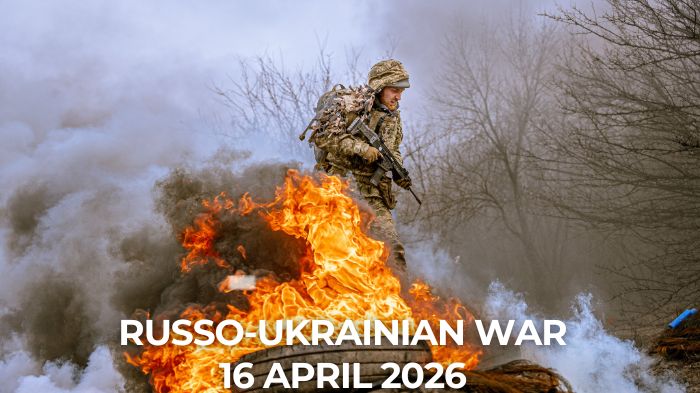
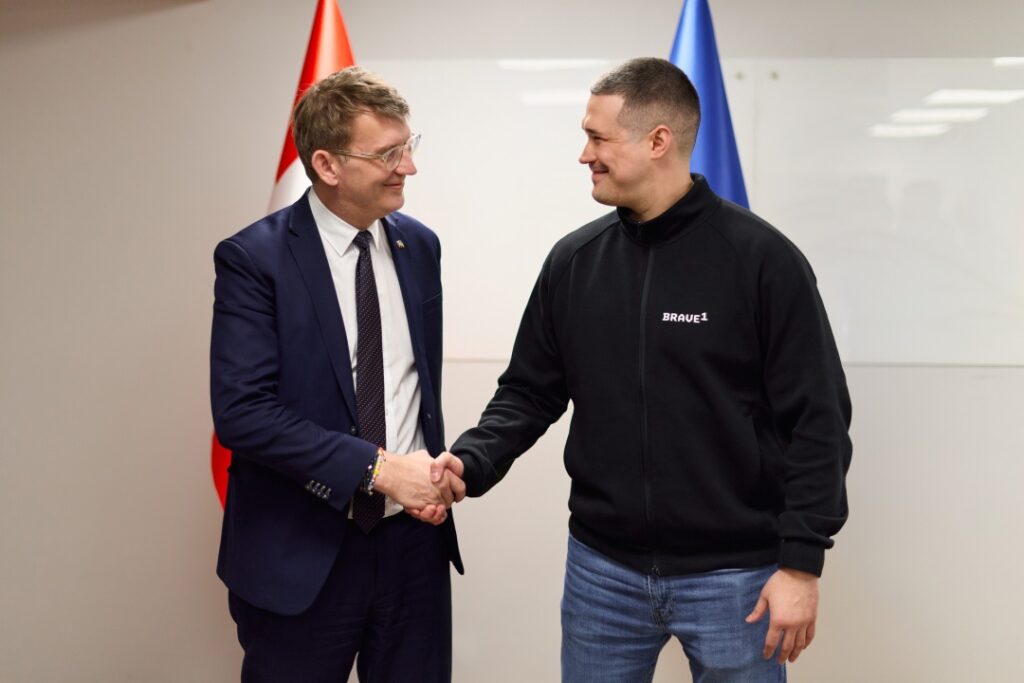
Russian Air Barrage Kills Dozens as Ukraine Pleads for More Defenses A relentless wave of Russian missile and drone attacks is killing scores of Ukrainian civilians, overwhelming the country’s air defenses as it faces critical ammunition shortages [131470][131017]. The strikes, described as the deadliest of the year, have prompted urgent new pleas from Kyiv for advanced Western air defense systems to protect its cities and infrastructure. Overnight assaults across multiple regions killed at least 17 people in one attack alone, with rescue workers continuing to search through rubble for survivors [131017]. In a separate barrage, at least 16 more civilians were killed [131470]. The widespread damage to apartment buildings and residential areas has underscored the vulnerability of the population. Ukrainian officials confirm that their air force is now forced to ration its most advanced interceptor missiles, such as those for Patriot systems, saving them only for the most critical threats due to a shortage of ammunition from delayed Western aid [131470]. President Volodymyr Zelenskyy has repeatedly condemned the attacks and called on allies to provide more protection [131017]. The mounting civilian toll comes as international support evolves. Denmark, a key military backer, announced a new €33 million aid package focused not on weapons, but on training Ukrainian soldiers in battlefield survival skills like medical care and mine clearance [85441]. Officials described the move as a shift toward ensuring Ukraine can sustain a capable fighting force for the long term. In a diplomatic development, Austria has agreed to join an international tribunal for the crime of aggression against Ukraine, adding political weight to efforts aimed at holding Russian leadership accountable for starting the war [131470]. Ukraine Rations Air Defenses as Civilian Toll Mounts Deadliest Russian Air Attack of Year Kills 17 in Ukraine Denmark's New Ukraine Aid: Buying Survival, Not Just Weapons

Latest Articles

Top UK Diplomat Quits After Clashing Over Cuts
A senior British civil servant, brought in to slash costs at the Foreign Office, has resigned after a short and turbulent tenure. Olly Robbins, a po...