Latest News
Stay updated with the latest news and articles
Top Stories
Global Leaders Warn "Geoeconomic Warfare" Now Tops List of World's Most Dangerous Threats
Global Leaders Warn "Geoeconomic Warfare" Now Tops List of World's Most Dangerous Threats A new report from the World Economic Forum (WEF) has identified economic conflict between nations as the most severe global risk for the next two years, surpassing traditional threats like armed conflict and climate disasters [49991]. The warning highlights a world where countries are increasingly using trade, supply chains, and investment as weapons in strategic rivalries. The WEF's annual Global Risks Report states that this "geoeconomic confrontation" is the dominant short-term danger, fueled by deepening geopolitical fractures [49991]. The report links this economic weaponization directly to two other top risks: the rapid spread of misinformation and severe social and political polarization worldwide [49991]. Analysts conclude these interconnected forces are creating a highly volatile international environment that threatens global stability and economic growth [49991]. This shift occurs against a backdrop of continued, deep economic interdependence between major powers, which complicates any clean break into rival blocs [6971]. Despite this integration, the strategic competition is intensifying, with the upcoming U.S. presidential election poised to significantly influence the direction of key international policies, from trade to climate [35508]. Observers note that the global order is undergoing a deliberate transformation, with allies and rivals alike preparing for potential shifts in American foreign policy [54213]. The findings will be a central topic at the WEF's upcoming annual meeting in Davos, Switzerland, where global leaders will confront a landscape where economic tools have become the newest instruments of power and conflict [49991]. Geoeconomic Warfare Named Top Global Threat for 2026 Globalization Shifts, But It Doesn't Reverse 2026: A World Shaped by Washington Trump's Plan to Remake the World Order Begins
Governments Take Aim at Housing Shortages with Major Construction and Conversion Plans
Governments Take Aim at Housing Shortages with Major Construction and Conversion Plans Facing severe housing shortages and skyrocketing costs, governments from the United States to Hawaii are pushing aggressive new plans to increase the supply of homes. The strategies range from sweeping national legislation to direct intervention in local rental markets, all targeting the core issue of a lack of affordable places to live. In the United States, the Senate has passed its most significant housing bill in decades with strong bipartisan support. The legislative package is designed to lower costs by funding and encouraging the construction of new homes across the country [100991]. Supporters argue that increasing supply is the primary way to address high prices [100991]. However, the bill's future remains uncertain as it moves to the House of Representatives, where it faces significant political hurdles [100719]. Taking more direct action, Hawaii's governor has ordered the conversion of 10,000 short-term rental units into long-term housing for local residents [61634]. The move directly targets the state's severe shortage, aiming to "return" thousands of condos and houses currently used as vacation rentals to the local market [61634]. Officials blame the prevalence of short-term rentals for driving up prices and forcing residents to leave the islands [61634]. Similarly, in the Netherlands, the new housing minister has declared a mission to build 100,000 homes a year to tackle one of Europe's worst housing shortages [108952]. The country needs an estimated 400,000 new homes, and the minister's strategy focuses on cutting complex rules and speeding up a notoriously slow planning process to break the current construction deadlock [108952]. Other regions are addressing specific housing crunches. Delta State in Nigeria has approved a large-scale project to build new student hostels across nine state-owned institutions to relieve severe accommodation shortages [103687]. In Hong Kong, officials are scrambling to secure land to build subsidized housing to rehouse residents left homeless by a deadly fire [25239]. These government-led initiatives highlight a growing consensus that addressing housing affordability requires direct intervention to increase the number of available homes, whether through new construction or reclaiming units from the tourist market. Senate Passes Bill to "Flood the Market" with New Homes U.S. Senate Passes Major Housing Bill, But House Hurdle Looms Hawaii to Seize 10,000 Vacation Rentals in Housing Crisis Move From Battlefield to Building Sites: Ex-General Takes On Dutch Housing Crisis Delta State Tackles Student Housing Crisis with Major Hostel Expansion Hong Kong Scrambles to Rehouse Deadly Fire Victims

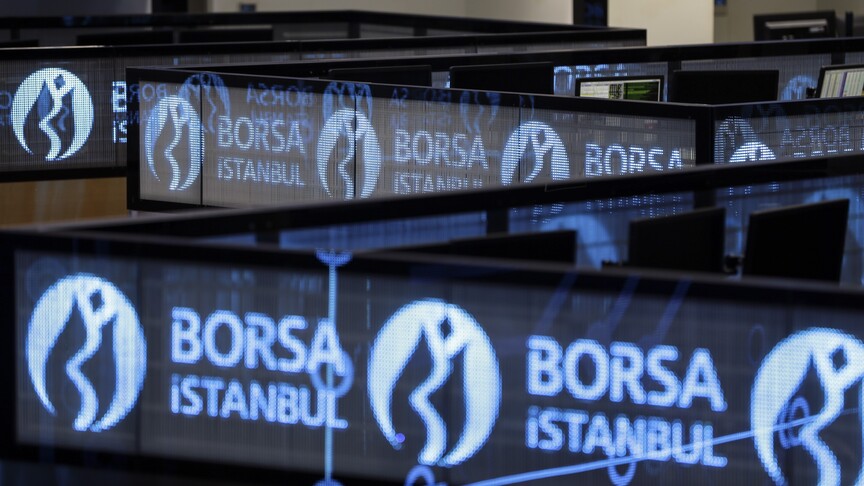
Turkish Stocks Surge Repeatedly as Central Bank Fuels Rally with New Cash Injection
Turkish Stocks Surge Repeatedly as Central Bank Fuels Rally with New Cash Injection Turkey's stock market is experiencing a sustained rally, marked by repeated single-day surges, as a new central bank policy directly funnels cheaper funding into local equities. The benchmark BIST 100 index, which tracks Turkey's top 100 companies, has posted a series of sharp gains. In one session, the index jumped 2.34%, a rise of approximately 316.4 points [71758]. The market opened another day with a powerful surge, gaining 99.1 points at the opening bell [110976]. The rally continued into a new trading year, with the BIST 100 leaping 2.1%, or 236.86 points, on its first session of 2026 [40181]. Analysts directly link the strong performance to a major policy shift by the Central Bank of the Republic of Turkey (CBRT). The bank announced it will provide cheaper financing to lenders who increase their purchases of domestic stocks, a move designed to directly support the equity market [80220]. Following this announcement, the BIST 100 closed with a strong increase of 32.6 points [80220]. The positive momentum has been consistent across multiple sessions. The index opened higher on a Tuesday, gaining 20.8 points [21230], and rose another 34.58 points at the Friday open [131327]. It also gained more than 55 points at the start of a Thursday session [8749] and added 26.64 points at a Wednesday open [33768]. The market closed one Tuesday up 143.73 points, a rise of more than 1% [128734]. Market observers view the BIST 100 as a key indicator of Turkey's financial health and economic sentiment [71758]. The current rally, fueled by targeted central bank action, indicates a period of renewed investor confidence in local assets [40181]. Analysts are now watching to see if this policy-driven positive trend will hold in the coming days and weeks [80220]. Turkish Stocks Surge as Key Index Jumps Over 1% Turkish Stock Market Rises in Early Tuesday Trading Turkish Stock Market Opens Strong, Gaining 34 Points Turkish Stocks Surge 2.3% in Single-Day Rally Turkish Stock Index Rises in Thursday Trading Turkish Stock Market Surges on Central Bank Boost Turkish Stocks Surge at Midweek Open Turkish Stock Market Opens Higher on Tuesday Turkish Stocks Soar 2.1% in First Session of 2026 Turkish Stocks Surge in Midweek Rally

Putin Demands Oligarch Cash and Digs In for Long War as Ukraine Fight Drains Russia
Putin Demands Oligarch Cash and Digs In for Long War as Ukraine Fight Drains Russia Facing severe financial strain from its prolonged invasion of Ukraine, the Kremlin is turning to Russia's wealthiest citizens for direct funding while signaling a commitment to fight indefinitely, according to multiple reports and analyses. Russian President Vladimir Putin has personally asked the country's oligarchs for donations to support the military budget, a move highlighting the growing pressure on state finances [112938]. This request comes as Russia's defense spending surged by 42% last year, widening the budget deficit [112938]. Analysts observing the diplomatic front report a firm, unchanged stance from the Russian leadership, suggesting a strategy built for a prolonged conflict despite the economic difficulty [17910]. An expert on U.S.-Europe relations stated that Russia, believing it holds a strong battlefield position, feels no urgency to negotiate a peace deal [17045]. This resolve was underscored by Putin himself, who declared that Moscow's goals in Ukraine would be achieved "through diplomatic negotiations or continued military force," positioning talks as a tool to secure gains rather than a path to compromise [28790]. U.S. intelligence assessments support this, indicating Putin's ultimate aim extends beyond Ukraine to reclaiming influence over former Soviet states, pointing to a long-term campaign [31282]. Financially, the war effort is taking a toll. To stabilize the economy, the Russian government has raised taxes, including a recent increase in value-added tax, or VAT [112938]. Sanctions have also forced Russia to sell oil at large discounts, reducing state income [112938]. In a meeting with officials, Putin advised a "moderately conservative approach" to spending any extra revenue from global oil prices [112938]. On the ground, Ukrainian President Volodymyr Zelenskyy reported that Russia is using better weather to intensify its attacks, though he claimed Russian army losses have increased even more [108784]. The Russian defense ministry announced the capture of a small village in Ukraine's northern Sumy region [108784]. Internationally, Russia is pursuing a dual-track strategy, analysts say. To European leaders, Russian messages remain aggressive, blaming the West for the conflict, while simultaneously asking the United States to remove "illegal" sanctions and resume trade talks [82150]. Putin has also engaged in a diplomatic surge, holding high-level meetings with the leaders of Turkey and Iran to discuss Ukraine and strengthen regional partnerships [24521]. Putin Seeks Oligarch Donations to Fund War as Defence Budget Strains Putin Signals Long War in Ukraine Amid Economic Strain Russia Holds Advantage, In No Rush on Ukraine Deal, Expert Says Putin: Russia Will Take Ukraine by "Force or Diplomacy" U.S. Intelligence: Putin's Goal is "Former Soviet Empire" Russia Intensifies Attacks as US-Ukraine Peace Talks End Russia's Dual Strategy: Talk War with Europe, Talk Trade with America Putin's Diplomatic Surge: Talks with Turkey, Iran Focus on Ukraine and Regional Crises

Turkish Opposition Leaders Decry "Political Operations" as Government Detentions Spark Crisis
Turkish Opposition Leaders Decry "Political Operations" as Government Detentions Spark Crisis A wave of detentions targeting opposition officials in Turkey has ignited a fierce political crisis, with senior figures accusing the government of orchestrating "political operations" and abandoning the rule of law [73277]. The arrests have drawn sharp condemnation from across the opposition, framing the actions as a direct assault on democratic institutions. The tensions escalated following the detention of a former mayor from the main opposition Republican People'ss Party (CHP) and other officials. Akın Gürlek, a CHP MP, declared the country is not a "state of law" and labeled the legal actions a politically motivated operation [73277]. "The detentions are not based on legitimate law," Gürlek stated. Echoing this sentiment, Istanbul Mayor Ekrem İmamoğlu, who recently faced his own high-profile trial, accused the judiciary of being a political tool. Outside a courthouse, he asserted his trial was "political from the beginning" and accused a leading prosecutor of being a "politician in disguise" who used "the tentacles of an octopus" to send messages to the capital [98374]. The opposition's warnings point to a deepening conflict. CHP leader Özgür Özel forecast difficult days ahead, telling supporters, "Tomorrow morning will be harder than this morning. Let no one have any doubt about that" [73277]. Within this charged climate, opposition politician Halide Türkoğlu argued that the state's suppression extends to fundamental democratic struggles, including women's rights. She stated that “the political institution itself is becoming the most fundamental obstacle in front of women,” and concluded that for the state to become democratic, it must recognize this struggle [92666]. The coordinated statements from opposition leaders frame the recent detentions not as isolated legal events, but as part of a systematic political campaign, setting the stage for further confrontation [73277][98374]. Turkish Opposition MP: "This is a Political Operation, Not Rule of Law" Istanbul Mayor: "This Trial Was Political From the Start" "State Must Recognize Women's Struggle to Become Democratic, Says Turkish Politician"
Europe Scrambles to Counter US Pressure as Transatlantic Rift Widens
Europe Scrambles to Counter US Pressure as Transatlantic Rift Widens A growing number of European leaders and analysts are warning that the United States is mounting an aggressive campaign to reshape European policy, leveraging military dependency and economic power to advance its own interests. The pressure spans digital regulation, foreign policy, and economic models, exposing Europe's strategic vulnerabilities and sparking calls for greater autonomy. The tactics form a "pincer attack," according to a new report, which alleges U.S. tech giants are collaborating with the White House to pressure European regulators, using Europe's reliance on American military protection as leverage [44570]. This digital dependence is stark: Europe relies on U.S. companies for essential cloud computing, software, and payment systems, making it difficult to enforce restrictions on those same firms [58167]. Simultaneously, European officials accuse the U.S. of an "ideological attack" targeting Europe's social welfare systems and worker protections [78938]. The pressure extends to foreign policy, where Washington is pushing European allies to accept a Ukraine peace deal that critics argue would favor Russian and American interests over Ukrainian sovereignty [23057]. In another arena, the U.S. is pursuing a resource-focused foreign policy—dubbed the "Donroe Doctrine" by critics—that has sparked alarm among European and Canadian leaders [43628]. Faced with this multifaceted pressure, Europe's response has often been muted or divided. While publicly rejecting harsh U.S. rhetoric on issues like migration, Europe is itself pursuing an "assertive migration diplomacy" in Africa, using aid and trade as leverage to outsource border control [80997]. Regarding a potential U.S.-led conflict with Iran—a direct threat to European energy security and stability—European governments have offered only quiet diplomatic protests, a significant shift from their vocal opposition to the Iraq war in 2003 [116413]. The escalating tensions have ignited a fierce debate within Europe about the cost of true strategic independence. One estimate suggests achieving full military autonomy from the U.S. could require spending up to €1 trillion, or 10% of the EU's economic output [60363]. Analysts warn the bloc is dangerously unprepared for a potential second Trump presidency, having relied too heavily on regulation instead of building concrete economic and military power [69895]. In response, some European leaders are advocating for a united front. Germany's finance minister argues that a strong Germany is essential for a secure Europe, emphasizing the need to reduce dangerous dependencies on foreign fossil fuels and critical minerals [131265]. Others point to Europe's growing leadership in green energy—which is generating major economic savings—as a point of divergence from a U.S. strategy still centered on fossil fuels [88037]. The core challenge, experts suggest, is Europe's fundamental dependence, which was a "deliberate policy choice" that has now left the bloc facing a critical test of its global relevance [69895]. The push for "digital sovereignty" and a stronger European defense pillar within NATO are emerging as key, if incomplete, answers to a partnership that is increasingly defined by coercion. US Tech Giants and White House Ally to Pressure EU, Report Warns Belgian Minister: U.S. Waging "Ideological Attack" on Europe Europe's Digital Dilemma: Reliant on US Tech It Seeks to Curb Trump's America Bullies Europe for a Ukraine Deal It Wants US "Donroe Doctrine" Sparks Global Alarm: "Resources Belong to Us" Europe's Migration Pressure: What's Really Changing? Europe's Muted Response to Iran War Threatens Its Own Security Europe's €1 Trillion Question: Can It Buy Military Independence? Trump Era Demands "Political Adults" in EU, Analysts Warn Germany's Finance Minister: A Strong Europe Needs a Strong Germany U.S. Doubles Down on Fossil Fuels as Europe Cashes In on Green Energy

AI Giants Race to Build "World Models" That Understand Reality
AI Giants Race to Build "World Models" That Understand Reality A new and expensive battle is underway in artificial intelligence, moving beyond chatbots to systems that can comprehend and simulate the physical world. Major tech firms and well-funded startups are pouring billions into developing "world models," a technology poised to reshape industries from gaming to robotics. Unlike current large language models that process text, world models aim to create AI that learns from and interacts with real-world environments. This shift, often called "embodied intelligence," is seen as the next frontier. "Our expertise in vision-based AI puts us in a strong position," said SenseTime co-founder Lin Dahua, as his company pivots to lead in AI for robots and digital agents by leveraging its strength in visual technology [22794]. The competition is global and intense. In China, Alibaba Group recently unveiled "Happy Oyster," an open-ended model designed for creating and interacting with fluid, real-time virtual worlds [130687]. Across the globe, French startup AMI announced a $1 billion funding round to build AI that learns "in the way animals and humans do," with the goal of creating "fairly universal intelligent systems" within five years [98165]. The immediate commercial target is the massive video game industry, valued at approximately $190 billion. Tech giants like Google's DeepMind and startups such as World Labs, founded by AI scientist Fei-Fei Li, are developing world models to automate the creation of complex 3D environments, which could drastically cut development time and costs [34854]. These systems promise to generate entire digital worlds, starting with background landscapes and potentially evolving into dynamic, expansive game settings. The military implications are also being tested. In a recent simulation, a Chinese AI "officer" was deployed in a battalion command tent during a mock amphibious assault. Designed to cut through the "fog of war," it processed chaotic battlefield data and provided decision-making support, reportedly outperforming human planners in speed [124817]. This highlights a parallel global drive to militarize AI for faster analysis and strategy. The collective push signals a strategic pivot from language-centric AI to systems that grasp reality. The goal is to power everything from autonomous robots and advanced simulations to new forms of human-computer interaction, marking a fundamental step toward more general and adaptable artificial intelligence. SenseTime Bets on Robot AI to Regain Lead AI "Godmother" Li Fei-Fei, Chinese Giants Race for "World Model" Dominance French AI Startup Aims for Animal-Like Intelligence with $1 Billion Boost AI "World Models" Could Upend the $190 Billion Gaming Industry China's New AI "Officer" Outsmarts Humans in War Games


Turkey Assumes Command of Major NATO Force, Leads 2,000 Troops in Largest 2024 Drills
Turkey Assumes Command of Major NATO Force, Leads 2,000 Troops in Largest 2024 Drills Turkey has taken command of a key NATO naval strike force and is deploying thousands of troops to lead major alliance exercises in Europe, showcasing its growing role in transatlantic security. The Turkish Naval Forces formally assumed control of the NATO Amphibious Task Force and its Landing Force Command on July 1, a role it will hold for one year [54453]. This powerful naval group is designed for assaults from sea to land and gives Turkey responsibility for planning and leading NATO exercises and potential missions in the region. Concurrently, approximately 2,000 Turkish troops are deploying to Germany to participate in NATO's largest exercise of 2024, Steadfast Defender 24 [70222]. The first Turkish military aircraft have already landed at Germany’s Wunstorf Air Base, marking the start of the drills which run from February 8 to February 20 across Europe [70222]. In a separate but related naval exercise, Turkish naval and army units are conducting joint amphibious operations in Germany this week as part of the NATO exercise Steadfast Dart 2026 [80228]. A key feature of Turkey's involvement in these drills is the operational use of its own domestically produced defense platforms [80228]. These movements are part of NATO's broader reinforcement of its eastern flank and demonstrate the alliance's ability to rapidly deploy forces across member states [70222]. The assignment of command is a routine rotation among member nations, but the scale of Turkey's simultaneous participation in major exercises underscores its active military profile within the alliance [54453]. Turkey Assumes Command of Key NATO Naval Strike Force **NATO's Biggest 2024 Drill Begins with Turkish Troops Landing in Germany** Turkish Forces Deploy Homegrown Tech in Major NATO Drill


Russia's Deadliest Air Attack of the Year Kills 17 as Ukraine Rations Air Defenses
Russia's Deadliest Air Attack of the Year Kills 17 as Ukraine Rations Air Defenses A severe shortage of air defense missiles is forcing Ukraine to ration its most advanced systems, leaving cities exposed to a relentless Russian air campaign that produced its deadliest single attack of the year overnight, killing at least 17 civilians [131017][131470]. The overnight assault struck multiple regions, damaging apartment buildings and trapping people under rubble. Rescue teams are continuing to search for survivors, and the death toll is expected to rise [131017]. Ukrainian President Volodymyr Zelenskyy condemned the strikes and reiterated an urgent plea for more air defense systems from Western allies [131017]. In response to the barrage, Ukraine's air force has been compelled to conserve its limited stock of Patriot missile interceptors, deploying them only against the most critical threats like ballistic missiles. This rationing is a direct result of delays in promised military aid from Western partners [131470]. The acute need for ammunition comes as the war enters its fifth year, with Russia making only incremental territorial gains at a high cost. Over the past year, Russian forces captured less than 1% of Ukraine's total territory, advancing as little as 23 meters per day in some key areas [84702]. Despite the slow pace, the constant aerial bombardment is taking a heavy toll on civilians and infrastructure. In a related development, the environmental damage from the war is spreading across borders. A Russian strike on a Ukrainian dam earlier this month caused an oil spill that has now traveled down the Nistru River, threatening drinking water supplies in neighboring Moldova [125731]. Deadliest Russian Air Attack of Year Kills 17 in Ukraine Ukraine Rations Air Defenses as Civilian Toll Mounts Russia's War of Inches: Ukraine Holds Firm After Four Years Oil in the Water: Russian Strike on Ukraine Pollutes Moldova's River
Global Powers Scramble for Africa's Minerals, Sparking New "Silent Scramble"
Global Powers Scramble for Africa's Minerals, Sparking New "Silent Scramble" A new and intense competition for Africa's vast mineral wealth is accelerating, as major world powers seek to secure the critical resources needed for modern technology and green energy. This "silent scramble" is forcing African nations to navigate between rival offers from the United States, China, and other global players, all while trying to ensure the continent itself benefits from its own resources [68293][83553]. The race centers on minerals like lithium, cobalt, and rare earth elements, which are essential for manufacturing electric vehicle batteries, renewable energy systems, and smartphones. With global demand soaring, Africa's reserves have become a focal point of geopolitical strategy [83553][68293]. The United States is advancing its strategy through initiatives like the Minerals Security Partnership, emphasizing transparency and high-standard investments to build Western-aligned supply chains. Meanwhile, China is leveraging its long-established model of offering infrastructure loans in exchange for mining access and trade deals [68293][44946]. This competition extends beyond economics into the realm of security and diplomacy. In West Africa's Sahel region, Russia has rapidly expanded its military influence through its "Africa Corps," filling a vacuum left by departing Western forces and gaining political leverage in nations like Mali, Niger, and Burkina Faso [67411]. Concurrently, in the Horn of Africa, Ethiopia's drive to secure sea access is attracting a mix of powers—including the U.S., China, Turkey, and Gulf states—all seeking naval bases and trade partnerships along the continent's coasts [87433]. The situation presents both significant risk and opportunity for African governments. Analysts warn that without strong, unified negotiation, individual countries could be pressured into unfair deals that export raw materials without creating local jobs or industrial capacity [83553]. In response, there is a growing push for continental coordination. Regional economic blocs and pan-African institutions like the African Export-Import Bank (Afreximbank) are being urged to act collectively to ensure minerals benefit the entire continent through local processing and better terms [83553][127881]. "The outcome of this geopolitical competition may ultimately be decided by which offers the better deal for Africa's economic future," noted one analysis of the U.S.-China rivalry for resources [68293]. As global tensions reshape alliances, African leaders are increasingly pursuing a strategy of "multi-alignment"—engaging with diverse powers to maximize their own development and sovereign interests [35302][44946]. China, US Race for Africa's Minerals. Who Wins in Africa? The New Scramble: Africa's Minerals and the Silent Race U.S. and Russia in High-Stakes Scramble for Africa's Sahel **Global Powers Rush for Africa's Coast as Ethiopia Seeks a Port** African Nations Pivot from West to Russia and China Amid Economic Strain Ethiopia, Afreximbank Push for Africa to "Feed Itself" Africa Gains Global Ground Amid U.S. Turmoil
Latest Articles

Top UK Diplomat Quits After Clashing Over Cuts
A senior British civil servant, brought in to slash costs at the Foreign Office, has resigned after a short and turbulent tenure. Olly Robbins, a po...