Latest News
Stay updated with the latest news and articles
Top Stories
Trump Revives Push to Buy Greenland, Using Tariff Threats and Cash Offers
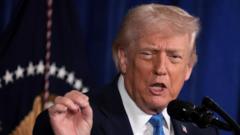
Trump Revives Push to Buy Greenland, Using Tariff Threats and Cash Offers Former President Donald Trump is renewing his controversial campaign to purchase Greenland, employing a mix of financial incentives, tariff threats, and public pressure tactics more common to real estate deals than international diplomacy. The autonomous Danish territory in the Arctic has consistently stated it is not for sale [50444]. Trump publicly discussed the potential acquisition during a speech at the World Economic Forum in Davos, Switzerland, telling global leaders the United States should be allowed to buy the island [55297]. He later clarified he does not want to use military force, but called for immediate negotiations to secure a purchase [55327]. His administration has reportedly made cash offers directly to Greenlanders while threatening economic consequences for Denmark if it obstructs a deal [50444]. The push underscores Trump’s unorthodox foreign policy approach, which experts say conflates genuine strategic interests with unrealistic expansionist ideas [50444]. Greenland’s location makes it increasingly valuable for Arctic shipping lanes and resource extraction, but its government and people have repeatedly rejected any notion of a sale [52669]. Denmark, which handles Greenland's foreign and defense policy, also firmly opposes the transaction [50444]. Analysts note that Trump’s tactics—including public criticism of NATO allies and threats of tariffs—ignore traditional diplomatic "soft power" and emphasize direct demands [55327]. However, experts widely agree the strategy is doomed to fail, as tariff threats are unlikely to coerce a sovereign people and risk provoking backlash from other global powers with Arctic interests, like Russia and China [52669]. The Danish and Greenlandic governments maintain a unified position: the island is not on the market [50444]. Trump at Davos: Questions NATO, Wants to Buy Greenland Trump Eyes Greenland: Cash, Threats, and Military Force Trump at Davos: Skips Soft Power, Targets Greenland and NATO Allies Trump's Tariff Plan Fails to "Capture" Greenland

Farmers Block Highways, Demand Price Guarantees as U.S. Trade Deal Looms
Farmers Block Highways, Demand Price Guarantees as U.S. Trade Deal Looms A wave of protests by Indian farmers is challenging the government's trade and agricultural policies, with fears that a new agreement with the United States could flood the market with cheap imports and undermine local livelihoods. For the second time in recent months, farmers have mobilized nationwide, using tractors and trucks to block major highways and railway lines in a show of force [75183]. The immediate trigger is a trade pact announced following negotiations with the United States, which protesters believe will lower tariffs on American farm goods [75183][73750]. At the heart of the dispute is India's Minimum Support Price (MSP) system, a government mechanism that buys key staples like wheat and rice from farmers at a guaranteed price [73750]. Farmer unions fear the trade terms could force India to reduce these supports or allow a surge of subsidized U.S. produce, devastating their incomes [73750]. "We don't trust the safeguards they promise," said one protest leader, echoing widespread skepticism of government assurances [75183]. The protests have centered on key entry points to the capital, New Delhi, with police significantly bolstering security in response [73750]. The demonstrations highlight the potent political influence of India's vast farming community, a crucial voting bloc that the government must carefully balance against its international diplomatic ambitions [73750]. While officials insist the MSP system remains protected and negotiations are ongoing, farmer leaders are demanding a new law that would legally cement the current price guarantees [73750]. The standoff underscores the persistent tensions in India's economy, where high-growth sectors like technology advance rapidly while the agricultural foundation supporting millions remains in a precarious state [96383]. Indian Farmers Strike, Fearing U.S. Trade Deal Will Flood Market India's Farmers Protest as Modi-Trump Trade Pact Threatens Key Crop Prices India's Economy Booms, But Not For Everyone
U.S. Forces Capture Venezuelan President Maduro in Major Military Strike, Vow to "Run" Country
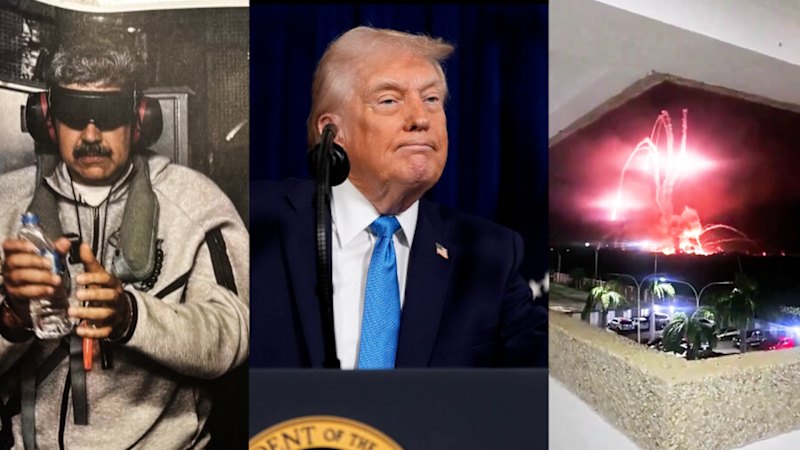
U.S. Forces Capture Venezuelan President Maduro in Major Military Strike, Vow to "Run" Country U.S. military forces have captured Venezuelan President Nicolás Maduro and his wife, Cilia Flores, following a large-scale military strike on Venezuelan territory. The unprecedented operation, ordered by the administration of President Donald Trump, marks a direct and dramatic escalation in the long-standing political crisis in the South American nation [41033][41227][41379]. According to U.S. officials, the operation resulted in the detention of the Venezuelan leader, who has long been labeled illegitimate by Washington [40668][41379]. Maduro and his wife have been taken to New York, where they will face criminal charges, including terrorism and narcotics offenses [41136][40942]. In a statement following the capture, President Trump declared that the United States will now "run" Venezuela [41227][42114]. He stated a key objective is to "take back the oil" and fix the country's collapsed oil infrastructure, aiming to restore access to the world's largest proven oil reserves [41227][40871][41525]. Trump framed the action as ensuring "American dominance in the western hemisphere will never be questioned again" [41525]. The unilateral military intervention has created an immediate power vacuum and deep uncertainty for Venezuela's 30 million citizens [41136][42114]. No clear successor has been named, and the status of the remaining government is unclear [41136][41379]. While the U.S. has recognized opposition leader Juan Guaidó as Venezuela's legitimate president since 2019, the path forward for forming a new government remains uncertain [41379][42114]. International legal experts have immediately questioned the legality of the attack, predicting the U.S. will justify it as an act of self-defense [40942]. The action is expected to trigger a major geopolitical crisis and intense debate over sovereignty [40668][40737]. U.S. Forces Capture Venezuelan President in Military Strike Venezuela Leader Ousted in U.S. Strike, Faces Charges in New York US Strikes Venezuela, Captures President Maduro U.S. Captures Venezuela's President in Secret Operation U.S. Forces Capture Venezuelan President Nicolás Maduro US Strikes Venezuela, Abducts President Maduro US Captures Venezuelan President in "Large-Scale Strike" U.S. Military Strike Captures Venezuelan Leader Maduro U.S. Captures Maduro: What Now for Venezuela? US Seizes Venezuelan President, Vows to "Run" Country and "Take Back the Oil" U.S. Claims Capture of Venezuelan Leader in Military Strike U.S. Strikes Venezuela, Captures President Maduro
AI Replay Tech Makes Olympic Jumps Spin on Screen: A New View for Millions
AI Replay Tech Makes Olympic Jumps Spin on Screen: A New View for Millions A new artificial intelligence-powered broadcasting system has debuted at the Winter Olympics, transforming how millions of viewers watch sports by generating replays from physically impossible angles. The technology creates detailed 3D models of athletes from standard broadcast footage, allowing for dynamic, computer-generated perspectives [82096]. The innovation was showcased during American figure skater Ilia Malinin's performance. For viewers worldwide, the replay of his quadruple jump did not show a standard side angle. Instead, the video frames appeared to orbit around the athlete as he spun in mid-air, providing a startling and clear view of all four revolutions [82096]. This "orbiting" replay is one of many new vantage points created by the AI system at the Milano Cortina Games. Beyond enhancing television broadcasts, the technology is also being used to assist officials with judging and to generate unique content for social media platforms [82096]. The project blends cutting-edge tech with a touch of Olympic history. Photographers at the same Games are also using adapted 70-year-old Graflex cameras from the 1950s to capture images, which are then transmitted live via smartphones—a nod to the 1956 Winter Games hosted by Cortina [79782]. AI Replay Tech Makes Olympic Jumps Spin on Screen Vintage Cameras Capture 2026 Olympics for Modern Crowd

Court Overturns African Football Champion, Strips Senegal of Title in Unprecedented Move
Court Overturns African Football Champion, Strips Senegal of Title in Unprecedented Move In a decision that has sent shockwaves through the world of sports, the Court of Arbitration for Sport (CAS) has overturned the result of the 2023 Africa Cup of Nations (AFCON) final, stripping Senegal of its championship and declaring Morocco the winner [105769]. The stunning ruling, announced Tuesday, erases Senegal's celebrated first continental title from the record books. The court's decision is final and cannot be appealed [105769]. The African football governing body, which referred the case to the court, stated it will release the full details of the judgment later this week [105769]. No official reason for the overturn was immediately provided in the brief announcement [105769]. The chaotic tournament final was originally played in January, with Senegal emerging victorious [105769]. The unprecedented court ruling fundamentally alters the recent history of African football, the continent's premier international football competition [32394][105769]. The Africa Cup of Nations tournament itself recently concluded its group stage, where matches like the one between defending champion Ivory Coast and already-eliminated Gabon were played for pride and momentum despite having no impact on the knockout round standings [38697]. The competition opened with dramatic moments, such as Zambia's Patson Daka scoring a stoppage-time equalizer with a diving header to secure a 1-1 draw against Mali [32394]. Court Shocker: Morocco Awarded Africa Cup Title, Overturning Senegal's Win Daka's Last-Minute Header Stuns Mali in AFCON Opener AFCON Finale: Why Play a Game That Doesn't Matter?


From Chin Balancing to Viral Buttons: How Communities Are Fighting to Keep Their Cultures Alive
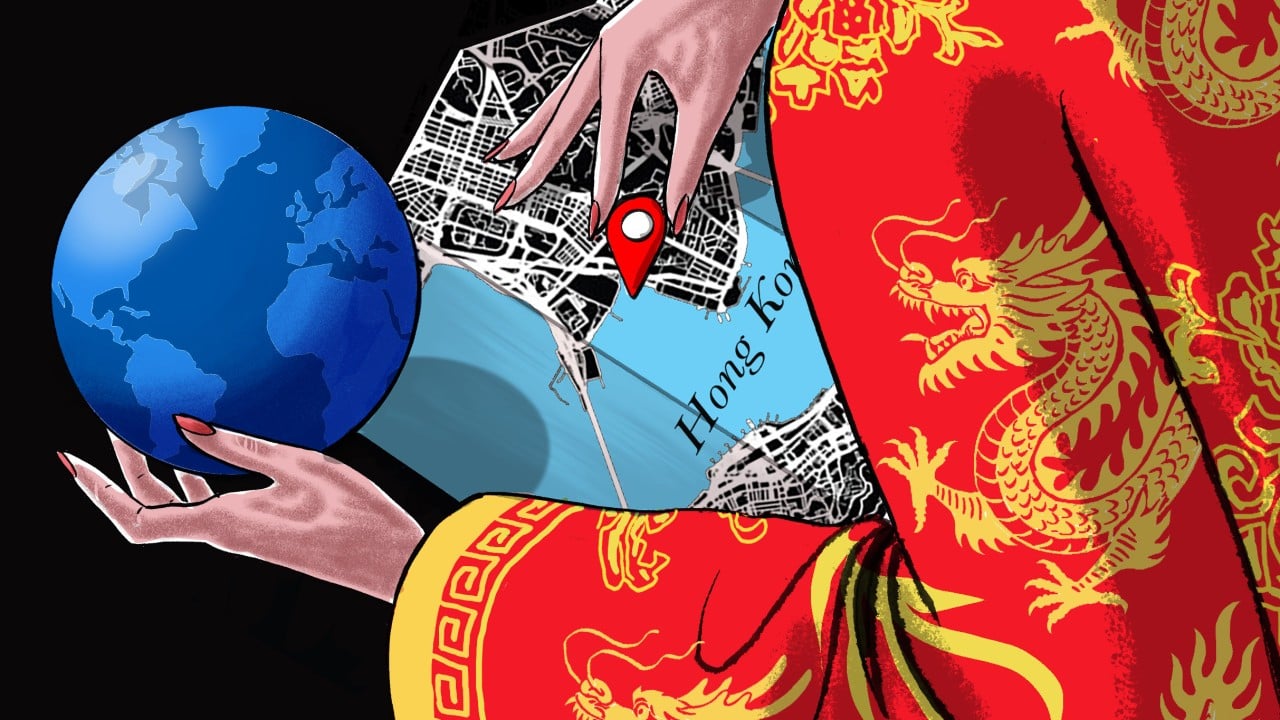
**From Chin Balancing to Viral Buttons: How Communities Are Fighting to Keep Their Cultures Alive** Around the world, from the streets of Malaysia to the Arctic Circle, communities are leveraging ancient traditions and modern platforms to assert their cultural identities in an increasingly homogenized world. These acts of preservation and promotion, often born from a history of displacement or suppression, are gaining new audiences and, in some cases, aiming for global recognition. In Malaysia, the vibrant Chingay parade in George Town saw performers balancing towering flagpoles on their chins and fingertips, a spectacle that is now part of a joint Malaysia-Singapore bid for UNESCO Intangible Cultural Heritage status [31985]. Organizers hope the listing will protect and promote the century-old art form on a world stage. This push for recognition through cultural expression is echoed in the work of Indigenous artists. A Sámi DJ duo from Norway's remote Arctic north is gaining international attention by blending modern electronic music with *joik*, their traditional rhythmic singing style [79759]. Their success taps into a growing global appetite for authentic Indigenous culture within contemporary club scenes. Similarly, in Syria, researchers point to the ancient craft of embroidery as a powerful, living symbol of cultural identity that has endured through years of war [47200]. The practice is described not as mere decoration, but as a deeply rooted form of expression passed through generations. The Circassian community in Syria, displaced from the North Caucasus in the 19th century, is also cited as a model for maintaining a distinct language and set of customs while fully integrating into national society [36001]. These traditions are finding new life and sometimes unexpected fame in the digital age. In Hong Kong, a group of women tattoo artists are gaining notice for channeling traditional Chinese painting, calligraphy, and Buddhist philosophy into their work, creating a unique fusion of ancient art and modern self-expression [44500]. Meanwhile, the sudden viral popularity of "frog buttons"—traditional Chinese fasteners seen on a jacket at Shanghai Fashion Week—demonstrates how heritage design elements can capture the global fashion zeitgeist [44500]. The phenomenon of cultural trends reaching massive online audiences was starkly illustrated by the "Chinamaxxing" meme in 2025, where people worldwide adopted Chinese cultural habits like drinking hot water and wearing house slippers for viral content [109231]. For many in the Chinese diaspora, watching lifelong customs become a short-lived internet trend was a complex experience, highlighting the fine line between appreciation and fleeting commodification. Music remains a potent vessel for cultural continuity and resistance. A curated collection of Ukrainian Christmas carols, or *koliadky*, showcases songs ranging from centuries-old folk chants to modern adaptations, many carrying subtle messages of national identity—a practice with deep historical roots during periods of oppression [32337]. Scholars note these songs have long preserved language and culture. As these diverse examples show, from seeking UNESCO protection to riding viral algorithms, communities are actively writing the next chapter for their cultural heritage, ensuring it is not merely remembered but lived and shared. Malaysia's Chin-Balancing Spectacle Aims for UNESCO Glory Remote DJs Rise with Sámi Sound, Fueling Indigenous Pride Syrian Embroidery Survives War, Defines Identity Syria's North Caucasus Legacy: The Circassians' Enduring Identity **Hidden Stories: From Tattoo Needles to Viral Buttons** Chinamaxxing: When Your Culture Becomes a Viral Meme Ukrainian Christmas Carols: Ancient Sounds of Defiance and Hope

Sleep in Cars for Two Days: Americans Queue for Free Healthcare as Costs Soar
Sleep in Cars for Two Days: Americans Queue for Free Healthcare as Costs Soar Hundreds of Americans are sleeping in their cars for up to 48 hours to secure free medical and dental care at pop-up clinics, highlighting a crisis of affordability in the nation's healthcare system. The charity Remote Area Medical (RAM), which typically provides services in developing nations, now runs temporary clinics across the United States to meet surging domestic demand [126324]. Patients arrive days in advance, forming long lines in parking lots to receive no-cost dental work, eye exams, and general medical care from volunteer professionals [126324]. Chris Hall, RAM's Chief Executive Officer, directly linked the extreme waits to the high price of care. He stated that healthcare has become financially "out of reach" for many, forcing people to seek charity for basic procedures [126324]. The situation underscores a systemic gap where even insured individuals can be deterred by high deductibles and out-of-pocket expenses [126324]. The clinics operate on a first-come, first-served basis, with services provided entirely free of charge. The sight of families waiting overnight in vehicles has become a stark symbol of the barriers to access faced by low-income and uninsured populations [126324]. **Americans Sleep in Cars for Free Healthcare**

U.S. Forces Capture Venezuelan President Maduro in Unprecedented Military Raid
U.S. Forces Capture Venezuelan President Maduro in Unprecedented Military Raid In a dramatic escalation of tensions, United States forces have captured Venezuelan President Nicolás Maduro in a direct military operation on South American soil. The sitting head of state was seized in Caracas and flown to New York to face drug trafficking charges, an action that has sent shockwaves across Latin America and revived deep-seated fears of U.S. intervention [41460][41880][47297]. The operation, which also detained Maduro's wife, represents the first time the U.S. has directly apprehended a sitting head of state from the region, a move analysts describe as an act of "extraterritorial apprehension" [47297][41064]. President Donald Trump announced the capture, stating the U.S. would oversee Venezuela's government but without immediately setting a date for new elections [41460]. Reaction from Latin American capitals has been sharply divided, exposing a regional political split. Governments historically critical of Maduro, including Colombia and Brazil, have offered cautious support for the action. Others, such as Mexico and Bolivia, have condemned it as a blatant violation of international law and national sovereignty [47297][47126]. Beneath the public disagreements, however, lies a private, unifying anxiety. Analysts report that leaders across the political spectrum are conducting urgent internal reviews, quietly assessing their own vulnerability to similar foreign interventions. The precedent set by the raid has forced every nation to re-examine its relationships with Washington and its domestic political stability [47126][47297]. The United Nations Security Council has called an emergency meeting at Venezuela's request to address what it terms a violation of its sovereignty [41880]. Meanwhile, the operation is seen as a direct challenge to China's expanding economic and diplomatic influence in Latin America, a region where Beijing has become the top trading partner and lender for many nations [41460][45747]. Experts warn the action marks a stark revival of the Monroe Doctrine, the long-standing U.S. policy of opposing foreign powers in the Americas, and represents a return to a century-old pattern of U.S. intervention to align regional governments with its interests [41460][41465]. President Trump underscored this stance, declaring after the capture that "American dominance in the western hemisphere will never be questioned again" [41064]. The immediate crisis centers on Venezuela's political future and Maduro's legal proceedings. The longer-term effect, observers note, is a continent now grappling with a fundamental shift in the rules of engagement, leaving an atmosphere of suspicion and heightened tension [47126]. U.S. Capture of Venezuela's Maduro Sends Shockwaves Through Latin America U.S. Capture of Maduro Sends Shockwave Through Latin America U.S. Captures Venezuela's Leader, Challenging China's Regional Reach Venezuela's President Seized by U.S., Faces Court in New York Trump Revives US Habit of Ousting Latin American Leaders Trump Orders First Direct US Military Attack on South America
Latest Articles
Pope's First Africa Trip Starts in Muslim Algeria
Pope Leo begins his first tour of Africa this week. His first stop is Algeria, a country where most people are Muslim. The Catholic Church is growin...
World's Oldest Gorilla Turns 69
The world's oldest known gorilla has celebrated her 69th birthday. Fatou, a resident of the Berlin Zoo, received a special fruit cake. Last year, Gu...
Fujimori Eyes Comeback: Peru Braces for Presidential Runoff
Early results suggest Peru's presidential election is headed for a second round. Keiko Fujimori, the controversial former first daughter, appears lik...
Lufthansa Pilots Strike Again: Fourth Walkout Grounds Hundreds of Flights
Pilots at German airline Lufthansa have begun a two-day strike, causing massive flight cancellations. The walkout, led by the Vereinigung Cockpit (V...
Pope to Trump: "I Am Not Afraid"
Pope Francis has directly addressed the political climate in the United States, stating he does not fear the administration of President Donald Trump...
Former Lafarge CEO Jailed for Paying Terrorists to Keep Factory Open
A French court has sentenced a former CEO of cement giant Lafarge to prison for funding terrorist groups in Syria. The Paris court ruled that Lafarg...
Burkina Faso's Junta Rejects Democracy, Exiled Opposition Fights Back
Burkina Faso's military ruler has publicly rejected democracy. Captain Ibrahim Traoré, who took power in a 2022 coup, called the system a "Western pr...
Australia Names First Female Army Chief
Major General Susan Coyle will become the head of the Australian Army in July. Her appointment makes history. She will be the first woman to lead th...
One in Four in Germany Now Has an Immigration Background
New government data reveals a significant demographic milestone in Germany. For the first time, over one-quarter of the population has what officials...
Pakistan’s Peace Push: Can It Overcome Its Own Crises?
Pakistan is winning international praise for helping to prevent war between Iran and the United States. Its diplomats worked quietly to lower tension...
Buchenwald Anniversary Marked by Memory and Protest
Germany marked the 81st anniversary of the liberation of the Buchenwald concentration camp on Thursday. The ceremony remembered the more than 56,000...
France to Debate Returning Art Stolen During Colonial Era
French lawmakers will soon debate a new bill. This bill could make it easier to return cultural artifacts taken from Africa during the colonial perio...
Orban's 16-Year Rule Ends in Defeat, a Blow to Illiberalism in Europe
Viktor Orban, Hungary's prime minister for 16 years, was voted out of power in a decisive election on Sunday. His defeat is a major event with implic...
Pope and President Clash Over War
Pope Leo XIV has made a new, public appeal to stop the fighting in Iran and Lebanon. The pontiff declared, "Enough of war!" This direct call for pea...
Trump Threatens Hormuz Blockade: Can the U.S. Enforce It?
Former U.S. President Donald Trump has threatened to blockade the Strait of Hormuz if re-elected. This key waterway is vital for global oil shipments...
Ex-CEO Jailed for Paying Jihadists
A former chief executive of cement giant Lafarge has been sentenced to six years in prison. The court found him guilty of helping fund terrorist grou...
Hezbollah Accuses Government of 'Treason' Over Israel Talks
The Lebanese militant group Hezbollah has called its own government's actions "treason." This comes as Lebanese officials prepare for talks with Isra...
EU's €90 Billion Ukraine Lifeline Hinges on Hungary's New Strongman
European leaders are watching Hungary’s new prime minister, Péter Magyar, closely. His actions will decide the fate of two major EU goals: funding fo...
French Minister Defends Israel With Disputed Hangman Quote
France's minister for Europe, Jean-Noël Barrot, has sparked controversy by using a contested historical quote to defend Israel. He expressed deep co...