Latest News
Stay updated with the latest news and articles
Top Stories
Young People Worldwide Are Reinventing Ancient Rituals for the Digital Age
Young People Worldwide Are Reinventing Ancient Rituals for the Digital Age From the Arctic Circle to East Asia, a new generation is breathing modern life into ancient cultural traditions, transforming private rituals into public declarations of identity. This global movement sees young people using digital tools and contemporary creativity to reinterpret heritage, ensuring its survival and relevance. In China, the centuries-old Qingming Festival, a solemn day for tomb-sweeping and honoring ancestors, is being reimagined. Young Chinese are now documenting their family visits on social media, researching genealogies online, and leaving letters or favorite snacks at gravesides. They are blending deep respect with personal expression, turning a private duty into a proud, shared act of cultural identity [123476]. A similar fusion is happening in the remote Arctic region of Sápmi, home to the Indigenous Sámi people. There, a DJ duo named Article 3 is achieving international success by blending traditional Sámi rhythmic singing, known as joik, with modern electronic beats. Their music, born from their remote homeland, meets a growing global appetite for authentic Indigenous culture in contemporary spaces [79759]. This trend extends to celebrations. In Malaysia, the vibrant, century-old Chingay parade—featuring performers who balance towering flagpoles on their chins—is the subject of a joint UNESCO bid with Singapore. The goal is to secure global recognition that will protect and promote the dynamic art form for future generations [31985]. Even in the face of profound loss, cultural practices persist as acts of resilience. In Syria, researchers note that the ancient craft of embroidery has survived years of war, serving as a powerful, living symbol of identity passed down through generations [47200]. Meanwhile, collections of traditional Ukrainian Christmas carols, or *koliadky*, are being shared internationally. These songs, some containing historical messages of resistance, connect ancient melodies to present-day struggles, offering the world a direct experience of a resilient heritage [32337]. Experts observing these phenomena suggest that this is more than nostalgia. It represents a confident, creative adaptation where technology and tradition merge, ensuring that cultural heritage remains a vital, evolving part of community life in the 21st century. Young Chinese Reimagine Ancient Tomb-Sweeping Ritual Remote DJs Rise with Sámi Sound, Fueling Indigenous Pride Malaysia's Chin-Balancing Spectacle Aims for UNESCO Glory Syrian Embroidery Survives War, Defines Identity Ukrainian Christmas Carols: Ancient Sounds of Defiance and Hope

China's Extreme Fitness Craze Takes Dangerous Turn as Doctors Warn of Paralysis
China's Extreme Fitness Craze Takes Dangerous Turn as Doctors Warn of Paralysis A risky fitness trend is sweeping China, with young people attempting dangerous, improvised medical treatments in pursuit of health, leading to severe injuries and alarming doctors nationwide. The most prominent warning surrounds "neck-hanging exercise," where individuals suspend their full body weight by their head from tree branches [122710]. Participants mimic professional cervical traction therapy, a controlled medical treatment for neck pain, but without any supervision. Medical experts state this can cause permanent ligament damage, paralysis, and even stroke [122710]. The trend follows a reported rise in cervical spine disorders, with an official 2024 health report citing over 200 million sufferers in China, over 40% of whom are under 30 [122710]. In a separate but related incident, a 23-year-old woman from Zhejiang province stopped menstruating after an intense regimen of exercising six times per week caused rapid weight loss [46995]. Hospital tests revealed her female hormone levels were comparable to those of a typical 50-year-old, and she was diagnosed with symptoms of kidney deficiency according to Traditional Chinese Medicine principles [46995]. Doctors ordered her to cease all workouts immediately and prescribed significant amounts of TCM to recover [46995]. While not a direct outlier, the story of UFC fighter Tatiana Suarez highlights a stark contrast—a disciplined athlete who overcame thyroid cancer through professional medical intervention before returning to elite sport [125334]. Meanwhile, health officials in Africa are being installed to combat a sharp rise in non-communicable diseases like cancer and diabetes, emphasizing digital innovation and coordinated leadership [13670]. The dangerous "neck-hanging" practice continues to gain popularity online despite urgent medical warnings, pointing to a gap between public health messaging and viral fitness behaviors [122710]. Dangerous "Neck-Hanging" Trend Alarms Doctors in China Young Woman's Extreme Fitness Halts Her Periods From Olympic Dream to UFC Title: Tatiana Suarez's Fight Against Cancer New Health Leaders to Combat Africa's Rising Disease Challenge



U.S. Forces Capture Venezuelan President Maduro in Unprecedented Military Raid
U.S. Forces Capture Venezuelan President Maduro in Unprecedented Military Raid In a dramatic escalation of tensions, United States military forces captured Venezuelan President Nicolás Maduro in a surprise operation in Caracas, sending shockwaves across Latin America and challenging international norms [41460][41880]. The raid, which U.S. officials described as a precision strike, resulted in the detention of Maduro and his wife on Saturday. They were subsequently transported to the United States, where Maduro is scheduled to face drug trafficking charges in a federal court in New York on Monday [41880][41460]. The United Nations Security Council has called an emergency meeting at Venezuela's request to address what many nations are calling a blatant violation of sovereignty [41880]. President Donald Trump announced the capture, stating the U.S. would oversee Venezuela's government but did not provide a timeline for new elections [41460]. In a follow-up statement, Trump declared that "American dominance in the western hemisphere will never be questioned again," reviving fears of a return to a century-old pattern of U.S. intervention in the region [41064][41465]. The operation has exposed a deep political rift among Latin American governments. While nations like Colombia and Brazil have offered cautious support, others, including Mexico and Bolivia, have issued sharp condemnations, labeling the action a dangerous breach of international law [47297]. Analysts note that behind the public divisions, a private fear is spreading among regional leaders who are now forced to question their own vulnerability to similar foreign actions [47126][47297]. The capture also marks a direct challenge to China's expanding economic and diplomatic influence in Latin America, where it has become a leading trade partner and investor for many nations [41460][45747]. Experts warn the aggressive U.S. move is intended to discourage regional governments from deepening ties with Beijing and reasserts a modern version of the Monroe Doctrine, the long-standing U.S. policy of opposing foreign powers in the Americas [41460][45747]. This event represents the first direct U.S. military attack on a South American nation in history, setting a stark new precedent for extraterritorial apprehension and intervention in the region [41064][47297]. U.S. Capture of Venezuela's Maduro Sends Shockwaves Through Latin America U.S. Capture of Maduro Sends Shockwave Through Latin America U.S. Captures Venezuela's Leader, Challenging China's Regional Reach Venezuela's President Seized by U.S., Faces Court in New York Trump Revives US Habit of Ousting Latin American Leaders Trump Orders First Direct US Military Attack on South America
Global Power Shifts and Economic Warfare Emerge as Top Threats for 2026
Global Power Shifts and Economic Warfare Emerge as Top Threats for 2026 A new report from the World Economic Forum (WEF) has identified "geoeconomic warfare" as the most severe global threat for the next two years, as analysts warn of a world increasingly reminiscent of the turbulent period before the post-World War II order [49991][123549]. This comes amid a widespread recognition of a deliberate, large-scale shift in international power dynamics [54213]. The WEF's Global Risks Report states that geopolitical rivalry is forcing nations to weaponize trade, supply chains, and investment, creating a volatile environment that now ranks above all other dangers [49991]. This economic confrontation is interconnected with other top short-term threats: the rapid spread of misinformation and severe social and political polarization [49991]. Analysts observe that these tensions are challenging the framework of the existing international system, often called the "new world order," which was defined by U.S. leadership and the dominance of the U.S. dollar [123549]. While not predicting another global war, experts highlight a sense of instability and a potential transition in how nations interact, pointing to fragmented global cooperation and rising conflicts [123549]. The defining story of 2026 is expected to be the U.S. presidential election, which international correspondents say will influence major events worldwide, from the war in Ukraine to competition with China and global climate policy [35508]. Every international move by the current or next administration will be viewed through a political lens, with allies and rivals preparing for the outcome [35508]. Despite this rivalry, economic data suggests that a century of globalization has created deep interdependence between nations, making most countries less willing to pick sides in a major power confrontation [6971]. This widespread economic integration is now shaping 21st-century geopolitics, even as states increasingly use economic tools as weapons [6971][49991]. The findings on geoeconomic confrontation will be a central topic at the WEF's annual meeting in Davos, Switzerland, next week [49991]. Geoeconomic Warfare Named Top Global Threat for 2026 Is the "New World Order" Ending? Analysts See Echoes of a Pre-1945 World Trump's Plan to Remake the World Order Begins 2026: A World Shaped by Washington Globalization Shifts, But It Doesn't Reverse
Tourists Are Grabbing Homes, and Cities Are Starting to Fight Back
Tourists Are Grabbing Homes, and Cities Are Starting to Fight Back From Hawaii to Cape Town, popular tourist destinations are taking aggressive action to reclaim housing from the short-term rental market, aiming to stem a severe affordability crisis that is displacing local workers. In a dramatic move, Hawaii's governor has ordered the conversion of 10,000 short-term rental units into local housing [61634]. The plan will "return" thousands of condos and houses currently used for vacation rentals to the long-term rental market, directly targeting a housing shortage officials blame for driving residents away [61634]. The conflict is stark in Cape Town, South Africa, where a surge in tourism and platforms like Airbnb has sent property prices and rents soaring in the central business district [39353]. This forces essential service workers into illegal and unsafe housing on the city's outskirts, creating a stark divide between luxury tourist villas and informal metal shacks in coastal areas [117472]. City officials acknowledge the crisis, noting the challenge of balancing tourism revenue with residents' needs [117472]. The phenomenon highlights a global pattern where the economic benefits of tourism create a severe housing shortage for local communities [39353]. In response, governments are beginning to use new laws and tax rules to shift the balance [61634]. The success of these measures is seen as critical to keeping cities affordable for the people who live and work in them year-round [61634]. Hawaii to Seize 10,000 Vacation Rentals in Housing Crisis Move Tourism Boom Pushes Workers Into Illegal Homes Tourists in Luxury, Locals in Shacks: Cape Town's Coastal Divide

Markets Soar as U.S.-Iran Ceasefire Declared, Sparking Global Relief Rally
Markets Soar as U.S.-Iran Ceasefire Declared, Sparking Global Relief Rally Global financial markets surged this week as a ceasefire between the United States and Iran eased fears of a wider Middle East war, prompting a sharp drop in oil prices and a rush back into stocks. The rally began in earnest after President Donald Trump announced a two-week "humanitarian pause" in the ongoing conflict [124524]. The immediate de-escalation removed a major source of uncertainty for investors, who had been bracing for potential disruptions to global oil supplies from the critical region [124578]. U.S. markets led the charge. The Dow Jones Industrial Average jumped over 1,000 points in one session, while the S&P 500 and Nasdaq Composite also posted gains of more than 2.5% [124377] [124317]. The VIX index, a key gauge of market fear, plummeted 18.39% as anxiety subsided [124377]. The shift was felt worldwide. Asian stock markets, including Japan's Nikkei and Hong Kong's Hang Seng, opened higher, though gains were tempered by caution over the ceasefire's fragility [124578]. European indexes also closed with strong gains [124377]. Concurrently, the price of oil fell as the immediate risk of a supply shock diminished [124099] [124524]. The market movement highlights the direct link between geopolitical stability in the Middle East and global economic sentiment [124099]. Analysts described the mood as one of relief rather than robust confidence, noting that the underlying tensions remain unresolved [124578]. For now, however, investors are breathing easier as the threat of a broader conflict has receded. Markets Surge as U.S.-Iran Ceasefire Declared Markets Soar as Iran Tensions Ease Markets Surge as U.S. and Iran Agree to Ceasefire Markets Hold Breath as Middle East Ceasefire Holds TACO Trade: Investors Bet Trump Will "Chicken Out"


Russia Deploys Spy Subs, Seeks Oligarch Cash as Ukraine War Grinds On
Russia Deploys Spy Subs, Seeks Oligarch Cash as Ukraine War Grinds On Russia is intensifying its long-term campaign against the West while scrambling to fund its protracted war in Ukraine, according to multiple Western governments and financial reports. The moves include covert submarine operations targeting vital undersea infrastructure and direct appeals from President Vladimir Putin to the country's oligarchs for war donations. The United Kingdom's Defence Secretary, John Healey, revealed that Russian submarines were recently detected actively spying on undersea pipelines and communication cables in the Atlantic Ocean near British waters [125390][124898]. While no damage was reported, officials stated the operation is part of a long-term strategy to gather intelligence on, and potentially threaten, critical infrastructure that forms the backbone of global internet and energy supplies [125390]. Concurrently, the Kremlin is facing growing financial strain from the war. President Putin has personally asked wealthy Russian oligarchs for direct donations to support the military budget, according to a report by the Financial Times [112938]. This unusual request underscores the pressure on state finances, which are burdened by a surging defence budget—up 42% last year—and a widening deficit exacerbated by sanctions that force Russia to sell oil at a discount [112938]. Analysts note that Putin appears committed to a prolonged conflict, showing no urgency to negotiate a peace deal from what he perceives as a position of battlefield strength [17045][17910]. This resolve persists despite the economic difficulties, pointing to a strategy that prioritizes long-term geopolitical aims over immediate financial stability [17910]. In a related diplomatic maneuver, Russia is employing a two-track messaging strategy, analysts say. To European leaders, Russian officials deliver aggressive rhetoric blaming the West for the war, while simultaneously sending a different message to Washington, asking for sanctions to be lifted and seeking to calculate financial losses from halted trade [82150]. This approach is seen as an attempt to create divisions among Ukraine's allies. The Kremlin has also leveraged major international treaties as pressure tools. A recent analysis states Russia is using the New START nuclear arms control treaty, which expires in 2026, as a bargaining chip to distract the United States and deter it from supporting a Ukraine peace settlement [60361]. Russia Deployed Submarines to Target Atlantic Cables, UK Reveals Putin's Spy Subs Caught Targeting UK Pipelines Putin Seeks Oligarch Donations to Fund War as Defence Budget Strains Russia Holds Advantage, In No Rush on Ukraine Deal, Expert Says Putin Signals Long War in Ukraine Amid Economic Strain Russia's Dual Strategy: Talk War with Europe, Talk Trade with America Russia Uses Nuclear Treaty as Bargaining Chip on Ukraine, Analysts Say
Turkish Opposition Figures Detained and Released in Wave of Political Legal Cases
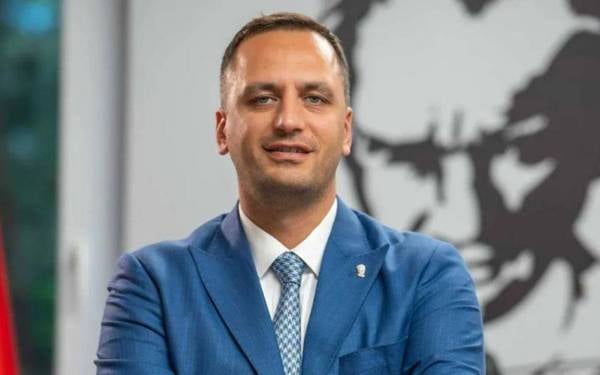
Turkish Opposition Figures Detained and Released in Wave of Political Legal Cases A series of arrests and releases of opposition mayors in Turkey has intensified the country's political turmoil, with leaders accusing the government of using the courts to target its rivals. The mayor of Borna, Ömer Eşki from the main opposition Republican People's Party (CHP), was released from custody pending trial this week after being detained by national authorities [125477]. The charges against him have not been fully detailed, but his detention drew immediate public support from fellow CHP mayor Cemil Tugay of İzmir [125477]. This case follows the earlier arrest and suspension of Resul Emrah Şahan, the mayor of Istanbul's Şişli district. In a courtroom statement, Şahan defended himself by referencing a famous story about injustice by Turkish author Yaşar Kemal [124646]. "In this country," he said, "we must recreate the truth every single day. We must stand against an organization built on lies, lawlessness, and bullying" [124646]. Senior opposition politicians have condemned these actions as politically motivated. CHP Member of Parliament Akın Gürlek declared the detentions a "political operation" and stated that Turkey is not currently a "state of law" [73277]. CHP leader Özgür Özel warned of difficult days ahead, suggesting the political climate is worsening [73277]. The tensions extend to the highest levels of opposition, with leader Özgür Özel also accusing the ruling party of avoiding a potential early election because it fears losing votes, a move he claims violates the constitution [124010]. The legal actions against local opposition officials are seen as part of ongoing political disputes between Turkey's national government and opposition-controlled municipalities [125477]. Turkish Mayor Released After Detention, Sparking Political Debate Jailed Mayor Defends Himself with a Literary Allegory Turkish Opposition MP: "This is a Political Operation, Not Rule of Law" Turkish Opposition Leader Accuses Government of Constitutional Violation
Europe Scrambles for Strategic Independence as U.S. Pressure Intensifies
Europe Scrambles for Strategic Independence as U.S. Pressure Intensifies European leaders are urgently seeking to reduce the bloc’s reliance on the United States, as a combination of aggressive American policy, economic coercion, and ideological attacks exposes the continent’s vulnerabilities. A series of reports and high-level statements warn that Europe’s dependence on U.S. military protection, digital technology, and geopolitical direction has left it open to pressure, forcing a belated push for “strategic autonomy” [44570][60363][69895]. The drive for independence is unfolding on multiple fronts. Militarily, outgoing Dutch Prime Minister Mark Rutte stated that for Europe to achieve full autonomy from the U.S., it would need to spend an extraordinary sum—up to €1 trillion, or 10% of its total economic output. He called this goal impractical, instead urging a stronger European pillar within the North Atlantic Treaty Organization (NATO) as a more immediate priority [60363]. This debate comes as the White House is actively pressuring Europe to accept a Ukraine peace deal that analysts say would favor American and Russian interests, prompting European leaders to urgently discuss using frozen Russian assets to give Kyiv financial leverage [23057]. Economically and technologically, the pressure is equally stark. A new report claims U.S. tech giants are working with the White House, using Europe’s need for American security as leverage to force policy changes and undermine European regulations [44570]. This creates a critical dilemma, as the European Union relies on these same companies—like Microsoft, Google, and Visa—for essential cloud computing, software, and payment systems, making any retaliatory measures difficult to enforce [58167]. Politically, the tension is framed as an ideological assault. Belgian Health Minister Frank Vandenbroucke accused the U.S. of waging an “ideological attack” against Europe’s social welfare model, which includes strong worker protections and public healthcare. He argued the EU must act as a “protective shield” for its citizens against such external pressure [78938]. This internal European social model is now a point of transatlantic friction. In response, Europe is attempting to build its own alliances to hedge against over-reliance on any single power. The bloc is forming a “hedging alliance” with Indo-Pacific nations, focusing on integrating defense industries and coordinating economic policy to ensure greater independence [123271]. Similarly, Southeast Asian nations are increasingly looking to the EU as a trusted, stable partner to balance U.S.-China rivalry, presenting Brussels with a major strategic opportunity [124921]. Analysts warn that Europe’s historical reliance on regulation and moral arguments, instead of building concrete economic and military power, has left it dangerously unprepared for a world where both the U.S. and China pursue raw power politics [69895]. The coming years will test whether Europe can transform its defensive posture into genuine strategic independence. US Tech Giants and White House Ally to Pressure EU, Report Warns Europe's €1 Trillion Question: Can It Buy Military Independence? Trump Era Demands "Political Adults" in EU, Analysts Warn Trump's America Bullies Europe for a Ukraine Deal It Wants Europe's Digital Dilemma: Reliant on US Tech It Seeks to Curb Belgian Minister: U.S. Waging "Ideological Attack" on Europe EU Seeks New Allies to Counter U.S.-China Rivalry Southeast Asia Seeks EU as "Hedging" Power Against US-China Rivalry

AI Set to Reshape Over Half of U.S. Jobs by 2027, Study Finds
AI Set to Reshape Over Half of U.S. Jobs by 2027, Study Finds A new analysis warns that artificial intelligence will fundamentally change the nature of more than half of all jobs in the United States within the next three years, accelerating a major shift in the national workforce. Researchers at the Boston Consulting Group estimate that AI will "reshape" 50% to 55% of U.S. jobs by 2027 [124525]. This reshaping means the core tasks and required skills for these positions will be altered as workers integrate AI tools into their daily routines. The report clarifies that this transformation does not necessarily equate to mass unemployment. Instead, many roles will evolve, with AI automating certain functions while creating new responsibilities [124525]. The rapid integration of this technology presents both significant challenges and opportunities for workers and employers across industries. The workplace is not the only sector facing imminent change. The global video game industry, valued at approximately $190 billion, is being targeted by new AI "world model" systems designed to automate the creation of complex 3D environments [34854]. Major players like Google's DeepMind and startups such as World Labs are developing this technology, which could drastically reduce development time and cost. In a high-profile application of the technology, Alibaba Cloud will embed its large language model into the core digital systems of the 2026 Winter Olympics in Milano Cortina [66986]. The AI will power "Olympic AI Assistants" designed to generate commentary for replays, create social media summaries, and serve as a multilingual chatbot for staff and broadcasters [66986]. Meanwhile, leading AI companies are pushing the technology into new physical and interactive domains. Chinese firm SenseTime is shifting its strategy to focus on "embodied intelligence," developing AI to power robots and digital agents that understand the physical world [22794]. Similarly, French startup AMI announced a $1 billion funding round to build AI that learns "in the way animals and humans do," with the goal of creating systems that comprehend real-world physics [98165]. AI to Reshape Over Half of U.S. Jobs by 2027, Study Says AI "World Models" Could Upend the $190 Billion Gaming Industry AI to Call the Shots? Alibaba Brings LLM to 2026 Winter Olympics SenseTime Bets on Robot AI to Regain Lead French AI Startup Aims for Animal-Like Intelligence with $1 Billion Boost

Latest Articles
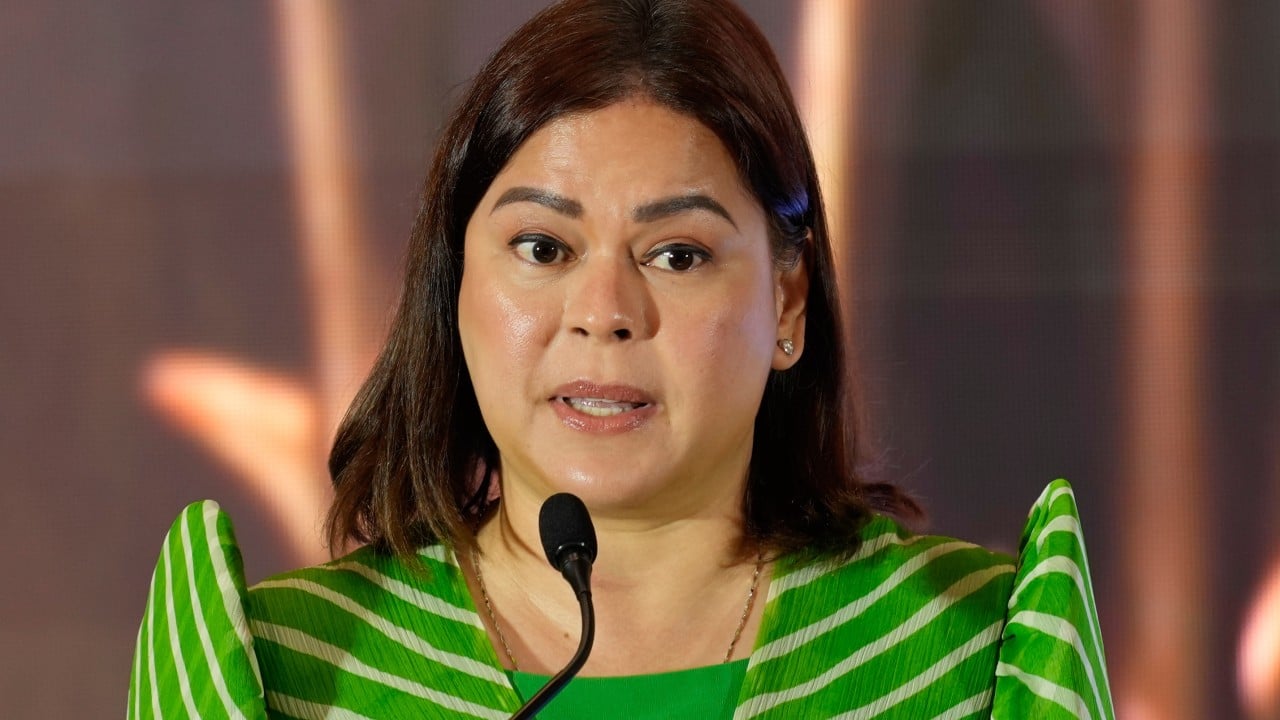
Sara Duterte Leads 2028 Polls Despite Political Storms
Philippine Vice-President Sara Duterte-Carpio is the clear early favorite for the 2028 presidential election. This is despite a series of major polit...