Europe Scrambles for Strategic Independence as U.S. Pressure Intensifies
Europe Scrambles for Strategic Independence as U.S. Pressure Intensifies European leaders are urgently seeking to reduce the bloc’s reliance on the United States, as a combination of aggressive American policy, economic coercion, and ideological attacks exposes the continent’s vulnerabilities. A series of reports and high-level statements warn that Europe’s dependence on U.S. military protection, digital technology, and geopolitical direction has left it open to pressure, forcing a belated push for “strategic autonomy” [44570][60363][69895]. The drive for independence is unfolding on multiple fronts. Militarily, outgoing Dutch Prime Minister Mark Rutte stated that for Europe to achieve full autonomy from the U.S., it would need to spend an extraordinary sum—up to €1 trillion, or 10% of its total economic output. He called this goal impractical, instead urging a stronger European pillar within the North Atlantic Treaty Organization (NATO) as a more immediate priority [60363]. This debate comes as the White House is actively pressuring Europe to accept a Ukraine peace deal that analysts say would favor American and Russian interests, prompting European leaders to urgently discuss using frozen Russian assets to give Kyiv financial leverage [23057]. Economically and technologically, the pressure is equally stark. A new report claims U.S. tech giants are working with the White House, using Europe’s need for American security as leverage to force policy changes and undermine European regulations [44570]. This creates a critical dilemma, as the European Union relies on these same companies—like Microsoft, Google, and Visa—for essential cloud computing, software, and payment systems, making any retaliatory measures difficult to enforce [58167]. Politically, the tension is framed as an ideological assault. Belgian Health Minister Frank Vandenbroucke accused the U.S. of waging an “ideological attack” against Europe’s social welfare model, which includes strong worker protections and public healthcare. He argued the EU must act as a “protective shield” for its citizens against such external pressure [78938]. This internal European social model is now a point of transatlantic friction. In response, Europe is attempting to build its own alliances to hedge against over-reliance on any single power. The bloc is forming a “hedging alliance” with Indo-Pacific nations, focusing on integrating defense industries and coordinating economic policy to ensure greater independence [123271]. Similarly, Southeast Asian nations are increasingly looking to the EU as a trusted, stable partner to balance U.S.-China rivalry, presenting Brussels with a major strategic opportunity [124921]. Analysts warn that Europe’s historical reliance on regulation and moral arguments, instead of building concrete economic and military power, has left it dangerously unprepared for a world where both the U.S. and China pursue raw power politics [69895]. The coming years will test whether Europe can transform its defensive posture into genuine strategic independence. US Tech Giants and White House Ally to Pressure EU, Report Warns Europe's €1 Trillion Question: Can It Buy Military Independence? Trump Era Demands "Political Adults" in EU, Analysts Warn Trump's America Bullies Europe for a Ukraine Deal It Wants Europe's Digital Dilemma: Reliant on US Tech It Seeks to Curb Belgian Minister: U.S. Waging "Ideological Attack" on Europe EU Seeks New Allies to Counter U.S.-China Rivalry Southeast Asia Seeks EU as "Hedging" Power Against US-China Rivalry
Articles in this Cluster
US Tech Giants and White House Ally to Pressure EU, Report Warns
Southeast Asia Seeks EU as "Hedging" Power Against US-China Rivalry

Belgian Minister: U.S. Waging "Ideological Attack" on Europe

Europe's €1 Trillion Question: Can It Buy Military Independence?
EU Seeks New Allies to Counter U.S.-China Rivalry

EU Warns: Energy Bailouts Could Trigger New Fiscal Crisis
U.S. Doubles Down on Fossil Fuels as Europe Cashes In on Green Energy

Trump Era Demands "Political Adults" in EU, Analysts Warn
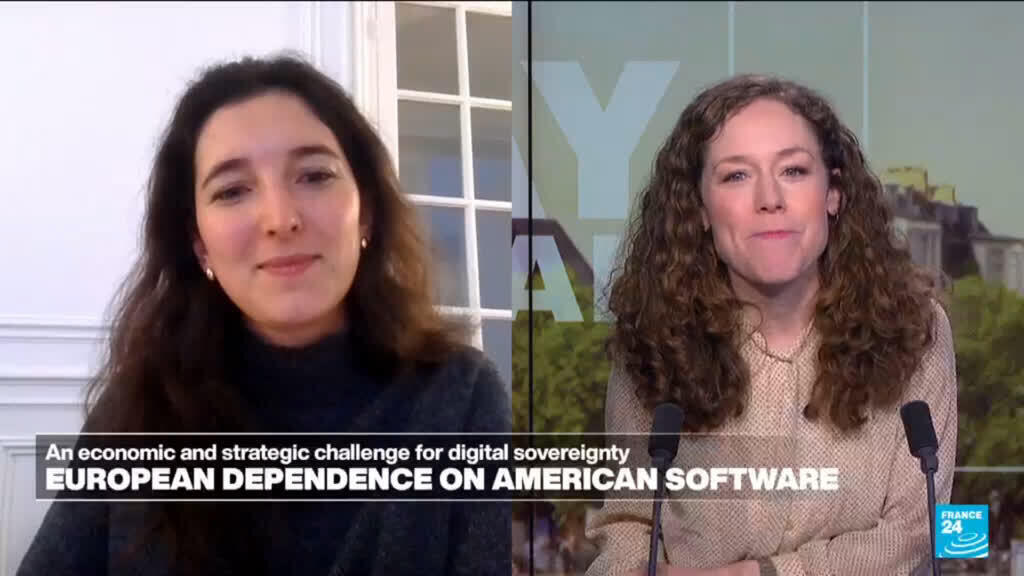
Europe's Digital Dilemma: Reliant on US Tech It Seeks to Curb
Piketty: U.S. Military Moves Signal Weakness, Not Strength

Europe's Tech Edge: It's Not About Giants, But How You Use Them