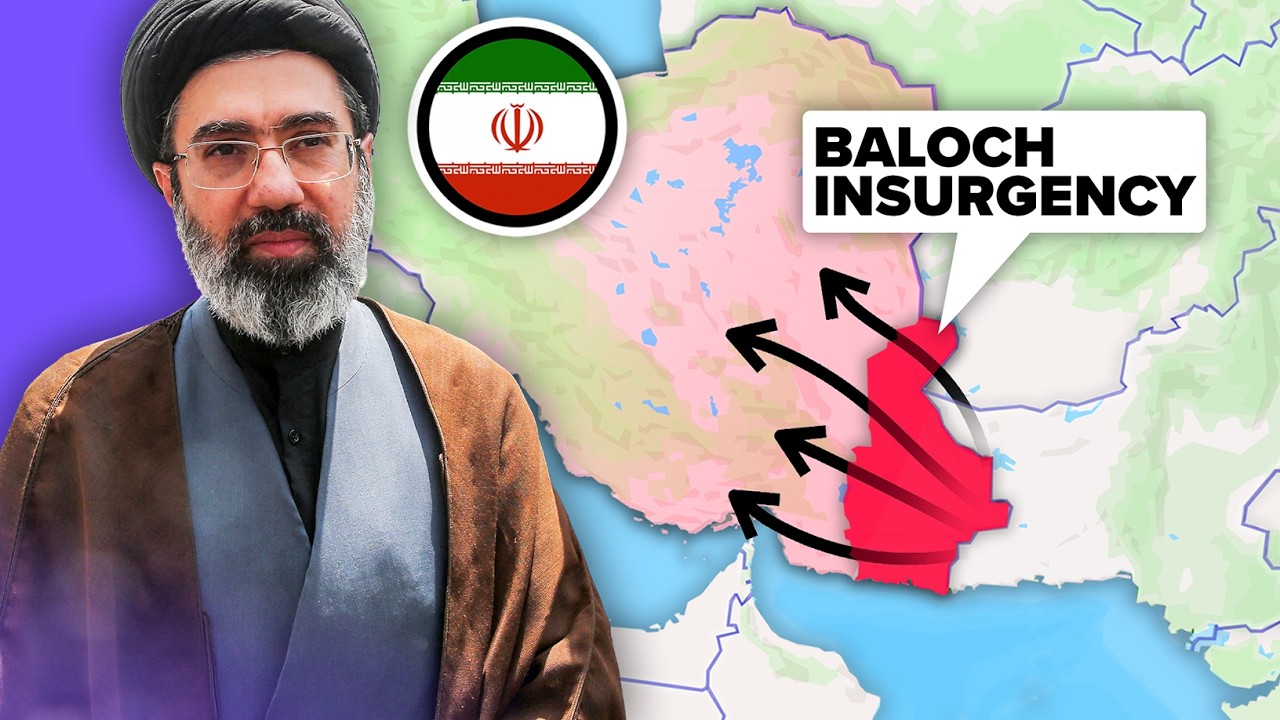
Iran’s Invisible War: Why the Baloch Insurgency Is Escalating
A low-level separatist conflict in Iran’s impoverished southeast is entering a dangerous new phase. Driven by decades of economic neglect, systematic discrimination, and increasingly sophisticated tactics, the Baloch insurgency poses a growing challenge to the Islamic Republic’s security apparatus.
A low-level separatist conflict in Iran’s impoverished southeast is entering a dangerous new phase. Driven by decades of economic neglect, systematic discrimination, and increasingly sophisticated tactics, the Baloch insurgency poses a growing challenge to the Islamic Republic’s security apparatus. As Tehran struggles to contain the unrest, the conflict threatens to destabilize the broader region.
The Baloch people are an ethnic group of roughly 15 million, speaking their own language and largely practicing Sunni Islam. They inhabit a vast, resource-rich region that spans the borders of Pakistan, Iran, and Afghanistan—a territory historically known as Balochistan. In Iran, they form a significant minority in the southeastern province of Sistan and Baluchestan, a region bordering Pakistan and Afghanistan. Despite the area’s vast natural wealth, including major gas fields and strategic ports, the Baloch population remains among the most marginalized in the country.
The roots of the current insurgency lie in deep-seated grievances. For decades, the Baloch have faced what they describe as an apartheid-like system of discrimination. They suffer from severe economic deprivation, with the province ranking among the poorest in Iran. The central government stands accused of systematically underdeveloping the region, extracting its resources while denying its people basic infrastructure, employment, and public services. Furthermore, the Baloch face religious and cultural suppression. As a Sunni minority in a Shiite-dominated state, they are often treated with suspicion by the government and its security forces.
This toxic mix of economic despair and political repression has fueled a cycle of violence. The situation has been further complicated by the influence of external actors, specifically the drug trade and the Taliban’s resurgence in neighboring Afghanistan. The region is a major transit route for narcotics, and the instability has allowed militant groups to flourish. The most prominent of these is Jaish al-Adl (Army of Justice), a Sunni militant group that has claimed responsibility for numerous attacks on Iranian security forces in recent years. The group’s stated goal is to secure rights for the Baloch people and to avenge what it sees as the government’s brutal crackdown.
Iran’s response to the insurgency has been heavy-handed. The government typically frames the conflict as a matter of national security and terrorism, rather than addressing the underlying socio-economic and political grievances. Security forces have conducted numerous military operations in the region, often resulting in civilian casualties and further alienating the local population. This repressive approach has been criticized by international human rights organizations, which have documented extrajudicial killings, torture, and the suppression of peaceful protests. The government’s refusal to acknowledge the political nature of the Baloch demands has only deepened the cycle of resentment and radicalization.
The escalating conflict has significant implications beyond Iran’s borders. The insurgency is intertwined with the complex geopolitics of the region, particularly the long-standing rivalry between Iran and Saudi Arabia, and the ongoing instability in Pakistan and Afghanistan. The porous borders and shared ethnic ties of the Baloch people across these countries make the conflict a transnational issue. As the insurgency grows in intensity and sophistication, it not only threatens Iran’s internal stability but also risks drawing in neighboring powers and further destabilizing the entire region.
The Baloch insurgency is no longer a distant, isolated problem. It is a clear and present danger to the Iranian state, born from decades of neglect and repression. Without a fundamental shift in Tehran’s approach—one that addresses the root causes of the conflict rather than just its symptoms—the violence is likely to escalate. The international community must pay attention to this forgotten conflict, for its consequences will be felt far beyond the borders of Iran.
Related Coverage
Iran Shuts Strait of Hormuz, Threatens Global Food Supply for Millions
Iran has closed the Strait of Hormuz, escalating military conflict with the United States and triggering a humanitarian crisis that is pushing millions into hunger worldwide.
Iran Closes Strait of Hormuz Again, 1.5 Million Lose Food Aid as Hunger Crisis Worsens
Tehran has closed the Strait of Hormuz again, escalating a dangerous standoff with the United States that is deepening a global hunger crisis and pushing millions into starvation [195031].
Strait of Hormuz Shutdown to Drag On for Months—Iran Demands US Concessions, Tanker Crews Still in Danger
The Strait of Hormuz, the waterway carrying roughly 20% of the world's oil, will remain disrupted for weeks or months even if a deal is reached, as Iran continues to demand the US meet undisclosed conditions before reopening the route.
Title: A World Held Hostage: How a System Built for Profit Fuels Endless War, Climate Chaos, and Global Instability
A fragile peace deal between the United States and Iran that briefly promised to unlock vital global oil routes is collapsing under renewed violence, even as a record-breaking climate disaster threatens worldwide hunger and an economic model built on extraction and profit leaves the most vulnerable to bear the cost.
U.S. Strikes Iran Again as 20% of Global Oil Flow Hangs in the Balance
The United States has launched new military strikes against Iran, escalating a standoff that threatens to disrupt oil shipments through the Strait of Hormuz, a narrow waterway carrying about 20% of the world’s crude supply [194255]. The attacks, which targeted Iranian military positions, come as negotiations between Washington and Tehran remain stuck with no deal in sight, and analysts warn that intermittent strikes and ongoing talks will likely define the conflict for the near future [194255][194273].
Iran Demands $100 Billion Back Before Signing Any Peace Deal
The United States and Iran are closer than ever to signing an agreement to end their war, but a critical dispute over approximately $100 billion in frozen Iranian assets threatens to derail the entire deal.
Related Editorials
The Hidden Crisis That Could Decide the Next Iran War
For years, the public debate on Iran has focused on centrifuges, enriched uranium, and the timeline to a nuclear weapon. Yet, a deeper, more immediate crisis is unfolding beneath the surface—one that receives far less attention but could prove decisive in any future conflict.
The Silent War: Inside the Resource Conflict Reshaping Central Africa
The Democratic Republic of the Congo (DRC) is home to one of the world’s most protracted and deadly conflicts. While often overshadowed by crises in other regions, the situation in Central Africa is rapidly deteriorating.
# The Houthis Batter the Saudis: What Next?
The Iran-backed Houthi movement has escalated its attacks on Saudi Arabia and the UAE, exposing the limits of Riyadh's air campaign and threatening to reshape the balance of power in the Middle East. --- ## A New Phase in the Yemen War The Houthis, a Zaidi Shia movement that seized Yemen's capi
The Sahel’s Hidden War: Why Mali’s Conflict Is Far Larger Than Reported
For years, the war in Mali has been framed as a remote insurgency—a localized struggle between government forces and Tuareg rebels in the country’s vast northern desert. But new evidence suggests that this framing is dangerously incomplete.
West Bank Erupts: The Unseen Escalation Reshaping the Middle East
The world’s gaze has been fixed on Gaza, but a second, equally volatile front has been quietly igniting. Across the West Bank, violence has surged to levels not seen in nearly two decades, threatening to destabilize the entire region.
The Coming Energy Market Meltdown: Why Experts Are Sounding the Alarm
Global energy markets are approaching a critical inflection point. While the transition to renewable sources dominates headlines, a less visible but equally dangerous crisis is brewing beneath the surface—one that could destabilize power grids, spike electricity prices, and trigger widespread econo