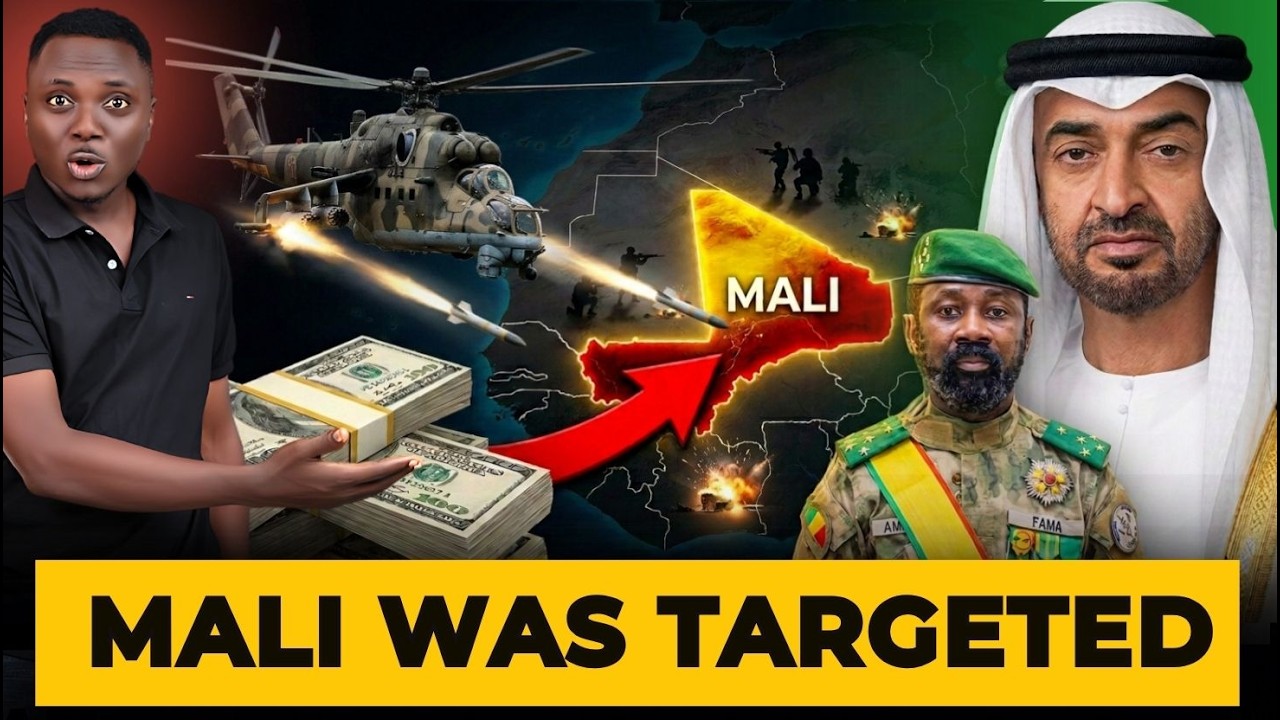
The Sahel’s Hidden War: Why Mali’s Conflict Is Far Larger Than Reported
For years, the war in Mali has been framed as a remote insurgency—a localized struggle between government forces and Tuareg rebels in the country’s vast northern desert. But new evidence suggests that this framing is dangerously incomplete.
For years, the war in Mali has been framed as a remote insurgency—a localized struggle between government forces and Tuareg rebels in the country’s vast northern desert. But new evidence suggests that this framing is dangerously incomplete. The conflict, as it turns out, is not a sideshow. It is a central front in a regional crisis that has quietly expanded beyond borders, involving international mercenaries, drone warfare, and a humanitarian toll that dwarfs official estimates.
What began as a separatist rebellion in 2012 has evolved into a complex, multi-layered war. The initial uprising, driven by long-standing grievances over political marginalization, was quickly hijacked by jihadist groups linked to Al-Qaeda. Their presence drew French military intervention in 2013, which successfully pushed the militants out of major cities. But the victory was temporary. The insurgents did not disappear; they dispersed, embedding themselves in rural communities and across the porous borders of Burkina Faso, Niger, and Mauritania.
The scale of the current crisis is staggering. The United Nations peacekeeping mission in Mali, known as MINUSMA, has become one of the deadliest deployments in the organization’s history. Over 300 peacekeepers have been killed since 2013. Yet, despite this sacrifice, the mission is withdrawing, ordered out by the Malian junta that seized power in 2021. The junta, in turn, has turned to a new ally: the Russian private military company, the Wagner Group.
This partnership has changed the war’s character. Wagner’s presence is not merely advisory; it is operational. Reports indicate that Russian fighters are embedded with Malian units, conducting offensive operations, securing mining concessions, and, according to multiple human rights organizations, executing summary killings and targeting civilians. The junta’s strategy appears to be one of brutal suppression rather than reconciliation. This has not only failed to reduce violence but has, in many regions, escalated it.
The humanitarian data supports this grim assessment. Over 400,000 people are now internally displaced in Mali, a figure that has tripled in just three years. The food security situation is critical, with nearly 2 million people facing acute hunger. The conflict has also severed access to basic services. In the northern regions of Gao, Timbuktu, and Ménaka, healthcare is nearly nonexistent, and schools have been systematically targeted by armed groups seeking to erase state presence.
The international community’s response has been fragmented. France, which once led the counter-terrorism effort, has fully withdrawn its troops, citing the junta’s unwillingness to restore civilian rule. The United States has suspended security assistance, but its diplomatic engagement remains limited. Meanwhile, regional bodies like ECOWAS have imposed sanctions, but these have done little to alter the junta’s calculations.
The most critical oversight, however, is the assumption that Mali’s war is a national problem. It is not. The Sahel region is now the epicenter of global terrorism, accounting for over 40% of all terrorism-related deaths in Africa last year. The collapse of state authority in Mali has created a vacuum that transnational jihadist networks are exploiting to expand their reach toward the Gulf of Guinea. Coastal states like Benin, Togo, and Ghana are already reporting incursions.
The conflict’s true scale is not just a matter of troop numbers or territorial control. It is a systemic failure of governance, exacerbated by climate change, demographic pressure, and a global scramble for natural resources. Mali’s gold mines, a primary source of revenue for the junta and Wagner, are financing a war that is destabilizing an entire region.
The narrative that this is a small, distant war is no longer tenable. The evidence is clear: Mali is the front line of a continental struggle. The world’s attention, for too long, has been elsewhere. But the consequences of ignoring this conflict will not remain elsewhere. They will arrive, as they always do, at the borders of those who chose to look away.
Related Coverage
Sahel Juntas Crack Down on Critics as Militant Attacks Surge – Report Finds Security Worsening
A new report reveals that military juntas in Mali, Burkina Faso, and Niger are silencing journalists and activists instead of adapting their security strategies, even as Islamist militant groups make unprecedented gains across the Sahel region.
Foreign Fighters Flood Nigeria’s Jihadist War as Boko Haram Trials Target Only Low-Level Scapegoats
Nigeria’s military is losing its 17-year battle against jihadist insurgents as foreign fighters from the Middle East join local militants, bringing deadly new skills and technology—while the government’s terrorism trials focus on punishing poor farmers and herders who paid taxes or fed livestock to Boko Haram.
Ethiopia conflict spreads as 52 civilians reported killed
Federal forces are advancing in Tigray, Ethiopia, where 52 civilians have reportedly been killed. The conflict is also spreading beyond Tigray, with fighting reported in the neighboring Afar and Amhara regions.
Pentagon’s $1.6 Trillion Mineral Grab Sparks Indigenous Alarm as Mining Expands onto Tribal Lands
A massive Pentagon push to secure lithium, graphite, and other critical minerals for military drones and electric vehicle batteries is expanding mining projects onto or near Indigenous lands, triggering warnings from tribal leaders who say they are being sidelined in decision-making and face environmental and cultural losses. The U.S. military argues the spending is vital for national security and reducing reliance on foreign suppliers, but Indigenous communities warn the rush for resources threatens their land and way of life [176027].
Related Editorials
Turkey’s Silent Surge: How Ankara Is Reshaping the Battlefield in Mali
For years, the conflict in Mali has been defined by a complex web of local militias, foreign mercenaries, and shifting jihadi alliances. Yet, a new player has quietly moved to the center of the board, altering the strategic calculus of the Sahel.
The Sahara Just Became the World’s Most Expensive Warzone
For decades, the Sahara Desert has been a harsh, sparsely populated expanse—a natural barrier for trade, migration, and conflict. That reality has changed.
Mali’s Bold Move: How Assimi Goïta’s Crackdown on Gold Mining Is Reshaping Africa’s Wealth Equation
For decades, a familiar narrative has plagued the African continent: vast mineral wealth extracted by foreign corporations, with local populations seeing little of the profit. Mali, one of Africa’s largest gold producers, has long been a textbook example of this dynamic.
The Silent Pivot: Why Chad’s Unnoticed Move Just Rewrote the Rules
In the high-stakes arena of international strategy, the most consequential moves are often the ones that make no sound. While commentators focused on the obvious theater and public posturing, a subtle but seismic shift occurred—one that most observers completely missed.
The Coup That Exposed the West's Hidden Hand in Africa's Resource Wars
Burkina Faso's young leader Ibrahim Traoré has done what few African presidents dare: he named the foreign powers quietly profiting from the continent's instability. His evidence is forcing a global reckoning.
Australia’s Quiet Rise as the Pacific’s New Power Broker
For decades, the Pacific Islands were viewed by much of the world as a postcard backdrop—remote, idyllic, and strategically peripheral. That perception has shifted dramatically.