West Bank Erupts: The Unseen Escalation Reshaping the Middle East
The world’s gaze has been fixed on Gaza, but a second, equally volatile front has been quietly igniting. Across the West Bank, violence has surged to levels not seen in nearly two decades, threatening to destabilize the entire region.
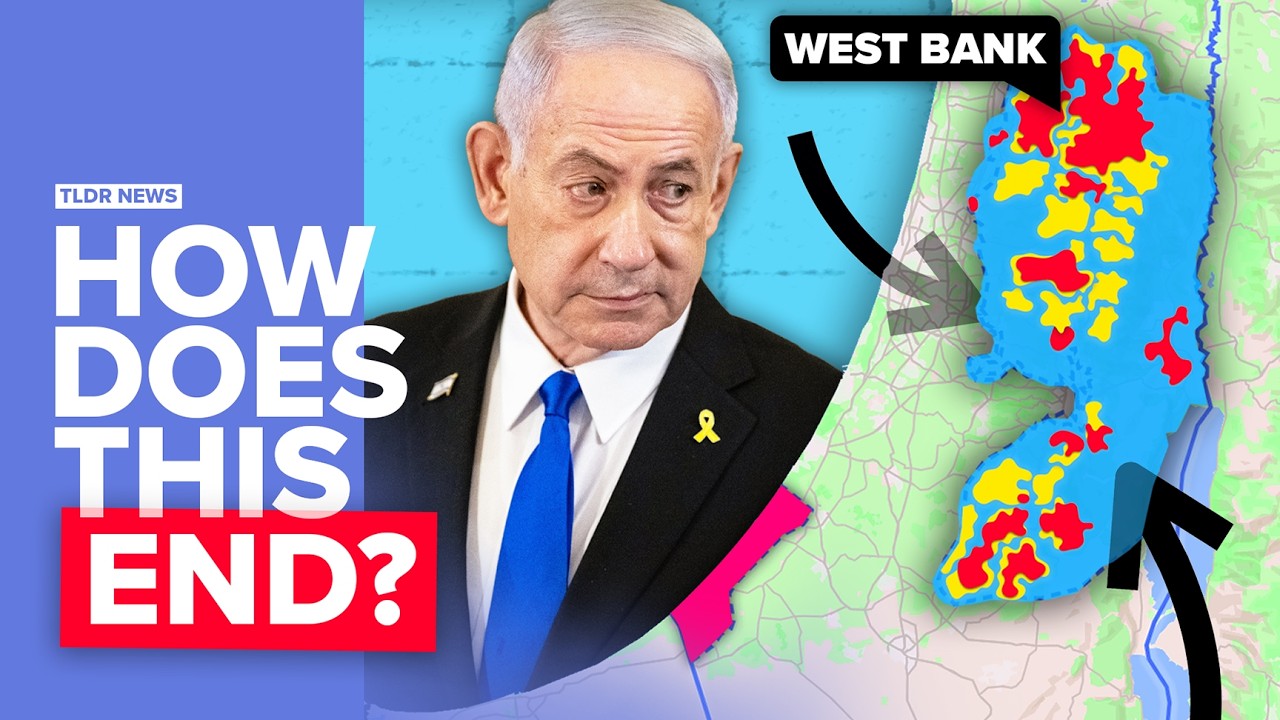
The world’s gaze has been fixed on Gaza, but a second, equally volatile front has been quietly igniting. Across the West Bank, violence has surged to levels not seen in nearly two decades, threatening to destabilize the entire region. This is not a spontaneous uprising, but the result of a lethal convergence: expanding Israeli settlements, a weakened Palestinian Authority, and the rise of armed militant groups. As the conflict enters a new and dangerous phase, understanding the mechanics of this escalation is no longer optional—it is essential.
The Collapse of a Security Paradigm
For decades, the West Bank was governed by a delicate security arrangement. The Palestinian Authority (PA) coordinated with Israeli forces to maintain order, suppress militancy, and manage daily life for roughly three million Palestinians. This partnership, while deeply unpopular among Palestinians, served as a bulwark against chaos.
That bulwark is now crumbling. The PA, widely perceived as corrupt and ineffective, has lost legitimacy in the eyes of its constituents. Its security forces, once a reliable partner for Israel, are increasingly seen as a proxy for the occupation. Consequently, their authority has evaporated in key flashpoints, particularly in the northern cities of Jenin, Nablus, and Tulkarm.
The Rise of the "Lions' Den"
Into this vacuum have stepped a new generation of militants. Unlike the hierarchical factions of the past, these are decentralized, often young, and highly networked. Groups like the "Lions' Den" in Nablus operate without a centralized command, making them nearly impossible for intelligence agencies to dismantle.
They are not driven by a single ideology but by a potent mix of anger, humiliation, and the daily friction of military raids. Their weapon of choice is the IED (Improvised Explosive Device) and the drive-by shooting, targeting both Israeli soldiers and, increasingly, settlers. This shift from organized intifada to localized insurgency has made the security situation unpredictable and highly combustible.
Israel’s Military Response: A Double-Edged Sword
In response, the Israeli Defense Forces (IDF) have intensified their operations, conducting near-nightly raids in what they describe as "counter-terrorism" efforts. The stated goal is to dismantle these militant networks and seize weapons caches.
However, the tactics employed—which include heavy armored vehicles in narrow urban streets and mass arrest campaigns—have resulted in significant Palestinian casualties and widespread property damage. For many Palestinians, these raids are not surgical operations but collective punishment. The result is a vicious cycle: raids generate anger, anger fuels recruitment for militant groups, and recruitment triggers more raids.
The Settler Factor and the "Price Tag"
The conflict is further inflamed by the radical settler movement. In 2023, attacks by Israeli settlers against Palestinian villages reached record highs. These attacks, often dubbed "price tag" operations, are designed to exact a cost for any Palestinian violence or government restriction on settlement expansion.
Settlers have been documented burning fields, uprooting olive trees, and attacking shepherds, often with impunity. This violence is not a side effect of the conflict; it is a strategic tool aimed at displacing Palestinian communities and expanding territorial control. The international community has largely condemned these actions, but sanctions remain absent, and the Israeli government has frequently turned a blind eye, with some ministers actively supporting the settlers.
The Geopolitical Vacuum
The escalation is occurring against a backdrop of regional realignment. The Abraham Accords normalized relations between Israel and several Arab states, but they conspicuously left the Palestinian issue unresolved. With the Palestinian cause deprioritized by Arab capitals, and with Iran actively arming and funding militant factions in the West Bank, the stage is set for a proxy confrontation.
Iran has successfully established a foothold in the northern West Bank, providing funding and expertise to groups like Palestinian Islamic Jihad. This is a strategic shift: Tehran is no longer content to fight Israel solely from Lebanon or Gaza; it is now opening a third front, deep in the West Bank’s mountainous terrain.
A Powder Keg Without a Match?
The current situation is a powder keg, and the matches are plentiful. The PA is on the verge of functional collapse. If it falls, Israel would be forced to assume direct control over millions of Palestinians, a scenario that would end any pretense of a two-state solution and likely trigger a massive international crisis.
Meanwhile, the Palestinian public, seeing no political horizon and facing daily violence, is increasingly supportive of armed resistance. Polls indicate a majority now believe that violence is the only path to change, a reversal of the previous decade’s sentiment.
Conclusion
The violence in the West Bank is not a random outbreak of chaos. It is the logical conclusion of failed diplomacy, unchecked settlement expansion, and a deliberate strategy of escalation by regional actors. The international community, distracted by crises elsewhere, has been slow to react, treating the West Bank as a secondary issue.
It is not. The West Bank is the heart of the Palestinian national project. If it collapses into full-scale war, the consequences will dwarf the current conflict in Gaza. The window for de-escalation is closing rapidly, and without a dramatic shift in policy—from both Israel and the international community—the region is hurtling toward a catastrophe that no one will be able to contain.
Related Coverage
West Bank on Fire: UN Warns of “Critical Point” as Settler Attacks Displace 107 Communities, Killing 2 in a Day
The United Nations has issued a stark warning that violence and settlement expansion in the occupied West Bank have reached a "critical point," with a surge in settler attacks displacing entire Palestinian communities and pushing the region toward annexation.
Settlers, Army Turn West Bank Into War Zone: 8 Dead, Homes Seized, Mosques Torched
Fresh violence has erupted across the occupied West Bank as Israeli forces and settlers have launched coordinated raids, leaving at least eight people dead, injuring dozens, and converting Palestinian homes into military barracks, according to local sources and international observers.
UN Report Drops Bombshell: Palestinians Trapped Between Israeli ‘Mass Atrocities’ and Hamas Abuses
A new United Nations investigation reveals Palestinian civilians are facing systematic “grave violations” and “mass atrocities” from both Israeli forces and Hamas-linked groups, with the occupied West Bank and Gaza becoming a war zone of settler violence, executions, and collective punishment.
Oil Shocks, Drone Wars, and a Divided World: How Blocked Chokepoints and Regional Conflicts Are Reshaping Global Power
A wave of attacks on Middle East oil routes, escalating drone warfare in Ukraine, and deepening divisions among major powers have pushed crude prices past $100 a barrel, reignited inflation worldwide, and strained the global order.
Israeli Settlers and Soldiers Celebrate Forced Evictions, Kill Two Palestinians in West Bank Raid
Israeli forces and settlers have escalated violence in the occupied West Bank, with a tour celebrating the forced removal of Palestinian families and a deadly raid on a village that left two Palestinians dead.
Nablus Under the Boot: Israel’s Checkpoints and Financial Strangulation Push West Bank Into Unprecedented Poverty
In the occupied West Bank, Israel’s tightening financial grip on the Palestinian Authority and a surge in military checkpoints have crippled the local economy, pushing Palestinian society into a level of poverty never seen before.
Related Editorials
The Coming Energy Market Meltdown: Why Experts Are Sounding the Alarm
Global energy markets are approaching a critical inflection point. While the transition to renewable sources dominates headlines, a less visible but equally dangerous crisis is brewing beneath the surface—one that could destabilize power grids, spike electricity prices, and trigger widespread econo
Egypt’s Silent Play: The Move That Reshaped the Regional Chessboard
In the high-stakes arena of Middle Eastern geopolitics, the loudest moves often come from missiles and ultimatums. Yet, the most consequential shift this quarter was executed in near-total silence.
The Afghan-Pakistan War Restarts: How Does This End?
The fragile peace along the Afghanistan-Pakistan border has shattered. A new phase of conflict, distinct from the two-decade American occupation, is now underway.
Is Inflation About to Get Much Worse? The Warning Signs You Can't Ignore
After months of declining inflation rates, a new threat is emerging that could reverse all the progress central banks have made. Recent economic data suggests that the forces driving prices higher are not only persistent but may be accelerating.
The Silent Pivot: Why Chad’s Unnoticed Move Just Rewrote the Rules
In the high-stakes arena of international strategy, the most consequential moves are often the ones that make no sound. While commentators focused on the obvious theater and public posturing, a subtle but seismic shift occurred—one that most observers completely missed.
Turkey’s Silent Surge: How Ankara Is Reshaping the Battlefield in Mali
For years, the conflict in Mali has been defined by a complex web of local militias, foreign mercenaries, and shifting jihadi alliances. Yet, a new player has quietly moved to the center of the board, altering the strategic calculus of the Sahel.