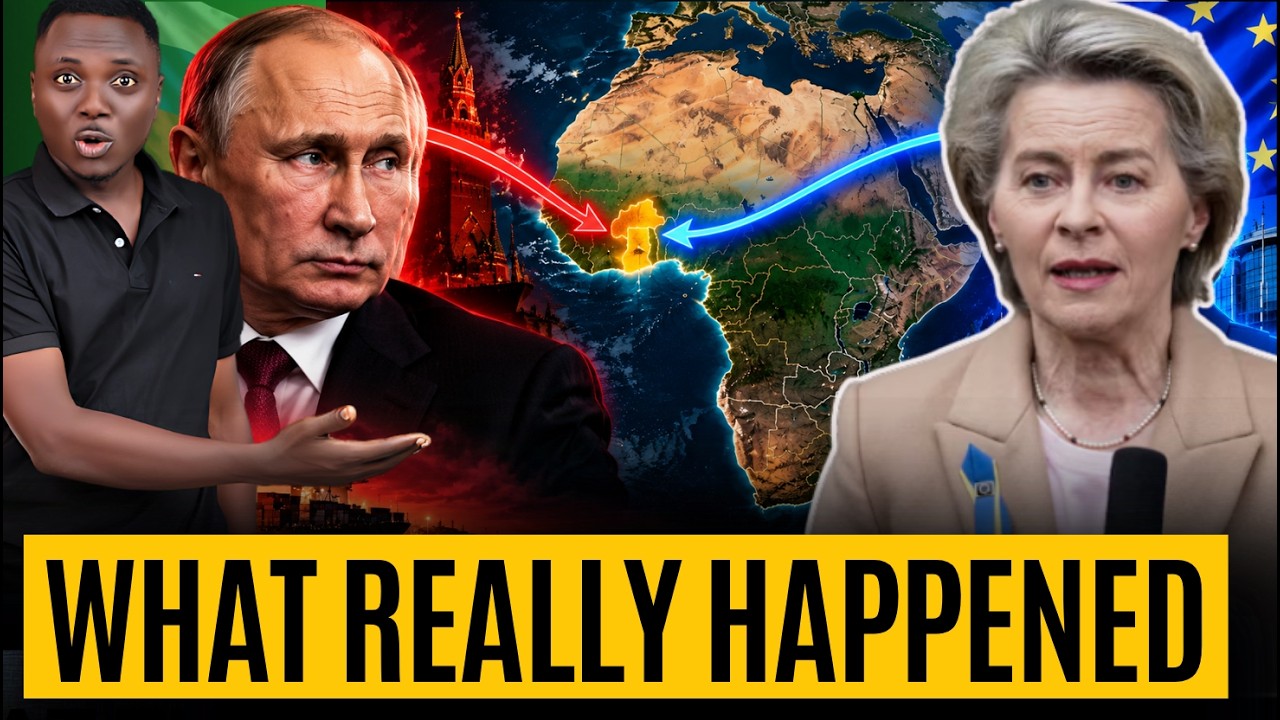
# Russia’s Information Offensive in Ghana Exposes a Deeper Battle for Africa’s Allegiances
A diplomatic dispute that began with a single social media post has escalated into a broader contest over influence, resources, and narrative control across West Africa. When Russia’s embassy in Ghana published a message criticizing the European Union’s stance on a controversial mining project,
A diplomatic dispute that began with a single social media post has escalated into a broader contest over influence, resources, and narrative control across West Africa.
When Russia’s embassy in Ghana published a message criticizing the European Union’s stance on a controversial mining project, few expected it to become a flashpoint. Yet the exchange quickly revealed something larger: a sustained competition between global powers for influence in Africa—one fought not only through diplomacy and investment, but through information.
A Dispute Rooted in Resources
At the center of the controversy is a mining operation that has drawn scrutiny from local communities and international observers alike. The project, involving a multinational company and significant environmental concerns, became the subject of public debate in Ghana after reports of pollution and displacement.
The European Union had issued statements urging stricter oversight and accountability. Russia’s embassy responded publicly, accusing the EU of hypocrisy and highlighting Europe’s own history of resource extraction on the continent. The message resonated with audiences skeptical of Western intentions.
Information as a Weapon
The exchange was not merely rhetorical. It reflected a deliberate strategy. Russia has expanded its media footprint in Africa in recent years, funding outlets and social media campaigns that challenge Western narratives. These efforts often emphasize colonial legacies, unequal trade relationships, and perceived double standards in Western policy.
Ghana, with its stable democracy and growing economy, has become a key battleground. Russian messaging there targets urban, educated audiences who are active online and increasingly critical of Western influence.
The Real Fight Is Bigger
While the immediate dispute concerns a single mining project, the underlying conflict is about alignment. African nations are being courted by multiple powers—Russia, China, the European Union, and the United States—each offering different models of partnership.
Russia’s approach combines energy deals, security cooperation, and ideological appeals. It positions itself as an anti-colonial alternative, even as it pursues its own economic interests. The EU, meanwhile, struggles to counter these narratives while maintaining its reputation as a norms-based actor.
What This Means for Africa
For African governments, the competition offers leverage but also risk. Aligning too closely with any single power can limit autonomy. Yet the attention also brings investment and diplomatic engagement that many countries welcome.
The Ghana episode illustrates how local grievances can be amplified into geopolitical messaging. It also shows that the battle for influence is not won solely through aid or trade—but through stories that resonate with local audiences.
A Contest Without a Clear Winner
As Russia and the EU trade accusations, the deeper question remains: who will shape Africa’s future partnerships? The answer will depend not only on resources and rhetoric, but on whether external powers can address the concerns of ordinary Africans—environmental protection, economic opportunity, and respect for sovereignty.
For now, the fight continues—one post, one project, one narrative at a time.
Related Coverage
Nigeria and South Africa Launch Dual Front War on Election Lies and Corruption
Nigeria has trained over 100 social media influencers from Northern Nigeria to counter the spread of false information online, while South Africa’s Electoral Commission is seeking public input on a new rulebook to fight disinformation during elections [189047][190003]. These parallel initiatives reflect growing efforts across Africa to protect electoral integrity and combat misinformation.
The AI Bubble Is a Power Play: How Compute, Debt, and Labor Are Reshaping the Global Order
The artificial intelligence boom is not a neutral technological revolution; it is a geopolitical and economic battleground. As the United States and China compete for control over the chips, data, and capital that fuel AI, the contest is redrawing the balance of power between states and corporations—while workers and global financial markets absorb the shockwaves.
Power, Profit, and a Planet in Peril: How Conflict and Financial Warfare Are Reshaping Global Politics
The global order is buckling under the weight of converging crises, where the pursuit of geopolitical power and corporate profit is colliding with fundamental human needs. From the closed oil routes of the Strait of Hormuz and the escalating aerial war in Ukraine to drought-parched rivers across Europe and famine-stricken regions of Africa, a cascade of interconnected emergencies is diverting public resources away from social welfare and toward conflict, leaving the world's most vulnerable populations to bear the heaviest burden of inflation, displacement, and violence [1][2]. This systemic shift, driven by financial warfare, a militarization boom, and an overheating artificial intelligence (AI) debt bubble, is redrawing the map of global politics, forcing nations to choose sides and citizens to fight for survival [1][2].
Power, Profit, and a Planet in Peril: How Conflict and Financial Warfare Are Reshaping Global Politics
The global order is buckling under the weight of converging crises, where the pursuit of geopolitical power and corporate profit is colliding with fundamental human needs. From the closed oil routes of the Strait of Hormuz and the escalating aerial war in Ukraine to drought-parched rivers across Europe and famine-stricken regions of Africa, a cascade of interconnected emergencies is diverting public resources away from social welfare and toward conflict, leaving the world's most vulnerable populations to bear the heaviest burden of inflation, displacement, and violence [1][2].
Swedish PM’s Ceuta Rhetoric Plays Straight into Kremlin’s Hands
Swedish Prime Minister Ulf Kristersson is repeating talking points about the Spanish enclave of Ceuta that benefit Moscow, not Stockholm, as the crisis in Ceuta is not a symbol of irresponsible migration policy but a case of a foreign power tightening its grip on the European Union [1].
# Power, Profit, and a Planet in Peril: How Financial Warfare, Climate Collapse, and the AI Boom Are Reshaping Global Politics
The global order is buckling under the weight of converging crises, where the pursuit of geopolitical power and corporate profit is colliding with fundamental human needs. From the closed oil routes of the Strait of Hormuz and the escalating aerial war in Ukraine to drought-parched rivers across Europe and famine-stricken regions of Africa, a cascade of emergencies is diverting public resources away from social welfare and toward conflict, leaving the world's most vulnerable populations to bear the heaviest burden of inflation, displacement, and violence [1][2].
Related Editorials
Title: The Hidden Hand Behind Africa’s Fractures: A Question of External Influence
Introduction Across the African continent, a troubling pattern has emerged. From the Sahel to the Horn of Africa, communities that once coexisted are now divided by suspicion, ethnic tension, and political violence.
Title: Namibia’s Rare Earth Gambit: How a Tiny African Nation Is Rewiring the Global Tech Supply Chain
Introduction For decades, the narrative of China–Africa relations has followed a predictable script: Beijing finances massive infrastructure projects in exchange for raw commodities, leaving African nations as passive suppliers in a global system they do not control. Namibia, a sparsely populat
Title: Russia’s Silent Takeover: How Moscow Is Replacing France in the Sahel
Introduction In a dramatic geopolitical shift, Russia is quietly but decisively expanding its military and political influence across West Africa’s Sahel region. Recent developments in Mali, Burkina Faso, and Niger signal a coordinated effort by Moscow to fill the vacuum left by departing Weste
Title: The Sahel Alliance Just Redrew West Africa’s Geopolitical Map—And ECOWAS Is Scrambling
Introduction In a move that has sent ripples through West African diplomacy, the Alliance of Sahel States (AES) has unveiled a significant new project that regional bloc ECOWAS did not anticipate. The development marks a decisive step in the consolidation of the AES as a standalone geopolitical
# The Coup That Exposed the West's Hidden Hand in Africa's Resource Wars
Burkina Faso's young leader Ibrahim Traoré has done what few African presidents dare: he named the foreign powers quietly profiting from the continent's instability. His evidence is forcing a global reckoning.
Title: The Gathering Storm: How a Continental Shift Is Threatening South Africa’s Regional Dominance
Introduction A quiet but seismic shift is underway in African geopolitics. For decades, South Africa has operated as the continent’s economic and diplomatic anchor, wielding influence from Cape Town to Cairo.