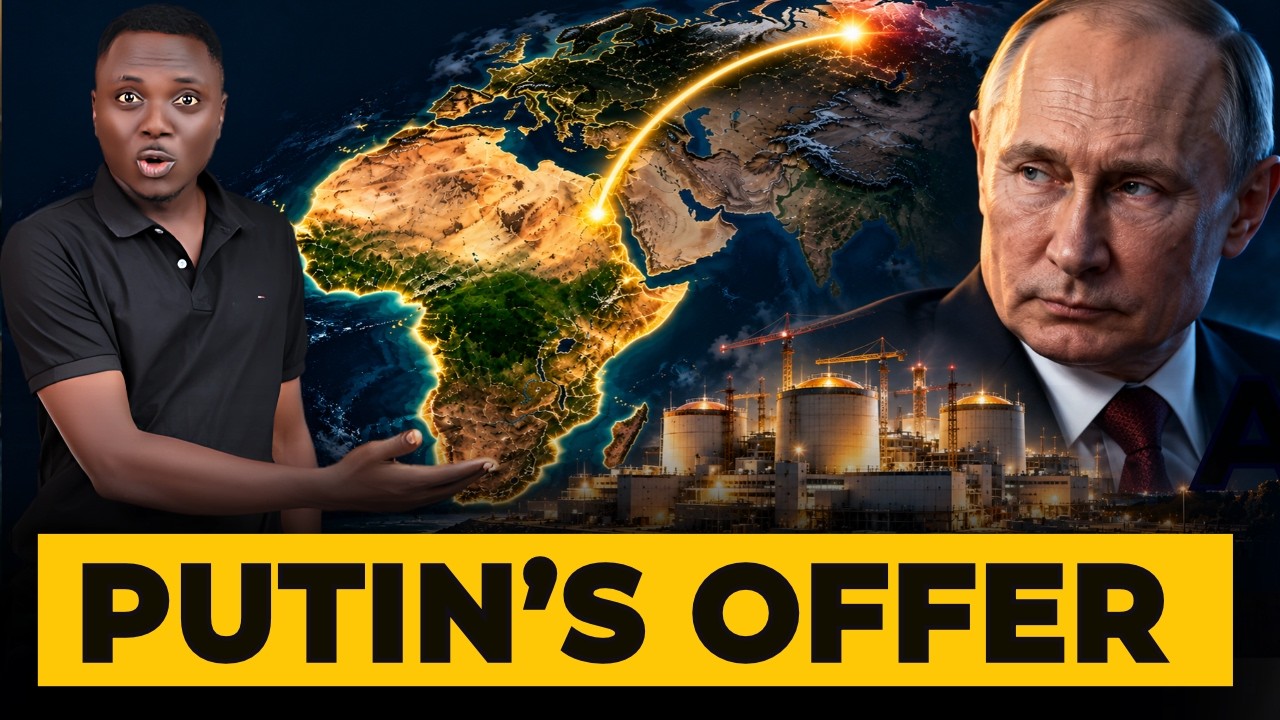
Russia’s Grand Bargain: Why Africa Cannot Afford to Ignore Moscow’s Latest Offer
Russia has returned to the African diplomatic stage with a proposal that could reshape the continent’s security and economic landscape. While Western attention remains fixed on Ukraine and the Middle East, Moscow is quietly advancing a comprehensive deal that promises military support, energy coope
Russia has returned to the African diplomatic stage with a proposal that could reshape the continent’s security and economic landscape. While Western attention remains fixed on Ukraine and the Middle East, Moscow is quietly advancing a comprehensive deal that promises military support, energy cooperation, and political backing—without the conditional strings attached by traditional Western partners.
The offer arrives at a critical moment. Across the Sahel and beyond, governments are growing frustrated with Western aid packages that come bundled with governance requirements and human rights benchmarks. Russia presents itself as an alternative: a partner that delivers security and economic benefits while respecting sovereign choices, regardless of domestic political practices.
What Russia Is Offering
The proposal centers on three pillars. First, military and security assistance, including arms sales, training programs, and the deployment of Russian security personnel—an arrangement already visible in Mali, Burkina Faso, and Niger. Second, energy and resource partnerships, with Russian firms offering to develop oil, gas, and mineral extraction projects on terms that bypass Western environmental and transparency standards. Third, diplomatic cover at the United Nations and other international forums, where Moscow has consistently shielded African governments from criticism over governance and human rights records.
For African leaders facing insurgencies, economic stagnation, and mounting public discontent, the appeal is straightforward. Russia does not lecture. It does not impose sanctions for democratic backsliding. It asks only for cooperation—and, critics note, access to strategic resources.
The Strategic Calculus
Moscow’s motives are equally clear. Africa offers a platform to demonstrate that Western isolation has failed. Each new partnership undermines the narrative of Russia as a pariah state. The continent also provides valuable resources—gold, uranium, oil, and rare earth minerals—that can bypass Western sanctions and sustain Russia’s war economy. And every African vote at the UN is a diplomatic victory in Moscow’s confrontation with the West.
The timing is deliberate. As the United States and Europe pivot toward Asia and domestic priorities, Russia exploits the vacuum. France’s withdrawal from Mali, Burkina Faso, and Niger has left a security gap that Russian operatives have rushed to fill. The message to African capitals is unambiguous: the West is leaving; Russia is staying.
The Risks Africa Cannot Ignore
Yet the deal is not without significant costs. Russian security assistance has not stabilized the Sahel. In Mali, the arrival of Wagner Group mercenaries coincided with increased civilian casualties and a deteriorating security situation. The group’s reputation for brutality and resource extraction has raised alarms across the continent. In the Central African Republic, Russian advisers have secured diamond and gold concessions while offering little in return beyond protecting the government from rebellion.
Economically, Russia cannot replace Western investment. Its GDP is roughly equivalent to that of Spain—hardly a substitute for the European Union or the United States as a trading partner. Russian energy companies lack the capital and technology to develop Africa’s most complex projects. And the promise of unconditional support comes with hidden costs: dependence on a partner whose interests rarely align with Africa’s long-term development.
Politically, aligning with Moscow carries diplomatic consequences. Western sanctions on Russian entities can extend to African partners, complicating access to international finance and markets. The United States has already signaled that countries deepening military ties with Russia risk losing preferential trade access under programs like AGOA.
A Defining Choice
Russia’s offer forces African governments to confront a fundamental question: what kind of partnership serves their people best? The answer is not simply a matter of choosing between East and West. It requires a clear-eyed assessment of what each partner delivers—and what each demands in return.
Moscow’s proposal is seductive precisely because it asks so little. But the absence of conditions does not mean the absence of costs. The real price of Russian partnership may only become visible years from now, when the arms have been delivered, the minerals extracted, and the diplomatic cover no longer needed.
For Africa, the deal is neither a salvation nor a trap. It is a test of strategic maturity. The continent’s leaders must weigh short-term security gains against long-term sovereignty, and immediate political convenience against sustainable development. Russia has made its offer. The response will shape Africa’s place in a fragmenting world order for decades to come.
Related Coverage
Russia’s Lavrov Pushes Military Pacts Across 4 African Nations in One Week
Russian Foreign Minister Sergey Lavrov has secured pledges for closer military and security ties with at least four African nations during a multi-stop tour, offering to help Mozambique fight a “terrorist threat” and promising more support to junta-led governments in the Sahel.
Russia Seizes Nestlé and Auchan Businesses, Then Offers European Firms "Favorable Conditions" to Stay
Moscow is promising sweet deals to European companies even as it tightens its grip on their Russian operations, while Washington sends mixed signals on sanctions enforcement.
Namibia Courts Russia for Energy and Tech Deals at Summit
Namibia is seeking closer ties with Russia in energy and technology, the country announced at a summit this week. The move signals Namibia's intent to expand its international partnerships beyond traditional allies, though details of the discussions have not been disclosed [270297].
Putin Pulls 32 African Nations Into Duty-Free Trade as Russia-Africa Trade Hits $27 Billion
Russia deepens economic ties with Africa as 32 nations gain duty-free access to the EAEU market and bilateral trade reaches $27 billion.
Trump Hands Putin a Diesel Deal and a 60-Day Sanctions Pass While Telling Zelensky to Surrender
Trump eases Russia sanctions for 60 days and pushes Kyiv to restart Russian gas trade as Zelensky accuses Washington of forcing Ukraine to capitulate.
Ghana Picks Russia to Build Its First Nuclear Plant as Mahama Seeks BRICS Foothold
Ghana is turning to Russia to build its first nuclear power plant and has won Moscow's backing for BRICS partner status, deepening energy and economic ties between the two countries.
Related Editorials
Russia’s Silent Takeover: How Moscow Is Replacing France in the Sahel
In a dramatic geopolitical shift, Russia is quietly but decisively expanding its military and political influence across West Africa’s Sahel region. Recent developments in Mali, Burkina Faso, and Niger signal a coordinated effort by Moscow to fill the vacuum left by departing Western powers—particu
Mali’s Bold Pivot: How a Surprise Alliance Is Redrawing West Africa’s Geopolitical Map
In a region already defined by coups, sanctions, and shifting loyalties, one man’s unexpected diplomatic gambit is sending shockwaves through West Africa. Colonel Assimi Goïta’s Mali has long been a flashpoint for international tension, but the latest development—a deepening military and political
Russia’s Information Offensive in Ghana Exposes a Deeper Battle for Africa’s Allegiances
A diplomatic dispute that began with a single social media post has escalated into a broader contest over influence, resources, and narrative control across West Africa. When Russia’s embassy in Ghana published a message criticizing the European Union’s stance on a controversial mining project, few
Russia’s New Arctic Base: A Strategic Shift That Could Reshape the AES War
In a move that has drawn little attention outside military circles, Russia has quietly completed a new military installation in the high Arctic—a base that analysts say could fundamentally alter the balance of power in the ongoing AES conflict. Located on the remote island of Alexandra Land, part o
The Sahel Alliance Just Redrew West Africa’s Geopolitical Map—And ECOWAS Is Scrambling
In a move that has sent ripples through West African diplomacy, the Alliance of Sahel States (AES) has unveiled a significant new project that regional bloc ECOWAS did not anticipate. The development marks a decisive step in the consolidation of the AES as a standalone geopolitical and economic for
Africa’s Silent Giant: The $5 Billion Megaproject Reshaping the World’s Economy
While global attention fixates on trade wars and energy crises, a quiet revolution is underway in North Africa. Morocco has just completed a project that analysts are calling the most consequential infrastructure development for the continent in decades—yet it has barely made headlines.