Namibia’s Rare Earth Gambit: How a Tiny African Nation Is Rewiring the Global Tech Supply Chain
For decades, the narrative of China–Africa relations has followed a predictable script: Beijing finances massive infrastructure projects in exchange for raw commodities, leaving African nations as passive suppliers in a global system they do not control. Namibia, a sparsely populated country in sou
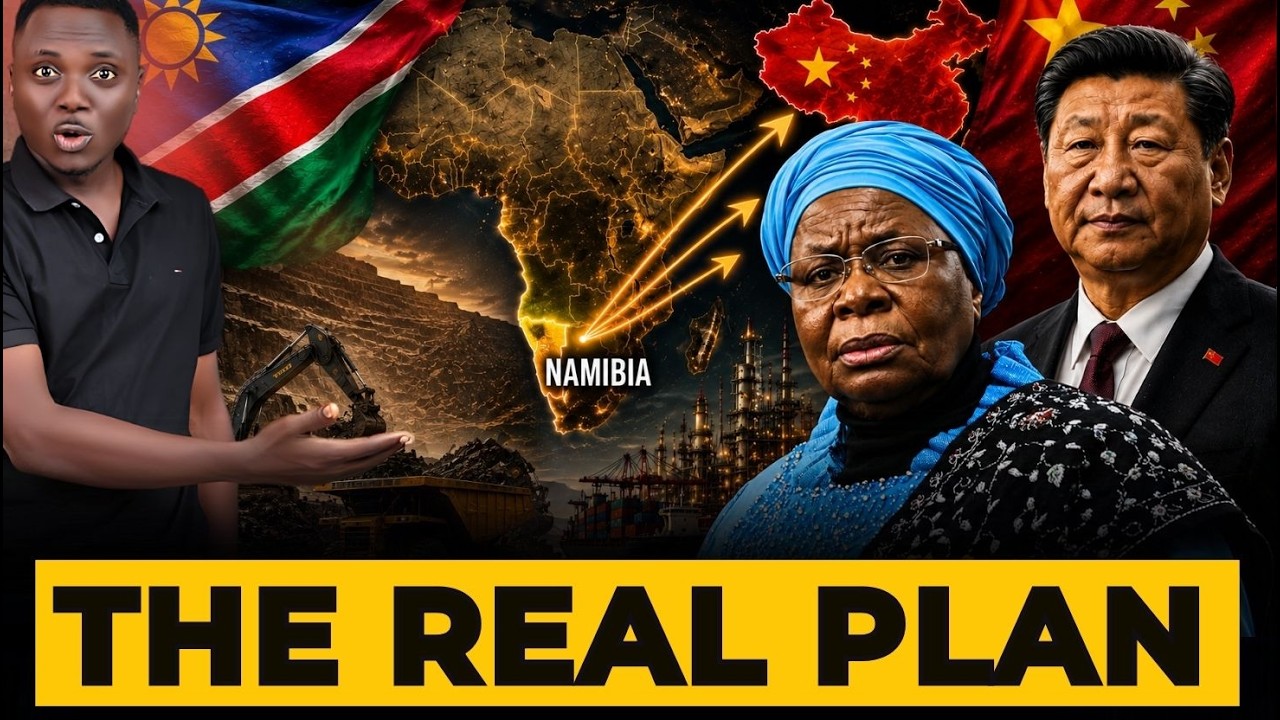
For decades, the narrative of China–Africa relations has followed a predictable script: Beijing finances massive infrastructure projects in exchange for raw commodities, leaving African nations as passive suppliers in a global system they do not control. Namibia, a sparsely populated country in southwestern Africa, has just broken that script. By leveraging a single, obscure mineral, the Namibian government has forced a strategic realignment that could determine who builds the world’s next generation of electric vehicles, wind turbines, and smart weapons. This is not a story about copper or gold. It is about a substance so critical that its absence halts factories in Shenzhen and Detroit alike—and about how a country of 2.5 million people used it to change the rules of the game.
The Strategic Asset
The mineral in question is neodymium, a rare earth element that is a core component of high-strength permanent magnets. These magnets are not optional. They are the quiet engines of modern technology, converting electrical energy into motion in everything from EV motors to drone propellers and precision-guided munitions. Without neodymium, the global transition to clean energy and advanced defense systems would grind to a halt.
China currently controls roughly 90% of the global rare earth refining capacity. For years, that dominance has served as a silent geopolitical lever, giving Beijing the power to restrict exports at will. Namibia’s new advantage is geological: it sits atop one of the largest and highest-grade undeveloped rare earth deposits in the world, located at Lofdal, near the country’s northwestern border.
The Policy Shift
What makes Namibia’s move unprecedented is not the discovery itself—geologists have known about Lofdal for years—but the legal framework now attached to it. In early 2024, the Namibian government enacted a new mining charter that mandates local beneficiation. In plain terms, any rare earth ore extracted from Namibian soil must now be processed domestically into a usable intermediate product before it can be exported. Raw ore cannot leave the country. Concentrates and mixed rare earth carbonates are subject to strict quotas, with a clear escalation pathway toward full domestic separation by 2027.
This is a direct departure from the historical model, where African nations exported raw materials and imported finished goods. Namibia has effectively told the world: if you want our neodymium, you must build your refinery here, hire our engineers, and pay our energy tariffs. The policy is not anti-Chinese; it is pro-Namibian. But its timing is significant.
The China Factor
Beijing’s response has been cautious but revealing. Chinese state-owned enterprises have long been the primary financiers of African mining projects, often trading infrastructure loans for mineral rights. Under the new charter, that model becomes untenable. A Chinese company cannot simply ship ore to a refinery in Guangdong; it must now either invest in a Namibian processing facility or lose access to the resource entirely.
The implications extend beyond economics. China’s rare earth export controls, used as a countermeasure in trade disputes with the United States and Europe, lose their sting if a non-Chinese source of processed material exists. Namibia is not attempting to replace China’s refining capacity—that would be impossible in a decade—but it is creating a strategic alternative. For Western automakers and defense contractors currently scrambling to diversify their supply chains, Namibia has become a lifeline.
The Hard Realities
Namibia’s ambition, however, faces severe hurdles. The most immediate is energy. Rare earth processing is electricity-intensive, and Namibia currently imports up to 60% of its power from neighboring South Africa, which suffers from chronic blackouts. The government has announced plans to build solar and wind capacity near the Lofdal site, but those projects remain in the feasibility stage.
Water is a second constraint. The Lofdal region is arid, and rare earth separation requires significant water usage. Recycling systems are planned, but they add capital costs to an already expensive venture. Finally, there is the question of technical expertise. Namibia has no existing rare earth industry. The country must attract skilled chemists and metallurgists from abroad, often competing with higher-paying jobs in Australia, Canada, and China itself.
A New Template for Africa
Despite these obstacles, Namibia’s strategy has already had a ripple effect across the continent. Several African nations—including Tanzania, Zambia, and the Democratic Republic of Congo—are now reviewing their own mining codes, exploring similar beneficiation requirements for critical minerals like cobalt, lithium, and graphite. The message is clear: the era of the extractive handover is ending.
The West has taken notice. The United States, through its Minerals Security Partnership, has quietly signaled support for Namibia’s processing ambitions, offering technical assistance and potential financing. The European Union has included Namibian rare earths in its Critical Raw Materials Act, designating the country as a “strategic partner” for supply chain resilience. Namibia has successfully positioned itself not as a pawn in a great-power rivalry, but as a sovereign player with a unique asset.
The Bottom Line
Namibia has not “changed the game” in the sense of overturning global power structures overnight. What it has done is more subtle and more durable: it has demonstrated that a small, developing nation can impose conditions on its own resources without being crushed by larger powers. The Lofdal project, if it succeeds, will prove that African countries do not need to choose between poverty and subservience. They can choose to build their own industrial capacity, one magnet at a time.
The world is watching. The question now is not whether Namibia can mine its neodymium—that was never in doubt. The question is whether it can refine it, process it, and sell it on its own terms. If it does, the China–Africa playbook will never be the same.
Related Coverage
Rare Earth ETF: America’s $1.4 Trillion Weapon to Break China’s Grip—or a Trap for Investors?
A new exchange-traded fund (ETF) now trading on U.S. markets aims to help the United States reduce its dependence on China for rare earth minerals—essential for smartphones, electric vehicle batteries, and military equipment—but experts warn the fund carries significant risk, with most non-Chinese projects years away from large-scale production [205656].
Uganda’s $X Billion Oil Bet: Can One Budget Fix a Broken Economy?
Uganda is preparing to begin commercial oil production later this year, and the government has unveiled a massive 2026/27 national budget aimed at reshaping the country’s lopsided economy.
The AI Bubble Is a Power Play: How Compute, Debt, and Labor Are Reshaping the Global Order
The artificial intelligence boom is not a neutral technological revolution; it is a geopolitical and economic battleground. As the United States and China compete for control over the chips, data, and capital that fuel AI, the contest is redrawing the balance of power between states and corporations—while workers and global financial markets absorb the shockwaves.
China’s AI Rulebook: A Global Push for Control
China is aggressively pushing its own vision for global artificial intelligence (AI) governance, positioning itself as a rule-maker in the digital age, while simultaneously easing restrictions on advanced chip imports and backing new domestic models to stay ahead in the tech race.
Pentagon’s $1.6 Trillion Mineral Grab Sparks Indigenous Alarm as Mining Expands onto Tribal Lands
A massive Pentagon push to secure lithium, graphite, and other critical minerals for military drones and electric vehicle batteries is expanding mining projects onto or near Indigenous lands, triggering warnings from tribal leaders who say they are being sidelined in decision-making and face environmental and cultural losses. The U.S. military argues the spending is vital for national security and reducing reliance on foreign suppliers, but Indigenous communities warn the rush for resources threatens their land and way of life [176027].
The AI Power Play: How Compute, Debt, and Geopolitical Rivalry Are Reshaping Global Control
The artificial intelligence boom is not a neutral technological revolution; it is a geopolitical and economic battleground where control over chips, data, and capital is redrawing the balance of power between states and corporations, while workers and global financial markets absorb the shockwaves. The most immediate threat to the global economy is not AI itself, but the debt being piled up to build it, as massive borrowing by tech giants to construct data centers creates a bubble that central banks and sovereign wealth funds warn is overheating [1]. Meanwhile, China is executing a carefully calibrated strategy to build its own AI ecosystem independent of American technology, positioning itself as a global rule-maker and forcing smaller nations to choose sides in a contest that will shape the world's technological future [2].
Related Editorials
The Rare Earth Chessboard: How China Secured Africa’s Mineral Future
In the global race for technological supremacy, few resources are as critical as rare earth elements. These 17 metallic elements are essential for manufacturing everything from smartphones and electric vehicles to military radar systems and wind turbines.
China’s $10 Billion Bet on Africa’s Most Volatile Frontier
In the arid, resource-rich expanse of the eastern Sahel, China is executing one of its most audacious and high-stakes foreign investments to date: a massive oil pipeline stretching through the heart of Niger. This project, often overshadowed by Beijing’s larger Belt and Road infrastructure deals, r
Africa’s Silent Giant: The $5 Billion Megaproject Reshaping the World’s Economy
While global attention fixates on trade wars and energy crises, a quiet revolution is underway in North Africa. Morocco has just completed a project that analysts are calling the most consequential infrastructure development for the continent in decades—yet it has barely made headlines.
Mali’s Bold Move: How Assimi Goïta’s Crackdown on Gold Mining Is Reshaping Africa’s Wealth Equation
For decades, a familiar narrative has plagued the African continent: vast mineral wealth extracted by foreign corporations, with local populations seeing little of the profit. Mali, one of Africa’s largest gold producers, has long been a textbook example of this dynamic.
China’s Arctic Silk Road: The Race for the Frozen North
For centuries, the Arctic was a realm of ice, isolation, and a handful of intrepid explorers. Today, it is the stage for one of the most ambitious geopolitical and economic projects of the 21st century: China’s "Polar Silk Road.
The Hidden Leverage: How a Global Pause in African Exports Would Trigger a Worldwide Crisis
The global economy runs on a fragile web of supply chains, and no continent is more central to its survival than Africa. Yet, the world often overlooks this dependency.