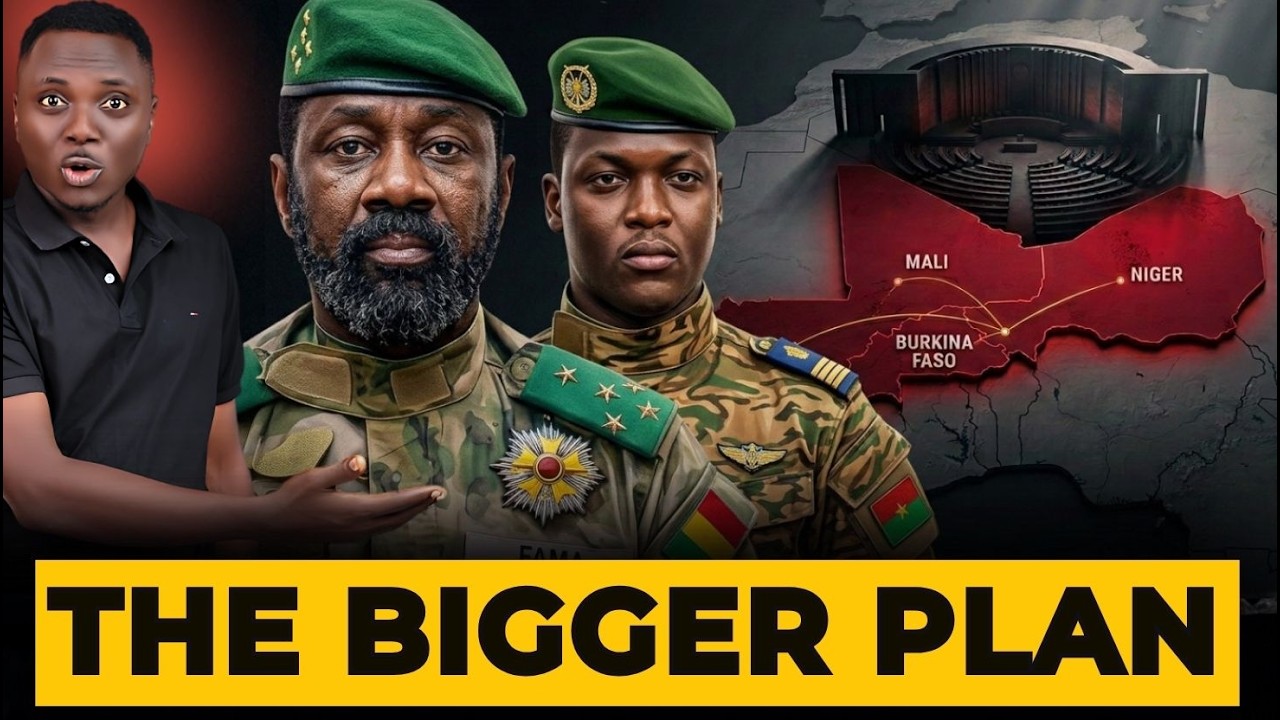
The Sahel Alliance Just Redrew West Africa’s Geopolitical Map—And ECOWAS Is Scrambling
In a move that has sent ripples through West African diplomacy, the Alliance of Sahel States (AES) has unveiled a significant new project that regional bloc ECOWAS did not anticipate. The development marks a decisive step in the consolidation of the AES as a standalone geopolitical and economic for
In a move that has sent ripples through West African diplomacy, the Alliance of Sahel States (AES) has unveiled a significant new project that regional bloc ECOWAS did not anticipate. The development marks a decisive step in the consolidation of the AES as a standalone geopolitical and economic force, signaling a permanent shift in the region's balance of power. This is not a symbolic gesture; it is a concrete infrastructure and policy initiative that challenges the status quo.
A New Reality on the Ground
The AES, comprising Mali, Burkina Faso, and Niger, has been steadily distancing itself from the Economic Community of West African States (ECOWAS) since the military coups that reshaped the region’s leadership. What began as a political rupture has now evolved into a tangible, physical reality. The recent announcement confirms that the bloc is moving beyond rhetoric, implementing projects designed to secure its sovereignty and economic independence.
The specific project in question is a major infrastructure undertaking—a cross-border initiative aimed at linking the three member states in a way that bypasses traditional ECOWAS-centric trade routes. By prioritizing internal connectivity, the AES is effectively building an alternative economic corridor that reduces reliance on coastal ports and established regional hubs that remain under the influence of the older bloc.
Strategic Autonomy Over Integration
This move is a direct response to the perceived inflexibility and external influence that the AES leadership attributes to ECOWAS. For the military governments in Bamako, Ouagadougou, and Niamey, the priority is strategic autonomy. The new project is designed to facilitate the movement of goods, people, and resources within the AES, creating a self-sufficient ecosystem that can operate independently of external pressure.
The infrastructure is not merely about roads or logistics; it is a statement of intent. It signals that the AES is prepared to function as a fully-fledged alternative to the post-colonial integration model that has defined the region for decades. This includes efforts to coordinate security policies, harmonize trade tariffs, and potentially introduce a unified currency framework in the long term.
The ECOWAS Dilemma
For ECOWAS, this development presents a profound challenge. The bloc has historically served as the primary mechanism for regional integration and conflict resolution. The AES’s aggressive push for self-reliance leaves ECOWAS in a reactive position, forced to negotiate with a bloc that no longer views it as a legitimate authority.
The timing is critical. With the AES accelerating its projects, ECOWAS faces the prospect of a permanent partition of the region’s economic space. The loss of three major landlocked nations to a rival bloc disrupts established supply chains and diminishes ECOWAS’s leverage in international negotiations. The "shock" referenced in the original analysis is rooted in the speed and decisiveness of the AES’s actions; what was once considered a bluff has become a functioning reality.
Implications for Regional Security
Security is the other pillar of this transformation. The AES has prioritized a joint military force to combat jihadist insurgencies, a task that ECOWAS has struggled to coordinate effectively. By formalizing their own security apparatus and infrastructure, the AES is creating a closed loop of defense and logistics that does not depend on ECOWAS intelligence or support. This allows for faster decision-making and a unified command structure, albeit at the cost of isolation from broader regional frameworks.
A New West African Order
The completion of this project does not just change logistics; it changes the political trajectory of West Africa. The AES is effectively establishing a new pole of gravity, one that is unapologetically sovereign and less open to external intervention. While this promises greater internal cohesion for its members, it also raises the stakes for regional stability. The question is no longer whether the AES will leave ECOWAS—they have already left in spirit and now in practice—but how the rest of the continent will adapt to a West Africa with two competing centers of power.
The old order has been challenged, and the new architecture is being built now. ECOWAS, which once expected the AES to falter, now faces the reality of a rival that is building faster than it can react.
Related Coverage
Oil Shock and Global Realignment: How Middle East Conflict, Ukraine War, and Shifting Alliances Are Reshaping the World
A wave of attacks on Saudi oil infrastructure and Houthi seizures of key shipping lanes has sent crude prices above $100 a barrel, while Ukraine's war with Russia escalates and BRICS leaders gather in New Delhi to test whether a divided bloc can challenge Western power.
New Saudi-Turkey-Pakistan Defense Pact Shakes Up Middle East, But Can It Survive First Test?
A new trilateral defense agreement between Saudi Arabia, Turkey, and Pakistan is reshaping regional security, but experts question whether the alliance can hold together under pressure.
Trump Cuts Ukraine’s Starlink and Backs Russian Diesel in 3-Day Blitz
The US has moved sharply against Ukraine and toward Russia, lifting sanctions on Russian diesel, demanding Ukraine stop striking Russian oil, and slowing Starlink service that Ukraine relies on for air defense warnings.
Zelenskyy Rolls Out Secret Asymmetric Plan to Counter Russia’s Ballistic Missile Barrage
Ukraine has approved a new set of technological and asymmetric measures to counter Russia’s intensifying use of high-speed ballistic missiles, President Volodymyr Zelenskyy announced Wednesday, signaling a shift away from conventional warfare.
Trump’s ‘Super Intelligence’ Loyalty Test: Salesforce and SpaceX Rebrand as OpenAI Refuses
Trump pushes a government-wide rebrand from “AI” to “Super Intelligence,” and two major tech companies are already falling in line—while others resist.
Iran War Hits 100 Days: Gulf States Dump Old Alliances as Israel Weighs Next Move
The U.S.-Israel military campaign against Iran has passed the 100-day mark, forcing Gulf states to rethink their security alliances and long-term strategies in a region now defined by shifting loyalties and a power vacuum [166488].
Related Editorials
Mali’s Bold Pivot: How a Surprise Alliance Is Redrawing West Africa’s Geopolitical Map
In a region already defined by coups, sanctions, and shifting loyalties, one man’s unexpected diplomatic gambit is sending shockwaves through West Africa. Colonel Assimi Goïta’s Mali has long been a flashpoint for international tension, but the latest development—a deepening military and political
Russia’s Silent Takeover: How Moscow Is Replacing France in the Sahel
In a dramatic geopolitical shift, Russia is quietly but decisively expanding its military and political influence across West Africa’s Sahel region. Recent developments in Mali, Burkina Faso, and Niger signal a coordinated effort by Moscow to fill the vacuum left by departing Western powers—particu
Burkina Faso’s Revolt Against France Triggers an Irreversible Domino Effect in the Sahel
In a move that has reshaped the geopolitical landscape of West Africa, Burkina Faso’s decision to sever ties with its former colonial power has ignited a chain reaction that analysts now describe as irreversible. The country’s military junta, which seized power in a 2022 coup, has not only expelled
The Sahel’s Quiet Revolution: Why Mali, Burkina Faso, and Niger Turned Their Backs on the West
In a move that has reshaped the geopolitical map of West Africa, three nations—Mali, Burkina Faso, and Niger—have collectively severed ties with their traditional Western allies. This is not a sudden coup or a fleeting protest; it is a calculated, strategic pivot that signals a new era of self-dete
Algeria’s Quiet Rearmament of the Sahel: A Strategic Shift with Regional Shockwaves
In a move that has recalibrated the balance of power in Northwest Africa, Algeria has begun a significant military supply program to the Alliance of Sahel States (AES). The deliveries, which include armored vehicles, artillery systems, and advanced drone technology, mark a decisive departure from A
ECOWAS Just Drew a Red Line Around the Sahel—Here’s Why
The Economic Community of West African States (ECOWAS) has issued a stark warning regarding the escalating crisis in the Sahel region. The bloc’s latest declaration signals a firm stance against further instability spilling across its southern borders.