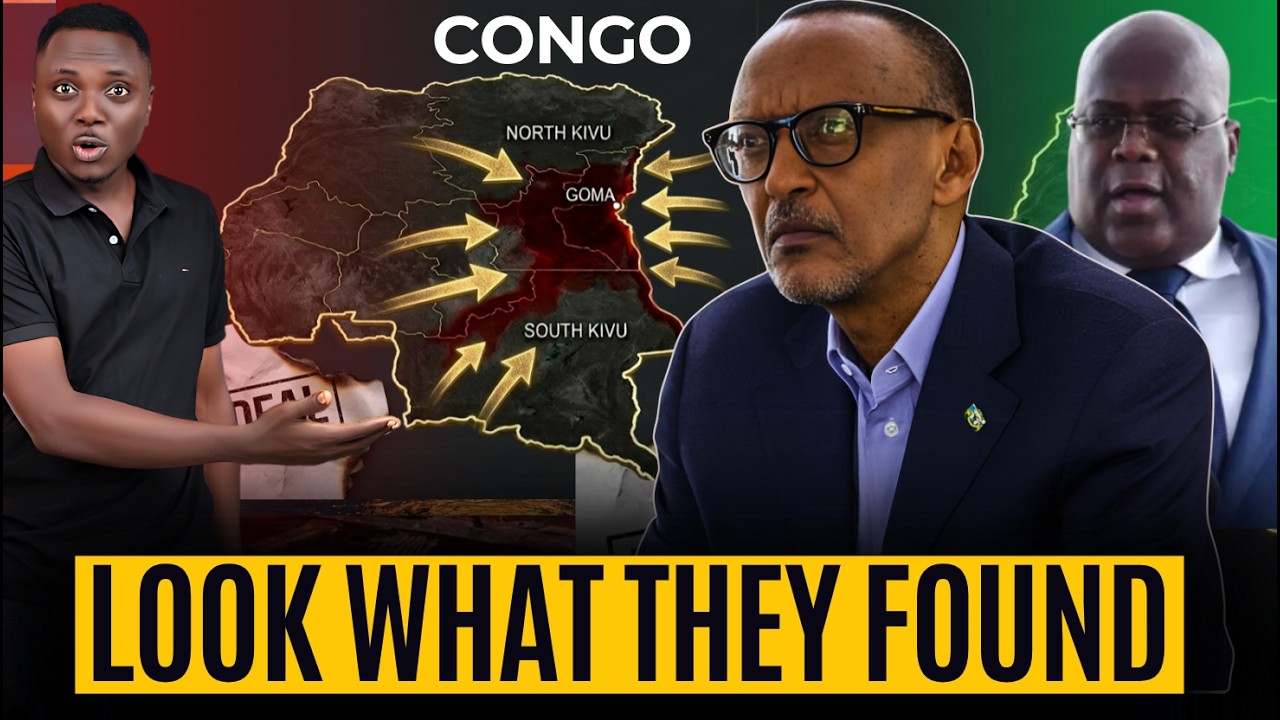
The Hidden War: What Rwanda Really Wants in Congo
The conflict in the Democratic Republic of the Congo (DRC) is often framed as a local struggle, but the roots of the violence run deep into the politics and economy of neighboring Rwanda. To understand why fighting persists in eastern Congo, one must look beyond the battlefield and examine the stra
The conflict in the Democratic Republic of the Congo (DRC) is often framed as a local struggle, but the roots of the violence run deep into the politics and economy of neighboring Rwanda. To understand why fighting persists in eastern Congo, one must look beyond the battlefield and examine the strategic interests of Kigali.
The relationship between Rwanda and the DRC is defined by a complex mix of security concerns, economic ambition, and historical trauma. While Rwanda officially cites the need to neutralize the Democratic Forces for the Liberation of Rwanda (FDLR)—a rebel group linked to the 1994 genocide—critics argue that this security threat serves as a cover for deeper economic motives.
Security or Profit?
Rwanda’s primary justification for its involvement in Congo is self-defense. The FDLR, founded by Hutu extremists responsible for the genocide, operates from Congolese territory. Kigali argues that the Congolese army (FARDC) is either unable or unwilling to dismantle these forces, forcing Rwanda to take preemptive action. However, this narrative is widely contested.
Evidence suggests that Rwanda’s interests extend far beyond border security. Eastern Congo is rich in natural resources, particularly gold and coltan, a mineral essential for global electronics. Reports from the United Nations and human rights organizations have frequently accused Rwandan officials and military figures of profiting from the illicit trade of these minerals, often through armed proxies like the M23 rebellion.
The M23 Connection
The resurgence of the M23 rebel group has brought Rwanda’s role back into the international spotlight. The M23, comprised largely of ethnic Tutsis, has been accused of receiving direct military support from Rwanda. Kigali denies these allegations, but the group’s sophisticated weaponry and tactical effectiveness suggest external backing. For Rwanda, the M23 serves as a buffer zone, keeping hostile forces away from its border and securing access to lucrative mining areas.
The Pursuit of Influence
Ultimately, Rwanda seeks to maintain a sphere of influence in eastern Congo. By destabilizing the region, Kigali ensures that the Congolese government remains weak and unable to project power into the borderlands. This lack of central authority allows Rwandan networks to operate freely, securing both political leverage and economic gain.
The situation is further complicated by the historical failure of the international community to address the aftermath of the 1994 genocide. The world’s inaction during the genocide has shaped Rwanda’s foreign policy, leading to a doctrine of proactive intervention. Kigali views a strong, stable Congo with suspicion, fearing that a capable Congolese military might one day align with forces hostile to Rwanda.
Conclusion
The conflict in Congo is not a simple case of good versus evil. It is a tangled web of security dilemmas and economic greed. While Rwanda’s fears regarding the FDLR are legitimate, the exploitation of Congolese resources and the support of proxy militias have exacerbated the humanitarian crisis. Until the international community addresses both the security concerns of Rwanda and the sovereignty of the DRC, the cycle of violence in the Great Lakes region is unlikely to end.
Related Coverage
Power, Profit, and a Planet in Peril: How Conflict and Financial Warfare Are Reshaping Global Politics
The global order is buckling under the weight of converging crises, where the pursuit of geopolitical power and corporate profit is colliding with fundamental human needs. From the closed oil routes of the Strait of Hormuz and the escalating aerial war in Ukraine to drought-parched rivers across Europe and famine-stricken regions of Africa, a cascade of interconnected emergencies is diverting public resources away from social welfare and toward conflict, leaving the world's most vulnerable populations to bear the heaviest burden of inflation, displacement, and violence [1][2].
Power, Profit, and a Planet in Peril: How Conflict and Financial Warfare Are Reshaping Global Politics
The global order is buckling under the weight of converging crises, where the pursuit of geopolitical power and corporate profit is colliding with fundamental human needs. From the closed oil routes of the Strait of Hormuz and the escalating aerial war in Ukraine to drought-parched rivers across Europe and famine-stricken regions of Africa, a cascade of interconnected emergencies is diverting public resources away from social welfare and toward conflict, leaving the world's most vulnerable populations to bear the heaviest burden of inflation, displacement, and violence [1][2]. This systemic shift, driven by financial warfare, a militarization boom, and an overheating artificial intelligence (AI) debt bubble, is redrawing the map of global politics, forcing nations to choose sides and citizens to fight for survival [1][2].
Oil Shocks, Crackdowns, and a World Order Under Strain: How War, Energy, and Repression Are Reshaping Global Politics
A wave of attacks on oil chokepoints, escalating wars, and sweeping crackdowns on dissent are converging to squeeze ordinary households while powerful interests profit — testing the global order as never before.
# Global Health Under Siege: How War, Climate Chaos, and Economic Strain Are Redrawing the Map of Care
Access to healthcare is becoming increasingly stratified by wealth and geography, as the convergence of war, extreme weather, and economic instability creates a world where the most vulnerable populations bear the heaviest burden [1]. From the battlefields of Ukraine to the drought-parched heart of Europe, the pursuit of geopolitical power and corporate profit is colliding with fundamental human needs, diverting public resources away from social welfare and toward conflict and profiteering [2].
# Power, Profit, and a Planet in Peril: How Financial Warfare, Climate Collapse, and the AI Boom Are Reshaping Global Politics
The global order is buckling under the weight of converging crises, where the pursuit of geopolitical power and corporate profit is colliding with fundamental human needs. From the closed oil routes of the Strait of Hormuz and the escalating aerial war in Ukraine to drought-parched rivers across Europe and famine-stricken regions of Africa, a cascade of emergencies is diverting public resources away from social welfare and toward conflict, leaving the world's most vulnerable populations to bear the heaviest burden of inflation, displacement, and violence [1][2].
Related Editorials
Russia’s Information Offensive in Ghana Exposes a Deeper Battle for Africa’s Allegiances
A diplomatic dispute that began with a single social media post has escalated into a broader contest over influence, resources, and narrative control across West Africa. When Russia’s embassy in Ghana published a message criticizing the European Union’s stance on a controversial mining project, few
The Hidden Hand Behind Africa’s Fractures: A Question of External Influence
Across the African continent, a troubling pattern has emerged. From the Sahel to the Horn of Africa, communities that once coexisted are now divided by suspicion, ethnic tension, and political violence.
The Ukraine War is Not What It Seems: A Battle for the Global Order
The war in Ukraine, now entering its third year, is widely portrayed as a straightforward conflict between a sovereign nation and an imperial aggressor. Yet, according to two of Europe’s most incisive economic and political thinkers, this narrative conceals a far more complex reality.