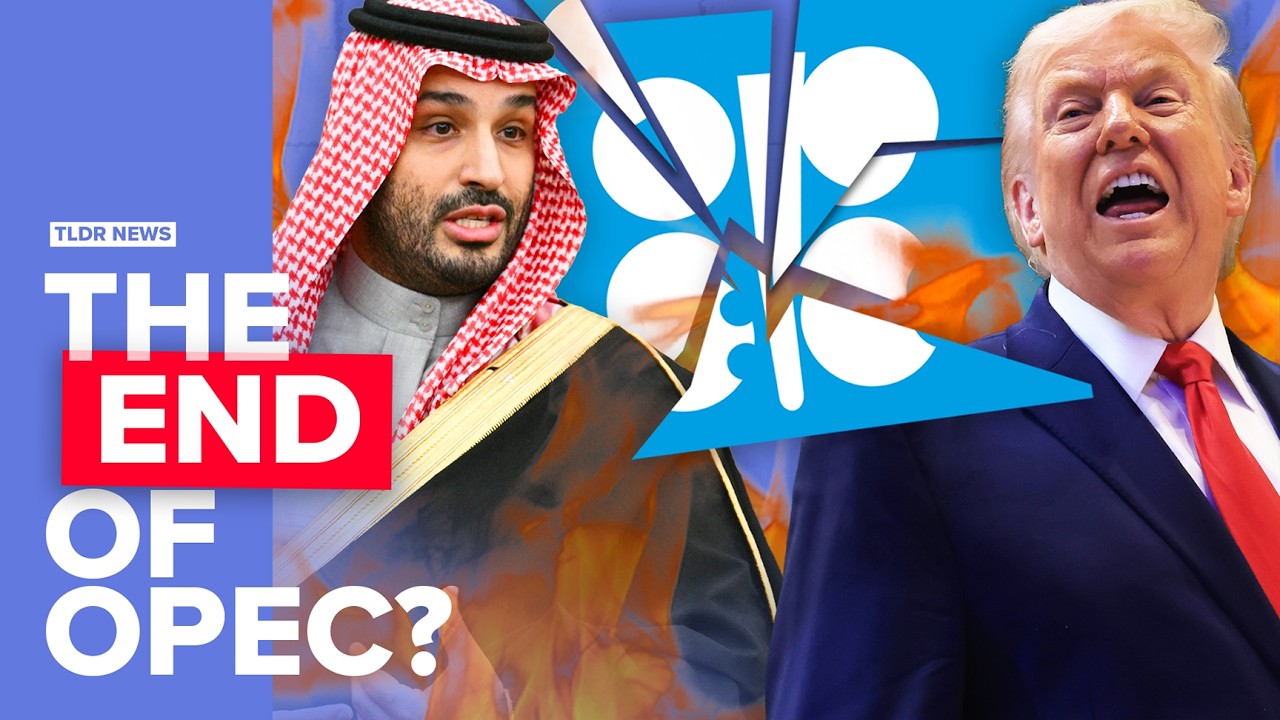
OPEC’s Unraveling: Why the Cartel’s Collapse Now Looks All But Certain
For decades, the Organization of the Petroleum Exporting Countries (OPEC) has functioned as the undisputed referee of global energy markets, wielding its members’ vast crude reserves to set prices and stabilize supply. Yet, beneath the veneer of quarterly meetings and production quotas, tectonic fo
For decades, the Organization of the Petroleum Exporting Countries (OPEC) has functioned as the undisputed referee of global energy markets, wielding its members’ vast crude reserves to set prices and stabilize supply. Yet, beneath the veneer of quarterly meetings and production quotas, tectonic forces are shifting. The cartel—once a model of collective discipline—is now fractured by internal rivalries, shrinking market share, and a global energy transition that no longer bends to its will. The question is no longer whether OPEC will lose its grip, but how quickly its remaining influence will evaporate. This analysis examines the structural cracks that make the cartel’s collapse look increasingly inevitable.
The Erosion of Market Power
OPEC’s primary lever has always been its ability to adjust production in unison, thereby influencing global oil prices. This works only if member states adhere to quotas and if the cartel’s combined output represents a decisive share of global supply. Both conditions are now in jeopardy.
First, internal compliance has deteriorated. Nations such as Iraq, Nigeria, and Venezuela have chronically exceeded their agreed limits, often out of economic desperation or infrastructural decay. Conversely, Saudi Arabia—historically the cartel’s swing producer—has repeatedly cut its own output to compensate for others’ overproduction, effectively subsidizing its rivals’ revenue. This asymmetry breeds resentment and undermines the collective bargaining power that OPEC once projected.
Second, the cartel’s global market share has been steadily eroding. In 2010, OPEC members produced roughly 40% of the world’s crude. By 2024, that figure had fallen to under 35%, according to the International Energy Agency. The rise of U.S. shale production, which is agile and responsive to price signals, has permanently altered the supply landscape. Shale producers can ramp up output in weeks, not months, making OPEC’s slow, consensus-driven decisions less relevant to real-time market dynamics.
The Internal Rift: A House Divided
Beyond market mechanics, the cartel is politically fractured. The most visible schism is between Saudi Arabia and Russia—a de facto partnership that has propped up prices since 2016 but is built on shaky foundations. Russia’s need for high oil revenue to fund its war in Ukraine conflicts with Saudi ambitions to capture long-term market share. When Moscow quietly discounts its crude to Asian buyers, it undercuts Riyadh’s pricing strategy.
Further complicating matters is the departure of Angola in January 2024, followed by Ecuador’s earlier exit. These withdrawals are not anomalies; they reflect a growing realization among mid-tier producers that OPEC membership offers diminishing returns. For smaller nations, the cost of adhering to quotas—lost revenue and constrained output—now outweighs the benefit of price stability, especially when the cartel cannot enforce discipline among its largest members.
The Demand Cliff
The most existential threat to OPEC is not competition from other oil producers but the structural decline in oil demand itself. The International Energy Agency projects that global oil consumption will plateau by 2030, driven by the accelerating adoption of electric vehicles, efficiency gains, and policy mandates aimed at decarbonization. Unlike previous demand shocks, which were cyclical and recovered, this shift is linear and policy-backed.
OPEC’s own long-term forecasts are notably more optimistic, predicting continued demand growth through 2045. Yet these projections are widely viewed as self-serving, designed to justify continued investment in extraction. The cartel faces a paradox: if it cuts production to raise prices, it accelerates the shift toward alternatives; if it floods the market to retain share, it collapses its own revenue. Neither path offers a sustainable future.
The Coordination Dilemma
OPEC’s collapse is not a single event but a process of unraveling coordination. The cartel’s effectiveness relies on the ability to negotiate a common price floor. However, as the number of non-OPEC producers grows—from Brazil’s deepwater fields to Guyana’s offshore discoveries—the cartel’s ability to influence price diminishes. Even a unified OPEC cannot control a market where its share is shrinking.
Moreover, the decision-making structure itself is anachronistic. Decisions require unanimous consent among sovereign nations with conflicting geopolitical interests. In a fast-moving market, this deliberative process is a liability. The 2020 price war between Saudi Arabia and Russia, which sent prices crashing to negative territory, demonstrated how quickly cooperation collapses when individual interests override collective goals.
Conclusion: The Inevitable, Yet Gradual, End
OPEC will not dissolve overnight in a dramatic announcement. Rather, it will continue to exist as a formal institution, holding meetings and issuing communiqués, even as its substantive authority fades. The signs of decline are already visible: falling market share, chronic quota violations, and a growing list of member exits. The cartel’s collapse is inevitable not because of a single shock, but because the structural conditions that made it powerful—concentrated supply, inelastic demand, and geopolitical alignment—have all eroded.
The world is moving toward a more fragmented, competitive oil market, where prices are set by technology, policy, and geopolitics rather than by a group of ministers in Vienna. OPEC’s legacy will be studied as a historical anomaly: a successful cartel that ultimately could not outlast the very forces it once controlled. For now, the only question is how long the semblance of unity can mask the reality of decline.
Related Coverage
War, Profit, and a Broken System: How Endless Conflict and a Super El Niño Are Crushing Global Stability
A fragile peace deal between the United States and Iran that could unlock the world’s most vital oil route is collapsing under the weight of the very conflicts it was meant to end, while a record-breaking climate disaster threatens global food supplies and a system that prioritizes profit over people leaves ordinary citizens bearing the costs.
Oil Shocks, Crackdowns, and a World Order Under Strain: How War, Energy, and Repression Are Reshaping Global Politics
A wave of attacks on oil chokepoints, escalating wars, and sweeping crackdowns on dissent are converging to squeeze ordinary households while powerful interests profit — testing the global order as never before.
War, Oil, and a Burning Planet: How Collapsing Ceasefires and a Broken System Are Deepening the Global Health Divide
A fragile global order is fracturing as a cascade of collapsing peace deals, escalating wars, and a deepening climate emergency converge, pushing energy markets into chaos and leaving the world’s most vulnerable populations to bear the heaviest costs of a system that prioritizes military spending and corporate profit over human welfare.
Oil at $84, Lines at 18 Hours: How a Cascade of Wars and a Climate Emergency Are Crushing the Global Economy
A fragile global order is fracturing under the weight of collapsing ceasefires, escalating wars, and a deepening climate emergency, pushing energy markets into chaos and leaving millions of ordinary people—especially the world’s poorest—to bear the costs of a system that prioritizes military spending over human welfare.
War, Oil, and a Burning Planet: How Collapsing Ceasefires and a Climate Emergency Are Crushing the World’s Most Vulnerable
A fragile global order is fracturing as a cascade of collapsing ceasefires, escalating wars, and a deepening climate emergency converge, pushing energy markets into chaos and leaving millions of ordinary people—especially the world’s poorest—to bear the costs of a system that prioritizes military spending and corporate profit over human welfare.
Oil, War, and a Super El Niño: A World Held Hostage by a System Built for Profit
A fragile peace deal that could unlock the world’s most vital oil route is collapsing under the weight of the very conflicts it was meant to end, while a record-breaking climate disaster threatens global food supplies and a system that prioritizes profit over people leaves ordinary citizens bearing the costs.
Related Editorials
The Coming Energy Market Meltdown: Why Experts Are Sounding the Alarm
Global energy markets are approaching a critical inflection point. While the transition to renewable sources dominates headlines, a less visible but equally dangerous crisis is brewing beneath the surface—one that could destabilize power grids, spike electricity prices, and trigger widespread econo
The Unraveling Alliance: Why a US-Israel Divorce Looks Increasingly Inevitable
For decades, the bond between the United States and Israel was considered unbreakable—a cornerstone of Middle Eastern geopolitics. Yet, beneath the surface of official statements and military aid packages, tectonic plates are shifting.
The Coming Oil Shock: Why a Price Spike Is Now Inevitable
The global oil market is tightening, and the signs point to a significant price surge. For months, analysts have debated the trajectory of crude, but a convergence of supply constraints, shifting demand patterns, and geopolitical instability now suggests that a sharp increase is not just possible—i
The Gathering Storm: How a Continental Shift Is Threatening South Africa’s Regional Dominance
A quiet but seismic shift is underway in African geopolitics. For decades, South Africa has operated as the continent’s economic and diplomatic anchor, wielding influence from Cape Town to Cairo.
The World Is Running Out of Oil Buffers Just as Iran Turns Up the Heat
When the United States and Iran went to war in February, oil analysts predicted catastrophe. With the Strait of Hormuz effectively closed, commentators warned of $200-a-barrel crude.
The End of Contentment: Why Global Stability Is Fracturing
For decades, a fragile global equilibrium held: cheap energy from Russia, ultra-efficient manufacturing from China, and a security umbrella provided by the United States. This arrangement delivered unprecedented prosperity to the developed world.