The World Is Running Out of Oil Buffers Just as Iran Turns Up the Heat
When the United States and Iran went to war in February, oil analysts predicted catastrophe. With the Strait of Hormuz effectively closed, commentators warned of $200-a-barrel crude.
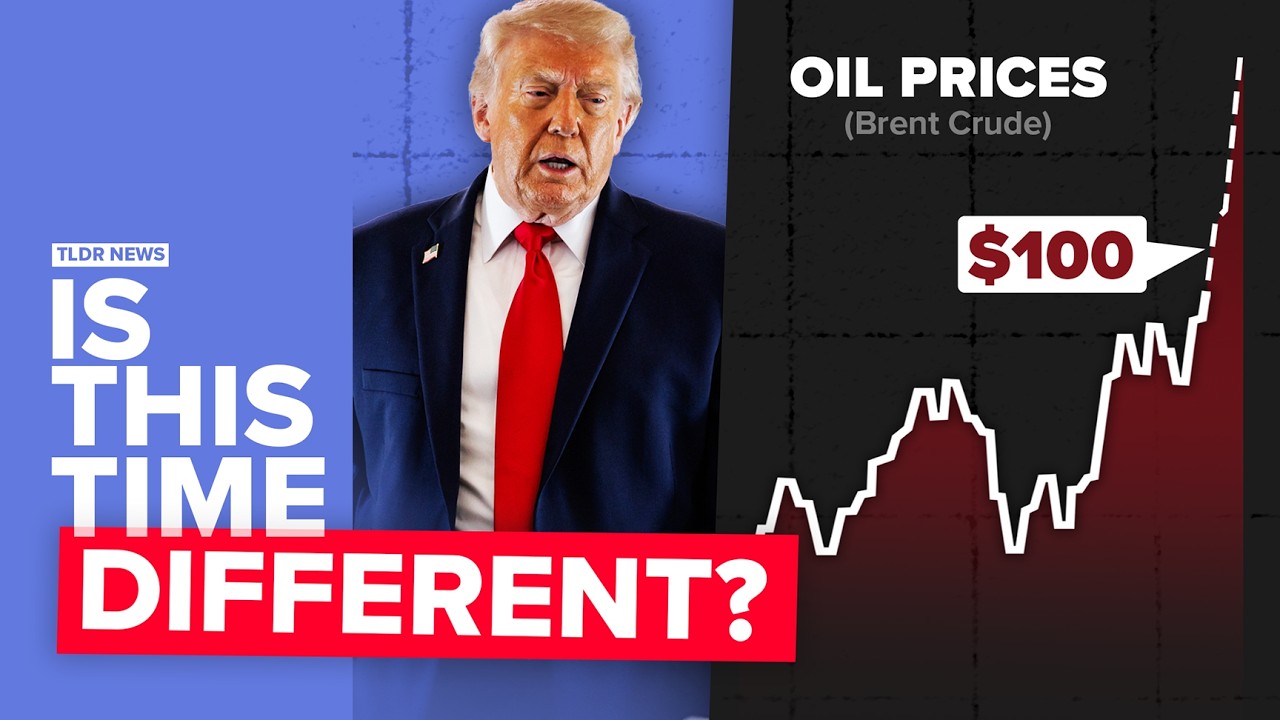
When the United States and Iran went to war in February, oil analysts predicted catastrophe. With the Strait of Hormuz effectively closed, commentators warned of $200-a-barrel crude. The reality was far quieter: Brent, the international benchmark, stayed below $100 for most of the spring. This week, that calm broke. After Iranian strikes on tankers in the strait and apparent Houthi attacks on Saudi oil infrastructure, Brent touched $99, its highest level since late July. The market suddenly looks far more fragile than it did a few months ago.
To understand what changed, it helps to understand why prices failed to spike during the first phase of the war, between March and June. Two factors kept the market stable.
First, the world tapped into unusually deep inventories. According to JPMorgan, global stockpiles stood at roughly 8.4 billion barrels when the crisis began, well above the historic norm. These reserves were drawn down at an unprecedented rate to supplement supply and hold prices down.
Second, China, normally the world's largest oil importer, slashed its imports by about four million barrels a day. Part of this reflected the Chinese economy's ability to adapt to price shocks. Public electric vehicle charging jumped 17 percent between April and May, suggesting drivers were switching to electric as gasoline became expensive. But most of the adjustment came from China drawing down its own stockpiles, built up over the previous two years. Bloomberg analysis suggests roughly half of the drop in Chinese demand came from those reserves.
In short, the world avoided an acute oil shock because everyone, China above all, was spending down their savings of crude. That could not last. By June, many stockpiles were running dangerously low.
President Trump acknowledged this publicly at the G7 summit, claiming oil reserves would run out in about four weeks and warning of what he called "bedlam." He used the argument to justify ending the war through a memorandum of understanding with Iran. The agreement was widely condemned by the American press and political class as a surrender document. Trump has since torn it up and restarted the conflict, presumably emboldened by the muted market reaction last time. Prices rose, but not enough to upend the economy.
That confidence may be misplaced. Neither of the two conditions that kept prices low still holds.
Global inventories are badly depleted. America's Strategic Petroleum Reserve, the world's largest single stockpile and a key stabilizer in recent months, has fallen from about 415 million barrels before the war to 287 million last week, according to the latest Energy Information Administration data. The accessible amount is lower still. The oil sits in vast underground salt caverns already past their shelf life, and at least 160 million barrels are needed at all times to maintain operational pressure, with over 200 million required for safety.
Meanwhile, Chinese imports are recovering. They fell from about 50 million tons before the war to below 30 million in June. Imports from the Persian Gulf rose to roughly 40 million tons in August. Total Chinese crude imports, running at about 12 million barrels a day before the war, have climbed back to 9 million from a low of 7 million in June. If that trend continues, or if imports approach pre-war levels, the market will tighten sharply.
None of this guarantees a price spike. The past few months have shown that forecasting oil prices is a futile exercise, unless one can pay $100,000 a month for early access to Trump's social media posts. Other forces are also pushing prices down. Non-OPEC producers, including the United States, Canada, and Guyana, are set to raise output by a combined 1.4 million barrels per day this year, according to Rystad. Russian exports have recovered from their lows during Ukraine's campaign against Russian oil infrastructure. Iran has also raised the prospect of an accord that would restore traffic through the Strait of Hormuz, which collapsed to zero after this week's tanker attacks.
Finally, prolonged high prices usually end in a crash. The world finds ways to curb oil use, reducing demand, while more expensive producers, such as American shale operators, ramp up output to capture higher prices, increasing supply.
Still, the central point stands: the two main factors that suppressed prices last time are gone. That materially raises the odds of an acute energy crisis in the near future, particularly since Iran knows it must use whatever leverage it holds over the Trump administration before the midterm elections.
Related Coverage
Oil Nears $100 as Iran Blockade, Gulf Attacks, and Fuel Shortages Rock Global Markets
Oil prices are surging toward $100 a barrel as the U.S. blockade of Iran pushes the region to the brink of war, with fresh military strikes and attacks on Saudi energy sites compounding supply fears. Fuel shortages are now spreading across Iran and Iraq, while European gas prices have hit a 3.5-year high due to Gulf liquefied natural gas (LNG) disruptions.
Oil Breaks $95 as Iran War Chokes Gulf Supply, Goldman Warns $120 Next
Oil prices surged past $95 a barrel on Wednesday as fighting between the U.S. and Iran intensified, shutting the Strait of Hormuz and threatening global supply lines [202019]. Goldman Sachs has warned that crude could hit $120 a barrel if the waterway remains blocked [201541][201023].
Iran & Houthis Trigger Twin Oil Chokepoint Crisis; 20% of Global Supply at Risk
Global oil markets are in turmoil as Iran and its Houthi allies launch coordinated attacks on two of the world's most critical maritime chokepoints—the Strait of Hormuz and the Bab el-Mandeb Strait—threatening to cut off nearly a fifth of the world's oil supply and push prices above $120 per barrel.
US Bombs Iran, Reimposes Naval Blockade as Oil Chokepoint Shuts Down
The United States has launched new military strikes against Iran and reimposed a naval blockade of Iranian ports in the Strait of Hormuz, a narrow waterway through which about 20% of the world’s oil passes [197166][197157][197161]. The escalation has prompted Iran to close the strait for the first time in decades, threatening global oil supplies and raising the risk of a wider conflict [197141].
Oil Crisis Explodes: Brent Crude Tops $105 as Iran Threatens Wider War and France Sends Troops to Saudi Oil Sites
The Middle East conflict is spiraling into a global energy emergency as Iran threatens to expand the war, oil prices surge past $105 a barrel, and France announces military deployment to protect Saudi oil infrastructure.
Iran Shuts Strait of Hormuz; Oil Prices Surge 20% as Global Food Crisis Deepens
Iran has blocked the Strait of Hormuz, a narrow waterway where about one-fifth of the world’s crude oil passes daily, after the United States renewed its naval blockade and launched a third wave of airstrikes in a week. The move has sent oil prices soaring and threatens to push millions more into hunger, particularly in vulnerable nations already struggling with food shortages.
Related Editorials
The Coming Energy Market Meltdown: Why Experts Are Sounding the Alarm
Global energy markets are approaching a critical inflection point. While the transition to renewable sources dominates headlines, a less visible but equally dangerous crisis is brewing beneath the surface—one that could destabilize power grids, spike electricity prices, and trigger widespread econo
The Hidden Crisis That Could Decide the Next Iran War
For years, the public debate on Iran has focused on centrifuges, enriched uranium, and the timeline to a nuclear weapon. Yet, a deeper, more immediate crisis is unfolding beneath the surface—one that receives far less attention but could prove decisive in any future conflict.
OPEC’s Unraveling: Why the Cartel’s Collapse Now Looks All But Certain
For decades, the Organization of the Petroleum Exporting Countries (OPEC) has functioned as the undisputed referee of global energy markets, wielding its members’ vast crude reserves to set prices and stabilize supply. Yet, beneath the veneer of quarterly meetings and production quotas, tectonic fo
Will Trump’s Escalation with Iran Trigger a UK Housing Market Crash?
The connection between geopolitical tensions in the Middle East and the value of a semi-detached house in Manchester may seem tenuous. Yet, as President Donald Trump intensifies his administration’s stance toward Iran, a growing number of analysts are asking a pointed question: could a military con
Britain’s Perfect Storm: How Record Oil Profits and a Hawkish Bank Could Trigger a Recession
The British economy is walking a tightrope. On one side, energy giants are posting historic windfall profits.
Is $100 Oil the Trigger for a UK Economic Crisis?
As global oil prices flirt with the $100-per-barrel threshold, a pressing question emerges for the United Kingdom: is the nation on the brink of an economic crisis? While the UK is less dependent on oil than it was during the shocks of the 1970s, the current landscape presents a unique set of vulne