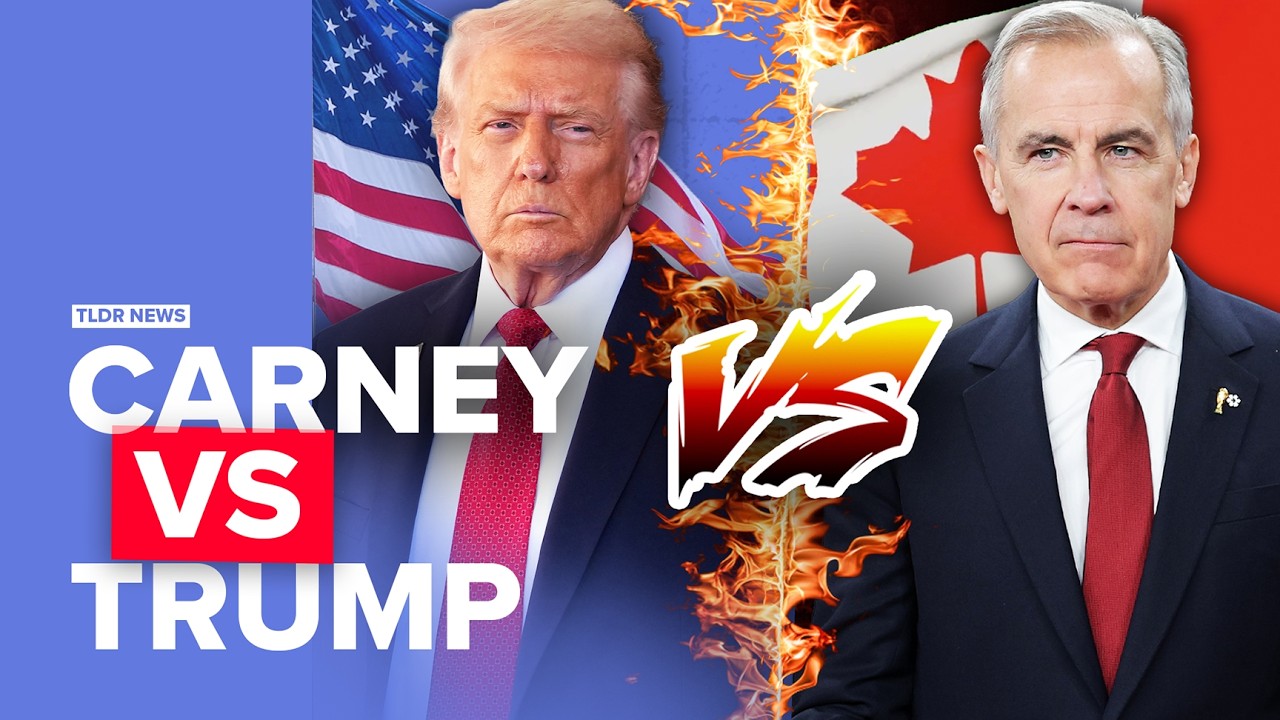
Title: Is Trump’s Trade War a Prelude to Economic Annexation of Canada?
The recent escalation in US-Canada trade relations has raised a provocative question: is the Trump administration’s tariff strategy a calculated economic maneuver aimed at undermining Canadian sovereignty? While official statements cite border security and trade imbalances, the broader implications
The recent escalation in US-Canada trade relations has raised a provocative question: is the Trump administration’s tariff strategy a calculated economic maneuver aimed at undermining Canadian sovereignty? While official statements cite border security and trade imbalances, the broader implications suggest a more aggressive posture toward America’s northern neighbor.
The Stated Rationale and the Immediate Fallout
The administration’s public justification for the new tariffs centers on two issues: stemming the flow of fentanyl and undocumented migrants, and correcting a perceived trade deficit. However, the economic data offers a different picture. Canada accounts for a negligible fraction of fentanyl seizures at the border, and the trade deficit is largely a function of US demand for Canadian energy exports, not unfair trade practices.
Despite these facts, the US has imposed sweeping tariffs on Canadian goods, including a 25% levy on most products and a 10% tariff on energy resources. The Canadian government responded with retaliatory tariffs on over $100 billion worth of American goods, targeting key political states and industries.
The 51st State Rhetoric
The conflict transcends mere economic policy. The President has repeatedly referred to Canada as the "51st state" and has publicly mused about the potential for annexation. These comments, initially dismissed as hyperbole, have taken on a more serious tone when paired with economic pressure.
The strategy appears to be one of economic destabilization. By disrupting Canada’s export-dependent economy, the US could create internal political chaos, potentially triggering a leadership crisis and forcing Ottawa to make concessions that weaken its independent foreign policy and economic autonomy.
Canada’s Economic Vulnerability
Canada’s reliance on the US market is profound; roughly 75% of its exports head south of the border. This dependency makes it uniquely susceptible to economic coercion. The disruption is already being felt in key sectors, from automotive manufacturing, where cross-border supply chains are deeply integrated, to agriculture and energy.
The threat of a prolonged trade war has injected significant uncertainty into the Canadian economy, affecting investment and consumer confidence. This pressure is designed to extract maximum political and economic leverage.
The Political Calculus in Ottawa
The Canadian government faces a difficult choice. It can escalate the conflict, risking further economic damage, or it can capitulate to US demands, setting a dangerous precedent for future negotiations. The current administration has chosen a path of retaliation, but the long-term viability of this strategy is uncertain.
The political landscape in Canada is also shifting. The opposition has criticized the government’s handling of the crisis, while some factions argue for a more conciliatory approach. The trade war has inadvertently bolstered nationalist sentiment, with many Canadians uniting against the US pressure, a development that may complicate Washington’s goals.
A Pattern of Coercion
This is not an isolated incident. The Trump administration has employed similar tariff tactics against other allies, including the European Union and Mexico. The strategy appears to be a consistent foreign policy tool: use the threat of economic pain to force nations into renegotiating trade deals on terms favorable to the US.
In the case of Canada, the stakes are higher. The ultimate goal, according to analysts, may not be a new trade agreement but the creation of a weakened, compliant neighbor whose resources and market are more accessible to US interests.
The Road Ahead
The immediate future hinges on upcoming negotiations. The US has paused some tariffs following initial talks, but the threat of reinstatement looms large. The Canadian government is seeking to leverage its role as a reliable energy supplier and strategic partner to de-escalate the situation.
However, the fundamental question remains unresolved: is the US seeking a fair trade deal, or is it pursuing a broader agenda of economic absorption? The answer will determine not only the future of the US-Canada relationship but also the stability of the North American economic bloc. For now, the world watches as two long-time allies navigate a crisis that could redefine their partnership.
Related Coverage
Trump’s New Tariffs Hit Michigan Auto Jobs He Claims to Have Saved
President Donald Trump’s new tariffs on Canadian goods are now threatening the very auto jobs he says his policies rescued, as he visits a General Motors plant near Detroit to defend his economic record.
US Slaps 50% Tariffs on Canada as Trade Talks Collapse — Carney Vows 'Dollar for Dollar' Revenge
President Donald Trump has imposed 50 percent tariffs on a range of Canadian goods after trade negotiations between the two countries collapsed, igniting a full-blown trade war between the longtime allies [225969][226035].
Trump Threatens Allies: "We Could Just Take Greenland"
President Donald Trump has privately suggested the United States could seize Greenland from Denmark, a long-standing NATO ally, according to a report from the BBC's economics editor [49594].
Trump Slaps Double-Digit Tariffs on 60 Nations, Sparks Global Trade Chaos
The United States has imposed sweeping double-digit tariffs on 60 countries, citing forced labor practices, in a move that is disrupting trade deals and pushing allies to seek new partners.
Trump Threatens Allies: "We Could Just Take Greenland"
President Donald Trump has privately suggested the United States could seize Greenland from Denmark, a long-standing NATO ally, according to a recent report [49594].
Trump to Allies: "We Could Just Take Greenland," Threatens Unprecedented Land Grab
President Donald Trump has privately suggested seizing Greenland from Denmark, a long-standing NATO ally, in a move described as "without parallel" in modern diplomatic relations [49594].
Related Editorials
# The Tariff Paradox: Why Trump’s Trade War Exposes the True Limits of Government Power
When a head of state launches a trade war, the assumption is simple: the government, with all its authority, can dictate economic outcomes. Yet, the unfolding reality of President Donald Trump’s aggressive tariff campaign has revealed a counterintuitive truth.
### Trump’s Shadow Over Brazil: Is the U.S. Pushing Mastercard and Visa on a Sovereign Nation?
By [Your Name/Editorial Staff] Date: [Current Date] A quiet but consequential battle is unfolding in Brazil’s financial sector. The question at its center is deceptively simple: Is a former—or future—U.
# Will Trump’s Escalation with Iran Trigger a UK Housing Market Crash?
The connection between geopolitical tensions in the Middle East and the value of a semi-detached house in Manchester may seem tenuous. Yet, as President Donald Trump intensifies his administration’s stance toward Iran, a growing number of analysts are asking a pointed question: could a military con
Title: Is Washington Turning Its Back on the Indo-Pacific?
Introduction For decades, the United States has positioned itself as the indispensable power in the Asia-Pacific region, anchoring security alliances and driving economic integration. Yet, under the current administration, a growing chorus of diplomats and strategists is asking a provocative qu
Title: How Washington’s New Tariffs Are Pushing the World into Beijing’s Arms
The United States has long positioned itself as the central node of global trade, the indispensable partner for any nation seeking economic security. Yet, according to economists Yanis Varoufakis and Wolfgang Münchau, the latest wave of American protectionism is achieving the exact opposite of its
# Canada’s Economic Crisis: A Global Warning
Introduction Canada has long been held up as a model of stability—a wealthy G7 nation with abundant natural resources, a strong banking system, and universal healthcare. Yet beneath this veneer of prosperity, a quiet crisis has been unfolding.