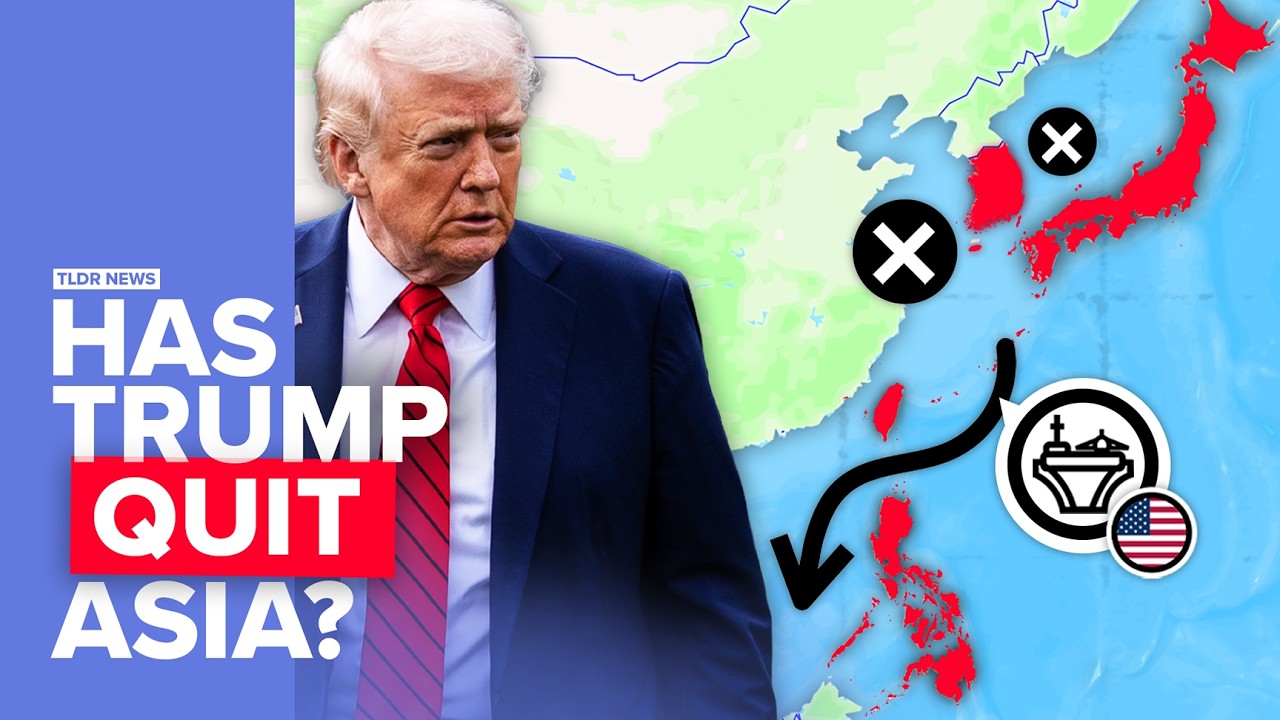
Is Washington Turning Its Back on the Indo-Pacific?
For decades, the United States has positioned itself as the indispensable power in the Asia-Pacific region, anchoring security alliances and driving economic integration. Yet, under the current administration, a growing chorus of diplomats and strategists is asking a provocative question: has Washi
For decades, the United States has positioned itself as the indispensable power in the Asia-Pacific region, anchoring security alliances and driving economic integration. Yet, under the current administration, a growing chorus of diplomats and strategists is asking a provocative question: has Washington quietly abandoned its commitment to Asia? While the rhetoric of "pivoting" to the East remains, the substance of policy suggests a different reality. This analysis examines the gap between American promises and its recent actions, exploring what a diminished U.S. presence means for the balance of power in the region.
The Rhetoric vs. The Reality
The official stance from the White House remains steadfast. Officials continue to describe the Indo-Pacific as the "priority theater" of U.S. foreign policy, citing the AUKUS submarine pact and expanded military exercises as proof of enduring commitment. However, a closer examination of the operational tempo reveals a different story. The frequency of high-level diplomatic visits to the region has plummeted, and the administration’s attention appears consistently diverted by crises in Europe and the Middle East.
This is not merely a matter of scheduling. It reflects a strategic triage where Asia is perpetually placed on the back burner. When the President skips major summits—such as the U.S.-ASEAN meeting and the East Asia Summit—for the third consecutive year, allies take note. The signal sent is not one of strength, but of transactional disinterest.
The Economic Vacuum
The most concrete indicator of abandonment is economic. The Biden administration inherited the Trans-Pacific Partnership (TPP) but chose not to rejoin it, leaving the region’s largest trade architecture without American participation. Instead, Washington has offered the "Indo-Pacific Economic Framework" (IPEF), a deal that notably lacks the two things Asian economies crave most: tariff reductions and meaningful market access.
Comparatively, China has moved swiftly to fill the void. The Regional Comprehensive Economic Partnership (RCEP), which includes China, Japan, and South Korea, has been in force since 2022. This trade bloc effectively creates a parallel economic system where U.S. goods face higher barriers. For non-native speakers, think of it this way: the U.S. is telling its friends to shop at a store where it refuses to stock the shelves, while a competitor across the street is offering a full inventory at a discount.
Security: The Credibility Gap
On the security front, the picture is equally murky. While the U.S. retains a formidable military presence in Japan and South Korea, its crisis management in the Taiwan Strait has been characterized by ambiguity. The administration speaks of "strategic clarity" but acts with deliberate vagueness, fearing that a firm commitment might provoke Beijing.
This hesitation has a direct consequence: it accelerates the "self-reliance" movements in Taipei, Seoul, and Tokyo. Japan has announced its largest military buildup since World War II, and South Korea is seeking greater autonomy in its defense posture. While these are presented as "burden-sharing" successes by Washington, they are, in fact, a hedge against the unreliability of the American security guarantee.
The Diplomatic Calculus
The final piece of the puzzle is diplomatic capital. The U.S. has been largely absent in mediating regional disputes, from the South China Sea tensions to the Myanmar crisis. By ceding the diplomatic initiative, Washington allows Beijing to frame the narrative. China’s "Global Security Initiative" is being marketed as an alternative to the U.S.-led alliance system, and without a robust American counter-narrative, it gains traction.
Conclusion: A Self-Fulfilling Prophecy?
Is this abandonment deliberate, or merely a failure of bandwidth? The evidence suggests a combination of both. The U.S. has decided that it cannot be the world’s policeman everywhere, and Asia—despite its economic weight—is viewed as a region that can "wait its turn."
The danger is that this perceived neglect becomes a self-fulfilling prophecy. Allies who feel abandoned will inevitably align their policies with the power that shows up. If Washington does not reverse course, it may find that it has not just abandoned Asia, but that Asia has moved on without it. The question is no longer whether the U.S. is leaving, but whether it will be missed.
Related Coverage
Japan and India Ink $61 Billion Defense-Tech Pact as US Retreats from Asia
A series of diplomatic meetings reveal Japan and India are rapidly deepening military and economic ties, targeting $61 billion in new investment and joint defense projects, as the United States scales back its regional presence.
US in ‘Panic’ as Gulf States Threaten to Ditch Washington for Own Security Pact
The White House is scrambling to keep Gulf allies from forming their own independent security alliance, a move that would shatter American influence in the region and undermine the Abraham Accords.
Trump’s Return Throws Europe’s Biggest U.S. Air Base Into Question
The future of Ramstein Air Base, the massive U.S. military hub in Germany, is facing new uncertainty as Donald Trump returns to the White House, raising questions about America’s role in European defense. The base, a closed American island surrounded by German countryside, has long been a symbol of U.S. power on the continent, but its strategic position is now under fresh scrutiny [167813].
US and China Are Pushing Southeast Asia to Pick an AI Side. Will It Crack?
Southeast Asia is being squeezed between Washington and Beijing as both superpowers demand the region choose a side in the global artificial intelligence race, threatening to split the region's tech future in two.
US Troops in Gulf at Risk as Allies Lose Patience with Iran War
A prolonged standoff over the Strait of Hormuz is pushing Gulf allies to question the cost of hosting American forces, while Washington weighs new economic pressure that could hit China’s oil purchases.
Japan Flogs Stealth Warships to Allies, Ditches Pacifist Arms Ban in Asia Power Play
Japan is actively marketing its advanced Mogami-class stealth frigates to foreign buyers, signaling a major shift away from its post-World War II pacifist stance as it builds a new security role in the Indo-Pacific to counter China’s rising power [180157]. The move, which includes loosening long-standing restrictions on lethal arms exports, comes as Tokyo doubles its defense budget and pushes through sweeping security reforms that critics call “new militarism” [180130][175118].
Related Editorials
The Unraveling Alliance: Why a US-Israel Divorce Looks Increasingly Inevitable
For decades, the bond between the United States and Israel was considered unbreakable—a cornerstone of Middle Eastern geopolitics. Yet, beneath the surface of official statements and military aid packages, tectonic plates are shifting.
Washington’s Fickle Embrace: Why the Gulf States Are Losing Patience with Trump
For decades, the relationship between the United States and the Gulf monarchies has rested on a simple bargain: American security guarantees in exchange for oil stability and regional alignment. Yet, beneath the surface of official summits and handshakes, a quiet but profound erosion of trust is un
How Washington’s New Tariffs Are Pushing the World into Beijing’s Arms
The United States has long positioned itself as the central node of global trade, the indispensable partner for any nation seeking economic security. Yet, according to economists Yanis Varoufakis and Wolfgang Münchau, the latest wave of American protectionism is achieving the exact opposite of its
Is Trump’s Trade War a Prelude to Economic Annexation of Canada?
The recent escalation in US-Canada trade relations has raised a provocative question: is the Trump administration’s tariff strategy a calculated economic maneuver aimed at undermining Canadian sovereignty? While official statements cite border security and trade imbalances, the broader implications
Australia’s Quiet Rise as the Pacific’s New Power Broker
For decades, the Pacific Islands were viewed by much of the world as a postcard backdrop—remote, idyllic, and strategically peripheral. That perception has shifted dramatically.
Is Trump’s Trade War with Canada a Declaration of Economic Hostility?
The relationship between the United States and Canada, long considered the world’s most stable bilateral partnership, is facing an unprecedented strain. Recent actions by the Trump administration have led economists and political analysts to question whether we are witnessing the opening salvo of a