Ukraine's $9,900 Drone Mothership Just Changed the War
Ukraine has unveiled a new carrier drone that ferries attack drones deep behind Russian lines, while both sides rapidly expand their unmanned arsenals in an escalating race for air supremacy.
The war in Ukraine has evolved far beyond tanks and artillery. It is now defined by a new generation of long-range drones, with both Kyiv and Moscow racing to build, deploy, and outproduce each other in a conflict increasingly fought far from the front lines [248643].
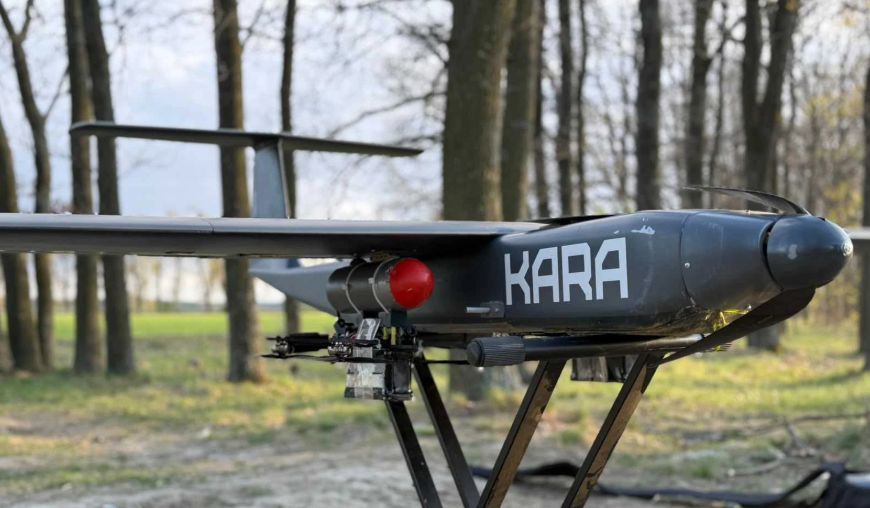
Ukraine has introduced a new drone called KARA that carries smaller attack drones deep behind Russian lines and releases them there. Listed for sale on Ukraine's state marketplace at about $9,900, KARA performs four jobs: dropping bombs, relaying signals, ferrying first-person-view (FPV) drones to the front, and striking targets. By carrying FPV drones far into enemy territory, KARA extends their reach well beyond the front line [248544].
This innovation comes as Ukraine's drone forces have achieved significant battlefield successes. In a world-first operation near Lyman in Donetsk Oblast, heavy drones delivered robotic vehicles more than 10 kilometers behind Russian lines. The operation, called Vivaldi, helped Ukrainian forces clear 125 square kilometers of territory [247305][247313].
Ukraine's drone kill count has reached extraordinary levels. The country says it has shot down 350,000 Russian drones this year, with each kill filmed and confirmed in DELTA, a Ukrainian military tracking system. This figure far exceeds what NATO has managed against a much smaller number of Russian drones [247291].
To sustain this pace, Ukraine has approved 650 new military drone models, with strike copters leading the list, followed closely by jam-proof and interceptor models. By September, the approval count was more than 30 percent ahead of last year's pace [248550]. A new interceptor drone has already scored its first kills against jet-powered Russian drones that fly like cruise missiles, cutting reaction time for Ukrainian mobile fire groups from about one minute to as little as six seconds [247289].
The scale of Ukraine's drone operations is enormous. A year ago, only 12 Ukrainian brigades could order weapons online. Today, 500 units use the DOT-Chain Defense system, which lets frontline units order their own drones and gear directly. The program has delivered 1.3 million drones to the front [248539].
Ukraine's expertise has attracted international attention. A former United States nuclear submarine commander has joined a Ukrainian fund to help protect Odesa with drone swarms, aiming to shield the Black Sea port city from Russian attacks using large numbers of low-cost drones [248545]. Western volunteers who came to Ukraine to fight on the ground are now training to pilot FPV drones instead, switching from frontline infantry roles to remote-controlled warfare [248549].
Even when Ukrainian companies lose international contracts, their technology finds a way in. No Ukrainian firm took a top spot in the Pentagon's $1.1 billion Drone Dominance program, with American companies winning every leading contract. But some Ukrainian firms supplied technology, designs, or components to United States winners, meaning Ukrainian battlefield-tested know-how is inside the program even if the headline contracts went elsewhere [245206].
Russia, meanwhile, is aggressively expanding its own drone production. Leaked documents from Russia's state nuclear agency, Rosatom, reveal plans to sharply increase output of Shahed-type drones through a carbon fiber plant in Tatarstan. The plant could add 28,000 drone bodies per year, raising Russia's total output of Shahed-type drones by 78 percent by 2029 [247314].
The expansion centers on the Alabuga-Volokno factory, which would produce an extra 500 tons of military-grade carbon fiber annually by 2029. One expert estimates that is enough material for 28,000 additional weaponized drones each year. Ukraine estimates Russia currently builds more than 36,000 kamikaze drones, known as Gerans, annually [246552].
Russia wants to make more carbon fiber at home to rely less on China. Moscow aims to build about 130,000 drones by 2030 under its national drone program, and 350,000 by 2035. Carbon fiber is essential for strengthening drone wings, fuel tanks, and engines while keeping the aircraft light [246552].
Experts warn the expansion threatens all of Europe, not just Ukraine. Russian drones have violated Polish and Romanian airspace. Last September, Polish forces downed four of 19 Russian drones. This September, a drone flew all the way to NATO's missile shield in Redzikowo, and the troops guarding it called the emergency number instead of shooting it down. The incident raises fresh doubts about Poland's drone defenses [247295][246552].
The Alabuga factory and its parent company are sanctioned by the United States, United Kingdom, and other Western governments. Earlier this year, the factory received a disguised shipment of 46 tons of carbon-fiber chemicals from a Chinese state company [246552].
The news comes as world leaders meet in New York for the United Nations General Assembly. Russian Foreign Minister Sergey Lavrov said Moscow is ready to restart peace talks. But analysts say the factory plans show Russia is preparing for more conflict. "No matter the political outcome over some sort of diplomatic solution to Ukraine, we don't see Russia de-escalating," said Nicholas Fenton of the Center for Strategic and International Studies [246552].