Ukraine: One in Three Russian Soldiers Now Killed by Our Drones
Ukraine claims its drone forces are now responsible for one out of every three Russian casualties on the battlefield, as the country rapidly expands its fleet of unmanned systems and defenses against enemy drones.
A senior Ukrainian military official from the Drone Army unit said that low-cost, remotely piloted aircraft have become the deadliest tool in Ukraine’s arsenal, flying thousands of sorties each month to drop grenades and guide artillery fire [171308]. The milestone comes as Ukraine now holds a 1.5-to-1 advantage over Russia in first-person-view (FPV) drones, with domestic production rising 12.7% in the last month alone, though the commander-in-chief warned, “Don’t relax,” noting the advantage remains fragile [170569].
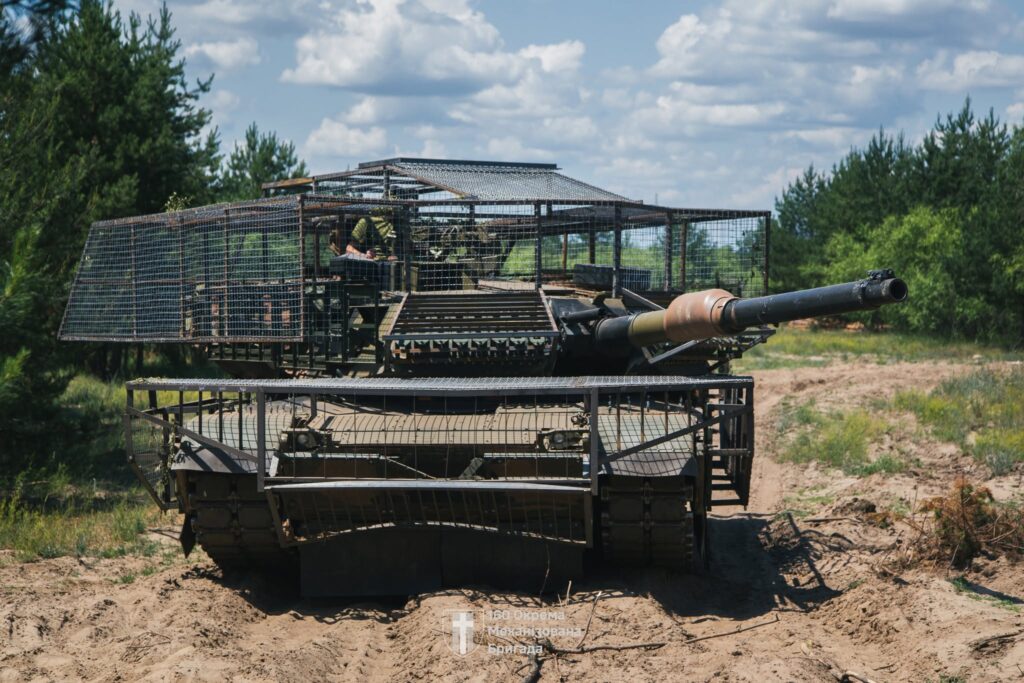
To counter Russia’s own drone attacks, Ukraine has developed multiple new defense systems. The military has introduced a new armored vehicle equipped with ten electronic-warfare modules that form a protective dome, designed to destroy FPV drones before they reach the vehicle [169081]. Additionally, Ukraine unveiled a new drone interceptor called the Litavr, a small, low-cost system built to shoot down enemy drones without relying on expensive missiles [169073]. A separate, almost fully automated air defense system has also been developed specifically to fight Russian Shahed drones [168803].
Ukraine’s Defense Ministry has confirmed that artificial intelligence is now integrated into its long-range drone systems, allowing them to navigate without reliable global positioning system (GPS), avoid electronic warfare, and identify targets during the final stage of flight [171296]. In one recent milestone, an AI-controlled drone shot down a Russian Shahed drone, with the system automating 95% of the kill process [168209].
The drone expansion extends to ground operations. The number of Ukrainian military units using unmanned ground vehicles (UGVs) has doubled from 117 to 230 in just six months, with robots now used to carry supplies, evacuate wounded soldiers, and detonate explosives [169820]. Ukraine’s Defense Ministry also approved a new 60-kilogram modular ground robot called the NEO-1, which can switch between clearing land mines and carrying supplies, reducing risk to human life [169821].
To protect supply routes from drone strikes, Ukraine has constructed 822 kilometers of underground road tunnels designed to shield military supplies and evacuation routes [168234]. Meanwhile, Latvia and Ukraine have signed a new agreement to expand joint drone production and defense cooperation, aiming to turn Ukraine’s battlefield experience into structured international partnerships [169065].