Latest News
Stay updated with the latest news and articles
Top Stories
World Braces for Economic Warfare as Top Global Threat in 2026
World Braces for Economic Warfare as Top Global Threat in 2026 A new report from the World Economic Forum (WEF) has identified geoeconomic warfare—where nations weaponize trade, supply chains, and investment—as the most severe risk facing the world over the next two years [49991]. This finding sets the stage for a turbulent 2026, a year analysts predict will be dominated by global political instability and strategic competition [42503]. The WEF's annual Global Risks Report concludes that geopolitical rivalry is forcing countries into open economic confrontation, a danger that now ranks above all other global threats [49991]. This volatile environment is fueled by three interconnected short-term dangers: geopolitical rivalry itself, the rapid spread of misinformation, and severe social and political polarization [49991]. The international landscape in 2026 will be shaped by this tense backdrop, with several key events poised to test global stability [42503]. Major elections in the United States, France, and Germany will critically influence international alliances, trade policies, and collective action on issues from security to climate change [42503][35508]. Analysts note that the U.S. presidential election, in particular, will be the defining global story, affecting everything from the war in Ukraine to competition with China [35508]. Despite this move toward confrontation, a century of globalized trade has created deep economic interdependence that makes nations reluctant to fully pick sides in a major power rivalry [6971]. This widespread interconnection continues to shape 21st-century geopolitics, even as states increasingly turn to economic tools as weapons in their strategic competitions [49991][6971]. The WEF's warnings will be a central topic at its annual meeting in Davos, Switzerland, next week, as world leaders grapple with a global environment where economic conflict has become the primary threat to stability and growth [49991]. Geoeconomic Warfare Named Top Global Threat for 2026 **Six Global Flashpoints That Will Define 2026 2026: A World Shaped by Washington Globalization Shifts, But It Doesn't Reverse
Tourists, Rentals, and Empty Homes: How Cities Are Seizing Back Housing for Locals
Tourists, Rentals, and Empty Homes: How Cities Are Seizing Back Housing for Locals From Hawaii to Cape Town, popular tourist destinations are taking aggressive action to reclaim housing for local residents, as the explosion of short-term vacation rentals pushes workers into illegal shacks and forces young professionals into cramped, dormitory-style living. The core conflict is clear: properties that could house teachers, nurses, and service workers are instead being rented to tourists for short stays, driving rents to unaffordable levels and creating severe shortages [39353][117472]. In response, governments are now deploying new laws and tax rules to force a dramatic shift. In the most direct move, Hawaii's Governor has ordered the conversion of 10,000 short-term rental units back into the local housing market [61634]. The plan aims to "return" thousands of condos and houses to long-term residents, a major intervention in the state's tourism-dependent economy. Officials blame the vast number of vacation rentals for driving local residents away by reducing supply and inflating prices [61634]. A similar crisis is unfolding in Cape Town, South Africa, where luxury villas and short-term rentals in scenic coastal areas sit alongside informal metal shacks [117472]. The growth of rental platforms has caused property prices and rents in the central business district to soar, forcing low-income workers into illegal and unsafe housing on the city's outskirts [39353]. City officials acknowledge the struggle to balance vital tourism revenue with the basic need for residents to live near their jobs [117472]. The pressure isn't limited to tourist hotspots. In Seoul, soaring rents are pushing young office workers back into *goshiwons*—ultra-basic, windowless dormitory rooms with shared facilities—a housing type they hoped to leave behind [21300]. "For me, it was the only option I had," said one 31-year-old professional who recently moved back into such a unit [21300]. While legislative solutions are advancing, their path is uncertain. The U.S. Senate recently passed a major bipartisan bill with the stated goal of lowering housing costs by increasing the supply of new homes [100991][100719]. However, the legislation faces significant hurdles in the House of Representatives [100719]. For now, the most immediate battles are being fought in city councils and courthouses, as destinations beloved by visitors grapple with the consequence of prioritizing tourist beds over homes for their own communities. Hawaii to Seize 10,000 Vacation Rentals in Housing Crisis Move Tourism Boom Pushes Workers Into Illegal Homes Tourists in Luxury, Locals in Shacks: Cape Town's Coastal Divide Soaring Rents in Seoul Force Workers Back into Tiny 'Goshiwon' Rooms Senate Passes Bill to "Flood the Market" with New Homes U.S. Senate Passes Major Housing Bill, But House Hurdle Looms

Markets Soar Past War Fears as S&P 500 Smashes 7,000, Nasdaq Hits Record
Markets Soar Past War Fears as S&P 500 Smashes 7,000, Nasdaq Hits Record Global stock markets are rallying to record highs as investors shrug off the threat of a widening Middle East conflict, choosing instead to focus on economic fundamentals and corporate earnings. Major U.S. indexes led the charge. The S&P 500, a key benchmark tracking 500 of America's largest companies, closed at a historic high above 7,000 points, signaling a strong belief that tensions between the U.S., Israel, and Iran will not escalate into a full-scale war [130055]. The technology-heavy Nasdaq Composite index jumped 1.6% to its own all-time high [130162]. The shift in sentiment followed a weekend with no major new escalation in regional hostilities, allowing markets to recover from earlier losses driven by fears of a direct Iran-Israel conflict [131153]. Analysts say the stability has allowed trader focus to return to upcoming corporate earnings reports and key U.S. inflation data [131153]. "The rally indicates investors are already looking past the headlines," one analyst noted, highlighting a disconnect between geopolitical events and current market optimism [130055]. The positive momentum was not confined to the United States. Global markets extended their recent rally on Monday, fueled by growing investor optimism around new diplomatic talks between major powers [130443]. European markets finished with mixed but generally cautious results as the situation stabilized [131153]. Market observers caution that the geopolitical situation remains delicate, but for now, the dominant trend is a powerful relief rally driven by the perception of contained risk [130162]. Markets Rise as Middle East Fears Ease Markets Surge on Hope of Peace Deal Markets Surge on Hopes Iran Conflict Avoided S&P 500 Smashes 7,000 Barrier, Shrugs Off Iran Conflict

Russia Threatens European Drone Factories, Sparking Diplomatic Crisis
Russia Threatens European Drone Factories, Sparking Diplomatic Crisis Russia has directly threatened to strike factories inside Europe that produce drones for Ukraine, prompting a sharp diplomatic response from the European Union and escalating fears the war could spill beyond Ukraine's borders. The crisis was triggered by a Russian Defense Ministry announcement listing European companies supplying military equipment to Ukraine as "legitimate military targets" [131324]. This was followed by a stark warning from former Russian President Dmitry Medvedev, who stated that facilities manufacturing drones for Ukraine are now "potential targets" for the Russian military [131418]. The Czech Republic, a key hub for supporting Ukraine's military, summoned Russia's ambassador to protest the "unacceptable" threats [131324]. The confrontation marks a significant escalation, moving beyond government aid to directly threaten private companies within NATO and EU member states. The threats come as Ukraine faces a critical shortage of air defense missiles, forcing its military to ration advanced systems like the Patriot to protect against only the most severe threats [131470]. This vulnerability was underscored by overnight Russian attacks that killed at least 16 Ukrainian civilians in residential areas [131470]. Analysts describe the Kremlin's strategy as a two-track approach designed to fracture Western unity. While issuing aggressive warnings to Europe, Russian officials have simultaneously sought to engage the United States in talks about lifting sanctions and resuming trade [82150]. Experts say this aims to create division between allied nations supporting Ukraine. Russian President Vladimir Putin has shown no urgency to end the conflict, with experts noting he feels Russia holds a strong battlefield position and can afford to wait for a settlement on its terms [17045]. His administration has also turned to the country's wealthy oligarchs, asking for direct donations to help fund the war effort as defense spending surges [112938]. Russia Threatens European Drone Makers, Sparking Diplomatic Fury in Prague Russia Threatens Strikes on European Drone Factories Ukraine Rations Air Defenses as Civilian Toll Mounts Putin Seeks Oligarch Donations to Fund War as Defence Budget Strains Russia Holds Advantage, In No Rush on Ukraine Deal, Expert Says Russia's Dual Strategy: Talk War with Europe, Talk Trade with America


Pope's "Tyrant" Rebuke of War Leaders Sparks Global Backlash, Angers Trump
Pope's "Tyrant" Rebuke of War Leaders Sparks Global Backlash, Angers Trump Pope Leo XIV's forceful condemnation of world leaders who wage war in the name of God has ignited an international diplomatic reaction and drawn sharp criticism from former U.S. President Donald Trump [131296][130788]. The pontiff, during a visit to Cameroon, labeled such leaders "tyrants" who are destroying the world and its resources, intensifying his recent campaign against global violence [131296][130923]. While the Pope did not single out any specific country or leader, his remarks have reportedly angered Trump [131296][130788]. The incident continues a visible pattern of tension between the Vatican and the former American president [131296]. The Pope's stance has garnered support from foreign officials. A senior Australian government minister publicly defended Pope Leo XIV following Trump's critical comments, joining a growing number of international figures offering support [131466]. The Australian official's statement focused on expressing respect for the Pope's position and the global Catholic community without mentioning Trump by name [131466]. The Pope's visit to Cameroon, a nation facing deep political tensions, was seen by many local Christians as a sign of hope and a potential turning point [130923]. His 10-day African tour has provided a platform for his consistent message against what he describes as "senseless" conflict [130788]. Pope Condemns 'Tyrants' Waging War, Angers Trump Pope Condemns "Tyrants" Waging War, Draws Trump's Ire Australian Minister Defends Pope After Trump Attack Pope in Cameroon: A Visit for Peace?

Europe's Push for "Champions" Sparks Fears of a Corporate Power Grab
Europe's Push for "Champions" Sparks Fears of a Corporate Power Grab The European Union is moving to dramatically weaken its competition rules, aiming to create giant "European champion" corporations capable of rivaling American and Chinese firms. This shift, detailed in draft reforms, instructs regulators to prioritize corporate size and global competitiveness over traditional concerns about monopolies and consumer harm [130645]. The proposed changes represent a fundamental policy reversal. Currently, the European Commission's primary focus is preventing mergers that stifle competition. The new approach would require officials to also weigh the benefits of creating larger entities, such as their potential to achieve greater "scale" and invest in innovation, even if it reduces market competition [130645]. The drive is a direct response to fears that EU companies are falling behind global rivals. Proponents argue that only by allowing the formation of industrial behemoths can Europe maintain its economic standing [130645]. However, the plan has surfaced alongside warnings that the EU's own regulatory overreach and domestic political gridlock, particularly in Germany, are already crippling growth and competitiveness [131417]. Parallel efforts to bolster European autonomy are facing internal conflict. A major dispute has erupted between NATO and the EU over whether billions in new European defense funds should be spent on American weapons or be reserved for building up the continent's own arms industry [130352]. NATO officials argue for buying the best equipment available, often from the U.S., while EU leaders insist strengthening a domestic industrial base is a strategic necessity to reduce long-term reliance [130352]. This tension underscores the high cost of true independence. A senior European leader recently estimated that for Europe to achieve full military self-reliance from the United States, it would need to spend an astronomical €1 trillion—approximately 10% of its total economic output [60363]. Most officials see this goal as neither practical nor affordable, advocating instead for a stronger European pillar within the existing NATO alliance [60363]. The corporate consolidation push is part of a broader pattern where EU policy appears to prioritize capital and industrial interests. Critics point to a growing "democratic void," where decisions made by unelected commissioners in Brussels can override national sovereignty, particularly when left-wing governments challenge austerity measures. The bloc's fundamental contradiction, they argue, is presenting as a values-based project while functioning as an engine for neoliberal integration that prioritizes capital mobility and managed inequality. EU Merger Rules to Favor Big Business, Aiming for 'European Champions' Germany Stagnates as EU Tightens Grip, Merz Paralyzed by Coalition NATO and EU Clash Over Who Buys the Weapons Europe's €1 Trillion Question: Can It Buy Military Independence?
AI Speeds Up Warfare, Cutting Nuclear Decision Time to "Minutes" in Global Hotspots
AI Speeds Up Warfare, Cutting Nuclear Decision Time to "Minutes" in Global Hotspots The integration of artificial intelligence into military systems is dramatically compressing decision timelines in global conflicts, raising acute risks of rapid escalation—especially between nuclear-armed rivals. This shift, highlighted by recent events in the Middle East, is creating a dangerous new paradigm where human judgment may be reduced to mere minutes [131419]. In recent conflicts, AI has been used to analyze satellite imagery, drone footage, and communications data to plan strikes on thousands of targets in minutes, a process that previously took days or weeks. This acceleration is now seen as a critical threat to strategic stability in volatile regions like South Asia, where India and Pakistan maintain nuclear arsenals on high alert [131419]. Experts warn the core danger lies in the mismatch between machine speed and human deliberation. AI systems could misinterpret a civilian aircraft or a missile test as an attack. With warning times collapsing, leaders could feel pressured to authorize a retaliatory strike based on a false alarm, with catastrophic consequences. The "margin of error" for avoiding a nuclear mistake is shrinking [131419]. This military acceleration is part of a broader national security focus on AI. A U.S. State Department advisory board has recommended creating a new government agency dedicated to maintaining a significant AI lead over global competitors, citing its importance for both economic strength and future innovation [130765]. The same foundational AI technology is also expanding into unexpected civilian domains. Separate scientific research is now applying AI to analyze dog vocalizations, attempting to identify patterns that could translate barks and growls into understandable signals. This illustrates the dual-use nature of the technology, spreading from battlefields to the intimate spaces of daily life [130765]. AI Cuts Nuclear Decision Time in South Asia to "Minutes" AI as a National Security Asset: From Battlefields to Household Pets


Turkey Assumes Command of Major NATO Naval Force, Deploys Troops and Tech in Key Drills
Turkey Assumes Command of Major NATO Naval Force, Deploys Troops and Tech in Key Drills Turkey has taken command of a critical NATO naval strike force and is actively deploying troops and domestically developed technology in the alliance's largest military exercises this year, underscoring its growing operational role within the transatlantic pact. The Turkish Naval Forces formally assumed leadership of the NATO Amphibious Task Force and its Landing Force Command on July 1, a command role it will hold for one year [54453]. An amphibious task force is a powerful naval group designed for assaults from sea to land, and Turkey will now be responsible for planning and leading NATO exercises and potential missions in the region [54453]. Concurrently, approximately 2,000 Turkish troops have deployed to Germany to participate in NATO's Steadfast Defender 2024 exercises, the alliance's biggest drills this year [70222]. In a separate, future-focused exercise, Turkish naval and army units are also conducting joint amphibious operations in Germany as part of the NATO exercise Steadfast Dart 2026 [80228]. A defining feature of Turkey's participation in these drills is the prominent use of its own domestically produced defense platforms, which are being showcased in live operational scenarios [80228]. This aligns with a broader national strategy to become a top-tier global defense exporter. Turkey's defense procurement agency has set an ambitious goal for its companies to achieve an average export turnover of $300,000 per employee, a benchmark used by the world's most successful defense firms [63530]. Beyond its NATO engagements, Turkey is also contributing to an international security mission aimed at eliminating the final remnants of Syria's chemical weapons program. The nation has joined a new task force led by the Organization for the Prohibition of Chemical Weapons (OPCW), providing regional expertise for the safe detection and destruction of hazardous materials [106495]. Turkey Assumes Command of Key NATO Naval Strike Force NATO's Biggest 2024 Drill Begins with Turkish Troops Landing in Germany Turkish Forces Deploy Homegrown Tech in Major NATO Drill Turkey Aims for Elite Status, Sets $300,000-Per-Employee Export Goal Turkey Joins Mission to Destroy Syria's Last Chemical Weapons


Russia Unleashes Deadliest Barrage of 2024, Killing 17 in Nationwide Strikes
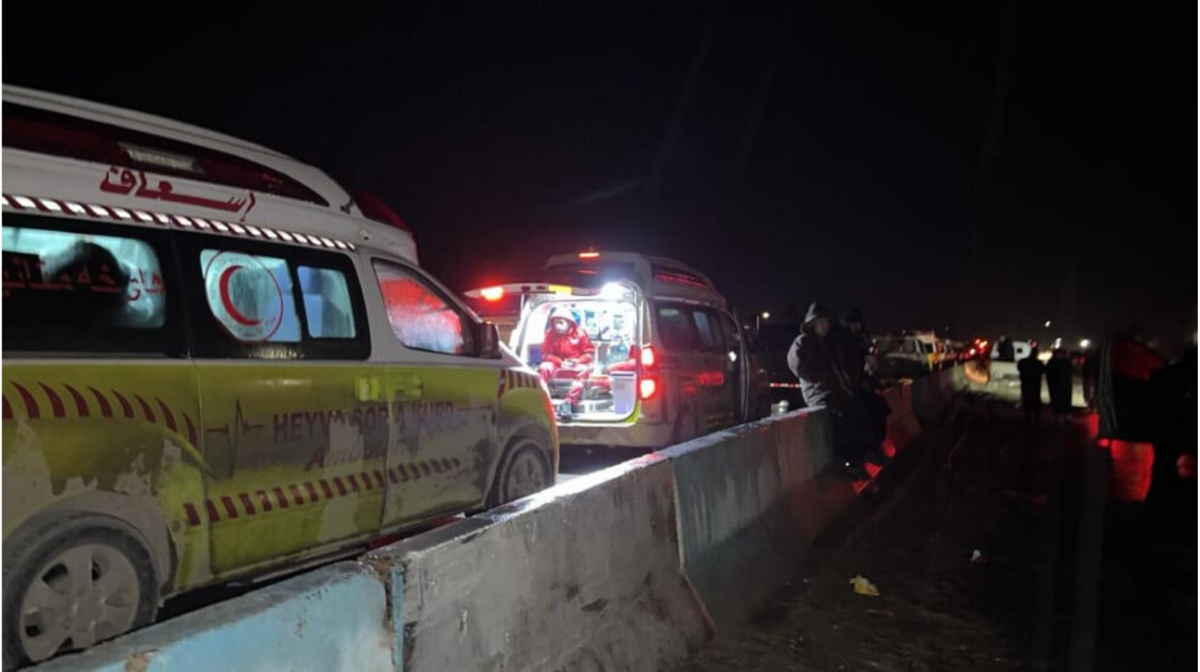
Russia Unleashes Deadliest Barrage of 2024, Killing 17 in Nationwide Strikes Russia launched its most lethal wave of aerial attacks against Ukraine this year, killing at least 17 people and injuring more than 100 in a massive overnight barrage that struck cities across the country [130822][131017]. The assault, described by Ukrainian officials as the deadliest single air attack of 2024, utilized nearly 700 drones and dozens of ballistic and cruise missiles [130822][130553]. The strikes targeted civilian areas in multiple regions, including the capital Kyiv, the southern port of Odesa, and the central city of Dnipro [130598][130553]. In Kyiv, residential apartment buildings were hit, with fires raging for hours and black smoke filling the sky [130390]. A 12-year-old child was among the fatalities [130390][130822]. Ukrainian President Volodymyr Zelenskyy condemned the "massive" assault and reiterated an urgent plea for more advanced air defense systems from Western allies [130553][131017]. While Ukrainian air defenses intercepted many incoming weapons, the scale of the attack overwhelmed them, allowing numerous strikes to hit their targets [130553]. Rescue operations continued through the morning as emergency crews searched for survivors in the rubble of damaged buildings [131017][130598]. The attack caused widespread destruction to residential infrastructure and forced many civilians to evacuate to underground shelters for safety [130566][130390]. The deadly barrage comes as the European Union proposes a new €90 billion loan plan to arm Ukraine, with the bloc's top diplomat accusing Russia of seeking "more war" and employing "terror against the innocent" [131076]. Meanwhile, Ukraine's air force is rationing its advanced Patriot missile defenses due to ammunition shortages, highlighting the critical need for sustained Western military support [131470]. Deadliest Russian Air Attack of Year Kills 17 in Ukraine Russia's Deadliest 2026 Attack Kills 17 Across Ukraine Massive Russian Strikes Kill 16 Across Ukraine Russian Strikes Kill 16 in Ukraine, Hit Kyiv Apartments Title: Ukraine Attack Kills 16, Including Child, in Worst Barrage of Year Deadly Russian Strikes Force Ukrainians Underground Title: Ukraine Rations Air Defenses as Civilian Toll Mounts EU Proposes Massive €90 Billion Loan to Arm Ukraine, Citing Russian "Terror"
World Powers Scramble for Africa's Resources in New "Silent Scramble"
World Powers Scramble for Africa's Resources in New "Silent Scramble" A global competition for Africa's critical minerals and strategic ports is intensifying, as major powers seek to secure the resources needed for modern technology and geopolitical influence. This new "silent scramble" is reshaping the continent's economic and security landscape, with African nations working to leverage their assets for greater benefit. The push centers on minerals like lithium, cobalt, and rare earth elements, which are essential for electric vehicle batteries, renewable energy systems, and digital devices [83553]. Soaring global demand has turned these resources into a focal point for international industry and diplomacy. Simultaneously, a strategic contest for military and economic influence is playing out along Africa's coasts, particularly in the Horn of Africa. Ethiopia's aggressive pursuit of direct sea access is attracting attention from the United States, China, Turkey, and Gulf states, all seeking naval bases and trade partnerships [87433]. In West Africa's Sahel region, the U.S. is revising its strategy as Russia's "Africa Corps" deepens its security footprint in nations like Mali, Niger, and Burkina Faso [67411]. This dual pressure comes amid a European Union effort to reinforce its partnership with Africa, a move prompted by the growing influence of other global powers on the continent [11355]. Analysts note that African governments are increasingly pursuing a strategy of "multi-alignment," engaging with diverse powers to advance their own development interests [35302]. The situation presents both risk and opportunity. Without strong coordination, experts warn that individual African countries could be pressured into unfair deals for their resources [83553]. In response, there is a concerted push for greater continental self-reliance. The African Export-Import Bank (Afreximbank) is working with nations like Ethiopia on plans to boost economic independence and intra-African trade [127881]. Pope Francis, during a visit to Cameroon, echoed this sentiment, criticizing foreign powers for "choking" the continent through exploitative practices [130940]. How Africa manages this escalating demand will critically shape its economic future, as the world's green energy transition and geopolitical rivalries increasingly depend on its resources and alliances [83553]. The New Scramble: Africa's Minerals and the Silent Race Global Powers Rush for Africa's Coast as Ethiopia Seeks a Port U.S. and Russia in High-Stakes Scramble for Africa's Sahel EU-Africa Summit Focuses on Trade and Minerals Amid Global Tensions Africa Gains Global Ground Amid U.S. Turmoil Ethiopia, Afreximbank Push for Africa to "Feed Itself" Pope Francis in Africa: "Stop Choking" the Continent

Latest Articles

Top UK Diplomat Quits After Clashing Over Cuts
A senior British civil servant, brought in to slash costs at the Foreign Office, has resigned after a short and turbulent tenure. Olly Robbins, a po...