Latest News
Stay updated with the latest news and articles
Top Stories
Global Leaders Warn "Geoeconomic Warfare" Is Now the World's Top Threat
Global Leaders Warn "Geoeconomic Warfare" Is Now the World's Top Threat A new report from the World Economic Forum (WEF) has identified economic conflict between nations as the most severe and immediate danger to global stability, surpassing traditional military threats [49991]. The warning highlights a world where countries are increasingly weaponizing trade, supply chains, and investment in their strategic rivalries. The WEF's latest Global Risks Report states that this "geoeconomic confrontation" now ranks above all other global dangers for the next two years [49991]. Analysts say this deep integration of geopolitics and economics is creating a volatile environment where every financial and trade decision carries strategic weight. The short-term global risk outlook is dominated by three interconnected threats: geopolitical rivalry, the rapid spread of misinformation, and severe social and political polarization [49991]. The report argues these forces feed into each other, driving nations toward more aggressive economic posturing. This shift occurs against a backdrop of persistent global economic unease, with slowing growth and rising prices putting pressure on governments worldwide [42503]. The weaponization of economic tools threatens to further destabilize recovery efforts and international alliances. The findings will be a central topic at the WEF's annual meeting in Davos, Switzerland, next week, where global leaders will confront the challenge of managing competition without triggering widespread economic disruption [49991]. Geoeconomic Warfare Named Top Global Threat for 2026 **Six Global Flashpoints That Will Define 2026
Governments Unleash 10,000+ Homes in Crackdown on Vacation Rentals and Red Tape
Governments Unleash 10,000+ Homes in Crackdown on Vacation Rentals and Red Tape In a series of aggressive moves from Hawaii to the Netherlands, governments are directly confronting severe housing shortages by seizing tourist accommodations, streamlining construction, and passing major new legislation aimed at flooding the market with new homes. Hawaii’s governor has ordered the conversion of 10,000 short-term rental units into local housing, a drastic measure targeting the state’s critical shortage [61634]. Officials plan to use new laws and tax rules to force condos and houses currently used for tourists back into the long-term rental market for residents [61634]. This action mirrors a global conflict seen in tourist hotspots like Cape Town, where a surge in short-term rentals via platforms like Airbnb has pushed rents and property prices beyond the reach of local workers [39353]. The economic benefits of tourism are creating a severe housing shortage, displacing residents to distant outskirts or illegal settlements [117472]. Meanwhile, in the Netherlands, the new housing minister—a former top military officer—has launched a campaign to build 100,000 homes a year to address a deficit of 400,000 units [108952]. Her strategy focuses on cutting complex rules and speeding up a notoriously slow planning process, declaring, “Luxury takes time. We don’t have time” [108952]. In the United States, the Senate passed the most significant housing bill in decades with strong bipartisan support, aiming to lower costs by increasing the supply of new homes [100719][100991]. Senator Elizabeth Warren summarized the approach: “It will bring down housing costs by just having more of it” [100991]. The legislative package, which includes funding and policy changes to encourage construction, now faces an uncertain path in the House of Representatives [100719]. These government interventions highlight a widespread shift toward treating housing scarcity as a crisis requiring direct supply-side solutions, from reclaiming existing stock to accelerating the creation of new units. Hawaii to Seize 10,000 Vacation Rentals in Housing Crisis Move From Battlefield to Building Sites: Ex-General Takes On Dutch Housing Crisis U.S. Senate Passes Major Housing Bill, But House Hurdle Looms Senate Passes Bill to "Flood the Market" with New Homes Tourism Boom Pushes Workers Into Illegal Homes Tourists in Luxury, Locals in Shacks: Cape Town's Coastal Divide

Wall Street Banks Rake in $16.5 Billion as Middle East Conflict Sparks Trading Frenzy
Wall Street Banks Rake in $16.5 Billion as Middle East Conflict Sparks Trading Frenzy Major Wall Street banks have reported surging profits, collectively earning billions from a trading boom ignited by market volatility following Iran's attack on Israel. The surge highlights how global geopolitical shocks translate directly into windfalls for the world's largest financial institutions. JPMorgan Chase kicked off the earnings season by posting a massive $16.5 billion profit for the first quarter, its second-best result ever [128412]. The bank's CEO, Jamie Dimon, stated the institution was prepared for volatile environments as clients rushed to trade and hedge investments amid the uncertainty [128412]. The trend continued across the street. Morgan Stanley capped the season with a 30% jump in profit, powered by the same surge in client trading activity [129683]. Analysts note that banks profit from fees generated when customers buy and sell stocks, bonds, and other assets in reaction to shifting prices and uncertainty [129683]. The immediate trigger was the unprecedented direct attack by Iran on Israel, which initially sparked a global sell-off as investors fled to safe-haven assets [128437]. However, as the immediate fears of a major regional escalation subsided, markets rebounded sharply, creating a whirlwind of trading opportunities [128231][128437]. This volatility proved extremely lucrative for bank trading desks. "Across Wall Street, trading desks have seen major gains," one analysis noted, as the conflict drove a boom in transaction volume [129683]. The results demonstrate the powerful mechanism by which periods of global instability can fuel record profits for major investment banks. Wall Street's War Windfall: Bank Profits Surge on Middle East Volatility JPMorgan's $16.5 Billion Quarter: Fueled by Market Chaos Iran Attack Fallout Fades: Asian Markets Rebound Sharply Iran Attack Fears Fade, Asian Stocks Surge



Global Energy Crisis Deepens as Nations Scramble for Alternatives Amid Middle East Conflict
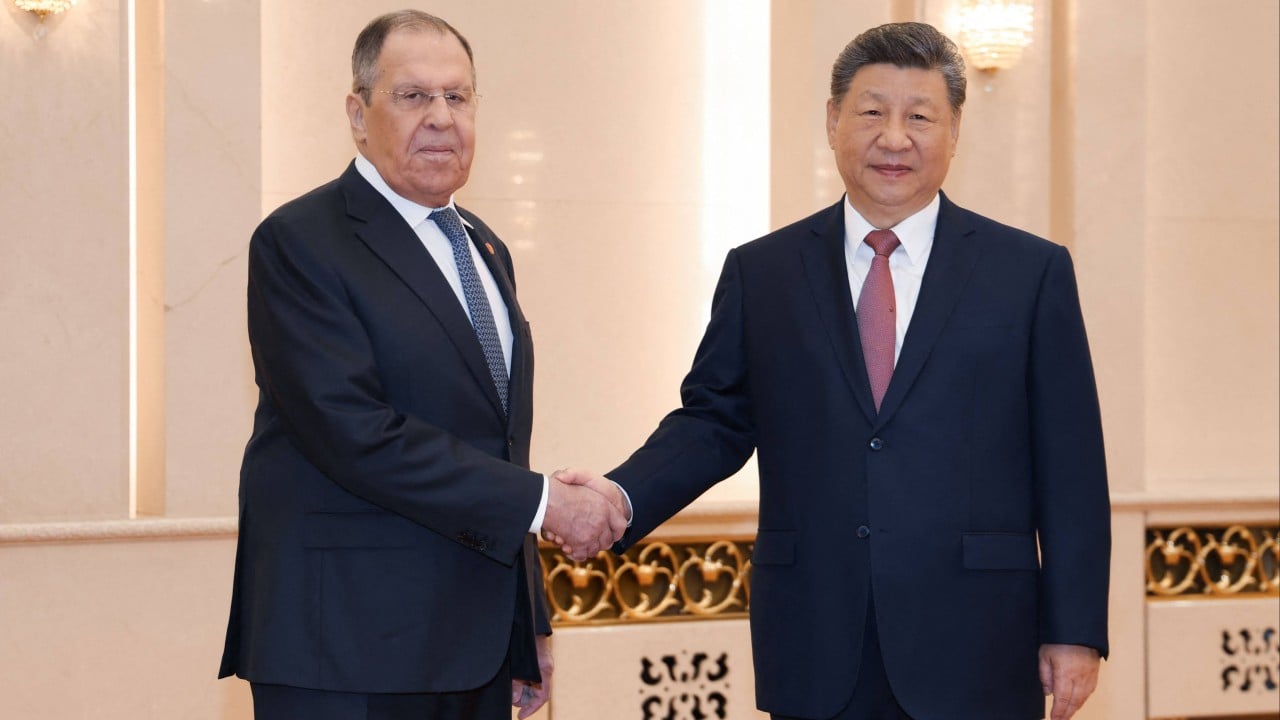
Global Energy Crisis Deepens as Nations Scramble for Alternatives Amid Middle East Conflict A widening war in the Middle East has triggered a global energy crisis, forcing nations to seek emergency oil deals and alternative suppliers as a critical shipping chokepoint remains blocked. The disruption is driving up fuel prices worldwide and threatening to push millions into poverty [128236]. The core of the crisis is the effective closure of the Strait of Hormuz, a major route for seaborne oil and gas shipments, due to regional hostilities [129561]. This blockade has sent shockwaves through the global economy, reversing inflation progress in war-torn Ukraine and creating severe economic pressure on vulnerable African nations [128542][129561]. In response, countries are urgently pursuing new alliances and supply routes. Indonesia's new president flew to Moscow to negotiate an emergency deal for cheap Russian oil, aiming to shield his country from soaring costs [128236]. Similarly, China dispatched a high-level official to Turkmenistan to secure more natural gas via overland pipelines, seeking reliable alternatives to vulnerable maritime shipments [128463]. Russia has positioned itself as a solution to the shortage. Foreign Minister Sergey Lavrov stated that Russia is ready to "compensate for the shortfall" in global energy supplies caused by the Middle East conflict [129421]. He made the declaration during a meeting in Beijing with Chinese leader Xi Jinping, where the two allies reinforced their "unshakeable" partnership against what they termed global instability [129421][129011]. The price surge is having a direct human impact. In Indonesia, officials warn that millions of citizens risk being pushed into poverty by rising fuel costs, prompting the desperate diplomatic mission to Russia [128236]. The economic damage is also spreading to Europe, where Ukraine saw fuel costs jump 23% in a single month, forcing its central bank to consider interest rate hikes [128542]. Major energy importers like Japan are also feeling the strain. The Japanese Prime Minister is personally lobbying Australia, its largest supplier of liquefied natural gas, to avoid new taxes on exports that would further increase Japan's energy bills [129018]. Indonesia's New President Flies to Russia for Emergency Oil Deal War's Ripple Effect: African Economies Hit by Gulf Blockades China Seeks Central Asian Gas as Hormuz Blockade Threatens Supplies Middle East Conflict Reverses Ukraine's Wartime Inflation Progress Russia Offers to Replace Blockaded Oil, Calls China Ties "Unshakeable" Japan's PM to Australia: Hands Off Our Gas
Trump's GOP Allies Dodge Questions on His Religious Claims and Mental State
Trump's GOP Allies Dodge Questions on His Religious Claims and Mental State More than a dozen Republican U.S. Senators are refusing to address concerns about former President Donald Trump's recent behavior, including his criticism of the Pope and comparisons of himself to Jesus Christ [129033]. When questioned by reporters, most declined to comment directly, instead using vague descriptors like "a person of enthusiasm" to characterize him [129033]. This pattern of deflection highlights a strategic choice by Trump's party to avoid engaging with questions about his conduct as he campaigns for a return to the White House. The silence from Capitol Hill follows Trump's social media attack on Pope Leo XIV, whom he labeled "weak" and a "globalist" after the pontiff condemned all war [129548]. The controversy touches a key political vulnerability. Catholic voters are a major swing bloc in U.S. elections, and Trump's running mate, JD Vance, is a convert to Catholicism [129548]. Analysts note that alienating this group could be costly in a close race [129548]. The unified front from Republican senators demonstrates a continued focus on defending Trump publicly rather than examining his statements, even those that have shocked religious and political observers [129033]. This dynamic persists as the election season intensifies. Title: Republicans Dodge Questions on Trump's Mental State Trump's Attack on Pope Risks Alienating Catholic Swing Voters

Europe Launches €1 Trillion Push for Military and Tech Independence from US, China
Europe Launches €1 Trillion Push for Military and Tech Independence from US, China European leaders are embarking on a massive, multi-front strategy to break free from dependence on American military protection and Chinese critical minerals, aiming to build an independent "Fortress Europe" capable of competing globally. The push follows a stark warning from outgoing Dutch Prime Minister Mark Rutte that achieving full military autonomy from the United States could cost the European Union up to €1 trillion, requiring defense spending to hit 10% of the bloc's total economic output [60363]. While admitting that goal is currently unrealistic, the EU is significantly boosting defense budgets, with spending up nearly 60% since 2022 to support Ukraine and rebuild its own armies [127947]. Concurrently, the EU has launched a new collective buying platform for critical minerals like rare earths, aiming to pool the purchasing power of European companies to challenge China's grip, which controls up to 90% of some supply chains [128019]. These materials are essential for manufacturing green technology and defense equipment, making the move a core part of Europe's economic security strategy. Analysts warn this drive for "strategic autonomy" is a direct response to profound vulnerabilities. A new report states the EU is dangerously unprepared for a potential second Trump presidency, having relied too heavily on regulation instead of building real economic and military power, a choice that left it dependent on others [69895]. This dependence is particularly acute in digital technology, where Europe relies on American firms for cloud computing, software, and payment systems even as it threatens to regulate them [58167]. The transatlantic tension extends to economics. A senior Belgian minister has accused the United States of waging an "ideological attack" on Europe's social welfare model, which includes strong worker protections and public healthcare [78938]. Meanwhile, a report from the Centre for European Reform claims U.S. tech giants are actively allying with the White House, using Europe's need for American military protection as leverage to pressure the bloc into changing its policies [44570]. Europe's green transition is also framed as a competitive gambit. As the United States doubles down on fossil fuel production, the EU is cashing in on renewable energy, generating economic savings and increasing its independence [88037]. However, the EU's Economy Commissioner has warned that massive national subsidies to shield consumers from high energy prices risk triggering a new fiscal crisis across the bloc [121783]. The overarching strategy reveals a continent seeking to secure its resources and technological future while externalizing crises. This includes what experts term "assertive migration diplomacy," using aid and trade deals to pressure African nations into stopping migrants before they reach European borders [80997]. Europe's €1 Trillion Question: Can It Buy Military Independence? Russia Accuses EU of "Major War" Preparations After Defense Spending Surge EU Launches Buying Bloc to Break China's Grip on Key Minerals **Trump Era Demands "Political Adults" in EU, Analysts Warn** Europe's Digital Dilemma: Reliant on US Tech It Seeks to Curb Belgian Minister: U.S. Waging "Ideological Attack" on Europe US Tech Giants and White House Ally to Pressure EU, Report Warns U.S. Doubles Down on Fossil Fuels as Europe Cashes In on Green Energy EU Warns: Energy Bailouts Could Trigger New Fiscal Crisis Europe's Migration Pressure: What's Really Changing?
AI Is Coming for Your Job Interview—And It’s Judging Every Word
AI Is Coming for Your Job Interview—And It’s Judging Every Word Companies are increasingly turning to artificial intelligence to conduct job interviews, automating a process once handled solely by humans. These systems can range from chatbots that ask questions to software that analyzes a candidate’s video responses for tone, word choice, and facial expressions [129582]. This shift is part of a broader transformation in the professional world driven by AI. Consulting giant PwC is undertaking a major global restructuring to adapt to the technology, focusing on retraining its workforce and reshaping its services as AI threatens to automate many traditional analytical and advisory tasks [128415]. Across industries, the definition of valuable work is changing. As AI takes over more technical functions, “glue work”—the human skills of mentoring, collaboration, and project coordination—is becoming more critical [128201]. The push for efficiency is also hitting manufacturing. Automaker Nissan is cutting 20% of its car models and betting on AI to streamline development, production, and customer service in a bid to survive intense electric vehicle competition [128228]. For job seekers, the experience of an AI-led interview can be unsettling. Candidates report interacting with systems that ask standardized questions and assess responses against predefined benchmarks, often with little human oversight [129582]. The technology’s rise underscores a pivotal moment where the tools used to evaluate and hire employees are being redesigned, raising new questions about fairness, bias, and the human touch in the workplace. AI Interview? We Want to Hear Your Story. PwC to Slash 100,000 Jobs? AI Forces Consulting Giant's Overhaul AI Era Set to Elevate Critical "Glue Work" in the Workplace Nissan Bets on AI, Cuts Car Models to Survive
Turkey Steps Up as Key NATO Player with Major Drills and Command Roles
Turkey Steps Up as Key NATO Player with Major Drills and Command Roles Turkey is taking on a more prominent role within the North Atlantic Treaty Organization (NATO), leading major military exercises and assuming command of critical naval forces in a show of allied strength and coordination. This week, Turkish naval and army units are conducting complex joint amphibious operations in Germany as part of the large-scale NATO exercise Steadfast Dart 2026 [80228]. The drills focus on coordinated assaults from sea to land, with Turkish forces showcasing domestically produced defense technology alongside other allied nations [80228]. This follows the recent deployment of approximately 2,000 Turkish troops to Germany for NATO's largest exercise this year, Steadfast Defender 24 [70222]. The first Turkish military aircraft landed at Germany’s Wunstorf Air Base earlier this month, marking the start of Turkey's participation in the wide-ranging drills designed to demonstrate the alliance's rapid deployment capabilities [70222]. In a separate but significant development, the Turkish Naval Forces formally assumed command of a key NATO naval strike group on July 1 [54453]. Turkey will lead the NATO Amphibious Task Force and its Landing Force Command for one year, putting it in charge of planning and leading exercises and potential missions in the region [54453]. Concurrently, Turkey has joined a new international task force led by the Organization for the Prohibition of Chemical Weapons (OPCW) aimed at destroying the final remnants of Syria's chemical weapons program [106495]. Turkey's participation is considered critical due to its border with Syria and regional expertise [106495]. These military and security moves coincide with an ambitious economic push. Turkey's defense industry has set a goal for its companies to achieve an average export turnover of $300,000 per employee by 2026, aiming to rank among the world's most productive global defense exporters [63530]. On the diplomatic front, Turkey recently enacted three major international agreements in a single day, including an investment pact with Hong Kong and ratification of a landmark United Nations treaty for protecting marine biodiversity [36056]. Turkey Assumes Command of Key NATO Naval Strike Force Turkish Forces Deploy Homegrown Tech in Major NATO Drill NATO's Biggest 2024 Drill Begins with Turkish Troops Landing in Germany Turkey Joins Mission to Destroy Syria's Last Chemical Weapons Turkey Aims for Elite Status, Sets $300,000-Per-Employee Export Goal Turkey Seals Key Deals with Hong Kong and UN in Single Day


Ukraine Inks Major Arms Deals with Germany, Nordic Allies as Drone War Escalates
Ukraine Inks Major Arms Deals with Germany, Nordic Allies as Drone War Escalates Ukraine is securing a wave of new, high-value military agreements with key European allies, focusing on air defense, long-range strike capabilities, and drone technology, as it deepens strikes on Russian strategic targets. In a significant long-term pact, Germany has committed to a $4.7 billion defense package for Ukraine, one of its largest security commitments since the war began [128964]. The agreement, signed by the nations' defense ministers, includes an immediate pledge of 100 Patriot air defense missiles and "hundreds" more in the future to bolster Ukraine's defenses against relentless Russian missile and drone attacks [128844][129088]. Beyond supplying weapons, the German deal marks a strategic shift toward co-production and capacity building. It includes funding to develop Ukraine's own defense industry, a commitment to joint drone production, and support for Ukraine's capacity to conduct "deep strikes" into occupied territory [128964][128844]. Separately, Ukraine has agreed to share invaluable real battlefield data with Germany to accelerate the development of artificial intelligence for combat drones, a partnership that could yield more advanced AI-enabled systems for Ukrainian forces [128848]. Concurrently, Ukraine is expanding its drone alliances. President Volodymyr Zelenskyy made a surprise visit to Oslo to sign a new "drone coalition" agreement with Norway and Denmark, a joint project aimed at massively increasing the supply of unmanned aerial vehicles to the Ukrainian military [129089]. This comes as Ukraine itself unveiled a new long-range attack drone named "Sichen" (January), with a range of 1,400 kilometers, symbolically named after the month of historically intense Russian strikes [128846]. Kyiv's growing capabilities were demonstrated by a drone strike over 1,300 kilometers inside Russia, hitting a major petrochemical plant in Bashkortostan that produces synthetic rubber for military tires [129500]. As Ukraine strengthens its hand on the battlefield, a diplomatic effort to hold Russia legally accountable also advanced, with 17 nations now backing a plan to establish a special tribunal for the crime of aggression, allowing the proposal to move to a formal vote [129505]. Ukrainian Drone Strikes Russian Tire Factory Over 1,300km From Front Line Ukraine Secures $4.7 Billion German Arsenal: Drones, Air Defense, Long-Range Strikes Germany to Send 100 Patriot Systems in Historic Ukraine Pact Germany to Supply "Hundreds" of Patriot Missiles to Ukraine in Major Deal AI's New Teacher: Ukraine's Real Battlefield Data Goes to Germany Zelenskyy Flies to Oslo, Signs Secretive "Drone Deal" with Norway and Denmark Ukraine Unveils "Sichen," a Long-Range Drone Named for Russia's Cruelest Month Russia Tribunal Moves to Vote as 17 Nations Back Plan

Global Powers Scramble for Africa's Coasts as Continent Seeks Ports and Influence
Global Powers Scramble for Africa's Coasts as Continent Seeks Ports and Influence A quiet but intense competition is unfolding across Africa as world powers, including the United States, Russia, China, and Gulf states, rush to secure military and economic footholds on the continent's strategically vital coastlines. This modern-day scramble is driven by Africa's critical resources, its growing geopolitical weight, and the urgent needs of its own nations, particularly landlocked countries seeking sea access. The recent African Union summit in Addis Ababa, officially focused on water security, was dominated by these geopolitical maneuvers [87433]. Central to the discussions was Ethiopia's aggressive campaign to secure direct access to the sea, a move that has attracted a flurry of attention from external powers looking to broker deals and gain influence [87433]. In West Africa's Sahel region, the strategic contest is particularly stark. As military governments in Mali, Niger, and Burkina Faso expel French forces, Russia is rapidly filling the security vacuum. Its "Africa Corps," the successor to the Wagner Group, is deepening its military and advisory footprint, compelling the United States to urgently rethink its own strategy in the area [67411]. Simultaneously, global tensions are redirecting economic attention toward Africa. With conflict disrupting traditional supply lines in the Middle East, major oil buyers are increasingly looking to Nigeria and other African producers for stable energy supplies, a shift that could boost the continent's economic leverage [121967]. This comes as the International Monetary Fund (IMF) warns that Sub-Saharan Africa's fragile economic recovery is threatened by these very same global instabilities, which risk driving up inflation and import costs [128698]. European leaders are also seeking to reinforce their ties, holding a major summit with African counterparts focused on trade and critical minerals, an effort to counter the growing influence of other global powers [11355]. African nations, for their part, are actively pursuing a strategy of "multi-alignment," engaging with diverse partners to advance their own development interests independently [35302]. This includes high-level talks between Ethiopia and the African Export-Import Bank (Afreximbank) aimed at boosting continental self-reliance and reducing external economic dependencies [127881]. The combined effect is a continent navigating a complex landscape where its development needs and strategic assets are drawing renewed foreign rivalry to its shores, even as its leaders work to consolidate a more independent and influential global stance. Global Powers Rush for Africa's Coast as Ethiopia Seeks a Port U.S. and Russia in High-Stakes Scramble for Africa's Sahel Middle East Turmoil Shifts Oil Focus to Africa IMF Cuts Africa Growth Forecast as Middle East Conflict Rises EU-Africa Summit Focuses on Trade and Minerals Amid Global Tensions Africa Gains Global Ground Amid U.S. Turmoil Ethiopia, Afreximbank Push for Africa to "Feed Itself"
Latest Articles

Pakistan Seeks U.S. "Guarantees" for Iran in Mediation Bid
Pakistan is attempting to broker a second round of direct talks between the United States and Iran. The effort focuses on securing U.S. "guarantees"...
Airlines Hit Hardest on Tokyo Market After Iran Strikes
Airline stocks fell more than any other sector on Japan's Nikkei index this week. The drop followed the start of military action by Iran. The declin...
Singapore Opens "AI Garage" for Businesses to Test Powerful Models
Singapore has launched a new facility where companies can experiment with advanced artificial intelligence. The goal is to help businesses safely tes...
Japan's Banks Scramble for Billions in U.S. Dollars
Major Japanese banks are urgently seeking U.S. dollars. This rush is happening as Japanese companies make huge overseas payments. These payments are...

Japan's Defense Revolution: Airbus, Hitachi, Subaru Join EU Push
Japan is taking a major step to strengthen its military by partnering with European defense companies. In a historic shift, it will jointly develop w...